Psalms 106:9
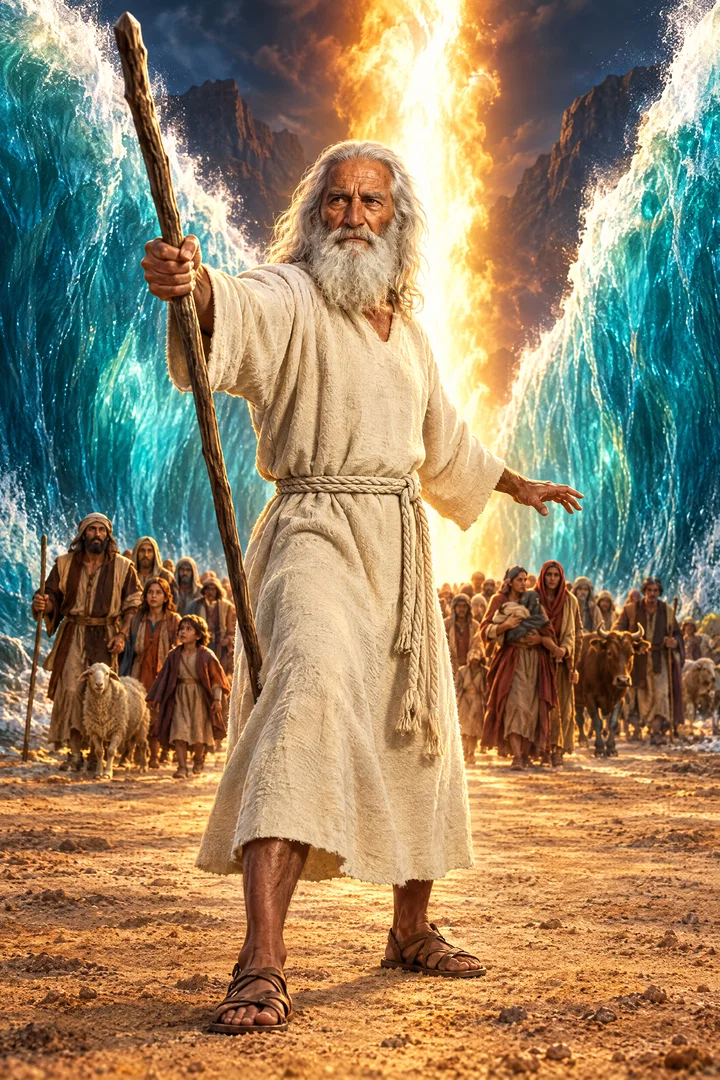
He rebuked the Red sea also, and it was dried up: so he led them through the depths, as through the wilderness.
Translations
American King James Version, King James Version, Webster Bible
He rebuked the Red sea also, and it was dried up: so he led them through the depths, as through the wilderness.
He rebuked the Red sea also, and it was dried up:
So he led them through the depths, as through the wilderness.He rebuked the Red Sea also, and it was dried up: so he led them through the depths, as through a wilderness.
He rebuked the Red Sea also, and it was dried up:
So he led them through the depths, as through a wilderness.And rebuketh the sea of Suph, and it is dried up, And causeth them to go Through depths as a wilderness.
And he rebuked the Red Sea, and it dried up; and he led them through the deeps as through a wilderness.
So he rebuked the Red Sea, and it dried up, And he led them through deeps, as pasture-land;
Berean Standard Bible, Majority Standard Bible
He rebuked the Red Sea, and it dried up;
He led them through the depths as through a desert.He rebuked the Red Sea also, and it was dried up;
so he led them through the depths, as through a desert.By his word the Red Sea was made dry: and he took them through the deep waters as through the waste land.
And he rebuked the red Sea, and it was dryed vp, and he led them in the deepe, as in the wildernesse.
Douay-Rheims (Challoner revision)
And he rebuked the Red Sea, and it was dried up: and he led them through the depths, as in a wilderness.
Pictures
Cross-references
- Exodus 14:21-22
And Moses stretched out his hand over the sea; and the LORD caused the sea to go back by a strong east wind all that night, and made the sea dry land, and the waters were divided.
God parts the sea and leads Israel through on dry ground.
- Psalms 105:26-27
He sent Moses his servant; and Aaron whom he had chosen.
Both recount Moses and Aaron and God’s signs in Egypt.
- Psalms 78:12-14
Marvellous things did he in the sight of their fathers, in the land of Egypt, in the field of Zoan.
Both recount God’s wonders in Egypt and Israel’s passage through the sea.
- 1 Corinthians 10:1-5
Moreover, brethren, I would not that ye should be ignorant, how that all our fathers were under the cloud, and all passed through the sea;
Paul recalls Israel passing through the sea and their wilderness experience.
- 1 Corinthians 10:11
Now all these things happened unto them for ensamples: and they are written for our admonition, upon whom the ends of the world are come.
Israel’s experiences were recorded as examples and warnings for later generations.
- Hebrews 11:29
By faith they passed through the Red sea as by dry land: which the Egyptians assaying to do were drowned.
Faith enabled Israel to cross the Red Sea on dry land.
- Numbers 33:8
And they departed from before Pi-hahiroth, and passed through the midst of the sea into the wilderness, and went three days’ journey in the wilderness of Etham, and pitched in Marah.
Records Israel passing through the sea into the wilderness.
- Revelation 15:3
And they sing the song of Moses the servant of God, and the song of the Lamb, saying, Great and marvellous are thy works, Lord God Almighty; just and true are thy ways, thou King of saints.
Israel’s deliverance through the sea is recalled in the song of Moses and the Lamb.
- Psalms 105:39-43
He spread a cloud for a covering; and fire to give light in the night.
Both recount Israel’s wilderness journey and God’s provision after the exodus.
- Exodus 12:15-29
Seven days shall ye eat unleavened bread; even the first day ye shall put away leaven out of your houses: for whosoever eateth leavened bread from the first day until the seventh day, that soul shall be cut off from Israel.
The passage recounts Israel’s deliverance from Egypt, leading into the Red Sea crossing.
Commentary
Each commentary is drawn from primary sources: the writings of Ellen G. White and Adventist pioneers and periodicals. Each commentary is separate. Its own words are not a quotation; follow the references to read the source passages.
Ellen G. White
8 sources
God rebuked the Red Sea and dried it up, leading Israel through its depths as through dry wilderness.SPBC 155.1Ms 1, 1897, par. 2PK 12.28T 109.5 That crossing rescued them from slavery in Egypt so they could be brought to the land He had prepared for them.PK 12.2 That act displayed His mighty power and delivered the people from their enemies.8T 109.5
It reveals His goodness, mercy, and love in that deliverance.8T 107.1Ms 1, 1897, par. 2 It belongs to Israel's wilderness history of deliverance and failure, which provides warning, lesson, and instruction for God's people in the last days.HL 284.1SPBC 155.119MR 108.1–2Ms 16, 1896, par. 1–2 As a last-day warning, it calls God's people to avoid unbelief and rebellion.HL 284.1 It calls all who claim to be God's children to read and remember this work and to appreciate His goodness, mercy, and love.Ms 1, 1897, par. 2
Sources
Pioneers and periodicals
16 sources
He rebuked the Red Sea and dried it up, leading Israel through its depths as easily as through dry wilderness, the same deliverance enacted in Exodus 14:19-29.ST Feb 4, 1903RH Aug 29, 1912ST Jun 11, 1894ST Aug 11, 1909ST Feb 4, 1903 That path was opened through Jesus Christ, the Angel of God's presence who was with His people for Moses' sake and for His own name.ST Dec 5, 1911RH Apr 9, 1901 The act displayed His mighty power saving them from the waters and redeeming them from their enemies in the making of Israel as a nation.ST Feb 4, 1903ST Jun 11, 1894ST Feb 4, 1903 It shows His wonderful mercy to His children in their backsliding and sinfulness, for although they had seen His wonders they doubted His goodness and distrusted His ability and power to save, believing only after reaching safety and seeing the Egyptians drowned.ST Oct 25, 1910ST Feb 4, 1903RH Jul 2, 1857RH Feb 28, 1856ST Aug 11, 1909 What happened was for examples and was written for admonition upon those on whom the ends of the world are come, to be read as a type for the present time warning later generations not to repeat their distrust.RH Aug 29, 1912RH Jul 2, 1857ST Aug 15, 1916
Red Sea Deliverance Recalled
Psalm 106 is one of the historical psalms, a class marked by detailed accounts of the ancient history of the Hebrew people and of God's wonderful deliverances of them.ST Dec 5, 1911RH Apr 14, 1903 It retells the experiences of the children of Israel recorded in the books of Moses, the same deliverance enacted in Exodus 14:19-29.RH Aug 29, 1912ST May 28, 1894 That deliverance was the passage of the Red Sea on Israel's road from Goshen across the northern part of the sea.ST Jun 11, 1894ST May 28, 1894
The meaning is that God rebuked the Red Sea, dried it up, and led Israel through its depths as through dry wilderness, as easily as through a wilderness.ST Feb 4, 1903ST Aug 11, 1909ST Feb 4, 1903 The drying of the sea and the passage through its depths were wrought through Jesus Christ, the Angel of God's presence who was with His people.ST Dec 5, 1911 He opened the path through the sea, drying it and leading Israel through, for Moses' sake and for His own name.RH Apr 9, 1901
The deliverance displayed His mighty power, saving them from the waters and redeeming them from their enemies.ST Feb 4, 1903ST Feb 4, 1903 In it was shown His leading, protecting, redeeming, and restoring providence in the making of Israel as a nation.ST Jun 11, 1894
Mercy Despite Israel's Unbelief
Psalm 106 is a general history of Israel in the wilderness, recalling apostasy, divine judgments, and mercy in forgiving those who returned.ST Aug 20, 1894RH Jan 7, 1862 It records astonishing transitions from faith and obedience when the covenant was given and accepted to rebellion and idolatry with the golden calf.ST Aug 20, 1894RH Jan 7, 1862 Within that account of rebellion the drying of the sea stands as a display of wonderful mercy to His children in their backsliding and sinfulness.ST Oct 25, 1910ST Mar 19, 1912ST Aug 11, 1909 By rebuke He dried the Red Sea and led Israel through its depths as through dry wilderness, displaying mighty power and saving the people from their enemies despite their rebellion.ST Oct 25, 1910ST Feb 4, 1903ST Aug 11, 1909 The psalm thus holds out wonderful assurances and forgiveness to those who will only return to Him with all their heart.ST Oct 25, 1910ST Aug 20, 1894ST Mar 19, 1912
Although Israel had witnessed His wonders in Egypt and at the Red Sea, their later provocations arose from unbelief.RH Jul 2, 1857RH Feb 28, 1856 They doubted His goodness and distrusted His goodness, ability, and power to save.RH Jul 2, 1857RH Feb 28, 1856 They did not believe His word before crossing, but believed only after they had reached safety and seen the pursuing Egyptians drowned.RH Apr 9, 1901 Their praise then followed what they saw, rather than being the song of faith.RH Apr 9, 1901
That passage on the road from Goshen across the northern part of the sea shows His leading, protecting, redeeming, and restoring providence in the making of Israel as a nation.ST Jun 11, 1894 It records His final triumph over the foes of His people, a triumph entered by faith.ST Jun 11, 1894 That triumph pledges His eternal triumph over all sin and wickedness, displaying the same power that creates and restores.ST Jun 11, 1894
Example for the Last Days
What happened to Israel was for examples and was written for admonition upon those on whom the ends of the world are come.RH Aug 29, 1912 The experiences of the children of Israel recorded in the books of Moses and retold in Psalms 105 and 106 are of greatest value to the people of God living near the end.RH Aug 29, 1912 The drying of the sea and leading through the depths is to be read as a type with direct application to present time and experience.RH Aug 29, 1912 As part of the record of Israel's journey it stands written as an example for later generations, warning them not to repeat their distrust of His goodness and ability to save after seeing His wonders at the sea.RH Jul 2, 1857 That old experience is held forth as an example of human perversity, whose resulting plague comes upon those who devise it.ST Aug 15, 1916
Sources