Your ShelfYour Projects

Review and Herald, Vol. 92, No. 32.

Prayer
Earlier text: True Witnesses

Progress of the Work in Fu-chau, China

W. C. HANKINS
About two years ago Pastor N. P. Keh went to Fu-chau, the capital of Fukien Province, to learn the language preparatory to beginning work in that large city. After he had learned the language, he was joined by another of our Amoy evangelists, Keh Hok-siu. These men have the same Chinese surname, but are not near relatives. They work together well, being quite different in temperament and manner of working, so that one supplies what the other lacks.
From the very first, the work has prospered, and a solid foundation has been laid for a permanent work. A good class of people have become interested in and embraced present truth, among whom are ministers, teachers, carpenters, tailors, merchants, farmers, etc., so that they have organized a church with a charter membership of over fifty, most of whom are heads of families.
The first day of April, 1915, I left Amoy to spend a few days with the Fu-chau church. I had been there once before since my return from the homeland, but could not stay long enough to really see what was being done. This time, however, I stayed about ten days, and had a chance to see something of the work.
When the church learned that I should be with them for several days, they immediately asked that daily services be held, so we arranged a program to suit their convenience, and held four services a day while there, three preaching services and one prayer service.
Pastor Keh is carrying on a school in the same compound where they have their chapel. This school has eighty pupils, who pay their own board, and a yearly tuition of about ten dollars, which goes a long way toward paying the salary of the teachers. It was arranged for the pupils to attend these meetings each day, and it would have done you good to see the orderly way they filed in and out before and after every service, and the reverent way those boys, most of them from heathen homes, rose to their feet as the ministers ascended the platform, and then kneeled with the ministers in prayer. The whole congregation always did this, and it seemed to me a very fitting way in which to begin the service.
Although the meeting was not previously announced, it being impossible for us to tell beforehand just when we could go to Fu-chau, yet we had a good average attendance. The afternoon service was always the best attended, there being generally from one hundred to one hundred and forty or fifty present, while at the morning and evening meetings there was generally an attendance of about one hundred and thirty.
On the last Friday afternoon of the meeting, quite a number of us walked three miles to the river, where fifteen believers were baptized. Among these was the young man who teaches English in our school. He is a graduate of the Y. M. C. A. school in Fu-chau, and is a very bright young man. He had been thinking seriously about the truth for some time, and was led to take a firm stand as the result of the meetings. I learned that two thirds of those baptized that day had never belonged to any other religious organization.
When we returned to the chapel after the baptism, we met a young man who had just come in from a village about seven miles away. He wanted to be baptized, but had come too late, and had to wait until next time. This young man has a school of forty pupils, which he has been carrying forward as a private enterprise. There are two teachers in the school, both of whom believe this truth. They said the school needed another teacher, whose salary would be a little less than five dollars gold a month. They proposed to hand the school over to us if we would pay for the third teacher, the two original teachers to remain self-supporting as before. They also represented that there were about twenty in that vicinity already keeping the Sabbath, meeting in the school building each week for worship. They suggested that they would raise half the money necessary to build a chapel if the mission would raise the other half; but I had to tell them that I could not promise to do that without authority from the home board, although the amount necessary would be only two hundred and fifty or three hundred dollars. We promised them, however, that Elder Keh and some of the other workers would go down to see them at once, and do what they could to develop the interest and establish a permanent work.
Lack of time and space prevents my telling all the interesting details of the open door that is before us in the Fu-chau district. The year began with a baptized church membership of fifty-eight, which has increased to seventy-three, and our workers hope by God's help to at least double the membership during the year.
Now, dear friends, I have a very earnest request to make of you who read this article. I believe that the Word of God teaches very definitely that God hears and answers earnest, definite, and above all, united prayer. So I wish to ask you to cut out this request and pin it up in your bedroom or some other place where you will be sure to see it every day, and then daily ask God to especially bless our work and workers here in Fukien Province, that we may be filled with his Spirit, and that our aim of a doubled membership may be more than realized. Will you do it? Then do it now. Do your part faithfully, and God will surely give a great harvest of souls, not only here but in other parts of China as well, and your own souls will be watered by the outpouring of the latter rain.

A Sketch of the Life and Experience of a New Sabbath Keeper

M. D. WOOD
MRS. P. GIDNEY was born in Cochin, South India, in 1851. Her grandfather was a Dutchman, and came to this country to engage in shipbuilding. There were no steamboats in those days; sailing vessels were the only means of travel by water.
Mrs. Gidney’s ancestors were all Roman Catholics. However, as there was no Catholic school near her home, she was allowed to attend a Church of England mission school until she was about twelve years of age, when her parents moved to Bombay.
In her teens she was sent to the Roman Catholic convent in that part of Bombay known as Mazagaon. Here she learned the Apostles’ Creed, the Catholic catechism, many prayers, and also how to confess her sins to the priest. Ignorant of anything better than this, she went on until she was sixteen years of age, when she was married to Mr. Pitts, who was also Dutch, and an engineer on the railroad. As Mr. Pitts was a Protestant, they were married by a Church of England minister.
Through the influence of her husband she began to get a little light about another way of living and the plan of salvation by faith. Still she attended her mother church, and, much against the desire of her husband, she went to the confessional, but not so frequently as before. With her husband she made two extended trips to Holland to visit her people. This opened the eyes of this poor soul, and she not only lived and associated with Protestants, but attended many of their meetings.
She frequently went to London and other important places in Europe, and all the time her faith in Roman Catholicism was lessening. After returning to India she had quite a thrilling experience, which not only shows something of the real material of which she is made, but also her opinion of her former church.
Her small nephew had been placed in a Catholic school for his education. One day, when bathing him, she discovered ugly scars all over his back and legs. This aroused her, and on making inquiry she found he had been beaten very unmercifully by the teaching priest, at school. This was too much for her, so she decided to accompany the boy the next day, and demand an explanation and apology. To support herself in her task, she was careful to take a cane along with her.
On entering the institution, she called for the priest who taught her nephew, but the priest in charge refused to allow her to see him. Since her demands were imperative, she walked right into the building. Here the head priest said she must not go any farther. “No, no,” she said, “I will go, and I will see the man who beat my boy, and I will cane him, too.” But being hindered, she said, “Well, then, I will beat you instead; so take this.” Thereupon she lost her temper and gave the priest several cuts with the cane. He called her mad, and said, “Cool yourself, cool yourself.”
While this was a drastic measure, still it had a most excellent effect; for the next day that head priest called all the others together, and after reading a long list of rules, forbade any more such treatment of the pupils.
About this time her husband died. She found help and comfort at this time in attending the Salvation Army meetings in Bombay. After a while she was again married, and this time to a Methodist by the name of Gidney. He, too, was a railroad man. They moved to Igatpuri, and attended the Methodist Episcopal Church together.
The priest called to see her, and became very angry when he learned that she was not attending strictly to her own religion. Finally he threatened to excommunicate her. This and several similar things caused her to give up the confessional altogether, and then she quit the Roman Catholic Church. Thus, we see, it took many years to illuminate the mind of this one soul.
Since leaving the Roman Catholic Church she has often called to see the nuns and mother superior of the convent. They were good friends of many years’ standing, and no doubt there were strong ties formed in some of their past associations which were not easily broken. The nuns often have expressed their regret to Mrs. Gidney that she had departed from their faith. They have said, “We hope to meet you in heaven.” And she has replied, “I hope to meet you there, too.” Then she expressed to them her assurance of faith in the new way she is walking. But again they said, “O Mrs. Gidney, you will never meet us in heaven unless you repent and return to the bosom of the Roman Catholic Church.”
In many instances it seems to take a long while to bring people out of superstitions and error, and, sad as it is, many never get out at all.
During the year 1914, while conducting a medical mission weekly at Igatpuri, and in the face of bitter opposition, Mrs. Wood gave a series of Bible studies in different private homes. Quite a number of intelligent persons appreciated these meetings and attended them regularly. Among the number, Mrs. Gidney took her place, with her Bible, anxious to learn all she could of truth.
Here for the first time she read of the true Sabbath. Her eyes were opened to some of the errors of the Roman Catholic Church and all other churches following her steps. For days these new-found treasures of truth were the common conversation in certain circles in that town. Mrs. Gidney had an intense longing to forsake the past and join those who keep the commandments of God. At one time the way seemed about to open, then it closed. This brought great disappointment to her, but proved to be but a test of faith after all. In a few weeks an open door was found at our Kalyan mission station. Mrs. Gidney, being a most excellent needlewoman, and having also had a thorough training in midwifery at the Grant Medical College, in Bombay, was well qualified to assist in several lines of duty in mission work. Not only so, but she speaks English, Hindustani, Dutch, and Marathi; and as all our work is in the Marathi language, she finds a ready place and plenty to do. Here she attends all the Marathi services, and not only appreciates the truth she hears from the Word of God, but is a help to our native church, and in the medical department also. Although sixty-seven years of age, she is strong, and puts in as many hours of hard work as our young people. We are glad indeed that she has accepted the truth, and will soon join the church by baptism.

Central China

R. F. COTTRELL
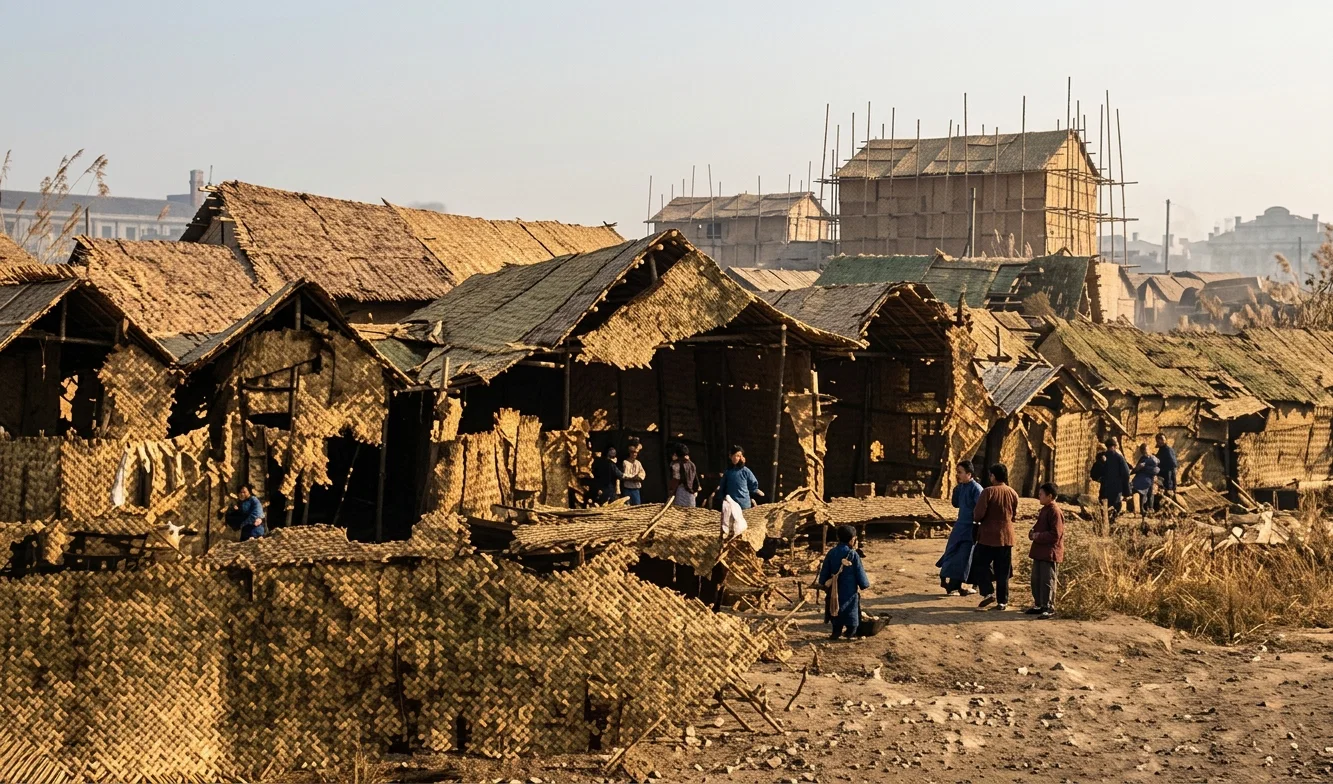
Mat sheds in Hankow, in which thousands have lived since the war there, when the city was burned.
OUR workers' meetings in the Central China Mission were this year held as follows: Yen-cheng, Honan, January 16-27; Changsha, Hunan, February 3-10; and Hankow, Hupeh, February 19-28. These gatherings were attended by all our native evangelists, Bible workers, and canvassers; and aside from our local staff, the Asiatic Division provided good foreign help.
The burden of the messages presented was the speedy return of our Lord, the high calling and sacredness of our ambassadorship, the need of absolute surrender of self, and the demand for wholehearted consecration and devotion to the work of God. These appeals did not fall on listless ears. Many confessed their lack of real earnestness, and covenanted before God that henceforth they would arise to the call of the hour, and zealously spread the tidings of the coming King.
We were especially impressed with the rapid extension of our work into “regions beyond.” From the plains of northern Honan came the cheering tidings of the welcome afforded God's messengers. While attending the Hunan meeting and arranging to supply the calls for evangelists, we found ourselves, humanly speaking, quite helpless in the face of so many openings. It was truly surprising to hear how the message is winning its way in the mountain districts of south Hunan. The needs of the great province of Kiang-si, with its 25,000,000 souls, was also thrust upon us. Colporteurs have carried the printed page to hundreds of its cities and towns, and from many quarters is heard the cry, “Come over . . . and help us.” So unmistakable was the voice that Hunan, although itself very short of help, voted to release its most experienced evangelist, Hwang Dzun Dao, to open work in Kiang-si.
This worker has now made a short trip through the province, and returns with the names of over twenty places where the people are anxiously waiting to hear and understand the Word of God more fully. Only a few weeks ago, traffic was opened on the new railway line connecting Nan-chang, the provincial capital, with the excellent steamship service of the Yang-tze-kiang River. Certainly the hour has struck when this province should hear the message of present truth.
For five weeks preceding the workers' meeting at Yen-cheng, a Bible institute was held at that place. This was for the benefit of prospective workers, also for laymen who could not well attend during the busy part of the year. The attendance was about forty, and the occasion was one of much profit.
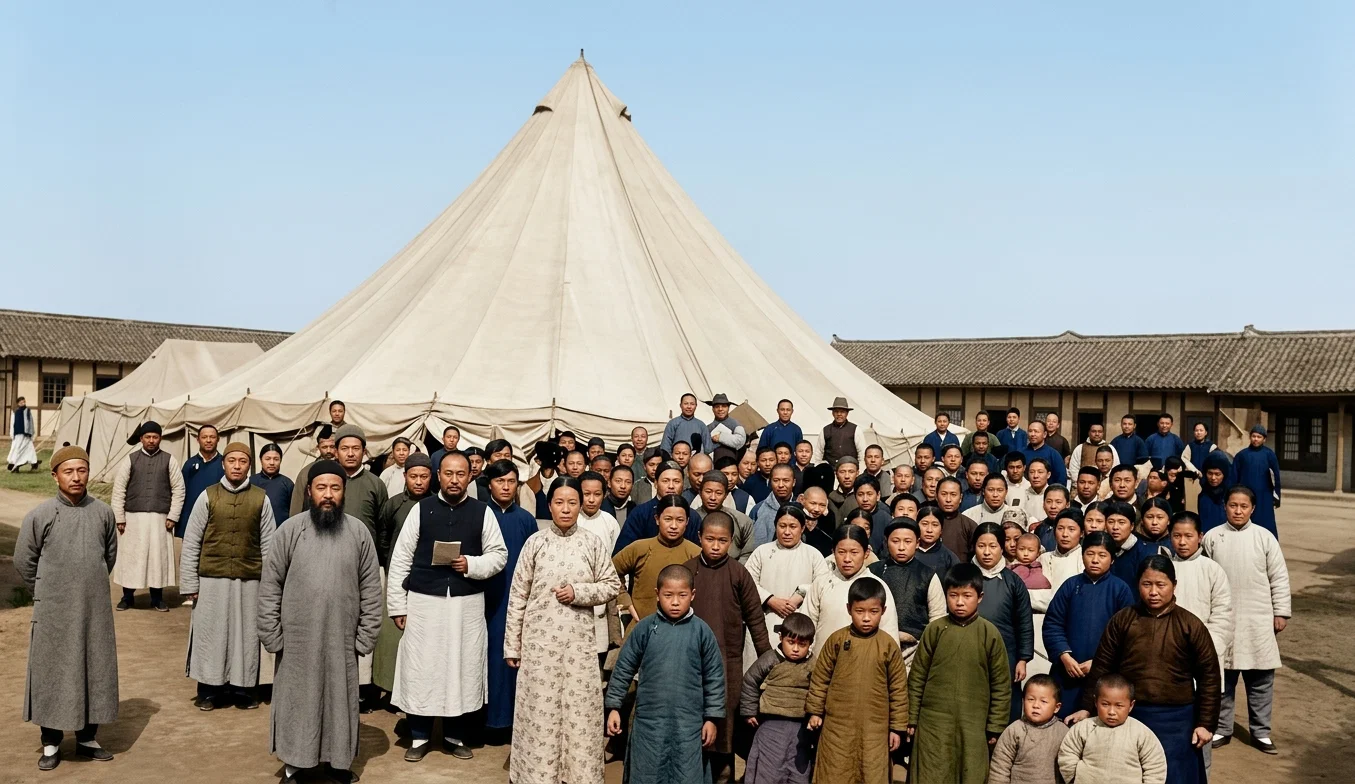
Following the last of the workers' meetings, Hupeh and Hunan Provinces united in an eight weeks' institute, which is being held at our new mission headquarters at Wang Gia Dun, Hankow. We had not expected so large a company; but, when over seventy, mostly young people, presented themselves, there seemed no alternative but to pitch our gospel tent and conduct the institute in that. Although for a part of the time the weather has been far from warm, the students have cheerfully borne the cold and inconvenience. At the three daily Bible classes we are teaching the great fundamentals of our faith and the rise and progress of the advent movement.
Of the seventy-three students now in attendance, sixty-six had formerly bowed down to idols of wood and stone, twenty-six had been addicted to wine and tobacco, nineteen were gamblers, five had practiced sorcery for a livelihood, four used opium, two were polygamists, and one was a Taoist priest. But He who said, “Behold, I make all things new,” has verified his word, for “the former things are passed away.”
A majority of this company are preparing for a part in the work, and about thirty of them will enter the canvassing field this summer. With the circulation of the printed page, new interests will develop, and new jets of light here and there will be sure to appear.
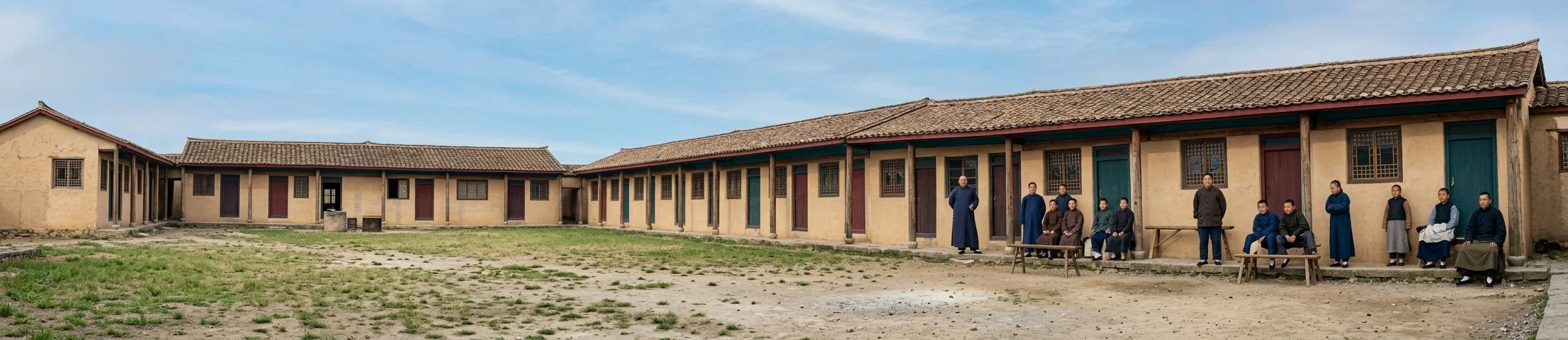
NEW SCHOOL DORMITORIES AT WANG GIA DUN, HANKOW
Every advance move in the establishment of Christ's kingdom calls for sacrifice both at home and in the foreign field. Brethren and sisters, God is doing a great work today in heathen lands; and as we lengthen the cords, the Holy Spirit will bless you in strengthening the stakes. It is now time to move forward in the strength of the Almighty.
Wang Gia Dun, Hankow.
TENT PITCHED IN SCHOOL COMPOUND AT WANG GIA DUN, TO PROVIDE FOR BIBLE INSTITUTE

On the Gold Coast, West Africa

W. H. LEWIS
THE beginning of our work on the Gold Coast dates back as early as 1894, but owing to sickness and deaths, but little was accomplished until about 1908, when Elder D. C. Babcock visited the Coast from Sierra Leone, and established two small companies, at Axim and Kickam, the latter of which, with the help of native workers, has survived.
In December, 1913, at our conference held in Freetown, my wife and I were asked to open up and take charge of the work on the Gold Coast. We had both expressed our fears about going into such an unhealthful country; but when the call had really come, and we had prayed over the matter, our fears disappeared, and we accepted the invitation.
As I was to remain in Sierra Leone until some one came to take charge of the work there, and then it was thought best that I should take my family to the Canary Islands before entering the Gold Coast, it was not until near the close of 1914 that I reached the Gold Coast. In July I took my family to Teneriffe; and after spending two months with them there, on September 9 I set out alone for the Gold Coast, reaching Seccondee October 3.
In accordance with Brother Conradi’s suggestion not to settle near the coast, after visiting the church at Kickam, I started for the interior, to look for a location for our permanent headquarters. After traveling eight or nine hundred miles, mostly on foot, I decided on a place about two hundred miles from the coast, and about twenty-five miles from down Kumassi, the terminus of the Gold Coast Railway. This place, Aguna, is the capital of the district, with six subtowns and several small villages under it.
I felt impressed to visit one of the subtowns called Wuamasie. I did not tell the chief my business, but told him I was traveling through the country and came through his town. He at once called his headman and told him to show me the town, which he did; and then taking me just outside to a high hill, he showed me a fine spring of water gushing from the rocks, cold, and clear as crystal, and said, “I dash you all,” meaning, “I freely give you all.”
As I looked at the water flowing out of the rocks in a country like this, where good water is so scarce, I thought of the experience of the children of Israel in the wilderness when the Lord caused the water to come from the rock, and I felt within my soul that truly the Lord had answered our earnest prayers that he would lead us to a favorable spot where we could establish a permanent headquarters, from which we could make tours into more unhealthful sections, and return, so that the sad experiences of former workers need not be repeated.
My wife and children came here in December, and we settled in a fairly good house in Aguna, and began our work the first of January, 1915. We now have a school with fifty-five boys, and an out-school about six miles from here, with thirty-five boys, all of them being taught the “wonderful love of Jesus.”
A few days ago I was not feeling well, and one of the boys came to my room to inquire about me. I said to him, “Kwesi, I am very sick.” His face brightened with a smile as he pointed upward and said in his native tongue, “Nyankupon zwo ho, na obeyew edur,” meaning, “God is in heaven, and he will make you well.”
From all around urgent calls are coming for us to open work, but we do not have the workers. Truly the harvest is ripe, but the laborers are few. Who of you are willing to give yourselves and your means to place the gospel message before these darkened souls? Could you see the three million souls in heathen darkness bowing down and sacrificing (in many cases human sacrifices) to wood and stone, and then see the change that comes when they learn of the love of Jesus and the wonderful plan of salvation, surely your hearts would go out to them; and if you could not go, I am sure you would go deep down into your pockets to provide the means to send others in your stead.

Found Her Way Again

ONE of our sisters who was engaged in colporteur work in Australia, had this experience:—
“On Wednesday morning I went to a house where at first the lady would not let me in. After I talked to her awhile, she finally invited me in. She said, ‘You are a stranger to me, but something tells me you are a Seventh-day Adventist.’ I asked why she thought so. She could not explain. I told her I was a Seventh-day Adventist, and began talking the truth to her. I soon found she knew the truth as well as I did; that she observed the Sabbath seven years ago, but gave it up on account of her relatives. She went to the tent last summer, but did not let the minister know she was interested. I prayed with her, and started to leave. She came to me, crying, and said she knew she would be lost if she refused to keep God’s law. She promised me she would come to church and would keep the next Sabbath.”

A Bad Disposition

MRS. A. A. TUCKER, M. D.
Few parents make their children a study. If they did, they might often find an underlying physical cause for seeming incorrigibility.
All children have a right to be born well, to have a sound mind and a perfect body. Unfortunately, many children are denied this birthright; and even if they start life with a clear title to physical soundness, they may be forced to yield it up by the way. Some of the diseases of infancy and early childhood are almost impossible to avoid, and mothers should be wide-awake to prevent their aftereffects.
In health as well as in sickness the wise mother will guard the diet of her children. She will look after their bathing, the ventilation of their rooms, and every detail that makes for their comfort and health.
The nose and throat should be examined by a competent physician to see if the tonsils are abnormal or if adenoids are present. The eyes and ears should be tested to see if there are any defects.
One physician goes so far as to say that the time is rapidly approaching when sin and crime and bad temper will be as much the business of the physician as smallpox or measles. This is rather an extreme view; but it goes without saying that few children are born well, and parents often confuse signs of ill health with natural depravity.
For instance, a girl who seemed unruly at home and unmanageable at school, was fortunately examined by the school physician. He had her sent to an oculist, and when the eyestrain from which she was suffering was removed, she was entirely changed. She learned to love her studies, and a marked reform was seen in every way.
A young girl was so cross and fretful that her mother finally sent her to her grandmother's for a long stay. She could have done nothing better, as the quiet, intuitive old lady seemed at once to understand this bundle of nerves. One year of eating, sleeping, and living outdoors, and having the perfect sympathy and cooperation of her grandmother, changed into a lovable girl this poor child, whose disposition, under less favorable circumstances, might have been ruined for life.
A child at school was not understood by her teacher. When asked to go to the board, or do anything that would cause her to display a deformed finger, of which the children had made fun, she obstinately refused, until compelled to go. The presence of this member had caused her to develop a defiant disposition, which was more to be deplored than the unfortunate deformity.
Apparent disobedience is sometimes caused by extreme sensitiveness. A boy in a crowded street car was asked by his mother to give up his seat to a lady who was standing. The little fellow was so embarrassed that he did not move. His mother, seeing his embarrassment, began to talk to a friend. This diverted the attention of the onlookers from the child, and he gladly slipped out of his seat and came over to his mother, pretending to have come after something. He was neither obstinate nor selfish — only shy.
Children should be directed, not constantly restrained. They should grow up free and happy, their energies wisely directed, their health well looked after. Under such conditions, it is certain parents will not be troubled much with the children's dispositions.
Sulphur, Okla.

EDITH M. GRAHAM

Growing Up in the Message — No. 1

EDITH M. GRAHAM

DURING the years that have passed since the proclamation of the third angel's message began, an alarming number of the children of believers have drifted into the world. In some conferences the statement has been made that as many of the children have gone from us, on attaining to maturity, as converts have been brought into the truth. In other words, had we saved our own children, and made no efforts to reach others, our gain in numbers would have been as great as it has been.
Is there not enough power and interest in this message to keep the children true to it as they grow up? Surely there is, and the children will grow up into it if they are trained in right principles.
Having given some study to the plans followed in a number of homes, and to their results, I wish to speak of some points in them which appear to me to be helpful.
Children are interested in that which strongly interests their parents. The things the parents talk about, plan for, and are engrossed in, insensibly mold the opinions of the children, and lay a strong foundation for their future lives. The parents may go to church on Sabbath, teach the Sabbath school lesson to the children regularly, pay their tithes, and give their offerings; but if, on six days of the week, their conversation and plans dwell almost entirely on the farm, the business, the things of this life, and how success may be attained in them, the minds of the children will be insensibly but surely given a tendency toward the world.
On the other hand, if the parents are absorbed in the message, loving it and the Lord, talking of it, planning for it, working to advance it by their personal efforts as well as by their means, the children will grow up with the feeling that this message is the greatest thing there is, and the attractions of the world will not draw them from it.
This is not theory, for I have watched both methods and their results. It is true that not all children trained under the first method go into the world; for other influences may counteract the worldly tendency that has been developed in their minds, and so they be converted. But the trend of thought manifested by the parents during the working days of the week undoubtedly has a very strong influence on the character development of their children.
Children like to feel that they belong to something, and that their efforts in behalf of whatever this may be are of value. Those who are taught to work for the cause of God learn to love it. Here also is a valuable factor for holding them to the truth.
Takoma Park, D. C.

Doctor Mother

A LITTLE wound, a little ache, A little blistered thumb to take With touch of love and make it well,— These things require a mother's spell. Ah, sweet the progress of the skill That science brings unto the ill! Vast range of methods new and fine; But when our little ones repine, The mother is the very best Of doctors into service pressed!
Sunshine and air and mother's spell Of helping little lads get well, And helping little lasses, too— Here are three remedies that do So much more, often, than the grave, Skilled hands that try so hard to save. For Doctor Mother, don't you know, Gives something more than skill—gives so Much of herself; gives, oh, so much Of love's sweet alchemy of touch!
Upon a little ward-room bed A little curl-encircled head, A little slender hand and pale, A little lonesome, homesick wail; Loved nursing, best of skill and care; But, oh, behold the wonder there When Doctor Mother, bearing sun From where the wilding roses run, Leans down, with hungering love and kiss— There is no medicine like this!
In a little child-heart’s hour of woe, Pain, ache, or life wound’s throb and throe, The Doctor Mother knows so well The weaving of love’s wonder spell— Just what the little heart requires, Just how to cool the fever fires; Just how much tenderness and cheer Will calm the little doubt and fear; How much of gentleness will ease— Alone she knows such arts as these!
— Folger McKinsey.

The Home Life Department

Conducted by Mrs. I. H. Evans, Takoma Park, Washington D. C.
Assisted by Miss Lora E. Clement
Through the columns of this department, hints will be given on all matters pertaining to the home life. Short articles and letters are solicited from home makers, telling of their everyday experiences,—their joys and sorrows, their failures and successes.

MRS. VINA SHERWOOD-ADAMS

Bird Studies With Our Children — No. 2

MRS. VINA SHERWOOD-ADAMS
It is very easy to interest the older children, from the ages of six to fourteen, in a study of the birds. In the spring let the children each select the bird he would like to study. Then from books, magazines, and personal observation inform yourself regarding the birds they have chosen, that you may have a reserve fund of knowledge to answer the questions they may ask you, and also as a guide to test the correctness of their observations.
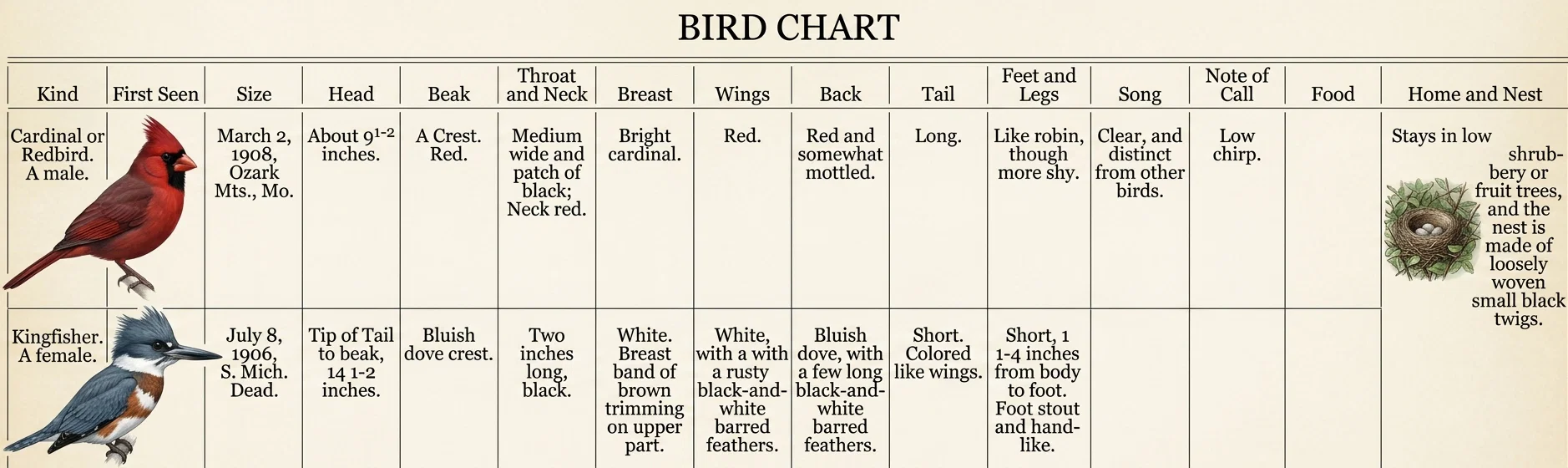
BIRD CHART
BIRD CHART
Select a bird for your personal study; for the surest way to interest the children is for father or mother to join them in this fascinating study. Be sure to ask your child to give you only such information concerning his bird as he actually observes for himself.
A bird chart, found in an old school magazine, has been used successfully with different groups of children. Place it on the blackboard or on a large sheet of paper tacked to the wall. As an illustration of how to use this chart, I am giving you, with it, some personal observations from my notebook.
Think how keen in observation a child will become by watching his bird for the various items. Each bit of knowledge acquired will stimulate him to complete his bird chart. These personal observations will remain with him far longer than anything you can read to him from books. As he discovers that not only on the bird he is watching, but on many other species also, are found various beautiful colors in artistic arrangements, he will gain a new feeling of reverence for his Creator, by whose power all things were made.
Children beyond the age of eleven years would be interested in a notebook of their own. You can make it yourself or show them how. Select rather heavy plain white paper, and have twenty leaves five by six inches in size. Tie with a pretty ribbon or cord, and on the outside cover either paste the picture or make a sketch of a favorite bird; also print in an artistic manner the words My Bird, The Friendly Wren, Robin Redbreast, Bird Lore, or whatever title the children prefer.
In this book they may enter items already jotted down on rough note paper regarding each bird observed, thus:—

CHEWINK

First seen — S. Mo., Ozark Mts., March 11, 1908. Size — From 7½ to 8 inches. Head — Black. Wings — Black with some white on long primaries.
Any peculiarity of bill, foot, etc., may be entered in this book. Feathers showing the markings may be sometimes secured, and mounted on the pages, as flowers are mounted in the study of botany.
“Bird Guide,” part 2, for birds east of the Rocky Mountains (price, 75 cents), and “Western Bird Guide” (price, $1), for birds west of these mountains, are valuable and interesting books. Each book is just the size to slip into the pocket while on a jaunt in the woods; and with the aid of its descriptions and colored pictures, any new bird may be easily identified. The “Flower Guide,” by the same author, I have found of equal value in studying the flowers. Any or all of these books may be obtained from Chas. K. Reed, Worcester, Mass. A field glass especially adapted to bird study may also be obtained from the same source.
After the children have made a systematic study of one bird, they will be more interested in literature on birds. “My Garden Neighbors,” by L. A. Reed (Review and Herald Publishing Association), is an interesting book to place in their hands.
Battle Creek, Mich.
Continue reading: Home Making