Your ShelfYour Projects

Review and Herald, Vol. 92, No. 21.

The Harvest of the Lord
Earlier text: Unanswered Prayers

The Medical Convention at Loma Linda, Cal.

According to appointment the medical convention opened at 9 A. M., March 21, holding to the twenty-third, inclusive. The College of Medical Evangelists had declared a vacation of one week, thus giving opportunity to members of the faculty to attend the convention. Several of the senior students were in attendance, as well as workers from the sanitarium. There was also present a number of visiting ministers, the convention being followed by a constituency meeting of the college.
Among those present were Drs. W. A. Ruble, N. G. Evans, John Reith, A. W. Truman, W. W. Worster, Julia A. White, T. J. Evans, G. E. Klingerman, W. J. Johnson, A. Winegar Simpson, B. L. Dieffenbacher, S. P. S. Edwards, W. A. George, Lyra George, T. S. Whitelock, E. H. Risley, A. Q. Shryock, D. D. Comstock, Belle Wood Comstock, G. K. Abbott, W. H. Smith, B. E. Fullmer, George Thomason, H. J. Hoare, B. B. Bolton, J. J. Weir, F. E. Herzer, Zenobia E. Nightingale, R. I. Hall, Lavina A. Baxter, H. W. Miller.
The following ministers were present: I. H. Evans, W. T. Knox, F. Griggs, E. E. Andross, J. O. Corliss, F. M. Burg, C. McReynolds, J. A. Burden, W. C. White, Clarence Santee, E. W. Farnsworth, J. L. McElhany, N. Z. Town, W. W. Eastman, F. W. Paap, G. B. Starr, V. H. Lucas, Meade MacGuire, F. I. Richardson, B. E. Beddoe, M. E. Cady, R. S. Owen, D. A. Parsons, W. F. Martin, C. F. Folkenberg.
The following brethren and sisters were also present: Brethren C. E. Rice, W. D. Salisbury, I. C. Colcord, J. R. Ferren, Claude Conard, Clyde Lowry, Ernest Lloyd, B. M. Emerson, J. J. Ireland, L. M. Bowen, C. M. Everest, C. F. Marvin, E. G. Fulton, F. W. Paterson, J. R. Scott, Harry E. Sanders, L. A. Hansen; and Sisters Helen E. Rice, Myrtle M. Phillips, Josephine Gotzian, Mrs. G. A. Irwin, and the wives of a number of the brethren already named. There were still others present whose names we did not get.
Mrs. Hattie Allee, assisted by Clyde Lowry, rendered valuable service throughout the convention in taking stenographic notes and writing out the minutes.
The chairman stated that it was not the purpose of the convention to act in executive capacity, going into details regarding particular institutions, but to deal with principles and policies and to make such recommendations as could be passed to the boards of management of our various sanitariums, thus making it a convention of study and suggestion.
The following committees were named: On plans, W. T. Knox, L. A. Hansen, H. W. Cottrell, L. M. Bowen, C. E. Rice, D. D. Comstock, John Reith, E. E. Andross, and H. W. Miller; on education, Newton Evans, F. Griggs, Julia A. White, A. Q. Shryock, W. A. Ruble, G. E. Klingerman, I. H. Evans.
The following agenda paper was used at this convention, as well as at the conventions held in Takoma Park and Boulder. The discussion of the subjects covered a wide range and elicited many excellent suggestions.

Agenda Paper for Medical Conventions

1. The object of Seventh-day Adventists in conducting sanitariums. By what shall we judge the success of a sanitarium?
2. What can be done to strengthen the mutual organization between our sanitariums, and with the Medical Department?
3. How fully ought sanitariums to be equipped with modern scientific apparatus; as, X ray, diathermy, cystoscope, urea calorimeter?
4. Sanitarium Service:— a. Upkeep and appearance of institution. b. Receiving of patients. c. Interesting and satisfying patients. d. Uniforms. e. Duties of matron. f. Duties of head nurse.
5. Advertising:— a. Direct to the public. b. Combined advertising of all Seventh-day Adventist institutions. c. Who shall do it? d. Field agents.
6. Supplies. A central purchasing bureau for supplies.
7. Blanks:— a. Histories and records. b. Advantage of a uniform system for sanitariums. c. Uniform examination blanks for nurse students. d. Diplomas and calendars.
8. Postgraduate work. To what extent shall these opportunities be granted to the medical faculty?
9. Medical superintendent's duties to medical staff and training school, and his relation to the business manager. Shall institutions be conducted from a medical or a business standpoint, aside from religious influence?
10. The business manager:— a. His duties. b. Relation to medical superintendent. c. How close can he come to patients?
11. Rates and collections:— a. Ways of making plain the rates and providing for prompt settlement of bills. b. Should the doctor help? c. How to collect bad accounts.
12. Charity rates:— a. To what extent can we grant them? b. Best plan for providing. c. How to secure funds for same.
13. Chaplains:— a. Should they be men or women, and what can they do to promote the institution? b. How to work.
14. How can sanitariums be evangelistic? How can the individual worker reach the individual patient? City work by nurses. Dispensary and visiting work for the poor.
15. Sanitarium training schools for nurses:— a. How many? b. Where? c. Entrance requirements. d. Number of years of training men and women. e. Requirements for graduation. f. Uniformity of course and studies. g. Necessary faculty.
16. Our sanitariums' relation to the medical college and postgraduate nurses' course at Loma Linda and Washington.
17. The medical secretary's relation to the sanitariums.
18. Can we as institutions prosper and not protest against every medical fad and the popular short course “pathies”?
19. Field work:— a. To what extent and how shall we do field educational work for the public? for our own people? b. How can we interest our own people so that they may secure the benefits of sanitarium principles and we secure their cooperation?
20. Treatment rooms. What affiliation can we secure between treatment rooms and sanitariums to their mutual advantage?
21. Life and Health:— a. Change of name and policy. b. How to increase its circulation. c. How to make it a strong department journal. d. A health educator for our people.
22. Hygienic cooks:— a. What can we do to develop them? b. Shall each institution train cooks in the regular course? c. Shall certain institutions make a specialty of training cooks?
23. Health food factories:— a. What can we do to encourage business? b. Should we offer suggestions on food standards?
H. W. MILLER, Chairman; L. A. HANSEN, Secretary.

Medical Missionary Department

W. A. RUBLE, M. D. — General Secretary
L. A. HANSEN — Assistant Secretary
H. W. MILLER, M. D. — N. Am. Div. Secretary

Impressions of Loma Linda Medical College

It was my privilege to attend the medical missionary convention held at Loma Linda, March 19-23, and to remain several days after and become thoroughly conversant with the equipment, plans, purposes, personnel of the faculty, and spirit of the place.
The impressions made on my mind I wish to pass on to the readers of the REVIEW, especially to students in our schools and colleges who believe themselves called of God to add a medical training to their preparation for his work.
It was emphasized, from first to last during the convention, that the object of the Lord in establishing the College of Medical Evangelists was, not to train physicians for the world's work, but to train medical evangelists for the Lord's work. His closing work in all the earth in its final triumph and benediction to suffering humanity is to present the life and work of Jesus in a revelation of his love and service in the blending of healing and soul saving as seen in his own personal ministry while here on earth, the Spirit of God witnessing and working with this ministry to the rescuing of souls in all lands, physicians and evangelists, nurses and Bible workers, working together in a sweet, brotherly unity to accomplish a work impossible without this unity. I can assure the readers that the Spirit of God witnessed to the presentation of these matters.
It was clearly shown that the world's medical schools are not prepared to train workers for God's cause any more than are the world's theological seminaries to train ministers to preach the three angels' messages. It is evidently just as inconsistent for our precious youth called to medical evangelism to look to worldly medical schools to equip them for the highest service in the cause of Christ for this time, as it would be for their companions called to the ministry in other lines to plan to attend Harvard, Yale, or Princeton, hoping to be equipped for their work.
The call of the hour is for trained medical men and women imbued with the spirit of reform, and trained to impart to others the information they receive. Physicians are wanted who are filled to overflowing with the spirit of dietetic and health reform, and who have deep, abiding, and inspiring convictions that God's methods of treating disease are the only methods worth considering. Physicians who are needing outlets for their pent-up convictions are wanted to step into sanitarium parlors, lecture rooms of the various clubs and societies, and homes of the people, so widely open at the present time, and to be opened wider and wider as men and women are prepared to enter them.
As changes are made in the future in the many institutions conducted by this denomination as a distinctive, integral, vital part of its God-given work, Loma Linda must be looked to as the natural place to find the men prepared to fill these openings. Here are men and women who for four and five years have been steadily trained in the God-given principles that make our medical work distinctive from all other medical work, as truly distinctive as our Bible teaching is distinctive,—men and women who, during these years of training, have, as a prime feature of their training, been drilled in imparting knowledge to others in lectures and conventions in all the near-by villages and towns until they have gained an experience which will enable them to carry on this work of imparting to others wherever they are called.
And this is not simply theory. The finished product is actually here. Doctors who have finished their course at Loma Linda and have passed the California State Board examination, which is peculiarly severe and testing, and passed with a percentage of 96+, are now actually employed as physicians and doing successful work in their medical departments, and are also successful and interesting lecturers.
Young men and women who are looking to the world's schools to give them a polish, recognition, and standing—which they have been advised that Loma Linda was unable to impart—are surely heading for disappointment. The recognition of God and his people cannot longer consistently be given to those seeking for positions in our institutions whose faulty training unfits them for his work. In past years when we had no medical school, we might reasonably have hoped that God would in a special manner save young men from the corrupting influences of the world's schools, but it would be presumption and not faith that would now choose these influences under which to gain an education.
To Loma Linda, men of God's appointment are bringing to the medical students the cream of all the schools, the latest and best in all scientific lines, placed in the setting of truth as given by the Lord.
Physicians, ministers, and educators among us who have in the past advised young men to attend other institutions, and have demerited the facilities of Loma Linda, should change their attitude and acquaint themselves with the facts, and now throw every ounce of their influence this way, and thus work in harmony with the Spirit of the Lord and the call of the hour for men specially trained for a special work. We must cease to bear false witness against the work of God, and use our decided influence to make successful what he says should succeed.
Among the seventy-five contented students now in training are many bright minds and consecrated lives who give promise of being men and women whom the Lord is preparing for his work.
The laboratory is well equipped for successful teaching, and Dr. Truman and his assistants are doing the best and most practical work we have ever seen in these lines. Dr. Ruble and assistants in pathology and bacteriology and Dr. Shryock in histology and embryology are all up to the mark. Dr. Hoare is making the usual dry anatomy alive with interest. The new hospital, built by the gifts of God's people at the last General Conference, is a model of up-to-date equipment, and is furnishing Dr. George and assistants with facilities for giving all that can be asked for along the lines of surgery. Dr. Risley's department of electricity, X ray, electro-photography, and chemistry, is alive with electrical forces. Here we found the latest and best in equipment for obtaining facts contributing to certainty in diagnosis. Dr. Newton Evans, the new president of the college, is a true "mixer," as one of his coworkers described him,—a man who knows how to harmonize with his fellow workers and to make room for all the talent and ability placed about him. He is beloved by his fellow workers and students.
The outlook for Loma Linda is bright. The freshman class for 1915 should be the largest and best yet enrolled, and will be, we feel assured, if young men and young women are led in their decisions by the Spirit of God.
The youth who are aspiring to do the world's work and are heading in their plans for large commercial advantages, should not plan to come to Loma Linda. This class is not needed here. But those who, like their Lord and Master, the Great Physician and Medical Evangelist, plan to gather the best that Heaven can bestow for the purpose of giving it out to others in a blessed ministry of self-denial,—these are wanted.
For the location of his school God has chosen one of the most beautiful spots on this beautiful earth. The surroundings are all calculated to contribute to the accomplishment of the ends desired, and to turn out the workers in sound health and with a sound spiritual experience. We can truly pray God to bless Loma Linda in its Heaven-appointed work.
The present prosperity of the Loma Linda Sanitarium will be noticed in another article. G. B. STARR.

The Mountain View Convention

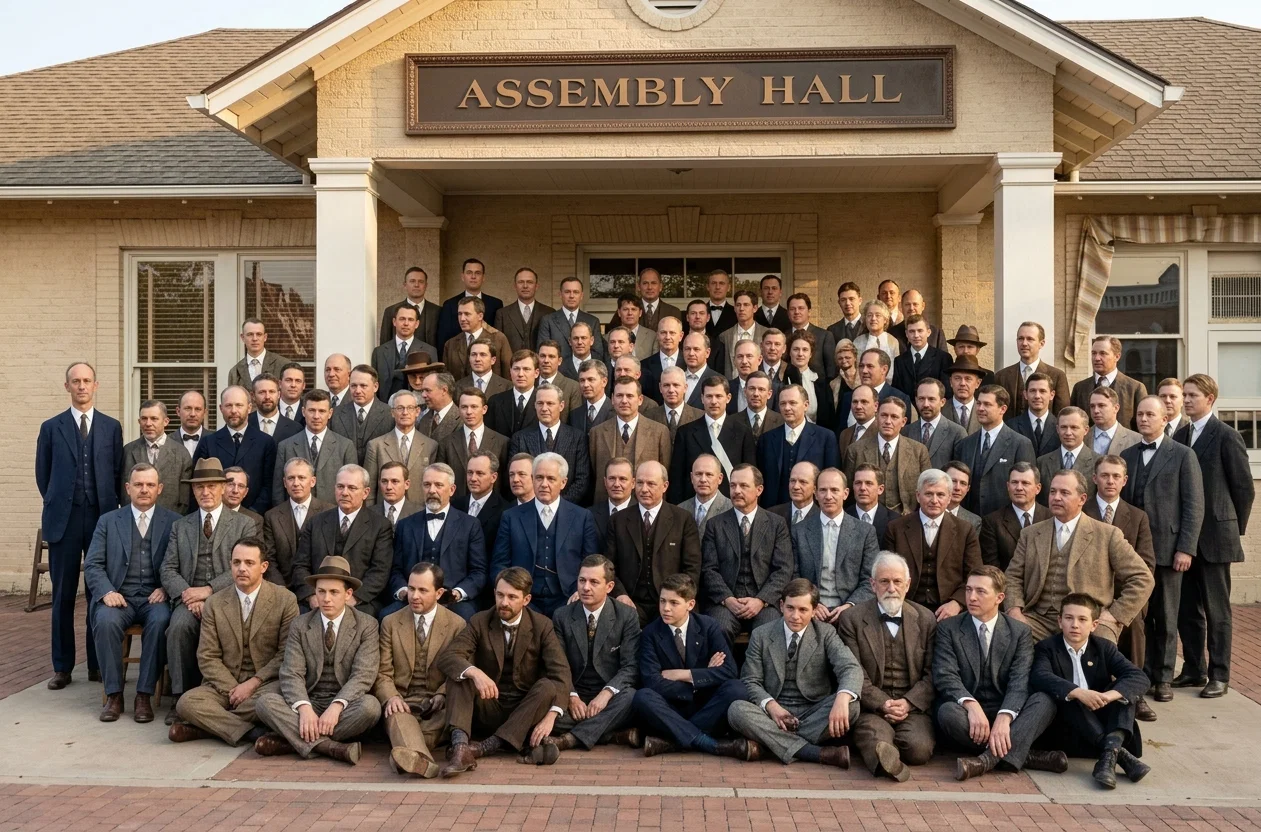
This convention opened at the time appointed, with nearly a full delegation from the five unions supplied by the Pacific Press Publishing Association and its branches. The line of autos awaiting the delegates at the Mountain View station when they arrived were forerunners of the generous entertainment they were to receive at the hospitable homes of not only our own brethren in Mountain View, but of other friends who had kindly opened their doors to them. Brother James Cochran was on hand at the station with introductory compliments from the Pacific Press in the form of a four-dollar meal ticket for each one, negotiable at the Pacific Press Cafeteria. Each delegate was assured that he should not hesitate to ask for a second ticket when the first was finished.
As we entered the hall where our meetings were to be held, we noticed on the wall in large letters the text, “Behold, I come quickly.” This thought and the work to be done in winning souls before the Lord can come, was the keynote of the convention in the consideration of both the colporteur work and the home missionary work. This thought was especially emphasized in the following talk given the delegates by Elder I. H. Evans:—
“I am very glad to be here and see such a good attendance at this bookmen’s convention. I believe that these conventions are doing a great deal of good in many ways, and it seems to me that our leaders should be stronger for this study together during these ten days than it would have been possible had they not met together in this convention.
“But we ought to be careful not to lose sight of the real object to be attained in all our work. We are doing a big work, to be sure. It almost staggers our poor, weak minds to think of how much we are doing collectively. We are breaking all records, and still going on in a progressive way. And surely it is a matter for gratitude on our part. Our people greatly appreciate this, and have confidence in the book department, believing that its work is a splendid success.
“These questions are in my mind often: What is success in this work? What constitutes success? Are money and the aggregate amount of our book sales what we should aim for, the purpose we should keep continually before ourselves and before our people? Or is there a higher ideal, a better objective, than mere finances? If I have any true conception of the object of the work of the book department, it is the winning of souls to Christ; and regardless of the number of books that one sells, or of the aggregate amount, the work is valuable in proportion as it leads poor, lost souls to accept Jesus Christ and to prepare for his coming.
“Now, if we have the monetary viewpoint, we may attain it, to be sure; but I believe we can attain to even a better standard in the number of books we sell if we continually keep in view the true object and purpose of all service. And I believe that every union and field agent ought to keep that burning in his heart continually—that the purpose of this work is to win lost souls to Jesus Christ. I believe that every worker ought to be trained with that idea in mind: that it is not enough to go out and sell books, but there must follow continually in the wake of that selling, a stream of people that are accepting the truth from the ministry of the workers. And if you, brethren, as leaders of this great department of our work, will continually keep before your helpers and assistants this ideal of winning souls to Christ. I do not believe it will lessen the number of books sold. I believe, however, that it will help each agent to be very careful of his words and of his manners. He will be more in prayer and will do far better work.
“Every man ought to have an objective to attain. It is not enough for a hundred men to pool together and say, ‘We will run a big convention this year, and work for large book sales; and then we will look for the results in the distribution that the Lord will make.’ I believe that each man ought to take rifle aim and say, ‘With the help of God, I will bring souls to Christ.’”
“This book department has grown to be a gigantic affair. More men are engaged in this than in any other line of work, unless it is our sanitarium work. A splendid work is being done, but I think we should get a better focus upon the real purpose, and then every man set his heart to bring souls to Christ. That will incite us to prayer. If a man has the true ideal of labor, he will be a man of prayer. His dependence will be upon the indwelling of the Holy Ghost to help him, when he meets persons, to speak in the name of the Lord. This is the power that will enable him to conduct himself in such a way that when he leaves the house, there will have been made an impression upon that family or that person, that can never be forgotten. That memory will be there, and it will be said: ‘I met a man who reminded me of Jesus Christ. His words, his talk, his looks, his manners, were the most impressive of any one I have ever seen. I have in my heart a hunger to meet that man, not because of anything he did, but for the impression that he left behind that he was a man of God.’ If you can put a thousand such men into the field in this country, men filled with the idea, the purpose, the one objective, resolved that every soul they meet shall be impressed with the life of Jesus Christ, I tell you, brethren, the Holy Ghost will follow up such work, and many a poor soul who otherwise would never read what you sell him will, because of the impression made, turn the pages of those books and become impressed with the truth.”
DELEGATES ATTENDING PUBLISHING CONVENTION
“I should like to see our men in the field so carry on their work that whenever a man goes into a region and sells a book, there will spring up a great demand for a minister to come and preach the gospel of Jesus Christ. It seems to me this book department is the forerunner of the ministry. With a thousand men in the field, raising up community interests in the third angel’s message, there ought to be in the wake of this book selling a great demand for evangelistic effort. I think you ought to hold this in mind, and just as soon as you have finished a community, there ought to be a demand for the evangelist to enter that territory and preach more fully the gospel. If we could run our book business in that way, brethren, it would be a mighty power in finishing this work.
“Some of you have a hundred or more men under your direction. You cannot afford to let even a day pass without keeping in close touch with God. You can lose more in one day in carelessness, in one moment of indifference, than you can undo in a long time. I do believe that as union and State men, as bookmen, it is your privilege to expect great things from God. You ought to expect and experience the baptism of the Holy Ghost. You ought never to go out into the field with a hundred men under your influence until you know that the Lord has breathed into your soul the Holy Ghost. You are entitled to it. It awaits your demand and reception. It is the mightiest thing that God can give you. I trust that at the close of this bookmen’s convention every heart will be filled with the great purpose never to go out in the work until God has given the power of the Holy Ghost in the life. With this ideal before you,—that all through your ministry your purpose and aim will be to enlarge the kingdom of God,—you will lengthen the ropes and strengthen everything connected with this work; you will win souls to Christ in prayer, in conversation, in your manners, courtesy, and kindness, under every condition; you will aim only to represent the Master, and the Lord will be with you to the end.”
There was a hearty response to the principles laid down by Elder Evans, and all those who took part in the social service which followed the talk expressed their determination to make the winning of souls the chief object of their work.
The second day of the convention the Pacific Press Publishing Association held its annual constituency meeting. The report of the manager showed that 1914 had been a very prosperous year for the Pacific Press. The balance sheet showed a net gain of $32,144. During the year the Pacific Press also gave to mission fields printing material and machinery to the amount of $2,757. In addition to this it turned over to the North American Division Conference for foreign missions the net gain on the Signs of the Times weekly for the year 1914, amounting to $2,568.
Elder J. N. Loughborough, who has been connected with our publishing work from its very beginning, was present at the constituency meeting, and offered the opening prayer. He could not refrain from comparing the present prosperity of our publishing work with the small beginning in 1849. He showed the delegates one of the original copies of our first periodical, the Present Truth, which Elder James White began to publish in that year.
One of the pleasant features of the constituency meeting was the banquet, spread on the long tables in the bindery. The banquet was prepared by the ladies of the Mountain View church. Over three hundred partook of this annual dinner.
One day, just before adjourning at noon, a gentleman from the city came into our convention and announced to us that we were to enjoy an auto ride in the afternoon, through the beautiful Santa Clara Valley, as guests of the Commercial Club of Mountain View. Twenty-six autos were provided to carry the delegates. The day was ideal, and the beautiful green fields, the flowers, the fruit trees in blossom, and the singing of the birds made the ride very enjoyable indeed.
Before the convention opened, a program relating to the colporteur, tract society, and home missionary work had been prepared. The delegates discussed these questions freely and fully during the convention, and at the close all felt that the meeting had been a very profitable one.
During the past year the Pacific Press Publishing Association has assumed a new responsibility in the purchase of the International Publishing Association at College View. This plant is now a branch of the Pacific Press. Brother J. R. Ferren has been placed in charge of the circulating department. All foreign literature now issued from College View will be furnished through the tract societies, the same as the English publications. The tract society secretaries and field agents at this convention realized as never before the importance of doing more for the foreign-speaking peoples in their fields.
The day following the close of the convention the delegates, together with the employees of the Pacific Press, visited the exposition at San Francisco.
Twenty tract society secretaries, five union agents, and nineteen field agents were present at this convention, also the managers of the three branches of the Pacific Press. Elders H. S. Shaw, G. W. Wells, and J. J. Nethery were also present during the whole time of the convention. If the same earnestness is manifested in the field work throughout the year as was manifested in the discussions during the convention, we shall see large reports from the Pacific Press territory during 1915. N. Z. Town.

Publishing Department

N. Z. TOWN                                     General Secretary W. W. EASTMAN                             N. Am. Div. Secretary

An Important Series of Meetings

The Conditions

The importance of saving and training our young people has often been dwelt upon. “The work that lies nearest to our church members is to become interested in our youth.”
In writing of the necessity of earnest personal labor for the salvation of the young, Mrs. E. G. White once said, “As we view the magnitude of the work, and see how little it is appreciated, we feel like groaning in spirit, and exclaiming, Who will accept these grave responsibilities, and watch for souls as they that must give an account?”
And again, “Very much has been lost to the cause of God by lack of attention to the young.” That there is a great work to be done for and by our young people all who appreciate our situation and work will admit.

The Needs

Earnest efforts are being made by the denomination to change these conditions. Our Sabbath schools are instructing the children and youth in God’s Word. Our schools are endeavoring to give a Christian education to those who attend them. In 1907 the General Conference organized our young people’s work as a separate department of the general work, in order that undivided attention might be given to the great work of reaching and training the raw recruits. The young people have responded nobly to the efforts put forth in their behalf. But a great work remains to be done.
We have an earnest corps of Missionary Volunteer secretaries who carry this burden on their hearts. One writes: “We have some splendid material among our young people here, and I am very solicitous that our cause have the benefit of their talents. My constant ambition is to help these dear young people to gain a deep Christian experience. I am confident that nothing will help them in these days, aside from this. As young people’s workers, we have a great duty along this line. Too many times we are inclined to trust to plans and theory, and neglect to enter into the lives of the youth with the idea of helping them to learn the character of God. There is much artificial religion among many of our people, which, no doubt, has crept in from the worldly churches. My great perplexity is how to counteract this inrushing tide.” Another says: “I love the work [educational and Missionary Volunteer] more than any other in which I ever engaged, and my desire is to be so humble that God can teach me what a tremendous responsibility and privilege it is to work with him in behalf of the young.” Another expresses, I believe, the general sentiment of all when he says, “The coming year must mean more to me and to this department than it has at any time in the past.” These workers feel the weight of this great need, and they long for more knowledge of how to do their work, and for more power.

Proposed Meetings

It is the purpose of the North American Division Conference during this year, to give all these workers for the young an opportunity for study and counsel. First, there is to be a council of the Educational and Missionary Volunteer Departments with a few representative workers from all parts of the field, at which the questions confronting us will be freely discussed and acted upon. Then in order to reach all our educational and Missionary Volunteer workers, it is planned to hold six large conventions. The schedule of these meetings is as follows:—
Educational and Missionary Volunteer Council ............ June 4-14 Pacific Union Convention ............ June 18-26 North Pacific and Western Canadian Union Convention ............ June 29 to July 6 Western Canadian, Northern, Central, and Southwestern Union Convention ............ July 9-17 Lake and Eastern Canadian Union Convention ............ July 19-26 Eastern Canadian, Columbia, and Atlantic Union Convention ............ July 29 to August 4 Southern and Southeastern Union Convention ............ August 6-14
It is hoped that by the blessing of God these meetings will definitely influence for good every child and youth in the North American Division.
A speaker at the Missionary Volunteer Young People’s convention eight years ago, when the Missionary Volunteer Department was launched, said: “Niagara Falls has rolled over that precipice for ages without doing good to any one; recently men have begun to harness its energy, and light and power are being sent throughout the country. God has given the Young People’s Department the work of harnessing the Niagara power that is in our young people, and directing it so as to carry light and blessing to the world that sits in darkness.” The times to which we have come demand that we quicken our pace and push this work as never before.

A Call to Prayer

“The effectual fervent prayer of a righteous man availeth much.” The main purpose of this article is to ask those readers of the REVIEW who have a burden for our young people to pray earnestly for the success of these meetings. As workers for the young people, we feel that we must have more wisdom and more power. Pray that God will clarify our vision, that we may know what Israel ought to do for her children in a time like this. Pray that the plans and policies of the world in educational and young people’s society matters may not count too much in our councils, but that we may understand God’s plans for the Adventist people.
M. E. KERN.

Features of the May Protestant Magazine

THE May number of the Protestant Magazine, just out, contains twenty-one headed articles, besides three pages of brief notes. Two features of this number are a brief explanation of Daniel’s prophecy concerning the Papacy, and a report of ex-President Taft’s story of his visit to the Vatican in 1902. A photographic reproduction of a very significant letter appears in the Picture Section.

A Soft Answer Turneth Away Wrath

“A SOFT answer turneth away wrath.”

Missionary Volunteer Department

M. E. KERN  General and N. Am. Div. Secretary
C. L. BENSON  Assistant Secretary
MEADE MACGUIRE  N. Am. Div. Field Secretary
Continue reading: The Impending Conflict