In our national museum at Washington, there is a cozy room set apart just for the children—the Children’s Room, it is called by the one who planned it, and made it what it is—Dr. S. P. Langley, the honorable Secretary of the Institution. He wished to make it a small, pleasant room, where little children might come, and learn the common, every-day names of curious and interesting birds and fishes, and look at them through cases on a level with their own eyes, and not have to be lifted up, or stretch their small necks in an attempt to “see.” You know that when the small child has done this, it is often very disappointing to read, on the card fastened to a bird’s toes, only a long, hard name that he never heard of, and doesn’t understand, and can’t pronounce to save his life. The secretary, who loves children, thought of all these things, and decided to take the time to fit up a room that should be just such as the children themselves would enjoy.
THE SMALLEST EGG AND THE LARGEST EGG
The Children’s Room is just across from the main entrance, and is a sunny, pleasant place. Its ceiling is painted to represent a vine-clad arbor, and the doors and windows open into a garden where there are real vines and trees, and where, during the long, bright days of summer, real birds sing and build their nests. But even when the outside birds have flown away, there are still live birds under the painted vines,—Redbirds, South American Cardinals, Bullfinches and Goldfinches, Javan Sparrows, Japanese Robins, Mocking-birds, Canaries, and many others. These supply a “chorus of nations,” filling the Children’s Room with happy music.
Around the gilt cages, and a little below them, are the aquariums, both salt and fresh, “so simply and carefully arranged that even the very little child may look and love and wonder from every side; where bright fishes and baby turtles wave and dart and paddle amid feathery green and over pebbly beds.”
Above the low glass cases along the wall are prints and water-color pictures of the specimens arranged below, and these are to be added to year by year.
Albert Bigelow Paine has described this room so well for the readers of St. Nicholas, that we will let him take the children of the INSTRUCTOR family on a little tour among the cases of birds in the Children’s Room:—
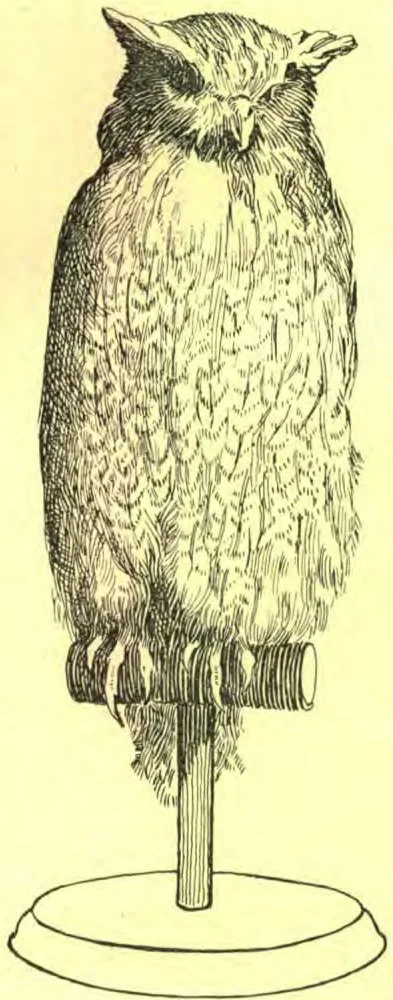
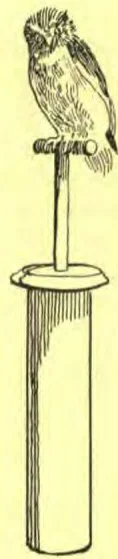
“These cases are arranged as a child would wish them, and he will begin, perhaps, with those on the left as he enters—the cases of birds. At the first of these he will linger. Within are the ‘Largest and Smallest Birds of Prey.’ He will look at the great Condor of the Andes, and the Bald Eagle, and then at the tiny Sparrow-hawk; and he will wonder why these are so big, and that so little, and if the Bald Eagle could whip the Condor in a fair fight. He thinks it likely, because the Condor has blunt claws,—so blunt, the card says, that he can not carry off the big animals he sometimes kills. The Condor is bigger than the Bald Eagle, but he is not so good-looking, and the child does not like him. He likes much better the largest owl, the Great Eagle Owl, who lives in the vast, trackless woods of northern Europe and Asia—a monarch of the far, dim stillness; and if the child is a little girl, she adores the smallest of his race, the tiny Elf Owl.”
THE LARGEST OWL AND THE SMALLEST OWL
“The small observer passes on. ‘Some Curious Birds’ come next, and he must see them, even if he has to come back to the Bald Eagle and the Condor, and the different-sized owls, by and by. He wonders and laughs, too, at the curious birds. Truly they are a funny lot. Some of them have fans that fold. Others have veils, aprons, crowns, lappets, armor, and what not. The Toucan has such an absurd big bill. The Black Skimmer’s flat bill is set the wrong way. A queer Paradise-bird has one tail where it should be, besides two very long tails that are half saw and half feather, and that start from behind his ears. Then there is a row of little Bat-parrakeets, that sleep with their heads hanging down. The child wonders why even from Australia, which has paltry, half-formed feathers, and no wings at all. The child pities the Apteryx—he looks so timid and sorry; and the card tells us he is often killed by dogs, because he can not fly. He is so different from his fine neighbor, the Laughing Jackass, whose expression is always humorous, and who seems always about to make merry.”
“Just below these is a shelf of ‘Bright-colored Birds.’ If the child is a little girl, here she will linger long. The vividly blue Cotinga of British Guiana, the Beautiful—the most beautiful—Parrakeet, the Rose Cockatoo of Australia, the Elegant Minivet, and the Crimson-winged Lory—these she will love and admire. To me the Mandarin Duck seems the gem of this collection—a fowl whose dress is so Chinese in its cut and coloring that one wonders whether he has really imitated the mandarins or they him.”
“And now come the ‘Common Birds of Europe’ and the ‘Familiar Birds of the United States.’ The child has yearned long to see the Raven, the Magpie, the Starling, and the Jackdaw of his story-books, and the English Lark and Robin from which, long ago, our meadow singer and redbreast were named by a people homesick for their own far lands. The Curlew, the Rook, and the Lapwing,—these, too, are among the European birds,—while the Phoebe, the Bittern, the Kingfisher, the Bob White, and the Bobolink are among their American cousins, as well as our own Lark and Robin, not forgetting the beautiful Blue Jay, and the tiny Ruby-throated Humming-bird, so familiar to us all.”
“The child is proud of his own birds. Perhaps he wishes they were more gaudily colored, and wonders why Parrakeets and Pink Cockatoos do not dwell in his own woods and fields. Still, there is the gay Cardinal, and the pretty Bluebird, whose color is like a bit of sky.390
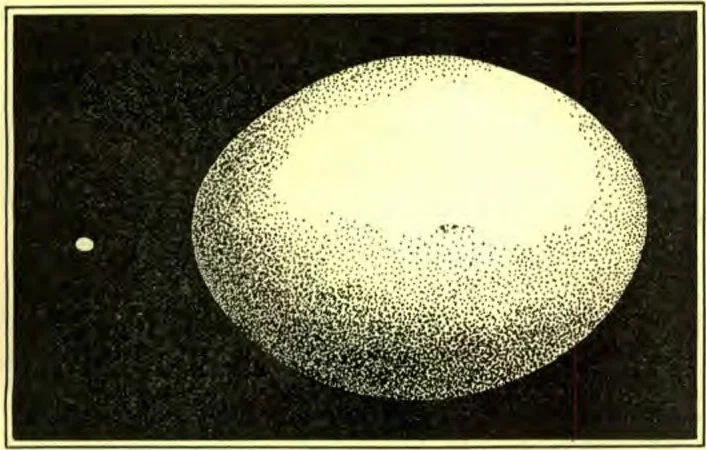
“In the case next to this are ‘Birds with Curious Nests and Eggs.’ The heart of the small observer finds great joy in this case. The smallest and largest eggs in the world, those of the Humming-bird and of the Giant Ostrich, or Aepyornis, of Madagascar, which no longer lives, but whose eggs, that were more than a foot in length, are still to be found.”
“The child ponders long over these eggs. He wonders how many times larger the big egg is than the little one. If he asks, as I did, he will be told that it is about thirty thousand times as big, and he will picture to himself the great bird, as tall as a tree, sweeping over the sands with furlong strides.”
“Within this case, too, are other curious eggs, large and small, including those of the Eagle, the Ostrich, and the great Moa of New Zealand, while among the curious nests the child sees the homes of the Hangbird, the Weaver-bird, and the Tailor-bird. Much and long he wonders how these clever house-builders wound in and out the threads and fibers of their marvelously built homes. But just below there is a nest with eggs. It is not a curious nest, but built in a curious place—in a skull, in fact, and it is the nest of the tiny House Wren.”
“And now, beyond these come the ‘Water Birds,’ the Great Albatross; the King Penguin of the far, white South; the White Egret, hunted for his rare plumage; and the Scarlet Ibis, whose flaming feathers make him a shining mark for death.”
“The child is sorry that these rare birds are killed for their wings and plumes. If a little girl, perhaps she resolves never to wear them. She remembers that birds have little folks, too, and she wonders what becomes of them when the parent bird is shot down, and can never return to them with food.”
“But at the next case these things are forgotten. At the top, instead of a picture, there are a mounted Beaver, and a Lyre-bird, with his tall, magnificent tail. Above the Beaver is a fine spray of peacock plumes, and in the case beneath him a Kite carrying a snake, some Bower-birds with their playhouse, and some Ptarmigans in both winter and summer dress. The child rejoices in the Bower-birds. He has a little book with a picture of them, but here they are at home with their playthings. There are several of them, and he wonders if they have invited in friends to see and play with the pretty shells and colored glass they have found.”
“But the Ptarmigans he can hardly believe real, their winter dress is so snow-white, while in their summer plumage they are so brown and mottled, like a pheasant. Still, the cards tell him they are the same, and though he wonders much, yet he must believe.”
“Then he passes on to ‘How Creatures Hide,’ the Children’s Room name—and a very happy one—for Protective Mimicry. Here are the Leaf Insects, that are so like the leaves about them as to make the observer almost ‘give it up’ before he discovers that some of the leaves open and form wings, while beneath others there lie curious creatures so near in shape and color to their hiding-place that only the sharpest eyes will find them. Nests there are, too, that might well be a part of the limb that holds them; and beneath, in a box of sand and pebbles, are some Terns’ eggs and young. And the young Terns are so like the eggs, and the eggs so like the pebbles, that even after he sees them, he must take a second and a third look to make sure.”
“Before the child goes home, he turns once more to the Song Birds and Darting Fish, and before he goes, he must have one more look at the cases. The Owls, the Swallows, the Night Hawk, and the Whippoorwill—such things as these he has been glad to see at close range. Heretofore they have been to him but as darting shadows, or weird voices from the dusk of evening. He has seen Swallows circling about the
THE CHILD TO THE WATERS
By Elizabeth Rosser
“O, WHERE do you come from, Ocean wide,
With white-capped waves and restless tide?”
“All the wide Rivers run to me—
That’s where I come from,” said the sea.
“O, where do you come from, River deep,
Whose waters neither rest nor sleep?”
“A tiny Streamlet forms my head;
That’s where I rise,” the River said.
“O, where do you come from, tiny Stream,
Whose dancing ripples glint and gleam?”
“I grew from a thousand little Rills
That gathered the Raindrops from the hills.”
“O, where do you come from, pattering Rain,
A-sprinkling roof and window-pane?”
“We fell from the Cloud up in the sky,”
The pattering Raindrops made reply.
“O, where do you come from, great, dark Cloud,
With lightning flash, and thunders loud?”
“I rose from the Ocean’s bosom wide—
That’s where I came from,” the Cloud replied.
ELIZABETH ROSSER.
Curious Birds and Their Odd Attachments
the blood doesn't run to their heads, and how the Umbrella-bird can see through the thick tangle of his head-covering. Almost all the Curious Birds have funny attachments, something they don't seem to need—all except the poor Apteryx
CURING OF ONE DEAF AND DUMB
By W. S. Sadler
INTRODUCTORY
Preceding Events.—Principal events in the Saviour’s life since the raising of the widow’s son at Nain:—
John the Baptist’s last message to Christ. Luke 7: 18-35.
Anointing of Jesus in the house of Simon the Pharisee. Luke 7: 36-50.
Christ goes on a preaching tour accompanied by the twelve, Mary Magdalene, and others. Luke 8: 1-3.
Bible Story of the Miracle.—“And he cometh into a house. And the multitude cometh together again, so that they could not so much as eat bread. And when his friends heard it, they went out to lay hold on him; for they said he is beside himself. Then was brought unto him one possessed with a demon, blind and dumb; and he healed him, insomuch that the dumb man spake and saw. And it came to pass, when the demon was gone out, all the multitude were amazed and marveled; and said, Can this be the son of David? But when the Pharisees and the scribes that came down from Jerusalem heard it, they said, This man doth cast out demons, but by Beelzebub the prince of the demons; he hath Beelzebub, and by Beelzebub the prince of the demons casteth he out the demons. And knowing their thoughts, he called them unto him, and said unto them, in parables, How can Satan cast out Satan? Every kingdom divided against itself is brought to desolation: that kingdom can not stand. And every city or house divided against itself falleth: that house will not be able to stand. And if Satan hath risen up against himself, and casteth out Satan, he is divided: how then shall his kingdom stand? Because ye say that I cast out demons by Beelzebub. And if by Beelzebub I cast out demons, by whom do your sons cast them out? Therefore, shall they be your judges. But if I by the Spirit of God cast out demons, then is the kingdom of God come upon you. When the strong man fully armed guardeth his own court, his goods are in peace; and no one can enter into his house and spoil them, except he first bind the strong man, but when a stronger than he shall come upon him, and overcome him, he taketh from him his whole armor wherein he trusted, and then he will spoil his house, and divide his spoils. He that is not with me is against me, and he that gathereth not with me scattereth.” (The foregoing is an interwoven story, in the exact language of the Bible, taken from Matt. 12: 22-30; Mark 3: 19-30; and Luke 11: 14-23.)
Place.—Uncertain; perhaps Capernaum.
Circumstances.—The working of this miracle is recorded in connection with the warnings and instructions which Christ gave to the Pharisees. Luke 11: 18-35. It was after Christ’s second circuit of Galilee. Many things of importance had occurred between the working of this miracle and the preceding one of raising the widow’s son, among which was the imprisonment of John the Baptist. Christ’s enemies utilized the occasion of working this miracle to charge the Son of God with casting out devils by the power of Beelzebub, the prince of devils.
Great Lesson.—Miracles of healing must be tested and judged by the flavor of the spirit in which they are worked, and the teaching that accompanies them. The wonder-working of Satan can not be flavored with the divine Spirit. A spirit of genuine repentance and loyalty to truth will pervade the atmosphere of all true healing.
STUDY OF THE MIRACLE
By Beelzebub the Prince of Devils.—The Pharisees accused Christ of casting out devils by the power of the prince of devils. Christ refuted the accusation by relating the story of the strong man of the house, who would not have suffered his house to be broken into; also by the self-evident statement that a power arrayed against itself can not stand. It is not merely the name of Christ that casts out devils: it is the power and influence attendant upon his character. There is restraining power in the influence of a well-balanced and holy life, and that power exerts an influence to the extent that it will cast out evil spirits from those who have them, or else it will send forth from its presence those who cling to the evil spirits.
First Bind the Strong Man.—Every soul bound by sin, by the strong man, that has been liberated by the power of the gospel, is an instance of the casting out of Satan. It is evidence that Christ has power to cast out devils; to enter the prison-house of sin, and liberate its captives. Christ thus calls attention to the fact that the prisoners of sin can not be liberated until the strong man, the jailer, Satan, is first bound. The devil does not have power to heal real diseases; for healing demands creative power. Neither will he be found casting himself or his agents out of the human heart where he has gained control.
W. S. SADLER.
A Child's Visit to the Bird Museum
chimney at nightfall, diving in one by one, and he has heard them cuddling cozily together at bedtime. Now for the first time he knows just how they look, just how they build their nests, and how they cling to the rough brick with feet that are set too far back on their bodies for them ever to perch on a limb without toppling over.
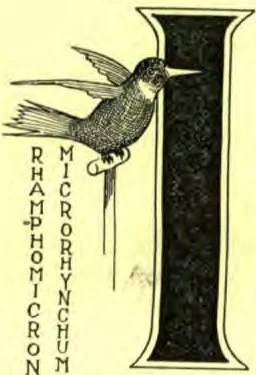
“And when the child does go home at last, it is with knowledge and the love of knowledge in his heart. He is happy, and, because his wonder has been aroused, he has learned. Unless he is a very small child, he has been able to read the large, clear type of the simply worded labels, on which, with one exception, there are no Latin names. The exception is made in favor of a very small Humming-bird, which bears bravely his technical title, Rhamphomicron microrhynchum, left by Dr. Langley as the best explanation of why he has not retained the others. Of all the rest, only the common names are given; and where no common name exists, a literal translation of the Latin name is made. All the labels the child has been able to read, and he is not wearied, and has not been puzzled nor confused.”
Christ's Patient Fidelity Without Applause
“CHRIST knew what monotony meant, and fidelity without applause,— the patience of the plow, the constraint of the yoke.”
THAT I MAY RECEIVE MY SIGHT
By Mabel Earle
If I could lift mine eyes this hour, and see
Thy face above me, patient while I pray,
How different all this prayer of mine would be,
How deep and real the words my lips would say!
If I could see thee walking at my side,
How would my feet make haste to work thy will,
Untiring in their speed, till eventide
Folds down the shadows over field and hill.
If so I might behold thee close at hand,
What love and joy about each task would cling,
What sudden light would flood the waiting land,
And all my winter waken into spring!
Thou hast not shut us from thy face, to beat
Against a fast-barred door with tears and sighs;
Nay, close as one of old I clasp thy feet,
I who am blind; Lord, open thou mine eyes!
— Mabel Earle.
1. What parables are recorded in the fifteenth chapter of Luke?
2. Which one of these had been given before?
3. Where was Jesus when he first gave this parable? and to whom was it spoken?
4. Where was he when he gave it the second time? See outline in INSTRUCTOR of December 7.
5. What caused the Saviour to repeat this parable?
6. To whom was it spoken?
7. When the Pharisees complained because Christ received sinners, of what did they show themselves to be ignorant?
8. If, however, one of them had lost a sheep, what would he have done?
9. What kind of character has a man who will do more for his sheep than for his neighbor?
10. What lost sheep was Christ seeking at this time?
11. What is there in the lesson to show that he was finding the lost?
12. In the parable, what did the shepherd do when he had found his sheep? What, then, was Christ doing when he ate with the publicans and sinners?
13. What effect did this have upon the Pharisees? What effect does such work have in heaven?
14. How did Christ further illustrate his work for the lost?
15. In this parable who lost the silver? Where was it lost?
16. What efforts were put forth to find it?
17. The woman used a candle and a broom: in what condition must her house have been?
18. What candle has God given us to use? See margin of Ps. 119:105. What will this candle do for our house if we use it? John 15:3.
19. This parable, therefore, teaches us to use what means in seeking the lost?
20. What did the woman do when she found her silver? Of what similar rejoicing should we partake? Who else will rejoice with us in this happiness?
21. These two parables represent different classes: in the one, that which is lost knows it. Which parable is this?
22. In the other, that which is lost knows it not. Which parable tells this story?
23. Which was lost far away? Which close at hand?
24. Which required diligent search to be recovered?
25. For whom, then, has the parable of the lost drachma a special lesson?
SELECTED PARAGRAPHS
1. The wide-spreading table-lands on the east of Jordan afforded abundant pasturage for flocks, and through the gorges and over the wooded hills had wandered many a lost sheep, to be searched for and brought back by the shepherd’s care. In the company about Jesus there were shepherds, and also men who had money invested in flocks and herds, and all could appreciate his illustration.—“Christ’s Object Lessons,” pages 186, 187.
2. It was taught by the Jews that before God’s love is extended to the sinner, he must first repent. In their view, repentance is a work by which men earn the favor of heaven. And it was this thought that led the Pharisees to exclaim, in astonishment and anger, “This man receiveth sinners.” According to their ideas he should permit none to approach him but those who had repented. But in the parable of the lost sheep, Christ teaches that salvation does not come through our seeking after God, but through God’s seeking after us. . . . We do not repent in order that God may love us, but he reveals to us his love, in order that we may repent.—Id., page 189.
3. The rabbis had a saying that there is rejoicing in heaven when one who has sinned against God is destroyed; but Jesus taught that to God the work of destruction is a strange work.—Id., page 190.
4. Those only who, by prayer and watchfulness and love, work the works of Christ, can God rejoice over with singing. The more fully the Lord sees the character of his beloved Son revealed in his people, the greater is his delight in them. God himself, and the heavenly angels, rejoice over them with singing.—Review, Aug. 24, 1897.
World Population Estimate by Continent
THE latest estimate of the population of the world gives a total of 1,479,729,400 persons, divided as follows: Europe, 357,379,000; Asia, 825,954,000; Africa, 163,953,000; the Americas, 121,713,000; Australia, 3,230,000; Oceanic Islands, 7,420,000; Polar Regions, 80,400.
Subscription Renewal Notice, December 1901
By Editor
DECEMBER, 1901
If the yellow address-label on first page of this paper, or on the wrapper, bears this month and year (John Brown 2/05), it indicates that the following blank should be filled out by you now, and mailed to the Review and Herald, Battle Creek, Mich., before the end of this month:—
Name, ........................................
Post-office, ..................................
Street, ........................................
County, ........................................
State, ..........................................
Inclosed find $...... (money-order, express order, registered letter, or bank draft), for which please send....copies of the YOUTH'S INSTRUCTOR....months to above address.
P. S.—If you object to clipping this out of your paper, or wish to forward other subscriptions, please write names and full addresses on a separate sheet, stating amount inclosed for that purpose.
Ladies Wanted to Work on Sofa Pillows
LADIES WANTED to work on SOFA PILLOWS. Materials furnished. Steady work guaranteed; experience unnecessary. Send stamped envelope to Miss S. McGee, Needle Work Dept., Ideal Co., Chicago, Ill.
GRAND TRUNK R'Y. SYSTEM.
Taking Effect June 2, 1901.
Trains leave Battle Creek.
WEST-BOUND.
No. 9, Mail and Express, to Chicago 12.15 P. M.
No. 7, Limited Express, to Chicago 7.00 A. M.
No. 1, Chicago Express, to Chicago 9.25 A. M.
No. 3, Lehigh Valley Express, to Chicago 3.50 P. M.
No. 5, International Express 2.17 A. M.
No. 75, Mixed, to South Bend 7.30 A. M.
Nos. 9 and 75, daily, except Sunday.
Nos. 1, 3, 5, and 7, daily.
EAST-BOUND.
No. 10, Mail and Express, East and Detroit 3.45 P. M.
No. 8, Limited Express, East and Detroit 4.50 P. M.
No. 4, Lehigh Express, East and Canada 8.22 P. M.
No. 6, Atlantic Express, East and Detroit 2.10 A. M.
No. 2, Express, East and Detroit 7.00 A. M.
No. 74, Mixed (starts from Nichols yard) 7.15 A. M.
Nos. 10 and 74, daily, except Sunday.
Nos. 4, 6, 8, and 2, daily.
W. C. CUNLIFFE, Agent,
BATTLE CREEK.
A Book for the Children and a Book that Children Love
By Adelaide Bee Cooper
Easy Steps in the Bible Story
By ADELAIDE BEE COOPER.
The minds of children turn as naturally to the stories of the Bible as a lily to the sun. They never tire of hearing of the wonders of Creation Week, of the incidents of the Flood, and the building of the Tower of Babel, and of the lives of Abraham, Isaac, and Jacob. And Joseph—what mother does not hear again and again from childish lips the request, “Tell me ’bout Joseph”?
“Easy Steps in the Bible Story” gives all these and other narratives reaching from Creation down to the time when the Law was spoken on Mount Sinai. The stories are told in simple words that the children can understand, and the pictures help make the meaning still more plain.
Do your children have this book? If not, make them happy by giving them a copy. If they do, encourage them to present it to some little friend. In these days when the market is flooded with children’s Bible stories that are filled with teaching that strikes at the very foundations of Christian belief, the placing of this book in the hands of the little ones may be the means of forming in some childish mind an idea of the events of Creation Week that neither time nor later teaching can wholly efface.
“The best of all Bible books for children,” —ALONZO T. JONES.
AGENTS WANTED EVERYWHERE.
Price: Bound in cloth, 50 cents; in paper, 25 cents.
Order of your State Tract Society; Review and Herald Pub. Co., Battle Creek, Mich.; or Pacific Press Pub. Co., Oakland, Cal.
SENT FREE
By E. J. Worst
Read Special Offer Below.
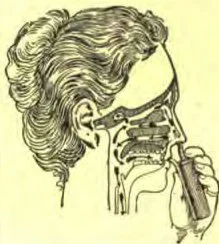
THE CO-RO-NA MEDICATOR.
A natural evolution from E. J. Worst’s famous Catarrh Inhaler that has won a world-wide reputation. It is made of Nickel, and will last a lifetime; is so compact it may easily be carried in a vest pocket or reticule.
CATARRH.
Don’t take medicine into the stomach to kill germs of Catarrh in the head. If you will only stop and think for a moment, you will certainly realize that the germs of disease were carried into your head by air, and that air is the only agency that will carry a medication to the diseased passages capable of destroying such germs. Catarrh, Colds, Pains and Roaring in the Head, Bronchitis, Sore Throat, Headache, Partial Deafness, La Grippe, and all diseases of the air passages yield as if by magic to treatment with the Co-ro-na Medicator. Science and common sense can offer no improvement upon this little pocket physician. It is simple in construction, and may be used anywhere and at any time. It is the only positive cure for the diseases named. I make it easy to prove this beyond all question by the following remarkable
SPECIAL OFFER.
For a short time, I will mail free to any reader naming this paper one of my new Scientific Co-ro-na Medicator, complete, with medicine for one year. If it gives satisfaction, send me $1.00; if not, return it after three days’ trial. Could any proposition be fairer?
E. J. WORST, 112 Elmore Block, Ashland, O.
NOT SOLD BY DRUGGISTS. AGENTS WANTED.
A PRESENT OPPORTUNITY
THE general movement in the conferences just now in selling “Christ’s Object Lessons” furnishes one answer to the question raised by many of our young people: “What can we do, as members of our organized companies, to help sound the warning message which it is our avowed aim to give?” At this season of the year there are hundreds of persons who are considering what they shall buy for some friend for a holiday gift; and many of these will decide in favor of “Christ’s Object Lessons” if this book is intelligently, enthusiastically, and winningly presented to them. This is a work that many of our young people are already doing, and that many more might do.
As an encouragement to those who are young and strong to take it up, we would mention the case of an aged sister in Seattle, Wash., who is selling “Christ’s Object Lessons.” She is over eighty years old. Speaking of her experience in selling the book, she says: “You would be surprised to know what good success I have in canvassing. While it is always a cross to enter a strange house, I have felt that I was doing the Lord’s work, and have had some rich experiences. I am in excellent health; the out-door exercise keeps me well.”
In order to tell others about the book, one must read it himself. If this is slowly and thoughtfully done, the helpful, comforting, and inspiring thoughts of the author as she dwells upon the parables of Jesus, will inspire him with a desire to have others read it, that it may be to them, as to him, a real blessing.
Then, aside from this, he will have the satisfaction of knowing that every book he sells will lift just one dollar and twenty-five cents on the debts that hang over our schools, and bring a little nearer the glad day when they shall stand free from any such incumbrance. This is a work that can be done to the very best advantage now.