CAPE COAST CASTLE.—Our native boy is learning to read the Bible, and he asks many questions about Jesus, heaven and the angels. He takes the opportunity to talk to the boys and tell them what he has learned about Jesus. He calls it “preaching.” The boys think it wonderful that he can tell so much about the Bible, when they know so little.
To-day (Sunday) he went home. I let him have one day of the week to go home and visit his people. He went down to the beach, that being his place of “preaching,” and gathered the boys together, and began to tell them about the commandments, and that the seventh day is the Sabbath of the fourth commandment, and where they would find it in the Bible.
The boys were very anxious to see if he was telling them the truth, so in the midst of his talk they ran home for their Bibles, and found that what he had said was true. Then they told him he had17done well, for it was true. His older brother confirmed what he had said, and they were speechless. I do not send him to school, but teach him at home. He has not been with us a year. When he came, he was weak and sickly. But his healthful way of living has made him a different boy. He has become strong and healthy, and is gaining in flesh. He did not know his alphabet, and could not speak a word of English; but now one would not know he was a Fanti boy, from his speech.
Within the last three months he has become a Christian, and prays like one who has been long in the way. It makes one's heart rejoice to see how he grows in the things of God. Last Sunday he told me he was going to work hard for God, and get names of people and pray for them until God had made them Christians. He came home with the names of sixteen persons, some of them men. He seems very glad over his work for Jesus.
My heart is in the work, and especially in that in Africa. Pray that God may bless the seed sown.
MRS. M. E. HYATT.
David Livingstone’s Early Life
At ten years of age a certain boy began to work in a cotton factory. His hours were from six in the morning to six at night. Out of the first week's wages he bought the “Rudiments of Latin.” At sixteen he could read Virgil and Horace. Then he went to the university. Then he became a missionary and a blessing to hundreds of degraded heathen. He died in Africa, but was buried in Westminster Abbey. His name was David Livingstone.—Morning Light.
Bible Distribution Among Japanese Soldiers
BIBLE distribution among the wounded Japanese soldiers grows in interest all the time. Mr. Loomis, of the A. B. S., writes that the war department has authorized Bible distribution among them, and the soldiers are glad to hear and read about Christianity. All experience of the power latent in the Scripture gives assurance that this work is the sowing of seed which is certain to bring forth much fruit; for, as Mr. Bell (A. B. C. F. M.) says, “Touch the soldiers, and you touch Japan.”
Work in North Carolina
By Horace G. Miller
I HAVE been selling “Coming King” and “Story of Daniel,” and my sales for the year have amounted to $613.45.
For ten years before coming here I canvassed in Iowa, the Dakotas, and in Kentucky, and I can truthfully say that I would rather canvass here than in any of the other States.
I find it a very needy field. I have worked mostly in the country, and have found very few who had any of our books. Most of the people have simply heard of us, but have neither read our books nor heard any of our ministers preach.
The people are very kind and hospitable, and the canvasser is treated as a visitor, and not as a pedler. Nearly all profess faith in the Bible, and belong to some church. During my last year's work not one has said in my presence that he was an infidel. Profane language is almost as rare.
If any of my dear brethren or sisters in the North are looking for a needy field where they will be welcomed by the people, I would be glad to hear from them, and to write more specifically of the needs and advantages of North Carolina. My post-office address is Mooresville, N. C. This is new territory, many counties having never been entered by any of our workers.
Besides selling books, I have given away and sold many papers, prayed and sung with the people, leaving results with the Lord.
HORACE G. MILLER,
State Agent.
Hayti
By Henry Williams
I THANK our Heavenly Father for his mercies of the past year toward us, and am grateful for the kindness of the Mission Board in sending us copies of readings for the week of prayer just in time so we could observe it at the time when it was observed by our brethren in the States. As it was not convenient for the sister and her children who join with us on the Sabbath, to meet with us during the week of prayer, I gave her a copy of the readings. I also sent a copy to a lone sister thirty miles across the sea on the Spanish part of the island. The important and interesting readings and the solemn exercises in drawing closer to the Lord during this special occasion have greatly helped us to consecrate ourselves anew, and have brought blessings to our hearts, with fresh enthusiasm to begin a new year in the service of the Lord, witnessing with greater zeal for the truth.
I used to say that it was a strange providence that permitted us to come to this country with its strange customs, to suffer as we have; but day after day as I realize the calling which we are filling, I am satisfied that we were not brought here without a cause. Just at this moment as I am penning these lines, Michel Nord Isaac, a native schoolmaster, comes into the room, and finding me writing, asks to be excused for interrupting me, but wishes me to be kind enough to listen to him for a while. I quit my writing, when he begins by saying: “I am a member of the Wesleyan chapel, but it is not man that I am serving. I am seeking for truth, so that I can serve God and do his will by the help of the Holy Spirit, and daily I pray for guidance to the path of truth; and I have come to tell you that the Spirit has brought me the truth of the Sabbath and baptism to my mind; that I am convinced of my error in keeping Sunday as the Sabbath, and have come to inform you that yesterday (Saturday) I kept my first Sabbath with my students that board with me; and will you allow me to worship with you on the Sabbath?’” Since listening to such an unexpected experience of victory for the truth, I am full of joy. He desires baptism as soon as possible. This young man keeps a high school, he is well informed, and a good speaker. He has begun to hold open-air preaching as leader of a society of young men calling themselves the Salvation Army. He has lately purchased a few numbers of our French Signs. I loaned him Elder D. T. Bourdeau’s pamphlet on baptism. It is the only French work of our faith that I could give him to read. He is more earnest now to fulfil the demands of the truth than when he was converted to Wesleyanism. Is not the conversion of this educated Haytian to the truth a blessed New-year’s gift to the cause in this part of the vineyard?
HENRY WILLIAMS.
Mexico
By George M. Brown
TACUBAYA.— The week of prayer was a season of blessing to the believers in this field. Professor Caviness had charge of the daily services in Mexico City, and I had the privilege of being with the brethren and sisters at Guadalajara.
The Spirit of the Lord was present in all our services, and we were favored with the counsel and labors of Elder I. H. Evans, who was at that time in Mexico as the representative of the General Conference Committee, to prepare a statement of the Guadalajara Sanitarium business.
At the time of our visit the patronage of the sanitarium was light, but recent letters from the brethren there tell me that they are now having a good run of business, and that the medical mission for the poor is crowded.
Brother Harzman has recently returned from a two months' trip through the State of Veracruz. He spent four weeks in Jalapa, where his sales amounted to fifty-eight dollars, one week in Coatepec, where he took in eighteen dollars, and three weeks in the city of Veracruz, where he disposed of fifty-four dollars' worth of literature.
While selling papers on the street in Veracruz, a fanatical Catholic tore up the paper he had bought, as soon as he saw it was Protestant, and began to warn the people against it, but this only served to increase our brother's sales, for the efforts of the opposer attracted attention, and the people stopped to see what was the matter. On that spot Brother Harzman sold five hundred papers.
We need more colporteurs to enter the doors that are open everywhere. I trust that our brethren have already said by their liberal annual offerings that Mexico shall have at least two more good colporteurs to put in the field. We have consecrated men here on the ground who are ready to go when we have the means to send them.
Never before have we had so many really interested readers as now. Now is the time to scatter the printed page in Mexico. We pray that God will place a burden upon souls to help us push this work just now.
GEO. M. BROWN.
The Old Battle Creek College
By I. H. Evans
The old Battle Creek College has held a very dear place in the hearts of God's people. For it they have toiled and sacrificed and prayed for many a long year. To it they have sent sons and daughters to be educated for the Master's service. Some of these have received an impetus toward a higher and better life while gaining a training for service in the cause of God. Many of the leaders in the third angel's message to-day received their training there. Missionaries in foreign lands, presidents of conferences, business managers, editors, doctors, and many a layman can look back to that institution, and say, That is my alma mater. And few are they who have thronged its halls, and sat in its lecture rooms, and imbibed the principles of its instruction, but are the wiser and better for the influences it has exerted upon their after-lives. What prayers, laden with burning heart-desires, have gone before the mercy-seat in its behalf! What nights of wrestling with the Lord, what days of anxious watchfulness in behalf of some wayward son or daughter, has the guardian angel beheld within its doors!
Once Battle Creek College was all the educational institution the denomination had. It was all we needed. As it was our eldest offspring, it entwined its tendrils about the heart of every loyal Seventh-day Adventist in its early18history. It long had the watchful guardianship of the General Conference.
But the cause grew apace; the soldiers trained under its discipline marched into the regions yet unentered, and there erected the banner of the third angel's message. Believers increased; new conferences were organized, and other schools were needed and built. No longer the only school among our people, Battle Creek College must take its place as one among sister schools.
Its location, too, was favorable when first erected. Battle Creek was then only a small rural town. There was plenty of open field, with woods, sunlight, and fresh air; but the town became a city, and buildings were erected on every side of the old college campus. No longer was this a rural college; for on every side were there the dwellings of men. Two of the largest sanitariums in the world, bringing thousands of invalids to its very door, were but just across the street from its campus. Thus wealth, luxury, and idleness were on every hand, wielding a strong influence to destroy the taste of the student for simplicity, and unfit him for the struggles of after-life.
It was strongly urged that the country was the place for schools of training, where the student would not be exposed to the temptations of city life. The agitation for moving out of Battle Creek increased. “To the country with our schools!” became the cry. Difficulties in the election of the board of trustees gave evidence to many of the need of an immediate change in the organization. No buyer being in sight, a blanket mortgage was placed upon all the property of the old Battle Creek College, ostensibly to protect the creditors, but really to secure a sheriff's sale of the property, and to bring to an end the old stock company. Before the mortgage matured, and the sale took place, a corporation was formed which had no capital, called the International Medical Missionary Training-school Association, and whose sole object of existence was to purchase the college property, and secure funds from the people to pay for the same. As rapidly as this association paid for the property, the property was to revert to the International Medical Missionary and Benevolent Association; so when the International Medical Missionary Training-school Association paid for all the property, it would lose its possession of the same, while the International Medical Missionary and Benevolent Association would become its possessor, although never having paid a dollar for the same.
During this time the creditors of the Seventh-day Adventist Educational Society having, almost to an individual, assigned their notes against that corporation to the International Medical Missionary Training-school Association. The International Medical Missionary Training-school Association was thus enabled to make the purchase of said college property, paying therefor the obligations owing by the old Seventh-day Adventist Educational Society. It will be plainly seen that the International Medical Missionary Training-school Association bought the college property, paying therefor all the old Educational Society's notes and accounts, which had now increased from a little less than $75,000 to over $82,000 at the time of the sale.
The money from “Object Lessons,” the Missionary Acre Fund, and various other donations, reduced the debt from $82,000 to nearly $53,000. But the board of managers of the International Medical Missionary Training-school Association gave notes, called notes of equity, to the Seventh-day Adventist Central Educational Association, also known as the Berrien Springs school, so that the auditor's report for Dec. 31, 1904, shows a total indebtedness of $92,676.17. The indebtedness had been increased from $75,000 before the transfer was thought of, to $92,676.17 on Jan. 1, 1905.
The International Medical Missionary Training-school Association, finding itself embarrassed financially in carrying such a load of debt, presented to the General Conference Committee in council at College View, Neb., Sept. 15-25, 1904, through its president, Elder A. T. Jones, a statement of the association's inability to carry out the duties taken upon itself, and asked that the council take under consideration the situation, and advise the officers of the International Medical Missionary Training-school Association what they should do to meet their obligations.
The whole matter was referred to the standing committee on finance. This committee submitted to the council a number of recommendations, which were unanimously adopted. A portion of the report reads as follows:—
“Your committee, to whom was referred the statement of the president of the International Medical Missionary Training-school Association, of Battle Creek, Mich., concerning the affairs of that association, and the request for counsel concerning its obligations and its future operations, would most respectfully submit the following:—
“Whereas, It was thought advisable in the winding up of the affairs of the old Seventh-day Adventist Educational Society of Battle Creek, Mich., to create a corporation known as the International Medical Missionary Training-school Association, that should assume the responsibility of its affairs; . . . and,—
“Whereas, The trustees of the International Training-school Association are not able to handle the obligations of said association under the existing conditions; therefore, we recommend,—
“1. That the present arrangement between the International Medical Missionary Training-school Association and the International Medical Missionary and Benevolent Association for the lease and final disposal of the property known as the Battle Creek College property be immediately cancelled by mutual agreement between the trustees of the two associations.
“2. That the property known as the Battle Creek College be sold to the General Conference Corporation for its debts, after certain obligations have been cancelled as hereinafter provided.
“3. That the following be the basis in the adjustment of the claims between the Seventh-day Adventist Central Educational Association [the Berrien Springs corporation] and the International Medical Missionary Training-school Association:—
“(a) That the Seventh-day Adventist Central Educational Association surrender to the International Medical Missionary Training-school Association all equity notes that it holds above $5,000.
“(b) That all other accounts and notes than the above as existing now, between the respective associations, or between the associations and their creditors, be considered bona fide.
“(c) That the General Conference Corporation, on receiving title to the old Battle Creek College property, shall pay in cash $2,500 to the Seventh-day Adventist Central Educational Association to apply on the $5,000 equity note, the balance of said note to be paid at such time as will be mutually arranged.
“4. That the dormitories known as South Hall and West Hall, and the adjacent cottages, and a portion of the north part of the college campus, be sold, provided a reasonable price and proper conditions can be arranged.
“5. That the college building be rented for the use of the American Medical Missionary College at such a rental as will cover taxes, insurance, and repairs, provided it appears that the college is so conducted that this can be done consistently.
“6. That the money needed to meet the obligations, and not provided for in the ways suggested above, should be raised by means of the Missionary Acre Fund, and such other means as the General Conference may devise.”
Oct. 25, 1904, the trustees of the International Medical Missionary Training-school Association met in legal meeting, and voted that its officers should execute to the General Conference Corporation of Washington, D. C., a clear title to the Battle Creek College property on condition that said General Conference Corporation would assume all the liabilities of the International Medical Missionary Training-school Association.
This was promptly done by said officers of the International Medical Missionary Training-school Association, and on Feb. 1, 1905, the trustees of the General Conference Corporation accepted said deed, and assumed the liabilities of said International Medical Missionary Training-school Association to the amount of $43,071.83. It expressly excluded all the equity notes given to the Seventh-day Adventist Central Educational Association aggregating $38,733.91, except the $5,000 before mentioned. It also excluded the $15,870.43 owing the old Review and Herald Publishing Company. The latter is a bona-fide obligation, and may have to be made up to the Review and Herald Publishing Association of Washington, D. C., later.
The old Battle Creek College property is now in the possession of the General Conference Corporation, and the said corporation has assumed the liabilities mentioned above. It is the purpose of the General Conference Committee that those who have loaned money to the college in good faith, shall be protected.
It is hoped to realize something from the property in rental to assist in meeting the interest, taxes, and insurance from time to time. But it is clearly to be seen that money must be raised by donations to help meet these obligations when the brethren have need of their money.
To provide for this necessity the General Conference Committee voted that a fund should be raised by means of the19“Missionary Acre.” Some years ago this source of revenue yielded several thousand dollars per annum. Conditions changed, and those who were glad to help felt that it was not right to appropriate their money for the purpose for which it was raised. Many thus held these funds till such a time as they could see that the situation had cleared up. We believe the cloud has risen, and the sunlight of good sense and a safe policy has been reached, where all can co-operate in faith and good cheer. The General Conference should be a pledge to all, of the proper use of all funds entrusted to its watch-care, and a safeguard to the interests of each individual.
It is requested that those holding notes against the International Medical Missionary Training-school Association will not press their collection, but rather allow the General Conference Corporation time to get the funds from the “Missionary Acre Fund.”
There may be many who can and will gladly cancel any accrued interest on their notes, while some may be able even to donate a part or all of the principal. If any will do this, the General Conference Corporation will greatly appreciate the donation, and it will be a help in starting the winding up of this affair.
We desire to request any who have missionary acre money on hand, and now feel ready to appropriate the same, to send it at once to the treasurer of the General Conference.
We believe our people will gladly take hold of the missionary acre idea, and at once plan to set apart this coming season a certain field or parcel of land for the Lord.
While these obligations are distressing, they were not contracted by the present management, but are a heritage from the past.
The plan is to lease the buildings subject to sale, and to place all the property, save the college building, on the market, and sell as soon as a purchaser can be found.
We ask the hearty and sympathetic co-operation of our people to help us fulfil these obligations, and thus have one thing more free from debt.
I. H. EVANS.
The Annual Meeting of the Pacific Press Publishing Company
THE Pacific Press Publishing Company held its first general meeting in Mountain View, Cal., January 23. Coming at the close of the Bookmen's Convention and the meetings of the Pacific Union and California Conference Committees, there was a good attendance and much interest. There was a deficit during the last eight months, the length of the last fiscal year, consequent upon moving from Oakland; but there was a spirit of hope and courage that, in our new home, with new and more effective organization and facilities, and especially the blessing of God, there would be success in the year to come. The following board of directors was elected: M. C. Wilcox, E. A. Chapman, C. H. Jones, W. B. White, M. H. Brown, H. H. Hall, A. O. Tait. This board was subsequently organized as follows: President, M. C. Wilcox; vice-president, C. H. Jones; secretary, B. R. Nordyke; treasurer, E. A. Chapman; auditor, J. J. Ireland. The working forces were organized as follows: General manager, C. H. Jones; manager book and periodical department, H. H. Hall; superintendent manufacturing department, C. H. Jones; assistant superintendent, F. H. Gage; manager Kansas City Branch, James Cochran; manager Portland Branch, W. V. Sample. It was greatly regretted that we could not have with us in the year to come our president of the past three years, W. T. Knox. He, however, declined the burden, but assures us of his willingness to meet us in counsel at all times. The present board earnestly solicits the prayers of our brethren and their hearty co-operation in the promulgation of this last message of mercy to the world.—Signs of the Times.
The Paradise Valley Sanitarium
By E. R. Palmer
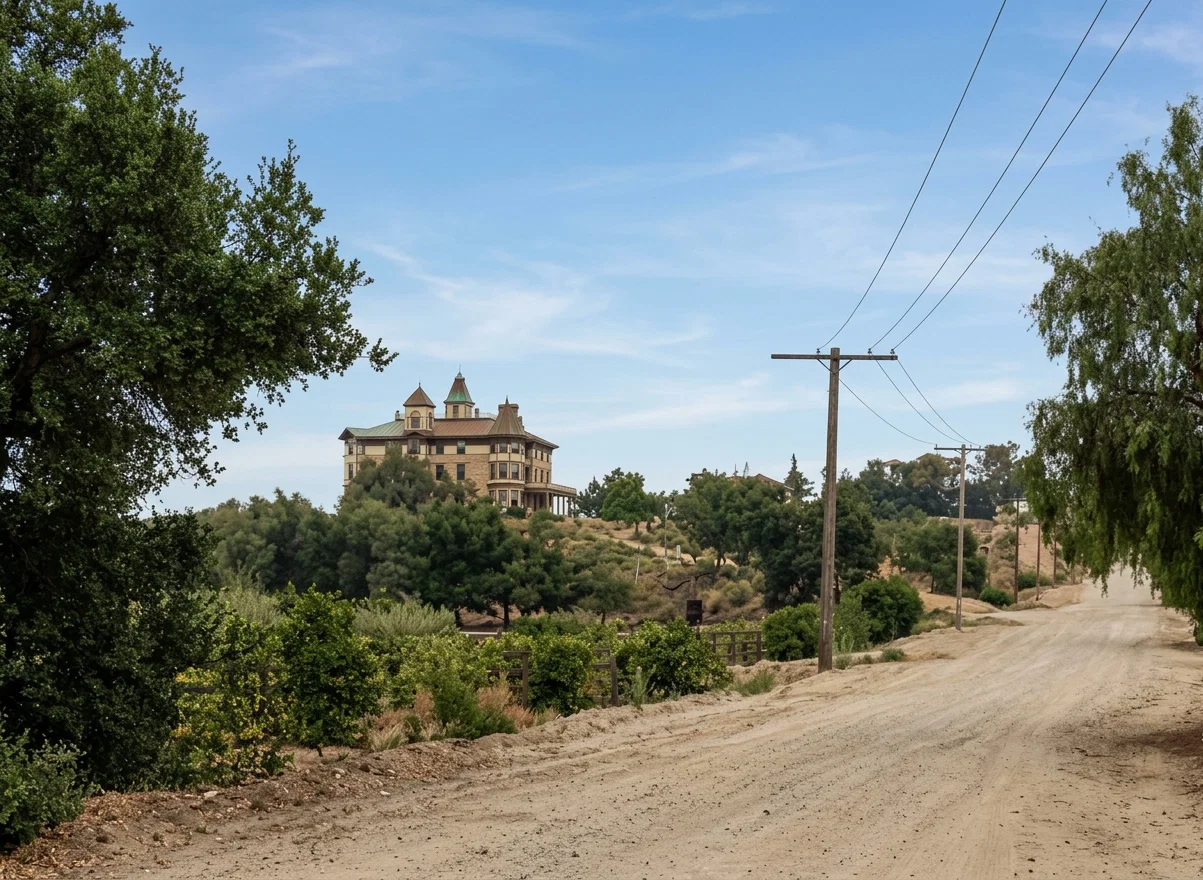
It is with a great sense of satisfaction and thankfulness to God that we are able to announce that another sanitarium in southern California is now ready to open its doors to the sick and suffering. For many years, even from the beginning of our sanitarium work, we have looked from the East, with its cold, wet seasons, over into the salubrious climate of southern California, and have heartily wished that Providence might open a way whereby we could establish at least one of our sanitariums where the splendid natural methods, which God has given us for treating disease, could be assisted by the unparalleled climate of southern California. And now instead of one, the Lord has given us two beautiful sanitariums,—one situated at Glendale, a suburb of Los Angeles, which has already been announced to our readers, and the other to be known as the Paradise Valley Sanitarium, located in Paradise Valley, within the limits of the little town of National City, six miles from San Diego.
About twenty years ago a lady physician, possessed of considerable wealth and enterprise, selected a commanding site in Paradise Valley for a sanitarium home, and expended fully sixty thousand dollars on the buildings and grounds. For various reasons her enterprise was a failure, and in a few months the doors were closed, and the building has not been occupied since, except by caretakers and an occasional boarder.
Our attention was first called to this building about three years ago, when it was offered for fifteen thousand dollars; later it was offered for eleven thousand dollars, and a committee visited the place, and plans were laid for the purchase of the property, but the way was hedged up. Later it was offered for eight thousand dollars, and the way was hedged up again. Nearly one year ago, through the kindness of friends interested in the place, we secured the information that it could be bought at a very low figure for cash. Negotiations were immediately begun, which resulted in the purchase of this fine building, with about fifty rooms, a six-room cottage near by, a fairly good barn, and thirty acres of land, for five thousand dollars, including all expenses and costs. The main building is a splendid structure, and with repairs and painting just completed, it is practically as good as new.
On the eighteenth day of April we took possession of the place and began repairing the buildings. The house has been thoroughly renovated, painted inside and out, and has been comfortably furnished. A new pumping plant has been put in on the old well, which is considered one of the best wells in San Diego County. Another well has been dug, and a gasoline engine pumping plant installed, so that we have an abundance of water, with about sixty feet pressure, for all domestic and sanitarium purposes and for irrigation.
Too much space would be consumed if we were to narrate the many providences which led to the securing of the property and the abundant supply of good water in this place where sunshine is so abundant, and where water is so scarce. Indeed, a good well in this country is a fortune in itself.
The initial investment in this property was made by four individuals who were most enthusiastically interested in the subject of a sanitarium for southern California. During the month of November, 1904, these investors spent about three weeks at the Paradise Valley Sanitarium, and while here, visited various places in the county, and presented the work to the friends of the enterprise. The result was that the capital was sufficiently increased to cover the purchase of the property and the furniture needed, and to make the improvements necessary. The hearty way in which our friends took hold of this work was most cheering. At every place where the interests of the work were presented, stock was subscribed, gifts of money were made, and in some instances the gifts took a most practical turn; for example, in San Pasqual, one farmer gave us a beautiful registered Jersey cow six years old; another man donated the use of his team and big wagon to bring her to the sanitarium, a distance of over forty miles. Another man volunteered to drive the team, and another to accompany him, and give us a week's work. And as the big team could haul two cows just as well as one, the wife of the man who gave the first cow, went out through the neighborhood and found another farmer who was willing to donate a second cow. That big team, when it drove up to our door, was an interesting affair; for in addition to the two cows, the good people had sent sacks of sweet potatoes, squash, canned fruit, canned corn, and other things that were very much needed. And so 'many hands,' which according to the proverb, 'make light work,' have supplied the labor and the means for one of the best little sanitariums that has yet been opened.
VIEW OF BUILDING AND GROUND
The situation of the sanitarium affords a fine landscape scene of the table mountains of Mexico to the south, of San Miguel and lower peaks of the Coast Range to the east, and a magnificent view of the silvery Bay of San Diego20and the Pacific Ocean, and the Coronado Islands on the west, Point Loma, with her celebrated lighthouse a little farther to the north, and the whole of National and San Diego cities, and the surrounding valleys, whose olive and orange orchards are always green, constituting a grand panorama calculated to give joy, and health, and life to those who can avail themselves of the privilege of visiting this, one of the loveliest and most attractive places in the world.
There may be other localities where a more delightful climate is enjoyed for a brief period, but there is no other place in the world where the temperature is so even, delightful, and healthful all the year round as in San Diego County. The temperature of San Diego has exceeded ninety degrees but nineteen times in thirty-two years. Four times in the history of San Diego the temperature has gone down to thirty-two degrees (the freezing-point), but it has never fallen lower, and within the history of the city there has never been a snowstorm. Flowers bloom out of doors from January to December. There is an average of one hundred and thirty-five days in the year when the thermometer stands between fifty-five and sixty-five degrees day or night. Last year there were two hundred and ninety-one clear days, and a rainfall of about five inches.
The sanitarium is not yet formally open, and its work has not yet even been announced to the public, and yet applications for admittance began to come in as soon as repairs were begun. One good lady insisted upon coming, and has been with us about two months, while the painting and repairing were going on. Week before last six patients pressed their way in upon us; others have come since, and all are pleased and are doing well. We expect the formal opening to take place about the middle of February, and it seems probable that our building will be full before we have time to open, as there are only four unoccupied rooms at the present time. In making the announcement for the preparation of this place for sanitarium work, the board of managers and investors wish thus to publicly express their thanksgiving to God for the marked providences which have opened the way for the launching of this enterprise.
Friends wishing to come to the Paradise Valley Sanitarium should buy tickets to San Diego, via Los Angeles. Our city office is 1117 Fourth St., San Diego. Our team will bring patients from the city to the sanitarium, a distance of six miles. All inquiries relative to facilities, charges, etc., at this place, should be addressed to the manager of the Paradise Valley Sanitarium, National City, Cal.
E. R. PALMER.
River Plate Conference Proceedings
By R. H. Habenicht
THE third annual session of the River Plate Conference was held in the village of Lehman, Santa Fe, Argentina, October 6-16. This was one of the most successful meetings ever held in this field. Although the attendance was not large, it was the most general and representative of any meeting ever held. Nearly every church and company was represented. All apparently came with the expectation of receiving a blessing, and none were disappointed.
The evening services were well attended by the citizens of the place, who showed much interest in the truths presented. Three preaching services were held daily, and the time between the meetings was used in visiting from house to house, selling books, tracts, papers, and Bibles. The Lord blessed in the presentation of the word, and before the close of the conference, some had decided to obey the truth.
Our own people were awakened by the preaching of the message, and it seemed to rekindle the fire that had long burned so feebly. There is nothing so practical, nothing so life-giving, as the plain, straight truths of the message. The thought of Jesus' soon coming fills the soul with courage, lifts one out of self, and impels one onward, ever onward.
The business of the conference was very interesting, and passed off pleasantly. The report of the president showed growth in all departments of the work. Two new churches were received into the conference, and two new companies not yet organized increased the membership, which is now more than fifty per cent greater than it was eighteen months ago.
Owing to the fact that our previous conference was held in March, the conference year was short. Notwithstanding this, the tithe was more than one thousand dollars greater than for the whole of last year.
As the various needs of the work were presented, the brethren responded very liberally and cheerfully. It was decided to put a printing-press in the school, and arrange for the printing of tracts and books. Several hundred dollars was given for this purpose. Other missionary enterprises were equally sustained.
In this meeting we practically saw the first-fruits of our school work, when five promising young men, all students from our missionary training-school, received ministerial license; also several other students enter the field as missionaries and canvassers.
The occasion was one of blessing from beginning to end. After the conference, Elders Town and Maas remained to follow up the interest. They report that several others have taken their stand for the truth, and we hope ere the effort ceases there, that a company may be raised up, which will increase the number of the redeemed in the near future.
Plans were made to carry on active work in each of the three republics composing the conference; namely, Argentina, Uruguay, and Paraguay.
The working force of the conference is now five ministers, six licentiates, and ten missionary licentiates. But this force will soon be lessened by Brother E. W. Snyder, who returns to the States. With a field more than one third as large as the United States, and of more than six million inhabitants, our few workers seem but a drop in the bucket. Yet we are of good courage, and work on, praying that the Lord of the harvest will send forth laborers into his harvest.
Some changes were made in the conference officers. The committee was increased from five to seven members, so that the various fields and departments of work might be represented.
The following are the officers for the coming year: President, J. W. Westphal; Vice-President, R. H. Habenicht; Secretary and Treasurer, N. Z. Town; Corresponding Secretary, Sadie R. Town; Conference Committee, J. W. Westphal, R. H. Habenicht, N. Z. Town, J. V. Maas, Arthur Fulton, John McCarthy, and Luis Ernest.
We are thankful for the blessing of the past year, and hope for greater blessings during the year upon which we have entered.