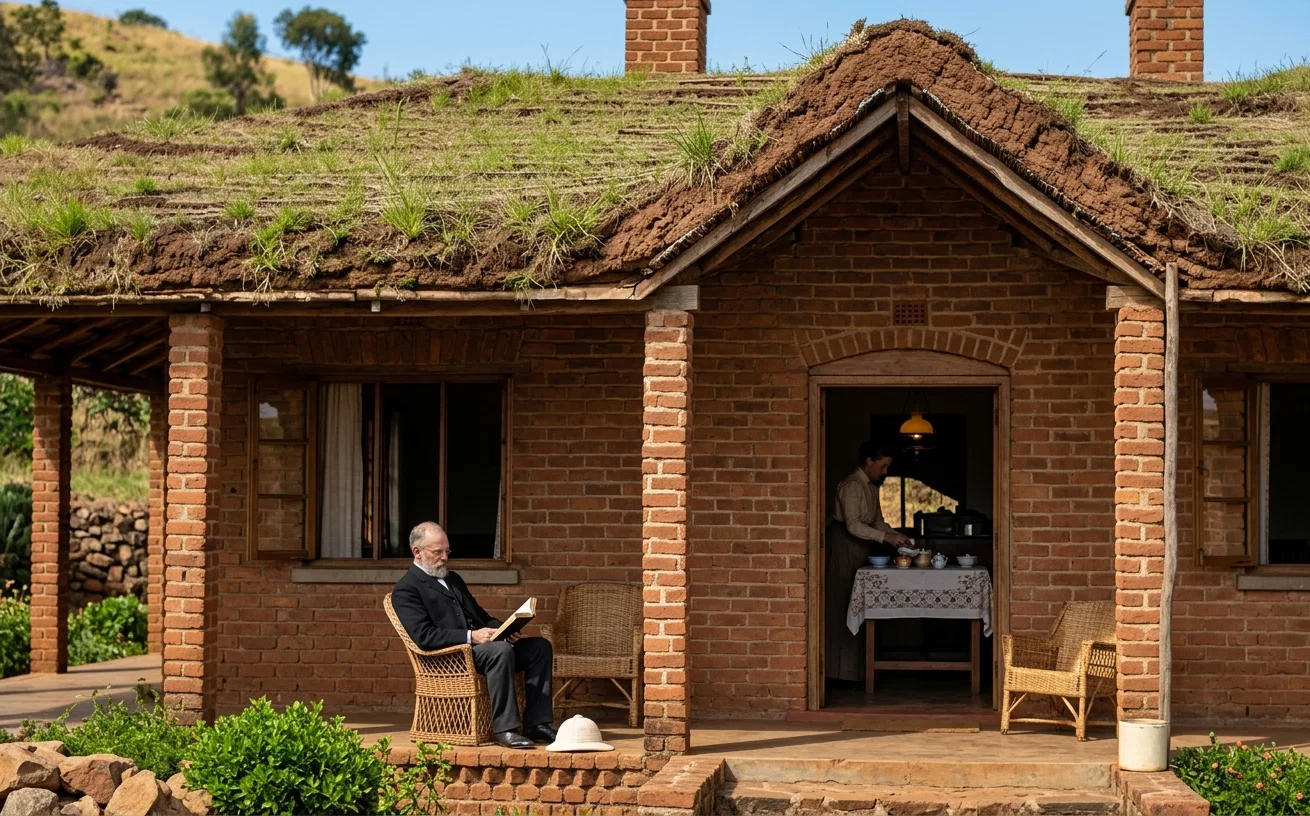
Matthew, Mark, and Luke record the narrative concerning the rich young ruler who came to the Saviour and propounded the most important question that it is possible for man to ask.
A large crowd of men, women, and children had assembled on the coast of Judea. Parents were anxious to secure the blessing of the Master upon their children, and children were eager to receive it. Others thought that these parents and children were taking too much of the Master's time and attention, and strove to hinder them from coming to Jesus. Jesus rebuked these by saying, “Suffer little children, and forbid them not, to come unto me: for of such is the kingdom of heaven.”
The young ruler, watching this experience from a distance, was stirred by the Saviour's actions. He saw in the Saviour one greater than himself. From the question that he asked it is evident that he possessed a knowledge of the Scriptures. He knew that they taught that life could be obtained only through a coming Saviour. He also understood that the Scriptures contained more than one code of laws. Being thoroughly in love with life, and desiring a continuance of it, he addressed the Saviour, saying, “Good Master, what good thing shall I do, that I may inherit eternal life?” Jesus said unto him, “Why callest thou me good? there is none good but one, that is, God; but if thou wilt enter into life, keep the commandments.” Then he asks the Saviour which. The Saviour replied by quoting a number that are contained in the second table of the law, which relate to man's duty to his fellow men. Then the young man replied, “All these things have I kept from my youth up: what lack I yet?” To this question Jesus said, “If thou wilt be perfect, go and sell that thou hast, and give to the poor, and thou shalt have treasure in heaven: and come and follow me. But when the young man heard that saying, he went away sorrowful: for he had great possessions.”
Here was a self-deceived ruler. He had doubtless inherited his wealth; for fortunes were not so easily collected then as they are in these days when riches are being heaped together.
The question that he asked indicated that his idea of obtaining was through inheritance, although he asked what he should do. Surely he possessed noble principles, and little did he realize that his goods were his god, or that his land was his lord, or that he thought more of the creature — self — than he did of the Creator. He did not prize the spiritual above the natural. Had he known that fulness of happiness which was in store for him as the result of obedience, earthly goods would have seemed of little value, and he would not have debated this question in his mind for a moment. How much wiser the choice that Moses made when he refused to be called the son of Pharaoh's daughter, but chose rather to suffer affliction with the people of God than to enjoy the pleasures of sin for a brief season. Let us look to it that we do not make the mistake that this rich young ruler made.
The Grape-Vine
OF all the fruit-trees of the garden when stripped of their leaves, the grape-vine is the most unpromising, with its slender, gaunt, dry-looking stem and rugged bark. It must have been at this season when the prophet said of it: “Shall wood be taken thereof to do any work? or will men take a pin of it to hang any vessel thereon? Behold, it is cast into the fire for fuel; the fire devoureth both the ends of it, and the midst of it is burned. Is it meet for any work?” See Eze. 15:1-7, and learn the lesson, which is to be repeated. Rev. 14:18, 19.
But when we look at the grape-vines putting forth graceful branches covered with leaves and tender blossoms, we wonder and admire this manifestation of life in that which seems so dry and dead, and think of the words: “Take us the foxes, the little foxes that spoil the vines: for our vines have tender grapes.” Cant. 2:15. It was the much pruning that led to abundant fruitage, as promised by our Lord Jesus when speaking of himself as “the true vine,” and his Father as the husbandman (John 15:1-8), and the necessity of abiding in him, the true vine, for life and power to bring forth the good fruit of the Holy Spirit, that many through us might be taught the way of life.
“The fruit of the Spirit is love, joy, peace, long-suffering, gentleness, goodness, faith, meekness, temperance.”—Selected.
The Way to London Town
By Mary Farrah
“One foot up and the other foot down,
That’s the way to London Town,”
— Old Nursery Rhyme.
It was only a simple nursery song,
But it cheered my heart one day
When the task seemed hard, and the journey long,
And the goal was far away;
For just like the darling toddler small
Who is learning to walk alone,
One step at a time, and that is all
We need for the end unknown.
Then leave to the morrow the morrow’s share
In the task you have to do,
Content if to-day you can bravely bear
Its burden with courage true;
With anxious haste you will strive in vain,
On life’s road your feet will tire,
But patience and pluck will surely gain
The prize of the heart’s desire.
So whatever your London Town may be,
Toil on with a purpose high,
And step by step, as the way you see,
You will reach it by and by.
For one foot up and the other foot down,
With a heart that’s true and bold,
Is still the way to our London Town,
As in nursery days of old,
— Mary Farrah, in Good Words.
Work for Children
ONE mistake of parents is in not seeing the benefits of work for children,—work suited to their years and strength, and which shall teach them self-reliance, develop skill, give them a sense of their own value, and an idea of the dignity of labor.
One of the first impulses of the child is to do something. When he is taking his toys to pieces, we call him destructive. It may be possibly the constructive impulse that is moving him. We have given him everything in so complete a form that he has no outlet for his own constructive energies, except in destroying the perfect object and remodeling it after his own designs. We would be much wiser to give him constructive material, and allow him to give expression to himself in the use of this material. Thus we should give him work to do that would develop his faculties, instead of stultifying them by our mistaken kindness.
What we call the play of the child is, in fact, his occupation, his work. Very early in life he manifests a desire to aid us in our work, and we will be wise to heed this desire and gratify it. Nothing gives the child more real satisfaction than the idea that he is helpful.
What we call his mischief may have had its origin in the sweetest impulse to be of use. I remember reading about a little fellow who undertook to dust a room in mama’s absence in order to help her. In his unskilled awkwardness, he broke a valuable vase. He was sorry for this, but to his mind it was not as important as the fact that he had worked and helped mama. As I recall the incident, the mother was wise enough to see the real motive, and did not blame the child for the accident, and did commend him for his helpful spirit, though I believe she incidentally suggested that it would be better for him to work under mother’s direction than of his own undirected impulse. It would take much true wisdom really to feel and to act as if the spirit of the child were of more real value than the broken vase, which, after all, was but a thing.
Very young children can be made to feel that they are helpful, and with careful teaching soon become so. I can remember when my little boy of three helped me to make the beds, and felt a great sense of importance at being allowed to stand on the farther side and pull the covers straight as I threw them over to him; and he was even more particular than I that every wrinkle should be smoothed out, and the quilts tucked in properly. The daily task was to him then a great pleasure; it has since proved a very valuable education.
I can remember, too, how in my own childhood my earnest pleas to be allowed to help were repulsed with the words, “Oh, you are in the way! I could do it a dozen times while I am showing you how.” Since then I have heard many mothers say the same thing, and perhaps add the stinging words, “Oh, you’re very anxious to help now, but when you are big enough to really be of some assistance, you won’t want to help then.”
This often has proved a true prophecy, but the child was not to blame. We can hardly expect that he will continue to proffer aid that is always repulsed, or later desire to do things he was not permitted to do in former years. Now that he has grown older, he has grown into new interests, his activities have been developed in other directions; no wonder that he does not wish to retrace his steps and begin the things he should have learned years ago.
Many mothers, looking upon work as an unqualified evil, perhaps because of their own overburdened lives, refrain from calling upon their children for assistance, and justify themselves by the apology, “I want them to have a good time, as they will never be young but once. They will have plenty to do when they grow older.”
This is reasoning from false premises. In the first place, a reasonable amount of suitable work really adds to the pleasure of the child; it is, in reality, play to him, for play is his business. Again, by learning the routine involved in the performance of his work, he is cultivating certain brain cells, and when in maturity this certain task becomes a part of his duty, he performs it with ease, if not wholly automatically; so the wear that comes with the acquiring of a new degree of skill in the doing of an unaccustomed work, is avoided, and his maturity rendered at least more comfortable.
The girl who, in childhood, has learned how to perform the daily tasks of the home, finds her introduction into the responsibilities of the housekeeper shorn of many of its terrors.
Manual training in the school is of value in giving dexterity in the use of tools, and so fitting the child to take up any form of labor with ease and pleasure.
“A good time” in the life of the child consists largely in doing. Unguided and undirected, as in his play, this doing is of great educational value; guided and directed, as in some work that is suited to his years and strength, it has a more definite value.
Surely no one will suppose that I am arguing for putting children to the task of routine work, day after day, for the sake of making use of their strength for the benefit of some else. My aim is to indicate that for their own good, their own development, they should receive such training in work at home as will lead out their own powers of mind and body, and teach them the skill and helpfulness which will be of great value to them in maturity. In teaching children to do certain little home duties, we may be lessening the amount of work done by the mother, but helping mother is not our primary object. It is the child’s, not the mother’s, interests we are considering. The actual help given to the mother may not be worth considering, but the spirit of helpfulness engendered is of incalculable value, and its value to the mother herself will be more and more patent as the years go on.—American Mother.
A Much-Needed and Neglected Remedy
DOING good is an excellent remedy for disease. Clothe the naked, bring the poor that are cast out to thine house, and deal thy bread to the hungry. “Then shall thy light break forth as the morning, and thine health shall spring forth speedily.” It was not until Job prayed for his friends that restoration took place. When Job prayed for his friends, “the Lord turned his captivity.”
Consciousness of right doing is a soother and a tonic to the body. There are many who remain ill merely because13they think constantly of their ills. Selfishness keeps them ill. As long as one thinks of his ills, he keeps them in mind; as long as they are kept in the mind, they are kept in the body. A little interest in some poor unfortunate would result in self-forgetfulness, and create a satisfaction and joy of mind that would be felt in every fiber of the body. “In blessing I will bless thee.”
Many diseases originate in the mind. Dissatisfied feelings, unrest, worry, fear, anxiety, a knowledge of wrong-doing have a paralyzing influence on the organs of digestion, the heart, the liver, and every other organ or member of the body. There are many who can never be helped until these mental boulders are removed, until, like Job, they begin to think, pray, and work for their friends. To be healthy one must first be happy. “A merry heart doeth good like a medicine.”
The friends of the paralyzed man expected physical healing as soon as they brought him to Christ. But Christ saw that the man was worrying over past sins, and needed mental healing before bodily healing was possible; so he addressed him with the welcome words, “Son, be of good cheer; thy sins be forgiven thee.” When good cheer had taken the place of condemnation and worry, he could say to him, “Take up thy bed and walk.”
Physical healing is impossible as long as worry, fretting, and condemnation exist in the mind. What Christ said to this man, he says to every man who is in a similar mental state,—“Be of good cheer.” The gospel imparts “the garment of praise for the spirit of heaviness.” It is, after all, the one great remedy humanity needs.
Failing to do what we know to be right, or doing what we know to be wrong, will bring about a state of mind that will result in injury to the body. The person who knows he is eating that which is not good sustains a greater bodily injury than the one who eats the same food ignorantly. The wilful transgressor is robbed of that peace of mind which the other one may still possess, and which is so essential to good health. Increased knowledge may, therefore, prove a blessing or a curse. In order to be of value there must accompany it such a change of mind that it will be a delight, not a burden, to obey. This is termed conversion. “To be carnally minded is death [it matters not how much knowledge possessed]; but to be spiritually minded is life and peace.”—Australasian Good Health.
Care of Rugs
Do not use a carpet-sweeper on a rug, and do not beat it on the back, which breaks the threads. Orientals never beat their rugs as we do in this country. They never step upon them with the shoes worn in the street. When they become much soiled, they wash them, and spread them in the sun to dry. The best way to clean a rug in your own home, if small and dyed with vegetable colors, is to put it in lukewarm water in a tub, soap it well, and brush with a clean brush.
In the summer, rugs may be hung on a line or railing, and the hose turned on them. For the daily or weekly care of rugs, keep a clean broom, not too hard, for their especial use. Sweep the rug with the pile with the dry broom, then sweep gently against the pile; lastly, dampen the broom in salt water or ammonia water and sweep with the pile. In the winter, the sweeping is best done out of doors. After shaking the rug, or beating on the right side (a piece of rubber hose is an excellent thing to beat with), spread on the snow and brush off with snow. The reason for the luster in antique rugs is that the constant brushing and cleansing make the face even, and gradually bring out the inimitable gloss which is inherent in the wool of the animal.
A rug in daily use is not troubled with moths, but rugs used for hangings are apt to invite colonization. An occasional brushing or exposure to the air, especially in winter, is usually sufficient to keep them all right; but if the dreaded enemy of the housewife should get in, shake out all the dust, dampen the rug, and press the back with a hot iron.—Twentieth Century Home.
Care of the Teeth
By Edith E. Bruce
EDITH E. BRUCE
In studying how to care properly for the body it is very important that we take into consideration the care of the teeth. The teeth, besides being an ornament to the face, giving it expression and symmetry, perform the main part of the mechanical digestion.
By grinding the food it is mixed with the saliva, and thus prepared for digestion in the stomach and other digestive organs.
When we consider the fact that starches are largely digested by the action of the saliva, and that a large part of our diet is made up of starch foods, we can appreciate the necessity of giving the teeth proper care.
When the teeth become decayed or missing, food can not be properly masticated, hence not enough saliva is brought into use, the food is swallowed in almost an unbroken mass, or “washed down” with some kind of liquid (which never should be done), and the next thing, the individual is suffering from indigestion, prolapsed stomach, torpid liver, and many other ailments common to this day and age of the world.
That disease of the teeth, like most other diseases, is caused by germs, is recognized by the medical and dental profession. The unwashed tooth surely is an ideal breeding place for micro-organisms, as it has warmth, moisture, and plenty of decayed food.
Food passed through a filthy mouth can not help but breed disease to the whole alimentary tract. Blood-poisoning has been known to be caused by ulcerated teeth, and many other serious conditions may be traced to poorly kept teeth.
Nothing can be more disgusting to a refined individual than to hold conversation with a person whose mouth is full of filthy teeth; for with such a condition one could not expect but to have a foul breath.
Booker T. Washington, who has done so much to educate and train for usefulness the colored people of the South, requires each student to be provided with a tooth-brush before entering the school. He says that “a person can be marked for his refinement by the use of the brush.”
Surely this is an example to us. We would say, then, that the teeth should be kept clean for a threefold reason:—
First, that they may be preserved as long as possible.
Second, that they may perform their office in the work of digestion, and thus promote good health.
Third, for general appearance and cleanliness.
A Few Practical Hints
Attention should be given to the teeth from infancy. Some think, because a child loses his first teeth at an early age, that they require little or no attention; but this is a wrong idea.
When a baby has not more than six or eight teeth, they should be carefully washed with a clean linen cloth, and later on a soft baby tooth-brush may be used. It is very important to keep the temporary set in good condition as long as possible, both to preserve the health of the child and to secure a perfect permanent set.
As the permanent set is developed, the temporary set is absorbed to make room for them; but a dead nerve can never be absorbed, hence deformity is most likely to occur in the permanent teeth. The practise of pulling the child’s tooth with a string is entirely wrong, as much damage may be done to the tooth.
The adult’s teeth should be thoroughly cleaned with a brush and some good tooth-powder once a day, and the teeth should be well brushed after each meal to remove all particles of food.
There are many kinds of tooth-powders on the market, but for a few cents one can get at a drug store, precipitated chalk, which is an excellent thing for the teeth.
When the teeth begin to decay, they should at once be filled; for it is much easier to keep the teeth than to use artificial ones.
At any rate, keep the teeth clean by some means, that you may be able to speak forth the praises of God with a clean sweet mouth.
What Makes Men Strong, Rich, Learned, and Righteous
“It is not what people eat, but what they digest, that makes them strong. It is not what they gain, but what they save, that makes them rich. It is not what they read, but what they remember, that makes them learned. It is not what they profess, but what they practise, that makes them righteous.”
The Last Hour
By Clara Thwaites
“Little children, it is the last hour.”1 John 2:18, R. V.
THE sunset burns across the sky;
Upon the air its warning cry.
The curfew tolls, from tower to tower;
O children, ’tis the last, last hour!
The work that centuries might have done
Must crowd the hour of setting sun,
And through all lands the saving Name
Ye must in fervent haste proclaim.
Ere yet the vintage shout begin,
O laborers, press in, press in!
And fill unto its utmost coasts
The vineyard of the Lord of hosts.
It is a vineyard of red wine,
Wherein shall purple clusters shine;
The branches of his own right hand
Shall overspread Immanuel’s land.
The fields are white to harvest. Weep,
O tardy workers! as ye reap,
For wasted hours that might have won
Rich harvests ere the set of sun.
We hear his footsteps on the way!
O work while it is called to-day,
Constrained by love, endued with power,
O children, in this last, last hour!
— Clara Thwaites.
A Brief Report of the Plainfield Mission for Quarter Ending Sept. 30, 1904
By Thomas H. Branch
THOS. H. BRANCH
Church Work
WHEN we came to this place, we found a few boys, with their wives, who professed to believe the Sabbath doctrine; but all of these, with one exception, are now polygamists. There is still no church organization at this station. I have baptized a goodly number, who I supposed, after the instruction given them from the Bible, would be able to stand firmly for the truth and for Christ. But, alas! most of these have become drunken with the desire to get money, and, with a few exceptions, have gone in search of the same. Some of those who have left the mission, I believe love the Lord, as many write us good letters, and always speak of their temptations, and of their victories through Jesus. Those who have remained with us are earnestly engaged in the work, and take an active part in all the meetings at the station, and are always anxious to go out to the villages to speak of the love of Jesus to the people, and to help them in many ways. This is encouraging, and we are earnestly praying that they may prove light-bearers in this message.
There are only five or six villages on and near this station, and they are small ones. We are hoping the seed sown will bring an abundant harvest of souls for the Master. We are still holding our Sabbath evening prayer and social meetings, and also our early Sabbath morning services. At these meetings instruction is given to the boys who go to the villages, on some subject that we have previously studied through the week. We are praising God for the privilege of a place to work for him in this closing message. I can not say when we shall have a church at this place. When Elder Hyatt was here, I laid the matter before him, and he advised me to wait awhile.
School Work
FRONT OF THE MISSION HOUSE
The enrolment in the school has been sixty-six. The attendance has been good. And although some of the village children have been dropped, others have taken their places. The interest is good.
Our first session is at 8 A. M., when instruction is given to the teachers. This session lasts for an hour and a half. The next begins at ten o'clock, and lasts two hours. This is attended by the village children and the field boys who are just beginning English. Their studies are as follows: reading in the Mang-'anja and English primers, writing, arithmetic, spelling. The advanced classes in English work from 6 A. M. to 12 M. After their dinner they enter school at 1:30, remaining for two hours. Their studies are reading, spelling, writing, arithmetic, translating into good English. At 6:30 P. M. all come together for a preparation of the next day's lesson. At 7:30 I give them a Bible lesson, lasting one hour.
We have twenty-four boys and five women staying with us on the station. These, as a rule, are the only workers we have on the farm. These boys are not very far advanced in their Bible study, so it is slow work getting the message before them. But six of them are doing well, and I am giving them instruction in the book of Daniel. We are hopeful, as the work is the Lord's.
My daughter Mabel has charge of the school work, with the assistance of one native teacher. Morning and afternoon sessions open with prayer and singing.
Industrial Work
At 5:30 A. M. the bugle is blown, and all report for duty. A short Bible service is held, then all go to the field to prepare ground for the crops. I am planning to plant corn, potatoes, beans, and other garden produce, also some peanuts. Last year we raised about thirty-five or forty tons of corn, which I hope to sell at a good market price, to help with the expenses of the place. I have sold and delivered ten tons, but as yet I have been unable to collect any money. Our cotton crop was a failure, on account of the continued rains and the severe cold weather. I have not given up in despair, but shall try again this season. The cattle, erelong, will be of some benefit to the farm. We also have thirty-seven goats, and they are doing well. I am looking to Him, the Giver of all good gifts, to give us an abundant harvest, and the blessing he sees we need, as we feel that we have been passing under the rod of sorrow and disappointment at this station.
Finances
While our demands have not been large, we have not been able to meet them, on account of the failure to collect the corn money. We have realized very little from our garden stuff, as the birds and rabbits destroyed nearly all of it. Now I am trying again. As for our butter, we have no market for it whatever. The market we might furnish is fifty miles away, and by the time we get it there by native carriers, it is all oil, and unmarketable. Our chickens are dying very fast. They droop a day or two, then die. No medicine seems to15do them any good. I have sold only a few of them.
Health
We are having fever frequently, but not long at a time, nor serious. To God be all the praise. The boys are enjoying good health. The natives are hearty and well, with the exception of now and then a headache or a sore. The people in the villages on the station are dying very fast. We have not been able to determine the cause.
Our Visitor
Brother W. S. Hyatt, president of the South African Union Conference, gave us a short visit from July 25 to Aug. 24, 1904. We were indeed glad to see him, and to give him a warm welcome among us.
From the first, we felt that we should be greatly benefited by his visit, and our expectations were realized. By the counsel and advice given, we shall be greatly helped. The plans laid for the work we believe will prosper. The month ended altogether too soon. But we bade him good-by, and pray that God's blessing will accompany him on his journey to the different missions, to help them as he has helped us.
Our courage and hope are good, and we are singing praises to Him from whom all blessings flow, and with you we desire to remain faithful until he comes.
Another Year in China
By J. N. Anderson
J. N. ANDERSON
OUR dear people in the home lands are continually praying for, and giving of their means to, the work in the great dark heathen fields, and it is but natural and reasonable that they should feel a deep interest in its progress. The work is quite as much theirs, though they are separated from it by thousands of miles, as it is ours who are on the ground. This is God's own arrangement, and it can not be improved upon: it is life and salvation both to the churches and to the heathen. Let this relation be broadened and deepened until the glorious message of our Lord's return shall have embraced all nations, peoples, kindreds, and tongues, and we, with those for whom we have labored, are gathered home.
Looking back over the past year, the special blessings and providences of God are manifest and many. The health of all our workers in this part of China has steadily improved. Apart from our language study, which has been pursued daily with vigor and enthusiasm, at least four different lines of work have been inaugurated wholly for Chinese: a girls' school, regular public preaching services, a boys' school, and the publication of literature.
By a special offering of several hundred dollars by the Wisconsin Conference, money has been provided for the support of school work among the Chinese girls. The enterprise is being carried on by Sister Ida Thompson, who felt a special burden for this work. The school opened last March with an attendance of twenty, which number has been increased to thirty-two at present. Two Chinese teachers do the drill work. It is a Christian school, the sole object being to lead the girls to a knowledge of Christ and to the acceptance of the truths which save the soul. The girls are both intelligent and responsive, manifesting a deep interest in their work. This is especially true of their singing, which they enter into with zest and enthusiasm, and they have already learned many gospel songs. All their work is in Chinese, and the memory faculty is put to the stretch. Apart from their other work, they have already committed to memory the entire Gospel of Mark, and the influence of the gospel is evident in the lives of the girls, some of whom are apparently having a Christian experience.
QUEEN'S ROAD EAST, HONGKONG, CHINA
About the first of May I began public meetings in the native tongue. It was a small beginning, yet it was a beginning, and has continued to grow until now we have a good attendance every night. At first the attendance was irregular, made up largely of pedlers and burden-bearers, who dropped in for a few minutes, and then went their way. But this was not true of all. Some sat down and listened to the singing, which was followed by Scripture reading and as many comments as my limited vocabulary would permit me to make. It was a novel thing, and I never failed to have at least a few attentive hearers.
About August 1, Brother Wilbur moved his family from Hongkong to Canton, and has since assisted in these services. With some unavoidable interruptions, this work has continued to the present time. About a month ago we secured the assistance of a native preacher, a man of considerable ability and experience. Another man, educated in the practise of Western medicine, and who professes to have accepted the Sabbath, has for the past six weeks assisted us gratuitously in preaching. With the help of these two men, we are able to teach intelligently the Bible truths to those who attend our meetings. When it is remembered that our hearers are the product of many generations of deep-seated heathenism, you will realize that the process of inculcating the principles of the gospel must necessarily be comparatively slow.
The eleventh of August a school for boys was opened in which instruction in both English and Chinese is offered. Properly, everything in China should begin at their new year, some time in February, if success is to be hoped for. In this and other matters our school went counter to Chinese custom, which is all but law, and the handful of boys that entered the first month or so made us think our school would meet with little success. But the tide turned, and the enrolment has reached thirty-two in the English and nine in the Chinese department. The study of the Bible and singing is a prominent feature of the daily program. On Sabbath an hour's Bible study in English, together with a short sermon in Chinese, is given. In this way the Bible is taught to a class of boys that otherwise would not be reached.
China is a land of letters and books. Some one has expressed the opinion that China has as many books as all the rest of the world combined. Be that as it may, it is clear that our literature will16play an important part in carrying the message to the millions of this vast empire. It has been a matter of regret that this work could not begin earlier; but our knowledge of the language would not warrant our assuming such a task until we were able to judge of the merits of literature. The Chinese language is very difficult; and while our knowledge of it is not even now very extensive, yet we have been blessed in acquiring such a hold upon it that we are able to judge of it with a good degree of certainty. From this time we hope to put out the printed page—both translations of tracts and books, and original matter—till every phase of the truth has been set forth. Already a two-thousand edition of a tract of eight thousand characters has been printed. The matter in this tract was prepared by the Chinese brother at Amoy, who has lately accepted the truth and connected with our work. It deals with the Sabbath truth in a fresh and convincing way, appealing to the Word for evidence and authority. This tract is now ready for distribution, and can be had at two cents a copy.
In addition to this, we have ready for press a translation of the chapter in “Steps to Christ” entitled “The Sinner's Need of Christ,” which can be sold for one dollar a hundred. Another tract setting forth the true God is also ready, at about $1.50 a hundred. Still another, prepared by Brother Pilquist, chiefly for school work, arranged on the plan of question and answer, is ready for the printer. This is the first of a series beginning with the first chapter of Genesis, and designed to cover the history of Israel. Our workers in Honan write encouragingly of their openings; but of this I hope to write more definitely a few weeks later, when I return from a visit to them.
Canton, China.
Alabama
By F. R. Rogers
HUNTSVILLE.—The special day appointed for fasting and prayer, February 11, is in the past. Truly the Lord visited us in our meeting here; from the beginning of the Sabbath until its close there was a marked quietness about the place, and a special degree of interest manifested on the part of the students and teachers in calling upon God for help throughout this Southern field. Earnest petitions were offered for this work, especially for laborers to enter the field and proclaim this message to those in darkness, also that the hearts of men who had means might be moved upon to help in this part of the vineyard at the present time. I think I can truly say that never since coming to Oakwood have I seen such a spirit of quietness throughout the school. The students observed the day with fasting, and in our special afternoon service of prayer and praise to God many testified that the Lord had especially visited them, and that they were resolved from this time forth to live better lives, and consecrate themselves more fully to the Lord’s work. Some who had become discouraged since the week of prayer renewed their zeal, and others who had been indifferent rose for prayer, and expressed a desire to live for God. Truly it was a blessed day for us, one that will long be remembered. We especially desire your prayers, that we may be able to follow up this work in just the way the Lord would have us.
F. R. ROGERS.
Chile
By E. W. Thomann
AFTER returning from Argentina, I worked several weeks at Valparaiso, taking subscriptions for our missionary paper, Senales de los Tiempos. In one street alone I obtained over one hundred and twenty subscribers. If we had workers to canvass all the city, I think a list of two thousand subscribers could be secured.
At Copiapo, another town farther north, I labored a little over three weeks. I held meetings nearly every evening, and many besides our little company came to hear the word. There I obtained over two hundred subscriptions to the Senales.
The morning before I left, I had the privilege of burying a dear soul with her Saviour in baptism. The evening of the same day we celebrated the ordinances, six taking part.
At Chanaral, a little port town still farther north, I had, after two-days' hard work, a list of sixty paid subscriptions to our papers. The evening meetings were attended by a goodly number; but because of prejudice I must look for another hall. I am of good courage, and before I go farther, I hope, with the help of the Lord, to raise the number of subscriptions to one hundred or more. I have over seventy already.
Dear brethren and sisters who read this, the great day of the Lord is very near, and soon all that is of this world will come to an end. Let us, therefore, work, and pray that the Lord may soon send more workers into his vineyard. E. W. THOMANN.