WHILE at the convention in Mt. Vernon, O., the American Catholic Federation meeting was held in Indianapolis. Not being able to attend at the beginning, Brother C. M. Snow, formerly of the SIGNS editorial staff, now of the Review and Herald, kindly consented to report the meeting for both papers, our readers know with what excellent success. Of this great movement we shall have more to say hereafter.
LEAVING Mt. Vernon the evening of July 20, for the capital of the nation, the dark part of the journey was passed in Ohio and West Virginia, the light part down the historic Potomac Valley, past Harper’s Ferry, thru the great gap in the Blue Ridge, seemingly made by some great convulsion of nature, as tho the pent-up waters of the confluence of the Potomac and Shenandoah had ruptured the mountains to make a pathway to the sea. We reached Washington shortly after noon, and enjoyed greatly the warm hospitality of friends, as we did not the warm weather, while we were there.
WE visited the beautiful new sanitarium in Takoma Park, recently finished and already enjoying good patronage. Dr Kress is physician in charge, and Mrs. G. A. Irwin is the matron. Within it is pleasant and genial, and the environments are beautiful and restful. It is entered on all sides, the most imposing of which overlooks the Sligo, whose silver clear waters wind thru the wooded valley. There is rest and help in the Sanitarium for the sick and weary, and we were glad to learn that it is already, even at this season, on a paying basis. We are not saying this for entertainment, for we neither ate, slept, or took treatment within its peaceful walls.
SCHOOL, of course, was not in session. The buildings are waiting for a new program this fall, the opening of the Foreign Mission Training Seminary, designed solely to better fit otherwise qualified, devoted men and women in the shortest possible time to enter the mission field they have chosen. This is a new, great step, and we believe great results will follow for God and His message. This school will take the tried and valued products of our other schools, and help, by especially qualified teachers, to pass them on better fitted to the great, needy fields in the “regions beyond.”10
Notes by the Way.
(Continued from page 9.)
THE printing plant of the Review and Herald, an imposing building of three stories and basement, is full of work to overflowing. In this we rejoice. It is good to see every press of our publishing houses engaged in doing the most important work of the times, that of giving to the world God's great Threefold Message of Revelation 14. We were glad to meet here old friends and fellow workers, and to partake of their hospitality.
IN Washington we secured very fine photos, views, information, etc., of public buildings, which we shall use in future issues of the SIGNS for the benefit of our readers; and this is also true of Philadelphia, New York, and other cities at which we called. At New York we visited a tent-meeting which Elder C. H. Edwards, the president of the Greater New York Conference was holding, assisted by able ministerial help, at 149th Street and Amsterdam Avenue. In many of these lectures stereopticons are used with good effect. There are, if we remember rightly, four such series of meetings holding in New York City at the present time. But what are these among so many? Surely this conference needs support and encouragement in its great, needy field.
WE visited two churches in New York State; namely, South Russell and Olcott, and spoke twice on each occasion. Our heart was burdened for these souls whom we had known for long years, and we have been deeply impressed with these thoughts:
Three of the great desiderata of the Christian life, three essentials to its success, are the daily feeding on the word of God, the seeking of Him by earnest prayer in all times of need, and the using of His blessings in helping others. If we fail in these, the cares and pleasures of this world will harden the heart and leave it barren, despairing, and hopeless. Another thought ever forced itself upon us as we recalled the scenes of boyhood days, and that is, that everything in this sinful world is subject to change. Men are born and live and die. They may have acquired riches and competence; they die, and it is left to others who spend it. One old friend and neighbor so labored, finding life so full of cares that he had little time to give to the life beyond. Yet he was a good man and respected as the world goes. The only daughter married a man unworthy, and recently committed suicide. How much better would have been a tranquil life with trust in God, even tho possessing little of this world's goods, than to possess all this world can give, yet die poor of the true riches.
LEAVING Chicago, August 8, we reached Boulder, Colo., August 10. Passing thru Kansas City, we had a half-hour's conversation with Brother W. R. Beatty of our Kansas City branch. Everything there was flourishing, all were well, and the office full of work. We greatly appreciated this meeting.
Sunday evening we spoke to a large and attentive audience on the faith necessary for this time. Here also we visited the large sanitarium of the Central West. Great improvements have been made since we visited it about seven years ago. Efforts have been put forth to destroy it thru its enemies and ill-advised friends, but it is to-day stronger than ever—stronger financially, stronger medically, stronger morally. The efforts against it have met with disastrous defeat.
All the rooms in the main building and cottages are filled with a splendid class of appreciative guests, many tents are full, and several rooms are rented from private parties. There are about 125 guests at present. Its mountain-water supply is pure and abundant. Its great green lawn, with its pond of living water, is a constant beauty to the eye and an enjoyable rest to the weary. Its atmosphere is of the best which the Rockies afford, and its service by devoted, skilled, willing Christian men and women is most excellent. Said one gentleman who had been to Battle Creek and elsewhere, "I think I know the sanitariums very well, but I never had better treatment than I am getting here." A short time ago a lady was sent to Boulder physicians given up by the experts of Denver. She was then sent to the sanitarium to die on their hands. That very night an operation was performed which greatly relieved her. As soon as she was strong enough, another was performed. In a few weeks she returned home well. This case, more critical than the average, is yet typical of many. Boulder Sanitarium deserves support. May it continue to prosper.
In Denver, we called upon Elder and Mrs. Mead McGuire, at the tract society. Found there also the State agent, Brother Job. The book work is prospering finely, and the courage of all the workers is good. We were urged to remain to the camp-meeting soon to be held, but work for the coming numbers of the SIGNS prevented.
IN Denver there was agitation over the labor troubles. The telegraphers' strike was already greatly affecting business, and the strike of railway men for an extra two cents an hour on the Colorado Southern centered in Denver, and when we left was threatening to involve the country, tho hoping it would be checked by the Denver and Rio Grande. Boulder is a town on the Colorado Southern. The night before we reached there a fire was kindled about midnight in an empty car by some evil-disposed person, and it spread rapidly, burning the freight depot and many freight-cars. Two cars loaded with dynamite stood on the track, one containing about 2,500 pounds and the other about four tons. The fire reached the former, exploded the dynamite, and well-nigh wrecked the town. All surrounding buildings were greatly damaged, many cars blown to pieces, nearly all the plate-glass windows in the business section of the town broken, and four deaths, at last account, resulting. The second car at a little distance, strange to say, was not exploded by the detonation of the first, and daring men ran it out of the yard some distance away.
Most of the citizens of Boulder, when the explosion occurred thought it an earthquake, and the lighting up of the hills by the giant powder, wonderfully grand and beautiful, those describe it who saw it, impressed some with the thought that the day of judgment had come. But not so the children of light.
This loss of life and awful loss of property were the result of twofold lawlessness. According to law, no such an amount of dynamite should have been in the town. "Not to exceed a hundred pounds in any one place," reads the municipal ordinance, a citizen told us. Yet here were five tons stored right in the town limits by the law-breaking railway corporation. This might have done no harm had not equally lawless enemies, declared by some to be the strikers, by the strikers, the detectives of the railway, set fire to the cars. The next night but one another incendiary fire occurred, consuming a large cement and brick factory, while close by were great oil-tanks, which, if they had caught, would have greatly menaced the city. There is bad blood and plenty of it in the Rocky Mountain region. In the fierce struggle between labor and capital, men have grown desperate and devilish. This has been clearly elicited by the Haywood trial, wherever the guilt may lie.
ONE of the sad things connected with these strikes is that at this writing there seems no door of relief. The Denver Post frantically calls upon the chamber of commerce of that city to act, do something, and in the interest of the public, endeavor to bring the various parties to terms. This of the railway strike. Of the telegraphers' strike it says:
"The country has never faced a more dangerous predicament. Men are wondering when and how the danger is to be passed. There seems to be no effort to bring about peace. Officers with the telegraph companies are stolidly indifferent to action. No overtures have been offered; none anticipated. And all the while the operators stand unyielding. They were never more earnest, they say."
A few weeks ago conservative men were telling us there could be no panic or financial backset in the path of prosperity we were so placidly pursuing. A few non-union laborers in a telegraph-office and the business of the country is paralyzed. What the end will be, we know not. It may mean government interference. It may mean a dictatorship or a practical monarchy. It may mean revolution. But this it does mean: Man has all thru the ages demonstrated and is demonstrating that he can devise no government worthy to persist or that can persist. Soon Christ will come and take to Himself His great power, and reign in righteousness over a people "all righteous." All others will perish with the governments in which they continued to hope. "The fittest will survive." "Right is eternal might." "The true gain is the long gain." "Hope thou in God."
Our
By Jean Vuilleumier
European Letter
(From Our Own Correspondent)
The Burial of Calvin's Church in Geneva.
SADNESS fills the hearts of Geneva patricians. Their beloved old national church has ceased to exist. On June 29 and 30, a popular vote of 7,653 against 6,823 cut off all State support from the churches in that canton. A bill to this effect had been adopted June 15 by the Legislature. A "referendum" was immediately called for, and the law was submitted to the people with the result just stated.
This was not accomplished without a desperate fight on the part of the State-church party. For a week or two before the vote, lectures were going on faithfully in the city and in the twenty villages which make up the canton. Large posters warned the people against the fatal law. Tracts and leaflets to the same effect were circulated everywhere. The defenders of "Calvin's inheritance" could not think that they could be defeated. On the other hand, the advocates of the law made a vigorous campaign in its favor, hardly daring to hope that success would be theirs.
The news that the bill had become a law, altho by the small majority of 830 votes, could scarcely be believed by either party. Consternation filled the hearts of the old Genevans; tears were shed in many a home. At first, some desire of renewing the battle and undoing its results was manifested. But this idea was soon given up, and made room for the wiser plan of accepting the new situation.
Geneva Then and Now.
More interesting, perhaps, than the fact itself, is the history of how it came about. Geneva is far from being what it was two and three hundred years ago. Then, the whole city, with scarcely an exception, was made up of staunch Protestants. A goodly number of them were exiles from France and Italy who had fled persecution, some of them leaving great wealth behind. For nearly two hundred years, Geneva was the leading asylum of that sad procession of victims who sought a refuge from the horrors of the Saint Bartholomew, the dragonades, and the revocation of the Edict of Nantes. Geneva was the nearest point of safety, and nobly did this little city, having then only 13,000 or 14,000 souls, do its part in receiving its persecuted brethren. Again, Geneva was the great educational center of the French and Dutch reformation. Hundreds and hundreds of preachers were sent out from here into neighboring countries.
All this helped in making Geneva a consistent, self-denying, austere, religious community.
But a change came. Persecution ceased. Prosperity, worldly fame, and worldly customs did their baneful work. In the eighteenth century, we find Genevan theologians gradually becoming unitarians, and in the beginning of the nineteenth, their religion had fallen to the low level of deism such as Rousseau taught.
Then came (1830-1850) the great revival under such men as Nalan, Merle d'Aubigne, Gaussen, and Bost, who were driven out of the national church, and whose faithful teaching and preaching rekindled the old candlestick of Gospel truth in Geneva. A new school of theology was founded, and from it hundreds of Bible preachers were again supplied for the needy fields in France and other lands. But this revival was not to last long, and the old apostasy, apparently checked, went on its way. Controversy with Rome was abandoned. Priests reentered Geneva, and swarms of Catholics from Savoy settled in the city and neighboring towns. At this writing the population of Geneva, city and canton, is 64,000 Protestants to 75,000 Catholics.
A Deadlock with Catholics.
Danger was approaching. Many Catholics were becoming citizens and thus acquiring a right to mold city affairs, including the affairs of the church. Things came to such a point that alarm took hold of the Genevans. Having given up the word of God for their weapon, they resorted to the arm of flesh. Under the guidance of a political leader, Carteret, a series of shrewd and violent measures were taken against the Catholic Church, by which it was hoped that its influence would be permanently killed. In 1870-72, a party refusing to accept the infallibility of the pope had seceded from that church in several cities, both in Switzerland and Germany. In 1873, the Genevan leaders took advantage of this, and passed a law recognizing this faction as the real Catholic Church. As a consequence, State support and several church buildings were withdrawn from the Roman Catholics and given over to the "Old Catholics." But these measures were only destined to be a ditch in which the Protestant church would find its grave.
Catholics and Socialists.
Prompted by a feeling of revenge and self-preservation, the Catholics went to work and organized into a solid political party, ready to take advantage of the occasion. This occasion was not long in coming. The Socialists had, in the meantime, become a party opposed to all religion, and especially to State religion. In 1880, a bill asking for the separation between the State and the churches was presented to the Legislature and was defeated. A similar bill came up again in 1897 and was also defeated. This year the union of Catholics, Socialists, and a growing class of Protestant dissenters carried the day. It is worthy of notice that this victory was gained notwithstanding the fact that the Protestants own 18,000 ballots while the Catholics have only 9,000.
Clear-sighted Pastors.
An interesting fact in this contest is the open stand taken in favor of the separation by eighteen pastors, to the present in the employ of the national church. These pastors made a clear and convincing statement in favor of the principles at stake. And it must be recognized that the law is animated throughout by a liberal spirit. It is not the work of the Catholic party, altho it would not have been carried thru successfully at the polls without its help. It is the work of Protestant deputies, and makes it easy for the churches to change their mode of support. Pastors are to receive pensions, and the church buildings are given to the parishes outright. St. Peter, the cathedral of Geneva, is to be exclusively and forever the property of Protestants. In fact, many Protestants in Geneva feared that had the separation been delayed, St. Peter might have passed over to the Catholic Church.
Bible Protestantism Dead Long Ago.
The lessons from this event are few, but obvious:
First, on the Catholic side: The separation of Church and State is forbidden by the Encyclical called the Syllabus; it was again condemned by Pope Pius X two years ago. How is it that Catholics were allowed to vote for it in Geneva? How can the same thing be bad in France and all right in Switzerland? Does God change? Does He suit His laws to circumstances? Or does not the pope care?
Secondly, on the Protestant side: Liberty of conscience, liberty of thought, the separation between the Church and the State, are Protestant principles because founded on the Bible. Of course, the Reformers had not seen that light in their day. But all Protestants11see it now as clear as daylight. Why then should they be so terribly afraid of carrying it out to its legitimate consequence—the separation of the Church from State control and State aid? Why should they cling to an alliance which is a stumbling-block to unbelievers and a constant temptation to persecute?
Why?—Because the Protestant church in Geneva, and elsewhere, has lost the source of its power—the Bible, the word of God—and is clinging to the arm of flesh. This fact is painfully evident from the arguments advanced in favor of maintaining the State church in Geneva:
1. "We shall lose the theological department at the national university, and thereby the high scientific standard of our pastors." The fact is that the teaching given at said department wholly overthrows the authority of the Bible!
2. "We may lose our cathedral, the sanctuary of our faith and liberties." The preaching now done at the cathedral ignores the fundamental truths of the Bible such as the divinity, vicarious death, resurrection, and second coming of Christ!
3. "We want to be a church of the multitude, including the whole nation, with State recognition." A clear rejection of the New Covenant church, which is made up only of professed believers and consistent Christian members. This rejection has made the Geneva National Church for the last thirty years a church in which different pastors preach from the same pulpit opposite views on the fundamental doctrine of the Bible.
4. "The two parties—orthodox and unitarian—in our church, which were living in peace, will split and new controversies will arise." Yes, would to God that the good fight for the faith once delivered to the saints, and which made Geneva the bulwark of Protestantism, might be resumed! But the Protestant church, being dead, can not claim this honor. Others will therefore have to be called to the blessed and painful privilege of following in the footsteps of the Master and the apostles and the martyrs. They will not fail to appear, and their work will be done and well done, tho without the university, the cathedral, the gold, or the police of the State, but only by the power of the word of God which liveth and abideth forever.
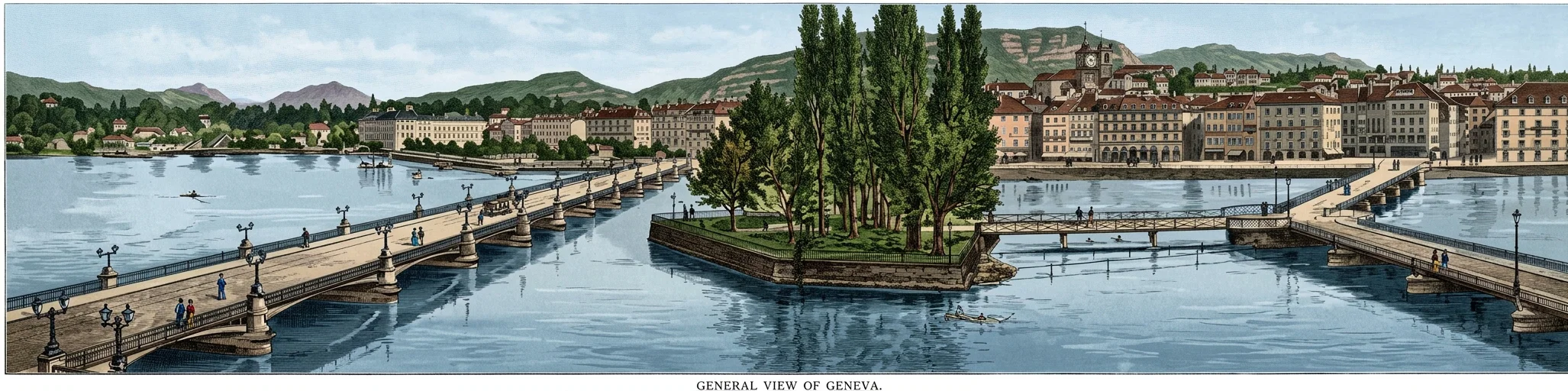
General View of Geneva.
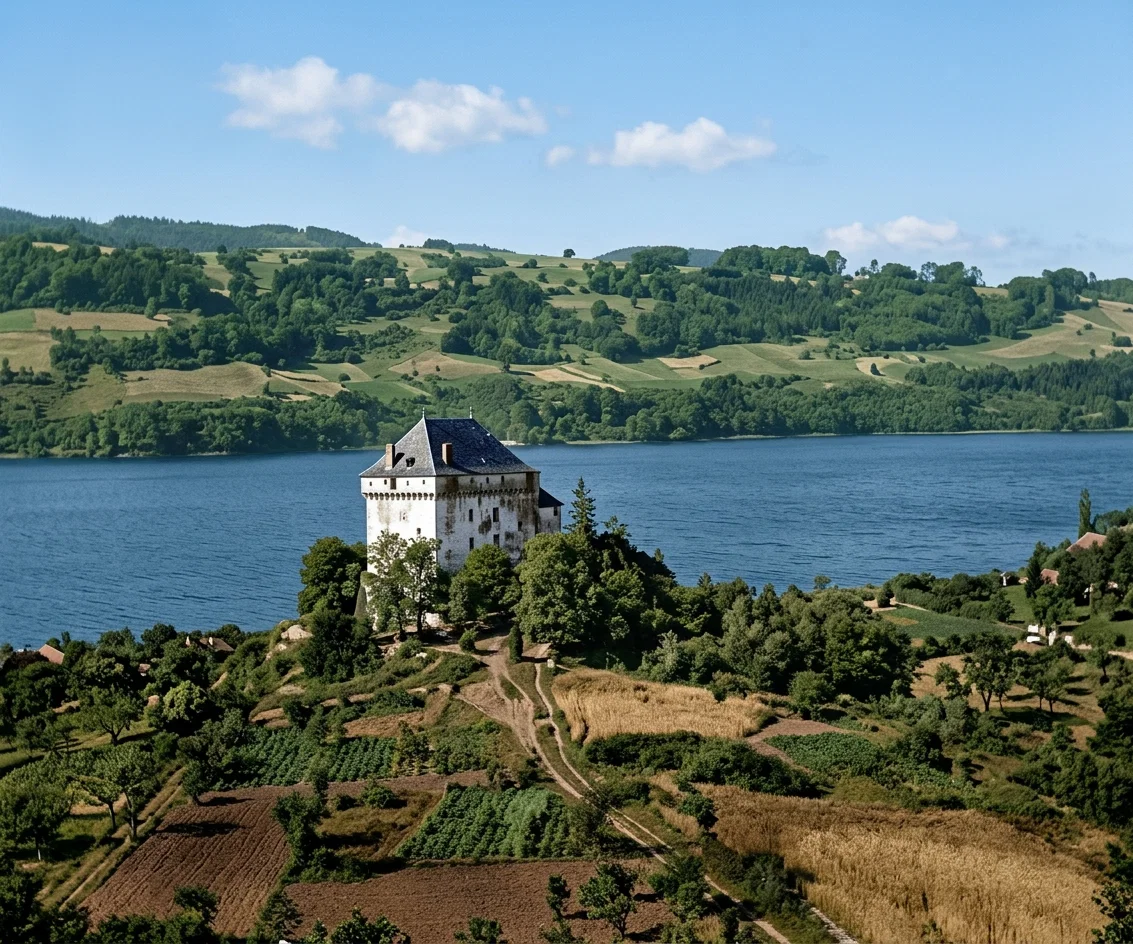
Chateau of Chatelard.
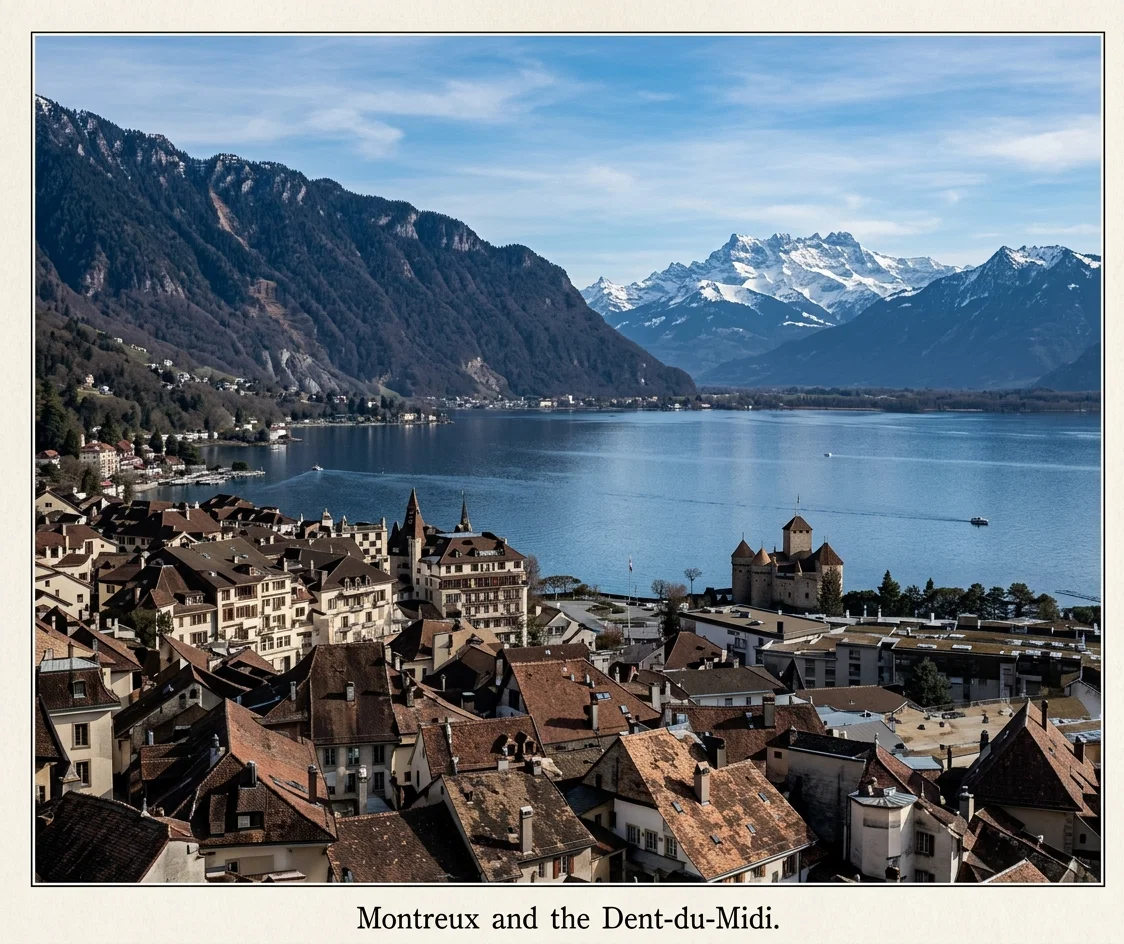
Montreux and the Dent-du-Midi.
The Double-Hearted Nations.
While France sends her delegates to talk peace at The Hague, she sends her captains and soldiers to massacre the Moors. A missionary, W. T. Bolton, who has reached England from Morocco, declares that Casa Blanca would have opened to the French, and the assassins and outlaws been punished without a struggle if it had been desired by the French, but that they purposely provoked the Moors to fight in order that the planned massacre might be consummated. Atrocities unprintable were committed by the French and Spanish soldiers. Cruelty and lechery went mad. One respectable Moorish merchant declared after the massacre: "My son is dead; my three daughters are worse than dead." Peace delegates may talk till doomsday, there can be no peace among the nations of unregenerate men. True peace, permanent peace, can only come thru Jesus Christ.
The Cause Advancing in Fiji.
By John Edwin Fulton
It is now less than ten years since direct work was commenced for the natives of Fiji. Just previous to that time, and just after having arrived from New Zealand, the writer can distinctly remember what his feelings were in commencing work among a strange race in a strange land.
Early Labors and Difficulties.
At that time there was not a Sabbath-keeper in the group, excepting ourselves. We were at first without a knowledge of the language or the customs of the people for whom we had come to labor. These must first be learned. There were a great many hindrances, which at times almost amounted to discouragements. We could hardly explain some of these to our brethren far away, and I am certain many misunderstood our situation altogether. Those early days of labor in Fiji were days of toil. We are glad that by connection with the Australasian Union Conference, and also having the frequent visits of Brother Gates, our needs and conditions became better appreciated.
Ten Years Later.
After about a decade of labor in Fiji, it is most interesting to review the history of13God's work in this group of islands. The Lord has moved before us in a most wonderful manner. Our work has now opened up in a number of islands in the group and we now have ten organized churches and a number of companies. Calls are coming in from many parts for labor, and there seems to be indications that there is still to be a goodly harvest of souls.
We have recently held a most interesting council meeting at Buresala, where our missionary training-school for natives and also headquarters for our mission in Fiji are now located. We had about one hundred and forty natives present at this gathering. There were thirty-seven delegates from the ten churches and unorganized companies. A great interest was taken in the meeting, and I am sure that our brethren who are readers of this paper will be glad to hear that the good Spirit was present. There was not a jar in all our business meetings. Our native brethren went away greatly strengthened by the instruction. Some who had been in the background were helped forward, and the meeting closed with an excellent feeling.
The Foreign Mission Spirit.
Our missionary work at home and in the "regions beyond" was held before our natives, and they were enthusiastic over plans to carry forward the work of the closing message. They showed themselves willing to sacrifice for its advancement. Of their own free will, without even a suggestion from us, they proposed in the meeting that in every place in Fiji where a church or company is raised up, a piece of native land be donated to the work, and in one place where we have been renting land of the natives, the natives of that place took the initiative in proposing that that land be given over to the mission without remuneration to them.
The Publishing Work.
They also desire to take hold of the circulation of our Fijian literature. We now have a paper published monthly, a number of tracts, and two bound books for general circulation, and a small hymn-book. A number of tracts are now called for, some of the old ones being about exhausted, and some needing revision, and new ones being demanded. It is most encouraging to hear the reports from the brethren who have been brought into the truth thru the instrumentality of literature. Even a little calendar which we prepared years ago was referred to by one of our students as being what had led him to the truth. This little tract, for it was a tract, had a page for every month with a Bible-reading on each, as well as the calendar for the month.
The School Work.
The school work under the supervision of Brother and Sister Carr is progressing nicely. This is a great factor in our work. Brother Parker, who has charge of the mission, is full of hope and courage. His wife, who has been very low, is better. Brother Smith, who has recently connected with the mission, is taking hold of the new work with energy. Our native laborers are doing good work. We wish we had more, but the school is here for the purpose of training workers.
Old Pauliasi Bunoa, our ordained native minister, is well, and we were rejoiced anew at the conference to see how helpful he is in our work. May God bless the work and workers in Fiji. J. E. FULTON.
A Visit to Pitcairn Island.
By B. J. Cady
It was my privilege to visit Pitcairn Island from June 9-13 of this year. In company with Brother Carey, who has been teaching our school at Raratonga, we left Tahiti, June 2, on the "Torch," a British gun-boat. We had a good trip both ways.
Arrangements were made whereby the Pitcairn Islanders are to have a cutter of about fifteen tons, which will open up communication between Pitcairn and the Society Islands. It is expected that this boat will make a trip to Tahiti about once in four months. All the islanders seemed to be enjoying fairly good health. Brother Carey remained there to help them in their school and in the church.
On account of so few ships passing the island of late, the women especially were quite destitute of clothing.
While there, I held meetings every day, and all seemed to appreciate the help given. Brother Thursday October Christian is now eighty-eight years old, and seemed quite well for such an old man. He said to me, "Brother Cady, ask me for anything you want, and if I can I will give it to you." I told him I would like something that he could give me. He seemed pleased and said, "What is it, Brother Cady?"
I told him that I would like him to pray for me and for the work of God in these islands. When we knelt down and prayed I thought of the old patriarchs, Abraham and Jacob, as they prayed for the younger members of their families. Truly God is pleased with His old and tried servants. This brother, like God's servants of old, is looking for a better country. Moses Young and wife are a few years younger. But tho the outward man is growing old, the inner man is filled with joy at the good news of Christ's soon coming.
There are not less than sixty children and youth on Pitcairn Island that ought to be in school. Brother Carey will find plenty of work to do for them. We hope that his stay there may be a great blessing to all, both old and young.
It is expected that Brother McCoy and other Pitcairn Islanders will come to Tahiti on their cutter about the first of September.
All seemed glad of our visit, and I trust that this short meeting was the means of encouraging many. We thank our kind heavenly Father for sending us such a good ship to help us make this trip in eighteen days. On my previous visit to Pitcairn, I had to be away from home for three months and a half.
B. J. CADY.
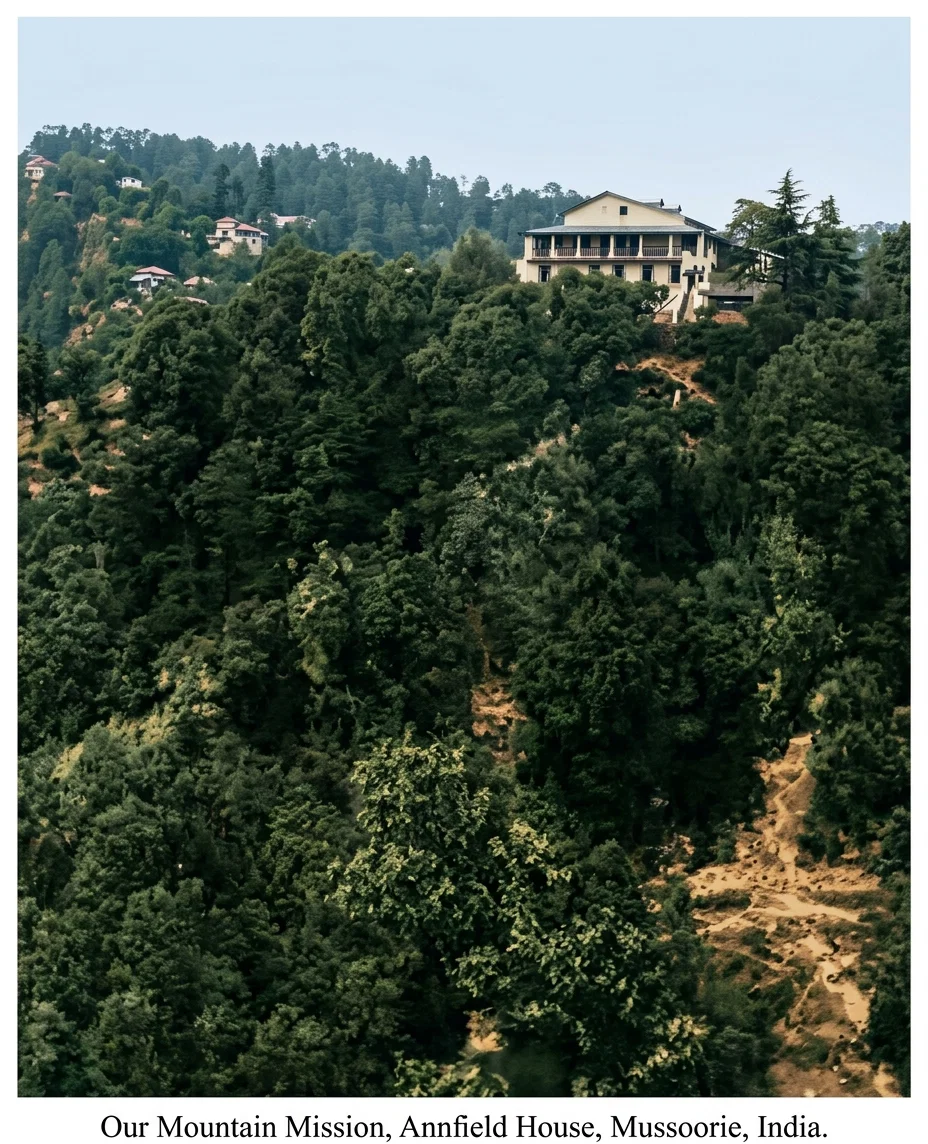
Our Mountain Mission, Annfield House, Mussoorie, India.
Annfield House, Mussoorie, India.
THE above heading is the address of our "Mountain Mission" in India. Brother J. L. Shaw, the superintendent of our work in India, says, in a recent letter, "I wish that I could have sent you a picture showing the property to a better advantage than the one sent you last, but that seems almost out of the question owing to the way the estate is situated on the spur of a mountain by itself. It is very difficult to get a good picture of the property from points where it shows off to best advantage because of the distance." The picture on this page was taken from a spur of the mountain opposite the mission and about a quarter of a mile distant. The house shows quite small, but the cut will give a better idea of the surroundings than the one previously published, as that was designed to show the house more particularly.
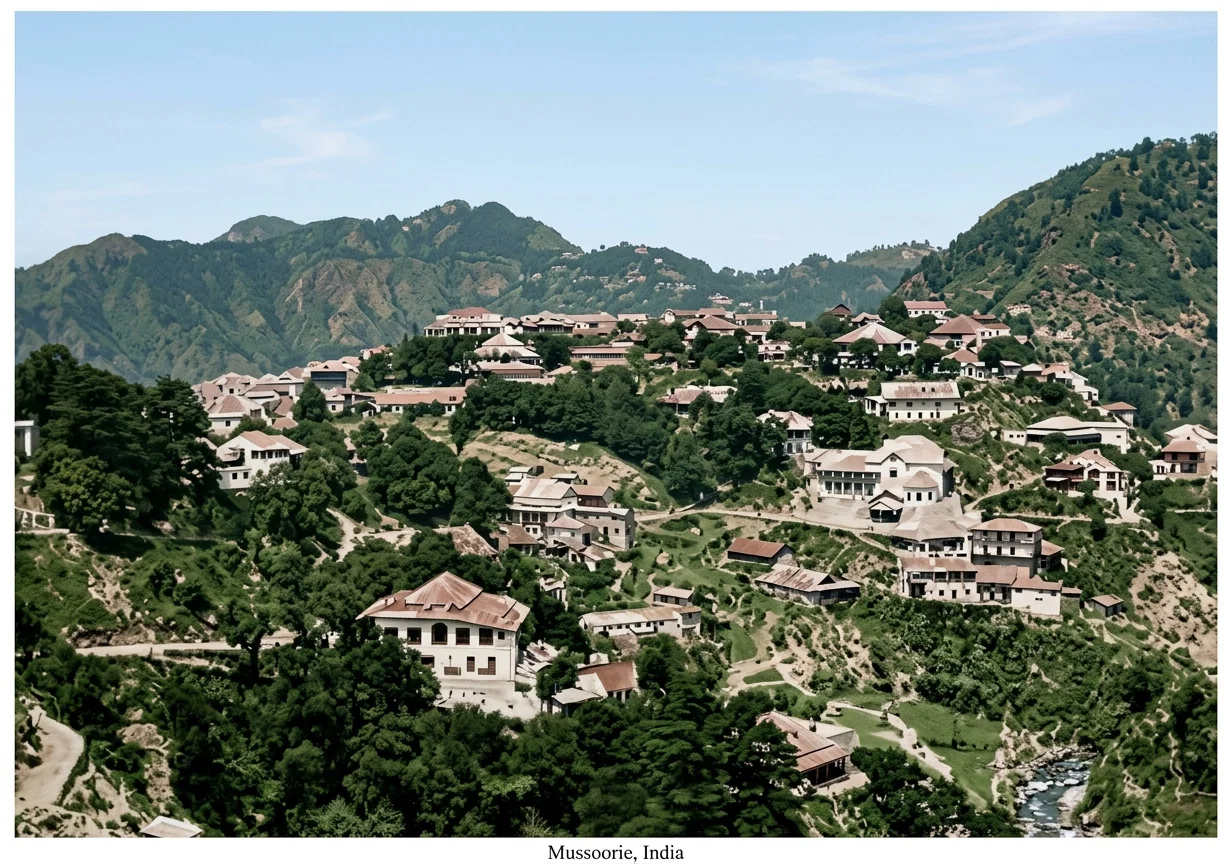
Mussoorie, India.
During the last six weeks three converts have been baptized at the Mountain Home. These are the first-fruits of the work in the mountains, and show that the missionaries can be accomplishing good work for the Lord while they are resting in the cool and bracing climate of the mountains and away from the depressing and health-destroying heat of the lowlands, where they work most of the time.
Brother and Sister Burgess are "resting" at the Mountain Home while they are translating and preparing some literature for the great field of India. This is another good example of how the tried workers there can keep right on with their work and still have a rest and vacation at the same time. Surely the hand of our Father led in the establishing of that home in the mountains of that great, needy mission field.
Brother Shaw says that his health is better than it has been for three or four years. When we consider that he had to return to this country two years ago on account of his health, and remain here for quite a time taking medical treatment before he felt equal to cope with India's climate in the lowlands, this also says to us that we made no mistake in establishing the mission. All who have had a part in it will certainly rejoice.
T.
Our Work and Workers.
By Editor
A SERIES of meetings held in Bridgeton, N. J., last winter by Brother Carl Haynes resulted in the baptism of eleven, August 11.
CAMP-MEETINGS always prove a harvest-time of souls. At Eureka, Cal., eight were recently baptized at the close of a good meeting.
THE India Mountain Mission Home has been the scene of the baptism of converts to the truth, a native man and his wife, and more are being shown the way of life.
BROTHER J. F. OLMSTED writes to the Indiana Reporter that his labors in Durban, Natal, South Africa, have brought fourteen to the Saviour, all of whom he has baptized.
BROTHER K. C. RUSSELL writes of the Fort Worth (Tex.), camp-meeting: "There were a thousand or more people in regular attendance. Last Sunday it was estimated that there were eighteen hundred or more people at the meeting. Over seventy were baptized and fifty-five new converts."