Biennial Conference and Workers' Institute in India
By A. G. Daniells
A workers’ institute and the biennial conference of the India Union Mission for 1914 was held in Calcutta, December 18-28. This meeting was attended by one hundred and eighteen representatives, who came from all parts of this union mission: twelve general representatives, twenty-three from the northern division, fourteen from the southern division, thirteen from the western division, thirty-eight from the Bengal division, and eighteen from the Burma division. Of these about ninety-six were Europeans, and twenty were natives of India. It was the largest conference of our people ever held in India. The little hall in which the biennial meetings have convened for several years was well filled during the days, and packed at the evening services. It was decided that a larger hall would be required for the conference to be held two years hence.
Personally it was a very great privilege to me to meet all these workers and believers in India. Only two of all the American workers present were in India before I became chairman of the Foreign Mission Board. These were Sister Georgia Burrus-Burgess and Sister May Taylor-Quantock. The former came to India in the spring of 1894, and the latter in the fall of the same year. All the rest I had helped in some measure to select for this field. My heart was filled with deep emotions as I looked into the faces of these dear fellow workers, when we had gathered for our opening meeting. I felt more like a father in the midst of a large family of children than a speaker standing before an audience.
And here I wish to say to the fathers and mothers, the brothers and sisters, and other relatives, also to the former classmates and interested friends of these workers, that nearly all of them are in good health and of excellent courage. They love the work to which they have been called, and the most of them want to remain in India until the work of God is finished in the whole world, and the Saviour comes to gather these dear people whom they, by his grace, are leading to the obedience of his truth.
Another pleasing and important feature of this delegation was the presence of about thirty Anglo-Indians, Indians, and Burmese. Nearly all these are engaged in some branch of the regular work in this field. Thus we are gradually and carefully training a staff of workers gathered from those who embrace the message in India.
The Institute
The workers’ institute was conducted very much as we have conducted such institutes in other fields. As we could be together only ten days, and as it was necessary to attend to the administrative affairs of the mission during this time, we could devote only about one half of our time and thought each day to the institute work. We have always found that it works best to give our whole time and thought and effort to the seeking of a clearer vision and a deeper religious life. But the situation here made it impossible to do this, so we did the best we could.
REGULAR MEETING HALL, CALCUTTA, INDIA, WHERE THE CONFERENCE WAS HELD
Our first meeting of the day was devotional, given to prayer and praise; the second was a regular study of the institute; and this was followed by conference proceedings. The first hour of the afternoon was devoted to conference proceedings also, then came the question box, and in the evening a general meeting for the public. In these evening services I conducted a series of studies on our message and its progress.
The presence of the Lord was with us throughout this meeting. The entire forenoon of each Sabbath was spent in earnest efforts to draw near to the Lord. One of the devotional meetings in the middle of the week was continued through the whole forenoon. This was a most earnest, heart-searching time. The peace and joy of the Lord filled our hearts as we endeavored to renounce everything offensive to our blessed Master, and to reconsecrate and rededicate our lives to him and his service. We had the assurance that he accepted our repentance and consecration, and that he reordained us for the work to which we are called. To me, personally, this institute was as helpful as any I have attended. But we needed a longer time together, and the whole of the time for the one thing. I hope this can be so arranged at the meeting to be held two years hence.
The Conference
The proceedings of the conference consisted of the usual reports of the general officers, the superintendents of the division missions, the superintendents of mission stations, the secretaries of departments, and the field workers; also the discussion and adoption of reports submitted by the regular standing committees. As this was my first visit to India, all these reports were of deep interest to me. They were full of helpful information regarding the progress of the cause of present truth in the various parts of the country. I was also deeply interested in the question of organization for this extensive field with its many perplexing problems.
In his opening address, Professor Salisbury made this encouraging statement: “The past two years have marked an advance in our work, not sufficient to satisfy us, but enough to encourage us. I give herewith the figures as I have been able to collect them, according to reports rendered by the superintendents of the different divisions. Our membership at the end of 1912 was approximately 210; at the present time, 391. The number of baptisms was 153: in 1913, 75; and this year, 78. In giving the present membership at 391, I have recorded only baptized members, European and Indian, whose names are regularly enrolled on our church or mission station books. All departments of our work show substantial gain this biennial term.”
Regarding finances, he said: “While the greater part of our money for the support of laborers in the India Union Mission comes from our brethren in America, yet I have been greatly encouraged to see the increase in our own tithes, Sabbath school donations, and other offerings. The tithes for the last biennial term were about $11,918, and for the past two years, $13,590, a gain of 25 per cent. The Sabbath school donations were $1,486 in 1911 and 1912, and about $1,988 this biennial term, a gain of over 33 1-3 per cent. We should give the question of funds careful consideration at this time, so that we in India may do all in our power to aid in raising funds for the finishing of this great work. The time is not far distant when our English work will be self-supporting, so that the mission funds from the home board can be used entirely for work among the non-Christian peoples.”
The reports of the superintendents of divisions and the heads of departments all expressed courage and hope regarding the triumph of the work in India.
As we studied the administrative features of the field, we were impressed that we ought to enlarge and strengthen the organization. We therefore adopted the constitution and by-laws of the Asiatic Division, making the necessary verbal changes to adapt them to the India Union Mission. This adds to the authority and responsibilities of the general committee, and it more clearly defines the duties of all upon whom official responsibilities are placed throughout the field. This will strengthen the general and local administration, and thus will enable the brethren to prosecute their work with greater dispatch and efficiency.
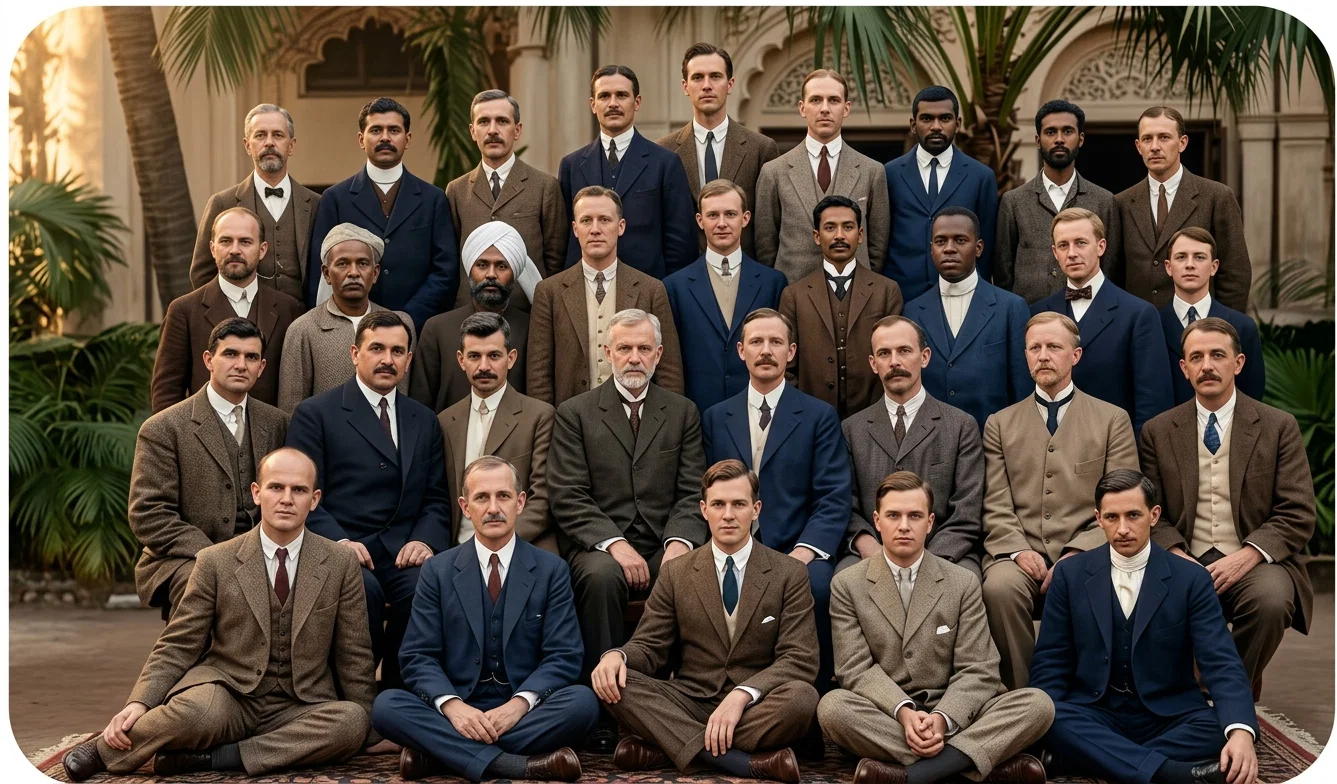
ORDAINED AND LICENSED MINISTERS, INDIA UNION MISSION
This was a truly encouraging conference. The workers reported an excellent interest wherever they are conducting missions, whether among the English-speaking people or the native races. In no other conference that I ever attended have I heard so many requests made by the laborers for prayer in behalf of those deeply interested in the truth and under conviction that they ought to obey. The difficulties in the way of keeping the Sabbath in this country are far greater than in the United States and in many other countries. It surely requires faith, for in most cases it involves the support of the family. For this reason people hesitate11and while they halt, the workers offer continual prayer to God. A great number of requests were brought to the conference by both European and native workers for the earnest, prevailing prayers of those present. As the meetings progressed, from day to day, we were deeply impressed that the Lord is surely pouring out his Spirit upon all flesh, even in India, with all its superstition, heathenism, and degradation.
Yes, God is working in India. He has been with the workers here from the first day. He has seen the stupendous task to which he called them, and has helped them. Those who have fallen by the hand of death on the battlefield have not died in vain. Those who have lived to plow, and sow, and water have not labored in vain. Those who have given their money and their sons and their daughters to India have not thrown treasure away. It has not been wasted nor lost. All this has established our glorious cause in this land of darkness, and, thank God, it is substantially and permanently established. It will never be uprooted. It has met the worst opposition that can be brought against it, and has triumphed. It is gathering momentum and making headway.
This is the conviction that has gradually stolen over me day by day for three months as I have tried to acquaint myself with conditions in various parts of the field. And with this is the further conviction that we must greatly enlarge our work in India. We must do more than we are doing. What has been accomplished opens the way for more to be done. Truly the harvest is great. Openings on every hand beckon us to enter. Now is the time to invest in India. The evangelistic efforts among the English-speaking people in the cities are as encouraging as anywhere in the world. They are bringing into the message a class we greatly need in this country,—men and women of education, moral worth, influence, and means. One of our brethren in Calcutta has charge of one of the government offices in which eighty men are employed in drawing and preparing maps for the government; two others in Simla hold very important positions in government departments; another is manager of a large ice plant in Agra; and others are employed in stores, shops, and factories of various lines of business. These men are needed for a good, stable foundation and framework of a growing cause. But we are short of city evangelists of experience. We need more help to open the work in such cities as Madras, Colombo, Maulmain, and Delhi. Nothing has yet been done by us in these large, beautiful places. We know of no reason why the same success now attending the work in Calcutta, Bombay, Simla, and Rangoon may not be ours in these other cities. Good churches in all these places of influence will do much to give the work the needed support in India.
To enter these cities will take more workers and more money. Including the president of the union, the editor of the papers, one physician, and one schoolman, we have only eight ordained ministers in all India, and half of these are giving their whole time to the vernacular work. But right now is the time to make this investment, and it would be made if the thousands of our people in the States could see the situation just as it is and as it is seen by those on the ground. The messages that have recently come to us through the spirit of prophecy to work in the cities surely mean the cities of India as well as the cities in the United States.
All that can be truthfully said about the work among the English-speaking people may also be said in its proper application regarding the efforts in behalf of the native peoples. This I shall endeavor to make clear in my reports of visits to the different mission stations.
Surely the Lord is “working salvation in the midst of the earth” (Ps. 74: 12), including India, and many prayers are being offered to him to send more laborers into this field.
From the proceedings of the conference, which will be furnished by the secretary, the readers of the REVIEW will learn of the steps taken for progressive work. As already suggested, the administrative affairs of the field were more thoroughly organized, the departments were strengthened, one new division was created, and it was decided to establish three new mission stations. Professor Salisbury was reelected president of the union. His work has been very strenuous since coming to India, but he has stood the strain as well as could be expected. He has won the confidence and love of the workers and believers throughout the field. However, he must slacken his pace in order to hold out.
The workers returned to their fields with good cheer and renewed courage to press the battle to the gate. Pray for India, with its teeming millions.
A. G. DANIELLS.
Adversity Our True Friend
“A HIGH character might be produced. I suppose, by continued prosperity, but it has very seldom been the case. Adversity, however it may appear to be our foe, is our true friend; and, after a little acquaintance with it, we receive it as a precious thing—the prophecy of a coming joy. It should be no ambition of ours to traverse a path without a thorn or stone.”
Our Dependence on God
By G. B. Thompson
MAN is indebted to God for every breath he draws. It is “in him we live, and move, and have our being.” Without him we can indeed do nothing, and we should continually render thanksgiving to God for his watchful care over us. He who watches the sparrow fall, and numbers the very hairs of our head, gives to us moment by moment the life we possess.
The following paragraphs concerning the heart, greatly impress this thought, and vividly place before us the fact that man is indeed a most delicate piece of workmanship, fearfully and wonderfully made:—
Whether we sleep or wake, sit or stand, walk or run, toil or rest, the tireless heart toils on, keeping the current of life in motion without any thought, attention, or will of ours. And if for one minute it should become, like the hand or arm, weary and demand rest, it would never beat again. Watches must be wound up or they will not run. Engines must be supplied with fuel or they cease to work. All machines must be watched and their moving power constantly renewed, or they become useless. We give no attention to the beating of our hearts. The force that moves that small living engine is as independent of our will as the force that moves the sun in the heavens. And yet in each of our bosoms that unwearied worker keeps counting the seconds, one, two, three, stroke by stroke, and it must count thirty millions of strokes for every person that lives from the beginning to the close of a year; and the moment it stops counting, we are in eternity. This tireless timekeeper, which every one carries in his bosom, is all that preserves our connection with the months and years of time. When it stops, time to us shall be no more.
Is it not a very wonderful thing that so frail and sensitive an organ as the heart can work so long without resting? Is it not a very fearful thing that we should have no choice or will or command over the heart, and yet the continued counting of strokes by that unwearied worker in our bosoms is all that stands between us and the tremendous destinies of death and eternity? Suppose a pendulum, swinging in your bedchamber, kept in motion by no visible hand or machinery, moving sometimes faster, sometimes slower, yet always going, and you lie down upon your bed, knowing that if it should stop for a moment, while you sleep, or when you wake, you will be in eternity,—would you not look upon that pendulum with fearfulness and awe? You go forth to your daily task leaving it swinging there, and it must keep swinging or you will never come back alive. Would you not think many times in the day of the mysterious power that holds your life without asking your leave?—“Our Father’s House,” pages 521, 522.
Truly we ought to render to God the deepest gratitude for his manifold blessing and constant care, and glorify him in our bodies and in our spirits, which are his.
G. B. THOMPSON.
The Spirit That Wins
By Frederick Lee
FREDERICK LEE
HERE is a picture of two Chinese canvassers, brothers. The boy at the right is one of the best colporteurs we have. No matter what the weather or the conditions, he is out with his papers. When others are discouraged, feeling themselves unable to sell more than a few papers a day, he cheers them on with his happy smile, and by his energetic ways he may sell a hundred or more a day. “No matter what comes,” he says, “I must go out and sell a hundred papers.” And he rarely comes in until the last one is sold.
The colporteur has no easy task, for there is nothing the heathen man detests more than “eating a foreign religion.” Many times our workers are cursed and mistreated for having turned from Confucianism to the religion of Jesus, which the Chinese think has come to their country from across the sea. In this one province of China we are selling about 10,000 copies a month of our paper (Signs of the Times).
Hankow, Hupeh.
Native Life and Mission Work
By T. J. GIBSON
Southern Rhodesia, South Africa
(Concluded)
T. J. GIBSON
Religion
THE religious belief of the natives is so variously manifested that it is difficult to define. They have the common belief in a Creator, or Great Spirit, and they are very superstitious. They have some forms of worship, the most common of which perhaps is the praying for rain. In this, they pray to the spirits of their dead chiefs to intercede for them with the Great Spirit. They visit the graves in succession, having a ceremony at each, and then a general assembly at the conclusion. A priesthood officiates in such a ceremony, which may last two or three weeks at a time. We know of one instance where they worshiped a large cream-of-tartar tree, and at the time when rains were due they brought garlands of wild flowers, placing them on sticks against this tree, and there offered up their prayers. Witchcraft, though forbidden by law, is still practiced among them, and leads to a great deal of evil and mischief.
Educational Advantages
Missions have been responsible for most of the school work done for the native. Along the coast this work has been carried on for the past century, but in Rhodesia and other parts of the interior it is yet in its infancy. Industrial schools are most favored by the government, and are considered to give the best results. A great deal of day school work is also done, and is a feeder for the industrial institutions. Many of the mining camps have night schools for their native help. These are well patronized, and are usually taught by native teachers from the missions. Several denominations have night schools in the towns. At most of the industrial missions, the natives are taught general farm work, brickmaking, and building. Printing, bookbinding, and trades classes are carried on by some of the older institutions with good results.
TWO COLPORTEURS IN HUPEH, CHINA
At most of our mission day schools, only the vernacular is taught, first with a primer and then the Scriptures. From these schools are brought to the main stations the young people, both boys and girls, who are the most apt in their studies. At the main stations the native language is taught first, and as soon as a pupil is able to read the Scriptures in his own tongue, he is then given an English primer, followed by standard readers. Reading, writing, spelling, simple arithmetic, grammar, physiology, and geography make up the curriculum of the school. Naturally the Scriptures are most studied and are readily accepted by the young people coming into the schools. The Bible is their one book, and its plain teaching is final, and its authority unquestioned.
The older people who come in touch with the missions, are for the most part silent lookers-on. We think of one notable exception in this instance, a middle-aged man, at Somabula Mission, Gwelo. He must have been over forty years of age when he joined the mission family, not as a pupil, but as a water carrier. He is partially blind, but finds his way between the spring and the camp. He was there several years before he manifested any particular interest. Finally he gave testimony of a desire for a renewed life, and was converted and baptized. He is now about fifty years old, and apparently a sincere Christian. He is always happy. We hear of other cases of those advanced in life, but they are not frequent.
Dress
The dress of the natives in their rural state consists chiefly of skins with the hair scraped off. These skins are used in the form of aprons tied around the waist, also under the arms or about the shoulders. The older women adhere to their own way of dress, but the younger women are adopting short, plaited skirts, made from imported cotton goods; also shawls. The old men frequently wear one or two European-made garments. The ordinary shirt or singlet, and perhaps a waistcoat, jacket, or overcoat, are sometimes adopted, but very seldom the trousers or hat. They wear sandals of rawhide. Children up to their teens are not much encumbered. Ornaments in the form of necklaces, bracelets, and anklets, composed of beads, seeds, teeth, tusks, and even of bones and horns, are extensively used. Brass rings and spirals are worn about the neck, forearm, and ankles, and seem to be favorites with women. Sometimes they have a spiral collar to the depth of four inches.
Results of Mission Work
One of the first indications of improvement we observe in the raw natives who come to us is that they begin to clean up and wash their clothing. In very rare cases do we need to remind the newcomer that liquor and tobacco are not to be used on the mission farm. We have one man here with us now, between thirty-five and forty. Doubtless he had been using tobacco for ten or fifteen years, but he gave it up without any apparent struggle. Not only do the natives clean up when they come in contact with the missions, but there is soon an indication of improved health. They invariably fatten. We have noticed this so often that we are convinced of its certainty. This becomes very marked when a boy leaves for a few months and returns.
We do not see the all-round improvement in their lives that we wish, but considering the short time they have been in contact with civilization and missions, we may well wonder at the advancement that has been made. In estimating the results of mission work for the native, we do well to consider the words of Isaiah, “Look unto the rock whence ye are hewn, and to the hole of the pit whence ye are digged.” After eighteen hundred years' proclamation of the gospel among us Europeans, the text still reads, “Look . . . to . . . the pit whence ye are digged.” There are many real jewels among14this people, and we find them in our work. We have with us a Basuto boy who came to this country from the Transvaal about twenty years ago as a lead boy for oxen, and he followed the transport life until about five years ago. He accepted Christianity soon after joining the mission school, and is now one of our most stanch believers.
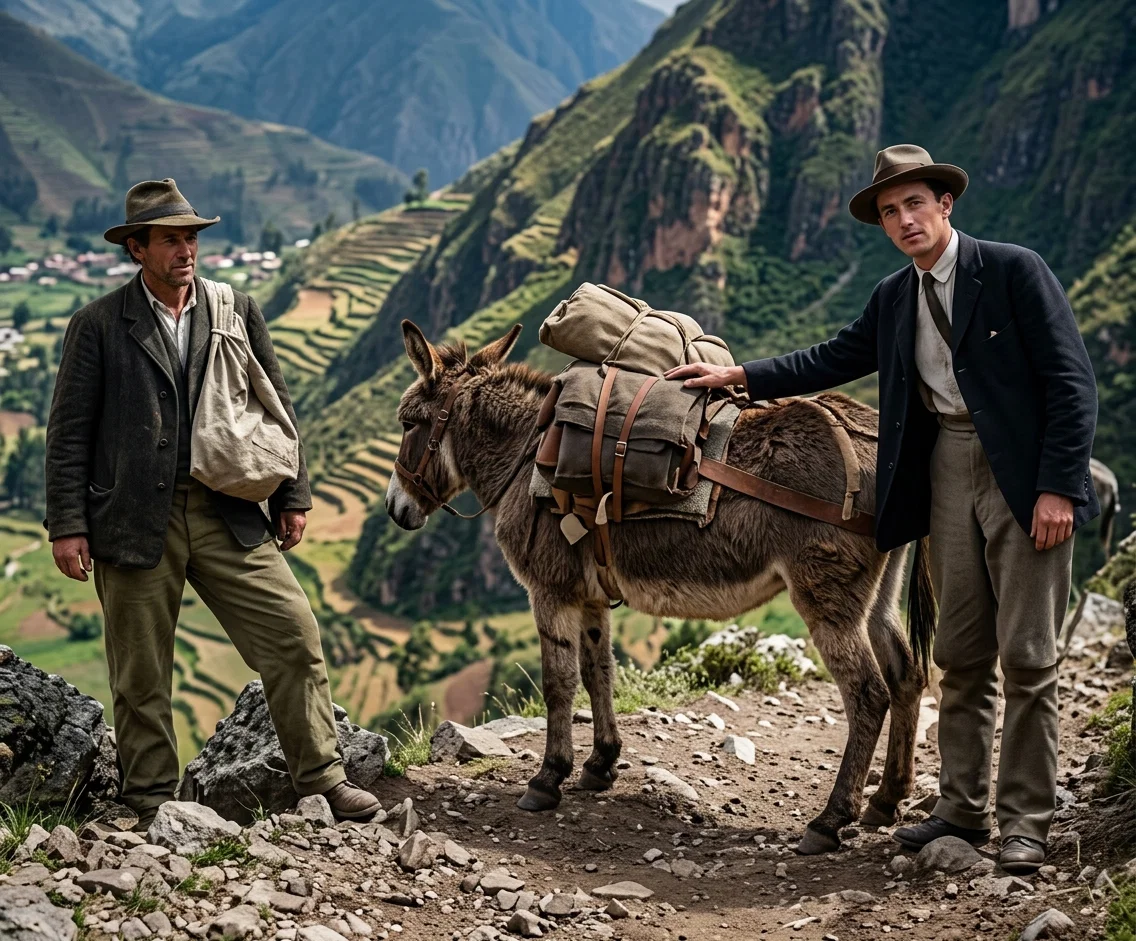
BRETHREN MAXWELL AND STAUFER EN ROUTE TO LANCA, PERU
Though he is about forty years old, he has made remarkable progress, especially in the Bible. He has a burden for souls, and two months ago we started him out as an evangelist. We have three other boys about the same age preparing for evangelistic work. The younger men with more schooling are used as teachers, but the older men have greater influence in doing pioneer work. It is on these we depend to open up the work at native villages and arrange for out-schools.
Caracas, Venezuela.
By S. A. OBERG
S. A. OBERG
At the time I mailed my last report, I sent my wife and our babes to Trinidad. Only five months before I had gone down so light-hearted to welcome them, and now, with a heart that felt like lead as I sent them away, I returned to my work, but it seemed that my heart went to sea with them. [Sister Oberg was forced to leave Venezuela to obtain needed medical help.] Four weeks have passed since then, and, praise the Lord, I have not known where the time has gone, so rapidly has it flown.
Just before my wife went, a shipment of “Practical Guide” (Spanish) arrived. I had no canvass for it, so set to work to improvise one, and at the same time began a canvassers’ institute for two Trinidad Spanish-speaking men, who were recently baptized. We spent eight days together, then went to work.
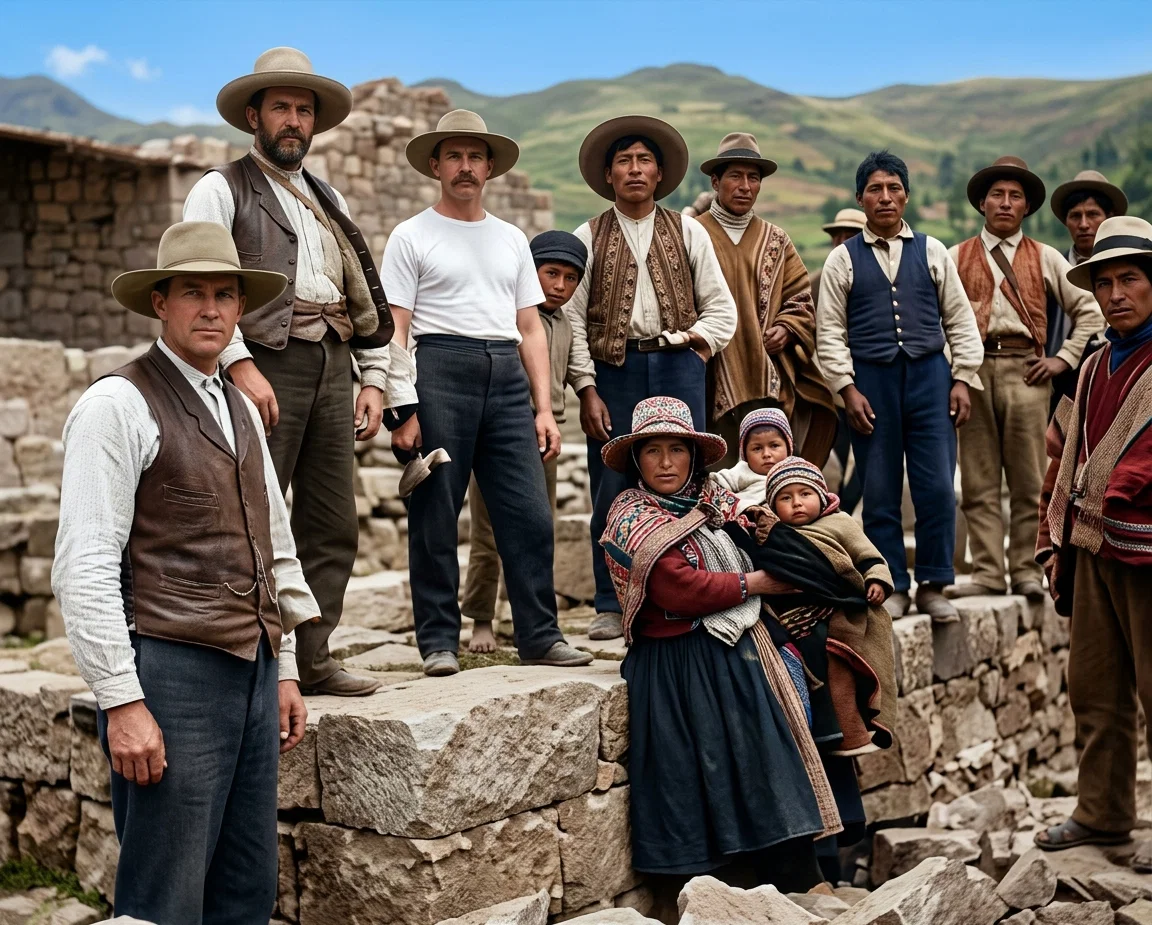
BRETHREN MAXWELL AND STAUFFER HELPING INDIANS ON THEIR CHAPEL AT LANCA, PERU, ON THE WESTERN SLOPE OF THE ANDES MOUNTAINS
I also started to work in La Guaira, our port town, because in that town a minister and his wife are very much interested in the truth, and while with them I could begin canvassing. During the week, I spoke twice in his church; and as for the book work, I took $106 worth of orders, at the same time collecting over $42 on subscriptions for the Spanish magazines. Last Monday I had my delivery there. I occupied the pulpit again the Sunday night previous. The entire congregation is interested and asking questions. I delivered $95 worth of the orders taken, making $137 total receipts for the week’s work.
Two or three incidents stand out prominently in the week’s work. I had in my possession a letter from Brother Cornforth’s wife that she had written to Trinidad, asking to have the Venezuela missionary look up her father, Mr. A. H. Kell. I inquired after him, and found him a busy English engineer in charge of the big harbor corporation. He was anxious to hear from his daughter, and especially glad to meet me because I could tell him of her. As he has a Spanish wife and family, I took the opportunity of making him acquainted with our work, in which he was much interested, so much so that he subscribed for our three papers, and took the medical book besides, paying me $6.25 in cash for the order. Later I met his wife, and while visiting with her, she wanted to know how it was that I came to look for her and Mr. Kell. I explained that although I had not seen her daughter, yet by being members of the church and body of Christ her interests become mine, and mine hers, so that as soon as I knew that her parents were in La Guaira near me, I at once made it my business and pleasure to become acquainted with my sister’s father and mother. This seemed to touch her heart. As I was leaving, she said, “Don’t forget your mother lives in La Guaira, and you must come to see her often.”
[Since receiving this article, word has come that Sister Oberg must leave Trinidad, where she hoped help might be afforded while her husband labored awhile alone in Venezuela. It is quite probable both of them, with their children, are now on their way to the States. Sister Oberg is suffering from a tropical disease that can be relieved only in a colder climate.—T. E. BOWEN.]
Peru
By E. L. MAXWELL
E. L. MAXWELL
Last week Brother Stauffer and I went up to Lanca, a place about sixty-five miles inland from Lima, where our brethren are building a small chapel. We helped them on the foundation for a week. They have had some difficulties in getting the work started, but are forging ahead. We are hoping that they will be able to finish it in about six months, so that we may hold a series of services in it. Meanwhile, I am working with a lawyer here to get the privilege of forming a corporation so that we shall be able to hold property in the name of a legal body rather than as individuals.
We have had some blessed experiences with the special numbers of the Atalaya, having sold 6,900 copies of the three numbers without the least difficulty. I sold eighty-two in two hours, and my oldest boy sold 127 in about ten hours. All these were sold in Callao. Workers in other places have as good or even better success.
Our first general meeting in this union mission will be held in Lika in April, and we hope to see steps taken which will do a great deal for the furthering of the work, and for the unification of our efforts in the different fields of the union.