Your ShelfYour Projects

Signs of the Times, Vol. 25, No. 43.

AGAINST THEMSELVES
Earlier text: JUST THE APPOINTED WORK

LESSON VII.—SUNDAY, NOVEMBER 12, 1899

REBUILDING THE WALLS OF JERUSALEM.

Lesson Scripture, Neh. 4: 7-18, R.V.
7 "But it came to pass that, when Sanballat, and Tobiah, and the Arabians, and the Ammonites, and the Ashdodites, heard that the repairing of the walls of Jerusalem went forward, and that the breaches began to be stopped, then they were very 8 wroth; and they conspired all of them together to come and 9 fight against Jerusalem, and to cause confusion therein. But we made our prayer unto our God, and set a watch against 10 them day and night, because of them. And Judah said, The strength of the bearers of burdens is decayed, and there is 11 much rubbish; so that we are not able to build the wall. And our adversaries said, They shall not know, neither see, till we come into the midst of them, and slay them, and cause the 12 work to cease. And it came to pass that, when the Jews which dwelt by them came, they said unto us ten times from 13 all places, Ye must return unto us. Therefore set I in the lowest parts of the space behind the wall, in the open places, 1 even set the people after their families with their swords, 14 their spears, and their bows. And I looked, and rose up, and said unto the nobles, and to the rulers, and to the rest of the people, Be not ye afraid of them; remember the Lord, which is great and terrible, and fight for your brethren, your sons 15 and your daughters, your wives and your houses. And it came to pass, when our enemies heard that it was known unto us, and God had brought their counsel to naught, that 16 we returned all of us to the wall, every one unto his work. And it came to pass from that time forth, that half of my servants wrought in the work, and half of them held the spears, the shields, and the bows, and the coats of mail; and the 17 rulers were behind all the house of Judah. They that builded the wall and they that bare burdens laded themselves, every one with one of his hands wrought in the work, and with the 18 other held his weapon; and the builders, every one had his sword girded by his side, and so builded. And he that sounded the trumpet was by me."
Golden Text: "Watch and pray." Matt. 26: 41.

SUGGESTIVE QUESTIONS.

(1) What is included in this lesson? Note 1. (2) Give an account of Nehemiah's preliminary work. Note 2. (3) What opposition did he meet? and what effect did it have? Note 3. (4) How did the Jews' success affect the adversaries? V. 7. (5) What did they do to hinder the Jews? V. 8. (6) What did the Jews do? V. 9. (7) Yet how were the people of Judah affected? V. 10. Note 4. (8) What did the adversaries say? V. 11. Note 5. (9) How did the Jews without, discourage those in the city? V. 12. (10) What additional precaution did Nehemiah take? V. 13. (11) How did he encourage the people? V. 14. (12) What did the withdrawal of the enemy permit them to do? V. 15. (13) How did Nehemiah manage his forces? Who supported the people? V. 16. Note 6. (14) How did the men go on with the work? Vs. 17, 18.

NOTES.

1. This lesson section includes from chap. 2: 11 to 7: 73, the whole account of rebuilding the wall. All should be carefully read, especially chapter 4. Artaxerxes Longimanus was still emperor of Persia; Nehemiah was governor, or pasha, of Judah, and Ezra was religious teacher and scribe.
2. In our last lesson we have an account of Nehemiah's praying; in this lesson is the fulfilment. Chapters 2 and 3 tell us how the king was moved by God to grant his request; of his journey to Jerusalem; of the opposition he met from Sanballat, a Horonite, Tobiah, an Ammonite, and Geshem, an Arabian; of his examination of the wall by night; of his meeting with the rulers, and acquainting them with his plan; and the division of the work among the people of every sort and condition, and its progress.
3. The enemies of the Jews, Sanballat, Tobiah, Geshem, and others, mocked them, ridiculed their work, and were wroth, showing their ridicule to be insincere. But Nehemiah and his people prayed and worked, "and all the wall was joined together unto half the height thereof; for the people had a mind to work." So it will always be.
4. We are not able.—It was the language of unbelief on the part of Judah. The work went hard; the burdens grew heavier as the wall went higher; some of the wealthier Jews oppressed their brethren—and, apart from God, it was discouraging. In God they were able, and this was the substance of the prophet's message years before, "God is able;" and prayer in faith brings God's power.
5. They shall not know.—All their conglomerate enemies were going to attack them in secret. Of this the Jews were warned, seemingly by their brethren without, who believed they should flee. Nehemiah's answer was to place his defenders, well armed, in the lowest places in the wall, and with them their families, and bid them to be of good courage, and faithful to God. When their enemies saw their determination and faith, they withdrew from the scene. It is often true that more than half the battle is the purpose, the will, the decision to stand.
6. Half of my servants.—Nehemiah divided the work of his own servants, half workers and half watchers, while the rest of the Jews worked in their armor. United working, praying, fighting with vigilance the good fight of faith, gave success to Nehemiah and his fellows; it will do the same today. But this means following God's plan.

LESSON VI.—SABBATH, NOVEMBER 11, 1899

THE QUESTIONS OF THE SADDUCEES, THE LAWYERS, AND THE PHARISEES.

In the Temple at Jerusalem, A.D. 31.
23 "On that day there came to Him Sadducees, which say that there is no resurrection; and they asked Him, saying, 24 Master, Moses said, If a man die, having no children, his brother shall marry his wife, and raise up seed unto his 25 brother. Now there were with us seven brethren; and the first married and deceased, and having no seed left his wife 26 unto his brother; in like manner the second also, and the third, 27 unto the seventh. And after them all the woman died. 28 In the resurrection therefore whose wife shall she be of the 29 seven? for they all had her. But Jesus answered and said unto them, Ye do err, not knowing the Scriptures, nor the 30 power of God. For in the resurrection they neither marry, 31 nor are given in marriage, but are as angels in heaven. But as touching the resurrection of the dead, have ye not read 32 that which was spoken unto you by God, saying, I am the God of Abraham, and the God of Isaac, and the God of Jacob? 33 God is not the God of the dead, but of the living. And when the multitudes heard it, they were astonished at His teaching. 34 "But the Pharisees, when they heard that He had put the 35 Sadducees to silence, gathered themselves together. And one of them, a lawyer, asked Him a question, tempting Him, 36 Master, which is the great commandment in the law? 37 And He said unto him, Thou shalt love the Lord thy God with all thy heart, and with all thy soul, and with all thy 38 mind. This is the great and first commandment. And a 39 second like unto it is this, Thou shalt love thy neighbor as 40 thyself. On these two commandments hangeth the whole law, and the prophets. 41 "Now while the Pharisees were gathered together, Jesus 42 asked them a question, saying, What think ye of the Christ? whose Son is He? They say unto Him, The Son of David. 43 He saith unto them, How then doth David in the Spirit call Him Lord, saying, 44 The Lord said unto my Lord, Sit Thou on My right hand, Till I put Thine enemies underneath Thy feet? 45 If David then calleth Him Lord, how is He his Son? 46 And no one was able to answer Him a word, neither durst any man from that day forth ask Him any more questions."
36 "For neither can they die any more; for they are equal unto the angels; and are sons of God, being sons of the resurrection."
NOTE.—The texts inclosed in marks of parentheses, while not essential to the lesson study, will be found to throw much light upon the lesson, and are suggested for those who wish to study further.

SUGGESTIVE QUESTIONS.

1. After the repulse of the Herodians, who came to Jesus? What was their view of the resurrection? Matt. 22:23.
2. What was the import of their question? Verses 24-28. (Deut. 25:5.)
3. Even tho these Sadducees quoted scripture to establish a proposition, with what lack did the Saviour charge them? Verse 29. Note 1. (John 20:9.)
4. How did He prove His charge against them? Verse 30.
5. In what respect are subjects of the resurrection to be like angels? Luke 20:36. (1 John 3:2.)
6. After establishing the fact that no marriage is possible in the future world, how did Jesus show that a resurrection is certain? Matt. 22:31, 32. Note 2. (Ex. 3:6, 16; Acts 7:32; Luke 20:37, 38.)
7. How did the multitude regard these words of Christ? Verse 33.
8. When the Pharisees heard that the Sadducees had been silenced, what did they do? Verse 34.
9. With what question did one of them, who was an expounder of the law, attempt to entangle Jesus? Verses 35, 36.
10. What did Christ say was the first great commandment? Verses 37, 38.
11. Was this statement in harmony with the Scriptures? (Answer—It was. See Deut. 6:5-9; 10:12.) (Luke 10:26, 27.)
12. What did He say of the second great commandment? Matt. 22:39. (Lev. 19:18.)
13. What depends on these two great principles? Verse 40. Note 3.
14. What vital question did Christ ask the Pharisees who gathered together? How was it answered? Verses 41, 42.
15. What question did Jesus then ask, which silenced the haughty Pharisees? Verses 43-45. (Ps. 110:1; Rev. 22:16.)
16. What was the result of this interview? Verse 46.
Side Lights.—"Desire of Ages," chapter 66; "Spirit of Prophecy," vol. 3, chapter 3.

NOTES.

1. Ye do err.—It will be seen that the scripture quoted by the Sadducees had nothing to do with the conclusion they drew, so that theirs was a hasty and ill-advised deduction. They probably supposed that such conclusion naturally followed the command which they quoted from the Pentateuch, but it was not so; hence the Saviour's rebuke of their lack of knowledge, both of Scripture and the power of God.
2. Have ye not read.—Christ might easily have proved the resurrection from Job, Isaiah, David, and other prophets, but He chose to meet this question with the words of Moses, the only inspired writer that the Sadducees believed in. It was useless to cite authorities for them in which they had no faith—a lesson worth remembering in our day.
3. On these two.—As these two principles are eternal, so the whole law, hanging on them, or being drawn out from them, must be just as eternal as that on which it hangs, or depends, for support.

Wednesday

November 1
Will be the last day on which you can accept our special offer to send paper-covered copies of

THE STORY OF PITCAIRN ISLAND

POLITICAL SPEECHES and DEBATES

Post-paid for 85 cents

The regular price of these books in cloth is $2.75, and yet we offer them both during this month for 85 cents post-paid. Read the conditions below

Description

These editions will be limited to the actual number of acceptances received before the above-mentioned time, and the completed books will be ready before the holidays.

Description

Both volumes are too well known to make an extended description necessary, therefore we only give a very brief notice here, but will send further information if desired. The first title is

THE STORY OF PITCAIRN ISLAND

By Rosalind A. Young
Rosalind A. Young
Rosalind A. Young
in which is given the romantic account of the mutiny on board the English sloop of war "Bounty," and the subsequent adventures of the mutineers. A book of thrilling interest. Contains 266 pages and is well illustrated.
Regular price in cloth, $1.00.

POLITICAL SPEECHES AND DEBATES

Edited by Alonzo T. Jones
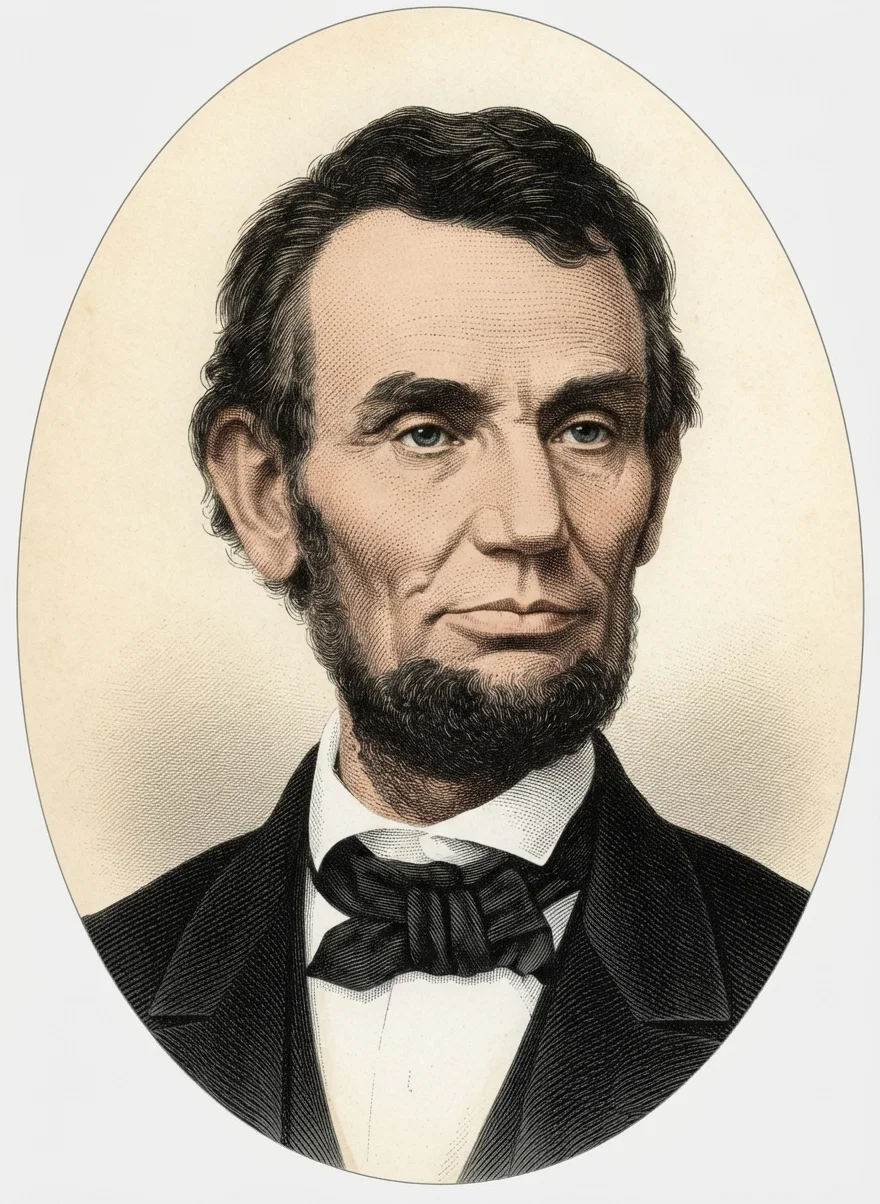
Abraham Lincoln
Abraham Lincoln
Stephen A. Douglas
Stephen A. Douglas
This book contains the public speeches and debates of Abraham Lincoln and Stephen A. Douglas from 1854 to 1861, also Lincoln's great speech at Gettysburg and his second Inaugural Address. The principles over which these giants of the political arena contended are again manifesting themselves, hence it is important that we become intelligent concerning them, and this volume will greatly aid to that end.
Then again, Lincoln's speeches were always to the point, and afford good examples of effective use of the English language, and are well worthy of study on that account alone.
It contains 555 pages, and the regular price in cloth is $1.75.

Acceptance Blank

If you will sign and return to us the following blank, your name will be placed on file, and you will be informed as soon as a sufficient number of names are received to enable us to publish the books.
A copy of the following form will be accepted if you do not wish to tear this one out.

Acceptance Blank

PACIFIC PRESS PUBLISHING COMPANY, Oakland, California.
Gentlemen: I hereby accept your offer to send paper-covered copies of "Political Speeches and Debates" and "The Story of Pitcairn Island" for 85 cents, post-paid.
I understand that these books will not be published at this price unless a sufficient number of advance orders are received before Nov. 1, 1899, to enable you to print fair-sized editions.
I also understand that no money is to be sent you until you inform me that the books are ready for delivery. Upon receipt of that information I will forward the 85 cents to you for the same.
Name........................................................................
Address....................................................................

Small Books

FOR THE USE OF AGENTS

THE HOLIDAY SEASON will soon be here, and with it will come more than ordinarily a demand for books. We have a large assortment of the kind that not only interest but help to make their readers purer and better. Many of them are sold by subscription, from which the following are selected. Write for descriptive catalog.

A Friend in the Kitchen

136 pages, imitation leather binding, price 60 cents A cook-book without meat, but with 400 recipes of wholesome and palatable dishes which not only take its place but are far superior.

Christ Our Saviour

160 octavo pages, fully illustrated. Board 50c, cloth 75c, gilt top $1.25 Almost a quarter of a million copies of this excellent little work on the life of Christ for the young have already been sold. Especially good for young lady agents. Prospectus 55 cents.

Coming King

290 pages, fully illustrated. Cloth $1.00, gilt top $1.50 Discusses the prophecies connected with the second advent of Christ. An excellent selling book. Prospectus 60 cents.

Gospel Primer

128 pages, 28 full-page illustrations. Board 25c, Cloth 50c A series of illustrated Bible stories, prefaced by the alphabet and short word-method reading lessons. A half million already sold.

Gospel Reader

192 pages, 22 half-tone engravings. Board 50c, cloth 75c Such Bible incidents are here introduced as will make the study of Gospel principles interesting and profitable to the young. A very attractively gotten up volume.

Heralds of the Morning

280 pages, fully illustrated. Cloth, marbled edges, $1.25; cloth, gilt edges, $1.50 An important and intensely interesting treatise on the signs of the times. Notice a few chapter titles: The Prevalence of Crime a Sign of Our Times, The Earth Is Filled with Violence, The Social Vice, The Great Deception, We Have Heaped Treasure Together for the Last Days, The Nations Are Angry, Voice of the Elements, Testimony of the Earth, etc. Altho published only last March, it has already had a sale of over 20,000 copies. Agents agree that it is one of the easiest books to handle they have ever found. Prospectus 60 cents.

Sketches of Bible Child Life

144 pages, 22 full-page illustrations. Cloth 50c A series of stories about children mentioned in the Bible.

Story of Redemption

237 pages, fully illustrated. Cloth $1.00; cloth, gilt edges, $1.25 A tracing of the great plan of redemption through Christ, from the time it was unfolded to our first parents to the consummation of all things. 12,000 already sold. Prospectus 60 cents.

Pacific Press Publishing Co.

OAKLAND, CALIFORNIA 39 Bond St., New York City 18 W. 5th St., Kansas City, Mo.

TO CONTRIBUTORS.

THE SIGNS OF THE TIMES is a purely missionary enterprise. For this reason it has felt free to ask for contributions from its friends. It pays nothing for contributions, either prose or poetry, unless solicited by the editor, and then the fact is stated when the articles are asked for. This is a plan rarely followed, but sometimes deemed expedient.
Articles Desired.—Those which set forth in the Spirit of Christ the great saving truths of God, short and to the point. It is better to treat one important truth clearly, in a short article, than many points vaguely in a long one. We desire no caustic, critical productions, which might minister to personal pride or pleasure, but can not save souls.
How Prepared.—Write plainly, with typewriter or ink, with wide space between the lines, to freely admit of editing, writing of subheads, etc. Write on one side of the sheet only. Sign the name to the manuscript, as it becomes oftentimes separated from accompanying letter. Anonymous contributions are not used, whatever their merit. If the writer does not wish his name to appear, let him furnish a pseudonym for the public. But we wish the name.
Manuscript Returned.—We will return all unused manuscript desired if stamp and directions are inclosed. We are forced sometimes to return good manuscript mainly for three reasons: (a) Sometimes the articles are too long; (b) sometimes we have a number on the same subject; (c) sometimes our plans are such that an article can not be used till it is out of date. We therefore hope that no offense will be taken by those who have freely contributed their best thought if their productions are returned. When we receive so much matter, we can not use all.

The Winning of Margaret

How Margaret and her skeptical friend Ralph were converted. A well-told story.
Price, $1.00 per 100.
PACIFIC PRESS PUBLISHING CO.
New York City       Oakland, Cal.       Kansas City, Mo.

THE WORLD'S HARVEST NUMBER

CONTINUES to get more interesting every day. The drawing for the front cover is pronounced by all handsome and striking. New illustrations are arriving and new beauties unfold. Under the hand of the printer the pages take shape and the display is striking. A page proof is laid before us for inspection. The matter is absorbing and is read with avidity; but, ere the end of the article is reached, the page is finished; and, not having that which follows, we are left with a feeling akin to that experienced when reading a very interesting story, and it suddenly breaks off with the note, "Continued in our next."
Orders for the special have been arriving for some time. One State tract society orders a quantity and directs us to send a copy to each editor in their State. A blind man wants a thousand. A little girl only nine years old, who sold two hundred of our Independence number, will also sell the World's Harvest number. And so it goes, and so it will go.
Order early, as orders will be listed as received and filled as listed. PUBLISHERS.

He Saves to the Uttermost . . .

This leaflet tends greatly to establish a wavering soul. It is especially good for mission work. A. G. L. No. 24. 13 cents per 100.
PACIFIC PRESS PUBLISHING CO.
New York City Oakland, Cal. Kansas City, Mo.

The Coming of Our Lord

Presents the cheering prospect of our Saviour's coming to those who look for him. A. G. L. No. 40. 50 cents per 100.
PACIFIC PRESS PUBLISHING CO.
New York City Oakland, Cal. Kansas City, Mo.

THE SPIRIT OF GOD

ITS OFFICES AND MANIFESTATIONS TO THE END OF THE CHRISTIAN ERA.

BY ELD. J. H. WAGGONER.
THIS is a brief but comprehensive argument on the solemn and important subject of the Spirit of God. Its chapters embrace the following heads: The Holy Spirit of Promise; The Power from on High; Circumcision of the heart; The Unity of the Faith; The Law and the Testimony; Try the Spirits; The Great Commission; Gifts in the Reformation; In the Present Century; Spirit of Prophecy Restored. These are subjects of vital importance to all and especially to those who are looking for the return of their Lord. 144 pp. Price, 15 cents.
Address, PACIFIC PRESS Oakland Cal.

Instructions for Ordering.

1. REMIT by P. O. Money Order, Express Order, or Bank Draft on New York, Chicago, or San Francisco.
2. If paper money or silver is sent, register the letter.
3. Orders and Drafts should be made payable to the PACIFIC PRESS PUBLISHING CO., or to SIGNS OF THE TIMES.
Postage-stamps.—Please do not send postage-stamps, as they are liable to stick together, and are useless in this condition.
Foreign Money.—Do not send any.
Receipt.—No formal receipt is sent unless by special request. The address label on your paper will indicate the time to which your subscription is paid. In case of non-receipt of papers, or any other irregularity, please notify us immediately.
Expiration of Subscription.—All papers are discontinued at the expiration of the time paid for. Notification will be sent several weeks before date of expiration, thus enabling you to renew in ample time to secure unbroken files. Please be prompt, as we can not always furnish back numbers.
Change of Address.—When ordering change of address, please give both the old and the new address.
Important.—Use a separate sheet for SIGNS orders, separate for other papers, separate for books, for tracts, etc., and if you address the editor, use a separate sheet. All can be sent in one envelope, and the money all sent in one order, but write each kind of business on a separate sheet. In this way each order can be handed to the proper clerk and filled at once.

It Is Pre-eminently Biblical.

Before this reaches our readers the first 16-page form of the World's Harvest number will doubtless be on the press, and many thousands will have been printed. That 16-page form will contain the following: 'The Harvest of War,' by Uriah Smith; 'The Harvest of Church and State Union,' by Leon A. Smith; 'The Harvest of Imperialism,' by Alonzo T. Jones; 'God's Divine Smelter,' by Albion F. Ballenger; 'The Harvest of Righteousness and Life,' by George E. Fifield; 'The Harvest of Earth,' by the editor; 'The Outlook European,' by Henry P. Holser; 'The Outlook Temporal,' by Asa Oscar Tait; 'Seeking to Save the Lost,' by Mrs. E. G. White; 'The Outlook Prophetic,' by John O. Corliss; a song, 'Let Us Go Forth,' words by El Nathan, music by James McGranahan; four poems, 'Harvest,' by Fred T. Elkin; 'The Humming of the Harvest,' by Thomas R. Williamson; 'Sin's Harvest,' by C. M. Snow; 'The River of Salvation,' by L. A. Morrison; nine Bible-readings; and fourteen illustrations. Is it not a pre-eminently Biblical number? And is not the matter in this half of the paper alone, judging by the titles, worth the price of the paper—ten cents? We who have read it know that it is. As we read the matter and contemplate its precious truth, we pray, 'O, that it might reach millions!' This, dear friends in the field, will depend largely on you.

A BETTER WORLD.

This is a world of opposites. Men often argue that the old world is getting better in every way, and as frequently the pleasant dream is most rudely dispelled on the morrow. To-day the earth seems firm and solid; to-morrow its bosom may be heaving like the swells of the sea. Yesterday the grass and grain fields surrounding the quiet prairie village were waving in the balmy, peaceful breezes of summer; to-day they are swept by a cyclone, the village is but a ruined heap, and its people homeless or mangled or dead. Last week the busy manufacturing town in the mountain valley was a-whirr with ceaseless activity; this week it is gone, carried away by the resistless mountain torrent, broken from the pent-up reservoir. To-day the ship sails fair over the bounding billows, with every inch of canvas spread; to-morrow she is straining her powers for very existence in the throes of the tempest. This old physical world is subject to moods and tenses. It is a world of opposites, ending in the sadder, minor chords of night and sorrow and pain and loss. But there is a better world. God has foretold it in the very division of the day He has given us. It is first night then day,—the night, the prophecy of this world of sin, with its moral darkness, through which shines the stars of hope; the day which follows, the divine promise of the glad, eternal inheritance of the sons of God, which shall know no wo, sorrow, pain, death, or hope deferred. Reader, live for the better world.

The Object of Human Law.

The American Sentinel well says: "The object of law is to protect men in the enjoyment of their rights. It protects men from one another; it guards each one against encroachment by the others. But it can protect no man against himself—against evil in his own heart. It can not keep him from doing wrong. And therefore human law can not undertake to prohibit wrong-doing, as such. It prohibits the wrong-doing when, and only when, that would invade another's rights. All men have the opportunity to do wrong—they must have it in order to develop character. And they are to be judged, and condemned or justified, not now, but at the end of the world; not here, but at the bar of God, and by the law of God. Any human law, therefore, which prohibits a thing merely because it is wrong, or is deemed so, is contrary to the purpose of God, and can work only evil as long as it exists."

MORE ON THE SAME SUBJECT.

WE have made frequent mention already of the World's Harvest number of the SIGNS that we are to issue early next month. The more the work advances on the paper, and the more we are able to see the effect of the work of the artist combined with that of the writers we were able to secure, the more we are impressed with the many good points that the paper contains.
There is such a variety of matter that it will be hard to find any one who will not be interested in some feature of it.
It is safe to say that there are millions of people in this country who are intensely interested in the money question. Doctor Ridpath's article will interest all such, and there is scarcely a limit to the number of papers that should be placed among this class of people.
Imperialism and the war spirit in these times are engrossing the minds of many. The able articles upon these subjects will be eagerly sought and earnestly read by thousands.
Indeed, it is quite impossible, as well as useless, to enumerate the many points of value that the World's Harvest issue of the SIGNS will contain. We have given our readers the titles of the leading articles several times, together with the names of the writers, and these are a sufficient guarantee of what we are trying to do in getting out this special issue of the SIGNS.
We are glad that some of the brethren are already sensing the importance of this work to the extent that single individuals are ordering as high as two thousand copies of the World's Harvest number, which they will distribute in their localities. Let the good work go on. Much more than two million copies should be circulated.
T.

Essentially Pagan.

That the doctrine of the intercession of the saints is essentially pagan is shown in what Dr. A. Wiedman reveals of the religious ideas of the Egyptians in about the days of Moses. He says (italics ours):—
"At all events, pantheism found its way only to the higher classes of the country, the majority of the population being attached neither to it nor to the adoration of the temple gods. Upon these latter they looked as too high to be willing to hear the complaints of the poor, and to be interested in their fate. As in this world they would not accost the Pharaoh in their troubles, but search to win the ear of one of his functionaries, hoping that this man would make way for their request to a higher authority, so they dared not bring their offering to Amon-Ra, or Ptah, in their rich and great temples, where their poor gift would have been easily overlooked by the god accustomed to the treasures the Pharaoh and his noblemen used to deposit on his altar. They tried to get hold of a mediator, who would consider their tribute as sufficient to be induced to forward their wishes, accompanied by a recommendation to the higher god."
This is the "intercession of Mary" and the "invocation of the saints" in an ancient setting. The theory is that God is too great and busy and far away to receive poor humanity, and so we will get one nearer ourselves. We will ask the saint to ask Mary to ask Jesus to ask the Father. It is all essentially pagan, treating God as a tyrant, fickle and to be appeased, when God's great, loving, gentle, gracious heart is waiting to be gracious. Jesus says, "Come unto Me,"—into His actual presence. He demands not that we pass a cordon of body-guards or ecclesiastical police. Come to Jesus, just as you are. His love and sympathy for every soul are greater than that of Mary and all the saints.

A Fine Souvenir.

The Spokesman-Review, Spokane, Wash., has issued a beautiful souvenir of Spokane and vicinity, for a copy of which we are indebted to the Spokane Chamber of Commerce. The cover is a charming three-color design, and the whole seventy-two pages are profusely and elegantly embellished by half-tone engravings of every imaginable thing in nature and art, in science and mechanics, illustrating the growth of Spokane, the inhabitants of which in 1870 numbered 0; in 1885, 2,000; in 1890, 19,922; in 1899, 45,000. The magazine contains wonderful tales of the wealth and resources of Spokane.
Storey Buck, secretary.
Continue reading: The Plagues of Revelation