While Europe itself, with its four hundred twenty-two million people, is a mighty missionary problem exceeding any of the other large fields so far as population and diversity of nationality is concerned, yet our brethren here have felt constrained by the Spirit of God to assist in carrying the gospel into the great “regions beyond,” into the adjoining parts of Asia and Africa. The Dark Continent has received special attention.
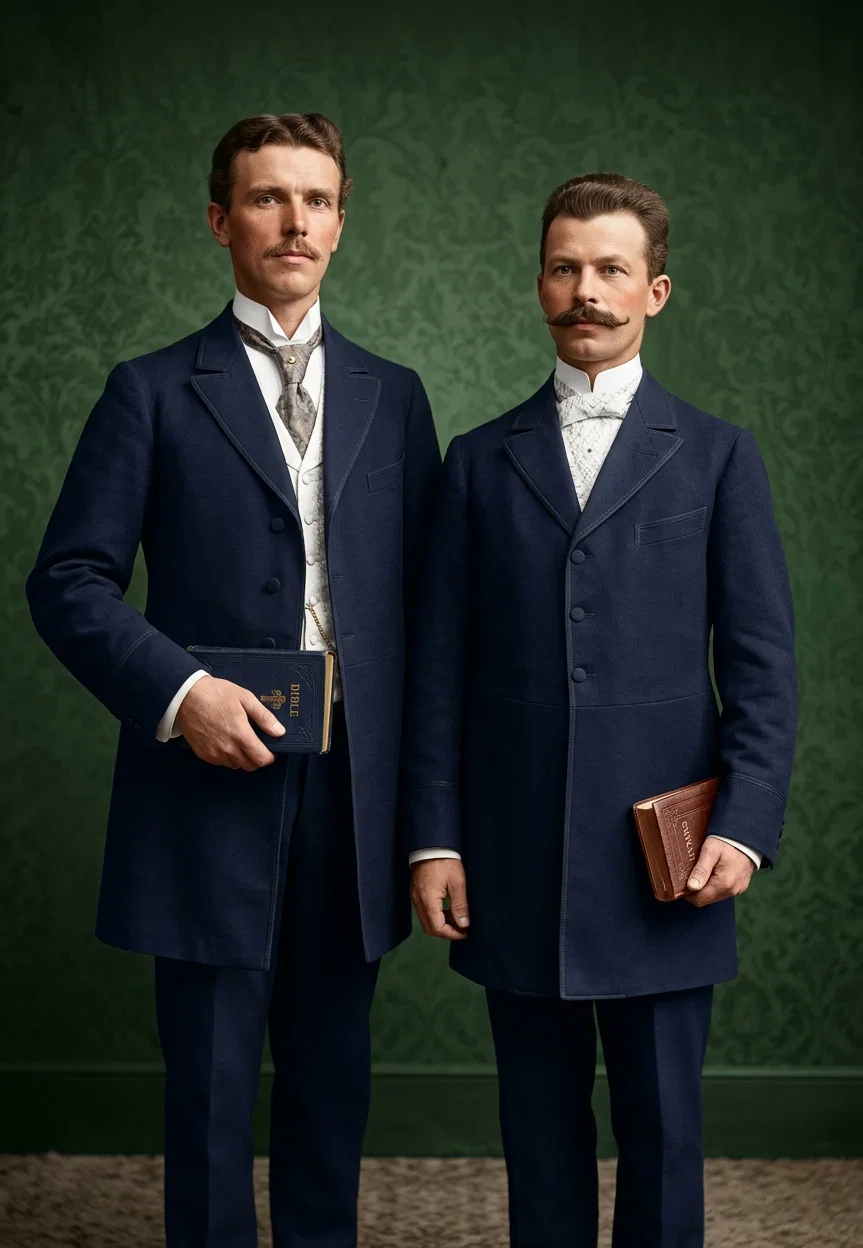
JULIUS PERSSON AND P. N. LINDEGREN
In 1903 the German Union Conference opened its mission to German East Africa. It now has three chief stations there, and eight missionaries. Its annual budget calls for an expenditure of over five thousand dollars. Aside from the head stations, there are several outstations. We have about three hundred young people in the schools there, and the brethren expect to have their first baptism this year.
The Latin Union followed, by sending two missionaries to Algeria, and a third worker is now to go there.
Following, came the British Union Conference, which began work in British East Africa, at the very door of Uganda: we now have four missionaries there.
Naturally, from the Levant Mission, we are working Egypt, having five missionaries there now.
The Scandinavian Union Conference is the last of our unions to decide upon taking active and aggressive steps to assist in the evangelization of Africa. They take for their special task that of reaching the Abyssinians. As Abyssinia itself is closed to foreign missionaries for the present, of course the mission to her people must be established in the surrounding territory. We have taken considerable time to study this most difficult problem, and to learn the best way of approach.
We had thought somewhat of trying to get an entrance through the country around Lake Rudolph, in British East Africa, and wrote to the British commissioner about the matter. We have just received the following answer: “Although this administration views with sympathy the extension of missionary operations, it is not considered desirable that work should be started in regions remote from administrative control, where there is no resident government official.” We have also learned that the Sudan is still closed. So the only means of access remaining to us would be the Italian colony of Eritrea, where the Swedish missionaries already have quite an extensive work.
The languages spoken in that colony are, besides the Italian, the Tigren and Amharric. Brethren P. N. Lindegren, and Julius Persson (née Andersson), of Sweden, have accepted the call to open this new mission. Brother Lindegren has been a nurse at the Skodsborg Sanitarium. He is thirty years of age. Brother Persson, who is nearly twenty-five years old, has been a successful gospel worker in the arctic circle, in northern Sweden. These brethren sailed from Hamburg on the German East African steamer, the “Princessen,” September 21, for Suez, where they will take passage on another line direct to Massouah, the principal seaport of Eritrea. We are thankful to God that already considerable means has been given by our Scandinavian and German brethren in Europe, and by the Scandinavian brethren in America, toward this work. These friends will naturally be happy to learn that this mission is now to be undertaken, and they will be glad to follow it with their prayers and means as the work develops.
The colony of Eritrea is about as large as the State of Virginia, and it has a population of two hundred eighty thousand. It extends on the western shore of the Red Sea down opposite to Aden. Its chief port is Massouah, with a population of eight thousand, while the government headquarters are in the mountains at Asmara. A railway has been planned from Massouah to Asmara, nearly one hundred miles in length, about fifty miles of which is now in operation.
We hope our people will remember this new mission in their gifts and prayers. We give herewith the picture of the two brethren.
Hamburg, Germany.
Ready to Preach the Gospel
“I AM debtor both to the Greeks, and to the barbarians. . . . So as much as in me is, I am ready to preach the gospel.” Rom. 1:14, 15.
Brighter Days in Guadalajara
This word comes from Brother G. M. Brown, of Mexico: “As a result of the meetings that have been held since I came here, there are some who desire baptism. I am now giving them special instruction to prepare for this step. I believe that brighter days are before the cause in Guadalajara. I have moved my family here, and shall make my home in this place for a time.”
The Eastern New York Camp-Meeting
By Eugene W. Farnsworth
THIS meeting was held at Herkimer, N. Y., September 5-15. There were about fifty tents pitched on the ground. The plot of land was somewhat low and level, and the heavy rains made it wet.
Elder S. N. Haskell was in attendance at the meeting, and his studies of the Word and his testimony in the meetings were a great help and inspiration to all. I was glad to have the privilege of associating once more with this servant of God in labor.
Elder H. F. Ketring was also there a part of the time, and assisted greatly. Elder H. W. Carr, of the Western New York Conference, was present a day or two, and did what he could. Brother R. J. Bryant labored hard in the interest of the book work. New York has done a good work in the circulation of literature the past year; but, being pressed for laborers in the evangelistic work, they took their general agent and put him at work with a tent as a minister. This worked well for the tent and the company, but the canvassing work suffered as a result. It is a very difficult proposition to keep the canvassing work in a healthy condition where there is no State agent, or where his time and thought are divided with some other calling.
The business part of the conference was dispatched promptly and very harmoniously. Elder F. H. De Vinney was re-elected president, and F. N. Johnson secretary and treasurer. A few changes were made in the committee. The camp-meeting was about as large as the meeting for the undivided conference was last year. I should judge from what I learned, that about the same amount of labor has been done in this half of the conference as was done in the whole conference last year.
Elder S. B. Whitney had been holding a tent-meeting in the city for a short time before the camp-meeting began. Some interest had been awakened. The interested ones attended the meeting whenever the weather would permit.
The conference had about six hundred dollars to raise on their part of the $150,000 fund. In one meeting they raised it all in cash and pledges in a few minutes. It will not be long before they will have the cash all in.
The most serious problem that confronts that conference, in fact both the New York Conferences, is the lack of laborers. There are only three ordained ministers in this conference who are able to labor, and one of these is seventy-five years old. The others whose names appear in the Year-book, who have not moved away, range all the way from eighty to ninety-six. Elder Frederick Wheeler is ninety-six years of age. He is somewhat feeble, yet sent a most vigorous and ringing testimony to his brethren at the camp in behalf of the unity and stability of the whole truth of this message, and his faith in it all.
There are nine hundred Sabbath- keepers and thirty-six churches. Their laborers must be replenished. What is true of the two New York Conferences is true, to a large extent, of this whole union conference. If there is a union anywhere that is largely destitute of laborers, in proportion to its needs, it is this one. We all need to pray earnestly that the Lord will send forth laborers into his harvest. There is a sifting going on all the time, and some have fallen out, but the work goes steadily onward, and a spirit of courage pervades the conference. All seemed ready and anxious to press the work forward as never before. I enjoyed the meeting very much. God greatly blessed the people. E. W. FARNSWORTH.
Southern California Conference Proceedings
By G. W. Reaser; H. H. Winslow
The eighth annual session of the Southern California Conference convened at Los Angeles, Cal., Aug. 18, 1907, continuing its meetings till September 1.
There are twenty-eight churches in the conference, twenty-seven of which sent delegates to this session. One new church, that at Imperial Valley, was organized during the past year, and was admitted into the conference at this session.
The president’s address presented statistics as to the condition of the work and the progress of the cause during the past year. This showed approximately two thousand membership in the conference at the present time, of which about two hundred forty have been added during the past year.
The financial and revenue statements of the conference for the year ending June 30, 1907, showed total funds handled to slightly exceed sixty-two thousand dollars.
Interesting reports were presented from Fernando Academy, from Glendale and Loma Linda Sanitariums, and from other conference institutions or departments, and the consideration of these reports and the principles underlying the foundation and operation of these institutions took up a large portion of the time of the session.
Resolutions were adopted expressing gratitude to God for the many manifestations of his guiding care over his work in this conference; also expressing the sympathy of the members of the conference for the wife and children of Elder William W. Simpson, deceased, and deploring the loss to the cause of God in his death.
It was voted that fifteen hundred dollars of the surplus tithe be donated to the General Conference for distribution, as follows: for the foreign mission work, one thousand dollars; for the Southern Union Conference, to be used by the Southern Missionary Society in its work for the colored people, five hundred dollars.
Recognizing the duty devolving upon this conference to aid in the evangelization of Mexico and the Mexican people in the conference, the members pledged their means, prayers, and energies to that work. A goodly number of Spanish-speaking people were present at this meeting as a result of the earnest efforts already put forth in this field for that people. It is hoped that these Spanish-speaking converts to the truth may be endued with power from on high and join in the work of giving the truth to Mexico.
The following officers were elected for the ensuing year: President, G. W. Reaser; Secretary and Treasurer, H. H. Winslow; Executive Committee, G. W. Reaser, R. S. Owen, W. M. Healey, C. E. Ford, J. A. Burden, H. G. Lucas, and J. R. Leadsworth; Missionary Secretary, Jennie L. Ireland; Tract Society Department Secretary, Florence Nightingale; Superintendent of Church-schools, E. S. Ballenger; Educational Committee, G. W. Reaser, E. S. Ballenger, H. G. Lucas, Geo. McCready Price, Dr. A. Winegar-Simpson, Milton P. Robison, and Grace O’Neil.
Fernando Academy Board of Managers: G. W. Reaser, H. G. Lucas, R. S. Owen, E. S. Ballenger, J. L. Kay, C. E. Ford, and W. J. Dart.
Board of Trustees of Glendale Sanitarium: G. W. Reaser, J. A. Burden, Drs. J. R. Leadsworth and M. M. Kay, Prof. H. E. Osborne, W. Ray Simpson, and E. G. Fulton. (These organized as follows: President, G. W. Reaser; Vice-President, J. A. Burden; Secretary, H. H. Winslow; Treasurer and Business Manager, W. Ray Simpson; Auditor, J. J. Ireland.)
Board of Trustees of Loma Linda Sanitarium: G. W. Reaser and J. A. Burden, Drs. J. R. Leadsworth, Julia A. White, and Geo. K. Abbott, T. E. Nightingale, and W. H. Gilmore.
The report of the committee on credentials and licenses was adopted as follows: for ministerial credentials, Elders G. W. Reaser, W. M. Healey, R. S. Owen, J. F. Ballenger, J. W. Adams, C. E. Ford, F. I. Richardson, S. T. Hare, Alfred Whitehead, J. L. Kay, J. A. Burden, B. E. Fullmer, S. Thurston, G. A. Raubeder, J. H. Rogers, E. H. Adams; for ordination and credentials, Prof. H. G. Lucas; for ministerial license, E. S. Ballenger, H. E. Osborne, H. J. Hoare, H. L. Rawson, C. F. Marvin, R. W. Miller, and T. S. Whitelock; for missionary license, H. H. Winslow, Jennie Ireland, Mrs. M. E. Hoyt, Geo. McCready Price, Henry Zutt, E. S. Horsman, Mrs. H. C. Stevens, Augusta de Angeles, A. W. Simpson, J. R. Leadsworth, G. K. Abbott, Julia A. White, M. M. Kay, Lillis Wood Starr, J. F. Blunt, Florence Nightingale, John Asker, C. W. Story, T. S. Nightingale, L. E. Brant, Juan Robles, Juan Avendano, Arthur Philbrick, Mrs. Josephine Gotzian, J. L. Jones, and Mrs. Belle P. Baker; for missionary teachers’ license, Milton P. Robison, Waldo Miramontez, A. E. Brown, B. B. Davis, Mrs. B. B. Davis, Bertha Messick, Mrs. Delpha Miller, Pearl Stone, Laura Wagner, Geo. B. Morrison, T. De Witt Robinson, Grace O’Neil, Ruth Kane, Lena Clark, Irma Parks, Mabel Noggle, Ida Lothrop, J. F. Gaster, Mrs. B. F. Harris, Mrs. H. G. Lucas, Mrs. J. L. Kay, and Genevieve Johnson.
It was voted that two thousand dollars in addition to the fifteen hundred dollars already appropriated, or as much thereof as can, in the judgment of the executive18committee, be spared, be appropriated to the General Conference for foreign missions. Conference adjourned sine die.
G. W. REASER, President,
H. H. WINSLOW, Secretary pro tem.
Bay Islands
By E. L. Cardey
UTILLA.—The two meetings I held in Bonacca were surely blessed of God. At one place I organized a church of fifteen members, and a Sabbath-school of forty. At the other, where there has been a church for years, the Lord came in with great blessing. During the first part of the services it seemed as if all were going to accept the message; but when we presented the great testing truths for this time, and people began to decide to obey, great opposition set in. It became so fierce that men drove their wives and daughters away from home at the point of a gun. Time after time men sent me word that they were going to kill me that night. One night after meeting, as I came out of church, I passed right by two men who had just declared their intentions of shooting me, and had their revolvers with them; yet they were as meek as lambs when I came near them. In all this, I assure you, the promise of God was very dear: “Lo, I am with you alway, even unto the end of the world.”
Of course this opposition did more good than harm; for many took hold of the truth. Before leaving, I baptized twenty souls. About that number will be baptized later. To Him be all the praise. I have held one hundred fifty meetings in the past ten weeks, as many as five on some Sabbaths. I feel none the worse for it now, although I had a few days of malaria fever.
For a number of reasons, I have decided to move the headquarters of our work to Guatemala, and take the oversight of opening the work there. There we shall have the best of mail service, and shall also be in a healthful country, and among the people. We are still thinking of building an industrial school in that country. At the workers’ meeting held September 28 and 29, one of the recommendations passed was that I go to Guatemala, and look over the country, in view of establishing a school there. What we do must be done quickly; for we have a large number of young people from the age of fifteen to twenty-two, and they want to do something. If we do not set them to work, we shall lose them to the work, and perhaps to the truth.
Financially our field is rapidly improving. The tithe for the first seven months of this year is $807, against $915 for all last year. The offerings have increased accordingly; and this in face of the fact that we have had a number of local enterprises19for which to raise money. We have started and successfully operated the Central American Herald. I have raised over two hundred dollars gold for tents in which to hold camp-meetings, and hundreds of dollars have been raised for new church buildings.
We have decided that the camp-meeting shall be held March 5-15, 1908. We have the ground, in a fine cocoanut grove. We expect there will be a large representation of our people present at this meeting.
We have had what many doctors call a light attack of yellow fever. With a strong constitution, it took me weeks fully to recover and get my head in thinking shape; but Mrs. Cardey did not seem able to rise above the effects of it. Since returning to the States, she has recovered rapidly, and is now in very good health. E. L. CARDEY.
West Virginia Camp-Meeting
By E. W. FARNSWORTH
This meeting was held in Pennsboro, September 12–22. Pennsboro is a place of about two thousand inhabitants, situated on the Baltimore and Ohio Railroad, in a narrow valley about thirty-five miles east of Parkersburg. The West Virginia Conference is small, having only about two hundred twenty members. Over one half of the membership of the conference was in attendance. This was really a good average when we consider the nature of the country and the difficulties in getting to the meeting.
Elder E. J. Dryer, the president of the conference, became ill last spring, and was forced to retire from the field. This left the work of the president on Brother L. E. Sufficool, the vice-president. Brother Sufficool, with his associates on the committee, and others took hold with vigor to prepare the camp, and to get as many there as possible. The camp was well pitched in a narrow valley about one-half mile from the town.
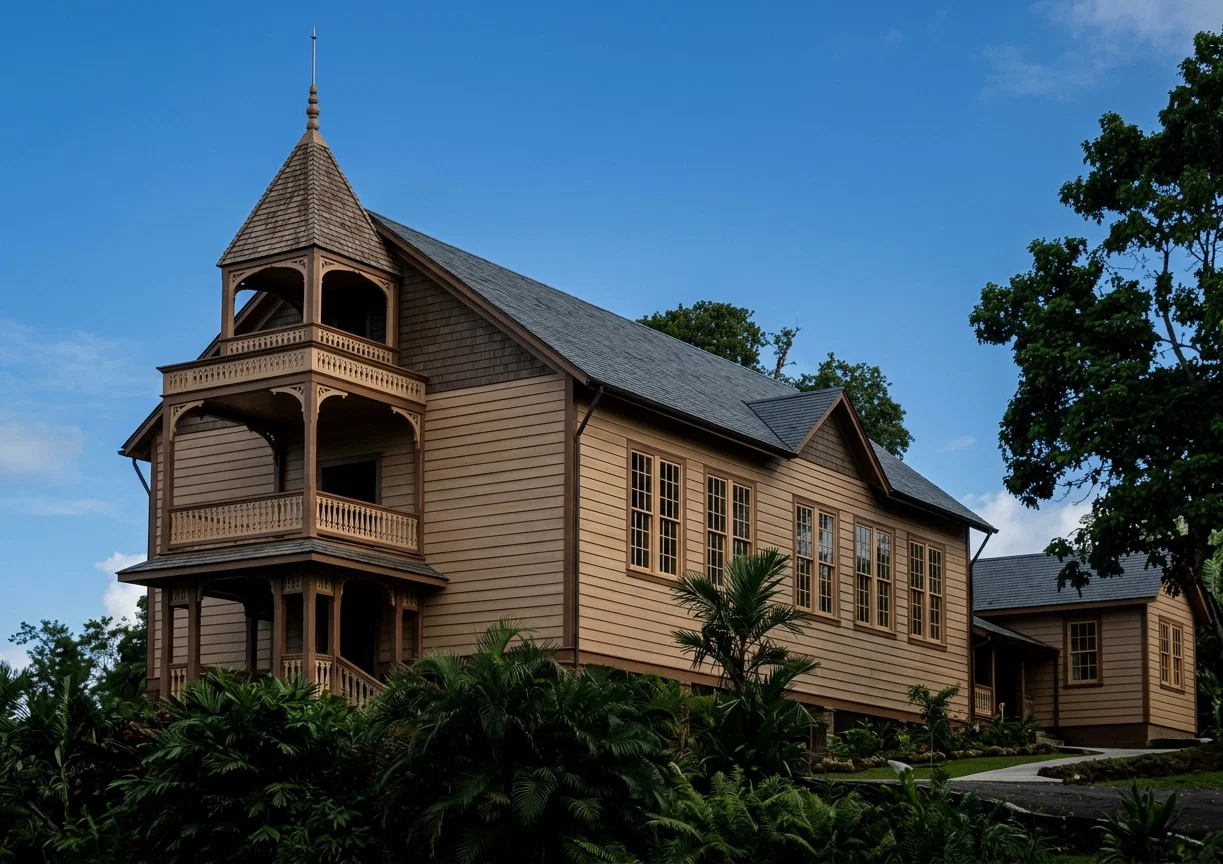
CHURCH (NEARING COMPLETION) AT MT. HOPE, CANAL ZONE.
The weather during the meeting was unfavorable. It rained almost every day, and nearly every night; and when it rained, it poured. The ground was wet and spongy, the large tent leaked like a sieve, and soon the ground under the tent, as well as outside of it, was little else than mud. Notwithstanding these untoward circumstances, the people from the town attended the meeting well when they could. There was a good interest, and on several occasions the large tent, fifty by seventy feet, was well filled.
The meetings for our own people were very good. A revival spirit prevailed from the first, and a goodly number made a start in the Christian life. Several were baptized.
Elder C. F. McVagh, from western Pennsylvania, was with us, and rendered most acceptable service all through the meeting. Brother R. J. Bryant, our general canvassing agent for this union conference, was there, and labored hard in the interests of the book work. The canvassers in West Virginia have done good work the past year. There has been no general agent to help them, yet the few canvassers in the field have kept at the work nearly all the time, and have made quite good records. We are sure that the labor of Brother Bryant will prove very helpful to them in the future. West Virginia is a good field, and if they can have a good general agent, they will soon be among the first in the sale of books.
In the business meetings the utmost harmony prevailed. The brethren came to see eye to eye on almost everything that came before them. All branches of the work received their share of attention. The work in the State is in an encouraging condition. The tithe is increasing, and the offerings are multiplying. The field is large; the laborers are few. They need more help from God and man. But the people are of good courage, and we believe the work will prosper. E. W. FARNSWORTH.
Isthmus of Panama
By Hubert Fletcher
Mr. HOPE.—It is interesting and encouraging to note the progress of the work here. The accompanying picture is a representation of our church building, which is nearing completion. After the tent-meetings conducted by Brother Peckover were closed, the small company of believers secured (by assisting to build) a portion of the house occupied by him at Mt. Hope, two miles from Colon, where they held their meetings for a time.
In February, 1906, they were compelled to sell the building, the land being required by the Union Oil Company. The brethren had to return to the town of Colon, where a rented hall was obtained, but this had to be given up after about seven months. Again Mt. Hope became their retreat. The low house shown in the rear of the picture is where the writer found them holding their meetings. After a few months it was evident that this place was not large enough for the growing congregation. On Sabbaths and Sundays the space inside was all occupied, and the veranda was filled. We then had to resort to the open air. And beneath the branches of a beautiful almond-tree we assembled to worship God. Here each week we came together if the weather would permit.
On the fifth of June last we pitched a tent for a series of meetings, which afforded us better accommodation. On the ninth of the same month the church building was started. Its dimensions are twenty-four by thirty-six feet. We are not paying out any money for labor. The brethren belonging to this company, and the writer, are doing the work. We hope to have it ready for dedication in a few weeks. Already it has given prestige to our work here. The rainy season having set in, we had to discontinue the meetings in the tent, and were glad that we had an unfinished building in which to meet. Our Sunday night meetings are well attended by interested strangers.
The sixth of October six followed their Lord in baptism. Very early on Sunday morning we started for the place of baptism, one and a half miles from Mt. Hope. On the beach of the Canal, and just behind the laborers’ camp—where thousands live—were gathered a goodly number of spectators to witness the service. Quite a victory was gained for the truth. The entire service was solemn and impressive. The presence of God was manifest. A brief discourse by the writer was listened to with excellent attention. Among the candidates were two Spaniards, a man and his wife. We trust this will be the beginning of a large harvest of souls among that people.
We are still suffering from the fever, but are of good courage. Pray for us and the work. HUBERT FLETCHER.
L. J. BURGESS
By L. J. Burgess
India
DEHRA DUN.—Recently we received a letter from a native preacher of the Baptist Mission not far from here. He has a high position in that denomination, and has been getting a good salary; but since the truth has come to him, he seems willing to give up all his prospects among them, in order to be free to give the message. He writes:—
“I am sorry that for a long time I have not written you anything about myself and work. I am now in Delhi, for two days only. During these two days I devote my whole time to preaching the present truth among the Christians in Delhi. I pray God that I may see, as the result of my preaching, many souls inclined to hear more about this truth. I am now prepared to preach it openly among my native brethren, that their hearts may be enlightened by the heavenly light to understand the present truth, and to follow it. . . .
“My wife wants help from you—that you often remember her and her work in your prayers before God, who indeed heareth the voice of his children who come through Christ, his beloved Son. I hope to come to Dehra Dun in the next month, to see you. . . . I was glad to get your last letter. It was indeed a great comfort to my heart. I request you further to remember me in your prayers. I do not forget you also.”
We are surprised at the number of native preachers in various places who are beginning to inquire about the truth. We have inquiries from Cawnpore, Shahjahanpore, Agra, Delhi, Kalka, Sealkote up in the Punjab, and from Bulandshahr, and other places. It looks as if the truth would soon be spreading all over the Northwest. We do not know how to account for this, except from the fact that the time has come for the message to go, and the Lord is moving upon the hearts of these native Christians, many of whom seem to have a strong love for the truth.
We wish there were a few more workers among these eighty million people, and we trust there will be soon. Sister Kurtz is studying faithfully at the Urdu language, and hopes before long to be able to labor among the women. We are all well, and of good courage.
L. J. BURGESS
A New Union Conference
By George A. Irwin
The West Canadian
Of late years western Canada has been rapidly growing into prominence. The rich grain and cattle-growing districts have attracted the attention of home seekers both from the United States and from eastern Canada, and land is being rapidly taken by sturdy and industrious people. Towns and cities (not of the mushroom type), well and substantially built, are springing up in many places. A constant surprise awaits the traveler who has formerly thought of this field as a cold, desolate, and uninhabitable country. As far north as we went (four hundred miles from the southern boundary) vast fields of wheat, barley, oats, and flax, with thrashing-machines in active operation, could be seen from either side as the train rolled rapidly onward over those beautiful prairies. It is said that hundreds of miles farther north the land is equally good, and the climate even better.
Capitalists are waking up to the importance of this field as a cattle-raising and grain-growing country, and two more trunk lines, the Canadian Northern and the Grand Trunk, are being built from the Atlantic to the Pacific through the central and northern portions of the provinces. Both of these new lines are well along toward completion.
We have in this field about one thousand believers, three of the provinces—British Columbia, Alberta, and Manitoba—having been organized into conferences, leaving only Saskatchewan still a mission field. The work in this field has heretofore been under the direction of the Northern and North Pacific Union Conferences.
Believing that the third angel’s message should keep pace with the rapidly advancing civilization and progress of this country, it was thought that an organization composed of believers in the field, who were familiar with the conditions and in touch with the spirit of the times and country, could do more effective work than one operating from the States at long range. The following action was taken by the General Conference Committee at the session held in Gland, Switzerland, in the month of May:—
“That the Northern and North Pacific Union Conferences be requested to release the territory they now hold in Canada, and that it be organized into a union conference, to be known as the West Canadian Union Conference.”
Later each of these unions, through the action of their executive committees, acceded to this request, and after being notified of this action, the officers of the General Conference issued a call to the men having charge of the work in the four western Canadian provinces to send delegates to a meeting appointed to convene October 18-22 in Leduc, Alberta, for the purpose of carrying the foregoing recommendations into effect by the formal organization of the conference.
Later it was voted that the writer should attend as a representative from the General Conference, and that the presidents of the Northern and North Pacific Unions be requested also to attend, inasmuch as this field has hitherto been a part of these conferences, and will still be intimately related thereto.
By previous arrangement I joined Elder Underwood in Minneapolis, October 14, and together we journeyed on to Leduc, the place of meeting, arriving there late Thursday afternoon, October 17. During the night Elder Breed, vice-president of the North Pacific Union Conference, arrived to represent that field. Later Elders Adams and Kunkel arrived from Manitoba, and with them came delegates from Saskatchewan, consisting of Elders H. S. Shaw, F. H. Conway, C. Sulzle, and Paul Curtis. Owing to delay of the train, Elders Stewart and Young, delegates from British Columbia, did not arrive until the afternoon of Friday, so the first meeting was held at 3 P. M., Friday, October 18.
At this meeting a temporary organization was effected, with the writer as chairman and Stella B. Lowry as secretary. A voting basis of representation was agreed upon, which gave to each field one delegate at large and an additional delegate for each twenty-five members. This made a voting delegation of thirty-seven, divided as follows: Alberta, twelve; Manitoba, ten; British Columbia, seven; Saskatchewan, four; delegates at large, four.
The forming of a temporary organization and the appointing of three committees,—one on constitution and by-laws, one on nominations, and one on plans and recommendations,—occupied the time of the first session.
Inasmuch as most of the brethren of the Leduc church live in the country and have no place of meeting near their homes, the Methodist church in the town was secured in which to hold the meetings. In addition to the business meetings, public preaching services were held each evening and on Sabbath and Sunday. When our people first went to Leduc, the minister then in charge of20the Methodist congregation circulated a petition to have the Adventists driven out of the country, but instead the preacher himself was compelled to leave in a few months, and the Adventists still remain, having the respect and good will of the citizens, including the present Methodist pastor.
The Alberta brethren have purchased a farm of one hundred sixty acres three miles west of the town, upon which they are preparing to locate buildings in which to conduct a school for the young people in the conference. This school was carried on in a rented building in the town last winter, but temporary buildings have been erected on the farm, and the school will be carried on there the coming year, which means a saving of nearly four hundred dollars in rent, besides keeping the pupils where they can do work on the farm and be free from distracting influences. The greater part of the farm is under a good state of cultivation, one hundred acres being well set in timothy grass, which brings a good price. Thus, if well managed, this farm will become a source of income from the start. Elder C. A. Burman and wife will live in the home and have charge of the school for a time while in this formative period.
At the second session of the conference a constitution defining the boundaries, fixing the basis of representation at future conferences, and recommending as a name the “Canadian Western Union Conference” was adopted. Following the adoption of the constitution, verbal reports were given of the work in the different provinces.
Alberta
Of the work in the Alberta Conference, Brother Burman, its president, said that there had been a healthy growth in the finances the past year, as well as in the membership. The tithe paid during 1906 amounted to $2,848; and for the nine months of 1907, it was $3,523. There are at present eight churches, with a membership of two hundred thirty. He also said that there had been received in cash and pledges for the Alberta Industrial Academy, over $4,000, and that the plan is to conduct a school the coming winter on the school farm in the buildings already erected on the ground.
British Columbia
Of the work in British Columbia, the following is the substance of Elder E. L. Stewart’s report: At the organization of the conference in 1902 there was a constituency of about fifty members. At present there are one hundred sixty-seven members. There are nine organized churches. Owing to the lay of the country, it has been necessary to divide the conference into four districts. The conference laborers consist of four ordained ministers, one licentiate, and four Bible workers. A school farm of two hundred acres has been donated near Hammond, where an intermediate school is being conducted with good results. The present enrolment is thirty.
An effort is being made in behalf of the Indians in the northern part of the province. A farm of two hundred forty acres has been purchased, upon which a mission school is being established. The tithe receipts of the conference for 1906 were $3,232, and for the nine months of 1907, $3,100, showing a healthy increase. Five camp-meetings were held during the year, which were a source of great encouragement to the brethren. The conference is practically free from debt.
Manitoba
At the third conference session Elder W. M. Adams gave a report of the work in the Manitoba Conference, of which he is president. After speaking of the vastness of the field and its great needs, he mentioned the fact that there were, in addition to four hundred thousand white people representing various nationalities, forty thousand Indians. At the time of the organization of the Manitoba Conference in 1903, Saskatchewan was included within its boundaries. The Manitoba Conference has now ten churches, two hundred sixty-one members, seventeen Sabbath-schools, and six family schools. Twenty-six new members were added during the year, making a total membership at the present time of three hundred two. They have a school farm located at Portage la Prairie, fifty-eight miles west of Winnipeg. Their indebtedness on the school and farm is about twelve hundred dollars. The building is equipped to accommodate about thirty-five students. Brother Adams made a strong appeal for the establishment of mission schools among the Indians. He gave a number of interesting incidents of a visit that he made among them, showing the interest they have in the study of the Bible.
Saskatchewan
At the conclusion of Brother Adams’ report, Brother H. S. Shaw spoke relative to the work in Saskatchewan Mission field, of which he has charge. He said there were about one hundred members. It was his belief that the time had not yet come for the field to be organized into a conference. The tithe received to Sept. 30, 1907, amounted to $2,100, and the donations to $397. There are four ordained ministers and one licentiate laboring in this field.
At the fourth meeting resolutions were adopted expressing gratitude to God for his prospering hand which has made possible the organization of a union conference in western Canada; and thanking the General Conference union and local conferences, and certain brethren for help rendered.
The new union conference voted its hearty approval of the establishment of the schools now operating in that territory, and recommended their continuance. The work of establishing schools and missions for the Indians will be taken up at once. They ask the General Conference to appropriate annually, until the work can be supported by local means, a sum equal to the Sabbath-school donations from this union conference for this purpose. They also request the General Conference to give to this field the sum of seven thousand six hundred dollars annually until the conference is strong enough to meet its own expenses.
At the fifth meeting the following officers were unanimously elected: President, Elder E. L. Stewart; Vice-President, Elder H. S. Shaw; Secretary and Treasurer, Mrs. H. S. Shaw. No definite vote was taken regarding location, but the probabilities are that the headquarters of the union conference will be at Regina, Saskatchewan.
The following-named persons were granted credentials: E. L. Stewart, H. S. Shaw, F. H. Conway, C. Sulzle, and A. C. Gilbert. Ministerial license was granted to Paul Curtis, and missionary license to Mrs. H. S. Shaw.
After extending a vote of thanks to the Methodist Church for the use of their church building, and to the citizens and press of Leduc for their kind consideration and accommodation, the meeting adjourned sine die. G. A. Irwin.
After Many Days
By E. H. Morton
OFTENTIMES workers know not until after many days the result of their efforts for others. This thought was brought forcibly to my mind a few mornings since by news which came in the mail. Brother Lamb, of Bangor, Maine, wrote that he has recently discovered that a lady who formerly lived near his home has been keeping the Sabbath for two years. She now resides in another part of the city, and for some reason has had no opportunity of communicating with Brother Lamb and his wife. She was led to think about the Sabbath truth by talks and reading-matter given her when a neighbor to Brother Lamb. It finally impressed her mind so forcibly that she yielded obedience to God's law.
A letter from Brother Thompson told of a visit he recently made at the home of a gentleman whose name he sent to the Maine Tract Society for missionary work last winter, and for whom he had labored and prayed. He found the gentleman rejoicing in the truth and keeping the Sabbath, but very ill. He fell “asleep in Jesus” last week, and it cheers our hearts to know that we were permitted to help give him the message for our day, and that it was accepted with gladness.
No doubt there are many isolated ones in the State keeping the Sabbath of whom we have never heard. In the days to come we shall see much fruit of this kind as the result of the distribution of the truth envelopes.