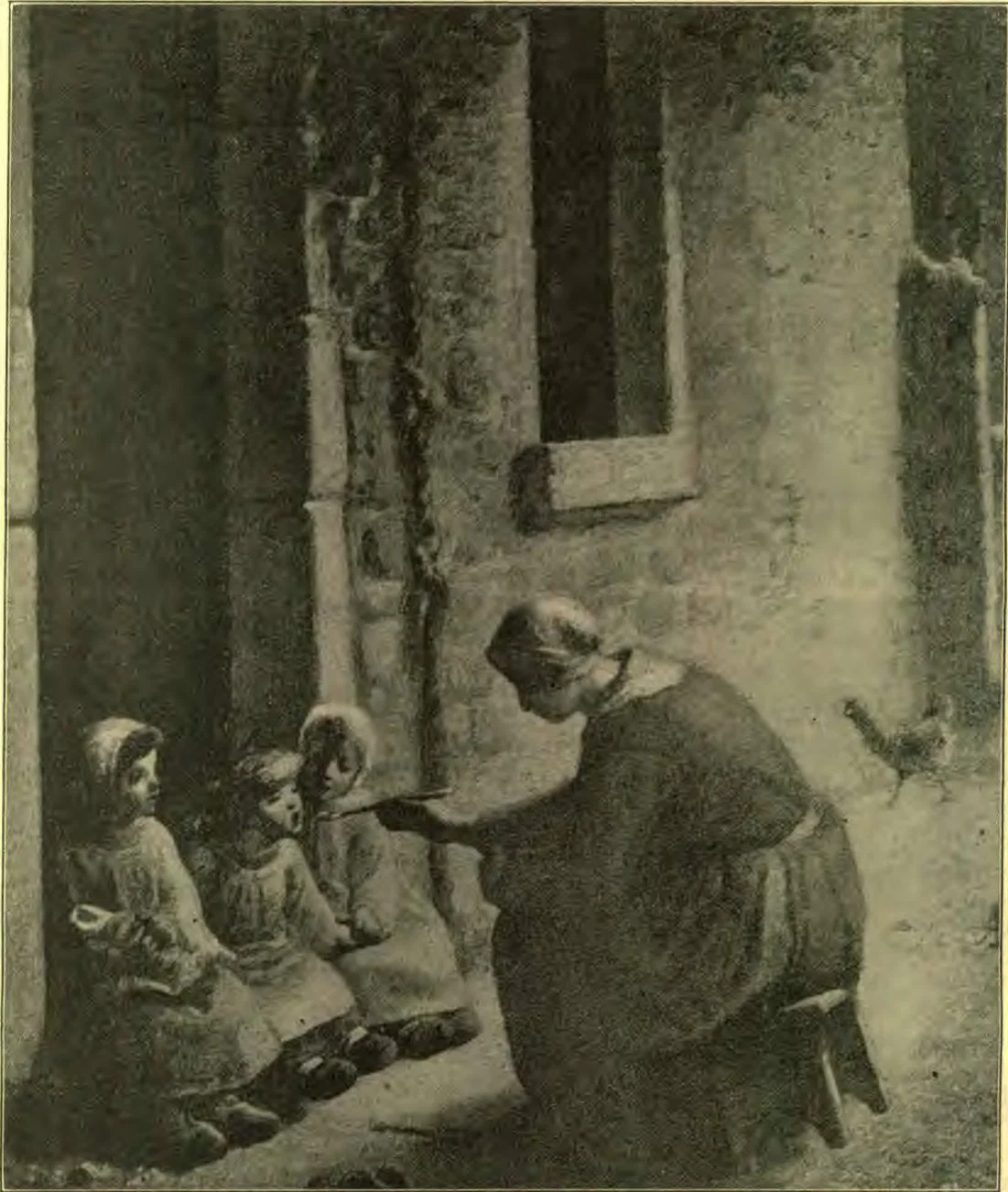
What Are the Opportunities for Work in the Cities?
By Bertrand Peterson
ALL the opportunities that an Almighty Power can open are now presented to the Christian workers of our Young People’s Societies. God has said: “Young men and women, can not you form companies, and as soldiers of Christ enlist in the work, putting all your tact and skill and talent into the Master’s service, that you may save souls from ruin?” “Let there be companies organized in every church to do this work.” Armies of the world carefully lay their plans,—let us so do, going forth to conquer. We can scatter the seed, God will give the increase. We have an Almighty Power and the angels on our side. Were it not for this, we might well be appalled at what lies before us in the cities—Satan’s strongholds.
Now for plans. I have before me an outline of work which I think will be helpful in meeting the needs of the cities. First, there is mentioned in this outline, branch Sabbath-school work. There are those who can take up that line of work and give time and talent to it, who could not take up other kinds of work. How many little ones can be taught the truth of God by efforts in this way. Truths learned in youth are rarely forgotten.
Second, Christian Help work opens a broad field. Isa. 58:7: “Is it not to deal thy bread to the hungry, and that thou bring the poor that are cast out of thy house? when thou seest the naked, that thou cover him; and that thou hide not thyself from thine own flesh?” or, in other words, that those members of the body of Christ should receive our utmost consideration in all matters temporal and spiritual. This is work that we find at our doors, and may we each be ready to help in any capacity. On the calling card of a missionary were the words: “For any helpful service at any time.” How appropriate! What a ready spirit!
Third, we can make missionary visits. Many of us can find a few minutes to call upon our neighbors, whether sick or well, and Christ gives us an example in his conversation. Turning to things eternal in every walk, he found opportunities to refer to the “signs of the times,” “living fountains,” “harvest time,” “eternal life,” and other life-giving themes.
Fourth, cottage meetings may be held by the members. Let those feeling incompetent to lead out in them, go and lend encouragement by their presence and testimonies. By taking hold in this way as God directs, they will gain strength to go on alone in the work. Many will gladly devote a short time in the evening to the study of the Word of God.
Fifth, sewing classes may be formed in different ways. Some may meet together and sew for the needy, others may gather in little ones, and teach them to make and mend their clothes, thereby helping them to help themselves, which I believe is the better way usually. In our cities there are philanthropic people who would lend the use of a room once a week for this purpose, and others will give materials, so that the poor may come and learn to work, and supply their needs at the same time. The boys can also have a part.
Sixth, supporting missionaries is a work in which all may have a part with pennies and prayers. As Societies we could bind ourselves to send out one or two missionaries into the field, and pay the expenses of the same by our own efforts. We can make and sell aprons, slippers, or any needed article, or raise missionary gardens. There are sisters in the Omaha church who have lately sent seventeen dollars for the support of a colored missionary in the South. This was earned by making gingham aprons, and crocheting slippers.
Seventh, work for the backsliders. Yes, this is a delicate work. God tells us to hold up the weak hands. This we can best do by being alive ourselves to God’s work, and letting the backslidden see that Christ’s yoke is no yoke of bondage, as Satan has made it appear to them.
Eighth, then there are the prisoners and the outcasts. In this line of work especially it would be wise for the older ones to aid, as the young and inexperienced need to exercise great care in this work. Those of maturer years can act as companions to our younger ones. We must have much of God’s power when undertaking this; for Satan will work with every art to fill the atmosphere with darkness to encompass those who are working. Among such unfortunate ones there are many dear souls that long for deliverance from their sins, and God can choose those best fitted to take to them the gospel of freedom.
Ninth, holding night schools. There are those who are working all day as clerks, etc., who would be glad to take advantage of special classes in school work in the evening, and there could always be given time on the program for Bible study.
BERTRAND PETERSON.
(Concluded next week)
A Working Society
By Lillie Hornbeck
We have been much interested in reading reports from different Societies, so perhaps others will enjoy hearing of our work. Eight months ago the young people of Leavenworth, Kansas, met one Sabbath afternoon to organize a Young People’s Society. Our object was first to seek a closer relation with our Saviour, and to study how to become efficient workers for Christ. There were fourteen present at the first meeting.
We have been studying the lessons given in the INSTRUCTOR, and have found them interesting and profitable. We also drill each week on a few texts of scripture on the different points of our faith.
All the members of our Society take an interest in missionary work, the reports of which form an interesting phase of each meeting. The following will give an idea of what has been done since our organization was effected:—
Life Boats sold ................................ 286
Good Healths sold .............................. 100
Signs of the Times sold ...................... 1,000
Papers distributed ................................. 132
Pages of tracts distributed ................... 4,196
Bible readings held ................................ 7
Missionary visits .................................. 100
Letters written ....................................... 10
Family Bible Teacher distributed .......... 200
Books sold .............................................. 42
Books loaned ........................................... 5
We have also done some Christian Help work. We have received about ten dollars in offerings. This has been used for missionary purposes.
Though only few in number, we remembered the promise to the faithful few; and as we sought to encourage others, we ourselves were encouraged, and gained rich blessings. Our zeal has only been increased by past effort.
LILLIE HORNBECK, Secretary.
Look for the Light That the Shadow Proves
“Look for the light that the shadow proves.”
The Way to School
By Frank Walcott Hutt
Oh, many a path the summer long
Has blossomed and bloomed my way for me!
And many a bird and many a bee
Have gladdened my path with song.
The path in the pasture well I know,
The path to the sandy shore I found,
I followed the garden path around,
And wandered in apple-row.
And now for the path to school, say I —
Wherever we go in summer time,
We’re ready the way to school to climb,
The lessons of school to try.
FRANK WALCOTT HUTT.
A Great Red A
Rufus McIntyre did not whistle over his work as usual, and he was inclined to be impatient with the knots that would not lie still in the basket he was filling.
“Lie there,” he said to the largest and most crooked. “Ugly black twisty thing! You've got to stay in your place and make room for another stick. Do you think that I'm going to carry this basket up-stairs with only four stumps in it? You're selfish; that's what you are. I haven't been selfish, anyhow, if I haven't helped. Everybody in this family helped, but me, even to the rooster, and now it has all come to nothing. It's too mean anyhow!”
Two tears forced their way out, and fell plump on the twisted stick. Rufus was as much astonished as the stump could have been; he was not used to seeing his own tears; but there was no denying that he was very blue.
The trouble was this: Grandmother Colton and Aunt Margaret Colton lived seven hundred miles away; his mother had not seen them for nine years.
And Uncle David, his mother's only brother, had a five days' furlough next month, and was coming home to grandmother's for the first time in three years; and grandmother had written to beg that Eunice, Rufus's mother, might make her long-promised visit at the same time. “Then I will have my children all together once more,” she wrote: “who knows but it may be for the last time?”
Aunt Margaret had added a few lines, which said: “Do come, Eunice, if you possibly can. Mother isn't so strong this spring as usual, and she seems to have set her heart on having you and David and me together. I'm afraid you may be sorry for it if you put her off again.”
Rufus had seen a tear on his mother's nose when she was reading that. She put up her hand quickly behind the letter, and brushed it away; she might have deceived the others, but Rufus was sharp-sighted, and he knew there were tears on her nose. Mother wanted to go just as badly as grandmother wanted to have her, and it was an awful shame that she couldn't. If he could only help! They had all tried hard.
“Of course you must go, mother,” his father had said, cheerily, and as if it were the easiest thing in the world to accomplish. “We'll have that money from Webster on the fifteenth, you know; and we can spare you now just as well as we can any time, can't we, girls?”
FEEDING THE BIRDS
Of course the mother had objected; she always did object when the pleasure was just for her; but her children had chimed in eagerly, and made her feel that it was a matter of course. Then they had all set to work to make her ready. Margaret, the oldest daughter, had turned and sponged and made over her mother's black dress until every one said it looked as well as if it were new, and Mary, who was only sixteen, and a genius, had made her the neatest little bonnet, “right out of the rag-bag,” she said, gleefully.
Aunt Mary, who was an invalid, had brought down her own handsome black coat and urged it upon her sister-in-law, saying, cheerfully: “I shall not need it any more, you know; and I meant to give it to you, anyhow. You may just as well have the good of it now.”
As for father, besides doing all sorts of things to help, he had come from the village one night with a pair of new shoes tucked proudly under his arm, that he was sure were “mother's fit,” and they had proved just right, though it had been so long since the dear mother had had a new pair that the wonder was that the feet had not grown away from the old size. Even Trudie, the nine-year-old daughter, had had a chance to sell her rooster, and had bought with the money two neat collars for mother to wear on the journey. In short, the gifts poured in so freely that the mother said she would have to go now to parade her finery, if for no other reason.
It was only poor Rufus who had not been able to do anything, although he had thought and planned and lain awake as much as fifteen minutes at night to contrive some way to earn a little money.
But the tears on the crooked stick had not been on that account. Hadn't his mother kissed him, and called him her dear son, and told him that he was helping all the time just as much as any of them? Did he think she could go away if she did not know there was a dear, faithful boy at home who would watch for ways to help his father, and see that Margaret did not have to run up and down stairs too much, and see that Aunt Mary had plenty of wood for her fire? O, she knew how she could trust him! Rufus had choked back the tears that wanted to come at the thought of getting along a whole month without a sight of his mother, and had smiled and told her he would see to everything.
And then, only three days before his mother was to start, had come the disappointment of their lives. Webster had failed them!
After promising over and over again that as surely as the sun rose on the fifteenth, the money he had long owed should be paid, the fifteenth had come, and the sun had risen and set, and no word had been heard from Webster. It was not until the afternoon of the following day that his letter came, to say that he could not possibly pay that money until next year. Then father, looking more sorry than Rufus had ever seen him, confessed that that made it impossible for him to raise the money for the ticket. He could manage the rest, but that twenty-one dollars and sixty cents he did not know how to raise.
It was a terrible disappointment.
“Father actually looks ten years older!” Margaret said, speaking in confidence to Mary about it. Rufus heard her, and when he thought of it, he let another tear plash down on the crooked stick.
“When I'm a man,” he said, “I'll do something for a living that can raise a little money. What's cabbages and squashes and things when a man wants twenty-one dollars?”
They were all so disappointed for her that the mother just had to be cheerful and say, “Never6mind, I can go next year, maybe.” But Rufus, watching her closely, knew that on Sunday morning her eyes were red, and believed that she had taken time to cry. He thought about this as he tramped over the frozen ground to church, walking all the way, so that Mrs. Simpson, their lame neighbor, could ride in the sleigh in his place.
He was early. Only a few dozen people were seated in the church when he walked in. No sooner was he seated than he knew that there was some sort of fun going on. Deacon Ferris was covering his mouth with both hands to keep from laughing aloud, and Jennie Wilcox was giggling outright. There were broad smiles even on the faces of the grown people. While Rufus wondered, Joe Stevens reached over and nudged him, whispering at the same time: “Look at Miss Ainsworth.”
At once his eyes traveled to the Ainsworth pew. There sat the stately elderly woman in her rich black silk robes, with her handsome furs pushed back, and on her shoulders the beautiful black cape she always wore, trimmed with yards and yards of real lace. But oh, horrors! the cape was wrong side out, and in the middle of it was a great “A” as much as three inches long, worked in red silk.
Rufus had heard that it was Miss Ainsworth's way of marking her clothing. Mrs. Simpson, who did her mending, had heard her say, “The thief who steals from me will have a good deal of picking out to do before she can wear my things.” This was while she sat working in finest embroidery stitch her great red A's. But of course she meant them to be always on the wrong side. How funny she looked, sitting bolt upright in her pew with that flaming letter between her shoulders! Rufus's first thought was to laugh; his next was, “What if it were mother!” With that his eyes began to flash. How mean in all the people to laugh! That silly Jennie Wilcox was actually shaking the seat. Why didn't somebody go and tell her, right away, before more people came? There were those girls just behind her. Why didn't they? They didn't; they simply giggled.
Then why didn't he, Rufus McIntyre? O! he had never spoken to Miss Ainsworth in his life. She was a great lady, and lived in a house that was almost a palace. And she thought that boys were created on purpose to try the patience of their elders; he had heard that she said so. Suppose he should try to whisper to her that her cape was wrong side out, and she should not understand, and should say to him: “Boy! how dare you? Go back to your seat!” O, horrible!
But Joe Stevens was chuckling with all his might. If Joe should ever laugh at his mother! And then Rufus started, slipped into the aisle, across the aisle, through Squire Humboldt's empty pew to the center aisle, and walked what seemed to him almost a mile to the seat just behind Miss Ainsworth. Bending over the astonished woman, he murmured, just what words he never knew; but he lifted the handsome cape from her stately shoulders, swiftly turned it, and set it back in place, as he had done for his mother's cape many a time, and was on his way to his seat again before Miss Ainsworth recovered from her indignant amazement. Everybody was looking at Rufus now, and he could not decide whether he had done the right thing, or made a fool of himself.
The moment the benediction was pronounced, Miss Ainsworth turned in her pew, and let her keen eyes search down the rows of seats until they reached Rufus; then she came swiftly down the aisle and crossed over to him, speaking with the air of a commander.
“Young man, I want to see you at the Ainsworth place to-morrow morning at ten o'clock sharp, and don't forget it.”
“What is all this?” asked his father, for the McIntyre family had come into church just as the exhibition was over.
If the truth must be told, the Sunday talk in the McIntyre home that afternoon was much about Miss Ainsworth's elegant black cape with the great red A on it, and the part that Rufus had played in the scene. Rufus asked whether he really must go and see the lady. And his mother said:— “Go, of course, my boy, and explain what you did for her. She probably doesn't understand what was the matter. When she hears, she will thank you; or, if she doesn't, never mind, I will. You were a thoughtful, gentlemanly boy, and your mother is proud of you.”
After that, Rufus felt better, and believed that nothing that Miss Ainsworth could say would trouble him.
All the way to the Ainsworth place, next morning, he studied over his story to see in how few words he could tell it. The moment Miss Ainsworth's eyes alighted on him, she said: “Now, young man, tell me this instant just what you want most in the world.”
Thus ordered, what was a boy like Rufus to say but that he wanted a railroad ticket for his mother worse than he ever wanted anything else in his life?
Miss Ainsworth seemed astonished; it was not just such an answer as she had expected; she asked questions until Rufus, ashamed that he had burst out with that want, and amazed that he was telling, still told the story of the home struggle, even to the rag-bag bonnet and the rooster, and under the fire of questions felt himself compelled to go on to tell of Webster and the sunrise, and how, though the sun did not fail them, Webster did.
“Rufus stays well,” said his sister Margaret, as they sat down to dinner without him. “He hated to go so badly that I thought he would be soon back.”
“There he comes!” said Trudie, as quick steps were heard outside. Sure enough, he came in like a March wind, flourishing in his hand a long yellow ticket, and shouting:— “I've got it, mother! I've got it! All signed and paid for and everything. It was my money bought it; she said it was mine to put in the river if I wanted to; she gave it to me because I had sense enough to do the right thing, she said, instead of sitting and giggling. And she's nice; I'm to go and see her again; she wants me to come every Saturday. She went with me to buy it, and get it signed, so there wouldn't be any mistake; and she brought me back to the corner in her own sleigh, with the splendid horses and handsome robes and everything. Say, father, didn't I help?”—Jr. Ch: Endeavor World.
What the Boy Did
By Louise R. Swift
(Concluded)
ABOUT the time James Garfield entered Geauga Seminary, he consulted a physician to see whether he had the strength to carry him through his mental and physical work. The doctor saw that he had a magnificent brain, strong lungs and pulse. After a thorough examination he said, “Go on, follow the promptings of your ambition. You have a brain of a Webster, the physical proportions that will back you in the most herculean efforts. Work, work hard, do not be afraid of overworking, and you will make your mark.” The doctor’s advice was good, and it would be a wise thing if more of the boys and girls of to-day would follow it. With the excellent schools in America and the scholarships within easy reach of the earnest worker, all can obtain a good education, and have a far better chance to succeed than had James Garfield.
By working in a carpenter shop before and after school and on Saturdays, James earned enough to go through the term, and had besides a few dollars to carry home to his mother. From that time on he paid his own school expenses.
The foundation of his success in life as a public speaker was laid at Geauga Seminary. Here he took an active part in the debating society. He studied his questions as though they were problems in mathematics, becoming so full of his subject that he could not help imparting it in a strong and impressive way. He often astonished his fellow students by his eloquent and strong appeals.
After a three years’ course at this school, he taught in his district at the “Ledge.” He began as Jim Garfield, but ere the term was ended, he was known by all as Mr. Garfield.
He next went to Hiram, Ohio, for a three years’ course. While there, he worked his way first as janitor, and then as assistant teacher. He was a noted member of the debating club. After this he went to William’s College in Williamstown, Massachusetts, for two years. Here he excelled in scholarship, and won high honors as a writer, reasoner, and debater. President Hopkins, of William’s College, said of him: “He was prompt, frank, manly, and social in his tendencies, combining active exercise with habits of study, and thus did for himself what it is the object of a college to enable every young man to do [and he could have added, what is in the power of every boy]—he made himself a man.” He was graduated in August, 1856, and had already identified himself with the Republican party. On his return to Ohio at the age of twenty-six, he was appointed Professor of Ancient Languages and Literature at Hiram College, and the next year was made its president.
In 1858 he married Lucretia Rudolph, who had been a schoolmate in Geauga, and also a pupil at Hiram. He was elected to the State senatorship of Portage County in 1859, and was afterward re-elected. When war was declared, Garfield formed a regiment from the Western Reserve. His ability as a soldier was early recognized, and he was promoted from a lieutenant-colonel to a colonel, then to brigadier-general, then major-general, and last of all to general—all within a period of two years and three months.
On being elected representative from his native State in 1863, he resigned his commission in the army. He had been the youngest man in the Ohio Senate, the youngest brigadier-general, and now at the age of thirty-two, he was found to be the youngest member of the House of Representatives. The reason for this was his habit of not passing anything by without thoroughly understanding it,—even stopping to learn how a common file was sharpened. He served as representative from the thirty-ninth congress until the forty-seventh. In January, 1880, he was elected senator for the term beginning March 4, 1881, but was nominated June 8, 1880, and elected Nov. 4, 1880, to the presidency of the United States, at the age of forty-nine.
While residing in Washington, D. C., Mr. Garfield occupied a house on the corner of Thirteenth and I Streets, just opposite Franklin Square. On the morning of July 2, 1881, the president, accompanied by James G. Blaine, the secretary of state, went to the Baltimore and Potomac Railroad station, where he was to leave for New York, to join his wife. As they were talking, a poorly dressed man, Charles Guiteau by name, drew a revolver and shot Mr. Garfield. As the president lay upon his bed of illness, he was told how the nation mourned. In response he said, with a smile: “The great heart of the people will not let the old soldier die.” After long weeks of patient suffering and waiting, the end came Sept. 19, 1881. He left a wife, two sons, and a daughter.
The nation raised a fund of $360,345.74 for the benefit of the widow. An old poorly dressed man came into the store where the money was collected, and putting a bottle of ink on the table, said that he wanted to give something toward the7fund, but that was all he had. The bottle of ink was sold again and again. When evening came, it had brought in fifty dollars.
The life of James A. Garfield is one of the greatest examples on record of the possibilities of every American citizen. He began life as one of the poorest of boys, and by his own exertions, ability, and character, made his way to the highest place. If he could climb so high with his few advantages, surely all who enjoy the excellent advantages of the present day ought to reach the heights of nobility and efficient service.
MEMORY VERSE: “This day is a day of good tidings, . . . now therefore come, that we may go and tell the king’s household.” 2 Kings 7:9.
After these things, Ben-hadad, king of Syria, gathered a host, and came up and besieged Samaria. It was not long till the people inside the city had eaten all their food; and as they could not go outside to get any more, they were soon in great distress. There was a very serious famine.
“And as the king of Israel was passing by upon the wall, there cried a woman unto him, saying, Help, my lord, O king. And he said, If the Lord do not help thee, whence shall I help thee? out of the barn-floor, or out of the wine-press?
“And the king said unto her, What aileth thee? And she answered, This woman said unto me, Give thy son, that we may eat him to-day, and we will eat my son to-morrow. So we boiled my son, and did eat him: and I said unto her on the next day, Give thy son, that we may eat him: and she hath hid her son.
“And it came to pass, when the king had heard the words of the woman, that he rent his clothes; and he passed by upon the wall, and the people looked, and, behold, he had sackcloth within upon his flesh.”
Elisha was sitting in his house with the elders, and the king came to see him, meaning to kill him. In his distress he blamed the man of God for the trouble that had come upon the city. But Elisha said: “Hear ye the word of the Lord; Thus saith the Lord, To-morrow about this time shall a measure of fine flour be sold for a shekel, and two measures of barley for a shekel, in the gate of Samaria.”
There was with the king a lord on whose hand the king leaned, and this man said to the prophet: “Behold, if the Lord would make windows in heaven, might this thing be?” Elisha answered, “Behold, thou shalt see it with thine eyes, but shalt not eat thereof.”
That night the Lord “made the host of the Syrians to hear a noise of chariots, and a noise of horses, even the noise of a great host: and they said one to another, Lo, the king of Israel hath hired against us the kings of the Hittites, and the kings of the Egyptians, to come upon us. Wherefore they arose and fled in the twilight, and left their tents, and their horses, and their asses, even the camp as it was, and fled for their life.”
Now there were at the gate of the city of Samaria, four men who were lepers. They were starving. There was nothing for them to do but to die. So on this morning they went out, while it was yet twilight, to the camp of the Syrians, to see if they could find something to eat. And when they came to the camp, and looked, “behold, there was no man there.” So the men ate and drank, and began to take some of the vessels of gold and silver, and hide them.
Then they remembered the starving men and women shut up in the city; and they said one to another: “We do not well: this day is a day of good tidings, and we hold our peace: if we tarry till the morning light, some mischief will come upon us: now therefore come, that we may go and tell the king’s household.”
At first the king would not believe that the Syrians had fled; he thought they had set a trap for his soldiers. But he sent a few men to follow after them, the way they had gone; “and, lo, all the way was full of garments and vessels, which the Syrians had cast away in their haste. And the messengers returned, and told the king.
“And the people went out, and spoiled the tents of the Syrians. So a measure of fine flour was sold for a shekel, and two measures of barley for a shekel, according to the word of the Lord.” But the man on whose hand the king had leaned, and who had said, “If the Lord would make windows in heaven, might this thing be?” was trodden by the people in the gate, so he died.
Questions
1. Who came and besieged Samaria? In what distress were the people of the city?
2. What did a woman cry to the king one day as he was walking along the wall? What dreadful thing did she tell him? How did the king feel when he heard it? What did he wear to show his sorrow?
3. Where was Elisha? Who came to him? What did the king mean to do? Why? What did Elisha tell the king would be done in Samaria the next day?
4. Tell what was said by the man on whose hand the king was leaning. What did Elisha say this man should see? What should he not do?
5. What did the Lord make the Syrians to hear that night? What did they think? What did they do?
6. Who came out very early in the morning to the camp? What did these men want? What did they do when they saw no one there?
7. Afterward what did they say to one another? What kind of day was it? What did they say they would do? Repeat this verse.
8. What “good tidings” have we learned? Read Luke 2:10, 11; John 3:16. What should we do with this good news? To whom should we tell it? What may we learn from these poor men?
9. What did the king of Israel think the Syrians had done? What was found all the way to Jordan, by the messengers whom he sent out?
10. What did the people of Samaria then do? What was sold in the city that day? What happened to him on whose hand the king leaned?
What Do We Know?
By Vina M. Curtis
WHAT know we of the gnawing pain
That dims, perchance, our neighbors’ way,
The fretting worry, secret pain,
That may be theirs from day to day?
Then let no idle word of ours
Strike to their heart with more dismay.
What know we of temptations deep
That hover round them like the night,
What bitter struggles may be theirs,
What evil influences blight?
Then let us not be hasty to condemn
If they have strayed from paths of right.
We know so little of the hearts
That everywhere around us beat,
So little of the inner lives
Of those whom day by day we greet.
Oh, it behooves us one and all
Gently to deal with those we meet!
VINA M. CURTIS.
IV—The Victory of the Remnant
(July 23)
MEMORY VERSE: “And in their mouth was found no guile: for they are without fault before the throne of God.” Rev. 14:5.
Questions
1. What measures will be taken to compel all to worship the beast? Rev. 13:17.
2. What sentence will be pronounced upon those who refuse? Verse 15, last part.
4. With whom does the prophet next see the remnant? Where are they standing? Rev. 14:1.
5. What do they have written in their foreheads in contrast with the mark of the beast which they had refused to receive? How many were delivered? Same verse.
6. How many were sealed under the message presented in Revelation 7? Verse 3.
7. Where was the seal placed? Verse 4.
8. Are the companies mentioned in chapters 7 and 14 the same? What follows the sealing? Chap. 8:1; 14:14; note 1.
1. The next event which follows the sealing of God’s people is the second coming of Christ. The events of the sixth seal, in the closing verses of the sixth chapter, reach to the immediate coming of the Lord, but do not include that event. Chapter 7 seems to be thrown in parenthetically, and relates to the work which will be done for God’s people under the sixth seal. Chapter 8, verse 1, announces the conditions under the seventh seal, and then takes up an entirely new line of prophecy. This first verse evidently refers to the coming of the Lord. When the Lord appears, all the holy angels will accompany him, and when these all leave the heavenly courts, there will doubtless be silence there.
2. Those that are redeemed from the earth pass through experiences (Dan. 12:1) that no other class of God’s people will pass through. For this reason no others can learn this song, because it will be a song of experience. It is a precious thought to know that the prophet has already seen this victorious company in vision. The victory is assured. We may share it. The preparation is easy. It is the every-day experience of keeping our sins washed away and our hearts open to the leading of God’s Spirit.
3. The saved will have the privilege of going with the Saviour and visiting all the worlds in the universe, and singing the song of their deliverance. The unfallen inhabitants of other worlds will listen with joy to the song of the 144,000. See “Early Writings,” page 33.
Swallowing Windmills
The tax levied on human credulity by some of the scientific theories of the day, is thus illustrated by C. H. Spurgeon in the Sword and Trowel:—
“There is a quaint story of a giant who had long fed upon windmills, and at last was choked by a pat of butter; and assuredly this counterpart may be seen in the evolutionists of our day, who are unable to receive the Bible account of the creation. The hypotheses of our present philosophers are enough to tax the credulity of a monk of the Middle Ages, yet many take down these windmills as pigeons swallow peas. The teaching of revelation is fitted for the capacity of a child, but our wise men are choked with such simple fare. We confess we have not enough faith to be an infidel, or an agnostic, nor even an evolutionist. We find ourselves for once standing up for reason, and demanding that our faith should not be overstrained. We can believe what is revealed; for, sublime as it is, there is a kind of truthlikeness about it; but we can not believe what we are now taught with such tremendous authority, for, in the first place, it is not worth believing, and in the next place it looks so dreadfully like a lie that we had rather not. No, thank you, dear sir, we will keep to our bread and butter; our throat is not yet adapted to the disposal of windmills.”—The Christian.
Are You Aiming at the Right Mark?
Life is an arrow, therefore thou must know what mark to aim at, how to use the bow, then pull it to the head and let it go.—Van Dyke.
MORE than half the world is adrift. Everywhere we see men and women in middle age, and even gray-haired people, who have not yet found their places, their work, who have no settled aim, no definite purpose in life.
What a pitiable thing it is to see thousands of bright young men and young women in this land of magnificent opportunities drifting aimlessly about, without purpose, without striking any permanent occupation or career. Is it not a sad plight to see men in middle life or later ever shifting about from one thing to another, throwing away the results of their experience in one occupation and entering something new, where they can not use much of what they have learned before, always laboring under a disadvantage, having to begin over again every time they change their vocation, not taking advantage of the accumulated experience or momentum which they gained in their last job? Everything they do has to be done by main force; there is nothing back of them to push them along.
The shrewd man wants to take advantage of every bit of experience, of every false step, every mistake. He wants to avail himself of this accumulated reserve so that it may add to his momentum in a single line of endeavor, so that he will lose nothing back of him. For he knows that every time he changes his vocation, he throws away valuable experience which he can never utilize to advantage in anything else.
The drifters in America would make an army infinitely greater than Grant or Napoleon ever saw. Fix your floating life the first thing you do. Do not drift any longer. Do not float about in an aimless sea without rudder, without purpose, without compass. Have a clear aim, a definite purpose, which will give color, direction, solidity, dignity to your life. And when you have an aim, cultivate it, never leave it, no matter how dark the outlook.
A Temporary Purpose
Even a temporary purpose, if you can not decide upon a life aim, will help you wonderfully. It will completely transform your lagging faculties. Supposing you have nothing especial to do on any particular day, no object, no aim in view. You rise in the morning wearily, you feel exhausted, your animal spirits are down, and you have no ambition for anything.
If you ask the aimless man why he never does this or that, he will tell you that he doesn’t feel like it. People without purpose never feel like it. It is the purpose that arouses the faculties and makes them feel like it.
Supposing that on the day you have no object in view, nothing to do and your spirits are all down, you receive a telegram to attend during the day, or during the evening, some important function, or to meet some important personage. Instantly everything is changed. New life, new energy, has come from somewhere to you, and your mental and physical forces are all ready for action, when, perhaps, an hour before everything within you was at a low ebb, and you were drifting. Perhaps it was even a burden for you to move about. All at once there is elasticity in your step, there is fire in the dull eye, there is a new light in the face because there is a purpose back of it.
If a little temporary purpose will thus work such a change in you, what shall we say of the great life purpose, that one unwavering aim which would lead the life and marshall all the faculties into line in their consummate action?—Orison Swett Marden.