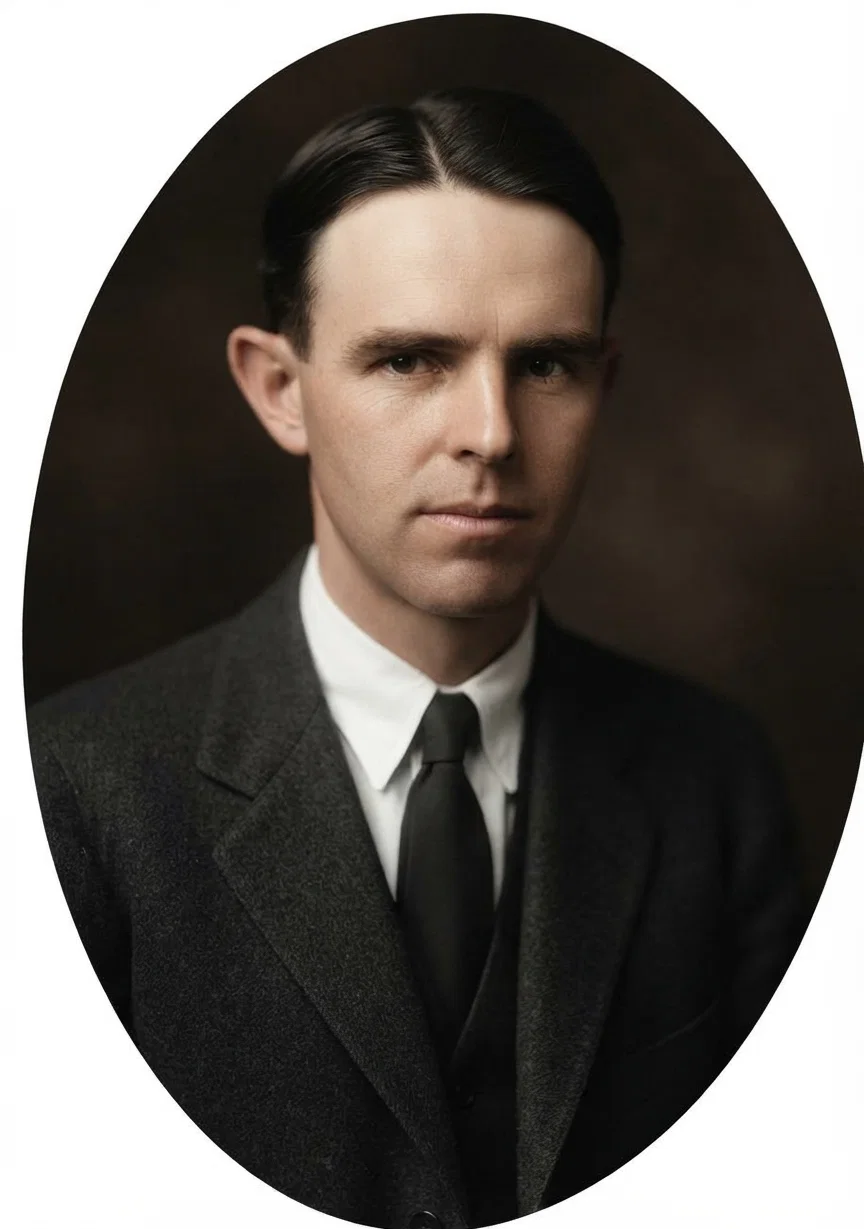
THIS is the season of the year when many happy thoughts and wishes come to us. It is a time when we like to clear our record of every unseemly thing and start with a clean page. The new year affords a fitting occasion for picking up broken threads and dropped stitches. We felt ambitious to make ourselves more useful, but put it off. We resolved and did not do. We started something good, but fainted by the way. How happy the thought that a kind Providence gives us one more opportunity to start something new or to start anew on something thought of or attempted, but not done!
I know individually a large multitude of ambitious, determined persons, young and old, who have been starting something new the last two months and more, and who are pushing it courageously forward. These are the new members of the Fireside Correspondence School, of Takoma Park, D. C. To these are still being added daily such as are determined to be something more than they are.
I know individually another noble class, our old members, who are continuing their work from previous years, some even who became charter members of the school three and a half years ago. Ah! that is what counts—keeping at a good thing from year to year.
I know individually a third honorable class, some of whom are not included in the first two: those who have completed one or more courses of work in our school. I am sure the reader will17want to see the faces of some of these in the only way we have seen most of them, yet without seeing feel to know.
These are only one here and there whose pictures we have, representing a large number who have done and are doing equally good work, with equal appreciation of its value.
The Happy Thought
It was a happy thought to establish the Fireside Correspondence School, of Takoma Park, D. C.
It is a happier thought that so many earnest-hearted persons, young and old, have been substantially benefited by it.
But the happiest thought of all, at this happy season of the year, is that it is not yet too late to register on the roll of its beneficiaries; for its doors stand ever ajar, and the perennial sign on the door-post reads, "Enter while you may."
W. E. HOWELL, Principal.
A minister who recently completed two years of New Testament Greek. He says: "I highly appreciate the privilege I have had of taking these two years of Greek in your school. Your inspiring words from time to time have greatly encouraged me ever to keep educating myself in a systematic way, and put to practical use the things I learn."
Field Notes
ELDER A. M. DART reports seven recent additions to the Fox, Idaho, church.
SEVEN new members recently united with the church at Salt Lake City, Utah.
Completed our course in Bible doctrines, and thinks the course "worth a hundred times the price." Gray hair does not hinder this work.
A conference treasurer who has completed our course in composition-rhetoric, and has now enrolled for algebra and penmanship. Has completed grammar, stenography, composition-rhetoric, and penmanship, and is now working on Bible doctrines and typewriting. Here is a charter member. He has completed four subjects, and says, "I am still intending to enroll anew." Age, 55.
ELDER C. H. MILLER reports the baptism of two persons at North Platte, Nebr.
AT the close of the week of prayer twenty-one persons were baptized at Loma Linda.
THREE adults were baptized and received into the Nashville, Tenn., church on a recent Sabbath.
TWENTY-SEVEN young people were baptized by Elder Meade MacGuire at the close of a Missionary Volunteer institute held in Keene, Tex., some weeks ago.
AT the close of the Queensland, Australia, camp-meeting twenty-four candidates went forward in baptism. On the last Sabbath of the New South Wales meeting, eighty persons were baptized, the largest baptism ever held in Australia.
ELDER F. A. ALLUM recently baptized eight new believers in Honan, China.
FOUR adults have accepted the truth at Eagle Bend, Minn., under the labors of J. O. Peet.
DURING the latter part of November a church of seventeen members was organized at Fort Lupton, Colo.
THE baptism of ten new Sabbath-keepers is reported from Melrose, Cal. Through the efforts of Elder J. A. Stevens ten persons have taken their stand for the truth at Petrolia.
A DEEP interest in the truth is being manifested at Herdon, Kans. The little Sabbath-school recently organized, with a membership of eight, now has twenty-six members, and fifteen adults are observing the Sabbath. Elder S. S. Shrock baptized four persons at Collyer a short time ago, and three at Herington.
Church Missionary Work
[The following program was prepared by C. H. Castle, missionary secretary of the Utah Conference.]
Suggestive Program for Fourth Sabbath Home Missionary Service
(Jan. 25, 1913)
OPENING SONG: "Christ in Song," No. 42; old edition, No. 36.
PRAYER, closing with the Lord's prayer, the congregation uniting.
SPECIAL MUSIC. (Where convenient to do so, arrange for the children to give this song.)
READING: "Individual Responsibility."
READING: "Systematic and Economical Distribution of Literature."
SONG: "Christ in Song," No. 720; old edition, No. 475.
RECENT MISSIONARY EXPERIENCES. (From ten to fifteen minutes may be used in relating these.)
MISSION FIELDS. (Short speeches on some of the newest mission fields, giving names of those connected with the work, and any interesting facts that may be learned from various sources, principally missionary reports in the REVIEW AND HERALD. Several should be appointed beforehand to prepare for this.)
PLANNING OF WORK. (Spend a few minutes in laying a definite plan by which every member may take an active part in missionary work.)
COLLECTION (local work, to provide the church with a supply of tracts).
CLOSING SONG: "Christ in Song," No. 474; old edition, No. 431.
Individual Responsibility
THERE is no question in the mind of any Seventh-day Adventist but that the third angel's message is the present truth for this day; and that this saving truth must be made known to our fellows in some way by somebody. It is equally clear that the message is to be given in this generation, and that Christ will very soon come.
It is impossible for the living preacher, the Bible worker, and all other classes of workers to proclaim the message in its fulness. How, then, shall the work be accomplished? The Word tells us that to every man is given his work, and the Lord has directed in the organization of the work so that every individual, no matter what his circumstances or condition in life, rich or poor, young or old, may have an active part in sowing the seed of truth.
The Lord holds us responsible for the light given, and requires that we let it shine out through our lives for the guidance of others. The following quotations from the spirit of prophecy are to the point:—
"God has given every man a work to do in connection with his kingdom. Each one professing the name of Christ is to be an interested worker, ready to defend the principles of righteousness. The work of the gospel is not to depend solely upon the minister; every soul should take an active part in advancing the cause of God. But, instead of this, how many in our large churches come and go like a door on its hinges, feeling no responsibility for the progress of the work, no interest in the salvation of souls for whom Christ died. They do not dream of weaving their religion into their business. They say, Religion is religion, and business is business; they believe each has a proper sphere, but let them be separated. But in whatever calling a Christian is found, he has his work to do for the Lord in representing Christ to the world. Whatever may be our occupation, we are to be missionaries, having for our chief aim the winning of souls to Christ. If this is not our interest, we rob God of influence, of time, of money and effort. In withholding our heart's service from the Lord, we fail to benefit our fellow man, and thus rob God of the glory that would flow to him through the conversion of others."
"Souls are perishing out of Christ, and those who profess to be the disciples of Christ are letting them die. Our brethren have talents entrusted for this very work; but they have bound them up in a napkin and buried them in the earth. What manner of entreaty can be brought to bear upon the idlers in the market-places that will arouse them to go and work in the Master's vineyard? What can we say to the slothful church-member to make him realize the necessity of unearthing his talent and putting it out to the exchangers? O that God would set this matter in all its importance before the sleeping churches! O that Zion would arouse and put on her beautiful garments! O that she would shine!"
"The work of enlightening others is not the work of the minister only, but it is the work of all who profess the truth of God. God has given to every man his work in making Christ known to the world. We must teach the members of the church how they may effectually minister to others. There are many who are ordained ministers, who have never yet exercised a shepherd's care over the flock of God, who have never yet watched for souls as they that must give an account. Were the kind of labor of which it stands in need, bestowed upon the church, many who are doing nothing would be educated to become diligent laborers in the harvest-field. An education should be given to the people of God that would result in furnishing hundreds who would put out to the exchangers valuable talents, whose use would develop men for positions of trust and influence, and great good would be accomplished for the Master."
"The church of Christ has been organized on earth for missionary purposes, and it is of the highest importance that every individual member of the church should be a sincere laborer with God, filled with the Spirit, having the mind of Christ, perfected in sympathy with Christ, and therefore bending every energy, according to his entrusted ability, to the saving of souls. Christ requires that every one who would be called by his name should make his work the highest and first consideration, and disinterestedly cooperate with heavenly intelligences in saving the perishing for whom Christ has died."
May the Lord help every one of us to realize what the very profession of a knowledge of this truth implies as to our individual duty. By the reception of the gospel ourselves, we are made debtors to all men, that they, with us, may share in its riches.
Systematic and Economical Distribution of Literature
HAVING settled the question as to our individual responsibility in the matter of enlightening the world of the soon return of our Lord, the next questions to be considered are: How shall we do the work, accomplishing the most in the shortest time possible? How may all have a part?
It is the opinion of the writer, reached by several years' observation, that some of the methods used long ago are still the best for securing results. It is generally conceded that personal contact with individuals is one of the most successful ways by which they are won to the truth. So, then, we need a plan whereby all, young and old, rich and poor, the ignorant and the learned, the weak and the strong, may have an active part in this grand work. This plan may be found in a systematic distribution of truth-filled literature.
We have a wealth of literature containing the message for this very time, and its circulation will accomplish wonders. Many feel that they can not hold Bible readings or converse at length concerning the vital truths we hold; but who can not hand out a tract or a message-filled leaflet? and in many cases it will send conviction to the heart when the living instrument would fail utterly.
These tracts may be systematically and economically distributed by means of the Tract Distribution Envelope. These may be secured at small cost from the tract society. The little leaflet entitled "Like the Leaves of Autumn" contains a list of all the tracts in print, and suggestions as to the grouping of the tracts to be used in the envelopes.
Then these should be carried from door to door, allowing a family to keep the package a week, more or less, when package number two may be presented, and number one taken up and passed on to another family, or preserved for future use. In this way they may be used over and over again as long as they are kept clean and presentable.
By this method we become acquainted with the people. Some will become interested and desire further instruction, which may be supplied by our books, or some one in the church may be found to hold Bible readings with these persons if the one using the tracts is not prepared to do so. Some may refuse to receive more literature, but remember God does not hold us responsible for the salvation of souls when we have been faithful to give them the opportunity to receive the light.
This plan is the simplest and most workable for the largest number of people in the various walks of life, and a most effectual way of doing a great work in a short time. It does not require great ability, nor much time, neither any set time; spare moments can be utilized to advantage.
May the Lord help us to realize the necessity of putting forth very earnest efforts now while the time is favorable, knowing that the "night cometh, when no man can work."
State and Church
By K. C. Russell
Reports, Notes, and Comments Pertaining to the Current History of Religious Freedom, and the Campaign "to Make America Catholic."
Conducted by the Religious Liberty Association.
W. W. PRESCOTT - - - - SECRETARY
An Important Meeting
The Second Quadrennial Session of the Federal Council of Churches of Christ in America
ONE of the most important councils of the Federal Council of Churches of Christ in America was held in the city of Chicago, December 4-9. It was estimated that three hundred delegates were in attendance, representing thirty-two Protestant denominations with a constituency of nearly eighteen million people.
One of the first items of business was the election of their officers for another quadrennial period of the council. Dean Shailer Mathews, of Chicago, Ill., was elected to the presidency, which position had been held during the past four years by the Rev. Bishop E. R. Hendrix, D. D., LL. D. Dean Mathews is one of the foremost educators of the country. He gives evidence of possessing great ability as a leader of this distinguished body of men.
Many lines of activity which are being encouraged by the council are without question praiseworthy and commendable; for instance, their opposition to the liquor traffic, the white slave traffic, the child labor curse, and their indorsement of many legitimate reforms. The fact, however, that an organization stands for some reformatory movement is no sure evidence that it is in harmony with the principles of the gospel. An organization or movement should be judged, not by the few unquestionable things which it seeks to promote, but by the principles upon which it is founded. The forbidden fruit of which Adam and Eve partook was from the tree of the knowledge of good and evil. There has never existed any great system of error, however, with which there were not connected some things that were desirable and even praiseworthy. The great deceiver of men well understands that error, when mixed with truth, is thus given greater currency.
The council had been in progress for some days before those objectionable features which demonstrated the real spirit of their confederacy were made apparent. A close observer of the proceedings from day to day could not fail in detecting how studiously members of the council avoided making any reference to Roman Catholicism as a menace to the true spirit of genuine Protestantism. One speaker spoke very fervently against Mohammedanism, Buddhism, and Confucianism as systems of error that are opposed to Christianity, but never made mention of the Papacy, one of the most stupendous and hostile forces to the spirit of genuine Christianity that exists.
Once during the course of their deliberations it looked as if a lively discussion would be provoked between prominent delegates regarding their attitude toward the Roman Catholic Church, but it was quickly suppressed, as they well understood that any expressions of differences of opinion on the part of the delegates would be detrimental to the outward show of unity which each member seemed to try to maintain. It will ultimately be seen, however, that when the mantle of professed unity is once stripped from off the council, there will be nothing left but a mere skeleton of an organization.
It was refreshing to note that there was at least one delegate who still retained some of the true spirit and principles of Protestantism, but, alas! he finally yielded to the so-called broad and liberal spirit that seemed to pervade the council. This was made evident when a resolution was submitted to the council to eliminate the word Protestant from the literature of the organization. That this action on the part of the council was an overture to the Roman Catholic Church is evidenced by the fact that the public press thus interpreted the action of the council without any remonstrance from that body. One of the reports of this unprecedented action of this great body of the professed Protestant churches of America appeared with prominent head-lines on the front page of the Inter Ocean of Dec. 7, 1912:—
"FEDERAL COUNCIL OPENS ITS DOORS TO THE CATHOLICS.
"WORD PROTESTANT IS STRICKEN FROM COMMITTEE REPORT ON OBJECT OF ASSOCIATION OF CHURCHES.
"IMPORTANT FORWARD STEP WILL MAKE POSSIBLE THE ADDITION OF FOURTEEN MILLION RECRUITS TO UNITE WITH THE ARMY OF CHRISTIANS.
"The Federal Council of Churches of Christ in America took one of the most important forward steps in its history when it adopted a resolution presented by the executive committee eliminating the word Protestant from the report of the committee, and virtually threw down the bars and invited the Roman Catholic Church of America to join the council, and lend its titanic strength toward solving the common problems of the church."
It is not surprising that any single Protestant church or the combined Protestant churches of America would eliminate the word Protestant from their literature when one considers that they have largely ceased to protest. When Protestantism was launched in the sixteenth century, it was the result of a most positive and vigorous protest by those noble Reformers at the risk and expense of life itself. The Catholics are to-day repeatedly taunting Protestants because of their departure from the principles of Protestantism.
In a recent magazine article written by Cardinal Gibbons, of the Catholic Church, it is evident that he is watching with unusual interest the progress of this great inter-church federation movement; for he stated that "dissension is the chief cause of persecution, and it delays the complete triumph of Christendom over the hearts and souls of men. Federation of churches as we have it in many places is a long step in the right direction for a more compact wall in Christendom." One who understands the design of the papal church can easily comprehend what the final step will be in order to unite Christendom. That step, in the last analysis, will be nothing short of the professed Protestant churches' accepting the Catholic Church as their leader. This sort of leadership has already been suggested by one distinguished church leader as reported in the London Daily Mail, Aug. 6, 1910 (overseas edition), as follows: "At a conference at Sheffield on Monday the Rev. J. H. Freeborough, the newly elected president of the Wesleyan Reform Union, speaking on the hope for the future unity of the Christian church, said he 'firmly believed that the great agency for the unification of Christendom was the Roman Catholic Church. No other church had the outlook, machinery, tradition, wealth, and ability to bring together all the forces of Christendom.'"
One of the cardinal points upon which the Federal Council of Churches of Christ in America is united is that of compulsory Sunday observance. Greater emphasis is being placed upon this feature of the federation movement at each successive council.
Following is a list of resolutions upon this subject which were adopted by the council:—
"1. That all Christians shall seek to do their utmost in the observance of this day by themselves abstaining from anything that savors of desecration, such as sports, travel, and buying, and urge upon the government the need of rest for the laboring man. This day has been taken from him, and the church can in no better way prove its interest in him than by untringly seeking to restore to the laboring man his day of rest.
"2. That we earnestly urge cooperation with all associations looking to the observance of the Lord's day, and also urge, if not a union, a close cooperation of all associations working to this end.
"3. That we heartily indorse a half-holiday of one of the six days of the week, preferably Saturday, as tending to give better observance to Sunday.
"4. That all ministers be requested to preach on this subject on the last Sunday in March. Last year twenty thousand sermons were preached in England alone on Lord's day Sunday relative to the observance of this day.
"5. That we earnestly recommend to State and local federations of churches the importance of not only guarding against the repeal or weakening of the laws we now have providing for Sunday rest, but of placing on our statute-books laws securing one day in seven as a rest day for all classes of working men, and the securing to every community a more complete protection against all Sunday practises that tend to demoralize society or weaken the forces that make for virtue and righteousness. As a means to this end we heartily cooperate with the social service commission of the council in its nation-wide campaign for one day in seven for the workers."
Another measure was also adopted by the council which in an unmistakable manner indicates how rapidly that body is moving to the direction of a union between the church and the state. It was a resolution favoring week-day instruction in religion in the public schools of this country. Much attention was also devoted by the council to the social service department and its work. Their new declaration of faith or creed reads as follows:—
"The church must stand,—
"For equal rights and complete justice for all men in all stations of life.
"For the protection of the family by the single standard of purity, uniform divorce laws, proper regulation of marriage, and proper housing.20
"For the fullest possible development for every child, especially by the provision of proper education and recreation.
"For the abolition of child labor.
"For such regulation of the conditions of toil for women as shall safeguard the physical and moral health of the community.
"For the abatement and prevention of poverty.
"For the protection of the individual and society from the social, economic, and moral waste of the liquor traffic.
"For the conservation of health.
"For the protection of the worker from dangerous machinery, occupational diseases, and mortality.
"For the right of all men to the opportunity for self-maintenance, for safeguarding this right against encroachments of every kind, and for the protection of workers from the hardships of enforced unemployment.
"For suitable provision for the old age of the workers and for those incapacitated by injury.
"For the principle of conciliation and arbitration in industrial disputes.
"For release from employment one day in seven.
"For the gradual and reasonable reduction of the hours of labor to the lowest practicable point, and for that degree of leisure for all which is a condition of the highest human life.
"For a living wage as a minimum in every industry, and for the highest wage that each industry can afford.
"For the most equitable division of the product of industry that can ultimately be devised."
The president of the council truly said that their creed sounded like that of a political platform, for indeed that is practically what it is. How striking the contrast between their expressed purpose to adjudicate all difficulties of a civil character between man and man, and the attitude of Jesus toward such questions as is indicated in his reply to the one who asked him to intercede in the division of an inheritance between two brethren: "Man, who made me a judge or a divider over you?" Luke 12:14. What a transformation has taken place since the days of Christ and the apostles on the part of those who claim to be the ambassadors of the Saviour of men! Their work was then confined alone to the preaching of the word of God with power sent down from above. The departure from the primitive gospel principles of those who have so long professed to stand in their defense should arouse every true disciple of Christ to put on the whole armor and give the trumpet a certain sound.
K. C. RUSSELL.
News and Miscellany
By Editor
Notes and clippings from the daily and weekly press
— Five hundred thousand schoolchildren in California have signed petitions asking that the Liberty Bell be taken to San Francisco to be displayed at the coming Panama Exposition.
— Exports from the United States to Canada are now averaging $1,000,000 a day. Three years ago they averaged a half million dollars a day, and a dozen years ago they averaged a quarter of a million dollars a day.
— The battle-ship "Pennsylvania," for the building of which bids will be opened February 18, will be the largest and most formidable ship afloat. Fully equipped for service, her total cost will be between $11,000,000 and $12,000,000.
— New York City is to have one of the largest municipal dock systems in the world. For more than three miles along the Brooklyn water-front the city will take its pick of the choicest property. The approximate cost of this enterprise will be $150,000,000.
— Abdul Baha, head of the Babist religion, who has been in this country since April, has returned to Persia. A crowd of the disciples he has made accompanied him to the steamer, and were almost fanatical in their signs of devotion. He claims to have made thousands of converts.
— Spain, with a population of 19,000,000, is feeding 32,000 priests, 1,700 monks, and 14,600 nuns, and keeping in repairs 65 cathedrals, 18,564 churches, and 11,202 chapels. The parish clergy, including the bishops, has a fixed income of $20,000,000, which comfortable sum is doubled by the various perquisites.
— Neither the high cost of living nor continued increase in the price of gems has had any effect on the demand of the American public for diamonds, pearls, and other precious stones. The November shipments of gems to the port of New York amounted to $3,415,529. These figures swell the total for gems received here thus far this year, so that the year's total will be $41,000,000.
— Russia has refused to remove her troops from Mongolia, and the Chinese are preparing for war. The six companies in San Francisco have appealed to every Chinaman to give at least ten dollars for the war fund. The Chinese consul in San Francisco says that contributions have been pouring into his office for several days. Many were sent by telegraph from various parts of the country, and range in amount from $100 to $1,000.
— Lieut. S. B. Edwards, retired, United States Navy, has patented a mattress which will not sink and which can be used as a raft. It is being tested by the naval board, and so far has stood the tests well. It is so light that one person can carry it, and it can be fitted to any bunk. If it proves to be all that is claimed, and it seems now it will, it is a great boon to the race. All steamers and war-ships will have these mattresses, and many lives will be saved.
— The British schooners "Gartegena" and "Georgiana" foundered between Jamaica and Cayman Islands during a recent hurricane. Twenty-two lives were lost.
— The new British white slave law became effective last week. It is comprehensive in its provisions, including public flogging as well as imprisonment as a penalty for men engaged in this unlawful business.
— Will Carleton, newspaper man, lecturer, and poet, died recently at his home in Brooklyn, N. Y. His first book of poems appeared in 1871. Among the most popular of his poems is "Over the Hill to the Poorhouse."
— A serious Negro antigovernment conspiracy has just been discovered in Cuba. Within forty-eight hours 2,000 Negroes were arrested. Great quantities of hidden arms and ammunition have been found. The government is taking every precaution against an uprising.
— The long-threatened strike of every branch of the garment-making industry in New York City began on the morning of December 30, when 70,000 workers, men and women, refused to take up their duties. It is expected that fully 30,000 more will join the ranks of the strikers.
— The public appears to have forsaken the government's sober postal card for the gaudier production of the souvenir shop. The report of Public Printer Donnelly shows that only 770,253,399 cards were printed in 1912, while in the preceding year 1,280,895,840 were turned out.
— The Jesuit question is agitating Germany, and Catholics threaten a campaign which may overthrow the Bethmann-Hollweg government. Prussian diplomatic relations with the Holy See, the German chancellor has affirmed, will be absolutely broken off the next time the Pope attempts to interfere with the sovereign rights of the state, as he was charged with doing recently in the encyclical relating to trade-unions.
— In the battle of electricity against steam an important victory for the former agency is the announced intention of the Denver and Rio Grande Railroad to electrify its main line in the near future. This, says the Electrical Review, will be the largest experiment of the kind which has yet been undertaken in this country.
— A general investigation into the illicit sale of morphin in Paris has been ordered by the authorities of that city. They report an apparently growing craze for the drug. The vice is said to be at its worst among the young women frequenters of night cafés and dance-halls, and in the collegiate circles of the Latin quarter.
— The Nobel peace prize will not be awarded this year. This is the first time since the first award was made in 1901 that the committee of the Norwegian parliament has found no person worthy of the award. The committee, in explanation of its action, merely states that it has decided that there has been "no work deserving of the prize." It has been recommended that the prize, approximately $40,000, shall be retained for the benefit of the foundation fund.
The Influence of Noble Examples
"To admire what is admirable, to adore what is adorable, to follow what is noble, to remember any such examples that have crossed our earthly pilgrimage, that have brightened its darkness and cheered its dulness,—this keeps alive before us the ideal of human nature and the essence of the divine nature. The good thoughts, the good deeds, the good memories, of those who have been the salt and the light of the earth, do not perish with their departure. They live on still, and those who have wrought them live in them."
NOTICES AND APPOINTMENTS
By Editor
The Review and Herald Publishing Association
NOTICE is hereby given that the tenth annual meeting of the members of the constituency of Review and Herald Publishing Association, Washington, D. C., will be held in the chapel of the Washington Foreign Mission Seminary, Takoma Park, Md., Feb. 12, 1913, at 10 A. M., for the election of four trustees for the coming year, to take the place of those whose term of office expires at that time, and for the transaction of such other business as may properly come before the meeting.
The following persons are members of this corporation: those composing the executive committees of the General Conference, the Atlantic Union Conference, the Canadian Union Conference, the Lake Union Conference, and the Columbia Union Conference of the Seventh-day Adventists; those who compose the executive committees of the several local conferences of the Seventh-day Adventists within the territory of the aforementioned union conferences; those who compose the board of trustees of Review and Herald Publishing Association; and such persons as have received certificates of membership in said association.
By order of the trustees,
F. M. WILCOX, President.