Seventh-day Adventist Publishing Association · Battle Creek, Mich. · Dec 1872
CITIES OF REFUGE.
By J. E. White
In ancient times there was a custom that if a person killed another, whether intentionally or by accident, the relatives of the deceased could put him to death.
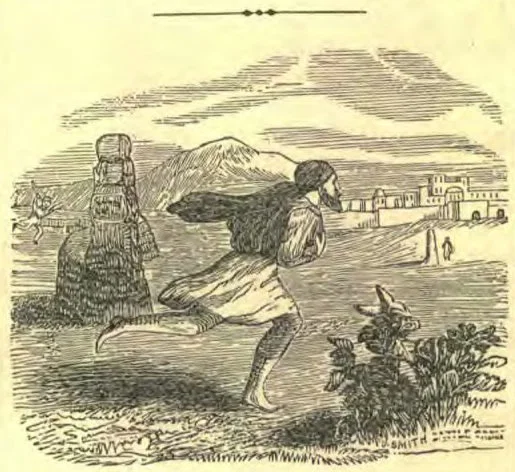
This custom was so firmly fixed that when the children of Israel went into the land of Palestine, instead of doing it away fully, the Lord commanded Moses to appoint six cities of refuge to which person killing another could fly and be safe from the avenger until the law decided whether he was really guilty of murder, or whether it was merely an accident. If it was merely an accident, he was safe within the walls of the city. If he was really a murderer, he was put to death by law.
But even if it was proved to be an accident by which he had killed his fellow-man, still his only safety was by remaining within the walls of the city until the death of the high priest, when he could go free. Before the death of the high priest, if his enemies should find him outside the walls of the city they could slay him with impunity.
There were three of these cities on either side of the river Jordan. On the west side were Kedesh, Shechem, and Hebron. On the east side were Golan, Ramoth-Gilead and Bezer. Joshua 20:7, 8.
You see in the above picture that the man in the foreground is running for dear life for the city in the distance. Away off to the left is another man in pursuit, who hopes to overtake him, and avenge the death of his friend before he can reach the city where he knows he will be out of his power.
I am glad such a revengeful custom is done away with now, for “vengeance is mine and I will repay, saith the Lord.”
There is a city of refuge for sinners exposed to the second death, if they will only fly to it in time. Oh! let us fly in time to the bleeding side of our Saviour and be washed from our sins so that we may have an abundant entrance into this city of refuge from whence we “shall go no more out,” and where “God shall wipe away all tears from their eyes; and there shall be no more death, neither sorrow, nor crying, neither shall there be any more pain.”
How happy we shall be if we can call Christ our friend in that terrible day when the wicked shall be consumed with unquenchable fire from Heaven. Dear readers, shall we find a refuge with our Saviour at that time? J. E. WHITE.
Trip to California, No. 2: Arrival in Denver
By W. C. White
TRIP TO CALIFORNIA.—NO. 2.
By a slight shaking and considerable noise from the car’s steward, we were awakened the morning of July 18th, and on looking out of the window toward the west, we saw a dark line crossing the plains from north to south, which looked like mountains. We were about forty miles from Denver, and as the train rushed on nearer and nearer, the mountains were more distinctly seen rising one above another, and on the highest peaks great banks of snow. Soon the whistle shrieked, and the brakeman cried, “Denver. Change cars for Cheyenne, Colorado Central,” &c.
Denver, the capital of Colorado Territory, has a population of 12,000 inhabitants, although it is but fourteen years since the first house was built.
It is situated on Cherry Creek, is laid out in a square, contains many fine buildings, and truly deserves its name, “The Queen City of the Plains.”
We had intended to spend a day or two in Denver with my cousin, Mrs. Walling, who resides there, before continuing our journey to California. But my parents were much wearied, and we were so heartily welcomed at the home of Mr. and Mrs. Walling that we staid with them two weeks, and then at his request accompanied Mr. Walling to their home in the mountains where his saw-mills are located, and where it was thought the pure air and mountain scenery were just what my parents needed to rest their minds and improve their health.
Before leaving, let us take one more look at Denver. At this season we often see large numbers of Ute Indians in the streets, who have come down from the mountains to trade. They go straggling through the streets, some on ponies, some on foot, and sometimes two on a pony, some with their faces painted, and all of them ragged and dirty.
The markets offer all kinds of fruits and vegetables, but he who buys must pay well for all he gets, especially for fruits which are all brought from California. One of Denver’s curiosities is its “dry river.” For years after the Pike’s Peak country, which is now called Colorado, began to be settled, Cherry Creek, which has a broad, sandy bed, was but a shallow stream in the winter, and almost entirely dry in the summer. So spiles were driven, and the business part of the town built over the bed of the creek. But at last there was a change, a wet season, and a terrible storm, when the stream rose, and the water came down from the mountain in a flood, and finding Denver in its way, took the larger part of the city with it, city buildings, city records and all. In rebuilding the city, they have kept on the banks and do not encroach on the bed of the stream.
From Denver to Golden, a small city at the foot of the mountains, a distance of fifteen miles, we had a chance to learn the agricultural products of the territory. Wheat and barley are the principal crops. Corn does well in some places, and vegetables yield abundant crops if properly irrigated. Stock raising is a profitable business, and the plain was dotted with fine herds of cattle.
A mile or two beyond Golden, our road left the plains, and entering a narrow canyon between the foot-hills, began to ascend. Here was hard work for the horses. For miles we drove along by the bed of a little creek, the mountains rising abruptly on each side, sometimes smooth and grassy, sometimes covered with pine and spruce trees, sometimes solid rock rising almost perpendicularly to the height of two or three hundred feet, but oftener covered with loose rocks and a few stunted pines. At last we left the creek and began to climb in earnest, up, up, up, for two or three miles, to the top of a foot-range, only to descend by a zigzag course to the bottom of another canyon, and then to climb again. Thus we rode up and down for twenty-five miles, and when we reached Walling’s Mills, the end of our journey, we were glad to stop and rest. W. C. WHITE.
THE CLOSING YEAR.
Ring out the old, ring in the new,
Ring, happy bells, across the snow:
The year is going, let him go:
Ring out the false, ring in the true.
Farewell! old year, we meet no more,
Thy end draws on apace;
Yet since thy birth how short it seems,
How very brief a space.
The Little Things That Make a Holy Life
A HOLY LIFE is made up of a number of small things. Little words, not eloquent speeches or sermons; little deeds, not miracles, nor battle, nor one great, heroic act, nor mighty martyrdom, make up the true life. The little constant sunbeam, not the lightning; the waters “that go softly” in their meek mission of refreshment, not “the waters of the river, great and many,” rushing down in torrent noise and force, are the true symbols of a holy life. The avoidance of little evils, little sins, little inconsistencies, little weaknesses, little follies, little indiscretions and imprudences, little foibles; the avoidance of such little things as these goes far to make up at least the negative beauty of life.—Sel.
Daily Acts of Kindness
TRY every day to do some act of kindness. One each day will amount to three hundred and sixty-five in a year.
THE SIN OF LYING.
By C. S. Veeder
We have recorded in Acts 5, an account of a man and his wife who sold a possession, and kept back part of the price, but brought a certain portion of it and laid it at the apostle’s feet.
It appears from reading the 34th and 35th verses of chapter 4, that as many as were brought into the truth by the preaching of the apostles, sold their lands and all they possessed, and came and brought the price thereof and gave it to the apostles, who divided it among them according as every man had need. Those who were rich sold and gave up all, while those who were poor shared alike with those who before had abundance. Thus they had all things in common. But Ananias thought the apostles would not know how much he got for his possession, and that he could just as well keep back some of it as not. He let his wife into the secret, and she consented. They no doubt thought, as a great many Christians do at the present day, that it was doing most too much to give all to the Lord, that it would answer the purpose just as well if they gave most all. So when this man came into the room where Peter was, with his money, he laid it at the apostle’s feet, as though he was making a complete surrender of the entire amount. Peter did not ask him if that was the full sum of the price of his land, but seemed to know from the conduct of the man that he was keeping back a portion. Peter says, “Ananias, why hath Satan filled thine heart to lie to the Holy Ghost, and to keep back part of the price of the land? While it remained, was it not thine own? and after it was sold, was it not in thine own power? Why hast thou conceived this thing in thine heart? Thou hast not lied unto men, but unto God.” Acts 5:3, 4. Ananias could not deny his deception, nor offer an excuse, but was so overcome with a sense of his guilt that he fell dead upon the floor. His wife, not knowing what had happened, came in shortly after, and was asked by Peter if they had sold the land for so much, and how it was that they had agreed together to tempt the Spirit of the Lord. The words of Peter struck a deep sense of shame and guilt to her heart, and she also sunk down upon the floor and yielded up the ghost.
Dear children, what important lesson can we learn from this account of Ananias and his wife? What was it recorded in God’s word for, but for our instruction? I think we can see what a fearful crime it is to lie, and especially to lie to the Lord. How easy it is to commit this sin. Before we are aware of it we break our promises to God; and is not this lying? Have you never told the Lord that you would love him and serve him with your whole heart? and have you done so? Are you fulfilling that promise to-day? and every day? Remember the fate of Ananias and Sapphira who pretended to give all, but kept back a part. It is better not to promise than to promise and not pay. Yet, this does not release us from our obligations to God, for he requires us to promise and pay too. It is a fearful thing to lie to God, and he will certainly punish all who do so. Be careful, then, of your words, and keep in mind that God’s eye is ever upon you. He knows all your thoughts, and can penetrate every motive. He loves you, and wants to make you happy. Eternal life with Jesus in that beautiful city is promised to all who will give God their whole hearts, and serve him faithfully to the end.
C. S. VEEDER.
Battle Creek, Mich.
THE NARROW WAY.
By C. Green
On this world there are two ways, into one or the other of which every person has traveled or is traveling. Of these two ways, one is a narrow path, the other is a broad road. But few walk in the narrow way, because of its difficult entrance, and the narrowness of the path. Many can walk together in it; but they must be agreed, and follow the instructions given by the Lord of the country to which this path leads. He has passed over the way, and left his good deeds as waymarks to guide the traveler all along its course.
A person just setting out to travel this way has to lay aside a great many things which are considered of much value to those on the broad road. These form a large load, and would hinder the progress of the traveler, or stop his course altogether. Among these are pride, love of applause, jesting, selfishness, envy, idleness, and a great number of other hurtful things. A goodly number of persons have been known to set out together upon this road, and all went well for a time; but after a while it would be found out that some of them had brought along one or more of these articles, which produces much trouble among them all.
It often happens that rather than part with these hurtful things, they will turn away, and take the broad road which they formerly traveled. Along the whole course of this strait path, there is a number of by-paths into which the traveler is liable to wander, these lead to the broad road; and if a person does not find out his mistake, and return, he is hopelessly ruined. Many wander off in this way, even when their journey is nearly completed. Thus, but few finally succeed in gaining the object for which they set out in the beginning to obtain; yet all might, as well as the few, had they not become weary in well-doing.
The traveler is provided with a suitable armor, which protects him from harm in attacks of his enemies. It requires much patience and perseverance to get this armor, in all its parts, fitted to a person, from the fact that the pattern is perfect, and to wear it well, he must grow into it.
Those journeying this road, call themselves pilgrims, because they have no abiding city here, but seek for one that is to come. This road is called the “highway of holiness”; it overlooks the broad road, and the traveler can see the evil that is going on in the latter, and the sad end of those upon its course.
The narrow way is in many places rough, difficult to travel; but the prospect ahead encourages the weary pilgrim, and fills his heart with contentment and peace. He knows if he goes on, he will by-and-by arrive at his journey’s end, and be permitted to enter the beautiful city, and become a resident of the most delightful country which the heart of man could desire. Besides this, he will eat of the fruit of the tree of life, and live forever, and sing the songs of the redeemed throughout an endless eternity. C. GREEN. Battle Creek, Mich.
FORGIVE AND FORGET.
By Sel
FORGIVE and forget—it is better
To fling every feeling aside
Than allow the deep cankering fetter
Of revenge in thy breast to abide;
For thy step through life's path shall be lighter
When the load from thy bosom is cast,
And the sky that's above thee be brighter
When the cloud of displeasure is passed.
Oh! memory's a varying river,
And though it may placidly glide,
When the sunbeams of joy o'er it quiver,
It foams when the storm meets the tide.
Then stir not its current to madness,
For its wrath thou wilt ever regret;
Though the morning beams break on thy sadness,
Ere the sunset, forgive and forget.
—Sel.
TIME IS PASSING.
TIME is running in his chariot,
Rapidly his wheels go round;
Though they leave no dust behind them,
Though they have no rumbling sound;
Silently they bear us onward,
Soon our journey will be o'er,
Soon our feet shall press the meadows
Of the vast, eternal shore.
HELPERS
By Young Reader
Poor old fellow! He can hardly get along. Let's lend him a hand. And so they did. And the old man, with the help of the lads, soon got his trunk to the top of the hill, and then it was easy work after that.
Are you a helper? Are there any who are the better for you? any whose load you lighten? any to whom you are a comfort? Are you trying to lead any to God? We cannot tell what power our words may have. But one day we shall know; and if we are faithful, we may find many souls won, to shine as stars in the crown of our rejoicing, who might have been lost if we had spoken no word for Jesus.
If you are not a helper, are you hindering? Does your course of life give pain to any heart? Do those who are laboring for Christ find you a hindrance? Learn from these lads. Help, and do not hinder.
Help the poor, the old; help all you can. Do not spend your time and strength in sin, or folly, or selfishness. Try to do good for Christ's sake. Yes, for Christ's sake. That is the true motive. They who feel what Jesus has done for them, are the best helpers. He went about doing good. He died to save sinners. May you be led by the Holy Spirit to be a helper for his sake.
—Young Reader.
The Rain and the Grasses
“WHAT do you pour down for now?” said the grasses to the November rain; “you will do us no good.”
“There are other folks in the world to look out for besides you,” answered the rain; “all the wells and springs are to be filled for winter.”
LITTLE BY LITTLE.
LITTLE by little the sands gather upon the dunes till farms are laid waste and towns buried. A snowflake is small, but the fall which fills the valleys and covers the mountains is made up of flakes. The coral worker is a tiny mason, but he adds brick to brick upon the walls of his temple springing from the bed of the ocean till he has lifted its roof above the water, and an island is formed from the depths upon it. They are very small particles of mist which the sun takes from the dew-drop, and which the wind carries away to the clouds, but falling in torrents they swell rivers and overwhelm cities.
Only little by little does the child gather sands of truth, but these are golden sands and form piles of the wealth of wisdom as old age comes on. Certainly it is a slow work to educate the ignorant, and elevate the degraded. God has been engaged in it for six thousand years, and yet is not tired nor discouraged, though the progress of his cause has been slow, and sometimes backward in spite of his efforts, his love, his entreaties, and his punishments. If his thoughts were like man's thoughts, he would long since have given up the task and tried some new experiment. Through the long ages of patriarchs and prophets, he has worked and waited. Knowing the end from the beginning, he sent forth his Son to be rejected and slain, and still he works and waits, century after century, the slow footsteps of men; but success will come at last, and the whole earth shall be full of joy. Little by little the work goes on. One cannot see the darkness pale in the early morning, nor the light fade at evening; but who doubts the day or night?
Little by little, better, kindlier, purer thoughts crowd out the former. Slowly intelligence is narrowing the domain of ignorance. Vice, which went unchallenged at night, will hide itself in shame as day dawns. The mustard seed is small, and still less the addition which it takes to itself from the soil with which to make stem, and limb, and leaf; but day and night the progress goes on till the fowls of the air find in them a lodging place.
Little by little the meal is leavened. The meal of mankind is very dry and dead; but the leaven of grace can work the whole mass into a measure of Christian holiness. No heart is insensible to its touch, or proof against its power. The hangman yonder would be excused the sad task of to-day had the Sabbath-school, the church, and society, been united in leading that young man from Satan to the Saviour, years ago. Gospel leaven might have changed him into a child of grace had it been brought to bear favorably upon his childhood and youth. The world is not to be educated, reformed, purified, and saved, in a day, nor by a miracle, but by Christian effort, little by little.
It took a long time to Christianize Great Britain. From the days of the apostles the work has been going on slowly. How slowly sometimes, and it is not completed yet; but the Great Britain of to-day beams with millennial glory compared with itself when Cæsar trod its shore. Shut up its grog-shops, educate its masses, and “merry England” would sing with the lark and nightingale, and shine with a Christian civilization, fair as the moon and bright as the sun. Little by little this will appear. One by one souls are converted. The sand, the snow-flakes, and the coral, all exhort the Christian worker to perseverance, and promise him triumph.—Atlanta Advocate.
SWEETNESS IN SORROW.
By Sol.
’Tis sweet to learn the happy art
Of culling, from each bitter smart,
The gems of hallowed pleasure;
For, though long hidden from our eyes,
Within our rugged grief oft lies
A wealth of diamond treasure.
And if we cut with skillful care
The mold that hides the jewel rare,
Soon will its dazzling beauty
Flash brightly on our raptured sight,
With crystal rays of living light
Illuming the path of duty.
We climb the cliffs that we may eat
The grapes that hang in clusters sweet,
Along the rocks eternal;
And gaze, with more than rapture, through
The diamond-sprinkled arch of blue,
Into the land supernal.
We wander through earth’s tangling maze,
’Mong sunken snares and slippery ways,
That in our grief’s completeness,
Our heavenly Guide may nearer come,
Changing the wild to Eden’s bloom,
With love’s enchanting sweetness.
So, when the briars pierce our feet,
We’ll say, “There must be roses sweet,
Just here, worth our possessing.”
And spend no more the grief-stung hours
In murmuring, but in search for flowers,
Twined with celestial blessing.
—Sol.
NOVEL READING.
By M. Wood
NOVEL reading is a sin of such magnitude, a practice so pernicious, and so detrimental to the mind, that I would say to those who are addicted to it, as the angel said to Lot, “Escape for thy life.” Break the bands that bind you to so fatal a delusion. Satan uses various instruments to win souls from Jesus, and one is, novel reading. It weakens the mind, destroys the memory, and ruins spirituality. It is an evil which, if persisted in, will wean the mind from everything of a holy and religious character. It produces a false, unhealthy, unnatural excitement upon the mind, and kindles an unholy flame within the breast of all who indulge in it.
The influence which light literature has upon the mind is sad in the extreme. It unfits the reader to enjoy the realities of life. It substitutes fiction for facts—the spurious for the genuine. It may seem harmless and inoffensive—a thing to be easily dropped if evil results follow. But Satan weaves his web about the reader in such a way as to make it almost impossible to extricate himself from its fascinating power.
Beware of the first misstep. One wrong habit will cause a desire for rocks and mountains to hide from us the face of Him that sitteth upon the throne.