Your ShelfYour Projects

Signs of the Times, Vol. 36, No. 28.

Conduct for Christians
Earlier text: The British Naval Propaganda

Uncle Ben’s Cobblestones

Familiar Talks with Boys and Girls About Common Things
UNCLE BEN has such a pleasing way of telling about the origin and use of common, every-day articles, that he holds the interest of the reader from the start in his talks about air, water, sunshine, fire, smoke, glass, coal, salt, paper, matches, etc.
He tells about more than one hundred different things in all, and intersperses with many happy thoughts that bring good cheer to young and old.
Two hundred and twenty-one pages, nicely bound. Price, post-paid, $1.00.
Pacific Press Publishing Assn.
Mountain View, California
Portland, Ore. Regina, Sask., Can. Kansas City, Mo.

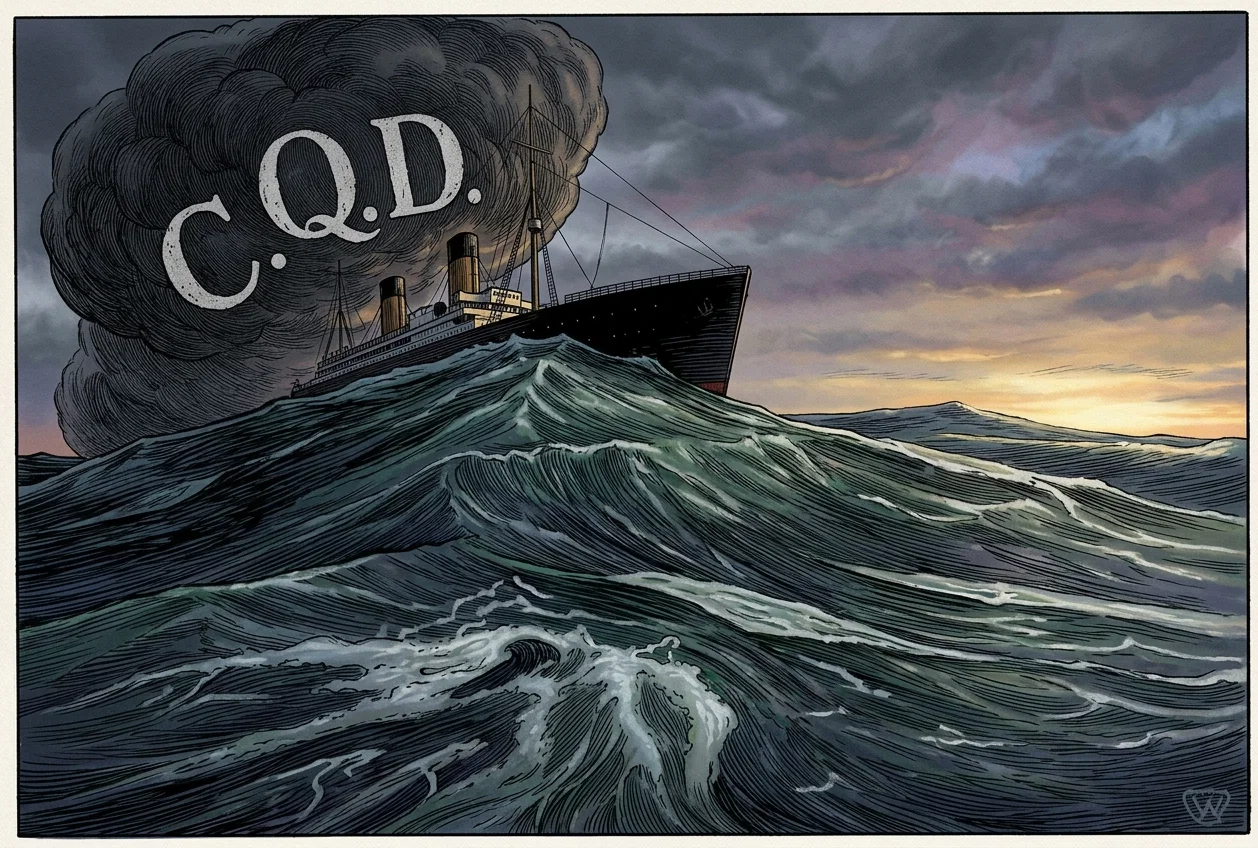
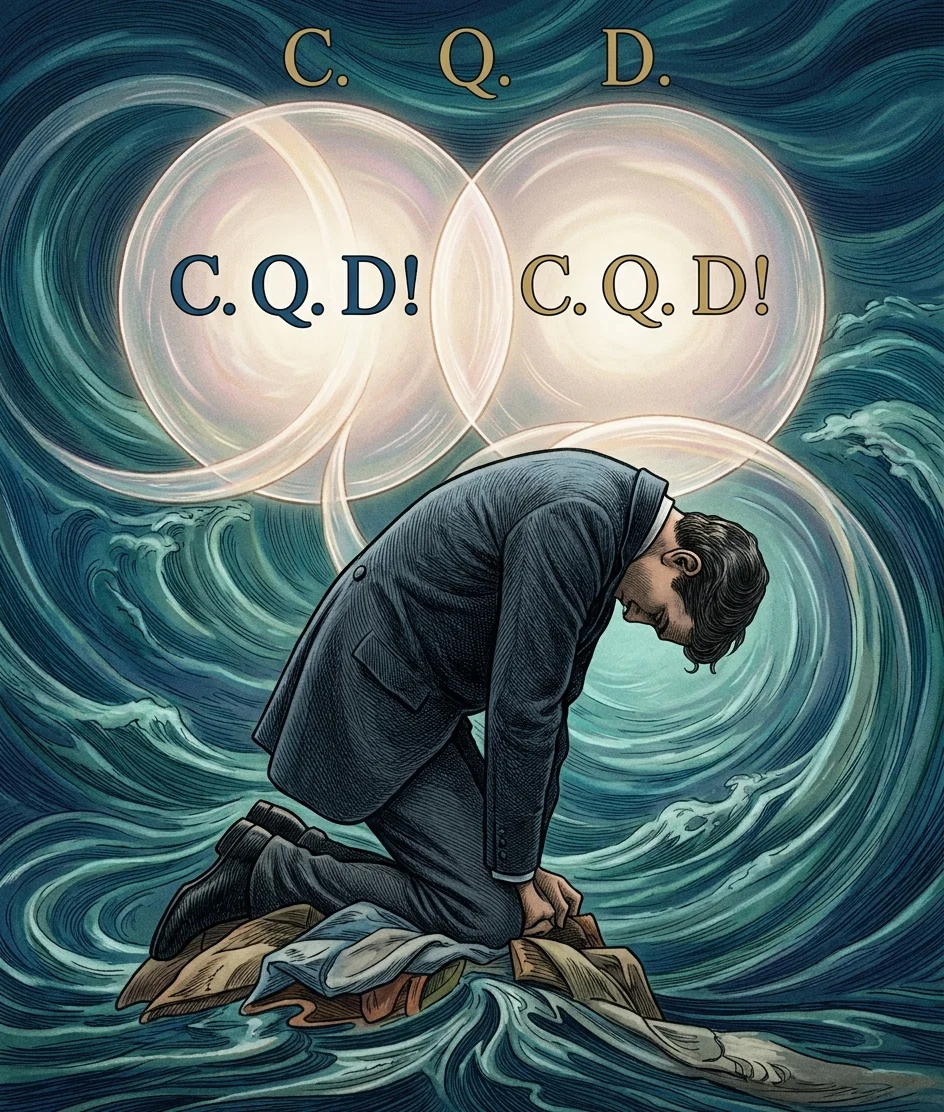
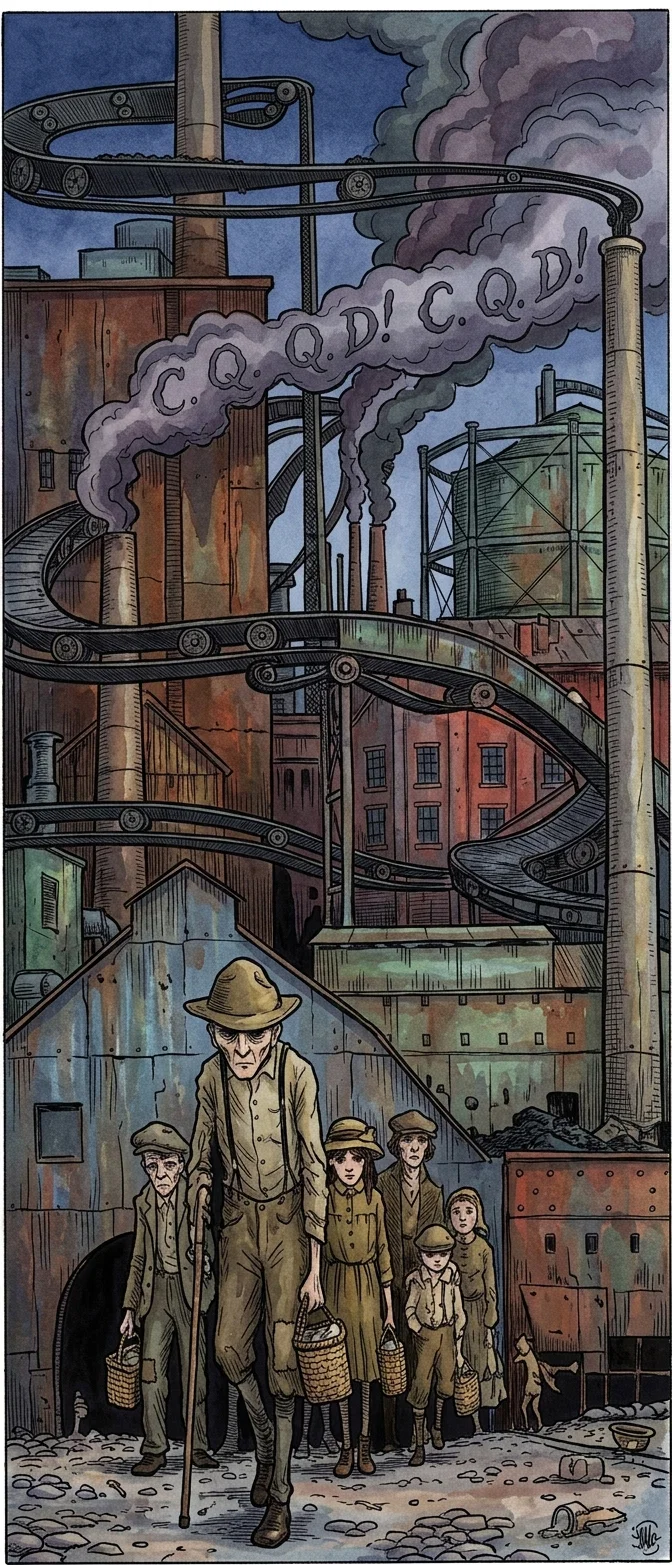
“C. Q. D!”

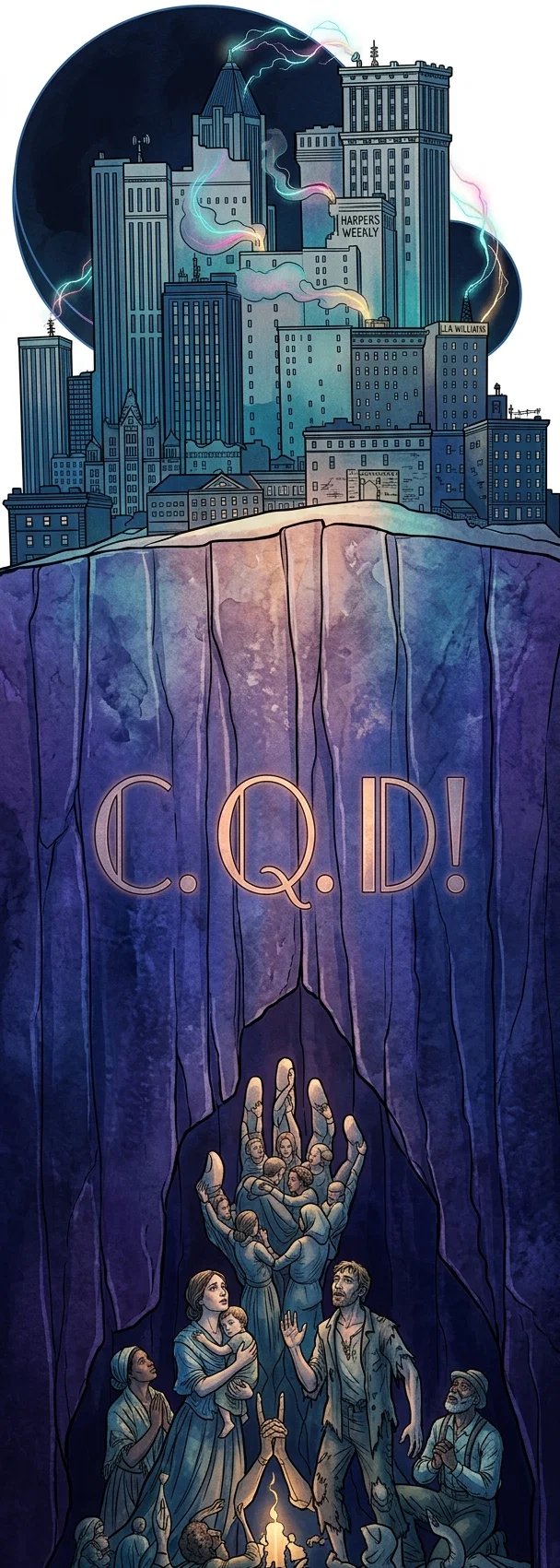
Poem by John Kendrick Bangs. Drawings by J. A. Williams
(In the code of wireless telegraphy the letters C. Q. D. are the signal of distress)
Copyright by Harper’s Weekly; used by permission
Sounding daily on our ears From the haunts of human tears, Human heart-strings wracked with fears Echoing on every side From the ever-rising tide, Crying out for sympathy— “C. Q. D!”
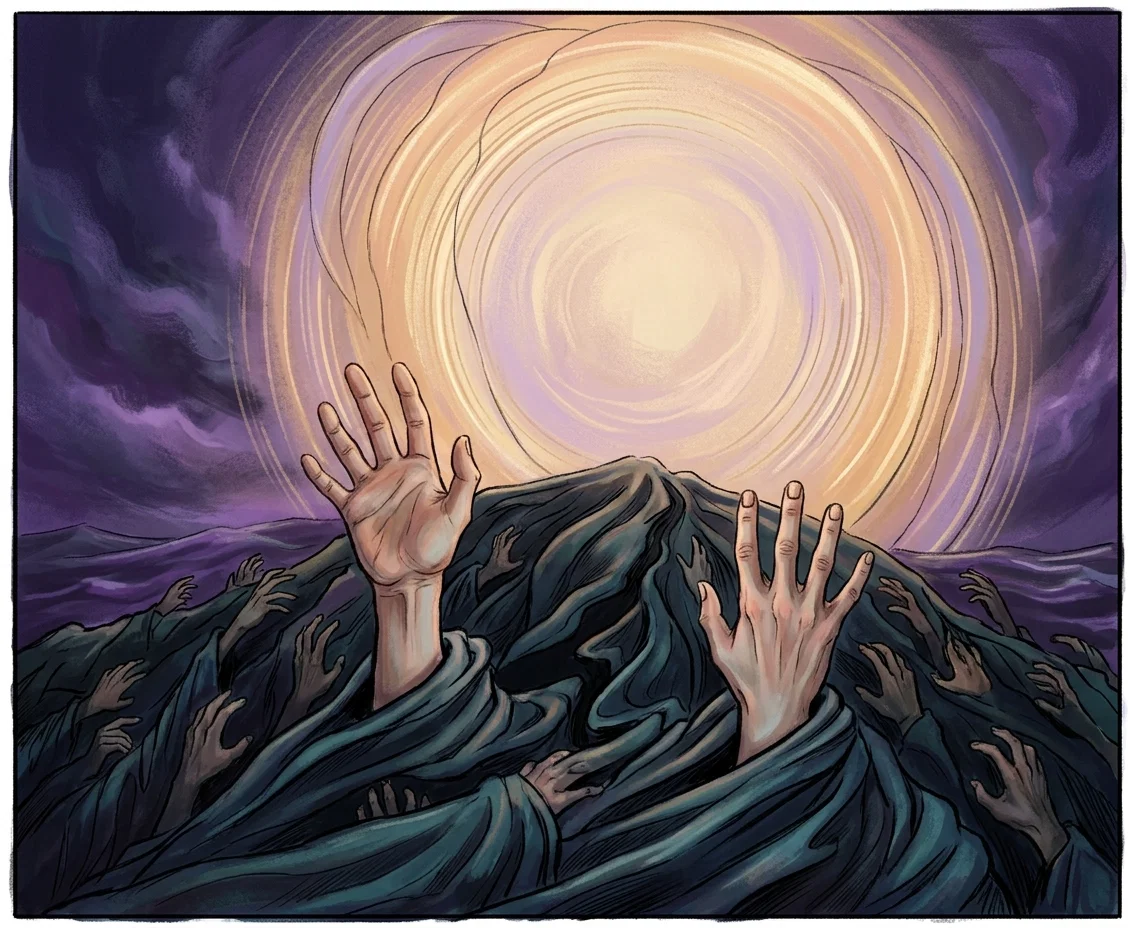
Grinding chance, and human ills; Shattered hope that numbs and kills; Human derelicts are there, Sinking, sinking in despair, Crying out imploringly, “C. Q. D! C. Q. D!”
We are sinking ’neath the wave! Come in charity to save! Come in great humanity, Rescue us in poverty— C. Q. D! C. Q. D!”
“C. Q. D! C. Q. D!” Everywhere we look we see Some one sounding “C. Q. D!” If it happen on the sea Instantly Comes the answer, ringing clear, “We are coming! Never fear. Keep your spirit full of cheer. We are hastening o’er the wave, And will save! Hidden in the misty haze Of the oceanic maze We will find you and extend Helping hand unto the end; Hand to lift you safely o’er Troubled waters to the shore. Keep your spirit undismayed. Let your hearts rest unafraid. We have heard your message clear Flashing through the atmosphere O’er the sea: C. Q. D!”
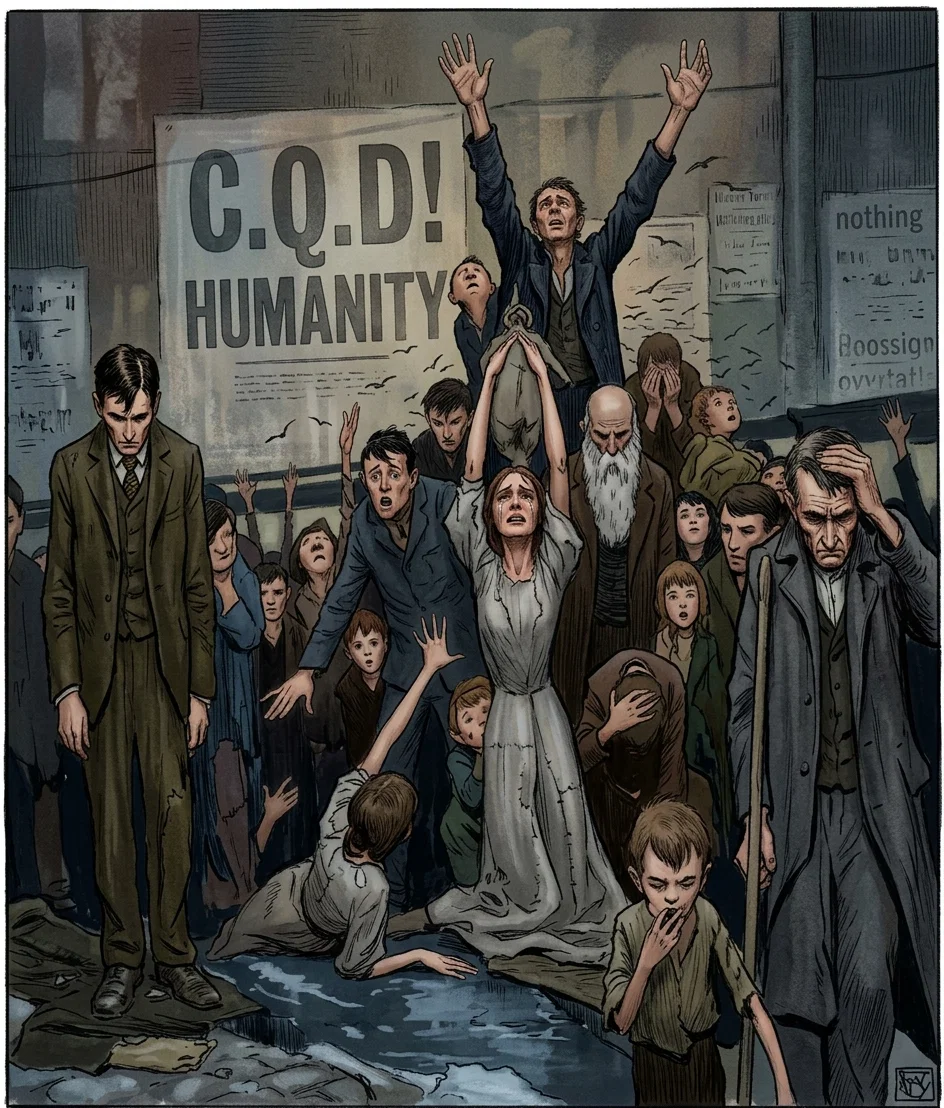
Women, children, in the crush, Trampled in the awful rush For some bare necessity, Call aloud incessantly, “C. Q. D!”
Here’s a human soul beset In the purlieus of regret; Tangled up, enmeshed within Webs of Sin! Hear his signal! “Come to me! Save me from this beggary— Beggary of soul and heart! I, alas, have lost my chart, And am drifting o’er the sea, Headed straight for slavery— C. Q. D! C. Q. D!!”
If it happen on the land, Where is then the helping hand? From the homes of penury, From the vales of misery, From the lair of pain and grief Comes the pleading for relief— “C. Q. D! C. Q. D! Hasten ye! C. Q. D!”
Round my soul the waters rise, Shutting out the blue of skies; Shutting out the Father’s face In the mazes of disgrace— Hasten ye! C. Q. D!! Leave me not unto this fate! Come before it is too late— Ere a human soul shall sink, Slipping, tripping, on the brink, In the snare Of despair!”
O the signals! O the calls Flashing o’er these City walls! From the Children of Despond To the Helping Hands beyond! Pleading daily for release! Pleading for one taste of peace! Little ones that blindly grope In the hopeless quest of Hope! Pleading for a sure relief From the waves of Sin and Grief! Human vessels one and all Sending out their piteous call— Call to you, and call to me, “C. Q. D! C. Q. D!”
Do we heed them? Do we list To those voices in the mist, On the land? Have we lent the helping hand To our brothers in despair Everywhere— Answering their message clear With the blessed words of cheer— “We are coming, never fear! Hold your courage undismayed! Let your hearts rest unafraid. We are hastening o’er the wave— We will save! We will come in Brotherhood With our life-boats staunch and good, Laden deep with Charity, Answering your C. Q. D!”

The Unnecessaries

We have reached an era when what-nots, woolen pincushions, horn cornucopias and shell-boxes are put away in boxes with hair flowers and the stuffed redbird. Women will have knickknacks in spite of everything on earth, but every year brings something new. Ages ago the lone women living on the seashores of foreign countries made fancy work from the dried entrails of whales and pounded metal or tiny seashells. Later the Indians showed their ingenuity with threads colored with the juices of berries and vines, which looked only too resplendent with brilliant beads. Peasants have shown great ingenuity in making fancy articles from almost nothing but the most plebeian objects around their humble homes, but Americans take the palm in having their houses filled with trash, truly an up-to-date state of affairs that has Dickens’ Curiosity Shop outdone by a league and a half. But it is ending—that is, it is drawing to a close in some homes. Get rid of your extra trash this spring, burn it, hide it, give it away, have a bonfire or collision—anything to get rid of the worn-out cushions, old pictures and unsightly hand-made articles that can’t be cleaned in any possible manner. Do it for appearance’ sake, even tho you may have no regard for your own health in trying to clean those articles every day of the week to keep the house presentable.—Woman’s National Daily.

Making Pottery from Portland Cement

VERY few people realize that anything artistic can be made from ordinary Portland cement. A contributor to the Scientific American of June 12 has a very interesting article on the manufacture of concrete pottery. Of course the Portland cement mortar has to be worked very much differently than clay, for clay can be formed into almost any shape and will remain there, for the reason that it is more or less sticky and the particles of which it is composed cling or adhere to one another. Cement is not capable of being so molded, and unless it is placed in a mold or form it will fall to pieces before it hardens.
The first step then in cement pottery is to make the forms. These are usually constructed of wire or wood, or they may be made of plaster of Paris. The use of the wire forms is the simpler when there are but one or two of the same shape of articles to be made. If a large number of pieces are desired, then a wooden or a plaster of Paris mold is advisable. The best material for wire forms is No. 20 Clinton wire lath, having about a half-inch mesh. When buying it, ask for galvanized wire lath. This is better to work than the ungalvanized. Those interested in the making of such pottery will find very full descriptions of the work running in a series of articles now being published in the paper above mentioned.

Monks and South American Indians

The monks have had nominal charge of the native Indians of South America for many years, but instead of Christianizing the poor pagans, they have only succeeded in paganizing a few Christian ceremonies.— W. A. Cooke.

IN THREE DAYS

Overland Limited

TAKES YOU
To Chicago
ACROSS GREAT SALT LAKE
AND
HIGH SIERRA BY DAYLIGHT
Luxurious High-class Equipment
Electric Lighted Throughout
Pullman Drawing-room
Stateroom
Vestibuled Sleeping Cars
Careful and Attentive Dining Service
Parlor Observation Car with Library and Cafe
Ladies’ Reading Room
Gentlemen’s Smoking Room
Daily News Bulletins
Latest Papers and Magazines
SOUTHERN PACIFIC

Life and Health

A PRACTICAL health journal, published with a view of meeting hygienic needs in every home; teaching how to care for the health and how to preserve life; prescribing simple home treatments to assist nature in throwing off diseases rather than adding more poison by using drugs or unnatural stimulants as remedies: teaching how to avoid disease as far as possible, how to manage in the home when sickness does come, and how to combat the disease by simple remedies which nature provides.
Send for sample copy and special rates to agents. Price 10 cents per copy or $1.00 per year.
Address, LIFE & HEALTH, Takoma Park, D. C.

INDIVIDUAL COMMUNION SERVICE.

Should be used by every church. Seventh-day Adventist Church, Lincoln, Neb., writes, “Service used April 6th with greatest satisfaction. We are delighted with it.” Outfit sent for trial before purchasing. Not expensive. Address
THOMAS COMMUNION SERVICE CO., Box M., Lima, Ohio.

LIBERTY

THE OFFICIAL ORGAN OF
THE RELIGIOUS LIBERTY BUREAU
An illustrated, 48-page, quarterly magazine, published as an exponent and advocate of true religious liberty; defending Christianity and the rights of conscience; upholding the Bible as the infallible word of God; recognizing the church and state as ordained of Heaven for specific and distinct purposes, but vigorously protesting against the alliance of the church with the state in the attempt to advance religion and to control the state. Price 25 cents per year. Liberal terms to agents.
Address, LIBERTY, Takoma Park, D. C.

Our Little Friend

An Illustrated Paper for the Smaller Men and Women, for the Children and Little Ones
Instructive and entertaining, clean, wholesome, sensible. It is a character builder, a helper to father and mother. Our Little Friend would plant seed in the joyous life of the children in the Present, that it may bear blessed fruitage in the Harvest of the Future. Respect your child's individuality. Take the paper for him or her. Only 50 cents a year.
Address, OUR LITTLE FRIEND,
Mountain View, Cal.

Early Writings

By Mrs. E. G. White. A new edition of this popular work, rearranged and reprinted from new plates. This book is a compilation of the first published writings of the author, and contains many encouraging words for those who are looking for the soon return of our Lord. Cloth, 75c; limp leather, $1.25. Address this office.

Steps to Christ.—

This little work, by Mrs. E. G. White, presents in a simple and attractive manner the steps by which the sinner may be made complete in Christ. While the book is an excellent guide for inquirers and young converts, it also contains a wealth of counsel and encouragement for those who are laboring with the difficulties that beset a growing experience. Paper covers, 30 cents; cloth, plain edges, 60 cents; cloth, gilt edges, $1.00. Address this office.

Peace Talk and Preparations for War

In our Outlook Department will be found some things worthy of careful reading over the brewing war troubles in Europe, notably between Germany and England. There are curious contradictions running through all of this talk at the present time. English authorities tell us that the true way to keep the peace is to build big navies. The Kaiser is quoted as saying through Prince Henry, who represented him at Kiel, June 5: “Our principal task in the future as in the past is to make the navy popular and to create German sea power for the assurance of peace.” And again: “In addition to a powerful army we need a navy in order to assure peace.”
Admiral Von Koester expressed the same sentiment, and declared that they were not considering a navy against any particular adversary, but a means of self-defense; but Admiral Weber referred to the possibility of a great war to come and scoffed at the idea of entering into an agreement with Great Britain in regard to restricting the building of war-ships.
Right in the face of all this peace talk of which we read an abundance, the world is preparing for war at a rate never before known and is looking for the Armageddon which lies on before. The lesson that students of prophecy and world conditions ought to see in it is this, that notwithstanding all the peace talks, nations are fulfilling the prophecy given nearly three thousand years ago: “Prepare war, wake up the mighty men, let all the men of war draw near; let them come up; beat your plowshares into swords, and your pruning-hooks into spears: let the weak say, I am strong.” See Joel 3:9-12.
Great Britain assures us that she will spend her last pound sterling and use her last man rather than relinquish her position in the naval world. And her colonies are coming to her rescue. For instance, New Zealand offers a new “Dreadnought,” Australia another, which means a contribution of something like an average of a pound sterling to every man, woman and child in New Zealand. Australia and all the other colonies are swinging to the fore, assuring the mother country that the empire stands as a unit when imperial control of the sea is questioned.
It must have been a tremendous spectacle, the great naval review, noted in our Outlook Department. The press representatives of the empire were carried past 144 war-ships of various sort, a distance of eighteen miles. The aggregate of the three flag-ships was over 48,000 tons. Another noted thing about these ships, they were of a new type. They were not discarded numbers by any means. What could be called the oldest were moderately late models. Practically all the 144 vessels it was said are the fruit of the last ten years’ work.
The sixteen battle-ships of the United States which cruised around the world a short time ago were a great display, even English colonies had seen no greater, but after the great naval display at Portsmouth, the sixteen battle-ships of the United States will be considered a small squadron. The real outcome of this will probably be an imperial naval board which will encourage Canada and Australia to build a navy of their own, and yet all under one imperial united plan. But we may be sure of this that England’s pace will be kept up by other great powers, and the end will be indeed Armageddon. The nations are now finding that the bleeding of the people through the enormous financial burden imposed is second only to what would be caused by actual war.

Baptist Convention Concludes

The great Baptist Convention held in Portland, Ore., concluded its sittings at 10:30, July 2. A report of some of its most striking decisions will be given in the SIGNS OF THE TIMES next week.

Voices from Other Lands

“Our notes on our good General Conference closed quite abruptly, but we are not through with some of the developments of that most excellent meeting. We purpose in several numbers of the SIGNS OF THE TIMES to give some of the real gems of thought and earnest appeals which were made for the great foreign fields by the laborers who were present from those fields. We are sure that all our readers, whoever they may be, will be interested in these voices from other lands, these Macedonian cries to which we earnestly hope other Pauls and Silases may respond.

German Finance Measure Faces Opposition

While the British finance measure is a radical one and is arousing more or less opposition, there is little doubt but that it will carry. The sentiment of the country is for it. While less radical, the German finance measure is having a harder time than the British. The opposition is much greater. Opposed to the government in Germany are the Conservative, Centrist, Polish, Alsatian, and Independent parties of the Reichstag, while Imperial Conservatives, National Liberals, Radicals, and Socialists support the government’s financial policy. The Prussian minister of commerce declares: “We need ships and bayonets, but they must be paid for, and especially at the moment when war breaks out.”

Warship Accidents Kill 151 Men

A recent explosion in a United States torpedo-boat in San Francisco Bay recalls the history that since Nov. 5, 1899, including the last, there have been fourteen accidents on war-ships of the United States in which 151 men have been killed and a large number injured.

Correction to “The Greatest Character in History”

In Mrs. Adams’ excellent article, “The Greatest Character in History,” on page 5 of our last number, occur in the fifth paragraph these words: “To-day we are considering him by whose lips were uttered . . . . words which form the heading of this article.” The title to Mrs. Adams’ article was changed after the article was in the page and these lines referring to the title had been omitted: “I am of slow speech and slow tongue.” We regret that the title given to the article was not left as a subtitle. It certainly makes a defect in the article for which we apologize to Mrs. Adams and our readers.

An Unworthy Appeal for Legislation

A WICKED measure before Congress is the bill introduced by Mr. Gaines of Tennessee. It is entitled: “To prevent the Fraudulent Use of the Mail in Matters Concerning Duly Authorized Secret Orders and Societies.” It proposes to crystallize into law: “That it shall be unlawful for any person, firm, or corporation to deposit or cause to be deposited in the mails, or send or cause to be sent, or print or cause to be printed for the purpose of depositing and sending, or deliver or cause to be delivered by mail, the ritual, or any part thereof, or rules, regulations, or works which are secret, of any fraternal order or society organized by law, without authority in writing of such order or society being first given.” The penalty for transgressing is a fine of not less than one thousand dollars and imprisonment for not less than one year. Grand juries are to be given inquisitory power to inquire into all violations of this act.
It will probably go over at this present session, but will come up again. We can see no object whatever in the bill unless it is to prevent the publication of exposés of some of these secret orders. If there is any organization in this country that can not stand the light, it certainly ought to die.
It is only another attempt to muzzle free speech and free press. If such a law as that were on our statute-books we could very readily understand what course officials would pursue who belong to secret orders. In the simple fact of the case, the government has no just right, and it ought not to have the power, to charter organizations which by their constitution and regulations are secret. The whole text of this bill is given in The Christian Cynosure of May. Every liberty-loving soul, whether he belongs to a secret order or not, ought to protest against such a measure.

August Alaska-Yukon-Pacific Number

The “Signs of the Times Monthly” for August is a special Alaska-Yukon-Pacific number, and gives a very interesting article upon the great Northwest exhibition by the editor, Asa Oscar Tait. The article is well illustrated with views of the buildings and special features of the Northwest. The frontispiece is a fine view of Mt. Rainier from Geyser Basin. The second general article is from the pen of Associate Editor Milton Charles Wilcox and gives a graphic account of the majestic march of nations westward through the centuries until civilization in our own day has engirdled the globe, well typified by this great exposition now inaugurated on the Northwest borders of our own great country where laves the waters of the Western sea. There are many other articles of interest besides a number of pages devoted to Current Topics, discussing the cardinal issues of the day.
The cover design is in keeping with the contents, and views the westward march of the bold pioneer representatives of our country, guided by an Indian maiden. A group of three stand upon the great divide of the Western mountains to view the “promised land” of the fair Northwest, calmly lying, bathed in sunshine, to the far distance below them. The price, ten cents; address this office.

The July Watchman Issue

The July “Watchman” has for its cover page an illustration of that great agony in nature, the Granite Gorge of Arizona. Among its striking articles are, “The World’s Greatest Enterprise,” “The Great Sign Plague.” Its missions department is unusually full and of interest. The issue is worthy of a wide circulation. Price ten cents; address The Watchman, Nashville Tenn.

You have reached the end of this edition.

Signs of the Times · Jul 21, 1909