The Youth’s Instructor, Vol. 64, No. 11.

Miscellaneous Notes and Brief Items
Earlier text: The South Pacific Islands Mission Field

God Honors Whom?

IN the north of England two brothers went into business. They had been reared in poverty, and had nothing with which to start business. But they were enthusiastic in religion.
They were determined to give to the Lord, and they made arrangements that the Lord Jesus Christ should be a partner in the concern, and that a fixed portion should be given to him out of all profits. They so gave, and prospered. The first year they had a generous sum of money to give. The second year they had more. The third year they had still more. The fourth year the profits were so great that they went into four figures.
Then they thought the portion to be set aside for God was too much to give to charity. Always be suspicious when you change your terms. It was for charity now, not for God. Seeing it was such a large amount, they divided it, took half away. The next year, on the testimony of one of the brothers, they did not make a cent. And before the end of six months of the following year, they came to a crisis.
The two brothers met and locked themselves in the office to face the situation. William said to James: “We have never prospered since we robbed God. The first charge on the business must be to pay back what we have robbed.” They knelt down and prayed, and made this promise. Before the end of the year, their business revived. Strangely enough, after some years they made a similar mistake, and had a similar experience. Today they are among the wealthiest Christian people in the land. They prospered as they honored God in their living. —Christian Herald.

New Plants and Seeds

THERE were five hundred and thirty different plants imported and listed in the three spring months of 1915 by our government Office of Foreign Seed and Plant Introduction, which searches the whole world for plants and seeds that can be transplanted to this country and made useful here.
Among them were a melocoton from South or Central America, an edible fruit of the melon variety, so fragrant that it is used for perfuming clothing; a honey-carob from Spain; a Manchurian wild pear, which will grow in spite of intense cold; a red currant from the Great Altai Mountains; a large-fruited variety of Chinese haw of great hardiness; and a yellow potato from the Andes.
Our agricultural explorers are conducting their search particularly in the remoter regions of the earth. Probably few of their discoveries will be of direct usefulness, but many of them are valuable experiments in hybridization, and may give an entirely new characteristic to some of our familiar varieties.
As yet there has been no organized plan to exchange the information gained with other countries. An international bureau which would file all the data collected; and answer inquiries or suggest experiments, might well find a wide field of permanent usefulness.—The Independent.

Have You Read It?

If you have not, just the moment that superlative Temperance number of the YOUTH'S INSTRUCTOR reaches you, take the time to catch the inspiration of that wonderful picture from real life painted so vividly by the Hon. J. Frank Hanly, ex-governor of Indiana. It alone is worth many times the price of the paper.
Every year I am led to wonder whether it will be possible for the editor and publishers to bring out another special equal to the current issue. Those fears seem groundless. The Temperance Annual this year is at once the most attractive and the most convincing piece of temperance literature which it has ever been my privilege to read.
The monster has been driven into his lair. He stands at bay. The great destroyer must be destroyed. Our duty is plain. It is to be a battle to the death. Our watchword—“For God and Home and Native Land.”
Missionary Volunteers, listen! Like one mighty sob rolls in the wail of a million broken hearts. Missionary Volunteers, look! Catch a vision of broken hearthstones, degraded manhood, crushed womanhood, ruined childhood. Missionary Volunteers, act! You have volunteered. You are accepted. You are enrolled in this great, mighty army which has been recruiting, drilling, and marshaling, yes, and winning victories for years. Arm yourselves for the battle. Load your ammunition wagon with hot shot to be poured into the camp of the enemy. Order scores, hundreds of rounds of temperance ammunition, and plunge into the fray. We win! God is on our side. “They that be with us are more than they that be with them.”
An unusual opportunity is before us this year. Many counties in the various conferences are to wage local option campaigns. The cry has gone up, “Make Chicago dry in 1916.” A great State-wide prohibition campaign is on in Michigan. More than half the State is already dry under county option. But a fierce battle will be on in order to dislodge the demons of rum from some of their well-defended strongholds. Every temperance organization in the State has joined in a great, mighty movement to “Make Michigan Dry.”
Now is the time of all times for our grand army of young people to show their colors. Let these temperance specials be sold, be mailed, be given away, until, when the glorious victory is won next November, it can be said as it was in Maine a few years ago, when more than 50,000 papers were used, “One very important contributing factor to the success of our campaign was the circulation among our people of tens of thousands of the temperance special of the YOUTH'S INSTRUCTOR.”
Michigan alone should set its goal at 100,000 copies. Who can estimate the result of such an effort?
Not only should they be sold, but thousands of people would subscribe liberally to a fund provided for the free distribution of the paper among those who need it most but who would be the last to buy.
Bring this number to the personal attention of temperance leaders and workers everywhere. The temperance organizations will order by the thousand.
Let us take hold of this campaign in earnest. Low rates when ordered in quantities. Order through your tract society. We have been instructed to do all that lies in our power to put down this evil, by “voice and pen and vote.” C. A. RUSSELL.

Chinese Telegrams

It might well seem impossible to send a telegram in a written language that has no alphabet, but is made up of a vast number of characters, no two of which are alike. Not only is the Chinese language composed of several thousand characters, says a writer in Les Inventions Illustrées, but there are so many dialects spoken in China that there are more than a hundred ways of pronouncing each character, although the written language is uniform throughout the country. How is it possible to send a telegram in such a land and such a language? The difficulties have been very ingeniously overcome, and it is now easier and less expensive to send a telegram in Chinese than in French.
In every telegraph office in China there is a dictionary, or special code, in which the written characters are listed and numbered. There are places for 9,999 characters, but a number of spaces are at present blank; they can be filled with characters when that becomes necessary.
The sender of the telegram writes his message in the ordinary manner. The operator knows the numbers of most of the characters. If there are any of which he is ignorant, he finds them in the catalogue. Each number is composed of four Morse numerals; for example, 5913.0013.0414 signifies Yuan Shi-kai, the name of the president of the Chinese republic. It follows, then, that the Morse numerals will serve to telegraph 9,999 different Chinese characters.—Selected.

Submarine Wonders of Hawaii

NOWHERE else in this wide world are there such rainbow fish as in Hawaii, of every color and shade and hue. If there is any tint or gradation of tints in the prism that is not reflected in the scales of the finny tribes of the waters around the islands, I should like to see it. A visit to the Honolulu Aquarium (far superior as it is to the world-famous one in Naples), or to the “Coral Gardens,” where we see the fish through a glass-bottomed boat, disporting themselves in their own front yards, so to speak, are excursions one never forgets. That God in his infinite love should paint the lily seems wonderful; but that he should paint the fish of the sea as gorgeously and as delicately as the petal of a flower is surpassingly wonderful. The flowers of Hawaii declare the glory of God, and the fish showeth his handiwork.—The Christian Herald.

(See article entitled “Unbelief”)

Unbelief

(See article entitled “Unbelief”)

(Texts for March 19-25)
MEDITATION.—As I study the texts this week, I am constrained to pray most earnestly to be saved from unbelief. If there is unbelief in my heart, God cannot do any mighty work in my life nor through it. Did I get up from my knees this morning believing that he had heard me? Do I really believe that he will use me today to help others? If I really believe that he controls all that concerns me and my loved ones, can I worry? If I do worry, is it not because of unbelief in my heart?
SPECIAL PRAYER.—This week we have before us a topic for special prayer that should drive us to our knees in the spirit of Jacob—refusing to give up until the blessing is obtained. Yes, pray for the young people who are drifting into the world, in a never-give-up spirit. Spread before God his promise found in 1 John 5:14-16; read into that text the names of a few for whom you are especially burdened, and then never let go while God gives you breath to pray.

A Monument to the Confederacy

Old King Darius, who ended the wicked luxury of Babylon and permitted the Hebrews to rebuild their temple, as told in the Bible, was the first man, so far as we know, to conceive the idea of perpetuating history by carving heroic life-size statues out of the living rock of the mountain side.
Gutzon Borglum, the distinguished American sculptor, is now engaged in plans for the carving of the history of the Civil War on a mile of a granite hillside near Atlanta, Georgia.
This tremendous undertaking will require eight years to complete. It will employ an army of steam and air drillers, blasters, surveyors, engineers, rock cutters, and other artisans. When they have sufficiently hewed the rock into shape, then eight of the most promising young sculptors of America will be called in by Mr. Borglum to “point up” and “block out” the rough masses of the design. Finally Mr. Borglum himself, with his chisel, will go over it, finishing them into wonderful naturalness.
There will be hundreds of figures — horsemen, artillerymen, infantry — in full relief, and thousands in low relief. The whole work will cost $2,000,000, and will indeed be the eighth and greatest wonder of the world.
This colossal monument is to be a memorial to the Southern Confederacy. The stone armies which will march across the granite hill will be led by Robert E. Lee and “Stonewall” Jackson. The greatest generals and leaders of the Confederacy will be shown in the high relief figures. They will be fifty feet high, and their faces will be recognizable at a distance of two miles.
Hundreds of portraits of lesser heroes of the Confederacy are being collected in all the Southern States, and faithful likenesses of these will be reproduced also.
At the base of the hill a temple dedicated to the United Daughters of the Confederacy will be hewn deep into the granite. In this will be kept the most complete archives obtainable of the Civil War and the records of those who took part in it.
In all the history of the world there has been no monument such as this will be.—Washington Post.

Unbelief: Pulling the Plug on Heaven's Blessings

Unbelief

Unbelief in the heart is like a cork in a bottle. It will do no good to hold the bottle under the faucet to be filled. The cork must be removed, then the filling becomes an easy matter. So if you and I will pull the plug of unbelief out of our hearts, heaven’s blessings will flow in and fill our lives with cheerful service for others. Because of unbelief, many hearts, filled with fear and trouble, are shutting out peace, comfort, and happiness. The doubting heart is ever fearing what may come, and what may not come, on the dreaded tomorrow.
Unbelief is sure to cripple one for service. The dead engine on the track is useless. Its arteries are full of cold air. It cannot even move itself. So is the young Christian whose heart is filled with unbelief. He can neither draw himself nor others to Christ. He is paralyzed spiritually; for unbelief shuts Christ out of the heart, and “without me ye can do nothing.”
But, listen! “All things are possible to him that believeth.” This is the wonderful declaration Jesus made when he came down from the mount of transfiguration. And this declaration comes down through the ages and challenges each one of us to keep the channel of life open, that the love of God may flow through us to others.
Are you troubled with unbelief? Does doubt struggle to possess your heart? “Tell it to Jesus,” and to Jesus only. Tell him all about it. Resolve to get better acquainted with him; for when you truly know him, you will realize that you are dearer than life to him, and that he will never permit one thing to come to you that will not in some way be for your good. Unbelief really is distrusting this wonderful Friend. What a shame! Shall we not say strongly, “Lord, I believe,” and then pray earnestly each day, “Help thou mine unbelief”? Let us do this until, by his grace, we shall learn how to live above worry, fretting, faultfinding, and constant fear; and above all other faults that are rooted in unbelief.
Matilda Erickson.

Missionary Volunteer Society Programs for Week Ending March 25

THE programs for the Missionary Volunteer Societies, Senior and Junior, for this date, with notes, illustrations, and other helpful material, will be found in the Church Officers’ Gazette for March.

(March 25)

Review

(March 25)

LESSON SCRIPTURE: Matthew 22 to 25:30.
MEMORY VERSE: All the memory verses for the quarter.

Chapter 22

I. Relate the parable of the marriage of the king’s son. What wedding garment must every one put on who attends the marriage supper of the Lamb?
2. Is it right to pay tribute money to an earthly ruler? How did Christ once answer this question? What tribute should we pay to the King of heaven?
3. “Which is the great commandment in the law?” Who once asked this question of Jesus? How did he answer?

Chapter 23

I. How did the Pharisees make themselves appear more holy than other people? Which places did they love best? How did they love to be honored?
2. How many blessings, or beatitudes, were pronounced in the fifth chapter of Matthew? How many woes, or curses, in the twenty-third chapter? Repeat the words that show that Jesus’ heart was filled with pity when he pronounced these woes upon the Pharisees.

Chapter 24

I. What did Jesus foretell concerning the beautiful temple at Jerusalem? What concerning Jerusalem itself? How did the Jews bring this destruction upon themselves?
2. What other great destruction did Jesus foretell? What signs did he give so that his people might know when to get ready?

Chapter 25

I. Relate the parable of the ten virgins. What lesson does this contain for us?
2. Tell the parable of the talents. How should we be using the talents which God has given us?

Two Bright Little Eyes: A Squirrel Poem

Two bright little eyes, And a questioning nose, A fluffy, curled tail, An inquiring pose— Then, a dart of gray color Through tree tops that sway And little gray squirrel Has scampered away! — New York Tribune.

The Bible Year

Assignment for March 19 to 25

March 19: Judges 13 to 15.
March 20: Judges 16 to 18.
March 21: Judges 19 to 21.
March 22: Ruth.
March 23: 1 Samuel 1 to 3.
March 24: 1 Samuel 4 to 7.
March 25: 1 Samuel 8 to 10.
For helps and suggestions on this assignment, see the Review of March 16.

Memory Verses for the Quarter

  1. “He that overcometh, the same shall be clothed in white raiment; and I will not blot out his name out of the book of life.” Rev. 3: 5.
  2. “Render therefore to all their dues.” Rom. 13: 7.
  3. “Thou shalt love the Lord thy God with all thy heart, and with all thy soul, and with all thy mind.” Matt. 22: 37.
  4. “God resisteth the proud, but giveth grace unto the humble.” James 4: 6.
  5. “This people draweth nigh unto me with their mouth, and honoreth me with their lips; but their heart is far from me.” Matt. 15: 8.
  6. “O Jerusalem, Jerusalem . . . how often would I have gathered thy children together, even as a hen gathereth her chickens under her wings, and ye would not!” Matt. 23: 37.
  7. “But he that shall endure unto the end, the same shall be saved.” Matt. 24: 13.
  8. “For as the lightning cometh out of the east, and shineth even unto the west; so shall also the coming of the Son of man be.” Matt. 24: 27.
  9. “Heaven and earth shall pass away, but my words shall not pass away.” Matt. 24: 35.
  10. “Be ye also ready: for in such an hour as ye think not the Son of man cometh.” Matt. 24: 44.
  11. “Watch therefore, for ye know neither the day nor the hour wherein the Son of man cometh.” Matt. 25: 13.
  12. “Well done, good and faithful servant; thou hast been faithful over a few things, I will make thee ruler over many things.” Matt. 25: 23.

Lesson XIII — Chapter Outlines and Review

(March 25)
LESSON SCRIPTURE: Matt. 22:1 to 25:30.

CHAPTER 22 — MARRIAGE OF THE KING’S SON; TRIBUTE MONEY; THE RESURRECTION; TWO GREAT LAWS; WHAT THINK YE OF CHRIST?

  1. Give the leading lesson in the parable of the marriage of the king’s son. Note.
  2. What great principle was taught from the tribute money?
  3. How did Jesus instruct the Sadducees concerning the resurrection?
  4. Repeat the words of Jesus on the two great laws.
  5. How did Jesus answer his own question, “What think ye of Christ?”

CHAPTER 23 — WARNINGS AGAINST PHARISAISM; WOES ON THE SCRIBES AND PHARISEES; LAMENT OVER JERUSALEM.

  1. What distinct Pharisaical practices did Jesus condemn? How did he define true greatness?
  2. Give the ground for each of the eight woes against the scribes and Pharisees.
  3. Repeat the words of Jesus’ lament over Jerusalem.

CHAPTER 24 — SIGNS OF THE DESTRUCTION OF JERUSALEM, AND OF THE END OF THE WORLD; INSTRUCTION AND EXHORTATIONS IN VIEW OF THE END.

  1. Enumerate the signs that apply primarily to the destruction of Jerusalem.
  2. Which of these signs apply also to the last days?
  3. What signs are given that refer only to the second coming of Christ?
  4. What instruction and exhortation did Jesus give regarding the coming of the Son of man?

CHAPTER 25: 1-30 — PARABLE OF THE TEN VIRGINS; PARABLE OF THE TALENTS.

  1. Repeat the parable of the ten virgins.
  2. What is the chief lesson of this parable?
  3. Give the substance of the parable of the talents.
  4. What lessons are taught by this parable?

Note

Do not fail to master the chapter outlines for this quarter. Go back also and review previous chapter outlines in Matthew.

His Will

LORD, give thy people eyes to see The only path to victory; Speak to each heart in this dark hour, Reveal the weapons of thy power; The sword of thy omnipotence, The shield that is a sure defense. Show us our whole security Is in obedience to thee. Make us to know thy will, and then Teach us to do that will. Amen!
—O. B. Adams, in the Christian Herald.

Bakery and Bible

THE great city of Chicago has 1,600 bakeries, and it takes good care of them. There are six bakery inspectors, each with a district under his charge. No bakery can get its necessary license till it is approved by him. If it is in the basement, its floor must not be more than five feet below the sidewalk, and it must be of cement. Besides, the room must be at least eight and a half feet high. If the bakery is above the street level, the floors must be of cement or hard wood, or some other impervious material. The ceilings, as well as the walls, must be smooth and well painted, or whitewashed or calcimined. The lighting and ventilation must be good, everything must be clean, screens must keep out the flies, the employees must be free from consumption and from skin diseases, and they must wear washable clothing, including slippers or shoes that can be washed. No one may sleep in the bakery, and cats are the only animals allowed there.
These regulations have brought down the number of cellar bakeries from 744 to 187 in eight years, and have resulted in many other improvements. It would be difficult now to find a baker who would say, as one did when forced to wrap his bread in paper, “The papers get so dirty that the customers refuse the bread!”
All this care for the material bread leads us to wonder whether we are careful enough regarding the bread of life which we feed to the hungry souls of little children and of adults. Are we heedful that it shall be the pure Word of God, undefiled by our human fancies and blundering misconceptions? Is it always “the finest of the wheat”? Are our hands clean of sin as we handle it? We have the blessed privilege of those that minister to others in the bread of life; it is a blessed privilege, but ah, it is also a heavy responsibility. Let us allow no baker to put us to shame.—Caleb Cobweb.

Prayed for Shoes

A LITTLE fellow of few years was accustomed to take his special needs to the Lord. His parents not being blessed with an overabundance of this world's goods, Amos had often to wait long for some of his reasonable wants to materialize. A few weeks ago he was in serious need of a pair of shoes, having even to remain indoors in stormy weather for the need of them. He finally decided to take the matter to the Lord; but not receiving an immediate answer, he concluded that the reason the Lord hadn’t sent him a new pair was because he hadn’t seen the hole in the old ones. Amos placed the most unpromising-looking shoe on his pillow, with the sole up and a pencil sticking in it, so that the Lord would be sure to appreciate fully his need. Upon further thought, he concluded that it would be wise to make another attempt to enlist his father’s interest, as the Lord might desire in some way to use him in providing the shoes. He accordingly transferred the appealing shoe from his own bed to that of his father, and believing that his father should not only see the evidence of his need but should hear the petition offered for a new pair, he waited long for his father to come to his bedroom.
At last the desired footfalls upon the stairs were heard, and almost as quick as thought Amos was out of his bed and in the attitude of prayer beside his father’s bed, earnestly petitioning the Lord—or his father, which?—for the needed footwear.
Suffice it to say that the shoes made an early visit to the cobbler, and are doing service while Amos hopefully waits for a full answer to his petition.

How to Search

JESUS CHRIST said, “Search the Scriptures.” Have we understood that word “search”? You have seen a man dig for silver? That is one help toward the meaning of the word “search.” You have seen a woman light a candle and sweep the floor and seek diligently until she had found the piece that was lost? That is a hint toward the meaning of the word “search.” You have seen a man looking for one document, which, if he could find, would make him a peer of the realm? Look at him with spectacled eyes, with busy fingers, with bent form, with eager face; look how he listens to any suggestion, what letters he sends out to registrars, clerks, any person or persons likely to help him. Have you seen such a process? This will give you some idea of what Jesus meant when he said, “Search.” He did not mean that we were to look around with cold, indifferent eyes, and take up anything that might occur in our process of blind looking. He meant the industry of the soul, the very agony of the spirit, a searching, seeking, digging, striving that meant the very agony of the combined faculties which make us men.
Jesus did not come with a new Bible. He read the old one; and when he read it, men’s hearts burned within them. We need no new Bible; we need the right heart to read the old one, and then it will make the heart that so reads it glow with sacred emotion; it will lift up that heart to heights of rapture and triumph, in the feeling of which, time will be but a passing shadow and earth a speck neither to be mentioned nor named.—The Silent Evangel.

Self-Reverence, Self-Knowledge, Self-Control
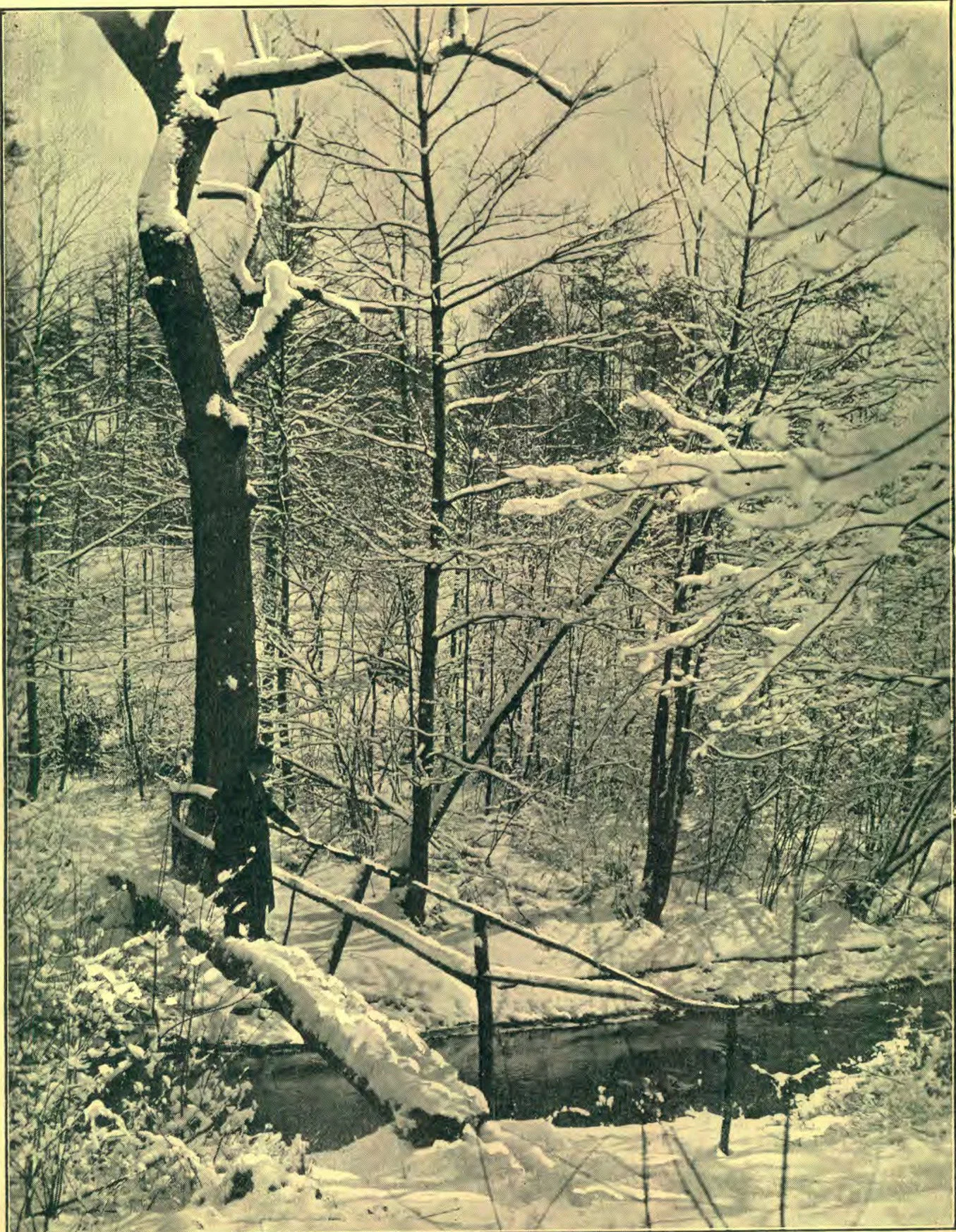
SELF-REVERENCE, self-knowledge, self-control,— these three alone lead life to sovereign power.— Tennyson.
WINTER LIGHTS AND SHADOWS
THE EARLY MORNING OFTEN FOUND JESUS IN SOME SECLUDED PLACE, MEDITATING, SEARCHING THE SCRIPTURES, OR IN PRAYER.

You have reached the end of this edition.

The Youth’s Instructor · Mar 14, 1916