Reported by John S. Wightman, Religious Liberty Secretary of New York
[Mr. Wightman attended and reported for other papers the Inter-Church Conference on Federation in New York; and also attended and reported for the SIGNS OF THE TIMES the late annual meeting of the American Federation of Catholic Societies in Buffalo, and was also in attendance at the meeting in Elmira for this journal. He is a student of the great principles involved, and his report is worthy of careful consideration by every American citizen. Ed.]
The Opening Meeting—Doing Politics—Disappointing Magistrates—Some "Great Victories"—The Elmira Case—Baseball and Other Sports—"The Crime of Sabbath-Breaking"—Denial of Trial by Jury.
THE deliberative session of the convention opened Wednesday morning, October 31, at nine o'clock. There was an address of welcome by Rev. Arthur Dougall,
vice-president for Elmira, which was responded to by Dr. Burrell, president of the state association. Reports of the secretary and various committees were received. The report of the secretary, briefly considered, was that the association was advancing in every way, its progress along the line of its particular work was most encouraging, its numbers and votaries were increasing, its scope and power both at the state capitol and abroad being greatly augmented within the past year, and the financial condition getting onto a better basis.
The organization was in a vital condition, a real working force, waiting for the occasion to make itself signally felt in the public life; and, with marked emphasis in both tone and voice, he declared that the "occasion was dead-sure to come."
Doing Politics.
Mr. H. H. Robbins, Chairman of the Committee on Legislation, reported that a good work was being done at Albany; bills that were not satisfactory to the association were quietly "killed" in committee—they were simply "just never heard tell of again;" and bills for a more "liberal" Sunday did not get any farther than committee rooms. The influence of the association was now sufficient to hold up anything and everything in the way of sabbath (Sunday) legislation that was not satisfactory to the association. The association proposed to do something further at the coming session of the state legislature in the matter of getting laws more stringent in character for the "protection of the American Sabbath" and to promote "its general observance." The Legislative Committee of the association were very much encouraged at seeing what it could accomplish in "the third house" at Albany.
A real difficulty, however, encountered by the association, when arrests have been made and evidence of Sunday violation secured, was to get magistrates and police officials and the "lower courts" to find the accused persons guilty. It was related that several cases in Brooklyn had occurred where magistrates had read opinions practically in favor of the accused and discharging the defendants, very much to the chagrin and disappointment of the association. It seemed that the sympathy of the magistrates and officials were generally with the accused violator of the Sunday law, and the tendency in this direction was so strong as to be well-nigh disheartening to the association managers. It was the one apparently insuperable barrier that stood in the way of progress in the matter of compulsory Sunday observance. A way to effectually remove this obstacle was the great question with the Legislative Committee of the Sabbath Association. It must be solved. It was almost impossible to secure a conviction in the lower courts.
Some "Great Victories."
Some great victories, however, had been won in Brooklyn, in Binghamton, and in Elmira, notably in the latter city, where the Civic Federation, composed of ministers, took up the matter and forced the city officials to fulfil their obligations, and to enforce the law against "the desecration of the sabbath." What the Civic Federation had accomplished in Elmira was a great source of encouragement, and an omen of what might come. It was a condition that may obtain all over this great land. The Elmira case of compulsory Sunday observance was one of the most hopeful signs of the times, and indicative of what might be accomplished in the future, and everywhere!
The Elmira Case.
Inasmuch as this Elmira case occupied the greater part of the time and attention of the convention, I will relate the facts, as this local crusade is being heralded far and wide by the American Sabbath Union and its auxiliary as the great victory in the battle for Sunday observance by legal enactment. (Continued on page 15.)
10
AN IMPORTANT MEETING.
(Continued from page 9.)
Early in March, 1906, much was said by the public press of Elmira about a movement on foot to secure Sunday baseball, and other games on that day, in order that the leagues playing in the larger cities might be secured, and because it was not a paying investment unless Sunday games were allowable. This provoked much discussion. A little later in the season amateur games were played in a field on the outskirts of the city on Sunday, but no admission fee was charged. This, too, brought on a storm of disapproval from the Civic Federation, composed of the sixteen leading clergymen of the city. Elmira was stirred over the question, and the discussion was prolonged. By threats to persecute, made by the Civic Federation, league games for pay on Sunday were eliminated, and amateur games were crowded to a secluded spot far removed from the city proper.
In the meantime, Eldridge Park, leased from the city government by Enoch M. Little, was opened to the public on week days and Sundays alike, with amusements and concessions, roller-coasters, and the like, to which many excursions from out of town came on Sunday. The park is city property, a mile or more from the heart of the city, far removed from churches and schools, and under the police control of the city.
It was publicly charged that the law was being violated both at the park and elsewhere. The Civic Federation, organized for the purpose of promoting "civic righteousness" in the city government, determined to throw itself into the field for "law and order," and compel the city officials to enforce the law. Counsel was secured and the battle begun.
The Battle On.
A communication was forwarded July 26 to the mayor and the police commissioners, declaring that the law was being violated, and unless the city authorities should forthwith begin proceedings to uphold the law and secure its enforcement, proceedings would be begun against them for malfeasance in office, and their "oustring" from office demanded at Albany. Mayor Brockway immediately ordered "John Doe" proceedings in law, and the ministers were summoned to tell what they knew about the violations alleged. No evidence was produced.
A week later, in the month of August, "John Doe" proceedings were instituted by the Civic Federation, and, as a result of this, Enoch M. Little, manager of Eldridge Park, was arrested by and upon complaint of Rev. R. Lew Williams, charging him with "the crime of Sabbath breaking," in that goods had been cried out and offered for sale upon the first day of the week, commonly called the Lord's day. While there were many separate charges in the information, they were all based upon and included under statutes providing for the observance of the sabbath, providing a penalty for the violating of the penal code on Sunday. So while Civic Federation had charged law was being violated, it all simmered down to, and finally rested upon, the one law, compulsory Sunday observance! It was for the religious day and its religious observance, that Civic Federation was fighting, and absolutely nothing else!
Denial of Trial by Jury.
Mr. Little was arraigned before Recorder Henry L. Bogart on August 25. He was represented by Hon. John B. Stanchfield, one of the leading attorneys of the state, and once a candidate for governor. Counsel for the defense made a motion for trial by jury, which was opposed by counsel for the Civic Federation. Motion denied by the recorder, on the ground that he had summary jurisdiction to try the case as a magistrate, and ordered the defendant to prepare for trial September 11.
Never was there such an array of legal talent, or such a gathering of citizens of respectability in the Recorder's Court-room in the City Hall as upon that day. It took on the color and tone of an ecclesiastical court rather than a civil; the clergy of the city were largely present, and the talk of "sabbath days" rather than "civil days" prevailed, while "the crime of Sabbath-breaking" was contended with by the defense. It was revealed that ministers of the Gospel had performed police spy work, and in an effort to obtain evidence had themselves violated the very law that they were seeking to have Mr. Little punished for violating.
The recorder took the evidence under advisement, and on September 13 rendered his decision that Mr. Little was guilty "of the crime of Sabbath-breaking," and imposed a fine for that offense.
There are two things in connection with this case worthy of careful note:
1. The denial of the right to a trial by jury.
2. The religious character of the prosecution. This was shown by the effort of the prosecution to show that the doing of any one of the separate counts charged was a violation of the law, even if there was not "such noise and serious disturbance as would disturb the peace and good order of the community" as provided by another section of the penal code. In other words, work of a quiet and inoffensive nature constituted a violation of the sabbath law whether of a noisy character or not, whether of a disturbing nature or not! Thus appears the religious character of the prosecution. Anything contrary to the religious observance of the day constitutes, in the minds of the gentlemen composing the Civic Federation, a violation of the civil statute, punishable by fine and imprisonment!
It will also be noted that great public pressure was brought to bear upon Mayor Brockway and the police commissioners to enforce the law upon the people according to its construction and interpretation by the Civic Federation, composed of clergymen.
It is perhaps unnecessary to dwell upon the feature of a denial of right to trial by jury. If juries can be eliminated from Sunday law prosecutions, it will be so much easier to "intimidate" and compel the magistrates to do their alleged duty. Juries could not be so easily handled as a single individual who might be a candidate for the office again.
So then, the Elmira case of Sunday law prosecution may be summed up as follows: Prosecution by ministers of the Gospel; charge, sabbath-breaking; denial of right to trial by jury; conviction and fine!
And to extend such a procedure all over this land, the American Sabbath Union and its auxiliary, the New York State Sabbath Association, stands for, fights for, works for, and prays for!
In reply to a question by a delegate as to how compulsory sabbath observance could best be obtained, Dr. Stanley replied: "Remove public officials who do not do their duty, and put in other officials who will do their duty in enforcing the [Sunday] law. That is the way to achieve success. If a public official is corrupt, and will not perform his duty and fulfil the obligation of his oath of office, turn him out of office, defeat him at the polls, and put a decent man in the office who will see to it that the Sabbath law is enforced. That is the best way to secure results."
Dr. Burrell followed, saying: "If you want special detectives, if you want special services, if you want something done, go to the representative of the association in your town. See where your pastor stands in the matter. Sometimes you may have to go to the third house [evidently meaning a lobby at the capitol]. Sabbath enforcement means work, tireless activity, and money. Organize; Elmira has shown us what organization [Civic Federation] can do, and what they have accomplished here can be accomplished elsewhere. Spread the light. We must see to it that Sunday laws are enforced."
The New England Sabbath Association.
By special permission, Dr. Kneeland, secretary of the New England Sabbath Union, took the floor and gave a glowing account of what is being done by the New England Sabbath Association. Eminent men had been enlisted in the services, such eminent men as the late Senator Hoar, Ex-Secretary of the Navy John D. Long, and Governor Murray Crane. If the workingman's industrial salvation is secured, it must be through securing and applying Sunday laws that he may be delivered from the clutch of greedy corporations and given opportunity to rest one day in seven.
He believed the laboring man would yet see that it was his duty and to his interest to amalgamate forces with those of the American Sabbath Union. In fact, Mr. Gompers and John Mitchell had recently said to him that such a possibility was not so remote as one might imagine. Such a confederation, Mr. Kneeland said, would accomplish great things and bring a mighty victory for compulsory Sabbath observance; for such a combined force was one that would be respected. The Sabbath argument was in the fourth commandment, and it was as binding, and the rest as necessary, to-day as in the days of Adam. A corporation or any other power that would take, or attempt to take, the Sabbath away, was an enemy of man, of the state, and of God. The ditch between the laboring man and the church would yet be bridged, and labor unions and church forces unite in one common purpose to secure the laboring man's right to one day in seven.
[This report and review closes in our next issue. Read it to the end. There is much more to be said, however, upon this important subject.]
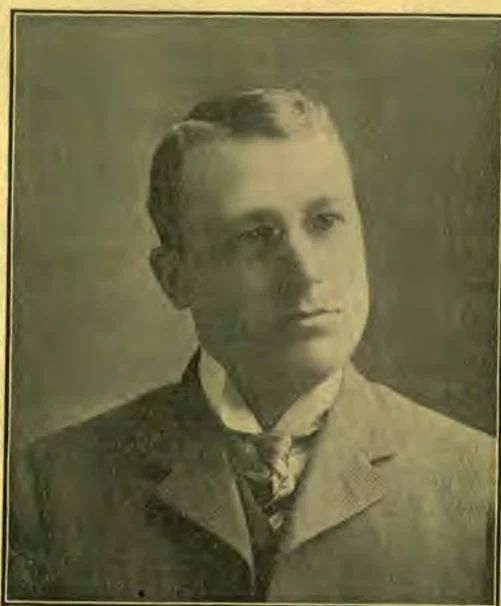
Police Justice H. L. Bogart, who refused the right of trial by jury
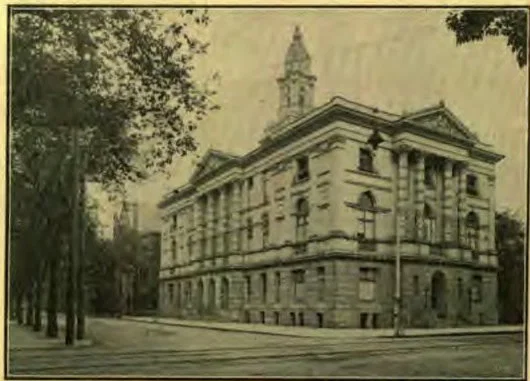
City Hall of Elmira, where the trial was held.
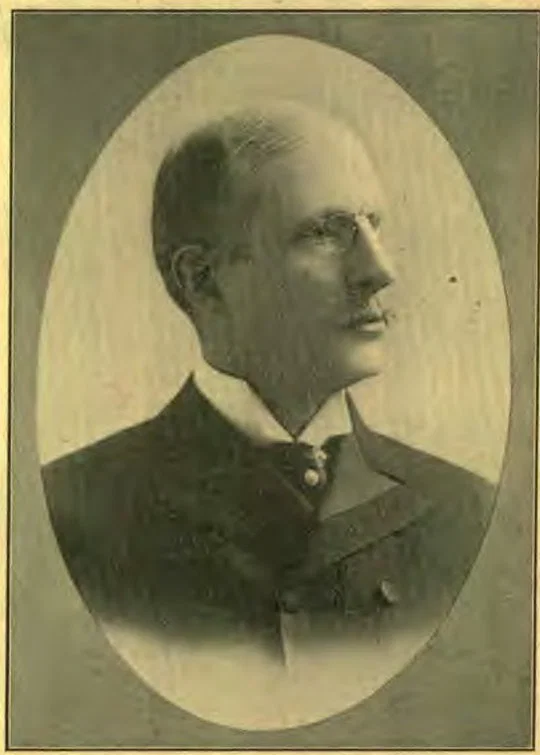
The Hon. John B. Stanchfield, one of the leading attorneys of New York State, who defended the counsel and plead for the right of trial by jury. Mr. Stanchfield was once a nominee for governor by one of the great parties of the state.
Contentment Is True Wealth
"You have plenty of this world's goods, if, with your little, you have content. If you have not content, you can never have enough of anything."
CHOSEN OUT OF THE WORLD.
By H. A. St. John
"If ye were of the world, the world would love his own; but because ye are not of the world, but I have chosen you out of the world, therefore the world hateth you." John 15:19.
By the above words of the great Teacher, we learn that a person or thing may be in the world and yet not of the world. Indeed we are told that the children of God are chosen out of the world, and this is their relation to God even while personally in the world. But they are strangers and pilgrims in the earth, and not dwellers. Their affections are set on things above, and not on things on the earth. Their citizenship is in heaven. Their conversation is in heaven. Their names are enrolled in heaven. They are laying up their treasure in heaven, and not on the earth. They are chosen, ordained, and sent out in this world, like their divine Lord, as ambassadors from the highest court and government in the universe, even the court and government of Heaven. It is their business and mission in the world to win and gather souls out of the world.
They are looking for a city which is out of sight, an abiding city whose builder and maker is God, a city incorruptible, and undefiled, and that fadeth not away, reserved in heaven for them. He that hath not this hope in him has not been chosen out of the world. He that lays up treasure on earth is not of the chosen ones, neither he that loves the pleasures of earth more than God, and heavenly things.
All that are chosen of God, and hence chosen out of the world are waiting, anxiously waiting, to be taken out of the world. And that day will come; yea, blessed be God, it will come soon. The adorable King who has His abode in heaven will come in great glory. All the holy angels, from the same blissful abode, will come with Him. With a mighty shout of joy and triumph, and the trump of God, all the chosen ones sleeping in death will be awakened. They, together with the living saints—a mighty host like the sands of the sea—in a moment, in the twinkling of an eye, will be changed to immortal glory. They were all chosen out of the world in the days of their probation, and now they are taken out of the world when the days of probation are over.
We have reason to praise our God, that we can now come out from the world and be separate, and touch not the unclean thing, sin, and the Lord will receive us, and be a Father unto us, and we may be His sons and daughters.
The Lord Almighty says that we may walk on the highway of holiness—a way cast up above the low, degrading, contaminating things of earth. We may joyfully tread this path of the just, which ever shineth more and more, until we actually, personally, and gloriously enter the perfect day, in the home of perfect bliss, and rejoice evermore with all the just made perfect.
H. A. ST. JOHN.
BEWARE OF PRIDE.
By Charles G. Finney
ARE you going to walk in the street? Take care how you dress. What is that on your head? What does that gaudy ribbon and those ornaments on your dress say to every one that meets you? It makes the impression that you wish to be thought pretty. Take care! You might as well write on your clothes, "No truth in religion." It says, "Give me dress, give me flattery, and I am happy." The world understands this testimony as you walk the streets. You are living epistles, known and read of all men.
If you show pride, levity, bad temper, and the like, it is tearing open the wounds of the Saviour. How Christ might weep to see professors of religion going about hanging up His cause in contempt at the corners of streets!
Only let the "women adorn themselves in modest apparel with shamefacedness and sobriety; not with broidered hair, or gold, or pearls, or costly array; but (which becometh women professing godliness) with good works"—only let them act consistently, and their conduct will tell on the world, heaven will rejoice, and hell groan at their influence.
But, O, let them display vanity, try to be pretty, bow down to the goddess of fashion, fill their ears with ornaments and their fingers with rings; let them put feathers in their hats, and clasps on their arms, lace themselves up until they can hardly breathe; let them put on their "round tires," and walk "mincing as they go," and their influence is reversed. Heaven puts on the robe of mourning, and hell may hold a jubilee.—Chas. G. Finney.
THE BIRD WITH A BROKEN WING.
[W. J. Thompson, in Oakland Tribune.]
I KNOW that a bird with a broken wing
Can never fly as high again,
Yet I've heard that bird on its cage perch sing
A melting song with a sweet refrain.
It started a tear in my eye as I lay,
Lay and listened the evening long,
To the pipe and thrill of the wounded jay,
As it filled the air with its melting song.
Then I tried to link the wing with the song,
If one with the other had aught to do,
And it didn't keep me thinking long,
Till I found this fact to be grandly true,
That closely linked on life's rough way
Are the broken wing and the sweetest song,
And we haven't to wait so very long,
Till the latest minstrel will surely sing.
There are compensations for every wrong,
And a balm for every broken wing,
And we haven't to wait so very long
Till the wounded bird begins to sing.
There are blessings that balance every ill,
That cripples, and wounds, and mars, and blights,
There's a beautiful mission for me to fill,
Altho it may not be on the heights
With the strong and the gifted crowned with power;
Yet down in the valley beneath their feet,
There are flowers to be tended every hour,
There are things to be done to make me meet
For the Master's use; if I can not fly with my
broken wing,
And the heights for me are no more, no more,
Then down in the valley I'll sit and sing
With the wounded birds that have ceased to soar.
With the wounded birds to learn their song,
And sit and listen to each as it sings,
With the wounded birds the whole day long,
As they trill and sing with their broken wings.
Influence and Responsibility of Mothers
By Mrs. L. D. A. Stuttle
By MRS. L. D. A. STUTTLE.
TRAINING TO KINDNESS AND COURTESY.
PLEASE, would you like a drink of water?" I was in bed, with a most distressing attack of the grip. I was quite helpless, and, worse than all, entirely alone. I opened my eyes in astonishment. What kind fairy had invaded my solitude? There by the bed stood a tiny boy. The dear little fellow had heard of my sickness, and, in his childish simplicity and real kindness of heart, he had come to offer his sympathy and do what he could!
Dear little heart! somehow the sun seemed to shine a little brighter, and the dark clouds of gloom to roll suddenly away! After all, the world was not as selfish and unfeeling as I had thought. Somebody cared; and as I drank the cooling draught from the little hand, I was comforted and cheered.
Somebody has said that the world would be a much nicer place if goodness was catching; but it is, it is; "No man liveth to himself," is as true to-day as it ever was. The goodness of a good man or woman or child is actually contagious. Kindness and courtesy and gentleness are contagious. Be kind and civil yourself if you want your boys and girls to be so; they will of a surety catch your spirit.
"Well," says some anxious mother, "I suppose I ought to get a book on etiquette, and study it; then I could teach Mary the correct thing to do upon any and all occasions. I only wonder which is the best book on the subject."
Well now, for the information of this mother and scores of others who are asking the same question, allow me to suggest a book which I am very certain will contain just the information you need on this subject. In fact, it is the best book on etiquette I ever saw. To be sure, I never read any instruction in it as to which side of the walk a gentleman ought to take, or whether it is good form to eat with the knife or the fork. But this thing it does say: "Salute every saint in Christ Jesus."
"What! I believe you are talking about the Bible. Why! the very idea of calling the Bible a book on etiquette!"
Wait, I am not done telling you about it yet. How many of us make the attempt to greet half the saints we meet on the streets on week days, or in the house of God on the Sabbath? I tell you there is a great and lamentable lack among professed Christians, in this thing; and as long as this continues so noticeably, the children will imbibe the same spirit. They ought to be taught the Christian courtesy of the Bible, and that by their parents.
"Charity suffereth long, and is kind." Do you ask me to define Christian courtesy? It is no more nor less than the outward expression of genuine kindness of heart. John would not have spoken discourteously to his sister, and Mary would not have replied in the same spirit, had the true love which suffereth long and is kind been cherished in the hearts of each.
We ought not to forget so often the admonition of the scripture, to be "pitiful; be courteous." Some one has said that Paul was undoubtedly a very polite man, and gave, as a reason for this belief, the masterly address, so tactful and courteous, which he made before the haughty Roman king. Of what avail would mere logic or deep and forceful reasoning have been, had not the truest and broadest Christian courtesy marked his every word. While the king trembled at his powerful reasoning, his heart was melted by the orator's gentle and kindly manner.
Have you ever had occasion to spend the day with an acquaintance who gave you such scant welcome that you were quite miserable? It did not matter that the furniture was elegant, and the carpets luxurious, or that a servant stood ready to receive your slightest request; or that the hostess was studiously polite; for surely not a single breach in etiquette could be imputed to her, or to the dignified host. But what was the trouble?—O, just this: the welcome given you was artificial—there was no heart in it; in plainer words, it was not an honest welcome.
My Bible lies open on my desk as I write, and these words catch my eye: "And whatsoever ye do, do it heartily, as to the Lord, and not unto men." "What! is it a Christian duty to entertain guests heartily?"—Yes, heartily, or not at all. Let me whisper a word in your ear, sister: Let us, you and I, enter into a solemn compact never to greet anybody, whether friend or casual acquaintance, in a listless, half-hearted manner. Let us stop these "Uriah Heep" handshakes. And yet we remember that this Uriah Heep was apparently the most "umble" of men; but his humility was only veneer. It was put on.
Now let us not flatter ourselves that this artificial courtesy will not be detected; even a little child can tell the difference between the real article and the counterfeit. O let us resolve never to give even a simple "good morning" unless we "do it heartily as unto the Lord;" because this is true Christian courtesy, and in this, as in other things, the children will be very apt to follow the example set for them by father and mother.
Winter in California
at the
California Sanitariums
Where the charm of country life at a high-class health resort, with your comfort and perfect rest, is the aim of the management. Medical attention if desired. Rates, $15.00 per week and upwards.
Where the same methods are used as at the Boulder, Colo., Portland, Ore., Melrose, Mass., Battle Creek, Mich., and nearly a score of other successful sanitariums. Christian physicians and employees attend to the needs of each guest.
Open Every Day in the Year
ST. HELENA SANITARIUM
(Napa County)
Reached by Southern Pacific Railroad from San Francisco or Oakland. Write for free booklet 16. Address, St. Helena Sanitarium, Sanitarium, Cal.
GLENDALE SANITARIUM
(Los Angeles)
Take electric car at Pacific Electric Building, Los Angeles. Write for free booklet “K.” Address, Glendale Sanitarium, Glendale, Cal.
LOMA LINDA SANITARIUM
(Redlands)
On main line Southern Pacific Railroad, near Redlands. Write for free booklet
Address, Loma Linda Sanitarium, Loma Linda, Redlands, Cal.
PARADISE VALLEY SANITARIUM. (San Diego)
Reached by Santa Fe to San Diego or National City. Write for free booklet 23. Address, Paradise Valley Sanitarium, National City, Cal.
MISER—MISERABLE.
It is a remarkable fact that men should have agreed to apply the word “miser,” or miserable, to the man eminently addicted to the vice of covetousness, to him who loves his money with his whole heart and soul. Here, too, the moral instinct lying deep in all hearts has borne testimony to the tormenting nature of this vice, and the man who enslaves himself to his money is proclaimed, in our very language, to be a “miser;” that is, a “miserable man.”—Trench.
Overland Limited
Chicago 68 Hours
Electric Lighted Equipment
World's Events Telegraphed, Train Daily
Unexcelled Dining Service
Observation---Parlor---Cafe Cars
Drawing-room---Stateroom Sleepers
Through without Change
Across Great Salt Lake and High Sierras
by Daylight
Fastest Time---Most Direct Route
VIA
Southern Pacific
Personally Conducted
Tourist Cars
ON THE
UNION PACIFIC
Operate daily between principal Eastern points and California. The route of the Overland Limited.
S. F. BOOTH, General Agent, San Francisco, Cal.
E. L. LOMAX, G. P. A., Omaha, Neb.
FOR SALE.
Fine fruit ranch; 10 acres in apricots, cherries, prunes, all bearing. Orchard under irrigation. Good seven-roomed house, tank house, good barn. Other general improvements. Located 2½ miles from Mountain View, Cal., on Rural Free Delivery Route. For full particulars address, care of "F," SIGNS OF THE TIMES, Mountain View, Cal.
Bank of Mountain View
If you haven't already done so, why don't you drop us a postal asking us to send you a copy of our monthly paper, "The Bank of Mountain View Journal." It is very interesting. It is full of good ideas, and it is free to you for the asking. If you live in the East, send for a copy and see how we do it in California. We still hold ourselves ready to furnish you with information about Mountain View. Write us.
———Address———
Bank of Mountain View
Mountain View, Santa Clara County, California
Our Affections Are Our Life
Our affections are our life. We live by these. They supply our warmth.—Channing.
VIEW NEW YORK HARBOR
from the convenient New York terminals of the Grand Trunk-Lehigh Valley Route. Double track. For time tables, descriptive literature, etc., write Geo. W. Vaux, A. G. P. & T. A., Grand Trunk Railway System, 135 Adams Street, Chicago.
Single Comb Buff Orpingtons
SINGLE COMB BUFF ORPINGTONS.—We breed nothing else, for we believe them to be the best. Hens, pullets, and cockerels, $2 each. Trio, $5. Eggs in season, $1.50 per fifteen. Satisfaction guaranteed. Union College Poultry Yards, College View, Neb.