“REMEMBER the Sabbath day, to keep it holy. Six days shalt thou labor, and do all thy work; but the seventh day is the Sabbath of the Lord thy God; in it thou shalt not do any work, thou, nor thy son, nor thy daughter, thy manservant, nor thy maidservant, nor thy cattle, nor thy stranger that is within thy gates; for in six days the Lord made heaven and earth, the sea, and all that in them is, and rested the seventh day; wherefore the Lord blessed the Sabbath day, and hallowed it.”
The law of God is binding upon men of every age and in every country. All mankind are under obligation to obey every injunction set forth in its ten precepts. The fourth commandment is a part of that law. God has made that command specially significant, by placing it in the very bosom of the Decalog.
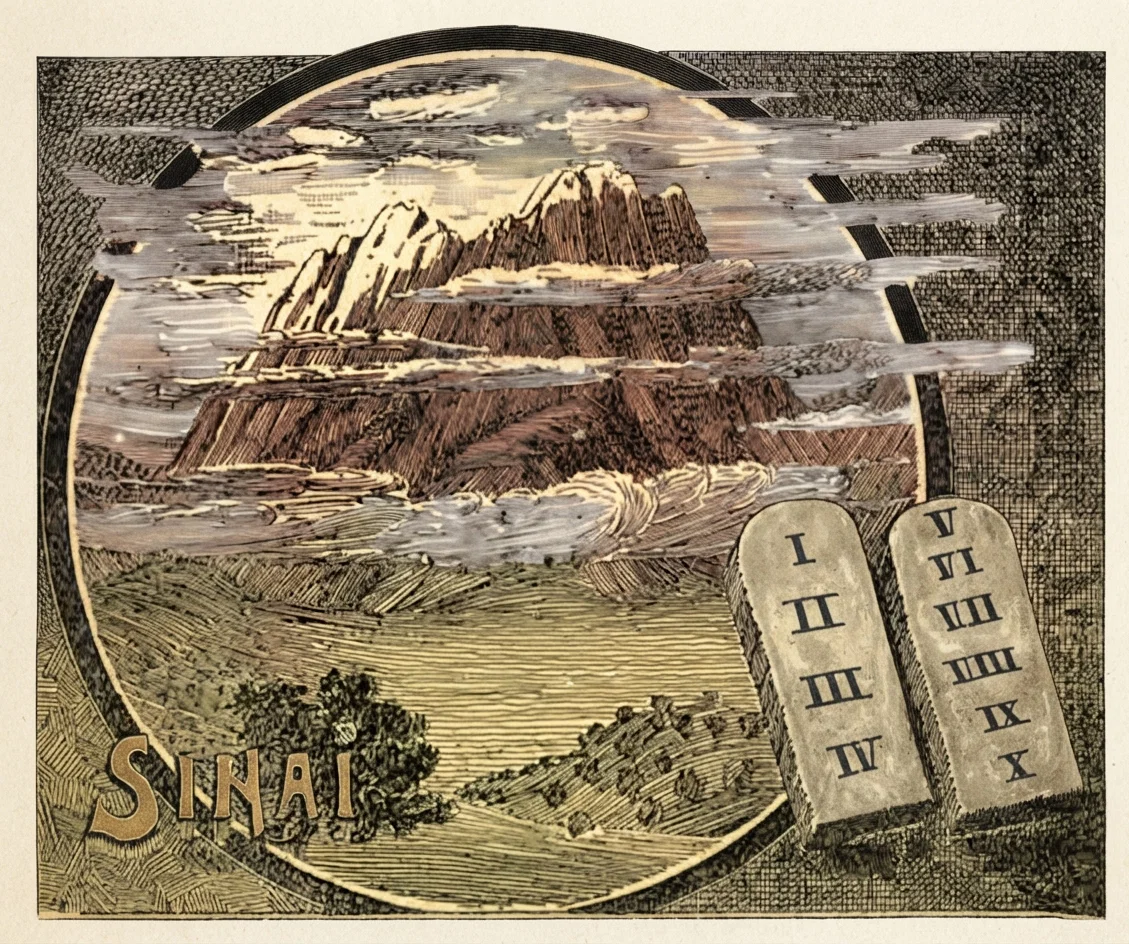
God’s holy law was not instituted at Sinai, altho it was there first proclaimed. The thunder and lightnings that enveloped Sinai presented a scene of awe and terror which no voice or pen can describe. The splendor and majesty of God’s glory there revealed caused the people whom he had rescued from the bondage of Egypt to tremble with fear. And as they heard the voice of God amid the smoke and the fire, the thunderings and the lightnings, and the noise of a trumpet, they moved afar off from the mount, and said unto Moses, “Speak thou with us, and we will hear; but let not God speak with us, lest we die.
“And Moses said unto the people, Fear not; for God is come to prove you, and that his fear may be before your faces, that ye sin not. And the people stood afar off, and Moses drew near unto the thick darkness where God was. And the Lord said unto Moses, Thus thou shalt say unto the children of Israel, Ye have seen that I have talked with you from heaven.” “Six days thou shalt do thy work, and on the seventh day thou shalt rest; that thine ox and thine ass may rest, and the son of thy handmaid, and the stranger, may be refreshed.”
During the absence of Moses in the mount, whither he had gone to receive the tables of the law, the children of Israel lapsed into idolatry. When Moses returned and saw that they had broken their covenant with God, shame and confusion on their account took possession of him, and he there threw down the tables and broke them. As they had broken their covenant with God, Moses, in breaking the tables, signified to them that so also God had broken his covenant with them.
“And the Lord said unto Moses, Hew thee two tables of stone like unto the first; and I will write upon these tables the words that were in the first tables, which thou brakest.” In writing the law upon tables of stone it was God’s design to teach men the lasting character of his law, and the perpetual obligation of all mankind to obey that law which is the transcript of his character.
At the very beginning of the fourth precept God said, “Remember,” knowing that man, in the multitude of his cares and perplexities, would be tempted to excuse himself from meeting the full requirements of the law, or in the press of worldly business would forget its sacred importance. It is not the first day, or any common day, but the seventh that God has blessed and set apart for a sacred use. As he surveyed his work of creation, he saw that it was very good, and he rested on that day.
And he designed that man should keep it holy because he himself on that day had rested. The teachers of our day, however high their claims to sanctity, who would pronounce the law of God Jewish, are wrestling the Scriptures, misleading the people, and making God’s law of none effect. The Sabbath was given to Adam and Eve in Eden for all their posterity. The Jews were not more closely related to Adam than were any of the other nations on the earth. Instead of losing its force now, the law is to be more fully understood. When the typical sacrifices ceased at the death of Christ, the original, as engraved on the tables of stone, stood immutable, holding its claims upon men in all ages. And in the Christian age the duty of man is not limited, but more especially defined and simply expressed.
God rested on the seventh day, not merely to furnish an example to the Jews. The Sabbath commandment is obligatory upon all men to the end of time. And not only this, its observance is to be carried into the future world, to be perpetuated throughout eternity.
God has given man six days in which to do his work, and carry on the usual business of life; but he claims one day, which he has blessed and sanctified. And he gives this to man as a day in which he can rest from labor and devote himself to the worship of his Maker. It is the grossest presumption for mortal man to venture upon a compromise with the Almighty in order to secure his own petty temporal interests. “I the Lord thy God am a jealous God,” was thundered from Sinai. No partial obedience, no divided interest, is accepted by him who declares that the iniquities of the fathers shall be visited upon the children unto the third and fourth generation of them that hate him and that he will show mercy unto thousands of generations of them that love him, and keep his commandments.
Christ was the foundation of the whole Jewish economy, and in all his specific directions regarding the ceremonial observances, these were distinguished from the Decalog. They were to pass away. Type was to meet antitype in the one great offering of Christ for the sins of the world.
Christ and his disciples kept the Sabbath. When accused of breaking the Sabbath by rubbing the ears of wheat in his hands and eating with his disciples to satisfy his hunger, he denied the charge made against him. He assured his accusers that they had condemned the guiltless; for he had done only those things that were perfectly in harmony with the Sabbath commandment. If the priests and rulers could have substantiated their accusation, they would have had no need to suborn men to bear false witness against God at his trial.
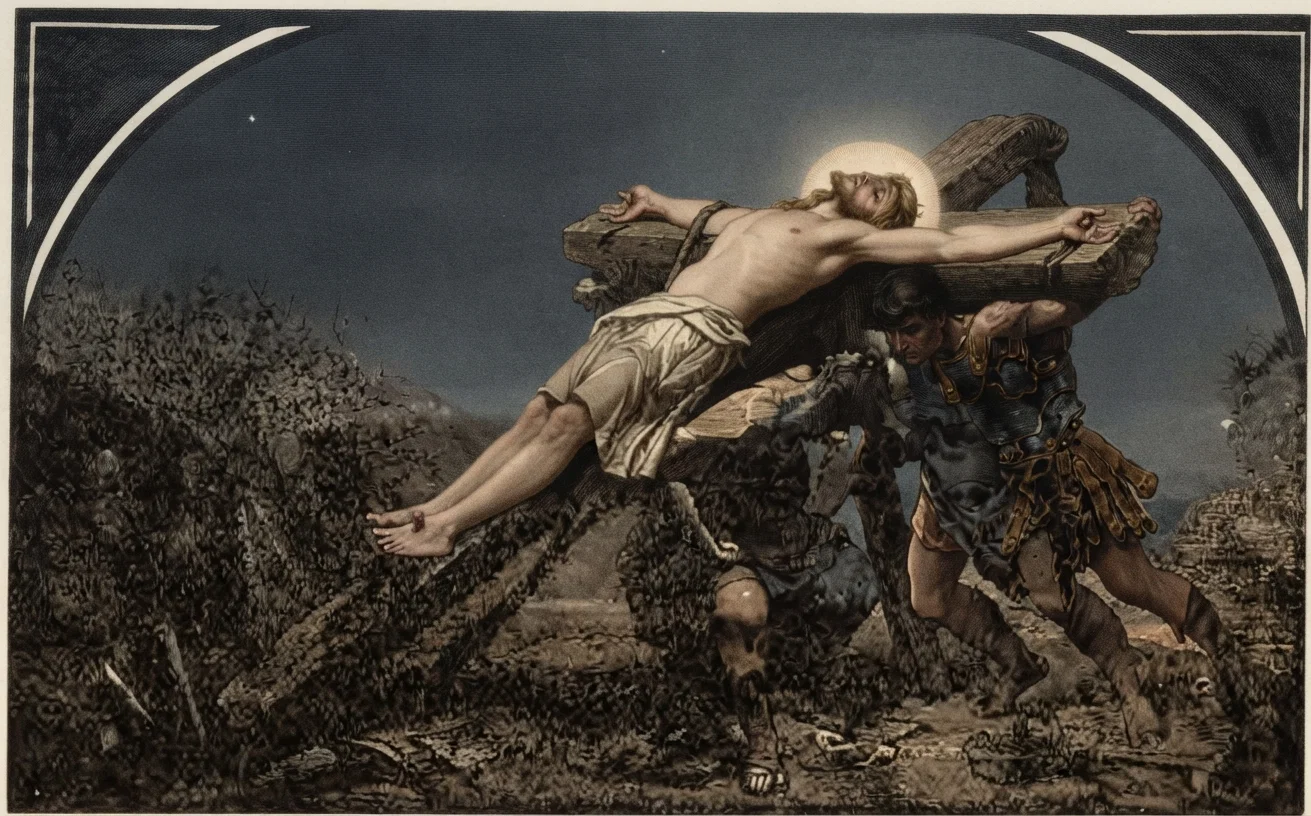
The death of Christ upon the cross shows the immutability of the law of God. His death magnified the law and made it honorable. From his own divine lips are heard the words: “Think not that I am come to destroy the law, or the prophets; I am not come to destroy, but to fulfil. For verily I say unto you, Till heaven and earth pass, one jot or one tittle shall in nowise pass from the law, till all be fulfilled.”
MRS. E. G. WHITE.
A BIT OF DAILY INSPIRATION.
By Henry Wadsworth Longfellow
STRONGER than steel
Is the sword of Spirit;
Swifter than arrows
The light of the truth is;
Greater than anger
Is love, and subdueth.
—Longfellow.
FAITH.
“THE faith of the Head
Is the faith that is dead;
The faith of the Heart
Is better in part;
“But the faith of the Hand
Is the faith that will stand,
For the faith that will do
Must include the first two.”
CHRISTIAN ENDEAVOR AND CHRISTIAN CITIZENSHIP.
By W. T. Knox
Two Methods.
NEVER in all her history has California witnessed such a gathering as that of the Christian Endeavor Convention just closed at San Francisco. It was a notable gathering in many ways, and various are the lessons that may be learned from it by the careful observer, for the Christian Endeavorers are well organized in many lines of Christian work.
As one gazed upon the thousands of delegates that thronged the streets and filled the halls of San Francisco, it was evident that among them was to be found the very flower of our young people. Of their number there were doubtless many earnest Christians whose hearts were fired with ardent love to God and fervent zeal for his service. One could but pray that their zeal might always be according to knowledge, and that the fire of their love be continually kept burning, and that they, "being rooted and grounded in love, may be able to comprehend with all saints what is the breadth, and length, and depth, and height; and to know the love of Christ," a love that caused the Son of God to take upon himself our nature, live his life of suffering and ministration here upon earth, and finally led him to dark Gethsemane, and was not quenched even by Calvary or the cross,—and all this that poor, sinful man might be won for God and redeemed from death; won by the wonderful display of love; but never once by a manifestation of any power but the drawing of his loving-kindness.
From a number of expressions made by some of their speakers it could be readily seen that all did not realize the wonderful power that Christ has placed at the disposal of his followers whereby they may win souls for him. A misunderstanding of the Gospel commission on the part of some was plain from the great prominence given to politics, and the desire expressed to regulate and reform the State.
On Friday afternoon in the Y. M. C. A. Auditorium, the committee on "Christian Citizenship" met in conference to consider this phase of their work. The meeting was presided over by Rev. W. E. Davis, of Lebanon, N. J., and was addressed by Rev. A. A. Murphy, pastor of the Second Presbyterian Church of New Brunswick, Rev. G. W. Scott, of Boston, and Bishop Samuel Fallows, of Illinois.
From the addresses delivered by these gentlemen, it could not be wondered at if the hearers would be in doubt as to whether they were listening to politicians or clergymen. The burden of all appeared to be that the church-members should perform their duty at the polls and attend the primaries. Dr. Murphy dwelt upon the scripture, "Render to Cæsar the things that are Cæsar's, and to God the things that are God's," applying the first to the Christian's duty of voting. To the speaker's mind, this duty to Cæsar was equal to our duty to God. It was stated that "politics were not to be brought into the pulpit, but that the pulpit must be taken into politics." The object to be accomplished by the pulpit in politics was revealed in the statement that "there will always be rings and machines, but it is our duty to see that we have the right men in the rings and machines, for God demands that Christian men should control the world." "Office is not to be refused by Christians, but we are to see that they [the officers] are in the hands of men that will enforce Sabbath laws."
The difference in the plan of work at the close of the nineteenth century and that in vogue immediately after the ascension of Christ was very manifest. The followers of Jesus then, as well as now, felt the need of power. To-day they are seeking the power of the State; then they were trusting in the promises of the Saviour, "Ye shall receive power, after that the Holy Ghost is come upon you." They were in the upper chamber, striving to place themselves where they could be controlled by the Spirit of God; to-day they are seeking to gain control of the political rings and machines in order that Christian men may wield the power of earthly governments for the enforcement of Sabbath and other religious laws.
Would that all could be brought to see that the Gospel of Christ is of itself all the power that this universe contains, even the "power of God unto salvation," that "the friendship of the world is enmity with God;" that it is "not by might nor by power, but by my Spirit saith the Lord of hosts."
"For the Lord spake thus to me with a strong hand, and instructed me that I should not walk in the way of this people, saying, Say ye not, A confederacy, to all them to whom this people shall say, A confederacy; neither fear ye their fear, nor be afraid. Sanctify the Lord of hosts himself; and let him be your fear, and let him be your dread. And he shall be for a sanctuary."
HOW IS THE KINGDOM OF CHRIST SET UP?
By W. N. Glenn
How the Word Is Perverted.
"THE world for Christ" is a very popular slogan in these days. It is one of the many mottoes of the Woman's Christian Temperance Union, and of the Young People's Society of Christian Endeavor. The Christian Citizenship movement, a system of religious politics, is now being held up as the means by which this great achievement is to be accomplished. It is now so common that it has become almost a fad for the champions of this political scheme to refer to the conversion of the world as a promise of God. And in support of this alleged promise they quote from the second psalm: "I will declare the decree; the Lord hath said unto me, Thou art my Son; this day have I begotten thee. Ask of me, and I shall give thee the heathen for thine inheritance, and the uttermost parts of the earth for thy possession." Verses 7, 8.
There are two important points which are overlooked in using this scripture to prove that the world is to be converted to Christ, and that Christians are to take it for him by political means: (1) God said to Christ, "I [not the people] shall give thee the heathen for thine inheritance, and the uttermost parts of the earth for thy possession." (2) A great mistake is made in not quoting the next verse of the psalm, which tells what Christ is to do with the heathen when they shall have been given to him: "Thou shalt break them with a rod of iron; thou shalt dash them in pieces like a potter's vessel." This does not look much like their being converted before they are given to Christ; for we can hardly believe that he would treat a converted people in such a manner.
The parallel of this scripture is in Daniel 2. There the kingdoms of earth are represented by a great image which Nebuchadnezzar saw in a dream. The head of gold was Babylon, the breast and arms of silver were Medo-Persia, the belly and thighs of brass were Grecia, the legs of iron were Rome, and the feet and toes of iron and clay represented the kingdoms of the world after the breaking up of the Roman Empire. Then a stone was cut out without hands, which smote the image upon its feet, and broke it to pieces. "Then was the iron, the clay, the brass, the silver, and the gold, broken to pieces together, and became like the chaff of the summer threshing-floors; and the wind carried them away, that no place was found for them; and the stone that smote the image became a great mountain, and filled the whole earth." Daniel's interpretation of the dream calls this stone the kingdom which the God of heaven shall set up, "which shall never be destroyed; and the kingdom shall not be left to other people, but it shall break in pieces and consume all these kingdoms, and it shall stand forever."
Why will the Lord break in pieces all the kingdoms of earth at his coming?—Not because they will all be converted, but, on the contrary, because they will be utterly and irretrievably turned to their own ways. "As it was in the days of Noah, so shall it be also in the days of the Son of man. They did eat, they drank, they married wives, they were given in marriage, until the day that Noah entered into the ark, and the flood came, and destroyed them all. Likewise also as it was in the days of Lot: they did eat, they drank, they bought, they sold, they planted, they builded; but the same day that Lot went out of Sodom it rained fire and brimstone from heaven, and destroyed them all. Even thus shall it be in the day when the Son of man is revealed." Luke 17:27-30.
The apostle Peter emphasizes this great truth when, speaking of the coming of the Lord, he refers back to the flood, and says, "The world that then was, being overflowed with water, perished; but the heavens and the earth, which are now, by the same word are kept in store, reserved unto fire against the day of judgment and perdition of ungodly men." So when the Lord comes he will not find the kingdoms of earth in a converted state; but he will find the earth as it was in the days of Noah and Lot, full of the "vessels of wrath fitted for destruction." But what will become of all this hurrah about "taking the world for Christ"? When the masses of Christian professors shall have entered "the gateway of politics" to wire-pull for a religious government, what will become of it all? This is what the Lord says about it: "Many will say to me in that day, Lord, Lord, have we not prophesied in thy name? and in thy name have cast out devils? and in thy name done many wonderful works? And then will I profess unto them, I never knew you; depart from me, ye that work iniquity."
Who, then, will have place in the kingdom of Christ?—"Blessed are the meek; for they shall inherit the earth." "Fear not, little flock; for it is your Father's good pleasure to give you the kingdom." "Not every one that saith unto me, Lord, Lord, shall enter into the kingdom of heaven; but he that doeth the will of my Father which is in heaven." We find the will of God in his Word. Christ was a doer of the Word, as James enjoins all of his disciples to be: "Be ye doers of the Word, and not hearers only, deceiving your own selves."
When men make hobbies of certain expressions in the Word of God, giving to them a fictitious construction, and ignoring the plain meaning as shown in the context, they can not rightfully claim to be either teachers or doers of the Word. Therefore they can not be doing the will of God, and are not prospective subjects of his kingdom. They are merely perverters of the Word. W. N. G.
THE CHURCH AND POLITICS.
By E. W. Whitney
THE subject assigned to me for to-day—really the relation of the church to civil government—is one which presents a broad field for investigation and for careful thought. It is one upon which there exists a wide difference of opinion. It is one upon which much is said and written, principally, however, upon one side. It is eminently one upon which all should know what saith the Lord. In presenting this paper, therefore, I assume that it is expected that the consideration of the subject shall be from the standpoint of the Scriptures alone.
I conceive that a failure upon the part of the church and her representatives to study scripturally the true relation of these two institutions—the Church and the State—is the occasion of spiritual weakness in herself, and a consequent dependence upon, and a seeking for, the support of the civil government. On the other hand, were it not for the consciousness of this lack of power in the church, there would be far less tendency with her to have to do with politics. The interest in the church as a church, in political affairs, the desire and effort to obtain political power by the church, I believe will be found by close study to be in exact proportion to the lack of the true power of godliness.
I am aware that the view I present appears absurd to many, and may appear thus to my brethren, members of this union. But the purpose in the investigation of any topic should be the eliciting and development of truth regardless of previous education or popular sentiment. Let us then, without bias, through either of these, appeal to the Scriptures, and the Scriptures only, for instruction. Their testimony ought to be all-sufficient for those composing our number.
What, then, is the specific work of the church through her delegated representatives? Christ answers in his commission to his apostles, "Go ye therefore and teach all nations." Note that he recognizes the existence of nations, and in no way suggests the subversion of these by the arbitrary setting up of his authority, tho he had just said, "All power is given unto me in heaven and in earth." He nowhere intimates in his teaching a temporal reign for himself, or a universal acceptance of the principles of his government in this world. True, the Jews accused him and his followers of sedition, and of attempting to turn the people away from loyalty to the Roman Government; but such a charge could never be sustained, and his precept and example are both against it. He had no such policy. Indeed, he had nothing whatever to do with politics.
What, then, is the church to teach to all the nations? Is it, in each particular nation, to teach the policy upon which its government should be conducted? Is that the Gospel as committed to the apostles? — No. They were to make disciples or Christians in all nations by "teaching them to observe all things [says Christ] whatsoever I have commanded you." His presence and power he promised to believers, in order to accomplish this work in every nation upon the earth. This teaching was to be to individuals as individuals, and not to nations as nations, for, in recognizing the commission, Mark says: "Go ye into all the world, and preach the Gospel to every creature. He that believeth and is baptized shall be saved; but he that believeth not shall be damned." This certainly can not be for the establishment of the kingdom of heaven for temporal and universal rule in this world, as is so much talked of these days. Had it been, Christ would not have taught his disciples so explicitly to the contrary. They, however, failing to comprehend his mission, did look for that very thing; but he said to them so emphatically as not to be misunderstood, "My kingdom is not of this world; if my kingdom were of this world, then would my servants fight." The Gospel and not politics is that with which the church has to do; for the Gospel is that in which every individual of every nation under heaven ought to be interested. It is that, too, in which every individual may be interested without disloyalty to civil authority, provided civil and divine authority are not confounded.
It may be said that those who preach the Gospel need support and power, and shall not these be supplied by the various nations to which the Gospel is preached? Paul answers in regard to the support, "The Lord hath ordained that they which preach the Gospel should live of the Gospel." One evil, and a great evil it is, occasioned by ignoring this principle is that the church comes to depend upon the support of the world instead of upon the individual interest of believers. This begets narrowness and selfishness, instead of breadth and liberality. Paul, in order to correct this evil, went even further than this God-ordained plan. He says, "But I have used none of these things; neither have I written these things, that it should be so done unto me. . . . For necessity is laid upon me; yea, wo is me, if I preach not the Gospel." "For ye remember, brethren, our labor and travail; for laboring night and day, because we would not be chargeable unto any of you, we preached unto you the Gospel of God." So Paul, instead of depending either upon the world or the church for financial support, depended upon the Lord to supply the opportunity for him to support himself by manual labor.
It may be claimed that the church needs recognition and power to make her work successful. Christ says, "Go ye into all the world, and preach the Gospel," "and, lo, I am with you alway, even unto the end of the world;" and Paul says the Gospel itself is the "power of God unto salvation to every one that believeth."
What more does the church need in the way of recognition than the presence of Christ? and what more in the direction of power than the power which saves to the uttermost the soul and body of the believer, experienced as it may be by each individual in it? If the church lacks power, it is because her ministers fail fully to preach the Gospel, as did Paul, and are depending upon some power other than the power of God. If she needs more helpful recognition, it is because she is walking apart from her divine Head, and courting the favor and recognition of the world—counting it of more consequence than the favor of God.
It may be asked, Did not the Jewish church have a national existence, and was it not therefore political in character? It is true, the Jews were at the same time both a nation and a church. According to God's purpose for them, however, they were to have nothing to do with the politics of the nation, that is, the principles upon which the nation should be managed, the making of its laws, etc. God himself attended to all this, and all the people or the priests were to do was to obey and execute what he gave them. When they called for a king like the nations around them, they entered politics, and it proved their ruin. They departed from the worship of the true God to that of false gods, and God forsook them in consequence, both as a church and as a nation.
All this history ought to be a lesson to the church to-day, for "all these things happened unto them for ensamples; and they are written for our admonition upon whom the ends of the world are come."
Christ has a church in the world composed of all true believers in him without regard to nationality or church name. He has also a kingdom, but he says distinctly that it is not of this world. The principles of that kingdom are implanted in the hearts of its subjects, and they will be loyal to these, tho they may conflict at times with the perverted principles of earthly governments. But if such governments do not go beyond their proper prerogatives there need be no conflict between them and the principles which govern in the kingdom of Christ. They must, however, be forever kept distinct and separate else the conflict is sure to come.
The only province in which civil governments may properly exercise authority is in securing to each individual, so far as is possible, his inalienable rights. This is accomplished through the exercise of law to which the individuals composing the government yield consent by choosing to belong to such government. It has nothing whatever to do with religious questions. On the other hand, the province of church authority is limited to religious matters only, except as the principles of true religion lead to a conscientious regard for all civil rights, as well as religions. It has, however, no authority in civil matters. Christ enunciated very clearly the principle underlying this distinction, and the relation of the two institutions, when he said, "Render therefore unto Cæsar the things which are Cæsar's; and unto God the things that are God's;" for the record is, "They could not take hold of his words before the people; and they marveled at his answer, and held their peace."
This answer indicates plainly that it is possible for the representatives of Christ to render to Cæsar—the government—that which belongs to it, and the same to God, without conflict, when taken in connection with his uniform teaching and practise. It also as plainly teaches that, as his followers, we need have nothing to do with the politics of earthly governments, for he never had. He constantly acted, as well as taught, the truth that his kingdom was not of this world, to govern by force, but that it was from above, and only required the obedience of a loving choice. The fact is, there is no policy or politics in the kingdom of Christ; it is ruled by the principle of love. There is no law in it except the law of love. There is no force in it except the force of love. This is of universal application. There can be no law against its exercise. Its length and breadth, its height and depth, are infinitely greater than all worldly policy. The province of the church and her representatives is by precept and practise to manifest this principle toward all men of every nation, kindred, tongue, and people. This is the sum of preaching the Gospel to every creature.
Therefore, we do not, as ambassadors for Christ, need to enter politics, or that politics should enter us, in order that we do successfully the work of God in the earth. The less we have to do with governmental politics, the better, it seems to me, will it be for us as individuals, for the several churches to whom we minister, for our respective denominations, and for the world.
Let the church, as did her perfect Head, have no policy or politics other than "Jesus Christ, and him crucified," accepted in the heart and manifested in the life of the believer.
E. W. WHITNEY.