Your ShelfYour Projects

Signs of the Times, Vol. 23, No. 29.

Editorial
Earlier text: THE CHRISTIAN ENDEAVOR CONVENTION

DR. HAMLIN ON SYSTEMATIC GIVING.

DOCTOR HAMLIN, the veteran missionary of Constantinople, says recently of its working in Turkey: "You take a poor, miserable beggar, as I have known some instances, a beggar who has become converted, and apply to him that iron system of tithing, which the oriental world loves and always has loved, perhaps always will love, and make that beggar, as the one condition of enjoying the privileges of the Gospel, give one-tenth of what he begs, and as much more as you can make him give, and in a short time he will not be a beggar; in a short time he will support himself, and in circumstances comparatively comfortable. Why, give a man something higher than himself to live for, and you immediately elevate him intellectually, even physically. You give him a better economy and more power to work; you give him more than intellectual power; you give him a spiritual power, and you invest him with the almighty providence of God. You can not keep that man down where he was; he will rise every way, and he will become a worker."
CHRISTIANITY is a thing which must be learned by doing it. "The words that I speak unto you, they are spirit, and they are life," said Christ, and life is known by living. The expert in regard to Christianity is not the man who has learned about it, but he who has lived it. Men are sometimes held back from active Christian experience by their own lack of experience. They want to know about what they are to do before they undertake it, and they can only learn by doing. The way to build a character is to build it, learning by mistakes as well as triumphs, and seeking aid wherever it is to be found. To him who endeavors, God sends aid. To him who stands still, God only sends invitation, an invitation to take the forward step, which is the beginning of the continuing journey. In the figure of Christ's own story, the pound employed increases to five pounds, or ten, while the pound hidden away is of no use, and its hiding brings condemnation.—Congregationalist.
WE should never forget that the missionary cause is an enterprise of faith. It requires faith in the promises of God, in the power of God. . . . It is a work of the Spirit of God, "whom the world can not receive;" therefore the world can approve of missions only when they go forward with the highest prosperity. Let no friend of missions become discouraged when the work proceeds slowly. . . . Among our forefathers in Europe a whole century was occupied with the introduction of Christianity. Sometimes a nation received Christianity to cast it off again after thirty or forty years. It required a thousand years to bring them up to the height at which we now stand.—Rev. Andrew Murray.
RICHARD BAXTER said: "My rule has been to study to need as little as possible for myself; to lay out nothing on need-nots; to live frugally on little; to serve God on what he allowed me, so that what I took for self might be as good for the common good as that which I gave to others; and then to do all the good I could with the rest. The more I have done this, the more I have had to do it with. When I gave away almost all, the more came in, I scarce know how, when unexpected and unplanned for. When of improvidence I was led to use too much on myself or on things of little importance, then I prospered less than I did otherwise. If I had planned to give only after my death, then all might have been lost; whereas, when I gave away at present, and trusted God for the future, then I wanted nothing and lost nothing."

MISSIONARY SKETCHES IN THE ORIENT.

Paul at Ephesus.
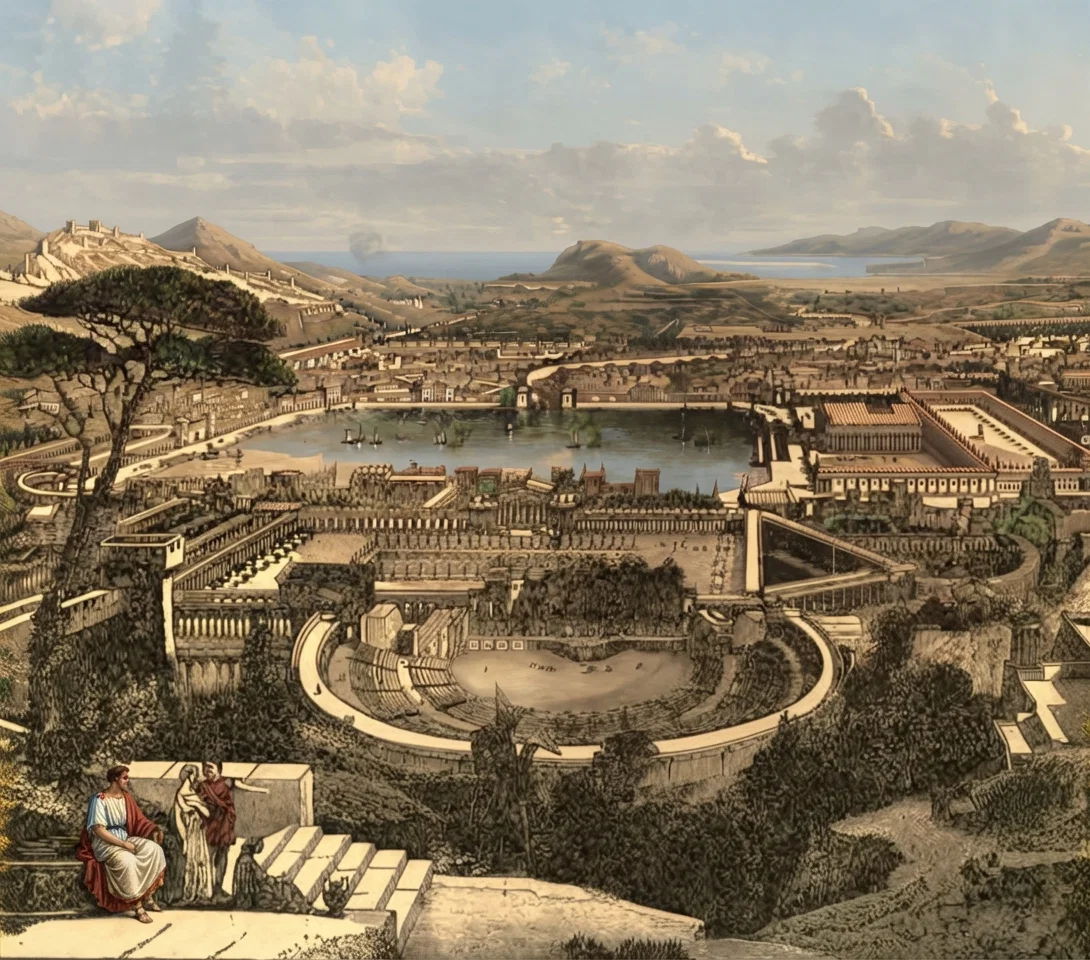
AFTER leaving Antioch, ten years after his conversion, to enter upon his mission to the Gentiles, the apostle Paul spent more time in Ephesus than in any other city. At that time Ephesus was the chief town of Asia, the Roman province which comprised the southwestern portion of Asia Minor. Ephesus was situated on the seaboard, and for several centuries had been the leading city and port of Ionia.
While Cyprus was noted for the worship of Ashtaroth, and Rhodes for the worship of Helios, the colossal sun-god, Ephesus was famous for the worship of Diana. So noted was the city as a shrine of this goddess that even Alexander the Great desired to share the honor of rebuilding her temple. In the days of Paul it could be said that "all Asia and the world" worshiped Diana. Acts 19:26. When Paul visited Ephesus, it was a Mecca of the heathen; and that the Ephesians were fanatical in their worship is evident from the speeches of Demetrius and the town clerk. Ephesus was also a center where Greek art and culture reached its highest point. In such a city Paul came to preach the Gospel. Surely, the enemy had all the advantage that it is possible for him to gain. Yet Paul preached boldly that "they be no gods which are made with hands."
After this long stay at Corinth, Paul came to Ephesus, and found about a dozen disciples that had not received the Holy Ghost, having been baptized only with the baptism of John. When they were baptized in the name of the Lord Jesus and received the Holy Ghost by the laying on of hands, they began to speak with tongues and prophesy. After Paul had taught in the synagog three months, and was driven out by the Jews, he taught about two years in the school of Tyrannus; and "all they which dwelt in Asia heard the word of the Lord Jesus, both Jews and Greeks. And God wrought special miracles by the hands of Paul; so that from his body were brought unto the sick handkerchiefs and aprons, and the diseases departed from them, and the evil spirits went out of them." Acts 19:10-12.
It was also here that the seven sons of Sceva, the Jewish priest, undertook to drive out evil spirits in the name of Jesus, and were torn by the spirits for their presumption. The people of Ephesus were noted for their practise of witchcraft and sorcery; and doubtless these sons of Sceva, like Simon, thought that they had found something out of which they could make capital. The remarkable work of the Lord through Paul, broke the spell in which the Ephesians had so long been held. "Many of them also which used curious arts brought their books together, and burned them before all men; and they counted the price of them, and found it fifty thousand pieces of silver. So mightily grew the word of God and prevailed." Verses 19, 20.
Headed by the Greek silversmith Demetrius, the craftsmen, who had much gain by making silver shrines for Diana, saw what the outcome of Paul's work would be; and, not being able to refute his work with fair argument, resorted to the more convenient method, still pursued, of playing on the superstition and fanaticism of the people; they raised a great uproar, "and the whole city was filled with confusion." Having caught and taken to the theater two of Paul's companions in labor, this public place was soon filled with a shouting rabble "and the more part knew not why they were come together." When the Jews tried to put forward one of their number to make an explanation, as soon as the people observed that he was a Jew, "all with one voice about the space of two hours cried out, Great is Diana of the Ephesians." It was with great difficulty that the town clerk could still the storm. It is only when one has been in the east and witnessed the excitable temperament of the people that he can fully appreciate this scene.
EPHESUS, THE THEATER IN THE FOREGROUND. ACTS 19.
After the uproar ceased, Paul left, and, so far as the New Testament record goes, did not return again, but wrote to the Ephesians that most remarkable epistle; and when on his way to Jerusalem for the last time, he stopped at Miletus, also a chief city of Asia at that time, situated about forty miles south of Ephesus, and called thither the elders of Ephesus and gave them final words of instruction and admonition. This interview reveals still other particulars about Paul's work at Ephesus, showing how ardently and faithfully he labored, and that he worked with his own hands for his support. His parting with the elders of Ephesus is the most touching of which we have any account in the New Testament; for the apostle knew "that they should see his face no more."
The great city of Ephesus has long been in ruins. There is but a small village near its site. Of late, much money has been expended by the British museum in excavating the ruins; some of the theaters, large squares, and public buildings are laid open to view. The city was built around a large rocky bluff several hundred feet high and several miles in circumference. The ruins testify to the former importance of the city. The arm of the sea which formed the harbor and which reached to the city walls is filled with sand, so that the sea is now several miles from the ruins.
But while this city is in ruins, the Gospel which here made such a stir in Paul's day has lost none of its primitive vigor, and it is again to be preached in power in this region. Through the medium of the Sabbath-school donations all our people are invited to take a part in sending the truth to this field. If our labors and sacrifices are as ardent and great as those of Paul's in behalf of this field, it will again be stirred by the Gospel. And so may it be. H. P. H.

BLIND.

BY JENNY TERRILL RUPRECHT.
O HEALER of the blind, Thy dear hands place Upon my sightless eyes, that I may see! Now let me feel Thy healing touch of grace And look into my Lord's benignant face, And by that look be led to follow Thee.
Jesus, Thou Son of David, hear my plea; A stricken Bartimeus pass not by, But from sin's cruel blindness set me free, And bid me nearer, nearer come to Thee, Where sight is love—and love shall satisfy.
—New York Observer.

OUR WORK AND WORKERS.

Six new members were added to the church at Newburg, W. Va., at the last quarterly meeting.
ELDER W. A. SWEANY reports the addition of four new members to the church at Wells, Minn.
DR. PAUL ROTH and wife and Brother Arnold Roth have gone to Europe to connect with the work in France and Switzerland.
AFTER an address by Dr. J. H. Kellogg, on the "Gospel of Health," at Willard Hall, Chicago, an invitation was extended to him to deliver a lecture at the same place once a month during the summer. The invitation was accepted.
ELDER J. W. WESTPHAL, who is engaged in work among the Germans, mentions the dedication of two houses of worship, one at Hillsboro, Kansas, and one at Cooper, O. T. These houses are adding to the influence of the cause in those communities. At Anvil, O. T., four were recently baptized and added to the church.
PROF. C. C. LEWIS, principal of Keene (Texas) Industrial Academy, informs us that that institution is prepared to give first-class instruction in the German language. A proficient knowledge of German is not merely an accomplishment, but it is a valuable aid in almost any calling in life, and especially to those who desire to enter the Gospel work. Prof. August Kunz, a native of Germany, and well known as an editor and translator, is the instructor.
THE laborer in the vineyard of the Lord may find many ways to introduce the Gospel. Any honest occupation which supplies what people need may be used as a means to this end. A case in point is the starting of a bakery in Charleston, S. C., by the wife of Elder I. E. Kimball, in order to give employment to several bakers who desired to keep the Sabbath, but could not do so where they were previously employed. The baking is done on health-reform principles, and is said to be "appreciated by many." Elder Kimball has been holding open-air meetings in one of the city parks.
FOLLOWING is an extract from a letter by Elder E. Hilliard, of Tonga, Friendly Islands, South Pacific Ocean. We copy from the Minnesota Worker: "We enjoy our island life very much, and have so much to do that we have but little time to think of America. I have a large yard, containing thirteen coconut trees, one tava tree, and four guava trees. By the help of the two native boys that we have taken into our family, I have set out forty-three banana plants, and intend to set out enough for 100. We have quite a fair garden this year, so that we raise about half or two-thirds of our living."
THE American Sentinel, the popular religious liberty journal, published in New York City, in addition to its usual store of timely instruction, is to have a department of "Religious Liberty for Young People," conducted by A. F. Ballenger, secretary of the International Religious Liberty Association. This is a good move. Now that extraordinary efforts are being made to educate the young people into the idea that religion should be enforced by civil law, that Christianity is merely religious politics, it is meet that they should receive special instruction in the line of true religious liberty, and the inevitable results of an incorporation of religious obligation in the policy of our national or State government.

Publications on the Sabbath

THE LORD'S DAY, THE TEST OF THE AGES

Presents in the briefest, simplest manner a part of the Bible evidence concerning both sides of the Sabbath question. The subject is treated in a new and interesting way. Fully illustrated with diagrams and original illustrations. 128 pages, paper covers, just out, price 15 cents.

ABIDING SABBATH AND LORD'S DAY

A pointed review of two of the best recent productions for the defense of the Sunday sabbath. The best arguments in support of Sunday are undoubtedly presented in this book. 173 pages, paper covers. Price 20 cents.

CHANGE OF THE SABBATH

A brief treatise answering the question so often asked, "Who Changed the Sabbath?" 218 pages, paper covers. Price 20 cents.

NATURE AND OBLIGATION OF THE SABBATH OF THE FOURTH COMMANDMENT

A candid and thoroughly scriptural treatise on this important question. 96 pages, paper covers. Price 10 cents.

THE SABBATH AND THE LAW

This work covers the Sabbath institution from Eden created to Eden restored, and its arguments are clear and forcible and convincing. 192 pages, paper covers. Price 20 cents.

THE HISTORY OF THE SABBATH

An exhaustive treatise on the Sabbath question, in which every passage in the Bible which has any connection with the Sabbath, either in the Old or New Testament, is examined at length. It is a veritable mine of information, both Biblical and Historical, on this subject. Three volumes, paper covers. Price $1.00 per set.
. . Send for Catalogue containing Price List of other . . Publications on this Subject.
Pacific Press Publishing Co. Oakland, Cal. Kansas City, Mo. N. Y. City, N. Y.
"Living by Faith." (Spanish.) A translation of Bible Students' Library No. 75; 16 pp.; price, 2 cents. Address, PACIFIC PRESS PUBLISHING CO., Oakland, Cal.

RISE AND PROGRESS

—OF—

Seventh-Day Adventists.

Tokens of God's Hand in the Movement, and Brief Sketch of the Advent Cause from 1831 to 1844.
By J. N. LOUGHBOROUGH.
This new book, fresh from the pen of one of the oldest ministers in the advent movement, cannot but be of great interest to all, and especially to those who have become Seventh-Day Adventists in recent years and know but little of the early history of the cause and its leaders.
The following are some of the chapter headings: Extent of the Advent Proclamation; The Tarrying Time; The Midnight Cry; The Disappointment; Fresh Tokens of Divine Guidance; Perils, Reproaches, Victories; New Features in the Work; Providence of God in the Publishing Work; Organization; Rapid Advancement; Though Workers Faint, God's Work Advances; Truth Advanced Even by Opposition.
The book contains nearly 400 pages, with 50 illustrations, several of them full page, and is neatly bound in cloth, and furnished in two styles.
Cloth, plain edges . . . . . $1 25 Cloth, gilt edges . . . . . 1 50
Books sent postpaid on receipt of price.
Address, PACIFIC PRESS PUB. CO., OAKLAND, CAL. Or 43 Bond St., New York.

Thoughts from the Mount of Blessing

IS PROFOUNDLY ..DEVOTIONAL AND.. INTENSELY INTERESTING
* Richly Illustrated and Containing 201 Pages
*
Thousands of copies will be sold this summer, as many agents are already at work. Write for territory and terms at once.
Price in Elegant Cloth Binding, 75c Price in Half Calf, Marbled Edges, $1.00
SAMPLE CHAPTER HEADING.

WHAT OTHERS SAY OF IT

*
Free Methodist.—Its entire trend indicates the author's confidence in the words of Christ. "The words that I speak unto you, they are spirit and they are life." While these words were first addressed to a cosmopolitan gathering centuries ago, they are applicable to all time, and come to us still freighted with that same "spirit" and that same "life." Western Christian Advocate.—A very devout, thoughtful exposition of the Lord Christ's words. Christian Observer.—Very pleasant is the style of this book, and very helpful are its comments on the Sermon on the Mount. Baptist Union.—It can by no means be read with profit at one sitting, but is a book for time of meditation, as its title implies. Southern Churchman.—A deeply religious book. . . . The publishers have gotten it out, both in type and illustrations, very well indeed. Herald and Presbyter.—This is a book of faith and devotion. Far from being a mere lecture on outward morality, it takes hold of the very inner being, and insists on a life believing and following the Master in simplicity and consecration. The Lutheran Observer.—This is a devotional exposition of Christ's Sermon on the Mount, in which the spiritual riches of the Beatitudes are unfolded in earnest and fervid thoughts. . . . It is finely illustrated with views of sacred scenes, and is issued by the publishers in handsome style. Christian Evangelist.—This volume, dealing with things of the Spirit, is a book for the quiet hour. . . . It will be found an enlightening and uplifting treatment of these lofty themes. Cumberland Presbyterian.—Is a book of deep, devotional nature, taking hold of the inner being. It has much beauty of style, many apt illustrations, and insists on a life of purity and consecration.
**** # PACIFIC PRESS PUBLISHING COMPANY 39 Bond St., New York City Oakland, Cal. 14 to 18 W. Fifth St., Kansas City, Mo.

The Sunday School

International Series. LESSON VII.—SUNDAY, AUGUST 15, 1897.

ABSTAINING FOR THE SAKE OF OTHERS.

NOTE.—The lesson section includes the story of the founding of the church at Corinth (Acts 18:1-17) and the first ten chapters of 1 Corinthians. A discussion of the same things will be found in the fourteenth chapter of Romans. This was also an important factor in the great conference at Jerusalem. Acts 15. The church at this place was founded in A.D. 52-53, and was about five years old at the time this epistle was written. The epistle was written in the Greek language, the language of Corinth; and was penned at Ephesus, in Asia Minor. This epistle settles many practical questions which had been troubling the early Christians, and can also be applied to questions which might trouble at this time those who would follow Christ. It is a temperance lesson.

Lesson Scripture, 1 Cor. 8:1-13, R. V.

"Now concerning things sacrificed to idols: We know that we all have knowledge. Knowledge puffeth up, but love edifieth. If any man thinketh that he knoweth anything, he knoweth not yet as he ought to know; but if any man loveth God, the same is known of him. Concerning therefore the eating of things sacrificed to idols, we know that no idol is anything in the world, and that there is no God but one. For tho there be that are called gods, whether in heaven or on earth; as there are gods many, and lords many; yet to us there is one God, the Father, of whom are all things, and we unto him; and one Lord, Jesus Christ, through whom are all things, and we through him. Howbeit in all men there is not that knowledge; but some, being used until now to the idol, eat as of a thing sacrificed to an idol; and their conscience being weak is defiled. But meat will not commend us to God; neither, if we eat not, are we the worse; nor, if we eat, are we the better. But take heed lest by any means this liberty of yours become a stumbling-block to the weak. For if a man see thee which hast knowledge sitting at meat in an idol's temple, will not his conscience, if he is weak, be emboldened to eat things sacrificed to idols? For through thy knowledge he that is weak perisheth, the brother for whose sake Christ died. And thus, sinning against the brethren, and wounding their conscience when it is weak, ye sin against Christ. Wherefore, if meat maketh my brother to stumble, I will eat no flesh forevermore, that I make not my brother to stumble."
Golden Text.—"For none of us liveth to himself." Rom. 14:7.

SUGGESTIVE QUESTIONS.

(1) With what does Paul's discourse in this chapter begin? Verse 1. (2) What knowledge do we have concerning these things? Same verse. (3) But what is the effect of such knowledge alone? Same verse. Note 1. (4) What difference does he make between knowledge and love? Same verse. (5) What is the condition of those who think they have knowledge? Verse 2. (6) Who are known of God? Verse 3. Note 2. (7) What question was troubling the early Christians at this time? Verse 4. (8) What did the Christians know regarding idols, and the God whom they served? Same verse. (9) What was the belief of the idolators in regard to the things they worshiped? Verse 5. Note 3. (10) As opposed to this what is the teaching of the Gospel? Verse 6. (11) What is the relation of the creature and the Creator as pointed out in the same verse. (12) How does the apostle indicate that there is a lack of the knowledge of the Gospel? Verse 7, first clause. (13) How did some look upon meat of which they partook that had been offered to an idol? Same verse. Note 4. (14) What was the result? Same verse. (15) What effect does the eating or refraining from eating have upon our personal relation to God? Verse 8. (16) Wherein is the greatest wrongfulness of careless indulgence? Verse 9. Note 5. (17) How might one be caused to stumble by seeing a Christian eating meat that had been offered to idols? Verse 10. (18) What would be the result to such a one? Verse 11. (19) How was he influenced to his downfall? Same verse. Note 6. (20) What is the result of this called by Paul? Verse 12. (21) Against whom else is it a sin? Same verse. (22) In view of the solemn consequences of self-indulgence, what declaration does Paul make? Verse 13.

NOTES.

1. Knowledge puffeth up.—That is how we may know we have a certain kind of knowledge. He who really knows the most is most willing to admit that he knows nothing yet as he ought to know. But this knowledge which leads us to be puffed up, is a knowledge which is really foolishness in the sight of God. He who feels puffed up over what he has learned, or thinks he has learned, may know that he has not that knowledge which edifies, or builds up into Christ.
2. If any man loveth God.—Him the Lord knoweth. This is in accordance with 2 Tim. 2:19, "The Lord knoweth them that are his," who have freely given themselves to him. It is the love of God that prompts such a gift. "To be fully known by God, after the manner in which one friend is thoroughly known by another, is the highest possibility of the earthly life for the Christian."—Professor Dwight. "God is love. Therefore by loving, we partake of God's nature, and know him, and he knows us. He recognizes that we are his children. To know a friend implies that he knows us."—Peloubet. Love then is preferable to knowledge; for while knowledge puffs up, love builds up; and love acquaints us with God.
3. There be that are called gods.—The image of brass or wood or stone was supposed by the worshipers to represent the deity to which it was dedicated; and the imagination of the heathen world had run wild in the invention of deities, or principles, or gods, which must have their share of the homage of man, or regard themselves as slighted and visit mankind with affliction for the slight. So careful had the heathen worshipers grown of the rights of their deities, and so fearful of slighting them, that at the time of Paul's visit to Athens, they had gone so far as to erect an altar to the "unknown god," thus supposedly rendering themselves proof against the attacks of offended or slighted deities. Thus had there come to be gods many; and the outcome of this idolatrous practise is seen in Rom. 1:18-32.
4. Eat as of a thing sacrificed to an idol.—Can not rid themselves of the thought that they are partaking in idol worship. Those who knew God and the power of his salvation, knew that the idols were absolutely nothing but the material of which they were composed, and they knew that meat offered to them did not change its character or nature in the least by being offered. So to such there could be no hurt if they partook of it; but persons of weaker conscience, who saw in the meat defilement on account of the use to which it had been put, and who saw those partaking of it who had had experience in the things of God, might be led to yield to what they regarded as wrong, and thus their conscience be hardened and they be led to do other things that they regarded as wrong. "If we were alone in the world, and had no one to consider but ourselves, this knowledge about the non-existence of idols would settle the question."—Peloubet.
5. But take heed.—For what is right to you may be an occasion for wrong on the part of another, as pointed out in the note above. If we voluntarily make stumbling-blocks of ourselves over which others fall into sin, we are sinning "against the brethren," and therefore sinning "against Christ." "Shall we, for the sake of eating one kind of meat rather than another, endanger the salvation of those for whom the eternal Son of God laid down his life?"—Hodge.
6. Through thy knowledge.—It is certainly a good thing to know that the idol is nothing. The Lord has brought us that knowledge; but let us not use it in a way to cause another to lose eternal life.

The Sabbath School

International Series.
LESSON VII.—SABBATH, AUGUST 14, 1897.

A PURE CHURCH.

Lesson Scripture, Acts 4:32 to 5:16, R. V.
32 "And the multitude of them that believed were of one heart and soul; and not one of them said that aught of the things which he possessed was his own; but they had all things common. And with great power gave the apostles their witness of the resurrection of the Lord Jesus; and great grace was upon them all. For neither was there among them any that lacked; for as many as were possessors of lands or houses sold them, and brought the prices of the things that were sold, and laid them at the apostles' feet; and distribution was made unto each, according as any one had need.
33 "And Joseph, who by the apostles was surnamed Barnabas (which is, being interpreted, Son of exhortation), a Levite, a man of Cyprus by race, having a field, sold it, and brought the money, and laid it at the apostles' feet.
34 "But a certain man named Ananias, with Sapphira his wife, sold a possession, and kept back part of the price, his wife also being privy to it, and brought a certain part, and laid it at the apostles' feet. But Peter said, Ananias, why hath Satan filled thy heart to lie to the Holy Ghost, and to keep back part of the price of the land? Whiles it remained, did it not remain thine own? and after it was sold, was it not in thy power? How is it that thou hast conceived this thing in thy heart? thou hast not lied unto men, but unto God. And Ananias hearing these words fell down and gave up the ghost; and great fear came upon all that heard it. And the young men arose and wrapped him round, and they carried him out and buried him.
35 "And it was about the space of three hours after, when his wife, not knowing what was done, came in. And Peter answered unto her, Tell me whether ye sold the land for so much? And she said, Yea, for so much. But Peter said unto her, How is it that ye have agreed together to tempt the Spirit of the Lord? behold, the feet of them which have buried thy husband are at the door, and they shall carry thee out. And she fell down immediately at his feet, and gave up the ghost; and the young men came in and found her dead, and they carried her out and buried her by her husband. And great fear came upon the whole church, and upon all that heard these things.
12 "And by the hands of the apostles were many signs and wonders wrought among the people; and they were all with one accord in Solomon's porch. But of the rest durst no man join himself to them; howbeit the people magnified them; and believers were the more added to the Lord, multitudes both of men and women; insomuch that they even carried out the sick into the streets, and laid them on beds and couches, that, as Peter came by, at the least his shadow might overshadow some one of them. And there also came together the multitude from the cities round about Jerusalem, bringing sick folk, and them that were vexed with unclean spirits; and they were healed every one."

QUESTIONS.

  1. Relate briefly the story of the healing of the lame man, and tell all that followed.
  2. How were the company of believers affected by the threats of the rulers?
  3. In what condition were all the believers? How did they regard their property?
  4. How did the apostles give witness of the resurrection? What was the source of all this? Compare 1 Cor. 15:10.
  5. What prevented the suffering of poverty by the believers?
  6. On what basis was distribution of goods made?
  7. What man who afterwards became prominent was among those who thus disposed of their property?
  8. What other two are especially named in this connection?
  9. How did they act in this business?
  10. What question did Peter put to the man?
  11. Had there been any compulsion in the matter? What questions show this? Of what did Peter say the pair had been guilty?
  12. What took place when Ananias heard these words?
  13. What occurred about three hours later?
  14. What did Peter intimate that the two had conspired together to do?
  15. What became of the woman, also?
  16. What was the result of this affair?
  17. What was done by the hands of the apostles?
  18. Whose hand was clearly seen in all these things? Heb. 2:4; Acts 2:22; John 5:30.
  19. To whom were believers added? In what numbers?
  20. But what of the rest who were not sincere?
  21. How did the people regard the apostles?
  22. How did they show their confidence?
  23. How widely did their influence extend? Did they seek aid in vain?
Continue reading: News and Notes