The Youth’s Instructor, Vol. 65, No. 9.

God's Spotless Snow: A Carpet for the Coming Year

The Youth’s Instructor

Feb 27, 1917

Review and Herald Publishing Assn. · Takoma Park Station, Washington, D. C. · Feb 27, 1917

God's Spotless Snow: A Carpet for the Coming Year
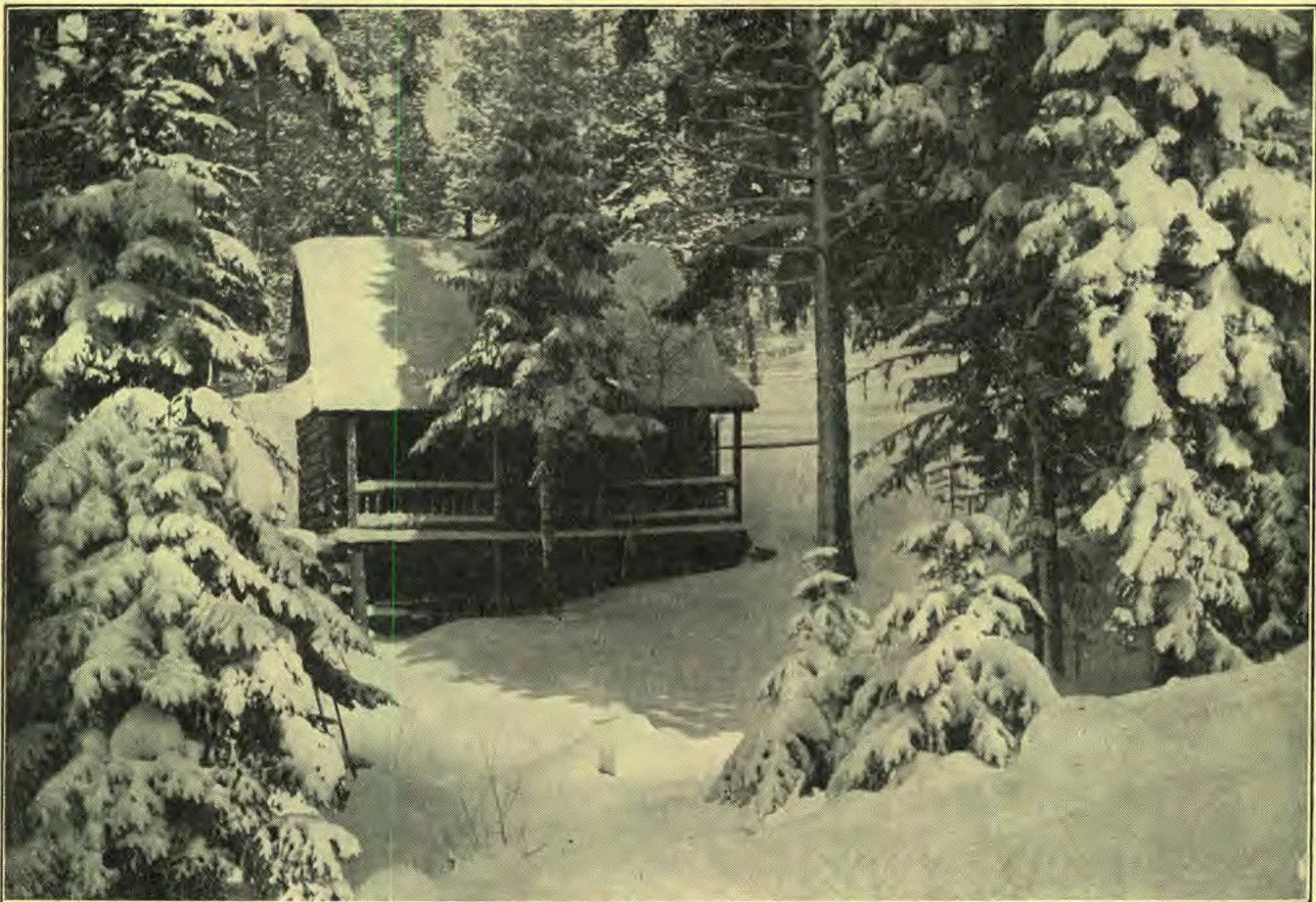
Courtesy of Elder F. D. Starr.
“The heavens were gray and dull and low, The earth was old and stained and sere, When God outspread his spotless snow,— A carpet for the coming year.
“Above it, sunshine came again; Beneath it, many a weary thing From summer heat and autumn rain Found rest and waited for the spring.”

Miscellaneous Curiosities and Brief Items of News

The bat is the natural enemy of the mosquito.
Texas has the honor of having within its borders the only armadillo farm in the world.
The submarine telephone perfectly reproduces the human voice through twenty miles of water.
The absence of a comma in a bill which passed through Congress many years ago, cost our government a million dollars.
George F. E. A. Wettin is the real name of the king of Great Britain; and Mrs. Henry Schwerin that of Wilhelmina, queen of Holland.
The police of Westford, Massachusetts, have received instructions to arrest any person using profane language on the public highway or street.
Baron Morimura, a wealthy Japanese Christian, has given $100,000 to establish a professorship of Christianity in the Imperial University of Tokio.
The Northern Express Company, Seattle, Washington, has been fined $1,000 for bringing into the State, liquor packages without the legal permit attached to them.
The new “ballistic kinematograph” now used at the Royal Prussian Institute of Military Technology, at Charlottenburg, a suburb of Berlin, takes 100,000 pictures per second.
A county attorney in Oklahoma, who at the time was a candidate for the legislature, was recently caught bringing intoxicating liquor into the Indian country. He was promptly convicted.
A bee’s wing moves so fast that hitherto no moving picture could catch it, but it has at last been photographed by an electric spark lasting a hundredth of a second, during which time twenty sharp negatives were made.
When an outdoor feast was given in the old days, a list was made out of the eatables it was desired to take on an outing. This list was presented to each guest in turn, who “picked” out the article of food she wished to furnish. Each article was then “nicked” off the list. Then the first syllables of “picked” and “nicked” came together, and we had the word “picnic.”
An old lady who died recently in Marseilles, directs by her will that, should she die before victory is secured, her body is to be placed provisionally in a vault, and to be interred ultimately in the field on which France’s final battle of victory is fought. Her entire fortune she has left to the town that shall give its name to the successful combat. She at least had no doubt of the victory of her country.
The empress of China, Hsi Tai-hou, wanted a country home, but lacked means with which to build it. But when the Chinese government appropriated $50,000,000 for the navy, she promptly seized the vast sum, and used it in converting a site by a lake over by the western hills into a fairyland, with magnificent palaces, pavilions, temples, beautiful barges, white marble balustrades, arched bridges, pillars, and gorgeous flower gardens.
A man suffered for years from acute rheumatism. He went from one doctor to another without relief. Finally he went to his dentist one day to have his teeth fixed. A blind abscess was found, which was opened and cured. Immediately his rheumatism disappeared. Another man had a supposed case of spine trouble. No doctor gave him relief until, finally, one physician suggested that he have his teeth examined. Pyorrhea was discovered, cured, and the spinal trouble left him. In another case defective eyesight was found due to defective teeth. A man’s throat trouble of years’ standing was found to be caused by toxins in the teeth. Evidently we do not give our teeth due credit for their importance in our general health.
The Surinam Government Leper Hospital at Groot Chatillon is near Bethesda, where Moravian missionaries are at work. They report the cure of two young women patients, one of whom has been four years under treatment at Bethesda, and the other seven years. Both have regularly used Aiouni. This is a preparation of the chaulmoogra oil, long known in India as a palliative for leprosy. It is mixed with olive oil and other ingredients to make Aiouni, which is the discovery of M. Delord, a French missionary resident in Switzerland. After six months under special observation, the two girls were dismissed by the highest medical authority in the colony as cured, and were permitted to return to their homes.
It takes American history to sweep away the Friday as an unlucky-day proposition. For it was not only on a Friday that Columbus sailed for America, but he discovered land and actually landed on Friday. Nothing unlucky about that! The “Mayflower,” too, made Provincetown Harbor on a Friday, and it was on a Friday that the Pilgrim Fathers landed on Plymouth Rock. George Washington elected to be born on a Friday; St. Augustine, Florida, the oldest settlement in the United States, was founded on a Friday; and it was on a Friday that John Adams made the motion that these United States should be made independent. So Friday has not been an unlucky day for this country.
The Grand Shereef of Mecca, who in July revolted against Turkey and proclaimed an independent kingdom, has adopted the title of King of the Hejaz. The Hejaz is a region in Arabia covering about 100,000 square miles.

Working Freely Versus Constant Hectoring

“MANY a man is a producer if allowed to work in his own way, while if hectored constantly, he becomes a miserable failure.”

Two Dreams and a Vision

(Concluded from last week)
THE two dreams referred to in the title were given in last week’s issue; the vision follows:—
“While I was praying at the family altar, the Holy Ghost fell upon me, and I seemed to be rising higher and higher, far above the dark world. I turned to look for the Advent people in the world, but could not find them, when a voice said to me, ‘Look again, and look a little higher.’ At this I raised my eyes, and saw a straight and narrow path, cast up high above the world. On this path the Advent people were traveling to the city, which was at the farther end of the path. They had a bright light set up behind them at the beginning of the path, which an angel told me was the midnight cry. This light shone all along the path, and gave light for their feet so that they might not stumble. If they kept their eyes fixed on Jesus, who was just before them, leading them to the city, they were safe. But soon some grew weary, and said the city was a great way off, and they expected to have entered it before. Then Jesus would encourage them by raising his glorious right arm, and from his arm came a light which waved over the Advent band, and they shouted, ‘Alleluia!’ Others rashly denied the light behind them, and said that it was not God that had led them out so far. The light behind them went out, leaving their feet in perfect darkness, and they stumbled and lost sight of the mark and of Jesus, and fell off the path down into the dark and wicked world below. Soon we heard the voice of God like many waters, which gave us the day and hour of Jesus’ coming. The living saints, 144,000 in number, knew and understood the voice, while the wicked thought it was thunder and an earthquake. When God spoke the time, he poured upon us the Holy Ghost, and our faces began to light up and shine with the glory of God, as Moses’ did when he came down from Mt. Sinai.
“The 144,000 were all sealed and perfectly united. On their foreheads was written, God, New Jerusalem, and a glorious star containing Jesus’ new name. At our happy, holy state the wicked were enraged, and would rush violently up to lay hands on us to thrust us into prison, when we would stretch forth the hand in the name of the Lord, and they would fall helpless to the ground. Then it was that the synagogue of Satan knew that God had loved us who could wash one another’s feet, and salute the brethren with a holy kiss, and they worshiped at our feet.
“Soon our eyes were drawn to the east, for a small black cloud had appeared, about half as large as a man’s hand, which we all knew was the sign of the Son of man. We all in solemn silence gazed on the cloud as it drew nearer, and became lighter, glorious, and still more glorious, till it was a great white cloud. The bottom appeared like fire; a rainbow was over the cloud, while around it were ten thousand angels, singing a most lovely song; and upon it sat the Son of man. His hair was white and curly, and lay on his shoulders; and upon his head were many crowns. His feet had the appearance of fire; in his right hand was a sharp sickle; in his left, a silver trumpet. His eyes were as a flame of fire, which searched his children through and through. Then all faces gathered paleness, and those that God had rejected gathered blackness. Then we all cried out, ‘Who shall be able to stand? Is my robe spotless?’ Then the angels ceased to sing, and there was some time of awful silence, when Jesus spoke: ‘Those who have clean hands and pure hearts shall be able to stand; my grace is sufficient for you.’ At this our faces lighted up, and joy filled every heart. And the angels struck a note higher and sung again, while the cloud drew still nearer the earth.
“Then Jesus’ silver trumpet sounded, as he descended on the cloud, wrapped in flames of fire. He gazed on the graves of the sleeping saints, then raised his eyes and hands to heaven, and cried, ‘Awake! awake! awake! ye that sleep in the dust, and arise.’ Then there was a mighty earthquake. The graves opened, and the dead came up clothed with immortality. The 144,000 shouted, ‘Alleluia!’ as they recognized their friends who had been torn from them by death, and in the same moment we were changed and caught up together with them to meet the Lord in the air.
“We all entered the cloud together, and were seven days ascending to the sea of glass, when Jesus brought the crowns, and with his own right hand placed them on our heads. He gave us harps of gold and palms of victory. Here on the sea of glass the 144,000 stood in a perfect square. Some of them had very bright crowns, others not so bright. Some crowns appeared heavy with stars, while others had but few. All were perfectly satisfied with their crowns. And they were all clothed with a glorious white mantle from their shoulders to their feet. Angels were all about us as we marched over the sea of glass to the gate of the city. Jesus raised his mighty, glorious arm, laid hold of the pearly gate, swung it back on its glittering hinges, and said to us, ‘You have washed your robes in my blood, stood stiffly for my truth, enter in.’ We all marched in and felt that we had a perfect right in the city.
“Here we saw the tree of life and the throne of God. Out of the throne came a pure river of water, and on either side of the river was the tree of life. On one side of the river was a trunk of a tree, and a trunk on the other side of the river, both of pure, transparent gold. At first I thought I saw two trees. I looked again, and saw that they were united at the top in one tree. So it was the tree of life on either side of the river of life. Its branches bowed to the place where we stood, and the fruit was glorious; it looked like gold mixed with silver.
“We all went under the tree, and sat down to look at the glory of the place, when Brethren Fitch and Stockman, who had preached the gospel of the kingdom, and whom God had laid in the grave to save them, came up to us and asked us what we had passed through while they were sleeping. We tried to call up our greatest trials, but they looked so small compared with the far more exceeding and eternal weight of glory that surrounded us, that we could not speak them out, and we all cried out, ‘Alleluia, heaven is cheap enough!’ and we touched our glorious harps and made heaven’s arches ring.
“With Jesus at our head we all descended from the city down to this earth, on a great and mighty mountain, which could not bear Jesus up, and it parted asunder and there was a mighty plain. Then we looked up and saw the great city, with twelve foundations, and twelve gates, three on each side, and an angel at each gate. We all cried out, ‘The city, the great city, it’s coming, it’s coming down from God out of heaven,’ and it came and settled on the place where we stood. Then we began to look at the glorious things outside of the city. There I saw most glorious houses, that had the appearance of silver, supported by four pillars set with pearls most glorious to behold. These were to be inhabited by the saints. In each was a golden shelf. I saw many of the saints go into the houses, take off their glittering crowns and lay them on the shelf, then go out into the field by the houses to do something with the earth; not as we have to do with the earth here; no, no. A glorious light shone all about their heads, and they were continually shouting and offering praises to God.
“I saw another field full of all kinds of flowers, and as I plucked them, I cried out, ‘They will never fade.’ Next I saw a field of tall grass, most glorious to behold; it was living green, and had a reflection of silver and gold, as it waved proudly to the glory of King Jesus. Then we entered a field full of all kinds of beasts,—the lion, the lamb, the leopard, and the wolf, all together in perfect union. We passed through the midst of them, and they followed on peaceably after. Then we entered a wood, not like the dark woods we have here; no, no; but light, and all over glorious; the branches of the trees waved to and fro, and we all cried out, ‘We will dwell safely in the wilderness, and sleep in the woods.’ We passed through the woods, for we were on our way to Mt. Zion.
“As we were traveling along, we met a company who also were gazing at the glories of the place. I noticed red as a border on their garments; their crowns were brilliant; their robes were pure white. As we greeted them, I asked Jesus who they were. He said they were martyrs that had been slain for him. With them was an innumerable company of little ones; they also had a hem of red on their garments. Mt. Zion was just before us, and on the mount was a glorious temple, and about it were seven other mountains, on which grew roses and lilies. And I saw the little ones climb, or, if they chose, use their little wings and fly to the top of the mountains, and pluck the never-fading flowers. There were all kinds of trees around the temple to beautify the place; the box, the pine, the fir, the oil, the myrtle, the pomegranate, and the fig tree bowed down with the weight of its timely figs,—these made the place all over glorious. And as we were about to enter the holy temple, Jesus raised his lovely voice and said, ‘Only the 144,000 enter this place,’ and we shouted, ‘Alleluia!’
“This temple was supported by seven pillars, all of transparent gold, set with pearls most glorious. The wonderful things I there saw, I cannot describe. Oh, that I could talk in the language of Canaan, then could I tell a little of the glory of the better world. I saw there tables of stone in which the names of the 144,000 were engraved in letters of gold. After we beheld the glory of the temple, we went out, and Jesus left us, and went to the city. Soon we heard his lovely voice again, saying, ‘Come, my people, you have come out of great tribulation, and done my will; suffered for me; come in to supper, for I will gird myself, and serve you.’ We shouted ‘Alleluia! glory!’ and entered into the city. And I saw a table of pure silver; it was many miles in length, yet our eyes could extend over it. I saw the fruit of the tree of life, the manna, almonds, figs, pomegranates, grapes, and many other kinds of fruit. I asked Jesus to let me eat of the fruit. He said, ‘Not now. Those who eat of the fruit of this land, go back to earth no more. But in a little while, if faithful, you shall both eat of the fruit of the tree of life, and drink of the water of the fountain.’ And he said, ‘You must go back to the earth again, and relate to others what I have revealed to you.’ Then an angel bore me gently down to this dark world. Sometimes I think I can stay here no longer, all things of earth look so dreary. I feel very lonely here, for I have seen a better land. Oh, that I had wings like a dove, then would I fly away and be at rest!’”

The Movies

“Is it right to go to moving picture shows?” is a question we often hear these days, from professed Christian young people. Several years ago, before the prevalence of the moving picture theaters everywhere, we very rarely heard the question raised among our people as to the right or wrong of going to the theater. It seemed to be understood that a Christian could not frequent this place of amusement. There were those who would not even go to a theater building, because of the odium attaching to the name and because of the effect of their presence in a playhouse, upon their mind.
Is it possible that the theater has become less objectionable because the invention of moving pictures has made it cheaper? Is theater going less of a sin because it is so common? Has the theater been purified as well as cheapened? Are these darkened moving picture rooms, with their all-day performances and promiscuous audiences, better places for Christians to go than the large theaters with their living actors? Or has the very commonness of the theater and the prevalence of the theater spirit dulled our sensibilities to the evil? Why the question, “Is it right to go to moving picture shows?”
“A Boston girl was found tied to a tree. When discovered, she told a moving tale about having been chloroformed, bound, and gagged by two men, thrown into an automobile, illtreated in divers ways, and finally tied to a tree. She stuck to her story for several hours, making it bigger each time she repeated it, but finally broke down and confessed that the whole was false. She had gone to a ‘movie’ the night before, had seen a play bringing in the events she described, got a friend to tie her to the tree, and then tried to palm herself off as the ‘movie’ heroine.”
This is a very fair sample of the stuff being poured into the minds of children and young people who constitute a very large portion of the movie audiences. The author who tells the above story says: “The great majority of them are trashy or worse than trashy. Bad books, frippery and sensational stories, constitute a fearful evil, but they are as nothing to this later evil that has developed so rapidly. Comparatively few children care to take the trouble to read, but all children enjoy looking at pictures. Reading is usually a solitary employment, but the movies are delightfully social. Moreover, there is nothing novel about reading; but the movie makes use of one of the most fascinating of recent scientific and mechanical inventions, and produces with ease the most astounding phenomena. Besides it has the ‘pep,’ the ‘go,’ the ‘zip,’ which mean so much to young folks.”
The thinking people of the world (though they may not be Christians even) are much concerned over this great evil. Just now in the city of Washington there is a great agitation over this question. In Cleveland, Ohio, a committee of representative citizens made a study of the moving picture shows of the city, giving this report:—
“They found that forty per cent of the two hundred and ninety films examined were unfit for children to see; fourteen per cent represented robbery; thirteen per cent murders; eight presented indecent suggestions; five portrayed domestic infidelity. Others represented loose ideas of marriage, kidnaping, and suicide. They also found that twenty-one per cent of the evening audiences were under eighteen years of age. A chief of police reports that many criminals who come under his charge confess that their fall came as a result of reading exciting tales of crime. This is unquestionably true. Others trace their fall to picture scenes of violence or to the theater.”
But regulation or censorship can never stop the evil. “Absolutely immoral films can and doubtless will be suppressed; but trashy ones, merely sensational ones, can hardly be touched by the law.” All the evils of novel reading lurk in the movies, and more,—the appeal to the passions, the presentation of unreal life, the popularization of sin, and the stirring of the emotions with no corresponding appeal to action.
Here are opinions from three authorities with widely different viewpoints:—
“The most insidious suggestion of evil in the land today.”—A Pinkerton detective.
“In every performance some ignoble suggestion.”—Dr. Winfield Hall, a leading authority on social ethics.
“The worst said has not been strong enough.”—Judge Landis of the United States District Court.
“Is it right to attend the moving picture shows?” Do you think Jesus would? M. E. KERN.

The Book of Romans

It was during Paul’s sojourn at Corinth, on the occasion of his visit to that city after learning of the favorable reception of the epistles addressed to the Corinthian believers, that he wrote the remarkable letter known today as the epistle to the Romans. For many years Paul had been laboring untiringly in an effort to help the heathen to gain clear conception of the divine plan of salvation, and of God’s willingness to transform hearts, even the most sinful and corrupt.
The book of Romans is often thought to be difficult reading, and is not infrequently passed over by those who read with pleasure other portions of God’s Word. But there are riches in this epistle that none can afford to miss.
The pastor of a Protestant church in one of the larger cities of France has happily emphasized the value of prayerful study of the book of Romans by a story concerning a member of his congregation, a poor old shoemaker. This humble believer had for his shop a tiny place that was more like a large box than a room. “Besides himself,” the story runs, “there was only space enough to accommodate one person, who sat upon a board brought in for that purpose; but that seat was seldom empty. Generally some person sat there to whom the shoemaker preached Christ while he was at work.
“The pastor once met a learned professor of the University of Paris, a member of the Legion of Honor, at the house of a friend in the country, where they spent a couple of weeks together. In the course of conversation, the professor told the pastor that he had tried to be satisfied with the religion of Roman Catholicism, and again with that of Protestantism; but both attempts had only alienated him the more from Christianity.
“The pastor advised him to make a third attempt, and recommended to him the reading of the New Testament, especially the epistle to the Romans. The professor thought such reading was fit only for old women, but consented to try it. After some days, being questioned as to his progress, he replied:—
“‘Evidently it is not a book for old women. I have read the epistle to the Romans, and I assure you I cannot understand a word of it. And if I cannot understand it, how can any one understand it?’
“The pastor maintained that there were persons who understood the epistle, and offered to introduce the professor to them. Half in sport, and half from curiosity, the professor accepted the offer, and the pastor brought him to the old shoemaker, and put him into his box, remaining himself without, that the professor might have the seat upon the board. The learned man, with a smile of compassion, now asked the shoemaker if he understood the epistle to the Romans. Upon which the latter answered, with joyous sincerity,—
“‘Yes, by the grace of God.’
“The professor made several visits to the humble shoemaker, and at length confessed to the pastor,—
“‘The shoemaker does, indeed, understand the epistle to the Romans.’
“This was not all. The shoemaker was the instrument, in the hand of God, of the professor’s conversion; and the latter, after some time, bowed as an ignorant sinner at the feet of Jesus, and found peace in him.”
In Reformation days, when the epistles of Paul, particularly those addressed to the Romans and the Galatians, were studied as a fresh revelation direct from heaven, Calvin wrote of the letter to the Roman believers:—
“‘When any one gains a knowledge of this epistle, he has an entrance opened to him to all the most hidden treasures of Scripture.’”
Luther’s testimony is equally to the point:—
“‘It is the masterpiece of the New Testament, and the purest gospel, which can never be too much read or studied, and the more it is handled the more precious it becomes.’”
The epistle to the Romans dwells much on the spiritual relationship that exists between man and his Maker, through the mediation of a risen Saviour. Those who approach the study of this portion of the Bible with a desire to learn more fully of the way of salvation, will be enabled to understand its message. And then, with transformed heart and quickened mind, the study of other portions of Holy Writ cannot but result in spiritual blessing and uplift.
On the study of the letter addressed by Paul to his fellow Christians in Rome, Dr. Barnes writes:—
“‘Perhaps, on the whole, there is no book of the New Testament that more demands a humble, docile, and prayerful disposition in its interpretation than this epistle. . . . No man ever yet understood the reasonings and views of the apostle Paul but under the influence of elevated piety. None ever found opposition to his doctrines recede, and difficulties vanish, who did not bring the mind in a humble frame to receive all that has been revealed; and that, in a spirit of humble prayer, did not purpose to lay aside all bias, and open the heart to the full influence of the elevated truths which he inculcates. Where there is a willingness that God should reign and do all his pleasure, this epistle may be in its general character easily understood. Where this is wanting, it will appear full of mystery and perplexity; the mind will be embarrassed, and the heart dissatisfied with its doctrines; and the unhumbled spirit will rise from its study only confused, irritated, perplexed, and dissatisfied.’”
Of that which he wrote to the churches, Paul himself testified:—
“‘We speak the wisdom of God in a mystery, even the hidden wisdom, which God ordained before the world unto our glory: which none of the princes of this world knew: for had they known it, they would not have crucified the Lord of glory. But as it is written, Eye hath not seen, nor ear heard, neither have entered into the heart of man, the things which God hath prepared for them that love him. But God hath revealed them unto us by his Spirit: for the Spirit searcheth all things, yea, the deep things of God. . . . We have received, not the spirit of the world, but the Spirit which is of God; that we might know the things that are freely given to us of God. Which things also we speak, not in the words which man’s wisdom teacheth, but which the Holy Ghost teacheth; comparing spiritual things with spiritual.’”
He who would understand the teachings of the Sacred Writings, must needs be taught of the Spirit of God. Spiritual things are spiritually discerned. “The natural man receiveth not the things of the Spirit of God: for they are foolishness unto him: neither can he know them, because they are spiritually discerned. But he that is spiritual discerneth [margin] all things.”
To the student of Scripture there comes sounding down through the centuries Paul’s solemn charge to Timothy:—
“‘God hath not given us the spirit of fear; but of power, and of love, and of a sound mind. . . . Hold fast the form of sound words, which thou hast heard of me, in faith and love which is in Christ Jesus.’ 2 Tim. 1: 7-13.
“‘Be strong in the grace that is in Christ Jesus. And the things that thou hast heard of me among many witnesses, the same commit thou to faithful men, who shall be able to teach others also.’ Chap. 2: 1, 2.
“‘Study to show thyself approved unto God, a workman that needeth not to be ashamed, rightly dividing the word of truth.’ Verse 15.
“‘All scripture is given by inspiration of God, and is profitable for doctrine, for reproof, for correction, for instruction in righteousness: that the man of God may be perfect, throughly furnished unto all good works.’ Chap. 3: 16, 17.
C. C. CRISLER.

“Thou Shalt Call His Name Jesus”

“Thou shalt call his name Jesus: for he shall save his people from their sins.” Matt. 1:21. Sin is defined as wrong-doing, as neglecting to do what is right. Paul tells us in Rom. 3:22, 23: “There is no difference: for all have sinned, and come short of the glory of God.” The high and the low, the rich and the poor, the educated and the unlearned, have all sinned. Go where you will, you will find a consciousness of sin and a need of pardon. The poor native of India can be seen bowing down to idols of wood and of stone, but he ceases his devotions with the same heavy heart. The sin-oppressed devotee lies upon boards filled with sharp-pointed spikes. Slowly these barbs penetrate his bare body. Patiently he endures the suffering, but when helped to arise, his heart is still filled with sin and sadness. The Chinese in his heathenism wanders from temple shrine to temple shrine. He says his prayers, bestows his offering, and returns with a Christless heart to a Christless home. The works of man, his pilgrimages, and self-torture will not suffice to free the heart from sin.
In Luke 19:10 we are told, “The Son of man is come to seek and to save that which was lost.” The fifteenth chapter of this book illustrates the manner in which Jesus seeks for poor lost souls. The shepherd, who had a hundred sheep, at the close of the day counted his sheep as they passed into the sheepfold. Again he counted, and to his dismay found that one of his sheep was gone. Only ninety-nine were safely housed. One was wandering out in the wilds, alone. Securely fastening in the ninety and nine, he hastened away, endangering his life in an effort to find the lost sheep. He sought until he found the lost, then triumphantly carried it home.
Again Jesus attempts to reveal his love and interest in lost mankind, by the woman who had ten pieces of silver, and lost one. She lighted a candle and diligently swept the house, peering eagerly into every recess where the coin might have rolled. She continued her search until it was found. Then rejoicing, she acquainted her neighbors with her good fortune.
Jesus wants to save us from our sins, not in our sins. He transformed John, the son of thunder, into the disciple whom Jesus loved. He took backsliding Peter and gave him victory over his self-assertiveness, his swearing and cowardice, and made him a bold witness for the Master. He will transform our lives, if we will but permit him.
Rowland Hill was one day preaching to a large outdoor audience in a London park. Lady Anne Erskine drove by in her carriage. Noticing the crowd, she asked her coachman the reason for the gathering, then directed him to drive up near the speaker. When Rowland Hill noticed the carriage, he stopped preaching. Addressing the crowd, he said, “I have something to sell. It is not a crown, nor a title to royalty, but a soul — the soul of Lady Anne Erskine. Do I hear a bid? Yes, Satan bids wealth, renown, and pleasure — the whole world for her soul. Do I hear another bid? Yes, the Lord Jesus bids forgiveness, peace that the world cannot give, and life everlasting.” Turning to the carriage, he said, “Lady Anne Erskine, which bid will you accept?” The carriage door opened, and Lady Anne Erskine stepped forth, with tears streaming down her face, and said, “I accept the bid of the Lord Jesus.”
There are two bids for each of our souls; and we must decide which bid we will accept.
C. L. BENSON.

Success with Fern Balls

INNUMERABLE failures in trying to grow fern balls result from not giving the balls sufficient water. Mere spraying is useless. Nothing short of a good soaking every other day until growth has started will bring success. Two or three hours is none too long to leave the balls in the water, and regular watering is required even after the ferns have begun to appear.
By soaking the balls in weak manure water after growth has begun to show, you can develop extra fine specimens. Pulverized sheep manure from the seed store is a very convenient fertilizer for use in town houses. Put it in a cheesecloth bag and immerse the bag in a pail or tub of water until the water has assumed the color of weak tea, when it will be sufficiently strong. Feeding the ferns in that way even once a week will result in amazing growth.
The best time to start fern balls is early in the year; in from two to four weeks they will be covered with feathery green foliage. They may be dried off at any time, and will then remain dormant until water is applied again.
If you cut a fern ball through the middle and place one half flat side down in a fern dish, and apply water as already described, you will in a short time have a charming centerpiece for the dining table. The divided fern ball will demand much less care than the ferns commonly used on the dining table. If it takes on a burned appearance, it is likely to be because of exposure to the sun. It is better to keep it out of direct sunlight at all times.
Fern balls are made by packing the roots of a special variety of Japanese fern in moss, forming the whole into the shape of a ball and binding it with tough string. Sometimes the strings rot away or break, but then it is necessary only to fasten a few fine wires round the ball to make it as firm as ever. Properly grown, fern balls are interesting and attractive, but the half-naked specimens that are often seen have little to recommend them.—Youth’s Companion.

Sea Gypsies

OUR little sea gypsy, the mackerel, in its watery home is no more like the dried specimens displayed in the market stall than is the mummy of Rameses like the ancient king when seated upon his gorgeous throne. So let us forget the unsightly cured specimens of the market, and think only of the sprightly fish of the great sea.
Some years the mackerel has appeared in great quantities upon our shores, and then again the fishermen search in vain for it. This habit of the mackerel has long puzzled scientific men as well as fishermen. It has been known that they are “a wandering species, traveling over immense areas of ocean, their movements manifestly directed to a great extent by the search for food and by anxiety to escape their enemies, among the most voracious of which are whales, porpoises, sharks, and bluefish.” It has been known that in late autumn they seek tropic latitudes; in spring they start northward, making their way along the coast, traveling sometimes in schools a half mile wide and twenty miles long. One school was estimated to contain 1,000,000 barrels of fish.
To the fisherman the puzzle has been, Where were the fish in those years when they failed to make their appearance on our coast? The annual catch has varied from 500,000 barrels to 2,700. In 1885, in New York City alone, 125,000 barrels were landed; but one year half the vessels that went after mackerel returned empty. “The same thing happened in the following year. Congress finally forbade the capture of the fish for five years, thinking by this means to give it a chance to recover from excessive destruction.” This, however, did not replenish the market. Through the efforts of the Fisheries Bureau this sea mystery has finally been solved. The mackerel has been with us all the while, though we failed to find it. The fish wandered farther from the shore and at a greater distance below the surface, but they were not runaways, as had been thought.
The favorite food of the mackerel, according to the Bureau, “is a very minute crustacean of bright-red color, which in our off-shore waters lives and multiplies in such fabulous numbers as often to lend a vivid tint to patches of sea covering hundreds of square miles. In some years this ‘red feed,’ or ‘cayenne,’ as the fishermen call it, is found in quantity near the land and at the surface. Under such circumstances the mackerel are conspicuously present, their schools swimming at or near the surface. But in other periods of years the red feed is farther out and deeper down; and so likewise are the fish out of sight.
“It has been ascertained that during the periods of the ‘disappearance’ of the mackerel, the schools are feeding at a depth of only twenty to fifty feet ordinarily.”
Since this discovery the fisherman’s courage runs high. The past year more than 3,000,000 pounds of mackerel a month was brought into three of our Eastern ports.
Continue reading: The Bat