The Youth’s Instructor, Vol. 48, No. 40.

THE CARIBS
Earlier text: THE CARIBS

A TRUE STORY OF A GREAT MAN

SHALL I tell you a true story, children? Methinks I see hundreds of bright eyes glisten, and hundreds of little hands raised. “Please tell the story,” they all say.
Very well. I would like to take all the little motherless children and all the poor, homeless little ones of the INSTRUCTOR family in my lap if I could, while I tell them about a little boy who was born many years ago—about the time your grandpa was born.
This little boy was not homeless nor motherless, but he was very poor, and lived in a small house. But this did not prevent his becoming a wise and good man.
I suppose the relatives of the little fellow were a long time deciding what name they should give the baby boy, just as people are nowadays; but finally they made up their minds to call him Abraham. I wonder who can guess his last name.
“Oh, I know who he was,” I hear somebody say; “he was the good, kind president, who set the poor slaves free.”
Yes, and it is of one of these poor slaves that I will tell you.
We will call her Dinah; she was born a slave. Sometimes Dinah longed for freedom, but one day she became the wife of a young man,—a slave on the same plantation where she lived,—and after that she settled down quietly to work.
After a time her husband became so wretched under the cruel lash of the overseer, that the spirit of freedom, which God has implanted in the breasts of all his creatures, burned in his heart until he determined to risk everything to become a free man.
At last Providence favored him, and he escaped from his cruel master, and hurried toward the North and freedom. But oh, the sad, sad parting from his young wife! But they were cheered with a hope of better days to come, when, in the bright land of the free, they would again be reunited; for the husband promised to provide some means of escape for her, if he was successful in reaching a place of safety.
After Dinah’s husband had been gone a few weeks, a dear little baby came to the anxious wife. Still she toiled, week after week, on the old plantation, wearily waiting for some news of her loved one.
Finally she decided that she could wait no longer. She would take her baby, and, trusting in God, who loves all his children alike, black as well as white, she would make a dash for liberty. Perhaps she could find her husband; at all events, anything was better than the chains of slavery, and the weary days of suspense and anxiety.
Waiting for the friendly darkness to shield her, she started.
Carefully she made her way along, over fields, through dark forests, fording streams, skulking in the darkest shadows,—wherever she could find a shelter from the cruel eyes of her pursuers,—always northward, toward blessed liberty. The extra weight of her little one impeded her flight, but at last she saw before her the broad Potomac. There was a boat ready—so it seemed to her—to carry her safely over; but she scarcely dared risk the attempt of getting on board, as of course she had no money and no means of obtaining a ticket. But in some way she managed to hide herself among the crowd, and with wildly beating heart, seated herself in a sheltered corner of the boat.
Groups of people stood chatting here and there, and among them Dinah noticed a tall, sad-looking man. Little dreaming who the stranger was, still she could not help watching him.
Finally the boat stopped at the landing, the gangplank was placed, and the passengers began passing out.
Clasping the little brown bundle more closely in her trembling arms, Dinah attempted to pass out with the others.
“Stop! where is your ticket?” thundered the heavy voice of the porter.
“O massa! massa! let me pass!” screamed the poor woman, almost frantic with fear for herself and her child.
“Down with you! down below! we will look after your case pretty soon! We are getting used to runaways!”
The poor creature’s heart almost stopped beating from fear and horror. After enduring so many days and nights of weariness and anxiety, to be caught at last, and hurried back to chains and slavery! Tears streamed down her cheeks, and she looked wildly around in hope of finding some friendly face in the crowd about her,—nor did she look in vain.
Here comes the tall, sad-eyed stranger—he is close at hand. “Stop, porter! let the woman alone. I will ask her a few questions,” he said.
Then poor Dinah pleaded her case and that of her child with all the eloquence of despair. She told of her husband’s leaving her, of his uncertain fate, of the birth of her little son, and of her flight for freedom, and of her horror at the prospect of going back to the old life. Long before she had finished her story, there were tears in the stranger’s eyes, and she felt that she had found a friend. “Here, porter, let this woman pass. I am going with her.”
After walking by her side to a place of safety, and advising her what to do, the stranger raised his hat politely, and turned to leave, but Dinah begged him to tell her his name.
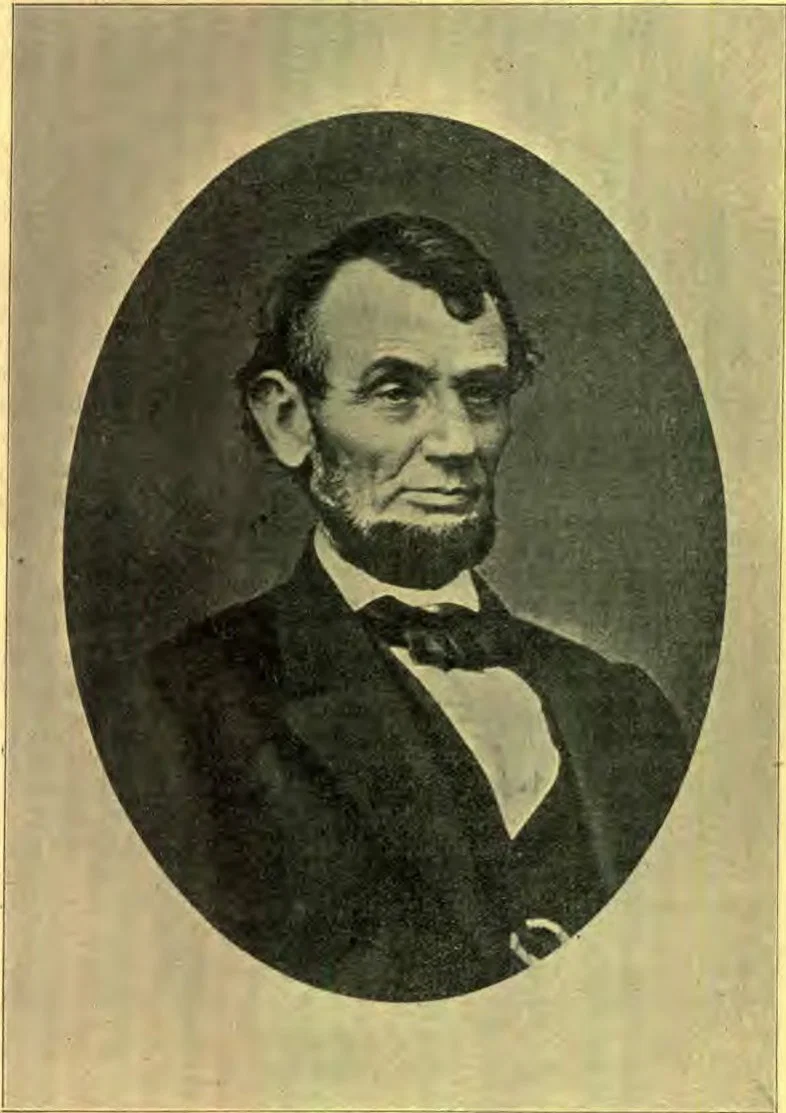
“Abraham Lincoln,” he explained, and walked rapidly away.
Whether the poor woman ever found her husband or not, I can not tell; but she never forgot till the day of her death,—which occurred only a little while ago,—the noble kindness of this truly great man.
MRS. L. D. AVERY-STUTTLE.

TWO DAYS

A TEAKETTLE sat on the top of a stove, singing merrily. “Dear me!” complained the broom, from the corner, “I do wish you would stop your noise!”
“Yes, do stop that everlasting song!” called the dustpan from his hook behind the door. But the happy kettle, paying no attention, continued its tuneful ditty. The cook, coming into the kitchen, and hearing the cheerful song of the kettle, began to sing. As one can not be cross with a song on one’s lips, she was kept good-natured. Because she was light-hearted and sweet-tempered, everything went well and smoothly. Dinner was on time and well cooked, father and mother were pleased, and every one was happy and bright.
One heart that is light, A smile sweet and bright, Somebody happy, Everything right.

ANOTHER DAY

The teakettle sat on the stove and pouted. “What’s the use of singing? No one cares, and it does not matter.”
“Yes, do stop for a while,” said the broom.
“It would be a change if you should keep quiet,” called out the dustpan.
So the teakettle listened to its tempters, and stopped its song. When the cook came into the kitchen, there sat the sulky kettle, quiet and still. “Dear me, how is this?” said she, impatiently. “There’s no hot water, and now I shall have a time getting dinner.” She hustled and bustled, upsetting this and spilling that in her hurry, getting crosser and crosser because things would go topsy-turvy. Dinner was late, father impatient, mother worried, and nothing was as it should have been.
One heart with no song, A face sour and long. Somebody snappy. Everything wrong.
— Sabbath-School Visitor.

ABRAHAM LINCOLN, THE BOY

THERE was a boy, a tall, strong boy, Bred in the wilds of Illinois, When Illinois in frontier days Welcomed the pioneer’s red blaze. Within a clearing of the wood The lad’s rude home, a log house, stood, And there his youthful days were spent Who afterward was president. There was he taught, in homely phrase, The Golden Rule of all his days; And there, in lowliness and need, Was sown Emancipation’s seed. A log fire cast the fitful light Wherein he learned to read and write; He owned a dog-eared book or two, Whose every word and phrase he knew. Like many a backwoods boy, all day Out in the woods he hewed his way; But, unlike many another, he Hewed deeper, surer; and no tree Of all the proudest in the wood This giant’s tireless strength withstood. And so, by every stroke made strong, He ever hewed his way along, Out of the wood and wilderness, Into the world’s great storm and stress,— Out of the depths of poverty, Unto the heights that were to be. He burst the bonds of circumstance, And nothing sought of fate or chance. He owed his greatness and his fame To honest poverty’s good name, To sturdy toil, and wholesome care, And to a loving mother’s prayer.
FRANK WALCOTT HUTT.
ABRAHAM LINCOLN
ABRAHAM LINCOLN

BEREAN LIBRARY STUDY

Rev. 1:1-20; “Thoughts on Revelation,” pages 323-344

NOTES ON LESSON 1

(October 14-20)
MAKE it a point, when you have a moment’s leisure, to store your mind with Scripture truths, and especially with what is brought to view in the Revelation, because some of us are to be the very actors who will be on the stage in the last days, when these things are revealed; and as you make a persistent effort to understand, the angels of God will enlighten your mind.—Review and Herald, April 10, 1888.
Here is a wonderful promise,—the angels of God will come and enlighten us, if we will make a persistent effort to store our minds with “what is brought to view in the Revelation.” If we accept the promise, and comply with the regulations, we shall be prepared to stand in the trying time before us.
How many of the young people will make a persistent effort to store their minds with Scripture truth, by committing to memory the verses contained in the lesson each week? The first lesson has twenty verses, less than three verses for each day of the week. All would receive a great blessing by committing them to memory, so that in the time of need the Spirit could bring them to remembrance. Who will co-operate with the angels, and make the effort?
The introductory chapter of Revelation may be considered under the following sub-divisions:—
Introduction.—The book opens with a blessing upon all who will read, hear, and keep the things contained therein. Every encouragement is held out to induce us to enter this precious treasure-house.
Character of Our Saviour Portrayed.—“Jesus Christ, who is the faithful witness,” will ever plead for us in the heavenly courts. He is the “first begotten of the dead.” Satan had nothing in him; therefore it was impossible for death to hold him in its grasp. Only those who have separated from all the character of Satan can hope to share in the first resurrection. He is the prince of the kings of the earth. Christ stands forth as having all power to witness for us in heaven. Every earthly power is under his control, while death, the last enemy, and Satan, are also vanquished. After setting forth all this power and might, John says that Jesus “loved us, and washed us from our sins in his own blood,” and has exalted us to positions of kings and priests.
Second Coming of Christ.—The King of kings descends upon the cloud, wrapped in flaming fire. The heavens are rolled together as a scroll, the earth trembles before him, and every mountain and island is moved out of its place. . . . There are those who mocked Christ in his humiliation. With thrilling power come to their minds the Sufferer’s words, when, adjured by the high priest, he solemnly declared, “Hereafter shall ye see the Son of man sitting on the right hand of power, and coming in the clouds of heaven.” . . . Those who derided his claim to be the Son of God are speechless now. There is the haughty Herod, who jeered at his royal title, and bade the mocking soldiers crown him king. There are the very men who with impious hands placed upon his form the purple robe, upon his sacred brow the thorny crown, and in his unresisting hand the mimic scepter, and bowed before him in blasphemous mockery. The men who smote and spit upon the Prince of Life, now turn from his piercing gaze, and seek to flee from the overpowering glory of his presence. Those who drove the nails through his hands and feet, the soldier who pierced his side, behold these marks with terror and remorse.—“Great Controversy,” Vol. IV, pages 641-643.
John’s Trials.—John calls himself the brother of all the church, and declares himself our companion in tribulation and patience. If we are his companions in patience, we must also be in tribulation; for “tribulation worketh patience.” We do not need to be banished in order to share with John. The real meaning of the word “tribulation” is “a threshing-sledge,” and is a synonym of affliction.
The Sabbath.—In the ark of God’s testament, in heaven, before which Christ witnesses for us, is the law of God, written upon the tables of stone, which fold together like a book. I quote as follows from “Early Writings,” page 26: “Jesus opened them, and I saw the ten commandments written on them with the finger of God. On one table were four, and on the other six. The four on the first table shone brighter than the other six. But the fourth, the Sabbath commandment, shone above them all; for the Sabbath was set apart to be kept in honor of God’s holy name. The holy Sabbath looked glorious; a halo of glory was all around it.”
Seven Churches.—God’s people from his first to his second advent are here brought to view; and the varied experiences through which they pass in different periods of the world’s history are indicated by the names given them.
Description of Christ’s Person.—He is clothed with light and glory, a real person, not simply a spirit; and when the redeemed stand with him on Mt. Zion, they will possess bodies like his glorious body.
Christ’s Mighty Power.—“Christ is the Alpha and Omega, the Genesis of the Old Testament, and the Revelation of the New. Both meet together in Christ.” “He is before all things, and by him in all things consist.” “It pleased the Father that in him should all fullness dwell.” He has the keys of hell and of death, and stands forth a mighty conqueror over all the power of the enemy.
The scope of the book covers the past, the present, and the future.

THE PROMISE OF THE INHERITANCE SURE

(October 20, 1900)
LESSON TEXT.—Gal. 3:15-18.
MEMORY VERSE.—1 Peter 1:3, 4.
The present lesson is closely connected with the preceding one. Review carefully the last lesson, especially verses 12-14. Through Christ we are partakers of the blessing of Abraham, “that we might receive the promise of the Spirit.” This promise, or covenant, is further mentioned and considered in the present lesson.

QUESTIONS

1. How is a covenant among men made sure? V. 15. What is a covenant made by men? Note 1.
2. To whom were the promises made? To whom besides Abraham? What is said of the number of seeds? Who is the seed? What is the significance of the one seed? Note 2.
3. What is the promise made to Abraham called in verse 17? Who confirmed this covenant? In whom was it confirmed? Same verse. With whom was it confirmed? Note 3.
4. When was the law given? What effect, then, could the law have upon the covenant? If the law were disannulled, how would that affect the covenant of the promise? V. 17; note 4.
5. What was the promise God made to Abraham when the covenant was confirmed? Gen. 15:18. How much did this inheritance include? Rom. 4:13.
6. How did God give the inheritance to Abraham? What if it had been of the law? V. 18; Rom. 4:13, 14.
7. What was it that God by his Spirit promised to Abraham? V. 18. Then what is “the promise of the Spirit,” mentioned in verse 14? Note 5.

NOTES

1. A covenant made by men between themselves is an agreement in which mutual promises are made. A covenant is commonly drawn up in writing; and when fully agreed to and signed, it is said to be confirmed, or ratified. To disannul a covenant is to make it no longer of any force. In our lesson and in other scriptures, a promise of God is likened to a promise among men, and so is often called a covenant.
2. This lesson about the seed runs through all the Bible. Christ is the seed of the woman, which should bruise the serpent’s head. Gen. 3:15. Those who are Christ’s, who are like him in character, are Abraham’s seed. Gal. 3:29. The seed of the serpent are the followers of Satan. Matt. 23:33. In many Scriptures the lesson is impressed that the holy and the unholy seed—the righteous and the wicked—are to be kept separate. With this thought in mind, read Deut. 22:9-11; Ezra 9:1, 2.
3. This covenant of verse 17 is evidently the same as the promises to Abraham mentioned in verse 16. The promises were made by God to Abraham and his seed, which is Christ. The covenant mentioned in verse 17 was confirmed by God, in Christ; so we would understand that it was confirmed with Abraham.
4. In verse 17 Paul completes the comparison begun in verse 15. Even a man’s covenant can not be changed or broken when it is once confirmed. God made a covenant with Abraham four hundred and thirty years before the giving of the law. But a covenant made by God can not be less binding than a man’s. Therefore the law, coming so long a time after the covenant, can not disannul the covenant, and thus make the promise of no effect. In the last part of this seventeenth verse we have it made very plain that the covenant and the promise are the same.
5. The blessing of Abraham comes to us that we may receive the promise that he received. Verse 18 makes it plain that this promise is the promise of the inheritance. Our sins are forgiven, we are counted righteous for Christ’s sake, and this entitles us to an inheritance in the “new earth, wherein dwelleth righteousness.” This promise also includes the reception of the Spirit.

“GARLAND” STOVES AND RANGES

were awarded highest prize at Paris Exposition, 1900.

NOTES & COMMENTS

A Curious French Law.—There exists in France a law providing that “any person who has been offensively mentioned in a periodical publication has the right to reply in the next issue, provided he does not use more than twice the space occupied by the original article.”
Russia and the Oil Trust.—It is stated that “the Standard Oil Company recently attempted to carry things with as high a hand in Russia as it is doing here.” To offset this, the czar simply appointed “an auditor of its accounts, with instructions to allow the trust a ‘fair profit’ on its products, and turn the balance into the public treasury.”
White House Children.—It is said that “the only child born in the White House, to a president of the United States during his term of office, is Esther Cleveland, who was born Sept. 9, 1893. Other children have been born in the White House, among the number being Julia Dent Grant (now Princess Catacuzene), born in the closing days of her grandfather’s second term.”
A Publishers’ Trust.—The great book publishers of this country have formed an alliance under the name of the American Publishers’ Association, in order to “abolish the wholesale cutting of rates on popular books.” It seems that “thousands of small booksellers have been forced out of business by the big department stores. The retail bookseller has to carry a great many dry books, for which there is small demand. From these he derives little profit, yet he must carry them. When the department stores offer for thirty-nine or fifty-nine cents books for which the bookseller charges a dollar or a dollar and a half, he finds his trade vanishing.” The new combination has agreed to “stop selling books to any jobber who supplies them to dealers who cut the retail price.” It is presumed that the department-store people will be glad, as this will insure them greater profits.
A Gigantic Strike.—The strike recently inaugurated by the United Mine Workers has “practically terminated operations in the most productive hard-coal field in the world. There are one hundred and forty-five thousand miners in the anthracite district of Pennsylvania, and eighty per cent of them belong to the Miners’ Union. The coal regions extend over nearly four hundred and seventy square miles, and the average production of the entire district is seventy-five million tons a year. The demands of the miners are as follows: ‘Abolition of the company stores; reduction in the price of powder to $1.50 a keg; abolition of company doctors; semimonthly payment of wages; abolition of the sliding scale; wages paid in cash; 2240 pounds to the ton; an advance of twenty per cent in wages less than $1.50, and not $1.75, a day; that all classes of day labor now receiving $1.50, and not exceeding $1.75, a day shall receive fifteen per cent over present wages; that all day labor now receiving $1.75 shall be advanced ten per cent; that no miner shall have at any time more than one breast-gang, or other class of work, and shall get only his legal share of cars.”
From Refuse to Fuel.—Owing to the present coal famine in England, “fuel is now being manufactured, in London, out of mud, street refuse, and sewage, for sale to the poor.” It seems that “a chemical process has been invented by which all this waste material is so treated that it is rendered combustible. Mud has been withdrawn from the Thames, at Millwall, treated chemically, and compressed in briquets, which in appearance closely resemble blocks of dull ebony or bog-oak. This mud burns readily, exhales a minimum of smoke, and leaves only twenty-five per cent of firm ash. The street sweepings are mixed with a small percentage of cheap chemicals, pressed into blocks, and sterilized by being subjected to intense heat. This fuel produces great heat, burns freely with little smoke, and leaves little ash. The sewage, when subjected to this chemical process and pressed into briquets, looks like the best coal, so deep and rich is its sable character. This last-named fuel can be manufactured at the low cost of two dollars a ton, and is equal in every way to the cheaper coals. Licenses have been granted to manufacture fuel from these hitherto waste materials, and works are shortly to be installed upon the river’s banks at Barking.”
That Disgusting Long Skirt.—It is indeed a strange thing that so many of the gentler sex should obey the dictates of fashion, and sweep sidewalks and streets with their long skirts. A scientist living in Rome, recently employed three young women to take their long skirts out on a microbe-collecting expedition. Upon their return, he took the three garments to his laboratory, and in them “found all the microbes of the streets,” the result being “horrible to relate.” The microbes contained in those three skirts were found to be “sufficient to contaminate the entire population of China, and that is more than four hundred and fifty millions.” What, then, must be the number of death-dealing microbes in the thousands of street-sweeping skirts seen in our large cities? Are there not enough germs floating about in the air,—germs of tuberculosis and other deadly diseases,—without going to the trouble of garnering innumerable others in a long skirt, and bringing them home to be shaken into the noses of your friends and relatives? You hold yours up? Why not have both hands free? If the long skirt is a part of modern “civilization,” then our so-called civilization is certainly a curse, and men will be compelled to look elsewhere than to woman for an emblem of cleanliness. A. J. Bourdeau.

To Reach BATTLE CREEK

—FROM—
CHICAGO, BUFFALO, DETROIT, OR TOLEDO,
Purchase Tickets Reading over the MICHIGAN CENTRAL
“The Niagara Falls Route.”
A First-class Line for First-class Travel between Chicago and New York and Boston. Elegantly equipped through trains pass Battle Creek in each direction daily.
R. N. R. WHEELER, Ticket Agent, Battle Creek.
G. W. RUGGLES, Gen’l P. and T. Agt., Chicago, Ill.

TAKE THE Canadian Pacific Railway

for . . . CHATHAM, LONDON, WOODSTOCK, PORTLAND, OTTAWA, GALT, TORONTO, and MONTREAL, QUEBEC, BOSTON.
All points in New England, the Maritime Provinces, Great Britain, and the Continent.
Illustrated literature, time-tables, and full particulars, upon application to—
J. FRANCIS LEE, GEN. AGENT.,
Passenger Dep't 228 SOUTH CLARK ST., CHICAGO.
Branch: 70 Ottawa St., Grand Rapids, Mich. Offices: Room 11, Chamber of Commerce, Cincinnati, Ohio. 315 Chestnut St., St. Louis, Mo.

Cincinnati Northern Railroad Co.

TIME TABLE NO. 3.

IN EFFECT SEPT. 24, 1899.
Trains Pass Battle Creek, as follows:

WEST-BOUND.

No. 21, Mail and Express — 6.58 P. M.
No. 23, Accommodation — 2.07 P. M.
No. 27, Local Freight — 8.25 A. M.

EAST-BOUND.

No. 22, Mail and Express — 8.25 A. M.
No. 24, Accommodation — 1.45 P. M.
No. 28, Local Freight — 5.30 P. M.
Direct connections are made at Toledo with all roads diverging. Close connections for Detroit and Cincinnati.
J. L. MEADE, Ticket Agt., Battle Creek.
B. R. SMITH, City Pass. Agt., 6 West Main St.

CHICAGO & GRAND TRUNK R'Y

E. W. Meddaugh and Henry B. Joy, Receivers,

CHICAGO & GRAND TRUNK R'Y.

Trains arrive and leave Battle Creek.

WEST-BOUND FROM BATTLE CREEK.

No. 9, Mail and Express, to Chicago — 12.15 P. M.
No. 1, Chicago Express, to Chicago — 8.30 A. M.
No. 3, Lehigh Valley Express, to Chicago — 8.50 P. M.
No. 5, Pacific Express, to Chicago, with sleeper — 1.10 A. M.
No. 75, Mixed, to South Bend — 8.20 A. M.
Nos. 9 and 75, daily, except Sunday.
Nos. 1, 3, and 5, daily.

EAST-BOUND FROM BATTLE CREEK.

No. 8, Mail and Express, to Pt. Huron, East and Detroit — 3.45 P. M.
No. 4, Lehigh Express, to Port Huron, and East — 8.27 P. M.
No. 6, Atlantic Express, to Port Huron, East, and Detroit — 2.25 A. M.
No. 2, Leh. Exp., to Saginaw, Bay City, Pt. Huron, and East — 6.50 A. M.
No. 74, Mixed, to Durand (starts at Nichols) — 7.15 A. M.
Nos. 8 and 74, daily, except Sunday.
Nos. 4, 6, and 2, daily.
W. C. CUNLIFFE, Agent, Battle Creek.

Self-Pronouncing S. S. Teachers’ Reference Bible.
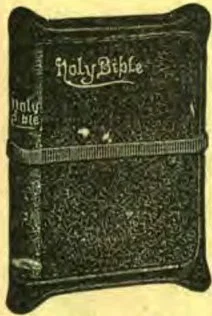
CONTAINS the celebrated Teachers’ Helps, comprising nearly 400 pages. Also a complete series of fifteen new maps.
Description. — Imperial Seal Binding, Tuck Edges, known as “Divinity Circuit,” Rounded Corners, Full Red under Gilt Edges.
We offer this Bible, post-paid, for only SIX NEW YEARLY SUBSCRIPTIONS at 75 cents; or TWELVE NEW SIX MONTHS’ SUBSCRIPTIONS at 40 cents.
We will also send it, post-paid, with the INSTRUCTOR one year for $2.25. For 20 cents extra we will stamp your name in gold upon the cover.

Do You Want Relief

From that ever-troublesome catarrh? If so, send us one dollar, and we will mail you, on ten days' trial, subject to return of money if unsatisfactory,—

THE MAGIC POCKET VAPORIZER,

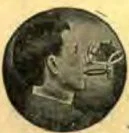
The Throat.
The Throat.
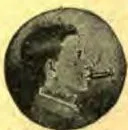
As it Appears when in use in Treating Catarrh of
The Nose.
The Nose.
An instrument so simple in construction that the germ-destroying oils may be applied to the affected parts while you go about your everyday labors.
The many unsolicited testimonials which we have received from our gratified patrons from Maine to California, are a sufficient guarantee of its effectiveness.
Our booklet, “Hygiene and Cure of Nasal Catarrh,” free on application.

Modern Medicine Co.,

25 Washington Ave., N.
BATTLE CREEK, MICH.

Committing the Book of Revelation to Memory

We would heartily second the suggestion found in the introduction to the Berean lesson this week— that those taking the study learn the book of Revelation. At first thought this may seem like quite a task; but it is only one chapter a week, or about three verses a day,— by no means an impossible task for those who are willing to devote a few minutes a day to the work. In talking this matter over with others, we find that those who are learning the book of Galatians in our Sabbath-school study are the most ready to try to commit the book of Revelation also. They have found a blessing in storing their minds with God’s holy word. Who is willing to set aside a little time regularly each day,— a few moments from other less profitable reading,— in order to become familiar with the very words of this wonderful book? Such familiarity will also aid in an understanding of its important truths, which apply with special force to these very days in which we are living. We should be glad to have the names of those who will begin this work with the intention of faithfully keeping it up.
Continue reading: FOR EVERY DAY OF THE WEEK