The Youth’s Instructor, Vol. 65, No. 41.

Self-Evident Truths and Facts Relating to the Bible
Earlier text: Whale Fishing

What Is God’s Law to You?

(Texts for October 14-20)
ONE of the most important questions today is: What is God’s law to you? Will you not stop just now and look into your heart? What place does God’s law occupy there? Is it made the standard of living? It was given for that purpose. It is a revelation to earth of the law of heaven; and it is given that we, with the help of our Saviour, may live by it and become fitted for citizenship in the earth made new.
One day Jenny Lind was sitting by the seaside; an open Bible lay in her lap; the western sun was just sinking in the boundless deep; its shafts of rainbow colors made glorious the sky above; its farewell rays curtained the restless waves in a soft shade of gold. Jenny Lind had known the thrills of great success on the stage; she had been showered with honors galore. But there by the seaside God spoke to her heart. She tasted the joy of getting close to God. The stage lost its charms; she forsook it. “No, no,” said she, “I cannot follow any pursuit in life that destroys my love for God’s Word, or stupefies my appreciation of nature.”
Neither can you, my dear young friend, afford to do anything that keeps you from loving God’s Word, or destroys your desire to obey his law. This pleasure that is tempting you so sorely just now cannot bring you lasting joy; soon it will pass away, leaving only a dark-brown taste of regret. The position that is beckoning to you may bring you more money; but do not be shortsighted, for the day is coming when money in hand will be only a wasted opportunity. Upon that day money will be valueless; a character built in harmony with God’s law will be the only thing that will count.
Yes, it is hard to see all this today. But get close to God and you will see and understand; get close to him and you will know what is right, and have power to stand firm; get close to him and the allurements of this world will lose their charms; get close to him and, like Moses, like Jenny Lind, and like a host of others, you will have power to turn away from “the pleasures of sin,” and follow Christ, no matter where he leads.
It is possible for you and me to obey the law. “By his own obedience to the law, Christ testified to its immutable character, and proved that through his grace it could be perfectly obeyed by every son and daughter of Adam.” The perfect characters which we must have if we enter heaven, demand perfect obedience; that means that our acts, our words, our thoughts, and the secret motives of our hearts must all spell obedience to God’s law. Every failure in our lives must be covered with the blood of Christ; but somehow, before probation closes, we must through Christ attain to perfect obedience.
As a chain is no stronger than its weakest link, even so a character is no stronger than its weakest point. Whether that point be buried deeply in the inner life or on the surface of the outer life matters not materially. It is there just the same. So long as we fail to obey even one small part of a command we are lawbreakers. Our disobedience shows that we are not fully submitted to God’s will, but are still harboring sin, and are in virtual rebellion against God. “Not by one word, not by many words, but by every word that God has spoken, shall man live.”
“By venturing to disregard the will of God upon one point, our first parents opened the floodgates of woe upon the world. And every individual who follows their example will reap a similar result. The love of God underlies every precept of his law, and he who departs from the commandment is working his own unhappiness and ruin.”
“Like warp and woof, all destinies Are woven fast; Linked in sympathy, like the keys Of an organ vast. “Pluck one thread, and the web ye mar; Break but one Of a thousand keys, and the paining jar Through all will run.”
MEDITATION.—First, I must surrender all to God and take his Word as the rule of my life. Then I must study my Bible to know what his law is; and I must get close to God in prayer that he may teach me the spirit of the law, for the spirit of the law reaches the unexpressed thoughts of my mind and the hidden motives of my heart. These must all be in harmony with my Master’s law, or my life can never please him.
SPECIAL PRAYER.—Father, pull up out of my life the tares that I have allowed the enemy to sow; plant the seeds of truth in every furrow of my heart. Teach me how to cultivate the truth in my life that it may yield an abundant harvest in words and deeds that will please thee.
M. E.

The Bible Year

Senior Assignment

October 14. Mark 1 to 3: John's ministry; baptism of Jesus; miracles.
October 15. Mark 4 to 6: Parables and miracles.
October 16. Mark 7 to 9: Pharisees reproved; miracles; transfiguration.
October 17. Mark 10 to 12: Instruction; entry into Jerusalem; parables.
October 18. Mark 13, 14: Prophecy; the Passover; Gethsemane.
October 19. Mark 15, 16: Crucifixion; resurrection.
October 20. Luke 1, 2: The child Jesus.
For notes on this assignment, see Review for October 11.

Junior Assignment

October 14. Luke 20: Parable of the vineyard.
October 15. Luke 21: The widow's gift.
October 16. Luke 22: Jesus betrayed and mocked.
October 17. Luke 23: Jesus before Pilate and Herod; crucified.
October 18. Luke 24: Resurrection and ascension.
October 19. John 1: The divinity of Jesus.
October 20. John 2: The water turned to wine.

A Lasting Friendship

Late one afternoon three young men were standing by a country roadside, engaged in conversation. As they talked, a stranger was seen coming toward them. He had a wonderful face, so fine, so intelligent, so attractive, that it seemed to draw one toward him irresistibly. One of the three exclaimed, “Behold the Lamb of God!” How those words thrilled the hearts of the other two. Leaving their companion, they turned and followed Jesus, for the stranger was none other than he.
Later that day as they talked with him and listened to his words of wisdom, they were more and more attracted to him, and a strong and lasting friendship sprang up between them. The name of one of these young men was John, the writer of the gospel story which we begin to read this week.
John was a fisherman, and he with his companions spent most of the time by the seaside. But after the visit of that afternoon all that John could think of and talk of was Jesus. He told every one of this new-found Friend.
When one morning early Jesus appeared by the seaside and asked John to join him in his work, he gladly accepted the invitation, and leaving home, associates, boats, and nets, he followed this Friend whom he had learned to love better than all else.
John's mother, Salome, and Mary, the mother of Jesus, were sisters. How were the two young men related, then?
You have often heard it said of a child, “How much she looks like her mother. I declare, the family resemblance grows stronger every day!” It is true that we grow to be like those with whom we associate. This was the case with John; he was with Jesus so constantly and loved him so dearly that he became very much like him. By beholding, we become changed.
John and his brother were called the “sons of thunder,” because they were such impetuous, eager, ardent young men. But as John associated with Jesus, his zeal became tempered with wisdom. It is a fine thing to be enthusiastic and full of energy, if these traits are combined with good judgment.
Do you remember which of the disciples it was who reached the tomb of Jesus first on the resurrection morning? Peter and John set out together, but John outran his companion, and arrived first. It must have been a glad moment for the disciples when the angel said, “He is risen,” in reply to their inquiries about Jesus.
In his old age “the beloved disciple,” as John is called, was banished to the isle of Patmos, where he wrote the book of Revelation. But he was not alone; Jesus was still his friend and helper. When our Saviour returns to earth, how glad John will be to be caught up with the living saints to meet his best-loved Friend again! ELLA IDEN.

The Cleansing of the Heavenly Sanctuary

IN our Sabbath schools important truths are illustrated with simple objects, through which the imagination forms a picture of real scenes and actions. These object lessons are a valuable aid in teaching children, and many of them are of interest to older people.
Having made us, the Lord knows the value of this method of teaching; and when he brought his people out of Egypt, he gave them a comprehensive object lesson to illustrate the important points in the life and work of Christ. “Let them make me a sanctuary; that I may dwell among them. According to all that I show thee, after the pattern of the tabernacle, and the pattern of all the instruments thereof, even so shall ye make it.” Ex. 25: 8, 9. Here we are told that the earthly tabernacle was made after a pattern. “Behold, the temple of the tabernacle of the testimony in heaven was opened.” Rev. 15: 5. Here is brought to view the tabernacle in heaven, of which the earthly sanctuary or tabernacle was an imperfect copy, through which valuable lessons would be taught.

The Cleansing Ceremony

We will deal at this time with only one phase of the tabernacle teaching,— the cleansing of the sanctuary. This ceremony took place once a year, on the tenth day of the seventh month, and was known as the day of atonement. The high priest first offered sin offerings for himself and his family, that he might be prepared to take his part in this solemn service. Two goats were brought, and the high priest presented them before the Lord at the gate of the tabernacle, casting lots to determine which should represent Christ, and which the scapegoat. The Lord’s goat was killed, and its blood sprinkled on the mercy-seat, and before it, within the most holy place, to make an atonement for the sins of the people, which they had committed during the year just passed.
This shows that in this earthly sanctuary service the sin offerings did not do away with the sins the people confessed, but removed them from the sinner to the most holy place.
When the priest had made the atonement for the sins in the tabernacle, he came out, and in his character of mediator, brought out the sins for which he had atoned, laid both his hands upon the head of the live goat, and confessed the sins upon it. In this way he put these sins on the head of the scapegoat, and then sent it away into the wilderness in care of a man who was to see that it was left where it could not return to the camp. In this way the sanctuary was cleansed.
We understand that all this ceremony was not the real forgiving of sins, but a picture of the real work that was being done in heaven. But it is important that we know what it means, that we may understand Christ’s work for us.
When one of the children of Israel sinned, his sin was recorded in heaven. When he repented, and by bringing a sin offering showed his faith in the sacrifice Christ was to make for him, his repentance was recorded in heaven with his sin; but the sin remained there until the heavenly sanctuary should be cleansed. In the life and work of Christ each event takes place but once; so there is but one cleansing of the heavenly sanctuary.
“Unto two thousand and three hundred days; then shall the sanctuary be cleansed.” Dan. 8: 14. Here is given the time for this cleansing of the heavenly sanctuary, which in harmony with the antitypes of other events in the sanctuary service, which were fulfilled at the same time of year as the types, began on the tenth day of the seventh month of 1844. This can be clearly proved from the Bible, but is not the point we have in mind just now.
Century after century, sins were recorded in heaven. The repentance of some sinners was recorded also. Some showed by their lives that their repentance was genuine, and others fell back into sin. How was the sanctuary to be cleansed from these sins? “Repent ye therefore, and be converted, that your sins may be blotted out, when the times of refreshing shall come from the presence of the Lord.” Acts 3: 19. There is a time, then, when sins shall be blotted out.
If the blotting out of sins depends on the repentance and conversion of the sinner, there must be an examining of the records in heaven to see who is entitled to have this done for him. Therefore this day of atonement is evidently a type of the investigative judgment—the deciding what shall be the fate of the sinners. It has a solemn meaning for us; for we are living in the time when this investigation is going on, and cases are being continually decided.
Following out the figure, we see that those whose lives have shown true repentance and faith in Christ have their sins blotted out, and they appear in the heavenly records no more. The punishment of their sins is placed on Satan, of whom the scapegoat is the type, and he must bear the punishment for that which he has caused. The Hebrew word for scapegoat is Azazel. According to the opinion of the most ancient Hebrews and Christians, this refers to Satan, or the angel who revolted and persisted in rebellion and sin.
Those who do not repent will bear the punishment of their own sins, as in the type. “For whatsoever soul it be that shall not be afflicted in that same day, he shall be cut off from among his people.” Lev. 23: 29. “And the Lord said unto Moses, Whosoever hath sinned against me, him will I blot out of my book.” Ex. 32: 33.
Then shall the heavenly sanctuary be cleansed,—when every record of sin and sinners has been blotted out from the records, to be remembered no more; when the repentant are clothed with Christ’s righteousness; and when sinners, with the one who was the originator of sin, are destroyed.
The question which vitally concerns each of us is: Shall my sins or my name be blotted out?
EDITH M. GRAHAM.

III — The Sabbath

(October 20)
MEMORY VERSE: “Remember the Sabbath day, to keep it holy. Six days shalt thou labor, and do all thy work: but the seventh day is the Sabbath of the Lord thy God: in it thou shalt not do any work, thou, nor thy son, nor thy daughter, thy manservant, nor thy maidservant, nor thy cattle, nor thy stranger that is within thy gates: for in six days the Lord made heaven and earth, the sea, and all that in them is, and rested the seventh day: wherefore the Lord blessed the Sabbath day, and hallowed it.” Ex. 20: 8-11.

Questions

1. When was the Sabbath made? How was it made? Gen. 2: 1-3. Note 1.
2. What is known concerning the Sabbath, after man was driven from the Garden of Eden? Note 2.
3. For what purpose did the Lord prove the people before he gave them his law? Ex. 16: 4.
4. What general command was given with reference to the manna? Verses 16-21.
5. What special instruction was given concerning the manna on the sixth day? Verses 22-24.
6. For how many years did the manna fall? Deut. 8: 2, 3.
7. How many miracles were thus wrought to teach the people that the seventh day was the Sabbath? Note 3.
8. How is the Sabbath set forth in the law as spoken on Mt. Sinai? Ex. 20: 8-11.
9. What command concerning work on the Sabbath did the Lord give his people through Jeremiah? Jer. 17: 21, 22.
10. If this instruction had been heeded, what would have been the result? Verses 24, 25.
11. How did the people regard this instruction? Verse 23.
12. What disaster came as a result of their Sabbath breaking? Verse 27.
13. Of what is the Sabbath a sign? Eze. 20: 12, 19, 20.
14. For how long will the Sabbath remain a sign between God and his people? Ex. 31: 14-17.

Notes

1. The Sabbath is founded on the fact of creation. The Creator worked six days, rested on the seventh, then blessed and hallowed the seventh day. These facts are unchangeable; therefore the Sabbath is unchangeable. The division of time into months and years is indicated by nature. But not so with the week. This division is made only by the Sabbath, and from the beginning, time has been measured by the seven-day period. See Gen. 8: 10-12.
2. Man kept the Sabbath for a long time after the Lord made it. But coming down to the time when the children of Israel were in bondage to the Egyptians we are told: “In their bondage the Israelites had to some extent lost the knowledge of God’s law, and they had departed from its precepts. The Sabbath had been generally disregarded, and the exactions of their taskmasters made its observance apparently impossible.”
3. “Every week during their long sojourn in the wilderness, the Israelites witnessed a threefold miracle, designed to impress their minds with the sacredness of the Sabbath: a double quantity of manna fell on the sixth day, none on the seventh, and the portion needed for the Sabbath was preserved sweet and pure, when if any were kept over at any other time it became unfit for use.”—Patriarchs and Prophets, p. 206.
Multiply fifty-two, the number of weeks in a year, by three, and the number thus gained by forty, the number of years they were fed with manna, to find the total number of miracles.

Another Quarterly Summary

PERHAPS our Missionary Volunteers think of the quarterly summary as just an unattractive table of statistics, but when once you give yourself up to the fascination of a report of this kind, you will find it intensely interesting—especially so when it tells a story of good cheer as does this one.
Just for once, take time to study this summary. Compare the report of your conference with that of other conferences. Is the comparison in their favor? Now endeavor to find out if your society is doing its share toward making up the conference report. And now comes the all-important question. Did you do your share toward making the society report what it ought to be? Shut your eyes for a moment, and think hard! ELLA IDEN.

A Youthful Inquirer

A YOUNG apprentice in a photograph supply shop, now and then comes to me for studies. In Japan an apprentice has little time that he can call his own, his time being almost completely at the disposal of his master. Whenever this young man has a half hour to spare he comes to learn about Christianity. His employer does not favor the foreign religion, but reluctantly consents to the young man's inquiries. It is encouraging to hear his simple prayers of childlike faith. He thanks the Lord for an opportunity to study his Word, and asks God to help him to quickly become a strong Christian.
Part of this apprentice's duties is to carry his employer's baby on his back and give it an airing now and then. The other evening, thus burdened, he came to our meeting at the chapel. I always look forward with pleasure to his coming because I know that I shall be refreshed by his simple faith.
A. N. ANDERSON.

The Vacant House Decays: Steady Work Over Fits and Starts

“THE vacant house decays soonest, and the watch or the man that is kept running regularly lasts the longest and is of the most service while he lasts. The watch that works only by fits and starts is never to be trusted. Nor is the man who does his work in the same way ever capable of the highest achievement possible to his station. With men as with watches the test lies in being right and reliable all the time.”

Debt Is Easy to Enter, Hard to Escape

DEBT is like any other trap, easy enough to get into, but hard enough to get out of.—H. W. Shaw.

Facing Circumstances Without Fear

“CIRCUMSTANCES get the better of us the moment we fear to look them in the eye.— S. V. Cole.

Personal Resolutions During War Time

I WILL try to preserve my own peace of mind. If I am powerless to prevent the war without, I can put an end to the tumult within.
I will resolve to do the task that is my own, in my own place, with my usual purpose and regularity, and not become useless and a burden to others on account of my hysteria.
If any of those who are dearest to me are called to serve in places of danger or even to give their lives, I will remember the great multitude of fathers and mothers in the world who are bearing the same burden.
I will be cheerful and uncomplaining under abnormal and strange conditions which I have never before known.
I will be ready to deny myself needless luxuries which have become, perhaps, selfish necessities.
I will not forget the needs of others less fortunate than myself. Even in war time the sympathies of days of peace must not be set aside.
I will strengthen my human friendships, and fortify my soul with divine companionship.
If I am too old to enlist in the army of men, I will volunteer in the great army of faith in God.
I will not lose sight of the final victory for right and truth and human freedom sure in the long run.
I will pray with every morning’s sunrise the prayer, “Give peace in thy time, O Lord.” And before I go to sleep, I will say to myself, “Underneath are the everlasting arms, and he will sustain thee.”—From Dr. Charles M. Sheldon’s Church Calendar.

Man's Work: To Labor and Leaven

MAN'S work is to labor and leaven, As best he may, earth with heaven. — Lowell.

Where Is God?

A FATHER at breakfast table one morning, asked his three-year-old boy where God is, to which the little one replied: “He is out canvassing.”
Children often say strange and unexpected things, but this simple answer, dear reader, is not far from the truth. As the faithful canvasser goes forth with the printed page, laden with the saving truth for this time, he goes not alone, for the Lord is with him. In the language of the little boy, the Lord “is out canvassing” in the person of his faithful worker.— N. P. Neilsen

A Business Man’s Prayer

TEACH me that 60 minutes make an hour, 16 ounces one pound, and 100 cents one dollar. Help me to live so that I can lie down at night with a clear conscience, without a gun under my pillow, and unhaunted by the faces of those to whom I have brought pain. Grant that I may earn my meal ticket on the square. Deafen me to the jingle of tainted money and the rustle of unholy skirts. Blind me to the faults of the other fellows, but reveal to me mine own. Guide me so that each night when I look across the dinner table at my wife, who has been a blessing to me, I shall have nothing to conceal. Keep me young enough to laugh with my children.
And when come the smell of flowers, and the tread of soft steps, and the crunching of wheels out in front, make the ceremony short, and the epitaph simple: “Here Lies a Man.”—New England Pilot.

“Do Your Bit”

Doubtless many of our young people have wondered what they could do for the soldiers. Suddenly thousands of young men have been transferred from their home environments, with all their social and educational privileges, to training camps where life is very different indeed. The government is doing all in its power to make the surroundings of these camps wholesome, but in the very nature of the case, as one soldier boy said, temptations are very strong. These young men need help. Will not all our young people be thinking and praying about some way we can help them?
An effort is being made through the public libraries all over the country to secure books and magazines for the soldiers. The following notice was recently distributed at the Nebraska State Fair:

“LET YOUR IDLE BOOKS HELP OUR SOLDIERS

“Our young men are sacrificing their education, business, professional training, and home life to serve their country.
“They need books and current magazines for study, recreation, and diversion in lonely moments. You can help them by supplying books and magazines which will be forwarded to army camps, the front, and hospitals.
“Books on the war, popular travel, history, and biography, as well as short stories, detective stories, stories of the sea and adventure, are desired. Any readable book of general interest, will appeal to the soldiers, as there are men of varying tastes among them. ‘Do your bit’ by immediately taking to the nearest public library or forwarding to the State Library Commission at Lincoln, such books as you will donate. If you can’t give a book, give the price of a book.”
Here is an opportunity for our young people to do something. Do not take books that you could not recommend. Give preference to such books as “Steps to Christ,” “Alone with God,” “Lover’s Love,” “Patriarchs and Prophets,” “The Great Controversy,” “The Ministry of Healing,” “The Mount of Blessing,” “Christ’s Object Lessons,” “The Ministry of the Spirit,” and “The World War.” Do not take books of a strongly doctrinal nature, at least at first. Doubtless our magazines would be acceptable, especially Life and Health.
We should be glad to hear from young people who take up this work as to their experiences in the work. M. E. Kern.

“Elo the Eagle and Other Stories”

POOR, proud, lonely Elo wandered up and down the river hunting for his lost mate. Our hearts are moved to pity as we read his history. With dainty little “Lady Betty,” the quail, we feel more at home, and long to cuddle her and her babies. Don’t you believe you would like to become acquainted with Jonah? He was a baby owl that was a dear pet of the boy who afterward wrote the story of his life. No finer dog than Frank, the collie, can be found, yet he had to be trained for service the same as any efficient worker. These are but hints of what may be found in the book “Elo the Eagle and Other Stories,” but there is not time to tell of Dick, the Black Bear, who stole the baby, or of Sobersides the toad. The best plan is for each to read these splendid stories for himself, for they are all true.

Enthusiasm: The Quality That Produces Excellence

“ENTHUSIASM is the quality which produces excellence, where its absence breeds mediocrity. It transforms the dull monotony of clock-watching routine into the exalted satisfaction of constructive achievement.”

What You Know About Yourself

“It isn't what others think about you that brings the worry wrinkles; it's what you know about yourself.”
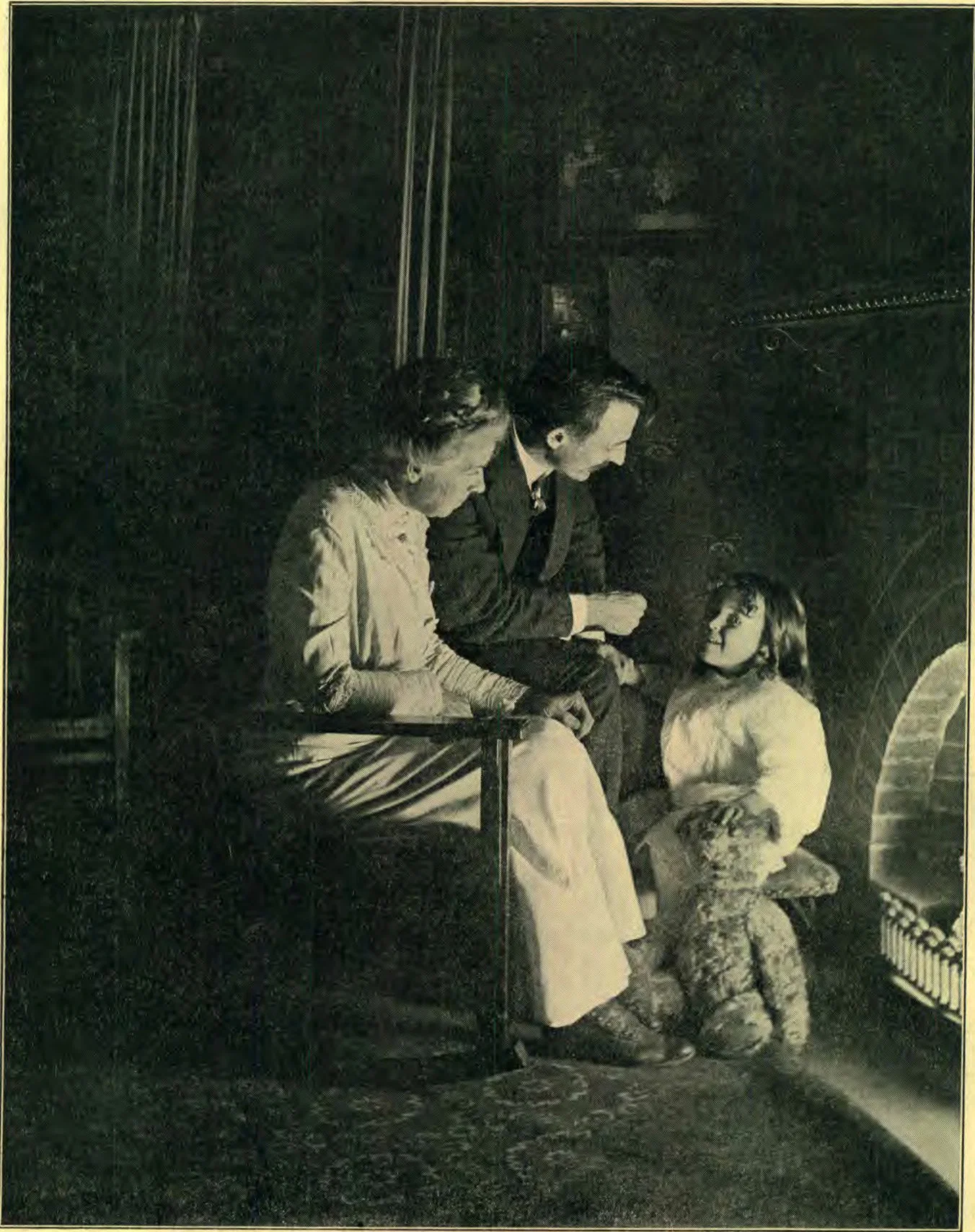
“THE OPEN FIREPLACE WITH ITS CHEERY FLAME IS OUR EDEN.”

You have reached the end of this edition.

The Youth’s Instructor · Oct 9, 1917