The Youth’s Instructor, Vol. 43, No. 42.

Feudalism in Japan

The Youth’s Instructor

Oct 17, 1895

S. D. A. Publishing Association · Battle Creek, Mich. · Oct 17, 1895

Feudalism in Japan.
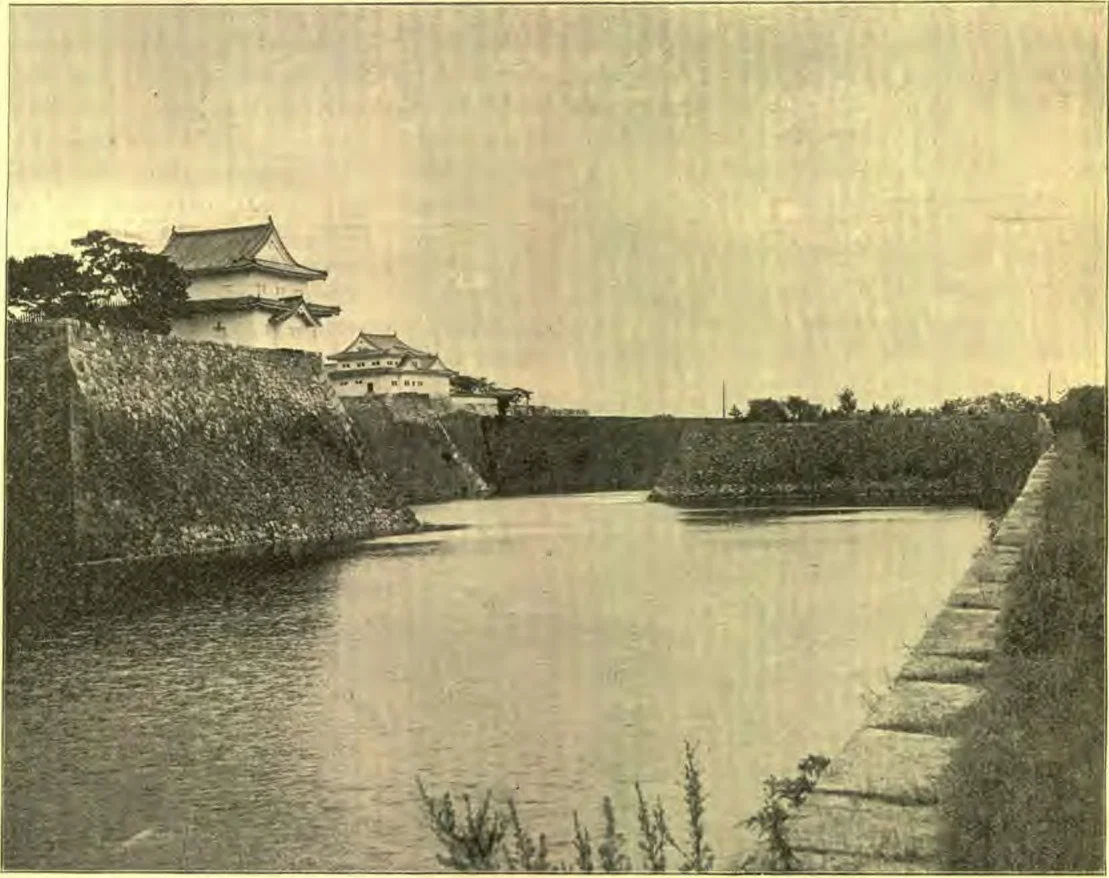
You have all been interested in the stirring accounts you have read of life in Europe during the middle ages, when fighting was the business of life, and feudal chieftains dwelt in their strong castles, surrounded by their faithful vassals, who were always ready to sally forth to war at their lord’s commands. Now feudalism came into existence in Japan about the time that it did in Europe; but it continued to flourish there for long centuries after Europe had thrown off the yoke.
Until about the middle ages the mikado was the sole and undisputed ruler of Japan. His court was held at Kyoto, whence he issued his orders to the nation. The civil offices were controlled by the Fujiwara family, who were relatives of the mikado. The leaders of this family always took the field in person in case of an insurrection or disturbance in the empire. By and by this great family so degenerated through idleness and indulgence that they refused to share the dangers and inconveniences of war and camp life, and relegated these duties to certain other nobles, while they remained in ease at home. As luxury and sloth increased at the capital, it became exceedingly difficult to keep the empire in subjection; for the government was fast losing its power to enforce order. Many of the more intelligent farmers, on becoming soldiers, had on account of valor been sent to the court at Kyoto. Here they were not slow in learning, among other things, that nearly every one there was striving for rank and his own aggrandizement. Hence when they returned home, they put into practise the knowledge acquired at court. They schemed for power in their native districts, and if successful, which was often the case, they paid no further attention to the orders of their superiors at Kyoto, and the civil governors were afraid to enforce obedience, as these men had an armed following at their back.
Thus a class of warriors sprang up who were always ready to follow a leader and fight for pay. The country was in a continual state of strife and confusion. The government at Kyoto lost the power of enforcing authority in distant provinces, and when it became necessary to quell a rebellion, usually sent a general from either the Taira or the Minamoto family. These families had become powerful and influential, but they were deadly enemies to each other. Thus while outside power increased, the mikado’s power decreased, until he became a ruler in name only.
THE CASTLE OF A DAIMIO.
The power of the sword was lost at Kyoto about the twelfth century. Fighting and free-booting were the order of the day. The empire was split into fragments, and the man who had the bravery to seize more land than his fellows, usually found no lack of armed adherents to help him to keep it. A warrior who succeeded in gaining possession of large tracts of land, and who had many retainers, was called a daimio (literally, “great name”).
As the authority of the court declined, even the agricultural classes put themselves under the protection of some daimio, and the taxes, instead of going into the treasuries of the central government, went to enrich the local rulers and their followers.
The daimios dwelt in state in their castles, which usually stood upon elevations or commanding eminences looking down upon the rest of the town. They were well fortified for purposes of defense in case of attacks by the enemy. They were usually surrounded by moats of considerable width. Many of their castles have been destroyed, but some remain as monuments to tell of troublous feudal times.
At the end of the twelfth century, Yoritomo, a member of the Minamoto family, after a long and desperate conflict, succeeded in completely overthrowing the Taira, and getting possession of the reins of government. The mikado was the ostensible ruler only. Yoritomo, with the emperor’s consent, took the title of shogun, or general, and became the chief daimio of the empire. He was virtually the head of the realm. Under him were the lesser daimios, and their military retainers, who were called “samurai.” The merchants were supposed to have no right to oppose or remonstrate with the samurai, hence they were much oppressed.
Below the merchants were the farmers and other laboring people. A still lower class were the etas, who were skinners, tanners, and gravediggers. They were not allowed to enter a house or sit at the same table with other persons. Their condition was miserable in the extreme.
The office of shogun, with all that pertained thereto, as well as the daimiates, became hereditary. Each succeeding shogun was invested by the mikado with the title of “Sei-i-tai shogun”; literally, “Barbarian-subjugating generalissimo.” The mikado himself lived in great seclusion at Kyoto, and was completely overawed by the usurper. About the opening of the seventeenth century, Ieyasu, a shogun of great power and ambition, established a capital of his own at Yeddo, now Tokyo, and under his rule Japan became more united and prosperous than it had been for ages.
During the latter part of his reign and the reign of his descendants, there were long seasons of peace, during which the samurai and other ambitious men applied themselves to study and research. As the result of their historical investigations, they learned what had been forgotten during the lapse of ages; namely, that the mikado was really the rightful ruler of Japan, and that the shogun was a usurper. They chafed at the exactions of their master at Yeddo, who was after all only one of their own class, and many of them began to brood over plans for getting rid of him. Feudalism was always very obnoxious to the peasant and merchant classes, and the samurai felt sure of the support of these classes if there should be a struggle.
In the meantime, in 1858, treaties were made by the shogun, in the name of the mikado, with foreign powers, which greatly enraged the masses of the people. He was declared a usurper; and after a brief struggle and some fighting, the mikado was reinstated. Embassies were then sent abroad to study the governments in foreign lands. Competent and progressive men were put into office, and they saw that the government could never be consolidated as long as feudalism continued to exist. So in 1871 a decree went forth from the mikado ordering the daimios to relinquish their fiefs and retire to private life. With few exceptions the order was obeyed, and those who rebelled were soon subjugated.
Since then Japan has wonderfully progressed in material civilization. There are now nearly three thousand miles of railway, and more than three hundred steamships along the coast and running to China and Siberia. The postal and telegraphic systems are better than in the United States. They have telephones, electric lights, and, in fact, have adopted all the inventions of the age. Their intellectual progress has kept pace with their material progress. The school system is modeled after that in this country.
The Lord has wonderfully prepared the way for the rapid spread of the gospel in that empire. Shall we have a share in the work?
MRS. J. A. BRUNSON.

HUMANITY THE LOST PEARL.

(Conclusion.)
Those who receive Christ by faith will be looked upon by Heaven as precious pearls for which the merchantman has paid an infinite price, and the human agents who find Christ will realize that they have found a heavenly treasure. They will be anxious to sell all that they have in order to buy the field which contains this treasure. As they contemplate the love of God, as the plan of salvation opens to their view, as the mystery of Christ’s condescension becomes plainer to them, as they see the sacrifice that he made for them, they count nothing too dear to give up for his sake. The more they dwell upon the wonderful love of God, the vaster becomes its proportions, and the brightness of the glory of God becomes too glorious for mortal vision.
The Lord God of heaven collected all the riches of the universe, and laid them down in order to purchase the pearl of lost humanity. The Father gave all his divine resources into the hands of Christ in order that the richest blessings of heaven might be poured out upon a fallen race. God could not express greater love than he has expressed in giving the Son of his bosom to this world. This gift was given to man to convince him that God had left nothing undone that he could do, that there is nothing held in reserve, but that all heaven has been poured out in one vast gift. The present and eternal happiness of man consists in receiving God’s love, and in keeping God’s commandments. Christ is our Redeemer. He is the Word that became flesh and dwelt among us. He is the fountain in which we may be washed and cleansed from all impurity. He is the costly sacrifice that has been given for the reconciliation of man. The universe of heaven, the worlds unfallen, the fallen world, and the confederacy of evil cannot say that God could do more for the salvation of man than he has done. Never can his gift be surpassed, never can he display a richer depth of love. Calvary represents his crowning work. It is man’s part to respond to his great love, by appropriating the great salvation the blessing of the Lord has made it possible for man to obtain. We are to show our appreciation of the wonderful gift of God by becoming partakers of the divine nature, having escaped the corruption that is in the world through lust. We are to show our gratitude to God by becoming a co-worker with Jesus Christ, by representing his character to the world. In great mercy the Lord has rolled back the thick darkness from before his throne, that we may behold him as a God of love.
Moses desired to understand the character of God, and he prayed, “I beseech thee, show me thy glory. And he said, I will make all my goodness pass before thee, and I will proclaim the name of the Lord before thee; and will be gracious to whom I will be gracious, and will show mercy on whom I will show mercy. . . . And the Lord descended in the cloud, and stood with him there, and proclaimed the name of the Lord. And the Lord passed by before him, and proclaimed, The Lord, the Lord God, merciful and gracious, longsuffering, and abundant in goodness and truth, keeping mercy for thousands, forgiving iniquity and transgression and sin, and that will by no means clear the guilty.” In every word and action of Jesus Christ we are to recognize the voice and the attributes of eternal love; for “this is life eternal, that they might know thee the only true God, and Jesus Christ, whom thou hast sent.” The Lord would have his followers enraptured with God through the knowledge of his paternal character.
The Lord looks upon souls as precious pearls, and through the merits of Christ we should esteem others as of great value, making every possible effort to coöperate with Christ in saving precious pearls for the glory of God. Satan is seeking to keep men in ignorance of the attributes of God, and is counterfeiting the angels of light in order that he may deceive souls, and thus cause their ruin. The Lord would have those who serve him show forth the love of Jesus Christ, that men may be able to detect the difference between the character of Christ and the character of Satan. We should be constantly on guard lest Satan shall obtain an advantage over us, and cause us to have a spurious spirituality. Christ has valued us as precious pearls, but Satan is constantly working to make us of no value in moral worth. Though the Lord has made every provision that man shall be transformed in character and made like unto himself, because iniquity abounds, the love of many waxes cold. Satan engages the attention, and causes the mind to become so engrossed with earthly, sensual things, that the knowledge of God is lost, and the soul is not inspired with the thought of the riches of Jesus Christ. The Lord does not propose to save us in companies. Individually we are to make our choice. One by one we are to appropriate the grace of God to the soul, and one cannot decide for another what course he shall take. The Lord says we are to “work out our own salvation with fear and trembling; for it is God which worketh in you both to will and to do of his good pleasure.”
Those who decide to receive Christ, enlist themselves to be co-workers with him in saving the souls of others. In presenting Christ to their fellow men, they themselves grow in the knowledge of God and of Christ. As they lift Christ up, their eyes are anointed so that they can distinguish the relationship of Christ to the human family. They become wise, and in meekness and lowliness, as opportunity opens, they present to tried and tempted souls the sublime reality of the saving grace of God.
MRS. E. G. WHITE.

THE HOMELESS.

Those who have homes, with all their endearing associations, can have no real idea of the meaning of the word “homeless.” There is something in the ring of it that brings with it sadness. How different our experience when we speak of home; the very sound of the word “home” sends a thrill of joy through our hearts. Strange that four letters could make such a difference! But why this difference? Because (as we all know) of the different conditions that the two words represent. Much of the indifference which is manifested toward the homeless ones, especially by young people, comes from thoughtlessness. They are so well provided for themselves, and everything is so pleasant around them, that they do not think but that every one is in the same condition.
To make a start in this direction, let us consider some of the benefits of a true home. What is it to the young? It “is not merely four square walls.” It is a place where love dwells. It means a father and mother, deeply interested in their welfare—a mother to whom they can go in perfect confidence of a hearty sympathy in all their joys and sorrows. If in trouble, no earthly friend can soothe and quiet as she can.
To the young man home means a place of refuge,— a place of safety from all the temptations of the outside world. It means a father to counsel him, whose only interest is for his good; it means a mother to love and care for him; a confiding sister to welcome him at the door, to whom he can intrust the secrets of his heart with assured confidence. It means, too, a brother to be a boon companion, and the younger children down to the babe in the mother’s arms, all eager to greet him. At nightfall, when the labors of the day are over, it means a family reunion where love reigns supreme. It means, too, an intellectual feast, or it may be an evening of song, and at the close a prayer of thanksgiving and praise to God.
The opposite of this is the condition of the homeless ones. You that have homes, with everything to make life desirable and pleasant, pause a moment, and think of the contrast—no father to counsel and instruct, no mother’s love and care, no sister to cheer and encourage, no cheerful fireside with loved ones to give a welcome at the close of the day—a place where one can be shut in from the outside world, and gather strength and encouragement for the morrow. The homeless ones can have no service of song and prayer to be a sweet remembrance as they go out into the busy world.
If these contrasting pictures are correct as regards young men, they are doubly so as regards young women, especially those who have to work for a living. If they have a home to go to after their work is done, how differently they feel from what they do when they have no home!
But what is home to the aged,—those who are done with the busy toils of life?—It should be a place of rest, of comfort, of freedom from care, and of patient, loving sympathy. May the contrast drawn awaken an interest in the minds of the young for the homeless ones!
MRS. JULIA LOOMIS.

RIOT IN CONSTANTINOPLE.

The dilatoriness of Turkey to carry out the promised reforms in Armenia has at length borne fruit, although in a most unexpected quarter. The Armenians are not confined to the country of Armenia, but are scattered all through the Ottoman empire. There are one hundred and fifty thousand Armenians in Constantinople, and one portion of the city is known as the Armenian quarter. All Armenians, wherever they live, sympathize with their people in the mountains of the home country, exposed to the ravages of the ruthless Kurds; and as this sympathy is well known, all Armenians are looked upon with suspicion by the bigoted and fanatical Musselmans.
The Armenians of Constantinople, in common with all of their countrymen, have been waiting for the Porte to inaugurate the reforms in Armenia, and they finally determined to make a special petition to the sultan, praying that these reforms might be hastened. October 2 was the day selected for presenting the petition. The presence of a large body of Armenians in the city, moving toward the palace of the sultan, aroused all the hatred of the Mohammedans. They were not allowed to present the petition to the grand vizier, but were attacked by the police, and, after much hard fighting, were dispersed. So great was the alarm of the Porte that all the troops in the city were called out, but they were not allowed to leave their barracks. Carriages containing high government officials were fired upon, and the city seems to be in a ferment. Five hundred Armenians have been arrested, and it is reported that many Armenians were murdered after their arrest.
It would seem that the Turkish authorities will not even allow the Armenians to petition for a redress of their wrongs! This tragic affair will bring the Armenian question up again in a way which cannot be longer ignored. Happily, Great Britain is now through with China, and can devote her energies to Turkey. Such shocking barbarity leaves no excuse for sympathy with Turkey. The barbarous Turk must pack up his effects and leave Europe; and even then he will be subjected to police surveillance, for the Turk will always bear watching.

IRISH HOPES.

For many years Ireland has been in a chronic state of unrest, and “the Irish question” is about the most difficult thing with which the British Parliament has to grapple every time it assembles. Perhaps as many Irish people have come to America as there are Irish now in Ireland, and there are now twice the number of people of Irish descent here that there are in the Emerald Isle. But whether here or there, the Irishman loves Ireland, and her welfare lies heavy upon his heart.
Most all Irishmen, whether here or in their native land, believe that Ireland has been wronged by England; that the people are oppressed by vicious legislation, and several generations of Irish people have vainly tried to bring about a better condition of things. Their plans have embraced everything from reform through parliamentary means, to open and direct attack.
In 1859 a secret society of Irishmen, called “Fenians,” was organized in this country to achieve the independence of Ireland. A congress of this society was held in Chicago in 1863, and in 1866 several attempts were made by armed bodies of this order to invade Canada. Most of these were prevented from entering Canada by the United States government, and those who crossed the line were compelled to retreat by the Canadian militia. The society soon fell into pieces, and was heard of no more.
Since then the cause of Ireland has received much attention in the British Commons, and the efforts of Charles Stewart Parnell, finally seconded by Mr. Gladstone, gave promise of all that Ireland wished,—a parliament of her own for the consideration of local questions. The death of Parnell and the circumstances connected with it which tarnished his fair fame, and the divisions which arose among the Irish members, gave the Tories their opportunity, and the last British elections set a seal of years upon the Irish hopes. The effect of this we are now beginning to see. A new “Irish movement” has been inaugurated in this country, the first meeting being held in Chicago, September 24. An intense hatred of England characterized the meeting, and the most incendiary speeches were made. The neutrality laws were denounced, and a determination was expressed to fight England in every possible way until Irish independence shall be gained. The following, from one of the speeches, will show the animus of the movement:—
“We say to the whole civilized world, no matter where Irishmen may be found, that we welcome opposition to England in any and every shape and form. To the Russian who may invade India, we say: ‘God speed your invasion!’ To the French who seek to drive out the English from Egypt, we say: ‘Drive them out, and God strengthen your arm in so doing.’ To the German who opposes the English rule in Africa, we say: ‘Take the whole of Africa from England, and if you need the help of stout Irish hands in that work, we are ready to help you.’ In a word, we are the friends of every enemy that England has, and the enemies of every friend of England. We want now to tell England that we intend to enlist young Irishmen, the world over, into regular companies and battalions, and will circle her empire with a girdle of hate and steel, ready to strike an effective blow when the time and opportunity come. When Wolf was sentenced by an English court-martial, he said: ‘I have always believed that the curse of Ireland is the English connection,’ and that is the fiery gospel that we must preach to-day.”
Telegrams of sympathy with the movement were received from many parts of Ireland, and from Irishmen in many countries. What the result will be cannot now be determined, but it certainly is ominous of trouble.

ANTI-TRUST SUIT.

The high price of meat in the United States, compared to the low price which is generally paid for live stock, has impressed the public with the conviction that some gigantic combine is controlling this portion of the food product of the country. Chicago is believed to be the center of this trust, and Armour and Swift are generally regarded as the most important factors in the combine. If one will stand by the great railway lines leading from Chicago to all parts of the country, and count the cars, as they pass, which are owned by these giant corporations, one will begin to realize what a vast amount of wealth and consequently of power is in the hands of these men.
There is an anti-trust law in this country which was passed by Congress through the initiative of Senator Edmonds. In harmony with the provisions of this law, Mr. Morton, United States secretary of agriculture, has been looking up the evidences of an illegal combine for increasing the price of meat, and thinks he has found sufficient evidence that a combine of this nature exists. It is now said that he will turn over the evidence which he has secured to the attorney-general of the State of Illinois, and that the latter will begin the work of prosecution.
Next to the craze to enforce religious ideas by law in this country, the great monopolies are the most dangerous foes of our liberties. But as the first of these terrible evils has the support of the clergy, and the second has the money power, there is little reason to hope that the people will be able to throw off either the ecclesiastical or the golden shackles which are enclosing the nation in a deadly embrace. The law will protect(?) the laboring man by prescribing what days he may work, and the trusts will further protect him by fixing the price he must pay for about everything he wants.

THE NEW YORK STATE CONTEST.

The Parkhurst crusade in New York City, which has led to the closing of saloons on Sunday, has grown beyond the bounds of city politics, and the Empire State is now stirred from center to outer edge by the question. Probably a majority of the people of New York City would vote for the sale of liquor on Sunday with certain limitations of time and place, and the same may be said of other large cities in the State; but the reformers think that the State as a whole, and not the cities, should decide what should be done in the cities,—in other words, they contend for the right of State rather than of municipal law to adjust such matters. So the Sunday question has suddenly sprung into prominence in State politics. This was done by the Republican clubs declaring in favor of the “American Sunday.”
The gage of battle thus thrown down was promptly taken up by David Bennett Hill in the Democratic convention, and he declares that the State election is to turn on the question of “personal liberty.” The New York Tribune deplores this turn of the question, and even Mr. Parkhurst has expressed his fears that if the Sunday is made a partisan question, “Tammany” will again get the control of New York City. The bringing of Sunday so prominently into the politics of the most populous State in the Union is very significant, and it will mark an important era in the discussion which has been so clearly foretold by prophecy.

SYMPATHY FOR CUBA.

THERE is no mistaking the fact that there is a very strong feeling of sympathy arising in this country for the Cubans. The gallant struggle they are maintaining, the cruel warfare waged upon them by Spain, and the threats of complete extermination, have touched a responsive chord in the hearts of the American people. The government of this country may preserve its neutrality, but the people are going to say what they please, and what they say will have a great effect upon the government. In Chicago lately an immense mass-meeting was held, and a series of resolutions in favor of Cuba was indorsed by general acclaim. This spirit is catching, and soon the same thing will be repeated all over the country. M. E. K.

A BIBLE STUDY ON THE WORD OF GOD.

I. AS A GUIDE.

Ps. 119 : 105.—As we use a lamp or candle to light the way before us, so we need to have God’s word with us, that our feet may not tread in the paths of sin. The commandments of God should ever be in our minds and before our eyes, that we may not depart from the right way.
Prov. 6 : 23.—Our path sometimes goes so near dangers that we are led to think we are wrong. Bunyan’s pilgrim saw the lions in the way, and was almost persuaded to turn back, until he saw that they were chained. So God’s word lights up our path, and helps us to see that all our enemies are chained.
Matt. 5 : 14, 16.—We become lights. If we are so filled with the word of God that our thoughts dwell upon his word, others will see that we do good works, which cannot come from self, and they will thus be led to glorify God.

2. THE WORD IS INSPIRED.

2 Tim. 3 : 16.—“All Scripture.” This includes every part of the word. The idea of inspiration is “God breathed.” All Scripture is so far the work of God that it is represented to us as given by the breath of God, in the same manner as the word of a man is given by the breath of his mouth. Holy men who wrote the Bible spoke as God breathed his words through them. 2 Peter 1 : 20, 21. Then when we study it, we should accept it as God speaking to us individually.

3. IMPORTANCE OF BIBLE STUDY.

Rom. 2 : 18.—It gives us a knowledge of God’s will. It is a great thing to know God’s will. In this word is revealed his will concerning his Son, and our relation to him. John 3 : 16. Through the word we learn of the Son, and through the Son we have eternal life. When Jesus said, “Search the Scriptures; for in them ye think ye have eternal life: and they are they which testify of me” (John 5 : 39), he showed that the word had power through him only.
Rom. 2 : 18.—The word of God reveals his own character, showing how we should walk to please him. It also reveals the help we may have through Christ to walk in that way. Then, how eager we should be to grasp this knowledge, that we may always know that our ways please him.
We are to search the Scriptures. This means that we are to put forth an earnest effort to understand the meaning of every word that God has spoken. We are not to be satisfied with reading a chapter or a certain number of verses, but it should be a deep searching to find out all the Lord has said to me. Gems are hidden beneath the surface, which can never be found unless we go down to them.
Ps. 119 : 97.—We must meditate. This means to dwell upon, with earnest thought. The psalmist meditated upon the law day and night. Ps. 1 : 2. If it is so profitable, why should we not think of it all the time?
Rom. 10 : 17.—Faith comes from the word. It is impossible to please God without faith (Heb. 11 : 6), and faith can be had only by hearing the word; therefore we may conclude that we cannot please God unless we are students of the Scriptures.
Ps. 119 : 74.—Through the word we have hope. (See verses 49, 81, 147, and Rom. 5 : 5.) Through the word we commune with God every day. He talks to us through his promises. We are held fast to him through the hope we have in his word. When his word speaks, we anchor on that, and cannot be moved.
2 Tim. 3 : 16.—It is profitable. If it comes from God, it must be just what we need. It will teach us the right kind of doctrine; it will instruct us in righteousness. (See verse 17.)
The Scriptures “are able to make thee wise unto salvation.” All are desirous of being saved. We may not be making any effort in that direction, yet we desire to be among the number that shall go into the city of God at last. The Scriptures are able to give us this salvation. Why?—Because they testify of Jesus, through whom only is salvation. The word of God tells us, “If we confess our sins, he is faithful and just to forgive.”
J. H. D.

MISSIONARY WORK

TALKS WITH BOYS AND GIRLS.—NO. 6.

MISSIONARY WORK.

DEAR CHILDREN: We will consider the subject of missionary work this week. No doubt many of you have been doing missionary work of some kind for some time; yet there may be some who have thought they could do nothing in the way of missionary work. Some of you have been raising gardens and chickens to get money to send the gospel to Japan and some of the other nations which have not had as many gospel privileges as you. You may have sent papers to distant friends, and may have written letters to those who are reading the papers. No doubt all these efforts have been blessed to the good of some souls.
But there is other work that needs to be done, that is often neglected. The field is not a distant one, and the work is abundant. It is all around us. The work we wish to notice is doing good to those around us. There may be some aged person living near you that cannot get around very well, who has many little chores to do. There is the water to bring, the coal or wood to be brought in for the evening, or errands to be run. Boys and girls can be doing work for Jesus in looking after those who are bowed down with age and infirmities. While looking after their wants, you can take them a paper or book to read, or what is better, sit down and read it to them.
The aged are not the only ones that need our attention. There are those of your own age who have been unfortunate in becoming crippled in some way. Some of your schoolmates may be sick and confined to their rooms. It is pleasing to Jesus for the boys and girls who love him to search out the crippled and sick, and do them some act of kindness in the Master's name. Jesus says: “And whosoever shall give to drink unto one of these little ones a cup of cold water only in the name of a disciple, verily I say unto you, he shall in no wise lose his reward.” Matt. 10:42.
Much of this kind of missionary work can be done in our own homes or neighborhood. You can do work for Jesus, and good missionary work, by helping your mother. If the heart is right, you will not need to be told to do these things. As you are praying for Jesus to show you what to do for him, your attention will be called to some little thing that you can do to make some soul happy. He that is faithful in the little things is the one to whom Jesus will say, “Well done, thou good and faithful servant.”
Do not wait to go to foreign lands, or until you can get some names from distant parts to whom you can send a paper or tract. Look around you, and begin to be a missionary at once. It is all right to send reading-matter away by mail, to write letters, and raise vegetables or chickens; but if you trust in these alone, and let all the little opportunities pass, wherein you might help some one to be better, you will fail to be what Christ wants you to be.
J. H. D.

PRAISE

WE are sometimes inclined to think that we have no special reason to praise God, because our lives are so monotonous, and there are no great events or marvelous deliverances in our lives, such as we read of in the Scriptures, or perhaps in the biographies of good men of later times. But great deliverances imply exposure to great dangers; and if we are spared even from the dangers, have we not an additional reason for gratitude and praise to God? If any of our readers have been orphans, deprived of the love and care of father and mother and the blessings of a home, and have received from other kind friends a home and such care and instruction as will be a blessing to them all through their lives, no doubt they are thankful for these favors, and praise God for the mercies he has moved others to grant to them.
But how about the rest of our readers, the majority of them, who have had kind parents to watch over them during the helpless years of infancy, to plan carefully for their future prosperity and success, and to toil, often beyond their strength, that the children should be comfortably clad and fed, and be provided with a good education that will fit them for the duties of life? Should they not be as grateful for the blessings they enjoy as those who, for a time, were deprived of home, and then had one supplied to them by friends? They certainly should be more grateful, for they have never had, even for a day, the sad feeling that they were friendless and homeless. A quiet life, a home, and freedom from great dangers, are blessings both for youth and for older people; but we fear they are not half appreciated by thousands who feel that their lives are very dull and monotonous.
The many reasons we have to praise God, which are not recognized by us, are well illustrated by the following anecdote: A minister who had traveled many miles on horseback to attend a camp-meeting, related to the people a wonderful deliverance from death which he had experienced on the road. His horse stumbled and threw him, but in some mysterious manner the fall was broken, and he was not injured. All rejoiced at the brother’s remarkable deliverance, which was attributed to the mercy of God. Then another minister arose, and said that he had passed through a more remarkable experience than his brother. He had come a long distance to attend the meeting, and his horse had not stumbled at all! If we would all note our experiences of this kind as causes for thanksgiving, our lives would not seem so destitute of reasons for devout thanksgiving and praise to God. We fail to recognize the hand of God in many things where we should see the leadings of his providence. His hand is ever over us for good; and if our spiritual eyes were opened, how many evidences of God’s love and care for us would be seen!
M. E. K.

SABBATH-SCHOOL HINTS.

TAKE your Bible with you to class.
Prayer is the Christian’s life,— yea, his very breath and being.
“Light is sown for the righteous, and gladness for the upright in heart.”
It is not enough to be able to recite the lesson when questions are asked. There should be much thought bestowed upon the subject.
“There are very few original thinkers in the world, or ever have been; the greatest part of those who are called philosophers have adopted the opinions of some who went before them.” — Dugald Stewart.
POWER.—There are two powers in operation in the world to-day; namely, the power of godliness and the power of sin. 1 Tim. 3:16; Eph. 6:12. The first brings liberty, while the latter brings bondage. Gal. 5:1; Heb. 2:14–16. One comes through the mystery of godliness revealed through the gospel, while the other comes through the mystery of iniquity revealed through men and women of unregenerate hearts. It has been said by one of the world’s great thinkers, “Power and liberty are like heat and moisture; where they are well mixed, everything prospers; where they are single, they are destructive.”

WHY WE SHOULD KNOW THE WORD.

1. Because by it we are “thoroughly furnished unto all good works.” 2 Tim. 3:17. Therefore we are to let this word dwell in us richly. Col. 3:16. Do not be satisfied with a surface knowledge. Go down into the depths, and see the unsearchable riches.
2. Christ said of the Scriptures, “They are they which testify of me.” John 5:39. If we would know of Christ, we should study that which tells of him. Luke 24:27.
3. The word gives light and understanding. Ps. 119:105. We need light, for sin has put us in darkness. The world has its speculations and theories which at first seem clear, but after we have tried them, we are disappointed. We need understanding of our relation to God. This is revealed in the Scriptures; therefore we should search them. 2 Cor. 4:4, 6.
4. The word produces faith. Rom. 10:17. We need faith; for it is by this means we overcome sin. 1 John 5:4. Then how important that we study it daily! We have to meet the world and sin daily, therefore we need faith every day. J. H. D.
Continue reading: LESSON 5.—THE POWERS THAT BE