The Youth’s Instructor, Vol. 66, No. 7.

Criminals to Be Tested by Alienists in New York
Earlier text: Incidents in Porto Rico

A Good Report

[Good reports make our hearts glad. This is why I pass on to the readers of the INSTRUCTOR this good report from Miss Emma V. Stock, the secretary of our Harrisburg (Pennsylvania) Missionary Volunteer Society. This was taken from a letter written to the Missionary Volunteer secretary of the Eastern Pennsylvania Conference, but I am sure all will enjoy reading it, even though it was not written for publication. M. E. K.]
Nov. 28, 1917.
DEAR SISTER ACTON: I feel as if I must write you of the grand success our young people are having at the Harrisburg church.
“Almost all have been out with the Ingathering papers, and all have done remarkably well. We go out in bands, and have an older person along as leader. One boy is working with foreign papers just now, and is doing very well.
“About a week ago, six of the young people and Sister Nutter were out. I went along, and we certainly did well. We were out about three hours, and received $11.94. We thought that was good. I can safely say there were no happier girls in Harrisburg than we. We were canvassing in a small town, and all the people were agreeable. I spoke to a minister of the place, and he asked me to what denomination I belonged. When I told him, he said we were doing a great work, and was glad I was engaged in such work. I came up to one house which had glass in the door. The lady saw me coming, and fairly ran to the door. She said, ‘You are just the girl I was looking for.’ You can imagine I was surprised, for I never saw her before. ‘No wonder you are surprised,’ she said, ‘for you are a stranger to me. But one of the girls bought a paper from you, and brought it up to the factory where I work. So I was looking for you to come over here. You have the papers scattered all over Harrisburg, and I was sure you would come here. Why, of course I’ll take a paper. I never read a more interesting one in all my life.’ So I gave her a paper. She called me back after I had started, and said her aunt was about to take a trip West, and would like to have a paper to read on the way. They each gave me a donation.
“The young people have worked among the colored people of Harrisburg and Steelton, and I think there is not a colored family that has not been canvassed. Most of them gave something, and all seemed very kind.
“Instead of having our meetings every two weeks, we have them every week, in the forenoon before Sabbath school.
“The young people have collected $87.12 so far, and we are all anxious to go out again. Don’t you think that is good? We have only nineteen members.”

Why Not?

THE other day a young man who had learned to appreciate the Morning Watch said: “I have obtained the addresses of thirty boys in camps, and am going to send each one of them a Morning Watch Calendar. I know it is a little late, but if they have already received copies, they can give these to some of the other boys.” That was a splendid way of inviting others to enjoy the great blessing which the Morning Watch brings to those who keep it.
His plan came to me as a reminder that it is never too late to give a Morning Watch Calendar to a friend who has none. Do you not have such a friend? Why not send him a calendar even now? And why not invest fifty cents in calendars, that you may have a few copies on hand to use in this way? This is one of the many good things we may do “while the days are going by.” M. E.

You Can’t Afford to Miss It

The Morning Watch idea is the carrying out of instruction given to us by the Saviour when he said, “Watch and pray, that ye enter not into temptation.” The idea of preparing ourselves for the duties of the day by a little time of real devotion in the very first waking hours of the day has proved in the experience of those who have followed it to be an excellent fortification against temptation.
In my personal experience a single day’s neglect always brings disaster. It is now that we are to develop characters for the kingdom, and before God can take us to be with him we must become what he wants us to be. The Lord says in Isa. 50:4 that he wakens us “morning by morning” to hear as the learned. If God wakens us to hear as the learned, we ought to be willing to learn, and when we practice hiding the Word of God in our hearts, personal victory will come.
M. B. VAN KIRK.

Learning to Enjoy Bible Reading

I CANNOT seem to become interested in reading the Bible. How shall I study it to really enjoy it? R. G.
There are several ways to become interested in Bible reading. One is to ask the Lord to give you a love for the Bible, then spend a definite time each day in reading it. The following ways of Bible study enlist one’s interest: Read the Bible by books; study the Bible by characters; read the different miracles of the Bible; read the prayers of the Bible, noting the circumstances under which the prayers were made, the need and experience of the one making the prayer, and how God answered his prayer. C. L. B.
What is the best way of conducting the Standard of Attainment studies? M. A.
The “best way”! That is the way we should always choose. The best way, however, differs in different communities. Wherever those desiring to study for Attainment membership can meet together to study, a Standard of Attainment class should be organized. This class should be conducted by the educational secretary, or if the educational secretary is young and inexperienced, the executive committee should appoint some one else to have charge of the Attainment class. Perhaps the pastor or church elder can be persuaded to take charge of it. But this does not excuse the educational secretary from helping to make the class a success. This class should meet regularly, possibly in the homes of the members, and definite assignments should be made for home study.
Why should not at least one Standard of Attainment class be formed in every church? If the class contains many persons, both old and young, it probably will be best to divide it into smaller groups, or to have the class meet regularly each week in the church. Surely it would be profitable for church members, old as well as young, to spend one evening a week in just such study. Editors, ministers, and other workers have reached the Standard of Attainment goal. Why should not many of our lay members do the same? Surely it is worth while.
It is now comparatively easy to reach this important goal. Missionary Volunteer Leaflet No. 21 tells you what helps are needed, but in addition to these there is now a Denominational History Study Leaflet which contains a list of 125 questions with references. Upon these, future examinations in Denominational History will be based. Each member of this class should secure a copy of this leaflet, as well as the helps recommended in Leaflet No. 21.
Perhaps I should add right here that the Junior Standard of Attainment Manual just off the press contains questions and references in both Bible Doctrines and Denominational History. On these questions the examinations in these subjects will be based.
Where classes cannot be organized, “the best way” is for each Missionary Volunteer to make up his mind to study alone. The helps recommended above are as good for the person who studies alone as for those who study in classes. M. E.
Is there a way to avoid so much reading on the programs? A LEADER.
Yes, of course, there is a way. It is spelled W-I-L-L. “Where there’s a will, there’s a way.” Get the will first, and then, no matter how much trouble it is, you will find the way. A. B. E.

Study the Testimonies

THE assistant secretary of our Medical Department, Brother L. A. Hansen, writes as follows of his experience:
“Were it possible for me to go back thirty years in my life and put into practice the things that now appear best to me, I should first of all, in my connection with my study of Bible truth, familiarize myself with the principles set forth in the Testimonies. I say this because I recognize that one of the best means and sources of reliable guidance and direction to me has been in what I have received from the Testimonies. Often am I made grateful for the clear, definite, and distinct light there given and for the positive influence of the principles and truth so abundantly found in these writings. Though I may not at once recall the words, paragraph, or volume, or even the fact that I read it in the Testimonies, I find certain principles guiding me in judgment, in counsel, and in action that, as I take thought, I can trace back to having read years ago in one of these good books.”
Do you not find in this paragraph a call to a careful study of the Testimonies? Why not begin today? Read eight pages every day except Sabbath, and in two years you will have read nine of the best books in the world. If you desire a deeper Christian experience, if you are longing for victory over subtle temptations, make these books your intimate friends.
Will you not join us in finishing the reading of the Testimonies within two years? If you will, kindly send your name and address to your conference Missionary Volunteer secretary. M. E.

Junior Leaders, Attention!

THERE'S a Junior Standard of Attainment Manual. Every society should have a copy in its library. Senior societies, as well as Junior, should get this manual. Every Junior society should have a copy for the meeting of February 23. Write to your conference Missionary Volunteer secretary about this manual. It is No. 58 in the Missionary Volunteer Series.
M. E.

VIII — The Call of Abram; Abram and Lot
(February 23)
LESSON SCRIPTURE: Gen. 12: 1-10; 13.
MEMORY VERSE: “I will make of thee a great nation, and I will bless thee, and make thy name great; and thou shalt be a blessing.” Gen. 12: 2.
STUDY HELPS: “Patriarchs and Prophets,” pp. 125-133; “Bible Lessons,” McKibbin, Book One, pp. 69-72.
“I know not the way I am going, But well do I know my Guide.”

Questions

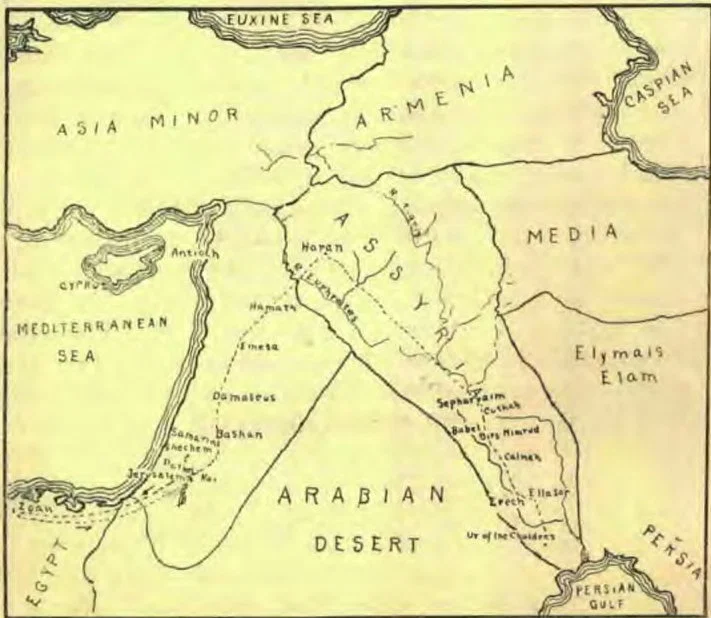
1. Who was Abram’s father? From what place did they remove? To what place did they go? Who are named as members of the company? Gen. 11: 31.
2. What command had the Lord given to Abram? What promise was made to him? Gen. 12: 1-3. Note 1.
3. After his father’s death in Haran, what did Abram do? How old was he at this time? Whom did he take with him? Verses 4, 5. Note 2.
4. As he journeyed, who appeared unto Abram? What did the Lord say? What did Abram build? Verses 6, 7.
5. Where did he again build an altar? Verse 8.
6. What caused Abram to leave the land of Canaan for a time? Verse 10.
7. Who went with Abram when he returned to Egypt? To what part of Canaan did he go? What is said of Abram’s wealth? Gen. 13: 1-4.
8. What is said of Lot’s possessions? Why could not he and Abram live together? Verses 5-7.
9. What did Abram say to Lot concerning the trouble? What plan did he propose? Verses 8, 9. Note 3.
10. What portion of land did Lot choose? What did he consider in making his choice? What did he not consider? Verses 10-13. Note 4.
11. What lessons should we learn from the experience of Lot? Note 5.
12. What did the Lord say to Abram after Lot was separated from him? Verses 14-17.
13. To what place did Abram then move his tent? What did he build there? Verse 18.

Things to Do

Locate on the map all places mentioned in this lesson. Trace Abram’s journey from Ur to Bethel.

Notes

1. It is written of Abram’s father, Terah, that he “served other gods” (Joshua 24: 2), and Abram, dwelling at Ur of the Chaldees, had grown up in the midst of heathenism. Abram, however, remained faithful to God and steadfastly worshiped him. But the influence of kindred and friends would interfere with the work which the Lord had set apart Abram to do, so he was called to separate himself from the associations of early life to go to a land—he knew not where.
2. Dean Stanley, a writer of ancient customs, gives this picture of the scene: “All the substance that they had gotten is heaped high on the backs of kneeling camels. The slaves that they bought in Haran run along by their sides. Round them are the flocks of sheep and goats, and the asses, moving beneath the towering forms of camels. The chief is there, amid the stir of movement, or resting at noon within his black tent, marked out from the rest by his cloak of brilliant scarlet. . . . The chief’s wife, the princess of the tribe, is there in her own tent, to make the cakes, and prepare the usual meal of milk and butter; the slave or the child is ready to bring in the red lentil soup for the weary hunter, or to kill the calf for the unexpected guest.”
3. Abram and Lot were both rich. Their possessions now brought them into trouble. Though Abram should by every right have had first choice of the land, yet he waived the rights which God himself had given (Gen. 12: 7), and courteously offered first choice to his nephew. Lot willingly accepted the favor, although he owed all his prosperity to his connection with Abram.
4. At first Lot pitched his tent “toward Sodom;” later he moved into a house in the city. “The dwellers in Sodom were corrupt; vile conversation greeted his ears daily, and his righteous soul was vexed by the violence and crime he was powerless to prevent. His children were becoming like these wicked people; for association with them had perverted their morals. Taking all these things into consideration, the worldly riches he had gained seemed small and not worth the price he had paid for them. His family connections were extensive, his children having married among the Sodomites.”—“Testimonies for the Church,” Vol. IV, p. 110.
5. “PITCHING ONE’S TENT TOWARD SODOM.—(1) Any wrong or selfish act, unforsaken, will naturally draw us toward evil. (2) There are great outward attractions to many sins. They are like Oriental cities, shining with marble and gold in the distance, but within they are full of all manner of vileness. (3) The approach to great sins is gradual. The innocent never rush into them at once, but are gradually drawn on; their repulsion is overcome little by little. ‘They first endure, then pity, then embrace.’ (4) He who keeps bad company pitches his tent toward Sodom. (5) He who indulges in doubtful pleasures pitches his tent toward Sodom. (6) He who pitches his tent toward Sodom will probably soon find himself in the city. (7) The only safe way is to keep as far from sin and as near to God as possible.”—Peloubet, 1913, p. 82.

Music When Soft Voices Die

Music, when soft voices die Vibrates in the memory— Odors, when sweet violets sicken Live within the sense they quicken; Rose leaves, when the rose is dead Are heaped for the beloved’s bed; And so thy thoughts when thou art gone, Love itself shall slumber on. — Shelley.

Facing the Future Without Fear

“It is never safe to look into the future with eyes of fear.”

Heaven’s Stars

How they twinkle, twinkle, twinkle, in the night, Till they thrill you through and through with pure delight; There they shine in heaven’s pure and arching blue, And their twinkling eyes are smiling down on you; Smiles from heaven’s glory shining through the sky, Telling of a brighter world for you on high.
L. MYRTLE SOURS.

To Save Coal

The slogan of the National Fuel Administration is: “It is everybody’s business to save coal.” The Administration counsels each one to seek to do this by:
Accustoming oneself to cooler rooms,
Using fireless cookers and oil stoves,
Economizing in care of range and furnace,
Turning off electric and gas lights whenever not absolutely needed,
Using only one room for study and reading in each home.
The necessity for saving gas and electricity comes from the fact that coal is used in their manufacture. The administration sends to every one the message, “Turn off the light.” The Government is thinking of changing the clocks so that everywhere the lights can be put out one hour earlier than at present. This alone will save millions of tons of coal.

Heeding Brings Thrift

The heeding of these war calls from the Government reacts favorably upon one in the acquirement of habits of thrift and frugality. Whether one’s pocketbook is directly affected by “turning off the light,” and by the adjustment of the check draft, the benefit to the Government and to one’s character is the same.
The Administration claims that economical and proper care of furnaces and ranges would save to the Government 40,000,000 tons of coal a year. St. Nicholas cites an illustration of coal wastefulness that also needs correction:
“In Tappan, New York, a patriotic citizen offered to pay one cent for each three pounds of coal picked up by the school children along the roads and in ash heaps. In five days sixteen boys and girls brought in more than sixteen hundred pounds of waste coal. Not one of these workers was over ten years of age. All the children of the village, one hundred twenty of them, earned enough in this manner to buy a hundred-dollar Liberty Bond.”
Let us each keep as far away as possible from the old saying, “What is everybody’s business is nobody’s business,” and make it true that “everybody’s business” in this instance at least is “my business,” and that business is to save coal.

The Story of Rama’s Bridge

THERE is an old Hindu story about Rama’s bridge. Rama, the chief of the gods, was building a bridge, and the monkeys came to help in the work. They carried earth and stones and trees, and piled them up. They moved cliffs and mountains.
While the work was at its height the squirrel came to help. The squirrel could not carry much, but he rolled himself in the sand and scampered to the bridge and shook the sand from his coat and scampered back again.
The monkeys stopped and laughed at the squirrel. They said, “Ho! what does he think he is doing?” But Rama had watched the squirrel, and he reproved the monkeys, saying that according to his powers the squirrel was doing as much as any of them.
And this legend adds that Rama reached down and stroked the squirrel kindly, and from that day to this the squirrel has always borne upon his coat the stripes that are the marks of Rama’s fingers.
This old tale has a food-saving point: We are all enlisted as volunteers to build a bridge from war to peace. Part of that bridge must be built of our surplus food materials. This great task enlists the whole nation. Some are able to accomplish more than others. But even the little child who saves a slice of bread is like the squirrel in the Hindu story, doing his or her utmost according to his or her powers.—St. Nicholas.

“Thy Father Calleth Thee”

MAJOR WHITTLE used to tell the story of the aged Quaker named Hartmann whose son had enlisted in the army. There came the news of a dreadful battle, and this old father, in fear and trembling, started to the scene of conflict that he might learn something concerning his boy. The officer of the day told him that the boy had not answered to his name, and that there was every reason to believe that he was dead. This did not satisfy the father, so, leaving headquarters, he started across the battle field, looking for the one who was dearer to him than life. He would stoop down and turn over the face of this one and then the face of another, but without success. The night came on, and then, with a lantern, he continued his search, all to no purpose. Suddenly the wind, which was blowing a gale, extinguished his lantern, and he stood there in the darkness, hardly knowing what to do until his fatherly ingenuity, strength, and affection prompted him to call out his son's name, and so he stood and shouted: “John Hartmann, thy father calleth thee.” All about him he would hear the groans of the dying, and some one saying: “Oh, if that were only my father!” He continued his cry with more pathos and power until at last in the distance he heard his boy's voice crying, tremblingly: “Here, father.” The old man made his way across the field, shouting: “Thank God! Thank God!” Taking his son in his arms, he bore him to headquarters, nursed him back to health and strength, and he lives today. Over the battle field of the slain this day walks Jesus Christ the Son of God, crying out to all who are wrecked by this awful power, “Thy Father calleth thee.”—The Tell It.

Sunshine Brought to Others Returns to Us

Who brings sunshine into the life of another has sunshine in his own.—David Starr Jordan.

Every Day Is the Best Day of the Year

WRITE it on your heart that every day is the best day of the year.—Emerson.

You have reached the end of this edition.

The Youth’s Instructor · Feb 12, 1918