THE recent World's Christian Citizenship Conference in Philadelphia was a great meeting. It emphasized two great ideas: the union of Church and State, or the church ruling, dictating, directing in religious matters; and the importance of co-operation among Christian denominations in putting these principles in practise. It proposes that the name of God be placed in the Federal Constitution, and that legislation shall shape all laws of the country in harmony with God's laws. But mark this, the STANDARD is always and forever GOD'S WILL AS INTERPRETED by some TRIBUNAL of MEN.
It would not do simply to declare that God's law shall be the law of the realm or the government, and then allow each man to interpret the law according to his own convictions or his own ideas of liberty. This would not suit our Christian citizenship friends. It would bring too much confusion into their theocracy. They contend for a legal sabbath day, and they fix that day on the first day of the week. Others do not believe in any religious sabbath. Still others hold to the seventh day. However conscientious one might be, regarding his own practise, he would be compelled to acquiesce in the religion of the authorized interpreters of the law.
The Rev. O. P. Gifford, D.D., of Boston, in his address on "The Bearing of National Life on Personal Religion," said:
Nor is this struggle of which we have just been speaking confined to America. The great problems that confront Christian patriots in our country are fast becoming problems in all countries, and are destined to become more and more so in every country where the Christian religion gains in favor, until it has leavened the whole lump of national life. The problems of the weekly rest-day, capital and labor, the relation of education to morality and religion, laws affecting the family life, vice and crime, war and how to abolish it, political corruption and how to remove it, are problems in all lands. Missionaries are laying the basis for Christian commonwealths as certainly as for Christian households and churches. No sooner have their converts graduated from the mission schools and colleges, and entered the employ of the government, than the question arises as to whether the government will respect their Christian convictions, in the matter for example of rest and quiet on the first day of the week, and the teaching of Christian morality.
Rev. T. B. Anderson, Rochester, Pennsylvania
How is it proposed to settle such questions? He continues:
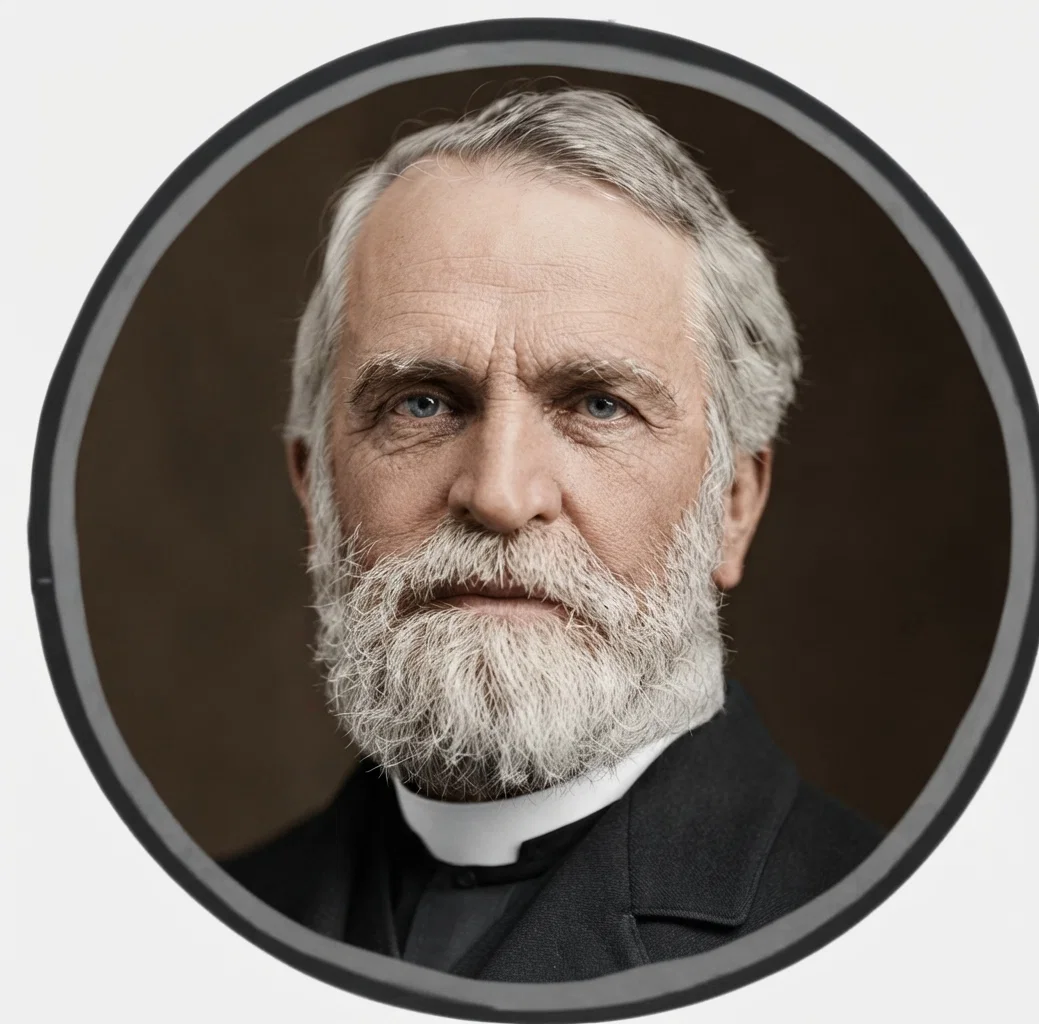
The Rev. O. P. Gifford
To whom shall these converts appeal for aid when denied their Christian convictions? Whom shall they entreat to intercede with the government in their behalf? Not to the church; for such intercession on the part of the church, would in all probability be regarded as an unwarranted interference of the church with the State. Only to a body of Christians, as citizens, only to a citizenship organization of Christian patriots, can such appeal be made to advantage. And such an organization—world-wide in character and influence—it is our hope to effect at this conference.
In other words, there shall be, if this Christian Citizenship Conference's ideas are rendered operative, a world tribunal which will settle not only the religion of the individual, but of the nations.
How this would work if fully operative is clearly set forth by another speaker, the Rev. Walter McCarroll, missionary in Cyprus, who sketched the conditions in Greek Catholic countries. We quote:
The distinctive teachings of this church with which these different States are in such close union, we sum up as follows: Based on tradition as of equal authority with the Bible, the teachings of the Evangel are utterly nullified; admitting the Virgin Mary and the saints to a share in divine worship, the Christ as sole and only Mediator between God and man is dethroned and dishonored; permitting the adoration of pictures and relics, "the glory of the incorruptible God is changed for the likeness of corruptible man;" attributing efficacious grace to the material emblems in the sacraments, the grace of God is turned into lasciviousness, and materialism substituted for true spiritualism; introducing the Old Testament priesthood, which had been fulfilled and abrogated by Christ, the rights and privileges of every individual believer as priest and king are arrogated to a special class; making ecclesiastical officialism the only and sole interpreter of Scripture, the individual is robbed of liberty of conscience and freedom of judgment; and finally, elevating the church to the place of supreme authority over the conscience makes it merciless in spirit and intolerant in action.
The ill effects of such a system of Church and State are thus set forth in part:
Ignorance, illiteracy, and immorality characterize the fruits of this system when it is unrestrained or uninspired by extraneous influences. . . . The characteristic of this system the most damning is its religious intolerance and hostility to evangelical Christianity. It leaves other religions alone, but does not permit liberty of conscience to any born within its pale who dare think for themselves and venture to worship according to the dictates of conscience. In the Greek Catholic countries all proselytizing agencies are prohibited under the severest penalties. . . . These representatives of religion and law, being thus given unlimited power and authority, perpetrated the most unspeakable indignities and horrors upon their helpless and innocent victims. [Baptists and Stundists.]
We need not quote more. This is sufficient to show the reader the effects of a union of religion with the State. Yet this is what is proposed by this Christian Citizenship Conference. As in Russia, the LAW-MADE TRADITION of Christian citizenship, the LEGALIZED INTERPRETATION, would not only be made "of equal authority with the Bible," but exalted above it. "The rights and privileges of every individual believer" would be "ARROGATED TO A SPECIAL CLASS" APPOINTED by this CHRISTIAN CITIZENSHIP BODY; "ECCLESIASTICAL OFFICIALISM" would be "the SOLE INTERPRETER of Scripture," and the INDIVIDUAL would be "ROBBED OF LIBERTY OF CONSCIENCE and freedom of judgment." Repudiating Protestant principles, the church would be elevated above the Word, over the conscience, and become mercilessly intolerant in spirit and action.
But it may be said, "We would not do such things; we are more enlightened; we are Protestants." But human nature is everywhere the same; and the whole history of the world shows that every church which has sought political power or preferment has deteriorated in spiritual life, and has become intolerant in proportion to her political zeal.
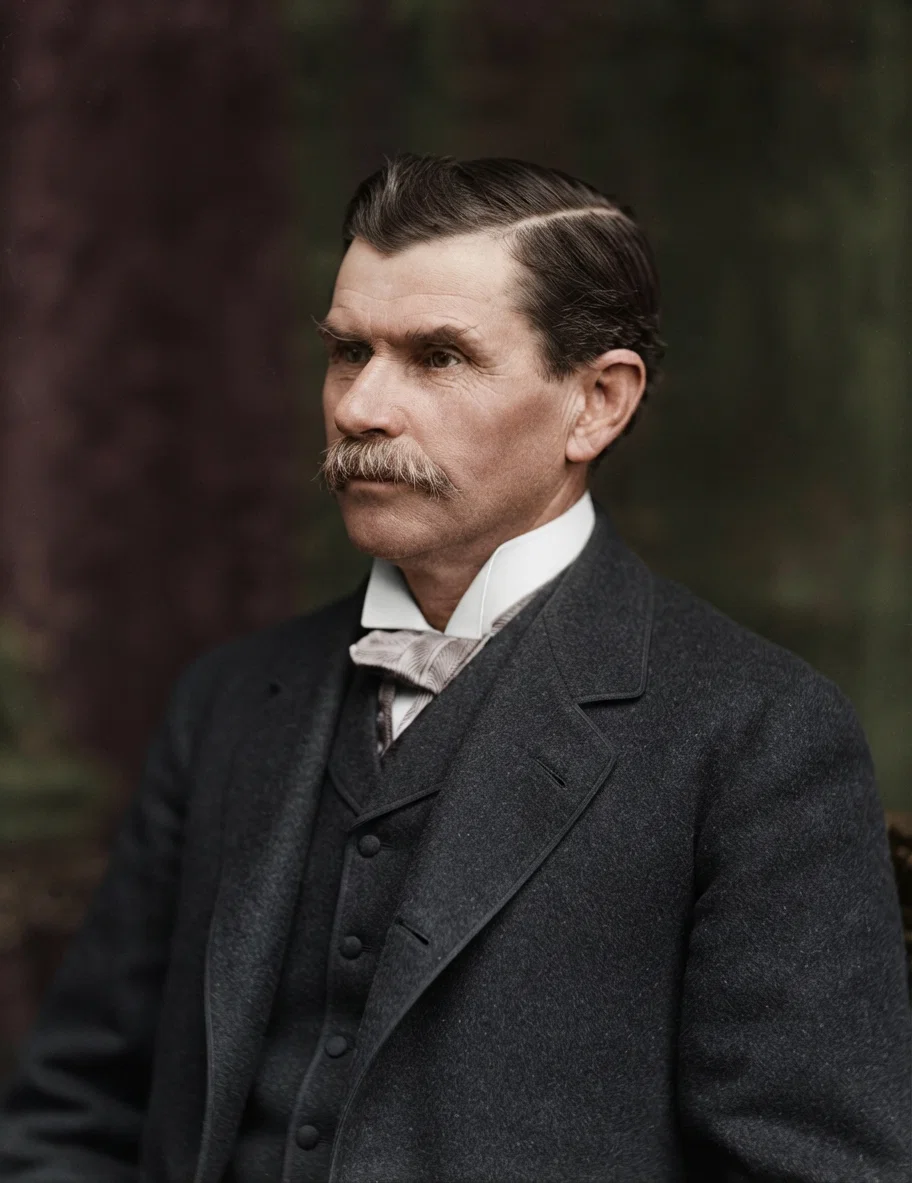
Rev. Amos Johnson, D.D., Methodist Episcopal, Philadelphia. He preaches and pleads for civic righteousness, ecclesiastical and political purity, Christian education in our public schools, colleges, and universities, for Christian citizenship, federation of churches, for a Christian republic in the United States. Delegate to the World's Christian Citizenship Conference.
Strange it is that men can not see it! Stranger far that the students of Christianity can not see it! Strange that professed ministers of the perfect and mighty Gospel of Jesus Christ are so ambitious to become ministers of imperfect and powerless — so far as character forming is concerned — civil law! Strange that Protestants can not see that what is proposed by this Christian Citizenship Conference is the utter repudiation of Protestantism, and the building again on the very foundation of the Papacy!11
Would God that they might be enlightened by the simple principles of the Gospel! Then would they forever repudiate all such Babylonian ideas of religion and State, which have cursed the ages, and which when embraced by this Government will accomplish in her degradation and fall what it has accomplished in the lost and decadent nations of the past and present.
AMERICANS, CHRISTIANS, AWAKE!
Banks and Money
Banks and Money.—During the fiscal year of 1910 the combined resources of the 7,000 national banks of the United States grew to approximately $10,000,000,000. On September 1 last their loans and discounts had reached $5,400,000,000 — an amount never before equaled since the creation of the national banking system in 1864. At the same time they were counting nearly $30,000,000 of overdrafts in their assets, a practise which there is no law to stop.
Combining all other banks in the United States and its island possessions with those of the national system, and allowing an estimate for those not reported, it is evident from the comptroller's report that the banking power of the nation has grown in the last ten years from 13,977 of all sorts of banks, with capital of $1,150,000,000 and individual deposits of $7,688,000,000, to more than 27,000 banks with combined capital close to $2,000,000,000 and individual deposits of nearly $16,000,000,000. The deposits have more than doubled in little more than a decade, and in the same time the combined loans and discounts have grown to more than $12,000,000,000.
The volume of business is reflected in reports which have been assembled from 137 clearing-house exchanges, showing combined clearings of $169,000,000,000 for the year ended on September 30, as against $158,800,000,000 for 1909. Cincinnati and six smaller cities were the only ones that did not show an increased volume of business transacted.
The New York Clearing House Association represented 60 per cent of the clearings of all associations of the country, and during the current year has reached $102,000,000,000, some $3,000,000,000 greater than in 1909. For those enormous transactions balances of only little more than $4,000,000,000 were used.
Bishop Nicholas C. Matz, Roman Catholic, urged in address before the Knights of Columbus at Denver, Jan. 1, 1911, that all Roman Catholics federate "to the end that by such a union they may become powerful enough to demand their civil and political rights." "Referring to the recent upheaval in Portugal, the prelate declared that the revolution was made possible through lack of organization by Catholics." So says a report in the Examiner of January 3.
A movement to substitute immersion — baptism — for the sprinkling method, was approved in the report of the committee to the Pittsburg, Pennsylvania, presbytery; but after a heated discussion the idea was turned down. The movement, altho a futile one, was regarded as important from the fact that the Presbyterian headquarters are nominally in Pittsburg.
A new method of mining, adopted in German coal-shafts, does away with dangerous blasting, while also avoiding much of the risk of spontaneous explosion of coal-dust. Deep holes are bored; but instead of putting in shots, water is forced into the holes under heavy pressure through pipes. The water finds its way through the coal fissures, and after the mass is loosened, the coal is removed without any dust, with a light pick and shovel.
The present type of battle-ship threatens to become obsolete, for it can be but a short time before the new Dreadnought type will be motor driven. The internal combustion engine, which is used successfully on smaller vessels, will, it is thought, do away with boilers and smoke-stacks, which will be a great saving in space and weight, and also add to the gun power.
In England a new system in railway transportation is now in daily service. It is called the "slip-coach," so named because one or two rear coaches may be "slipped," or uncoupled, from the train, traveling at a high rate of speed, and the coaches brought to a stop at any given point, while the rest of the train, without slackened speed, hurries on to other points.
The Western Union Telegraph Company has offered to the public a new service to be known as the "Ocean Mail Service," whereby messages addressed "Care Ocean Mail" at New York, San Francisco, Seattle, or Vancouver will be deposited in the post-office in time to catch the next ocean mail from the point designated.
In a train robbery, January 4, on the Southern Pacific near Ogden, Utah, one porter was killed and another wounded. The bandits entered the sleeping-cars, and after brutal treatment of some of the passengers, made their escape with over $2,500, including several articles of jewelry.
France is in a crusade against alcohol, in which leading scientists and public men are taking prominent part. Since 1880, when the restrictions on the sale of intoxicants were removed, the number of saloons in France has increased from 334,000 to 500,000.
Washington, D. C., is leading out in the matter of manual training schools. Two-year courses have been provided in seven trades for boys and three for girls. These courses are especially adapted to children in the sixth, seventh, and eighth grades.
Dr. J. Wilbur Chapman has completed arrangements for a great religious campaign in Jerusalem and another in Cairo, Egypt, in which he will be assisted by a number of prominent evangelists and singers.
The revolution continues in Mexico, and there is little prospect that it will soon cease. The federal troops have defeated the revolutionists in Chihuahua, and have taken the city of Guerrero.
A whole car-load of babies, fifty-two of them, none over three years of age, were sent from a foundling home in New York to Texas, where each baby will be adopted by some family.
It is said that the Sioux Indian tribe raises $300 every year to send a missionary to their worst enemies, the Crows, because the Bible tells them to love their enemies.
In the annual Christmas list of wealthy citizens of Spokane, Washington, it is stated that there are twenty-one millionaires and 133 persons who own $58,000,000.
A new fuel has been discovered called sudd. It is a weedy growth extending three hundred miles along the Nile, and is estimated to cover some 35,000 square miles.
It is proposed to build a railroad across Persia, at a cost of $90,000,000, which will bring London within seven days' journey of Bombay.
Dinah Hicks, a Negro woman born in slavery, died at her home in New Rochelle, New York, recently at the age of 110 years.
Prohibition Defeated in Oregon
By Frank A. Coffin
Statewide prohibition was defeated in Oregon by the liquor interests, November 8, by over 13,500 votes. At the same election what is known as the "Home Rule bill," a constitutional amendment purporting to give to cities and towns of the State the power to regulate and license the liquor traffic irrespective of State law, passed by a small majority.
Under the initiative and referendum statute, which provides that bills may be submitted to the people for popular vote at general elections, two anti-liquor measures were placed on the ballot. One called for the amendment of the State constitution so as to prohibit the manufacture and sale of intoxicating liquor after July 1, 1911, except for medicinal, scientific, sacramental, and mechanical purposes. The other was a bill for a law to prohibit the "manufacture, sale, possession, exchange, or giving away of intoxicating liquors . . . except for specific purposes."
As to the so-called "Home Rule bill," put forth by the Greater Oregon Home Rule Association, which is opposed to prohibition, the Prohibitionists declare it will make possible the establishment of saloons within dry territory. They say a clique of liquor men may, under the new constitutional amendment, incorporate a cross-roads town within a county or precinct voted dry under the local option law, and within this town set up as many saloons as they wish.
However, one clause of the amendment reads: "Such municipality shall within its limits be subject to the provisions of the local option law of the State of Oregon." There is a conflict of opinion as to just what is meant by this clause, when the amendment says also that the municipality is vested with "exclusive power to license, regulate, control, or to suppress or prohibit, the sale of intoxicating liquors therein."
The anti-saloon forces are said to have spent more than $2,000 in fighting their lost cause, and the Home Rule Association to have spent upwards of $20,000. The latter organization, composed of Portland business men unfavorable to prohibition, secured a list by precincts of all the voters in Portland and the suburbs, with the aid of which they conducted a man-to-man campaign. Rev. J. R. Knodell, superintendent of the Oregon Anti-Saloon League, said after the election returns came in that the saloon forces had outgeneraled him and his co-workers.
"The big speakers sent here by the liquor interests were not sent for the purpose of making votes," he is quoted as saying. "They were sent here to distract attention while the 'gumshoe' men did the work. We preachers thought no one dared appear in public and defend the saloon. When the liquor interests sent their speakers here we were astounded. The Prohibitionists stampeded to get on their trail, dropped all of the work, and left the field open for the 'gumshoe' men. It was a 'buttonhole' campaign, a system of talking to each man personally while we were after the speakers. It was a clever coup, and we were caught in it."
FRANK A. COFFIN.
Original Americanism
As Seen Through French Eyes
The Western Watchman, Catholic, prints an article from the Figaro by M. B. Van Vorst on "The Church and the Faith of the United States." The writer quotes from an old French author of 1784 who speaks of the religious freedom in America, and says:
"At the moment they drew up their Constitution, the Americans formulated their desire of religious liberty in the following articles:
"No religious test shall ever be required as a qualification to any office or public trust under the United States."
"Congress shall make no law respecting an establishment of religion, or prohibiting the free exercise thereof."
"The result of this tolerance has been the rapid multiplication of the different sects. Between the Methodists, who count their followers by millions, and the Shakers, whose number only reaches 300 members, one can count 42 sects who are fervent enough in their beliefs to support their particular church."
And he truly tells us that "the absence of a religious organization officially imposed gets rid of all possibility of persecution, every form of anti-clericalism."
Wo worth the day when America yields to the politico-religious organizations and combinations so rapidly forming.