The Youth’s Instructor, Vol. 64, No. 8.

Yuan Shi-kai Crowned Emperor of China
Earlier text: Birds as Travelers

Mary’s Investment

HERE is a true story about a little girl, whom we shall call Mary. On her seventh birthday she received from her father, who lived in India, money with which to buy a Bible. No doubt Mary immediately began to picture to herself what a beautiful Bible she would buy, for the money sent by her father was enough to buy a very handsome one indeed. But before the Bible was bought, an idea occurred to Mary.
“Grandmother,” she asked, holding out her precious money, “is there enough money here to buy two Bibles, instead of one?”
“Yes, dear,” replied grandmother, “but what do you want with two Bibles?”
“Oh,” said Mary, “I want one myself, and one to send to India for some little Indian girl just seven years old, like me, who hasn’t any Bible of her own.”
And so it came about that Mary did not get such a pretty Bible as she had expected to get at first. But she didn’t mind about that, for she was thinking, not about herself at all, but about the surprise birthday present she was sending out to the little unknown girl in far-off India.
A letter was written asking that when the book was given to its new owner, the name of the little Indian girl should be written on the flyleaf, and after the name, the words, “From Mary——.”
A new petition was added to Mary’s evening prayer, for night by night, without fail, the little English child prayed to God to bless the Hindu girl who had a Bible like her own.
Years passed, and Mary grew to young womanhood, and in 1882 she went out to India as a missionary. One day, not very long after her arrival, she was visiting some zenanas with a native Bible woman who was a very earnest Christian. In the course of conversation, it somehow happened that the Bible woman heard for the first time the young missionary’s name. A look of glad surprise crossed her face, and hurriedly putting her hand into her pocket, she drew out a book and eagerly signed to her companion to read what was written on the flyleaf. Mary looked, and read her own name! Yes, this earnest Christian woman was the little Hindu girl whom she had remembered so often in her prayers.
God had blessed Mary’s first missionary work, for it was through reading that Bible that this native woman had become a Christian; and now that Mary was a woman, she was to have the joy of having as her companion and fellow-worker the very one for whom she had prayed so long ago, and so far away.—The Silent Evangel.

The Good Old Times

I’ll tell you a story true: ’Twas when the country all was new, And bears, sometimes, came ranging through.
On woods and fields, all brown and gray, Was closing the November day, With cold winds whistling every way.
Just eight years old was little Ned; Along the lonesome path he sped, With pa’s old hat down on his head.
Changing, to give each hand its share, A heaped-up pail of pommes de terre, Just dug, all fresh, and white, and fair.
The pail was heavy, and too slow His hurrying footsteps seemed to go, Dark fears and darkness gathering so.
And now looms up just in his track, A something, strange and awful black. The woods are dark, he can’t go back—
And that black something, growling low, Is coming toward him, crawling slow. Way down the hill the home lights glow.
“The candle’s lit; pancakes for tea,” He said aloud; “and here I be, An’ there’s the cake ma promised me.
“If I could fly, or climb a tree, Or pa would come, or somebody, For that’s a bear, I truly see.
“Oh, if I only wasn’t Ned, Or this a dream, and I in bed!” Then popped a thought into his head.
*The steady gaze of human eye Will make the wildest creature shy.*
So fixing on the moody bear Both eyes fierce shining with despair, He looked and looked, with all his might, Crept sideways and outflanked him quite.
Slowly, full two rods the other side, The magic of his heels he tried. He scarcely minded logs and stumps, Nor heeded many graceless bumps.
Still kept his pail, the contents too (To lose them it would never do; Though twenty bears were at his back, Breakfast must not potatoes lack); And reached home safe, poor little boy— Back through the years, I wish him joy.
Close to the door, he thought a minute What he would say, and how begin it. For Ned was famed for seeing bears, And having many causeless scares. So, he said, creeping in quite still, “I saw a black dog on the hill.”
“What dog? How big?” the children cry. “Large as our pig, and just as high; He reared on his hind feet, just so, And showed his teeth, and eyes aglow. I called, ‘Good fellow,’ he growled more; I don’t know what it was, I’m sure.”
“Seems like a bear,” said Uncle Dick; “I’ll go and see; Ned, where’s my stick?” Short time sufficed his search to make, It was a bear, and no mistake; He saw it in the twilight dim; It reared and made great mouths at him.
Mamma and children, all turned pale. Papa came in and heard the tale. “I’ll go to Smith’s,” he calmly said; “Hush, children, you have naught to dread; Smith always keeps a loaded gun; You get the pitchfork, Ned, now run.”
Pa, Uncle Dick, Smith, and his boys Were soon en route, with little noise; Their main dependence Smith’s old gun, Of long descent from sire to son. Pitchforks were three, with three keen prongs; Dick held aloft the massive tongs.
Darkness had gathered round the hill, As cautiously they marched, and still, Peering far off into the dark, With now and then a whispered, “Hark!” Till “Halt!” said Smith, “there sits your bear.” All looked; all saw his eyeballs glare. They halted, held a consultation, Giving to every man his station. Smith made a speech. They all agreed To march right up with fiercest speed; Not to back out, or shirk, or run, Until the victory was won. Smith was to fire, the rest be ready To meet the bear with weapons steady. Flash in the pan did that old gun; But bravely rushed they every one, And all at once gave thrust and thump, When, lo, ’twas nothing but a stump!

MORAL

So, children never let your fear Make molehills mountain high appear. And when your duty you’ve begun, Be sure there’s danger ere you run. For Satan, sly and artful foe, Is not well pleased that you should go In paths of right, and hence will try By fears to make you turn and fly. But do not tremble at his scares, They all are stumps, they are not bears.
—Selected.

X — Get Ready

(March 4)
LESSON SCRIPTURE: Matt. 24:42-51.
MEMORY VERSE: “Be ye also ready: for in such an hour as ye think not the Son of man cometh.” Matt. 24:44.

Questions

1. What day is soon coming upon this world as a thief in the night? 1 Thess. 5:2.
2. Upon what class of people will it come as a thief? Upon whom will it not come as a thief? Verses 3, 4.
3. When a man knows that a thief is coming, what does he do? Matt. 24:43.
4. Therefore what should those do who know that the day of the Lord is coming? Verse 42.
5. About what should they be watchful? What should accompany their watching? Luke 21:34-36.
6. In what condition are we admonished to be? Why is it necessary for us to get ready? Memory verse. Note 1.
7. What kind of servant does an earthly lord seek to set over his household? Matt. 24:45.
8. When and why is the servant called blessed? Verse 46.
9. How will the faithfulness of such a servant be rewarded? Verse 47.
10. What will an unfaithful servant say in his heart? Verse 48.
11. How does his evil thought bear fruit? Verse 49.
12. How will he be taken unawares? Verse 50.
13. Only what may such a servant expect? Verse 51.
14. In view of all these things, what does the Lord again warn us to do? Rev. 3:3. Note 2.

Notes

1. “Those who watch for the Lord’s coming are not waiting in idle expectancy. . . . Those who are watching for the Lord are purifying their souls by obedience to the truth. With vigilant watching they combine earnest working.”—“The Desire of Ages,” p. 634. In other words, they make haste to get ready and to help others to get ready, for that event.
This time spoken of for which all should be ready, is a time prior to Jesus’ appearing on the cloud as he comes to the earth. It refers to that time when Jesus closes his ministry as priest in the heavenly sanctuary. That time comes suddenly upon all, and unless we are found ready then, with all our sins forgiven, we shall not be prepared to meet him when he comes for his people at his second personal coming, accompanied by all the holy angels. This is why Jesus tells us beforehand to be ready, and to watch. See “Testimonies for the Church,” Vol. II, pp. 190, 191.
2. “The word came to Noah, ‘Come thou and all thy house into the ark; for thee have I seen righteous before me.’ Noah obeyed and was saved. The message came to Lot, ‘Up, get you out of this place; for the Lord will destroy this city.’ Lot placed himself under the guardianship of the heavenly messengers, and was saved. So Christ’s disciples were given warning of the destruction of Jerusalem. Those who watched for the sign of the coming ruin, and fled from the city, escaped the destruction. So now we are given warning of Christ’s second coming and of the destruction to fall upon the world. Those who heed the warning will be saved.”—“The Desire of Ages,” p. 634.

X — Get Ready

(March 4)
LESSON SCRIPTURE: Matt. 24:42-51.

Questions

1. In view of our not knowing the hour when the Master comes from his mediatorial work, what does he admonish us to do? Matt. 24:42. Note .
2. What illustration does Jesus cite to impress the need for watchfulness? Verse 43.
3. In what condition are Jesus’ followers to be? Verse 44, first part. Note .
4. Why are the people of God to be ready? Verse 44, last part. Note .
5. What will the faithful and wise servant be doing at this time when Jesus goes to his Father in heaven to receive of him the kingdom? Verse 45. See also Dan. 7:9-14.
6. What is said of such a servant? Verse 46. Note .
7. What is to be his final reward? Verse 47.
8. At this time what does Jesus say some of his servants may be saying in their hearts? Verse 48. Note .
9. What will these evil servants do? Verse 49.
10. What warning from the lips of Jesus is given them? Verse 50. Note .
11. What will be the portion of the unfaithful servant? Verse 51, first part.
12. When too late for repentance and his lost condition comes over him, in what way will the evil servant express his disappointment? Verse 5, last part. Note .
13. Draw the contrast between the rewards of the two servants. What causes led to the final reward of each?

Notes

Religious Liberty Achieved

FOR over fifteen years a campaign for religious liberty has been going on in three of the South American republics. In Ecuador, Bolivia, and Peru no public worship was allowed except in the established Catholic Church, and no marriages could be contracted except under Catholic forms. Several years ago these restrictions were removed in Ecuador and Bolivia, and full religious liberty was permitted; but in Peru liberty of worship was still forbidden, and any other than Catholic religious service had to be behind closed doors in private houses to which admission was by card. Although petitions and protests had been directed over and over again from citizens of this country to the Peruvian government, seeking full liberty of worship, it seemed as if the congress of Peru would never yield.
We are glad to learn through our State Department that with the beginning of this year that section of the Peruvian constitution which prohibited any public worship except after the Catholic manner has been annulled and legislation adopted granting full religious liberty. This does not mean that Catholicism ceases to be the established religion of Peru, but only that other forms of religion may be freely and publicly exercised. But it is a great victory that at last, throughout the entire Western Hemisphere, religious liberty has been achieved. This marks an epoch in the religious history of the continent. No longer anywhere will those who would worship God in their own way be compelled to hide themselves behind locked doors. The dark ages have passed away. No longer will those who are not of the established church be compelled to live without the sanctions of legal marriage.
The next religious campaign will be over the question of an established church. At a period in the history of our older States it was thought the business of the government to care for and support religion. In New England the town meeting made contracts with the minister and paid his salary. In Maryland the Roman Catholic Church was established, as also in Louisiana and other States; in New York the Dutch Reformed; in Virginia the Church of England; but long ago the country learned that everybody should pay for his own religion, and that way the whole world moves. The example of the United States and Canada will before long be followed in South America.—The Independent.

Congress and the Bible

IN the earliest days of the Republic, Congress, through a period of five years or more, it is affirmed, gave much consideration to ways and means for providing copies of the Scriptures to destitute Americans. On account of the War of Independence the scarcity of Bibles was very great, and the war risks were so high that a plan of importing types and paper for printing 30,000 copies had to be abandoned. Twenty thousand copies were therefore ordered from Scotland and Holland at public expense. When the Robert Aiken edition of the Scriptures was published at Philadelphia, Congress appointed Drs. White and Duffield to examine the work and to report on its accuracy. This having been done, they passed a resolution recommending this edition of the Bible and authorizing the publication of their recommendation.—John Keller.

“Ready-to-Wear” Shacks Still in Use
MR. RICHARD HARDING DAVIS, who has recently visited Messina, Italy, the victim of a disastrous earthquake in 1908, says that there has been no apparent effort made to restore the city.
“The post cards that were printed at the moment of the earthquake show her exactly as she is today. With no sign of life in the streets, with the inhabitants standing idle along the quay, shivering in the rain and the snow, with a background of crumbling walls, gaping cellars, and hills buried under acres of fallen masonry, the picture was one of terrible desolation, of neglect and inefficiency. The only structures that had obviously been erected since the earthquake were the ‘ready-to-wear’ shacks sent as a stop-gap from America. One should not look critically at a gift house, but they are certainly very ugly. In Italy, where every spot is a ‘location’ for moving pictures, where the street corners are backgrounds for lovers’ trysts and assassinations, where even poverty is picturesque, and each landscape ‘composes’ into a beautiful and wondrous painting, the zinc shacks, in rigid lines, like the barracks of a mining camp, came as a shock.
“Sympathetic Americans sent them as only a temporary shelter until Messina rose again. But it was explained, as there is no rent to pay, the Italians, instead of rebuilding, prefer to inhabit the ready-to-wear houses. How many tourists the mere view of them drives away no one can guess.”
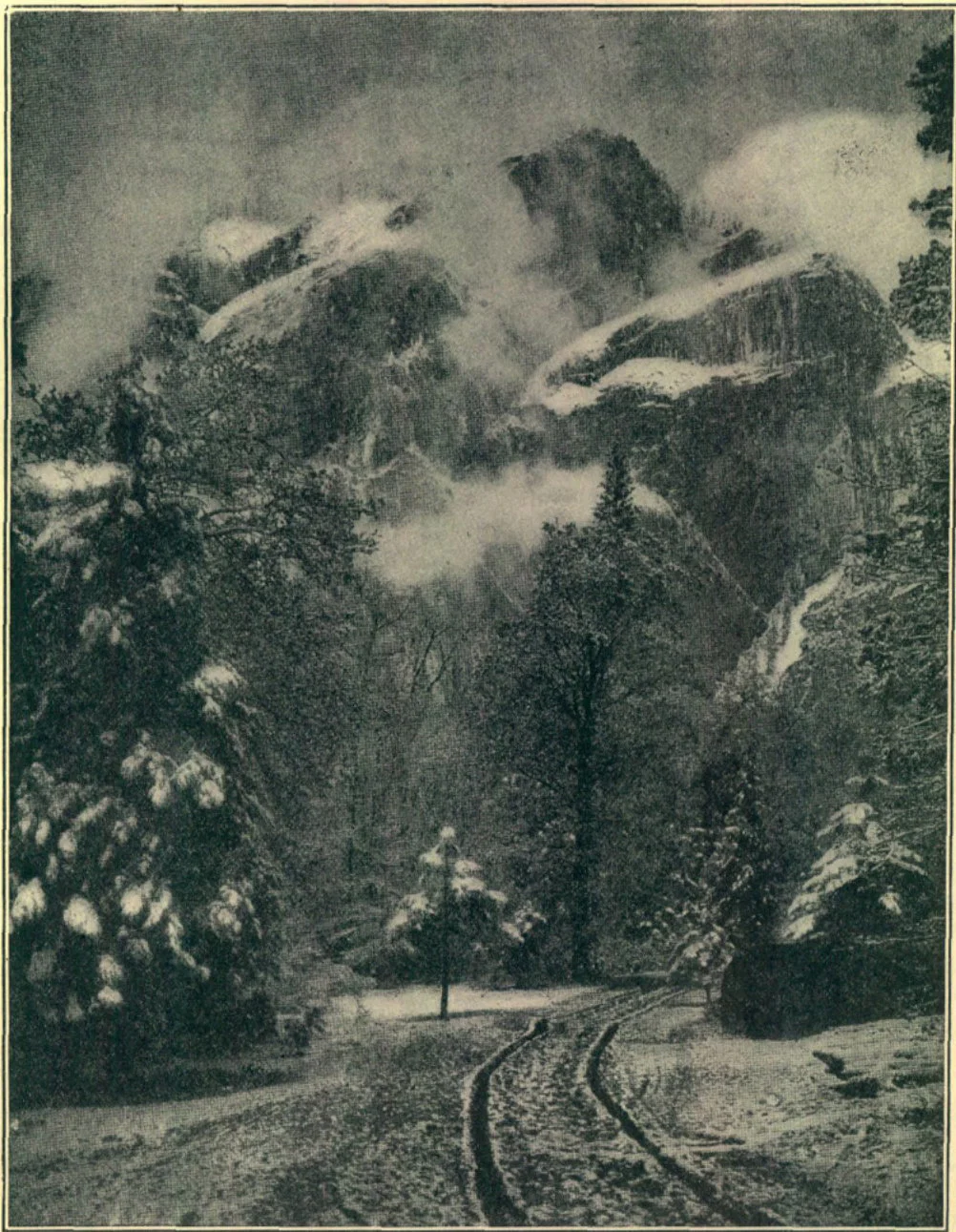
“The fleecy clouds their bosoms bare,
And shed their beauty on the floating air.”
“The fleecy clouds their bosoms bare, And shed their beauty on the floating air.”
THE EARLY MORNING OFTEN FOUND JESUS IN SOME SECLUDED PLACE, MEDITATING, SEARCHING THE SCRIPTURES, OR IN PRAYER.

You have reached the end of this edition.

The Youth’s Instructor · Feb 22, 1916