MANY an angry expletive or forceful action might be avoided if a few common-sense suggestions were remembered. Unfortunately, it is frequently the things that do not apply to the particular case that come to mind, while the special one is forgotten till the need for it has passed.
For instance, the knowledge of how to keep ice in the sick-room may be of service in saving life. A deep tin pan or pail should be taken, and a piece of flannel so fastened over the top that it will sag in the middle, but not enough to touch the bottom of the pail. A good-sized piece of ice can be placed in the flannel, and completely wrapped in its folds so that no air can reach it. Small pieces of ice can be broken off, using a hatpin.
When windows rattle in heavy winds a few slips of folded newspaper will stop the unpleasant noise, besides keeping out the wind. Paper is an excellent weather stripping, and it is a wonder that some enterprising dealer has not patented a way to use it. Pinning the curtains together on very cold nights will prevent the chill of the glass from lowering the temperature of the room.
When the dreaded house-cleaning time arrives, the careful mother of the family finds so many annoyances that a few hints regarding some of them may not be scorned. Keys that never seem to stay in place may be fastened to the knobs by small gilt cords. Doors that will not open easily and drawers that stick may frequently be put in good condition by rubbing the offending edges with stove blacking, or even a soft lead-pencil. The wearisome and continual polishing of brasses may be avoided if, when they are in fine condition, they are varnished with a colorless shellac, kept in any paint store. A simple polish for furniture can be made of one part turpentine and three parts linseed oil, and is quite as efficacious as any of the expensive ones with fancy names. Kerosene oil will remove finger marks without taking off paint or varnish as well. Common washing soda will cleanse the drain pipes. Salt or Indian meal will brighten the carpets and keep the dust from rising. When a broom has been used for heavy sweeping, it keeps longer if it is dipped in hot water, shaken out well, and allowed to hang up until dry.
When hard water is used, if a common marble—not glass—is put in the kettle, it will prevent the flakes of lime from forming on the sides. When a double boiler is improvised from two saucepans, a couple of nails placed in the lower one will prevent burning, and insure the water reaching every part. Lemons will keep better if strung on a cord through the blossom end, and hung up in a dark place; they must not touch each other.
Tho it is my last suggestion, it may not be the least, that slightly moistening the button-holes of stiffly starched collars may prevent a morning episode that is quite common, “even in the best-regulated families.”—Selected.
AN OLD SAW THAT IS SENSELESS.
IN olden times when a person died it was customary to toll the church bell a certain number of times to indicate whether it was a man, woman, or child. For a woman it was tolled three times and for a man thrice three times. The stroke of a bell was called a “teller,” and hence it was nine tellers for a man; or, as folks said in those days, “Nine tellers mark a man.” This saying, which was continued long after the tolling custom was abolished, finally became converted into the present saying, “Nine tailors make a man,” which is devoid of both sense and reason.—Ladies’ Home Journal.
Stamps Collections Bought
STAMPS Collections Bought. Best Prices. Send particulars. Fine old Mission Packets for sale. 100 varieties, 10c; 200, 30c; 300, 60c; 25 (special value) 15c. Postage 2c extra. WESTERN AGENCY, 528 13th St., Oakland, Cal.
Jesus and the
Resurrection
Important thoughts upon immortality and the resurrection are clearly presented in this tract, showing our dependence on the Saviour for both. A. G. L. No. 42. 50 cents per 100.
PACIFIC PRESS PUBLISHING CO.
New York City Oakland, Cal. Kansas City, Mo.
2,500 IN USE
Lambert's Nut Butter Mills
Are the original and only perfect nut grinders on the market, having stood the test of five years' general use. Ball Bearing, easily operated, make the finest kind of butter, warranted to give satisfaction.
Nut Butter is a valuable substitute for lard, cow's butter, and all animal fats, which are recognized to be injurious to the human system.
Guide for Nut Cookery, a most valuable book of 450 pages, given with each mill. We make roasters and blanchers too. Write to-day for special prices on all kinds of health foods, nuts, and machinery. Specialties: Spanish and Virginia varieties of shelled peanuts.
All orders promptly filled. Send to-day.
JOSEPH LAMBERT
336 W. Main Street Battle Creek, Mich.
Pacific Press Publishing Co.
Publishers
SIGNS OF THE TIMES
OUR LITTLE FRIEND, Etc.
First-class facilities for the execution of every description of modern printing and publishing
Orders for general printing will receive most careful attention
OAKLAND, CAL.
Branches at ::
SAN FRANCISCO
KANSAS CITY
NEW YORK
Printers
Publishers
Binders
Etc.
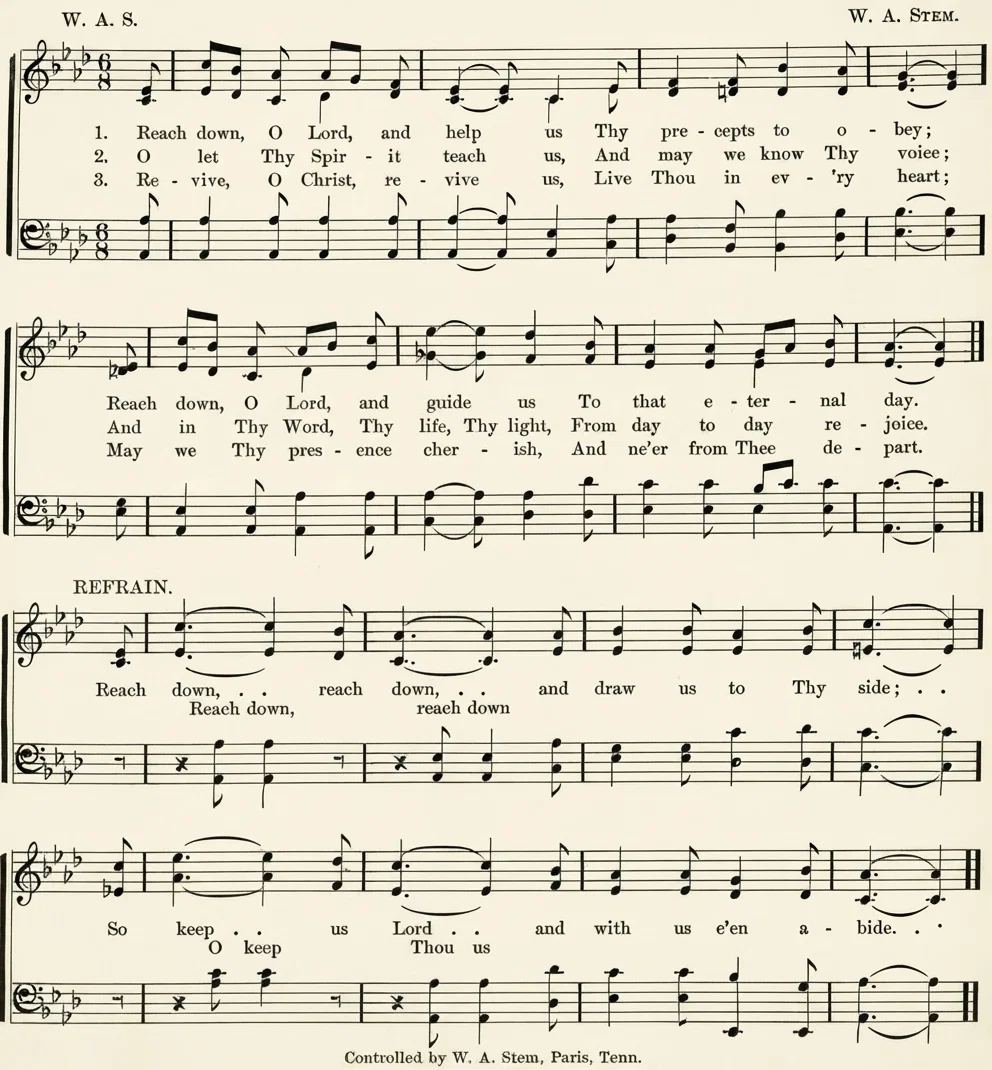
Reach Down and Help Us.
MISSIONS
By Wm. Nehring
THE WIND ACROSS THE WHEAT.
I HAVE wandered through the woodland and o'er the meadows sweet,
And have heard the lovely singing birds by brooklets' cool retreat,
And I have seen in spring-time the grass and flowers and trees
Come bursting into greenness and blossom in the breeze,
And I have been delighted with the scent upon the air,
Of the perfume of sweet blossoms, so many and so fair,
And my heart is filled with reverence, my heart is filled with love,
At the wondrous loving-kindness of the gracious God above.
But now I see another sight most wonderful and grand;
'Tis the waving, golden fields of wheat in Oklahoma land.
Stretching out in broad expanses as far as eye can reach,
The bounteous harvest should to man a wholesome lesson teach.
And as I walked beside the fields I heard a sound most sweet,
In the rustle and the whisper of the wind across the wheat,
And it seemed to tell of millions who are waiting to be fed;
And the wheat is heaven's blessing to supply their daily bread.
And next I heard a sighing as of a mighty band—
Of India's famine-stricken, and from Europe's care-worn land,
And then the wheatfields seemed to beg that they might soon be sent
To satisfy the hungry, and bring them sweet content.
And my heart was filled with thankfulness and praise to God above,
For His blessing and His goodness and His blest impartial love—
For sending rain and sunshine on evil and on good;
And hearing e'en the raven's cry when calling for their food,
O, sweet the thought, He cares for me, and guides me all the way!
He knows my needs before I ask, and keeps me day by day;
And 'tis sweet to heed the pleading of the Spirit's gentle voice,
That takes away all selfishness and makes the heart rejoice,
O, that this hope to weary souls may everywhere be given
Of sharing in that glorious time when this earth will be heaven,
When pain and trouble flee away and sin shall be no more,
And woe and want shall banished be from that immortal shore!
Kiel, Oklahoma. WM. NEHRING.
EDUCATION FOR THE COLORED RACE.
By J. E. White
AT the close of the Civil War was the golden opportunity for church and missionary work in the South. The colored people were then easier to lead, as their habits as freedmen were not yet formed. Some religious denominations undertook this work in a measure, but none so heartily as the Baptists, who had forecast the outcome of the war, and had their forces ready at the proper time. Hence the Baptists have the leading place among the colored churches. Many mission schools were established; and missionary work has been continued in a more or less efficient manner, and through various channels. The most successful effort in this line which we have met is that of the Baptist Women's Missionary Society. This society is all that its name indicates, and it is doing energetic, sensible work. About one hundred women missionaries are employed in this field under the control and pay of the society. It operates in the churches and homes of the people, and its object is to relieve suffering and elevate the people.
But the crying need of this field is better educational facilities. More than fifty-five per cent. of the colored people can not read. To them the Bible is a sealed book, only as they take its lessons from the lips of others. Hence they are in a position to be misled by false and unscrupulous teachers. Too often those who should be spiritual leaders of the flock, are but "blind leaders of the blind." Custom and tradition take the place of a "thus saith the Lord," and govern the lives of the people, accordingly.
Mission School at Vicksburg, Miss.
It will, then, be readily seen that the first work to be done is to teach the colored people to read the Bible for themselves, and to instruct them in the importance and power of God's Word; also that obedience to its teaching is required. At present a wide latitude is allowed, and in many churches is required the paradox of a change of heart without a change of life, the ministry setting the example. The sight of a minister in a large and popular church taking a drink of whisky from a flask while in the pulpit, does not tend to instil into the hearts of his people lessons of sobriety and godly living. This is an actual scene, which came to the knowledge of the writer. Another minister in a prominent colored church, when brought face to face with Bible truths which he and his church were ignoring, exclaimed in a sermon from his pulpit, "I'll die and go to hell before I'll change." Thus church creeds are placed above the acknowledged teachings of the Bible by the ministers, and the word of the minister goes farther with the majority than a direct command from the Word of God.
As a rule, moral darkness surrounds the people as a pall. We have attended church meetings and communion seasons, and have noted the men and women most active in the "experiences" and services, and before the week was over have seen numbers of these same people mingling in the orgies of the lowest dens, which flourish along the main streets of some of our Southern cities. Yet there are, in every place we have entered, earnest people who realize the moral and spiritual darkness which surrounds them, and are crying earnestly to God for light and help. When we come to them with plain lessons from the Bible, they gladly receive us as a direct answer to their prayers.
What do these people need?—They need educating physically, mentally, and morally. They must be taught to eat, drink, live, and work properly. They must have their mental powers instructed and expanded by proper education. Their moral natures must be quickened, and they must be taught to discern right from wrong; between the sacred and the common; between the service of Satan and the service of God.
In most cases their religious training is at fault. They are an intensely religious people, but much of their religious manifestation is like the rank growth of noxious weeds in a fruitful soil. Properly cultivated, the soil produces an abundant crop of useful products. Left to itself, it will produce weeds, briars, and thistles, which are "nigh unto cursing." In this work, Satan has been very busy; for he would much prefer to have a false religion, which can not save, engross the mind and energies of the people, than to have them indifferent or actual infidels. This class of people is hard to reach, and they are the most bitter opposers of God's plain truth.
Teach them the power and importance of God's Word, and the necessity of obedience when it speaks. As they learn to read for themselves, let the every-day lessons be drawn from the Bible. As their minds expand, they will take in the power and importance of the Word. They will grow into it, and their faith will strengthen. They must not be hurried. Let disputed doctrines alone. They will settle themselves later. Just get their feet planted firmly on the Word of God, and there is then a channel established through which the Holy Spirit will speak, to the enlightenment of the mind.
The following selections from a recent letter from Mrs. E. G. White are especially applicable in this connection:—
How pleased I am that the work in the Southern field is advancing! My prayer is, Let it advance, deepen, widen, enlarge, until this shall be a part of the vineyard no longer neglected, but under cultivation. May it be a fruitful garden of the Lord. This can only be done by educating the colored people to read. Then the Word of God, the Bible, placed in their hands, even tho without explanation, will be made plain and applied by the Holy Spirit.
The apostle Paul considered that the Jew had a great advantage above the Gentile, "because unto them had been committed the oracles of God." This is the highest commendation or testimony of the value of the Bible. Every effort should be made to have the sacred Book containing the whole of the revelation of God, placed in the hands of all nations, tongues, and people.
If the mere possession of the Bible is an advantage, how much greater is the privilege of knowing how to read and study its pages! All who wish to13understand the Word are stewards of God as verily as those who have been entrusted with riches. Earthly possessions are talents to be imparted to others to advance the work of righteousness in the world.
The Bible is becoming more and more an educating lesson-book for children and youth, giving to the young, to those of mature age, and to the aged of every nation, the instruction of truth in heavenly things which is the higher education.
Teach the colored people to read the Word of God, and it will have a transforming power upon life and character, and give vigor to the intellect. As its principles are sent home by the power of the Holy Spirit, they will work a positive reformation in the minds of all who receive the Word.
Our only hope for this field is in the transforming power of the Spirit of God as brought to the people through the Word.
J. E. WHITE.
EFFICIENT LABORERS.
By H. E. Sawyer-Hopkins
WHEN Saul was chosen to occupy the throne of Israel, he was deficient in knowledge and experience, and had, with many good qualities, serious defects of character. But the Lord granted him the Holy Spirit as a guide and helper, and placed him in a position where he could develop the qualities requisite for a ruler of Israel.
This shows that if we trust in our own strength and judgment, we will commit grave errors; but if we are humble, and are willing to be guided by God, we can be successful in all our undertakings. God in His providence places us where we may learn of Him. To all who will receive instruction, He will impart grace and wisdom. It is the purpose of the Almighty to bring us in close connection with Him, that Satan can have no opportunity to pervert our judgment.
The Lord instructs us to pray in secret, to pray while we labor, to pray while walking by the way. Let the heart's desire ever ascend to God. When we enter upon our work, we have almost everything to learn; but with Christ as teacher, we can become efficient laborers. God chooses those who feel their dependence upon Him, to engage in His work.
H. E. SAWYER-HOPKINS.
Battle Creek, Mich.
OUR WORK AND WORKERS.
FOUR persons from Camden, N. J., were recently baptized at Philadelphia.
FOUR added to the church at Minneapolis, Minn., at last communion service, is the report of Brother H. F. Phelps.
THE wife of Brother R. A. Underwood, president of Pennsylvania Conference, died at the family home in Mesopotamia, O., on the 2d inst.
THE baptism of six young people at Ruthven, Iowa, by Brother C. T. Adams, is noted in the Worker's Bulletin, by Sister Mary B. Hansen.
TENT-MEETINGS in the interest of the Scandinavians are being conducted at Kane, Pa., by Brother Meleen, assisted by Charles and Silma Johnson.
A POSTAL card from Brother W. S. Dann notes the baptism of forty-six candidates at Omaha, Neb., June 17, with a dozen more to follow a week later.
FROM the Missionary Visitor we learn that on the 5th inst., the Portland (Oregon) Sanitarium and Benevolent Association was incorporated with W. T. Knox, G. E. Tyszkiewics, H. W. Decker, W. R. Simmons, M.D., Mrs. J. Gotzian, A. Q. Shryock, M.D., and L. I. Stiles as incorporators. W. R. Simmons, M.D., was chosen president and superintendent; L. I. Stiles, secretary; and W. W. Sharp, treasurer.
SISTER D. A. FITCH, of Burlington, Iowa, has answered a call from the Medical Missionary Board to connect with the sanitarium at Guadalajara, Mexico.
AT the recent local camp-meeting at Frazee, Minn., six candidates were baptized. A series of tent-meetings is being carried on since the meeting.
THE Texas Reporter says: "It will be remembered that Brother Bahler took 5,000 copies of the Quarter-Centennial SIGNS. He has kept a careful record of the time required to sell these papers, and has just sent us the result. It took Brother Bahler and his daughter Grace 162 hours and 10 minutes to sell the 5,000. This, figured into days of 10 hours each, would give 16 days and a quarter."
A LETTER in Echoes from the Field, from Brother M. A. Altman, of Liverpool, England, says: "Again the season for tent work has come, and this time it has brought to us a nice new tent fresh from the manufacturers in Battle Creek. Its dimensions are 40x60 feet, and can also be pitched as a 40-foot round tent. Brother E. E. Andross has removed to Birmingham, and Brother Harry Armstrong and family have come to assist us in the work here."
The Keystone Gleaner, published at Williamsport, Pa., says in its issue of July 12: "The missionary boat, Sentinel, which is usually found supplying the seamen in and about New York Harbor with literature, came to Philadelphia during the camp-meeting. Combining business with pleasure, Captain Johnson and wife disposed of a large number of books and papers on board the vessels in the Delaware River, and their cruise in Pennsylvania waters was both pleasant and profitable."
IN Yazoo City, Miss., a house-to-house work is in progress among the colored people, in giving Bible-readings and teaching them to read the Bible for themselves. Many can now read, who, when the place was entered, did not know their letters. Reading and history have been taught them from "Christ Our Saviour," "Patriarchs and Prophets," the Bible, and other similar books. A goodly number have taken a stand for the truth, and many are investigating with deep interest. A Sabbath-school has been organized with a membership of fifty-seven, and on Sunday the chapel is filled for both the Sunday-school and the preaching service.
BROTHER F. R. RICHARDS has united his efforts in self-supporting Gospel mission work with Brother D. P. Ziegler and his company at Springfield, Mo. He writes: "This is a city of some 35,000 inhabitants. We conduct services in a large room, where we also serve meals. We plan to hold meetings every evening, also Sabbath-school every Sabbath, in connection with other services. We also divide our working force and hold house-to-house meetings and distribute literature." Amongst other workers he mentions the names of Mrs. Ziegler; Brother Fred Lane, of Topeka, Kansas; and Sister Annie Nordlind, a trained nurse from Battle Creek, Mich. In connection with this mission is published a monthly paper entitled The Life Line, at 25 cents a year. This important enterprise is doing good, and is worthy of encouragement.
PRAYER THAT OBTAINS.
By Inland
PRAYER is man's means of communing with God. In it he pours forth his desires for help and his praise for mercies received. The men of prayer have been the men who have prevailed with God and with their fellows. There have been Pharisees who have uttered eloquent words, but they have failed to gain the ear of the "Majesty on high." The failure came about because they prayed to be seen and heard of men.
Prevailing prayer is one that springs from the soul as the spontaneous expression of a heart-felt need. The publican's prayer was answered, because the man was genuine through and through. There was humility there deep as the sin was great; yet there was boldness to come before the throne of grace. The humility arose from a sense of sin and personal unworthiness; the assurance arose from a faith that was unwavering in a God who will abundantly pardon. The prayer that obtains is the prayer of faith; for as is our faith, so will it be granted unto us. We ask of the King, and we must remember that He gives like a king. He gave His Son—this is evidence that He will grant great things. O, for a faith that dares ask God to bestow great blessings!
Definiteness is a characteristic of prevailing prayer. We often pray for everything in general and for nothing in particular, and we are answered accordingly. The widow in the parable of the unjust judge was specific: "Avenge me of mine adversary." That one thing she sought, and she sought it tenaciously. One definite prayer is more effective than a hundred general ones. Paul prayed that the thorn in the flesh be removed, and he prayed earnestly, and the answer was specific. God's grace was given, and his servant triumphed in spite of his infirmity—perhaps we ought to say because of it.
Importunity is another characteristic. We often give up just before the blessing descends, and it is withheld. It is the "continual coming" that gains the point. Elijah prayed till the rain came, and Jacob persevered until the blessing was granted. The Saviour prayed repeatedly that the cup pass away. The cup did not pass, but angels came to minister unto Him.
Resignation is necessary. "Not my will, but Thine be done." God knows best; let us acknowledge that, and if wise He will grant the petition. This is reasonable, and it is the reasonable prayer that will be answered. Lord, teach us how to pray, and we shall prevail.—Inland.
OUR INDIA FAMINE FUND.
By Editor
IT is not necessary that we should again rehearse the story of the starving millions of India, or harrow the souls of our readers with the horrible details. Our fund is still open, and will be for three weeks. All that may be received after that date we will reserve the right to combine with other funds and forward as best we can for the greatest need of India. But we hope to close the fund within three weeks from the date of this writing (July 17). We have received to date as follows:—
Previously acknowledged, $1,432.85.
Ben Johnson . . . . . $ 1 00 Mrs. Cora B. Findlay . . $ 5 00
Geo. R. Underwood &
friends . . . . . 3 68 R. W. Airey . . . . . 5 00
A. F. Judd . . . . . 6 00 Chas. Wilson . . . . . 1 00
M. E. Darling . . . . . 3 00 Oscar A. Conklin . . . . . 75
J. Stewart . . . . . 2 50 Mrs. L. A. Chase . . . . . 1 00
Mrs. E. M. Smith . . . . . 3 00 Mrs. Emma Garner . . . . . 1 00
H. J. Taber . . . . . 1 00 Mrs. Gill . . . . . 25
Mrs. E. P. Naylor . . . . . 50 Mrs. L. A. Cooper . . . . . 1 00
Mrs. M. E. Doble . . . . . 2 00 Mrs. C. E. Yost . . . . . 1 00
Los Angeles S. D. A.
Church per W. M.
Healey . . . . . 18 65 Mrs. A. D. Lambert . . . . . 1 00
Crystal Springs S. D. A.
Church . . . . . 27 25 Rebecca Giroux . . . . . 1 00
Mrs. J. Wheeler . . . . . 1 00 Mrs. P. P. Hargrave . . . . . 1 00
A. Rogers . . . . . 1 00 Harvey Anderson . . . . . 7 00
Monrovia S. S. per Mrs.
F. H. Jewell . . . . . 12 00 Daniel Hollinger . . . . . 2 00
Mrs. J. M. Sampson . . . . . 1 00
Mrs. Jane Freeze . . . . . 9 50 Jessie, Harry, & Esther
Bradford Smith . . . . . 50 Smith . . . . . 40
Mrs. W. J. Harris . . . . . 3 10 Mrs. J. A. Chaplin & Mrs.
L. J. Benton . . . . . 2 25 L. S. Bussard . . . . . 2 00
H. E. Chapman . . . . . 1 00 J. N. Berry & wife . . . . . 4 50
Mrs. H. E. Chapman . . . . . 1 00 Freddie Weaver . . . . . 50
Mrs. Mary Peoples . . . . . 1 00 Mrs. Amos Fish . . . . . 1 00
Mrs. W. D. Ayers . . . . . 1 00 Mrs. S. J. Mory . . . . . 1 00
John Hanson . . . . . 2 00 No name . . . . . 50
Phebe Cash . . . . . 5 00 Seattle S. D. A. Church . 19 52
Dora M. Preston and
friends . . . . . 1 75 Clifford Forbes . . . . . 1 00
G. Lawrence . . . . . 1 50 John Hanson . . . . . 1 75
M. E. Carman . . . . . 75
A. I. " . . . . 25
S. S. " . . . . 1 00
Willie Skinner . . . . . 50
Edwin Orr . . . . . 75
Grand total . . . . . . . . . . . . . . . . . . . $1,611.45 Allen Kellogg . . . . . 2 00
ANOTHER SPLENDID OPPORTUNITY.
By Editor
Do you know that the Sanitarium Medical Missionary Training-School has for nearly two years past had a correspondence department connected with it, and sends out lessons weekly to students who are unable to take a regular course at one of our sanitariums? We shall organize a new class this month, and would like to hear from those who are interested. A descriptive circular giving full particulars of the course, also testimonials from those who are taking it, will be furnished free on application. Address, Correspondence Department, Medical Missionary Training-School, Battle Creek, Mich.
Christ and the Sabbath
By Editor
CHRIST AND THE SABBATH: Or Christ in the Old Testament and the Sabbath in the New, by Elder James White. Paper covers, fifty-six pages, sent post-paid for ten cents.
Address, PACIFIC PRESS, Oakland, Cal.
Cancerous Diseases and Their Cure.
Among the increasing evils of these days are cancerous diseases of various sorts. For the treatment of all forms of cancer, lupus, epithelioma, and all localized skin affections, the Garden City Sanitarium management, San Jose, Cal., has put in one of the finest X-Ray outfits ever shipped to the Pacific Coast. No worthy person will be turned away who can pay the bare cost of board and room. Prices will vary from zero up. All cases will receive thorough constitutional treatment in the treatment rooms, aside from the X-Ray treatment. For further particulars, address Garden City Sanitarium, San Jose, Cal.
1 "THEN after the space of fourteen years I went up again to Jerusalem with Barnabas, taking Titus also with me. And I went up by revelation; and I laid before them the Gospel which I preach among the Gentiles, but privately before them who were of repute, lest by any means I should be running, or had run, in vain. But not even Titus who was with me, being a Greek, was compelled to be circumcised, and that because of the false brethren privily brought in, who came in privily to spy out our liberty which we have in Christ Jesus, that they might bring us into bondage; to whom we gave place in the way of subjection, no, not for an hour; that the truth of the Gospel might continue with you."
NOTE.—Remember that when the apostle wrote the Epistle, he did not divide it into chapters; it is one continuous narrative, and there is no break between the first chapter and the second. Therefore you must have the whole of the first in mind before beginning on this one. Do not forget to study each time from the beginning.
SUGGESTIVE QUESTIONS.
Where was Paul when the Lord was made known to him?
To what place did he soon go? What did he next do?
How long a time elapsed after his conversion before he went to Jerusalem?
What did he do fourteen years afterward?—"After the space of fourteen years I went up again to Jerusalem."
How long would this be after his conversion?
Who accompanied him on this journey?
What led him to go this time?—"I went up by revelation."
What did he do when he arrived in Jerusalem?—"I laid before them the Gospel which I preach among the Gentiles."
How did he lay it before some?—"Privately."
To whom did he present the Gospel privately?—"Before them who were of repute."
Why did he present the Gospel privately to these?—"Lest by any means I should be running, or had run, in vain."
What about Titus?—"Not even Titus who was with me was compelled to be circumcised."
Who was Titus?—"A Greek."
What is indicated by the statement, "Not even Titus, a Greek, was compelled to be circumcised"?
Why was it necessary that this visit to Jerusalem should be made?—"Because of the false brethren privily brought in."
Why had they come in privily?—"To spy out our liberty which we have in Christ Jesus."
What was their object?—"That they might bring us into bondage."
Did he yield anything to the claims of these "false brethren"?—"No, not for an hour."
Why did he thus withstand them?—"That the truth of the Gospel might continue with you."
What, then, was the controversy concerning?
What would these "false brethren" do?
NOTES.
1. THE first three years of Paul's life as a Christian he spent in Arabia and Damascus. At the end of three years he went up to Jerusalem, which he had left as a persecutor of Christians. That time he stayed but fifteen days, living with Peter. Fourteen years afterward, that is, seventeen years after his conversion, he went up again to Jerusalem.
2. IT was about the year A.D. 34 that Paul was converted; and seventeen years later would bring us to the year A.D. 51, the time of the meeting in Jerusalem, recorded in the fifteenth chapter of Acts. See marginal references. So we know from this, as well as from things mentioned in the Epistle, that the visit referred to in this lesson is the one described in Acts 15.
3. THAT meeting was over the teaching of some "false brethren" (Acts 15:24), who by their false teaching subverted the souls of the disciples. They claimed that a man could not be saved without being circumcised (Acts 15:1); but that this was not the teaching of the apostles and elders is shown from the fact that "not even Titus, a Greek, was compelled to be circumcised." This expression shows that when Paul made this visit to Jerusalem, there was an attempt to compel all to be circumcised, which connects it with the visit recorded in the fifteenth chapter of Acts. The attempt, however, was not successful.
4. THE brethren at Antioch, where Paul was laboring, determined that he and Barnabas and certain others should go up to Jerusalem over the disputed question of circumcision (Acts 15:1, 2); but Paul tells us that he went up by revelation (Gal. 2:2). He did not go up on an errand for men, but for the Lord. He was the Lord's servant, not man's.
5. PAUL did not go up to Jerusalem to find out if he had been teaching the truth. To suppose that he did would be to contradict all that he says in the first chapter of this Epistle. He went up to impart to others the light which God had given him.
6. A CAREFUL reading of the lesson will show that verse 4 refers back to verses 1 and 2. It is not that Titus was not compelled to be circumcised on account of the false brethren, but that Paul went up to Jerusalem because of the false brethren, and it was because of them that he presented the Gospel privately to some. These false brethren, who, as the Danish vividly expresses it, had "sneaked in," would pervert every word that Paul uttered in public.
7. THE reason why Paul would not give any place to the teaching of those men was that he wished "the truth of the Gospel" to remain with the churches, which had been formed from among the Gentiles. This shows that the whole controversy was over the Gospel. These false brethren were presenting a false gospel. Paul stood for the truth of the Gospel, which is the power of God to save every one that believes.
8. WE can now see why Paul relates this personal experience. He had already encountered men who did just what the men were doing who were troubling the Galatians with a pretended gospel. The question at issue resolved itself into this: Are men saved by faith alone, or by works? Is it by the power of God alone, or by human merit?