The Youth’s Instructor, Vol. LI, No. 36

Rambles in Bermuda—II

The Youth’s Instructor

September 8, 1903

Review and Herald Publishing Assn. · Washington, D. C. · September 8, 1903

Rambles in Bermuda—II

The People of Bermuda
THE first Bermudians were a motley collection, and gave their governors a deal of trouble. In these days the “ducking-stool” is nothing but a name, and it takes a wide stretch of imagination to invest it with its former terrors; yet if one may judge from the old records, it was once to be reckoned with by too turbulent and talkative housewives. In those days, when subjects for legislation were so scarce that it took several days to pass a suitable measure for affecting the transfer of a pump from Somer's Seat to the capital, it was considered quite proper that the courts should employ themselves with the personal conduct of each member of the community.
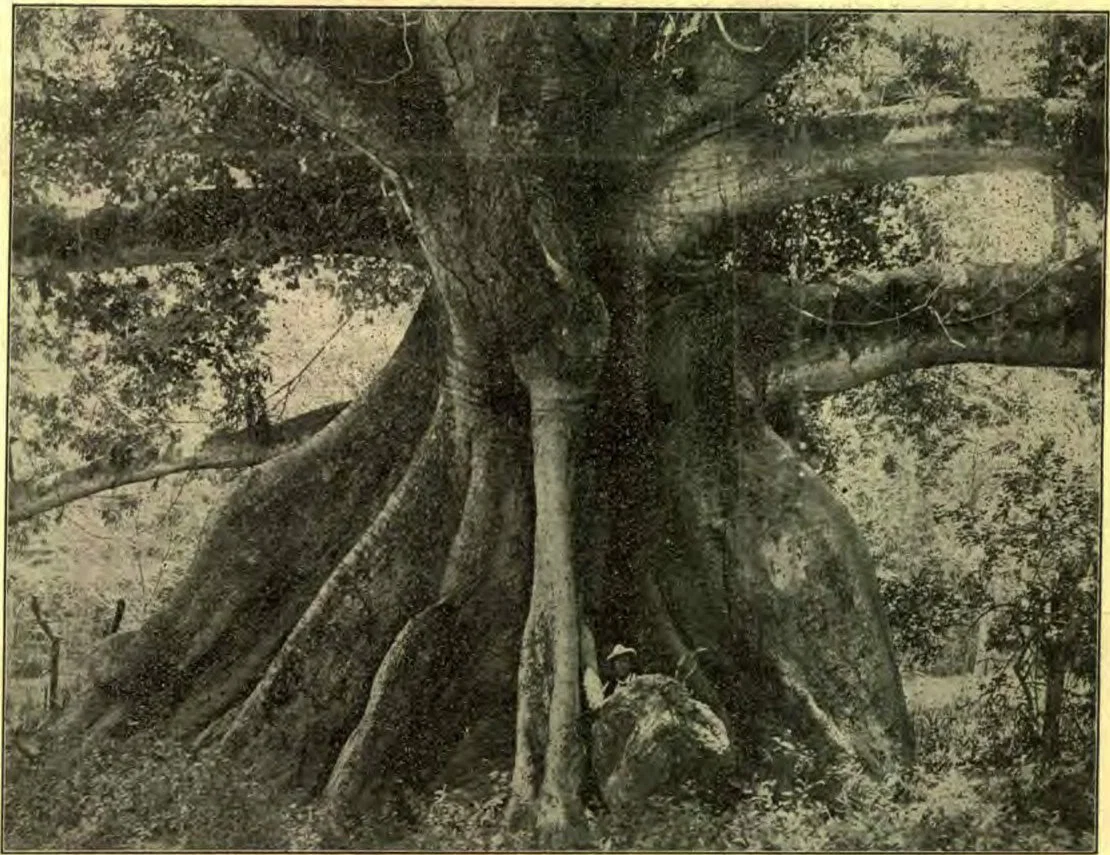
A GIGANTIC COTTON TREE
For many years the Established Church was alone in Bermuda; now there are the Wesleyan Methodist, the African Methodist Episcopal, the Presbyterian, the Catholic, and a small organized company of our own people. In the Church of England, both High-church and Low-church are represented. The large cathedral, which is decidedly High-church in its tendencies, is still unfinished. The beautiful edifice that once occupied the same spot was destroyed by fire several years ago, and only the audience-room, part of the cross of the new church, is completed. If it depends upon Bermudian workmen, it may rival the famous Cologne Cathedral, in one particular at least.
Bermudians are disinclined to exertion, or so it seems to an American. Perhaps they have chosen the wiser part; certainly they live to a ripe old age. Diseases are not common; in fact, since the yellow fever epidemic in the early part of the last century, there has been little to disturb the even tenor of the Bermudian's ways. Pneumonia is the disease most dreaded, probably because of the dampness of the climate, rendering it inimical to lung disorders. There is no malaria, however, and few contagious diseases are found, owing to the strict quarantine regulations. The islands are a favorite winter resort for nervous invalids and overworked professional people in need of rest and change.
A rest it certainly is to come from a busy, bustling country like our own into this little island paradise, where such inventions as street-cars and electric lights are practically unknown; and the greatest excitement is the weekly arrival of the New York mail. And well it is for the tourist that this little island world is able to hold her own against the change and bustle and hum that characterize the greater world outside. When street-cars replace donkey-carts, half the charm of the place will be gone.
The months from November to May bring most tourists; and in January, February, and March the streets of Hamilton are alive with Americans. The little “city” really takes on an air of energy and business. Prices are way up; rooms are at a premium. In the height of the season, an unfurnished room without board rents for five dollars a week.
It is hard at first to accustom one's self to the English currency; and when an American lady buys three yards of cloth at “one and six” a yard, the temptation, often the only resource, is to turn out the contents of her purse, and let the shopkeeper take what he will. Be it said to their credit, however, Bermudian shop-keepers are strictly honest in their change.
By the middle of May, the most delightful month in the year in Bermuda, the large hotels are closed; and the only interruptions to the summer quiet are the ship-loads of Cooks' tourists, who are beginning to find the summer months quite as pleasant for sight-seeing as the earlier ones. For the most part, summer is more endurable than in the United States, as the thermometer seldom rises above eighty-five degrees, and there is always a cool ocean breeze. The humidity of the atmosphere renders the heat oppressive at mid-day; but there is always a delightful coolness in the shade. Tourists are making the discovery that Bermuda is a summer as well as a winter resort; and it is a question of a few years at most until the hotels will be open the year round.
This transient population, however, while it enriches the shop-keepers, and helps set the fashions, can make comparatively little impression on the real life of Bermuda. The American comes and goes in increasing numbers year after year; but he can not remain except at great disadvantage. According to law, no alien can hold property; and if a Bermudian lady marries an American, and fails to dispose of her property within a given time, it is forfeited to the crown.
In considering the people of Bermuda, one must not forget that two thirds of the population, about ten thousand, are black. The early settlers, like the Virginians, had their plantations and their slaves. The black people of Bermuda have a generation's start over those of our own land, having been freed in 1838, and they have made good use of the time. One is impressed at once with the air of intelligence, in many cases of refinement and prosperity, that characterizes many of them. Some of the leading professional men are negroes. Even the poorer classes are usually well dressed; and there is little abject poverty among them. Compared with the lower classes of other countries, they seem really rich. Nearly every one who is not in service owns his own little stone hut and plat of ground, and is quite independent. It is not so hard to own a house in a country where all one has to do is to buy a tiny lot, scrape off the layer of soil, and saw out enough blocks of the sandstone to leave a cellar and build the house.
There are no beggars. The Bermudian negro is self-respecting; he believes in the equality of labor, and is proud of the position he has won by honest toil. He is not particularly submissive, and does not believe in “taxation without representation.” He is allowed a representative or two in the Assembly; but this does not satisfy him. It is prophesied by many that sometime in the not very distant future, Bermuda will be the scene of a race war.
For some time the islands have been inundated with an influx of West Indian negroes which, if continued, will do much to bring the disturbing elements into conflict. The newcomers differ from the natives in appearance, intelligence, and disposition. They are lazy, thievish, and discontented. The public house is likely to get most of their earnings. Laws have been passed restricting their immigration by making it necessary that each immigrant have five pounds of ready money in his pocket when he steps on shore; but a way is always found to evade the laws. It is very easy for the contractor who wishes to profit by cheap labor to lend the required sum to be worked out later on his estate.
Domestic labor is cheap. Ten dollars a month is a fair wage for house servants, but they make it much more by their stealings and pilferings. It is generally understood that in engaging a servant one engages also to support the entire family out of his own larder.
The color line is rigidly drawn. In churches with white and colored membership, separate sittings are maintained. Though there is an African M. E. Church, many of the negroes prefer to have their church membership with the whites. The reply of one old aunty, when questioned as to the cause, shows a lingering remnant of the old-time deference to the “massah.” “I don't min' sittin' behind white folks, but I won't take no back seat foh collud folks.” There is of course no social intercourse between the two races. While in Bermuda, I met a lawyer whose wife had fallen a victim to this social exclusiveness. He had received his education in England, and with his clear, olive complexion, crisp hair, and white features, had always passed for a white man, with possibly a strain of the Spanish or Italian blood. He married a beautiful English girl of the upper middle class, and settled down to practice law. For some reason he brought this young wife back to his old home in Bermuda. The shock was too great. She found herself shunned by all who under other circumstances would have been her friends and associates, and in less than a year she had pined away, and died, it is said, of a broken heart. The story is only one of hundreds for which the curious race tangle is responsible.
Bermuda is a faithful representation in miniature of the great world outside. Each race has its own castes, cliques, and social circles. The whole island is like a great, overgrown village, in which everybody knows everybody's business, and knows, but does not recognize, all his neighbors. To a stranger, the punctiliousness of Bermudian etiquette seems just a little absurd, but it is inevitable.
WINIFRED M. PEEBLES.

The King of Jamaican Forest Trees

VEGETATION flourishes luxuriantly in the warm, moist climate of Jamaica. The forests are perhaps more remarkable for the rare, hard woods than for the size of the timber. Sandalwood, satinwood, ebony, and many other varieties are known, and the logwood and fustic supply brown and yellow dyes much used in commerce. Logwood is still quite largely planted on the estates, although artificially made mineral colors in a measure supplant the old vegetable dyes.
But the king of the Jamaican forest trees, the most majestic of them all, is the silk cotton tree, or the ceiba, as it is botanically named. There is a beautiful lesson in any large tree, as it roots itself in the earth to withstand every blast. As the head lifts higher above the plain, the roots sink lower, and take a firmer hold on the foundation of things. The ancient prophets used the cedars of Lebanon as a type of strength. The believer in God was to “grow as the lily, and cast forth his roots as Lebanon”—as the lily for gentleness and purity, as the gnarled and rugged cedar for strength to withstand opposing forces.
The cotton tree of Jamaica may well stand as a type of the well-grounded life. It is commonly a tall tree, with wide-spreading boughs, bearing the blossom of silky cotton which gives it the name. The ancient folk lore of Jamaica made this tree the home of the dreaded “duffes,” or evil spirits, and a trace of the old traditions still lingers in the minds of the superstitious. The hand that lifted ax against the cotton tree was supposed to bring great evil upon itself. But often along the country roadsides I saw workmen hollowing out the tall, straight trunks, fashioning them into shapely canoes.
The tree has peculiarly large roots, which sometimes run along the ground for yards, looking like great coiled serpents. The tree shown in illustration is not one of the tall ones. Some freak of nature turned it mostly into limbs and roots. But it would be difficult to find a picture more suggestive of massive strength. From some tiny little seed came the tender shoot that developed all this gnarled and hardy specimen. Every limb is a large tree itself, standing out horizontally, but the trunk is so rooted and grounded in earth that the whole broad canopy of green is easily held aloft against every wind that blows.
The same living word that God spoke when he said, “Let the earth bring forth,” and that wrought such strength as this out of the tiny green shoot, will work much more wondrously in every heart that yields to God. The life that is to bear the fruits of righteousness must be “rooted and grounded in love.” Let the roots of character sink deep. It is stability that counts when the storm comes. A sturdy, steadfast character is of more value in service than showy brilliancy or mere cleverness. These gnarly roots of the cotton tree have a real grace and beauty for the eye that sees in them the foundation and stay of all that is beautiful above.
W. A. SPICER.

Nikko, the Beautiful

THE following paragraphs describing Nikko, the pride of Japan, are taken from an article written by Francis Clark, and printed in Collier's Weekly:—
Nikko wo minai uchi wa, “Kekko” to in na!
This couplet is not quoted as an original poem, nor even as a new discovery in ancient poetry: but, being confident that Japanese poetry is not familiar to all Americans, I venture upon it, and do not suppose that I shall insult the intelligence of my readers by giving the translation at the same time. Here is the celebrated couplet turned into prosaic English:—
Do not use the word “magnificent” Until you have seen Nikko.
Or, in other words:—
You can not say “kekko” [splendid] Until you've seen Nikko.
A day's holiday from the exacting and absorbing duties which brought us to Japan had enabled us to say “Kekko!” and we shall never cease to be grateful for the privilege. Nikko lies about a hundred miles north of Tokyo, and is dear to all Japanese as the burial-place of the great shoguns Iyeyasu and Iyemitsu. But to travelers from other climes Nikko is “kekko” because of the magnificent temples with their wealth of lacquer and carved work; their great bronze and stone lanterns; their curious and elaborate carvings of fabulous beasts, of monsters that never dwelt on land or sea; for its magnificent setting of mountains and ravines and cascades; but, above all, for its superb pine-trees, which here tower in such majesty and symmetry as I have never seen in any other part of the world. California's great trees are bigger, to be sure, and more stately; but they often stand by themselves, apart from other glories of nature, or where they are united only with the beauties of towering mountains and filmy cascades. The exquisite works of art, also, which have made the Nikko temples famous in all the world, are wanting.
We climb a hill, between rows of magnificent, stately pine-trees, until we come to the beautiful temples which a whole dictionary of adjectives can not adequately describe. These temples were built in the classic period of Japanese wood-carving and painting. They are to Japan what the Parthenon is to Greece, what the Pyramids are to Egypt, what the Sistine Chapel is to modern Italy. They contain examples of all that is most exquisite and unique in Japanese art, and examples in such bewildering numbers that one does not know where to begin or end one's description. In all, there are more than thirty buildings, some of them temples, some of them priests' houses, some of them bell-towers or pagodas, and some of them tombs of the great shoguns.
Let me pick out a few unique objects. Every one goes to see the sacred horse, which lives in an elegant stable built near the tree which Japan's greatest ruler and warrior, Iyeyasu, was in the habit of carrying about with him in his palanquin, when it was still small enough to be contained in a flower-pot. The sacred horse is kept for the use of the god; but the god evidently is not a hard rider, for the pony is sleek and fat and comfortable, and looks as if he had not a care in the world, except to obtain as many platesful of yellow beans as the devout pilgrims are willing to pay for. These are fed to him by his attendant, on a dainty porcelain dish; and he licks them up with all the greediness of a common, everyday pony, who has not been dedicated to the service of a hideous god. The pony's stable, moreover, is adorned with three groups of monkeys, over which every visitor lingers. The most interesting group, of three monkeys, is in the middle. They are solemnly sitting in a row, one with his hands over his eyes, another with his hands clapped to his ears, and a third covering his mouth in the same way. The blind monkey will see no evil, the deaf monkey will hear no evil, the dumb monkey will speak no evil.
The great temples themselves fairly defy description. The beasts and birds and fishes, the flowers of every hue and of every description, the geometrical figures, and the beautiful golden panels, each one with its own rare design, are all so bewildering that it would take a month to study their beauties, and a year to describe them. Temple after temple we visit, and each one seems a little more magnificent than the last, yet none of them are gaudy, though all are gorgeous. It has been truly said that “the sobriety which is the keynote of Japanese taste gives to all the elaborate designs and bright colors its own chaste character.” Yet all this magnificence is really but the gateway to a tomb. All these gorgeous temples lead up to a mausoleum. On and on we go, through one temple after another, climbing hill after hill, until at last we come to a modest bronze tomb which is strangely in contrast with the gorgeous temples that have led the way to it, and here lies the dust of Japan's greatest statesman, warrior and ruler, Iyeyasu, the “father of his country,” who was first in war, and first in peace, and is still first in the hearts of his countrymen.
But the trees! If one finds it difficult to describe the temples, one is utterly at a loss for adjectives that shall fitly paint the beautiful cryptomerias, which, after all, are Nikko's chief wealth and beauty. An avenue of these splendid pines, thirty miles long, leads up to the sacred shrines. On either side of the road stand these great sentinels, often in rows four deep, interweaving their branches overhead and forming a complete arched passageway, thirty miles in length, to the temples beyond. When one reaches the temples, he finds himself in a grove of these huge giants of past centuries, thousands and thousands of them, standing erect and sentinel-like on the hillside, crowning every swelling mound of earth, springing up in every temple court-yard, overshadowing every magnificent lacquer shrine. These, indeed, are Nikko's true glory. These dwarf and belittle the temples made by man, magnificent as they are, proving once more how much more beautiful and glorious are God's first temples than anything that the highest skill and art of man can attain.
The traditional story of the natural spires and minarets and turrets in ever-living green is worth recording. It is said that when the great Iyeyasu demanded contributions for this temple from the daimios in all parts of Japan, some sent money, and some sent magnificent bronzes, and others great stone lanterns of curious workmanship; but one daimio sent word that he was poor, and could not contribute money or carvings or lanterns, but that he would plant some trees. So he sent his servants to plant thousands and tens of thousands of little pine-trees. And now the fame of this Japanese leads all the rest.

The Thing That Counts

“Do you think I can trust you to drive the reaper, my son? You know an accident might mean a good deal to us just now; and you may not understand mules as well as you do algebra.”
“Did I ever go back on you yet, father?”
There was a proud glint in the clear blue eyes of the boy, and his head went up almost defiantly.
“No, Cecil, you never did; but you never tried to drive the reaper all alone. Those mules are pretty nettlesome, and if they should come to grief, it would mean just three hundred dollars out of my pocket.”
“Never mind, daddy. I’ll guarantee the safety of the mules and the reaper, and—the boy.”
“Go along, youngster,” laughed his father, “and tackle the meadow. I’ll see what sort of stuff you are made of. I’ll venture he’ll be glad to turn the team over to Silas after an hour or two of this sun, eh, mother?”
“You’ll see,” said Cecil; and soon, in blue overalls and spreading straw hat, he was on the driver’s seat, cutting wide swaths in the “east meadow.”
The sun was hot—there was no mistake about that—and to a boy fresh from school life, it seemed that it must have taken on several degrees for his especial benefit. But it was good to smell the sweet, fresh hay, to see the wide, free swaths that fell beneath the reaper, and to realize that he was a part of the big, busy world, and above all, that his father trusted him! Nothing is so sweet to a boy as the sense of responsibility and the feeling that he is trusted and is trustworthy. Cecil Ray found himself wondering how a boy could be mean and sneaking and cowardly in this broad, free, brave old world.
In the midst of his soaring thoughts “Lige,” the “lead mule,” gave an angry snort, and came to a full stand. Then his companion in harness plunged to one side, giving the reaper a sharp lurch.
“Whoa, boys! Whoa! Get up, Lige! G’lang, Ben!”
But Ben and Lige insisted that they had already “whoaed,” and positively refused to “g’lang.” Seeming to spring up out of the very earth, suddenly the air was full of indignant wasps, ready to resent to the death this intrusion upon their household rights. They swarmed over the team, stinging them into fury. The mules plunged and reared, but the wasps clung on with infuriate tenacity.
“Jump, Cecil! Jump, quick!” cried Silas, the hired man, from the other side of the meadow. “Jump quick afore the critters alight on ye!”
“Jump”? Could he? and leave the reaper to be torn to pieces by those frantic beasts? The new reaper that his father had paid a hundred and fifty dollars for only last week? Suddenly the wasps seemed to realize that the mules were not their only prey. In a brown swarm a detachment pounced upon Cecil as he strove to hold firmly the reins against which the mules were tugging wildly.
“If I could only get to the traces, and turn the mules loose!” flashed through Cecil’s brain. “But I would have to let go the reins to do that, and that would give the mules their head—they’d tear things to splinters, and maybe kill themselves,” came on the heels of this thought.
Still the wasps stung. The mules plunged, and Cecil held the reins in blinding pain. Si was approaching.
“Run, Si! Run! Cut the breechin’—loose the trace chains. There!”
And the animals, freed from bondage, and mad with pain, sped wildly toward the barn. As soon as he realized that his task was done,—mules and reaper safe,—Cecil stood not upon the order of his own flight. A boy learns a good deal when he learns that one boy has a poor chance when pitted against hundreds of indignant wasps. And those few moments in the meadow that taught Cecil that when one was whipped in the fight, it is not always wise to follow the enemy within his own fortifications.
“If that warn’t grit, I never saw grit!” exclaimed Silas, as he tore strips of cotton which Mrs. Ray promptly plastered with damp soda, and applied to every accessible spot of Cecil’s face, neck, and hands. “Says I to myself, says I, ‘Si Higgins, do ye reckin ye can stand the racket with and a thousand or so wasps peltin’ ye fore and aft? Do ye reckin ye could hang on to them critters ruther’n turn ’em loose an’ let ’em go lickety split with that new reaper, sure to break it to bits, an’ do theirselves no tellin’ what damage?’” Silas paused, and gazed at Cecil’s swollen, soda-plastered face and hands admiringly; then he shook his head sorrowfully, regarded his own stalwart length of limb, and went on. “‘No’m,’ says I, ‘ye couldn’t ’a’ done it, Si, with all yer muscle that ye’re so proud of, an’ yer six feet that ye tries to stretch to seven. Ye’re big out’ardly, Si, but I’m thinkin’ that that little chap that ye’ve laughed at so much is bigger in’ardly than a mountain o’ Si Higginses.’ An’ I’m thinkin’, Mis’ Ray, it’s the in’ardly that’ll count in the long run.”
And Cecil, bandaged but happy, saw a look on his father’s face that was recompense for the stings of all the wasps in Waspdom!—Eva Williams Malone, in Young People’s Weekly.

To Be Depended On

WE’RE sure of the lad Who works with the best to be had, And toils with his might While yet there’s a glimmer of light; Whose motto is true, It’s better than nothing to do; Whose doing proves well It’s always the littles that tell.
FRANK WALCOTT HUTT.

The Maid I Used to Be

I NEVER sit on orchard grass Beneath some gnarled old apple-tree, And watch the fragrant winds that pass Ruffle the slender blades, and waft A rain of sweetness down to me, While building birds chirp busily; I never drink the full, rich draught From summer's brimming cup,—itself A peerless nectar,—but I see A laughing sprite, a tricksy elf, A little maid who peeps at me From out the gnarled old apple-tree.
I never sit on winter night Before some leaping driftwood fire, And watch old pictures blazoned bright Against the thickly memorized dark, But what, with look of glad desire That kindles as the flames shoot higher, A child beside me reads each spark A wingéd hope; so still, she seems Never in restless mood to tire, Her eyes twin citadels of dreams— As chin on hand before the fire She smiles to see the flames dance higher.
I never wrest from life's close grasp Some sprig of bay, some petty gain, And feel the hands that eager clasp My own, but what a child looks up, Half wondering, half afraid, and fain To hide her face behind her mane Of tangled curls; from fortune's cup Its sweetest draught I'd give and all That I have won, the mingled pain And joy of strife yet to befall— To be that little maid again And hide behind her curls' shy mane.
So near she seems, and yet so far. Where'er I go she follows me; I wait, but years' fast-widening bar Divides us and I may not take Her hand. Have patience; it shall be When I am old and lingeringly Once more the days long circles make, That in my dreams, or grave or gay, Youth's pictures in the fire I'll see; And live again in merry play, The little maid I used to be Up in the gnarled old apple-tree.
—Harper's Bazar.

Queer Little Chemists on Clover Roots

If you pull up a clump of clover, and shake off the soil, you will see that there are many little white bunches on the roots. Each is not much larger than the head of a pin. Perhaps you will call them “little potatoes;” the scientists call them root tubercles. Each of these tubercles is a laboratory, within which thousands of microscopic bacteria are at work. These tiny bacteria take from the air, in the soil around the roots, one of the gases called nitrogen, and change this into food for the plant. It is not known just how they do this, but it is plain that the clover thus furnishes a home for the bacteria. The scientists have proved that the bacteria make food for the clover. The clover, in this manner, gets more food from the air than from the soil. The farmer can harvest a good crop of clover, rich in nitrogen, and leave the ground, by the decaying clover roots, richer than it was before. Of course, if he plows in the entire clover plants the ground will be much richer than if he leaves only the roots to decay. He can plant corn or sow wheat on the field, and it will get the benefit of the food of decaying roots or stems gathered from the air by the little clover chemists.
A few other plants have similar root-tubercles containing bacteria with the power of gathering food from the air. Among such plants the best known to our young folks are peas and beans.
You can easily see the tubercles without the aid of even a microscope. Perhaps your science teacher, or some other grown-up friend with the use of high-power lenses in a compound microscope, will show you the tiny bacteria in the tubercles.
The bacteria are really plants. Thus the microscopic plants and the big plants are mutually helpful. Botanists call them messmates.—St. Nicholas.

Satan's Methods

NEAR Ayuthia, in Siam, is a curious labyrinth where elephants are captured alive. The labyrinth is formed of a double row of immense tree trunks. Where it begins, the space between them is over a mile wide, but it gradually narrows until the elephants can not turn around. Tame elephants lure the wild ones into the trap, and at the inner end of the labyrinth the tame ones are let through a gate, while men slip shackles over the feet of the captives. This is not a little like Satan's method of capturing men. The broad way gradually narrowing, the use of tamed captives to betray the free, and the shackles at the end of the labyrinth, all suggest his wiles,—Youth's Companion.

THE WEEKLY STUDY

Youthful Yoke-Bearers

The Waldensian Missionaries

(September 13-19)
SCRIPTURE LESSONS—
The central thought of the lesson. Lam. 3:27.
Why the young are called. 1 John 2:14.
Words of counsel. 1 Tim. 4:12-16.
Joseph, the youthful missionary. Genesis 39.
Daniel and his three young friends. Daniel 1-6.
Parallel Reading:—
“Great Controversy,” Chapter Four.
The Vaudois Teacher—by Whittier.

Lesson Notes

Young men and women have ever been the flower of the church. The strongest Bible characters were young men. Nearly all of the great missionaries gave themselves to the land of their adoption in early youth. Our blessed Lord did his great work for this world in his youth—
“And in the prime of his mysterious manhood Laid down his precious life upon the cross.”
The days of youth are our best days. It is in youth that we determine our career, fix our habits, and choose our fellow workers and companions. What a fatal mistake to withhold these days of strength for selfish interests, and then attempt to give to God the more fleeting, uncertain days of age and weakness! Young Christians, this lesson is a call to you. What will you do with it?
When Luther’s heart was full of the great message for this time, he and Melanchthon gathered about them many of the best young men of Germany and taught them the word. He spent a few months of each year in school, and then went out during vacation to tell the message they had learned. At one time Luther sent forty young men from his school to Switzerland to sell his writings. Soon after they reached Switzerland, Zwingli wrote this to Luther: “O, that we might have one hundred such young men in this country instead of forty; for they know the message, and they go from house to house like burning torches.”
Time is swiftly passing, and will soon close. The last sands in the hour-glass of time are fast running out. We must hasten to decide these personal questions:—
Will we wear the yoke of Christ in the days of youth?
Will we give to God our best, or keep the best for self?
Will we choose honor, good wages, and worldly pleasures, or give all up for Christ?
Will we recognize the privileges of this eleventh-hour call, or forever lose the opportunity of working for the lost?
May the good Lord help you to answer these questions wisely for your eternal good.

To the Leader

Study your young people and arrange as far as possible to give some little part in the program to each.
The lesson for to-day may be presented by several persons, as follows:—
  1. A study of the first three points in the Scripture lesson.
  2. Prominent characteristics in the life of Joseph as a missionary.
  3. Daniel’s mission in Babylon.
  4. Recitation, “The Vaudois Teacher,” found on this page.
  5. Reading, “Waldensian Youth,” on this page.
Let this part of the program, which should occupy about thirty minutes, be followed by a general exercise of fifteen minutes, when the members may mention and discuss the openings for young people to work for the Lord just now.

Waldensian Youth

“PARENTS, tender and affectionate as they were, loved their children too wisely to accustom them to self-indulgence. Before them was a life of trial and hardship, perhaps a martyr’s death. They were educated from childhood to endure hardness, to submit to control, and yet to think and act for themselves.
“Economy and severe self-denial formed a part of the education which the children received as their only legacy. They were taught that God designs life to be a discipline, and that their wants could be supplied only by personal labor, by forethought, care, and faith. The process was laborious and wearisome, but it was wholesome, just what man needs in his fallen estate, the school which God has provided for his training and development.
“God designed the Bible to be a lesson-book to all mankind, in childhood, youth, and manhood, and to be studied through all time. He gave his word to men as a revelation of himself. Every new truth discerned is a fresh disclosure of the character of its Author. The study of the Scriptures is the means divinely ordained to bring men into closer connection with their Creator, and to give them a clearer knowledge of his will. It is the medium of communication between God and man.
“While the Waldenses regarded the fear of the Lord as the beginning of wisdom, they were not blind to the importance of a contact with the world, a knowledge of men and of active life, in expanding the mind and quickening the perceptions. From their schools in the mountains some of the youth were sent to institutions of learning in the cities of France or Italy, where was a more extended field for study, thought, and observation than in their native Alps.
“In the schools whither they went, they were not to make confidants of any. Their garments were so prepared as to conceal their greatest treasure,—the precious manuscripts of the Scriptures. These, the fruit of months and years of toil, they carried with them, and, whenever they could do so without exciting suspicion, they cautiously placed some portion in the way of those whose hearts seemed open to receive the truth. From their mother’s knee the Waldensian youth had been trained with this purpose in view; they understood their work, and faithfully performed it. Converts to the true faith were won in these institutions of learning, and frequently its principles were found to be permeating the entire school; yet the papist leaders could not, by the closest inquiry, trace the so-called corrupting heresy to its source.
“The spirit of Christ is a missionary spirit. The very first impulse of the renewed heart is to bring others also to the Saviour. Such was the spirit of the Vaudois Christians.
“To have made known the object of their mission would have insured its defeat; therefore they carefully concealed their real character. Every minister possessed a knowledge of some trade or profession, and the missionaries prosecuted their work under cover of a secular calling. Usually they chose that of merchant or peddler. They dealt in choice and costly articles, such as silks, laces, and jewels, which in those times could not be readily procured, and thus they found entrance where they would otherwise have been repulsed. All the while their hearts were uplifted to God for wisdom to present a treasure more precious than gold or gems.
“In secret places the word of God was thus brought forth and read, sometimes to a single soul, sometimes to a little company who were longing for light and truth. Often the entire night was spent in this manner. So great would be the wonder and admiration of the listeners that the messenger of mercy was not infrequently compelled to cease his reading until the understanding could grasp the tidings of salvation. Often would words like these be uttered: ‘Will God indeed accept my offering? Will he smile upon me? Will he pardon me?’ The answer was read, ‘Come unto me, all ye that labor and are heavy laden, and I will give you rest.’
“Faith grasped the promise, and the glad response was heard, ‘No more long pilgrimages to make; no more painful journeys to holy shrines. I may come to Jesus just as I am, sinful and unholy, and he will not spurn the penitential prayer. “Thy sins be forgiven thee.” Mine, e’er mine, may be forgiven.’
“Thus the Waldenses witnessed for God, centuries before the birth of Luther. Scattered over many lands, they planted the seeds of the Reformation that began in the time of Wycliffe, grew broad and deep in the days of Luther, and is to be carried forward to the close of time by those who also are willing to suffer all things for ‘the Word of God, and for the testimony of Jesus Christ.’”

The Vaudois Teacher

“O LADY fair, these silks of mine are beautiful and rare,— The richest web of the Indian loom, which beauty’s queen might wear; And my pearls are pure as thy own fair neck, with whose radiant light they vie; I have brought them with me a weary way,—will my gentle lady buy?”
And the lady smiled on the worn old man through the dark and clustering curls Which veiled her brow as she bent to view his silks and glittering pearls; And she placed their price in the old man’s hand, and lightly turned away, But she paused at the wanderer’s earnest call,—“My gentle lady, stay!”
“O lady fair, I have yet a gem which a purer luster flings Than the diamond flash of the jeweled crown on the lofty brow of kings,— A wonderful pearl of exceeding price, whose virtue shall not decay, Whose light shall be as a spell to thee, and a blessing on thy way!”
The lady glanced at the mirroring steel where her form of grace was seen, Where her eye shone clear, and her dark locks waved their clasping pearls between; “Bring forth thy pearl of exceeding worth, thou traveler gray and old,— And name the price of thy precious gem, and my page shall count thy gold.”
The cloud went off from the pilgrim’s brow, as a small and meager book, Unchased with gold or gem of cost, from his folding robe he took! “Here, lady fair, is the pearl of price, may it prove as such to thee! Nay—keep thy gold—I ask it not, for the word of God is free!”
The hoary traveler went his way, but the gift he left behind Hath had its pure and perfect work on that high-born maiden’s mind, And she hath turned from the pride of sin to the lowliness of truth, And given her human heart to God in its beautiful hour of youth!
And she hath left the gray old halls, where an evil faith had power, The courtly knights of her father’s train, and the maidens of her bower; And she hath gone to the Vaudois vales, by lordly feet untrod, Where the poor and needy of earth are rich in the perfect love of God! —Whittier.
Continue reading: Katzy: A Kitten Rescued by Johnny