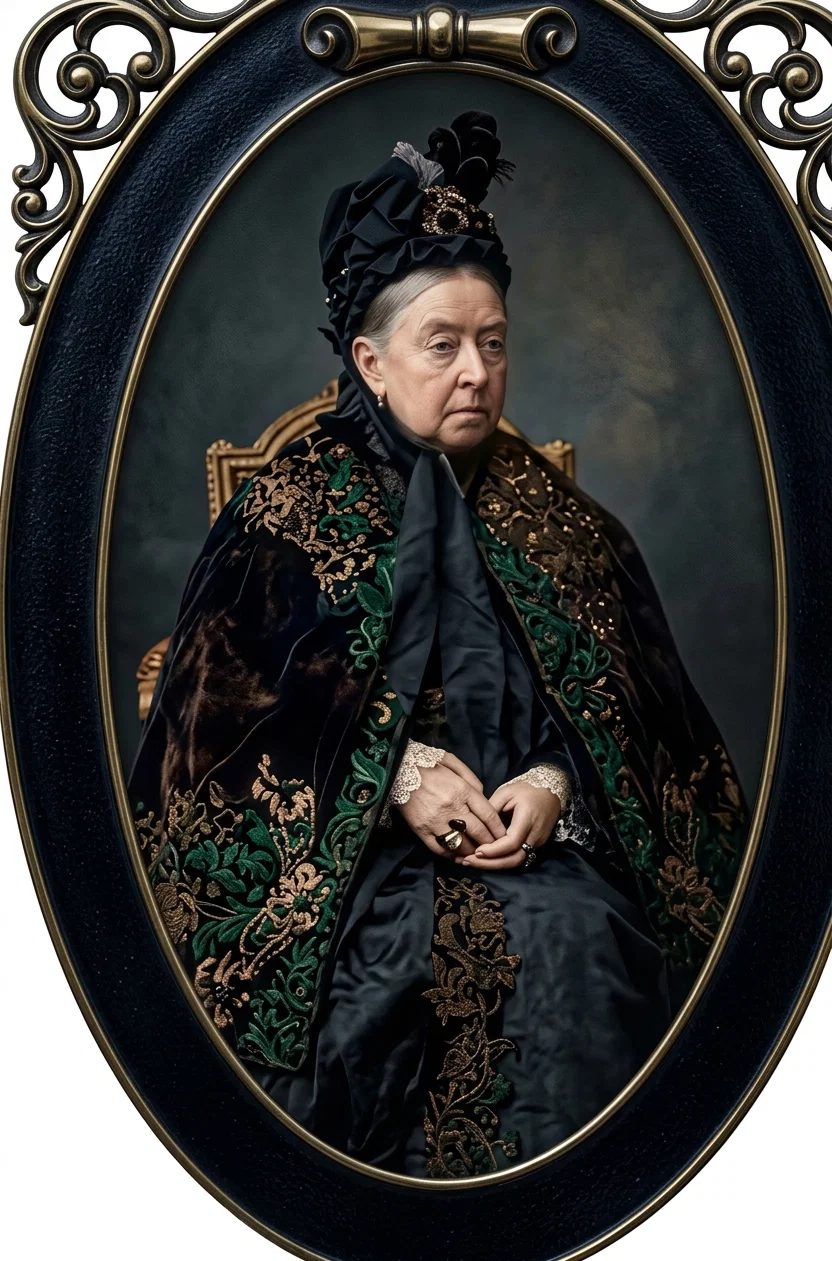
On the death of her uncle, William IV., King of England, Victoria, only daughter of the Duke of Kent, succeeded to the throne. She was proclaimed June 21, 1837, and was crowned on June 28, 1838, being then nineteen years of age. On February 10, 1840, took place her marriage to his Royal Highness Albert, Prince of Saxe-Coburg and Gotha, who died in 1861.
Victoria Hall
Perhaps no country in the world has had a more marvelous growth and development in the same length of time than did the British nation from the time of Victoria's coronation to the time when death took the scepter from her aged and weary hand, placed the seal upon her life-work, and closed her forty years of widowhood. No sovereign was ever more beloved by the people of his realm than Queen Victoria, and none has ever received more general respect and honor from the people of other nations and languages. Her reign was remarkable both for its length and for the growth and progress of the nation during its continuance. She had seen fifteen successive parliaments elected, had dealt with a score of different ministries, under the leadership of ten different individual prime ministers. She had seen five Archbishops of Canterbury and six Archbishops of York in office. Lord chancellors and chief justices had come and gone, and two generations of men, dispensing justice in her name, had passed away. British authority had reached out over India, Egypt, Australasia, and a multitude of the islands of the sea. In it all her personal influence was continually exerted for progress and peace. Had it not been for this strong influence, it is certain that England would have had many expensive and bloody wars on her hands. It is a sad fact that her collapse was hastened by what she had hoped would never come, the clash of arms in South Africa. Her death occurred Tuesday afternoon, Jan. 22, 1901, when she had reached the age of 81 years, 7 months, and 28 days. Thus closed one of the most illustrious reigns in history. The day following her death, Albert Edward, Prince of Wales, was proclaimed king.
With pomp and ceremony and regal rituals, England's king will take the coronation oath on the 26th day of the present month. It has been many years since Old England has witnessed the oath-taking and crowning of a ruler, and she will make the most of it. Foggy London will wear the gayest dress her decorators can fashion; while upon that day and the day following her streets will resound with the clatter of cavalry, the heavy tread of armed men, the long roll of the military drums, the booming of cannon, and the inspiring strains of the grand coronation march.
Democratic England is going to crown a king, and the world must know about it. England herself must realize that it is no unimportant event that is taking place on that date. England spent $350,000 on the coronation of Queen Victoria; but that was sixty-four years ago—longer than the great majority of her population has lived. There have been many expensive coronations since the nineteen-year-old Victoria took the reins of government over Britain and her dependencies; and the coronation of Edward VII. will be one of the most expensive. Three hundred and fifty thousand dollars would pay but a small part of the expense to be incurred in this coronation. The cost, as represented in the civil service estimate, is placed at £1,000,000, or $4,888,000. What it will cost those who see it and take part in it is an item impossible to estimate; but it will mean an enormous amount in the aggregate. The ceremony is expected to be one of the most imposing spectacles ever witnessed, and many will spend small fortunes in connection therewith, either in participation or in attendance.
Edward VII., son of Victoria and the Prince Consort Albert of Saxe-Coburg and Gotha, was born Nov. 9, 1841, and is thus in his 61st year. He takes the title of his father as Prince of Saxe-Coburg and Gotha; is Duke of Cornwall; Duke of Saxony; Duke of Rothsay; Earl of Chester, Garrick, and Dublin; Baron of Renfrew; and Lord of the Isles. His ancestry is traced back on his mother's side to the House of Guelph and on his father's side to the House of Wettin. He was married in 1863 to the Princess Alexandra of Denmark. So the oldest king in the world is now the father-in-law of the newest crowned king, who was older, perhaps, at his coronation than any king with whose name we are familiar.
When Victoria became the Queen of England, she was not yet Empress of India. She did not get that title until the year 1877. She was not ruler of India in fact until 1855. Australia was just beginning to blossom out as a colony when Victoria came to the throne. Egypt was not under the governing hand of England then, and Canada had made but little progress at the beginning of her reign. There has been a marvelous development between the date of the coronation of Victoria and that of her eldest son, Edward VII. He comes upon the throne of a kingdom numbering 395,319,560 persons. At the beginning of her reign the English language was spoken by about 25,000,000, while the number speaking that language now is over 124,000,000. This is the most marvelous growth recorded in any language. Its growth is so universally recognized now that English is fast becoming the polite language of Europe. The wooden war-ships with which England was then protecting her interests have given place to the mightiest steel navy in the world, consisting of 956 vessels of all classes, exclusive of obsolete ships. With this great progress it naturally follows that England must occupy a most influential place among the sisterhood of nations and exert a powerful influence.
No nation with greater or more varied interests was ever ruled over by man than the nation whose ruler Edward VII. becomes formally on the day when he takes the coronation oath. These are doubtless some of the considerations which have influenced royalty to make of this coronation one of the most memorable spectacles in the history of the world. The gems and robes of the king and queen, peers and peeresses, official attendants and foreign representatives, will make it a scene of uncommon splendor. Ermine and precious stones are now commanding the highest prices, and10every part of the earth is being searched for the precious white fur. There is even now complaint in other countries that the finest pearls in the world are being sent to London. As a result, the price of gems has risen to unprecedented figures in other parts of the world. It is stated that a peer and peeress can not obtain a coronation outfit for less than $2,500.
The coronation ceremony will take place at eleven o'clock on the morning of June 26 in Westminster Abbey. The choir will sing, “I was glad when they said unto me, Let us go into the house of the Lord.” The peers and peeresses will be seated on either side of the coronation chair. The clergy, robed in purple and gold, and white and black, with scarlet hoods falling on their backs, will stand in the middle of the nave, awaiting the king's entry. The knights of the Order of Chivalry will be marshaled to their places, and the standard-bearers will take their stations beneath the grouped standards. The king enters, with the barons of the five old Norman ports holding over him the canopy of state. Two bishops walk at either side of the king. After kneeling in prayer at the altar and taking the coronation oath, the king will take his place in the ancient coronation chair, over the celebrated Stone of Scone, over which all British rulers have been crowned since 1272, and over which the rulers of Scotland and Ireland had been crowned previous to that date. Four Knights of the Garter hold over the king's head a canopy of cloth of gold, and the Dean of Westminster pours from a vessel called the ampulla some of the scented oil into a golden spoon. With this the archbishop anoints the king, pouring a few drops on his head, a little on his hands, making the motion in the form of the cross. Then the king kneels and is blessed by the archbishop with uplifted hand. The mantle of cloth of gold is placed upon the king's shoulders, and he is girt with a sword, and spurs are placed upon his feet. After other curious and quaint ceremonies, the orb, a globe of gold ringed with gems and surmounted by a cross, is placed in the right hand of his majesty, and a ruby ring is put on his fourth finger. Then the orb is taken away, and two scepters are placed in the king's hands, the one surmounted by a cross and the other by a dove.
After all this, there comes the ceremony to which the foregoing has been but the prelude. The archbishop, with the crown of St. Edward before him, asks a blessing over it, the group of clergy approach the king, and the Archbishop of Canterbury places the crown on his head. The peers put on their coronets, the trumpets sound, the cannon boom, and a powerful choir takes up the anthem, “The king shall rejoice in thy strength.” A crown is then placed upon the head of the queen consort, and the peeresses don their coronets. The coronation completed, the Bible is placed in his hand as his most precious possession. And the world can express for him no better or truer good wish than to hope that it may be so.
Tho the coronation is ended, the great spectacle for the common people has not yet taken place. The grand procession will occur on the following day, and will probably equal in magnificence any pageant of the kind that has ever been looked upon by man. Seats to view the procession on that day will be very expensive. Many will pay more than a thousand dollars for the use of a window commanding a view of the parade.
Tho the king of England is not an unlimited ruler, there is no man in the world whose political responsibilities are greater, or who can wield a greater influence by his personal example. May a sense of those responsibilities and of that influence rest upon the new-crowned King of Great Britain and Emperor of India.
C. M. SNOW.
CROWNS AND CHARACTERS.
In many of the grandest pageantries of earth the things of chiefest glory have been the gems and jewels, the ornamentation and decoration, the beauties of the art of various cunning workmen. It is not the men and the women that the great mass of people go to see; it is the dazzling brilliance of embellishment, the overwhelming and magnificent display of wealth and royalty, the pomp, and power, and glory which are but for a day. And yet the millions of dollars which will be expended to witness the coronation of Edward VII. are without computation. We are not speaking of the mere expenses of the government and the royal family. These will have to be measured by millions. But think of the expenses of the peers and peeresses, the barons and viscounts, the knights and esquires, the wealthy and learned of England, Scotland, Ireland, and Wales. One estimate gives of the royal family and the nobility alone expenses exceeding $12,000,000. Think of the expense to newspapers in sending their representatives to the great event. Think of the various embassages and commissions of all the various governments which will be represented there; of the wealthy and pleasure-loving from all the British colonies and many of the countries of earth! Hotels, railways, steamship lines, high-art lapidaries, jewelers, tailors, gown-makers, will reap a harvest. There will be a month of festivity, feasting, and drunkenness, followed by a period of remorse, an extra Lent as it were.
We are not condemning King Edward VII. nor his good Queen Alexandra. Much of it all to them will be weariness and vexation of spirit. In spirit and nature it is common to nearly all such occasions, but more magnificent, that is all. It is of the earth, and is but a manifestation of its fading glory. In a little while its glory will pass away forever. Yet how many would sell health and happiness, body and soul, in order to taste of its power and splendor. This desire is per se a proper one, implanted of God, but O, it is sadly perverted. God desires that His children shall “partakers” of glory, wearers of crowns, possessors of dominion; and these are of more value than that which the glorious coronation of June 26 represents in its fulness, even so as to be without comparison. Listen to the promises of the Creator-King of the universe:—
“Be thou faithful unto death, and I will give thee the Crown of Life.” Rev. 2:10.
“Blessed is the man that endureth temptation; for when he hath been approved, he shall receive the Crown of Life, which the Lord promised to them that love Him.” James 1:12.
“I have fought the good fight, I have finished the course, I have kept the faith; henceforth there is laid up for me the Crown of Righteousness, which the Lord, the righteous Judge, shall give to me at that day; and not only to me, but also to all them that have loved His appearing.” 2 Tim. 4:7, 8.11
“When the chief Shepherd shall be manifested, ye shall receive the Crown of Glory that fadeth not away.” 1 Peter 5:4.
The Crown of Righteousness, the Crown of Life, the Crown of Glory, are identical, and demonstrate the right of the wearer to reign.
They tell of victories won over sin and selfishness in all their lying guises and cruel tyrannies; over hydra-headed and multiformed death; over shame and dishonor.
No questionable transaction mars their past record, no oppression or tyranny, no deceit or guile, no violence or bloodshed, mars or stains their symmetry or beauty. Through the living flowers of their splendor no widow’s moan, no funeral dirge, no sufferer’s agony, no dying groan, breathes sad refrain. Unmarred in beauty, untarnished in glory, they are only less beautiful than the characters they adorn forevermore. And character and crown only reflect in many-hued radiance the greater, but not purer glory of the many crowns and infinitely lovely character of Him who is the “Chiefest among ten thousand,” and the One “altogether lovely.”
The Bible in the Eskimo Language
The Eskimos now have their own translation of the Word, which the Bible Society of Denmark has the honor of publishing. It took 150 years to complete the task. The Norwegian pastor, Hans Egede, who went as a missionary to Greenland in 1721, began the work; and his son, Paul, finished the translation of several books. Danish and Moravian missionaries, during the last century added book after book, until now the 10,000 Eskimos, who are all members of the Danish State Church, have the entire Bible in their mother tongue.—Missionary Review.
ENGLAND'S ROYAL EDIFICES.
By W. H. B. Miller
OLD England is proud of her royal castles and palaces, her cloistered cathedrals, and ancestral homes. True, the fingers of time have wasted many an ancient pile; but even as we honor the bowing heads of our loved ones, man instinctively reveres these crumbling ruins of past magnificence, and sees added beauty in their decay.
In this issue we have shown, grouped with England's king and queen, the royal residences, and grand old Westminster, where the coronation is to be celebrated.
Away back, shortly after the time of William the Conqueror, Windsor Castle stood in the midst of the great Windsor forest, 120 miles in circumference, where Saxon and Norman kings hunted the deer, wolf, and wild boar. Here King John came when the celebrated Magna Charta was signed. Here Edward III. was born, and here David Bruce and James Stuart, kings of Scotland, were imprisoned. Cranmer, Ridley, and Latimer were at Windsor Castle on their last melancholy journey to martyrdom at Oxford. It is said to be the stateliest palace in Europe. No other sovereign lives in a building which has been so long inhabited. Deep down in the foundations of the towers, Norman archways and masonry carry us back to the time of the Conqueror. In the castle park there stand to-day stately oak trees reputed to be as old as the Norman Conquest. The castle is full of priceless treasures. The picture galleries are rich with numerous masterpieces of Michael Angelo and Raphael and thousands of the choicest works of art. Old illuminated masterpieces of great beauty, and rare books and antiquities abound everywhere. The royal apartments—especially the throne room—are magnificently furnished.
Old Westminster is reputed to be more ancient than London itself, and its abbey is associated with King Alfred—1,000 years ago. From the time when Harold, full of hopes of success against the Norman invaders, here assumed the crown, to the day when Victoria the Good came to offer solemn thanksgiving for her reign of over half a century, the abbey has been the scene of the highest ceremonials, splendor, royal pomp, and magnificence. In this respect no other place can equal it in interest. Seventeen kings are here entombed, from Edward the Confessor to George II. One writer has said that the Confessor's Chapel is “paved with princes and a royal race.” Here history becomes a reality. It is the center of England and of the British empire. Interment within its walls is the last and greatest honor the nation can bestow. Here stands the ancient Coronation Chair, bearing the Stone of Scone. Tradition says that this is Jacob's pillar, which was conveyed from Palestine to Egypt, thence to Spain, Tara's Hill in Ireland, and to Scotland, to become the crowning seat of all of Scotland's and England's kings and queens. The abbey is built in the form of a Latin cross, and is 513 feet long, 200 feet wide at transepts, and 102 feet high.
Buckingham palace is the royal city residence. It is a comparatively modern structure, dating only from the 18th century. It is beautifully located in St. James Park. The picture gallery, 180 feet long, is exceptionally fine, and the throne room, where the queen's receptions are held, is celebrated for its rare beauty. It is here that most of the royal social functions are celebrated.
The good old Queen loved Balmoral Castle, away off in the Scottish highlands, more than her city palaces. Here her happiest days were spent, and numerous are the records, treasured and oft repeated by her humble Scottish subjects, of her kindly acts and consistent Christian life. May England's sovereign ever pattern after her noble example by looking beyond the transient pomp and magnificence of earthly empire, to the crown of righteousness which shall never pass away. W. H. B. MILLER.
CHRIST A PRIEST-KING.
1. When Jesus Christ after His resurrection ascended, where did He go?
“Which He [the Father] wrought in Christ, when He raised Him from the dead, and set Him at His own right hand in the heavenly places.” Eph. 1:20.
2. What is His position there?
“Far above all principality, and power, and might, and dominion, and every name that is named, not only in this world [age], but also in that which is to come.” Verse 21.
3. What is His relation to the church?
“And He [the Father] hath put all things under His feet, and gave Him to be head over all things to the church, which is His body, the fulness of Him that filleth all in all.” Verses 22, 23; see R.V.
4. What is His office at the right hand of God?
“Now of the things which we have spoken this is the sum: We have such an High Priest, who is set on the right hand of the throne of the Majesty in the heavens; a minister of the sanctuary, and of the true tabernacle, which the Lord pitched, and not man.” Heb. 8:1, 2.
5. Whose blood and sacrifice does He minister there?
“Neither by the blood of goats and calves, but by His own blood He entered in once for all into the holy places, having obtained eternal redemption for us.” Heb. 9:12, more literal.
6. After what order is He priest?
“Thou art a priest forever after the order of Melchizedek.” Heb. 7:17; 5:6, 10.
7. What was the character of the Priest-King Melchizedek?
“For this Melchizedek, king of Salem, priest of God Most High, . . . being first, by interpretation, king of righteousness, and then also king of Salem, which is king of peace.” Heb. 7:1, 2.
Note.—“Melchi” means king; “zedek” means righteousness; “Salem” means peace. But peace comes from righteousness; for it is written, “The work of righteousness shall be peace; and the effect of righteousness quietness and assurance forever.” Isa. 32:17. A king of righteousness must in the nature of the case be a king of peace. Melchizedek was therefore a king-priest or priest-king; and Christ, being of the order of Melchizedek, must necessarily, as in the very nature of the case, be the Priest-King of righteousness and peace.
8. What is Christ’s work upon the Father’s throne?
“Thus speaketh Jehovah, saying, Behold the Man whose name is the BRANCH; and He shall grow up out of His place, and He shall build the temple [the church, Eph. 2:19-22] of Jehovah: even He shall build the temple of Jehovah; and He shall bear the glory, and shall sit and rule upon His [Jehovah’s] throne; and He shall be a priest upon His throne; and the counsel of peace shall be between them both.” Zech. 6:12, 13.
9. What fitted and entitled Him to be priest?
His Sonship. “Christ glorified not Himself to be made an high priest; but He that said unto Him, Thou art My Son, . . . saith also, . . . Thou art a priest forever after the order of Melchizedek. . . . Tho He were a Son, yet learned He obedience by the things which He suffered; and being made perfect He became the Author of eternal salvation unto all them that obey Him.” Heb. 5:5-10.
10. What demonstrated that He was the Son of God?
“Declared [literally, “determined”] to be the Son of God with power, according to the Spirit of holiness, by the resurrection from the dead.” Rom. 1:4.
11. By what was He entitled to live?
By His righteous life. “According to the Spirit of holiness, by the resurrection from the dead;” Rom. 1:4.
“In the way of righteousness is life; and in the pathway thereof there is no death.” Prov. 12:28.
“Whom God hath raised up, having loosed the pains of death; because it was not possible that He should be holden of it.” Acts 2:24.
12. What should be the desire of every soul?
“That I may know Him, and the power of His resurrection, and the fellowship of His sufferings, being made conformable unto His death.” Phil. 3:10.
13. When His priesthood is finished upon the “throne of grace” (Heb. 4:16), and the church is gathered out, what will He do?
“At His coming; then cometh the end, when He shall have delivered up the kingdom to God, even the Father.” 1 Cor. 15:23, 24.
“When the Son of Man shall come in His glory, and all the holy angels with Him, then shall He sit upon the throne of His glory.” Matt. 25:31.
14. What promise does He make to the overcomer?
“To Him that overcometh will I grant to sit with Me in My throne, even as I also overcame, and am set down with My Father in His throne.” Rev. 3:21. See also Matt. 25:34.
THE DAY OF THE LORD.
The One Thousand Years.
1. What is the characteristic of “the day of the Lord?”
“A day of wrath, a day of trouble and distress, a day of wasteness and desolation, a day of darkness and gloominess, a day of clouds and thick darkness.” See Zeph. 1:14-18; Isa. 13:6-13; Amos 5:18-20.
Satan and his angels will be confined to this desolated earth, and Jesus and the saints will reign in heaven. Rev. 20:1-4. At this time the saints will judge the world. 1 Cor. 6:2; 4:5.
7. What are the important events after the one thousand years?
(a) The Lord and His people descend from heaven; a great plain will be made and purified by the touch of Christ; and here will be the camp of the saints (Zech. 14:4, 5); (b) The wicked dead are raised; they are deceived and marshaled by Satan into a vast army, and go forth to take the camp of the saints and beloved city (Rev. 20:5, 7-9); (c) The overpowering glory of Christ’s presence finally falls upon the wicked and all things upon earth identified with sin, converting the earth into a vast lake of fire, which forever purges the earth of sin (Rev. 20:11-15; Isa. 30:27-33); (d) The power of God renews, regenerates, re-creates the earth. His glory fills the universe, and there is no more curse (Isa. 33:24; 35:10; 60:18-22; Rev. 21:9-27; 22:1-7).
POINTED PARAGRAPHS ON HEALTH.
By David Paulson
The person who wishes to maintain the brilliancy of the eye, the clearness of the skin, and the vigor which is so characteristic of youth, must take an abundance of outdoor exercise.
Mold never grows on the apple while it is hanging upon the tree, nor does moss flourish on the fresh young bark of the tree, nor does slime gather in an artesian well. Just so with the human organism; it must be trampled upon and weakened, and its resistance lowered by wrong habits of living, before the germs of disease can secure a permanent foothold.
The membrane which separates the air from the blood in the lungs is so thin that it requires twenty of these layers, placed one on another, to equal the thickness of a sheet of ordinary writing paper. What a horror we should have of breathing tobacco smoke and foul gases with only this thin lining to prevent their being carried to the very brain!
If children knew half as much about what they ought to put into their stomachs as they do about the specific gravity of the Dead Sea, or some other sea, or the height of Pike’s Peak, more than half their diseases would disappear.
What we eat and the state of our digestion determine, to a large degree, what we are and the amount of power we will wield in the world.
The body is fed, renovated, and nourished, almost entirely by the blood; therefore the actual condition of any part of the body depends almost wholly upon the character of the blood. How strange it is that people imagine that the human system possesses the power to make clean, pure blood out of such unnatural mixtures as are commonly found on our tables!
The natural food elements of the earth, prepared in a simple healthful manner, without the addition of such blistering substances as spices, and without being smeared with grease, tend to produce, when eaten properly and at appropriate intervals, a healthy and pure condition of the blood.
Fluids are very important for the maintenance of every function of the body, and should be supplied in abundance, but at other times than at meals. Always remember that pure water is the best liquid that can be secured.
If we will constantly eat the things that are good for us, by and by they will taste good; for nature has put an individual flavor into every food.
Vicious eating and drinking are the stern and unrelenting parents of four trying children,—Bright’s disease, diabetes, rheumatism, and gout; and as sometimes the children of the same family do not bear any striking resemblance to each other, so these diseases seem to be very different in their manifestations, yet the identical causes give birth to the whole quartet. The man who wishes to avoid these diseases had better pour his tea and coffee into the gutter, bury dead animals in the graveyard instead of his stomach, deal his “bread to the hungry,” instead of eating too much of it himself, and take sufficient exercise daily to produce perspiration.