Signs of the Times, Vol. 28, No. 24.

OUR FUTURE
Earlier text: Coronation of Edward VII

THE CHILD

By Mrs. Mary Wood-Allen, M.D.
A LITTLE human soul has come into the world. It is encased in a tenement-house of clay. It can see nothing, hear nothing. It is perfectly helpless. As we look at it lying there in its blank existence, we instinctively ask, “Why did it come into the world at all? and if there was a reason for its coming, why should it come so unable to help itself?”
Upon the practical answers to these questions largely depends the destiny of the race.
We may answer them briefly by saying that the human soul comes into the world (1) to be developed; (2) to teach others.
Each child is a separate individual as soon as he breathes his first breath of atmospheric air; he has individual rights and needs; and it is as obligatory upon those who have him in their care to recognize these rights and needs in his helpless infancy as it will be in his more assertive maturity. His training from the very outset should be to secure his development. He has not come here to entertain or amuse any one. He is not put here to be subject to any one’s arbitrary will or commands. He is put here to grow; and anything that interferes with his growth is inimical to his welfare.
His caretakers, in whatever they do for him from his earliest infancy, should ask themselves, “Is this for his best good? Will this promote his development?” There is no item of care, no fact of environment, that should not be subjected to this inquisition, and conduct should be based on the answer.
In these days of helpless infancy are to be laid the foundations of character. What are the virtues which we desire should flourish? What are the vices we wish to thwart? How shall we accomplish our desires? These queries cover the whole range of child-life and training. The catalogue of virtues would embrace all good qualities of body, mind, heart, and spirit; but they are summed up in a few words,—health, truthfulness, justice, courtesy, purity.
We shall find, if we observe closely, that the vices are often virtues misdirected or distorted; and that if we assiduously cultivate the virtues, pruning and checking redundant growths, we shall have comparatively little trouble with the vices.
But is not the child handicapped by the inheritance of ancestral sins? Let us consider a little this question of heredity. We sometimes excuse ourselves or our children for the manifestation of evil tempers on the ground that it is an inheritance, and therefore can not be avoided. Scripture tells us (Eze. 18:20) that we are each responsible for our own conduct, and that we are not justified in blaming our forefathers for our faults. If this is justice, then we must find in heredity no bar to our progress, no excuse for our faults. Is the child at birth simply a machine set to run in a fixed groove, from which no deviation can be made?—By no means. Neither is it a blank, waxen tablet, on which you may write anything you please. It is rather a bundle of capabilities, varying in character and in strength; and life in all its experiences will develop these varying capabilities in various ways.
Environment and heredity work together to create character. They can not be separated, and psychology to-day is telling us that it is not simply environment that makes us, but that part of our environment to which we pay attention. In the training of a child, then, our motive should be to arouse an interested attention to all that it is desirable for him to acquire.
Each child has in him material for good and evil. Each child has his own individuality through which the trainer must work to arouse attention. The problem of what motives to use, what methods to employ, is presented anew with each child, even in a family of children inheriting the same ancestry. A practical discussion of motives and methods will be the subject of this series of articles.
In addition to the purpose of his own development, we said the child came helpless into the world to be a teacher of others. Probably the greatest teacher of morals and manners is the little child. We are spurred on to the continual cultivation of the best in ourselves when we realize that keen little eyes are watching us, quick little ears are hearing us, and bright little minds are following our conduct to copy it in its minuteness of good or bad. Slips in grammar, deviations from exactitude of speech, awkward gestures, harsh tones, unkind words,—all are recognized by our consciousness most painfully when we see them repeated in our children. For their sake we are more careful, more truthful, more courteous; and so the unconscious child becomes the world’s most powerful teacher.

CROWN JEWELS OF ENGLAND.

AMONG the most famous of historic buildings is the tower of London. The many historical reminiscences of this tower are more interesting than those of any other building in the world.
Guarded by a strong iron cage, in a circular chamber of this tower, is the renowned Regalia of England, the magnificent collection of crowns, scepters, orbs, swords, bracelets, spurs, and various other splendid articles pertaining to royalty. The following are the principal pieces:—
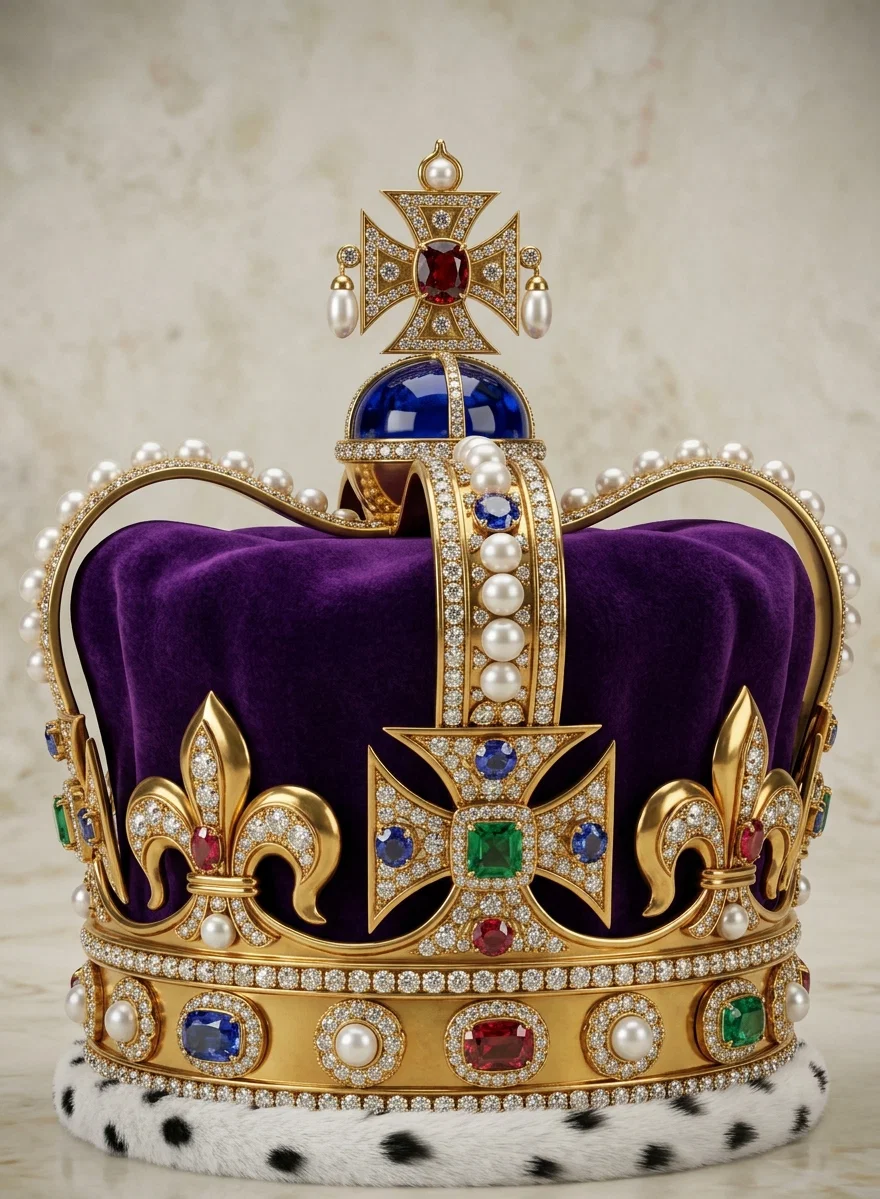
St. Edward’s Crown, the official crown of England, made for the coronation of Charles II, in 1662, and worn at all subsequent coronations.
Queen Victoria’s crown, so sparkling with brilliants that the crown is scarcely visible, is probably the most expensive ever made. In the front, set in the center of a diamond Maltese cross, is the finest ruby known, said to have been given to the Black Prince by Don Pedro of Castile in 1367, and to be worth half a million dollars. The crown was made in 1838, and contains not less than 2,783 diamonds, 277 pearls, 16 sapphires, 11 emeralds, and 4 rubies. In the center of the crown is a magnificent sapphire reputed to have been worn by Edward the Confessor, and to have been buried with him. This with the large spinel ruby makes the crown of both historic and intrinsic value, far beyond that of any other crown in existence. It is lined with violet velvet, and bordered with ermine.
The crown of the Prince of Wales is of gold without precious stones.
The Queen Consort’s Crown is of gold set with jewels.
The Queen’s Crown, a golden circlet embellished with diamonds and pearls, was made for Queen Maria d’Este, wife of Charles II.
The Royal Scepter, with the cross,—2 ft. 9 in. long,—is of gold, elaborately decorated, and ornamented with colored jewels. The upper portion is wreathed and twisted and handsomely decorated. There are three white and red enamelled bands dividing the scepter. The cross rests on an orb of gold, and a large amethyst stands on it, faceted, and held in position by jewelled protections. The whole piece is thickly studded with costly gems and is brilliant in the extreme.
The Ivory Scepter of Queen Maria is surmounted by a dove of white onyx.
Queen Mary’s Scepter, made for her by her husband, King James II., is two feet, ten inches in length, of solid gold, ornamented only with diamonds.
These scepters, including also the Scepter of the Dove, or Rod of Equity, and Queen Victoria’s scepter, are fully as interesting as the crowns, and are symbolical of times and personages which will forever live in history.
The orbs of the king and queen. The larger orb, made for King Charles II., the official orb of England, is six inches in diameter with a fillet around the center, surmounted with an arch, and edged with pearls. Clusters of colored jewels and diamonds stud the band and the arch, while the red and white enamels inevitably appear. At the top of the arch is a fine amethyst cut in facets one and one-half inches high, and on this stands the cross patte, edged with rose-cut diamonds. In each of the four corners of the cross, there is a large handsome pearl, while at the foot there is a collar of diamonds.
The somewhat smaller, the more delicate orb of Queen Mary, ornamented with fully as many jewels, and kept with jealous care, is made after much the same pattern. It is ornamented with amethysts, pearls, sapphires, and diamonds.
St. Edward’s Staff is made of gold, is four and one-half feet long and about ninety pounds in weight; tradition has it that it contains a piece of the true cross.
Here also is a model of the Koh-i-noor (mountain of light) diamond, one of the largest known, weighing, originally, nearly 800 carats, but now reduced by the lapidary to 106. Its worth is variously estimated, from $700,000 to $1,000,000. The original, kept in Windsor Castle, is now set in the new crown of Queen Alexandra.
The Regalia also contains the three swords: the Sword of Spiritual Justice, with a broad blade and rather blunt point; the Sword of Temporal Justice, a sharp weapon, narrow and tapering to a dagger-like point; the Custana or pointless Sword of Mercy. These typify three of the great prerogatives of the sovereign.
Three articles of the Regalia date back to a period more remote than the restoration. They are the coronation stone, the golden eagle, and the coronation spoon.
The total value of the Regalia is estimated to be £3,000,000, or about $15,000,000.
KATHRINA B. WILCOX.

SURVIVORS

When that last fiery bolt is hurled Which waits but heaven's august decree, To shiver into dust the world And make a storm of flame the sea; When strikes the last sad human eye The tumult of the reeling sky;
Unawed shall stand in that dread hour— When the red suns as ashes fall— Poised in the calm of Godlike power, One with the Great Supreme of All, Those souls who, guileless of retreat, Snatched the lit laurels from defeat. —George Benson Hewetson.

CROWNS AND CORONETS.

The crown is a symbol of royalty, the coronets are worn by peers and peeresses who are not of royal rank. Just now, when “England is a-quiver from center to circumference over the coronets of dukes, marquises, earls, viscounts, and barons,” many of the British nobility are unpleasantly conscious of this latter fact.
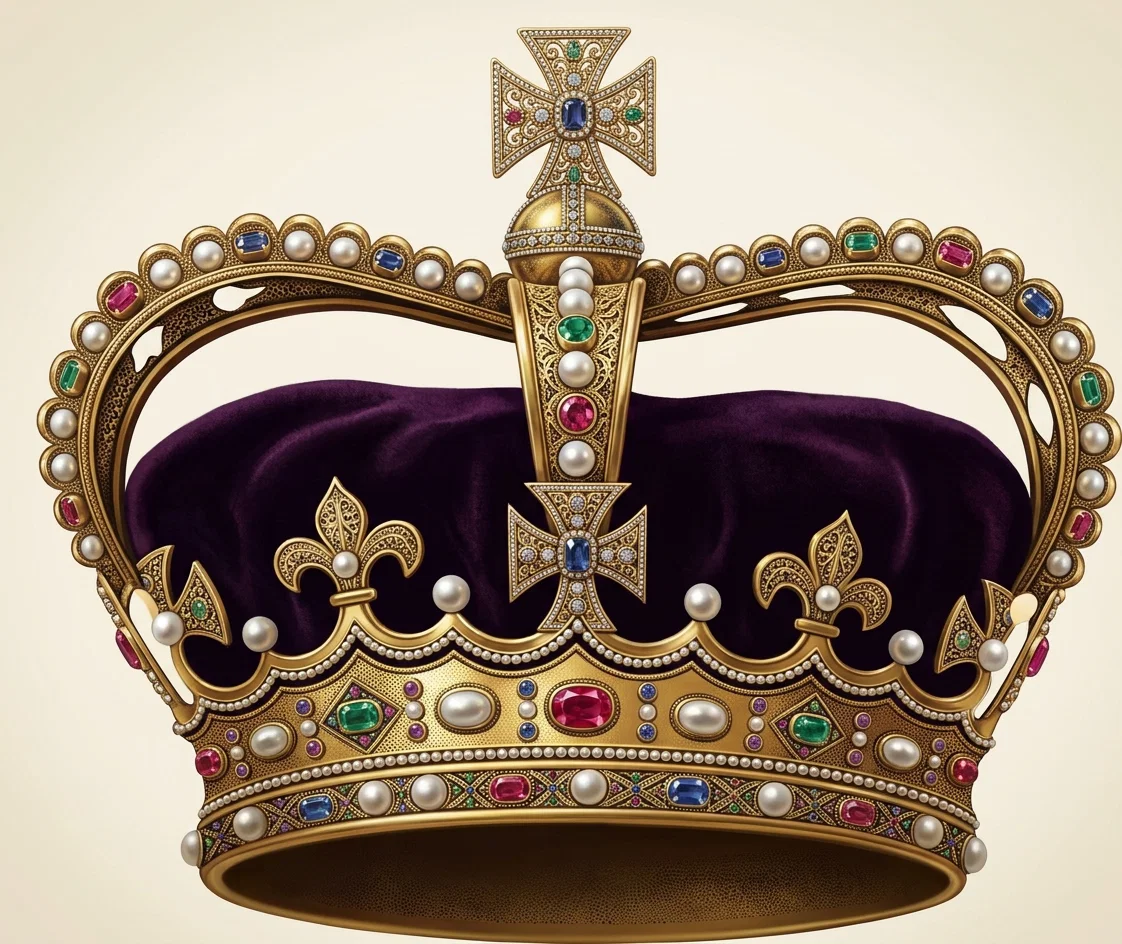
King Edward’s crowns are two, and they will be worn at different times in the course of the long ceremony. They are known as St. Edward’s crown and the imperial or State crown.
St. Edward’s is the oldest of English crowns, and as a historical relic is of inestimable value. It is a copy of one made for Edward the Confessor and destroyed in 1649 by order of Cromwell’s Puritan Parliament, though it is said that the original pattern was found in the tomb of a fifth-century king.
The crown is a circle of gold, adorned with pearls and precious stones. From the rim rise four broad crosses alternated with fleurs-de-lis, and above these are four arched diadems that close at the top under a mound and cross. Elaborate as was this royal headgear when first made, succeeding monarchs have added to it rare pearls and precious stones. George IV. added so many that its weight was increased to five and a half pounds and its value to $700,000. Among these gems was a magnificent sapphire of purest blue, and a “glorious ruby” once the property of Edward the Black Prince. This made the crown of the gallant old king the finest in the civilized world; and his queen, unwilling to be outdone, spent about $600,000 from her own purse in decorating her own crown, adding to it pearls and diamonds until the gold foundation was almost entirely hidden.
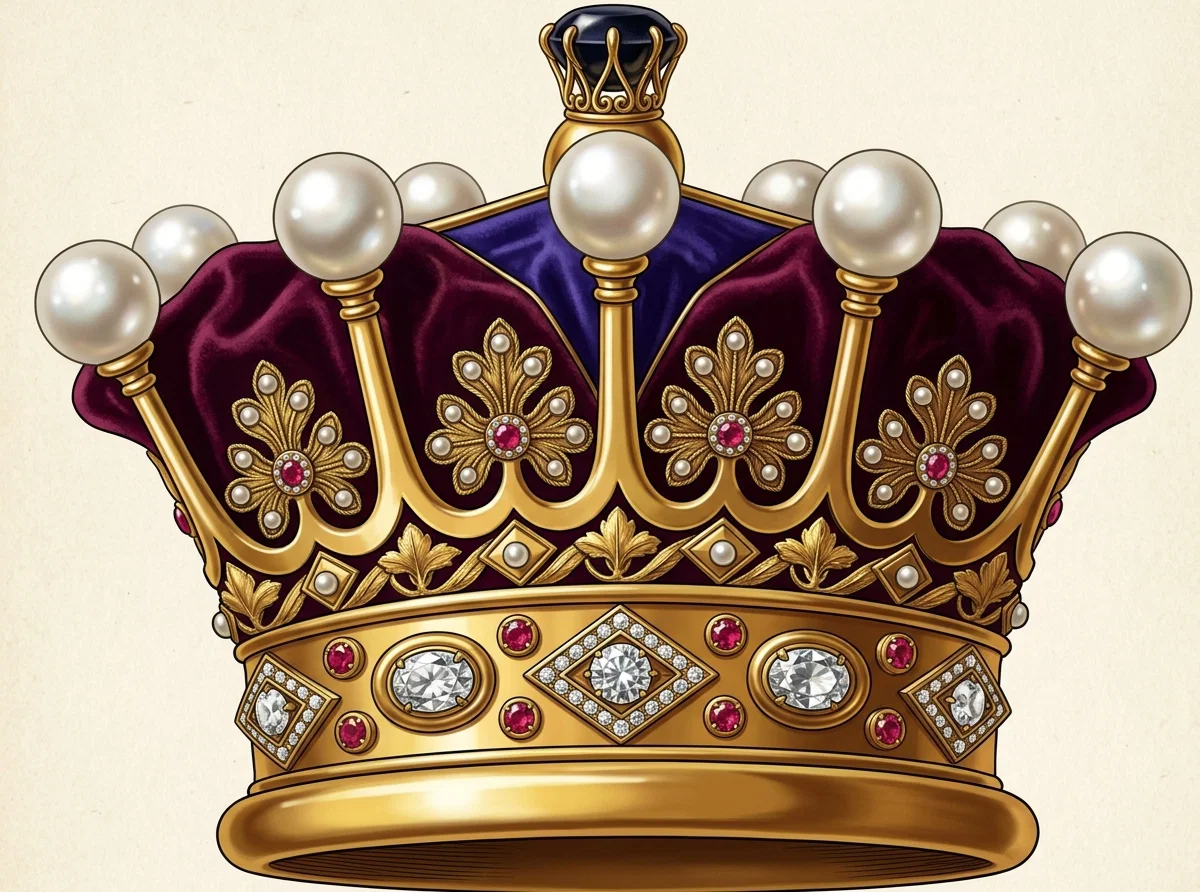
The styles of the coronets worn by the peers and their wives have been settled by long usage, and indicate the rank of the wearers. That worn by the prince of Wales shows the same alternation of broad crosses and fleurs-de-lis as the royal crown, and two of the crosses are connected by a diadem surmounted by a mound and cross. The younger children of the king wear coronets like that of the prince, but without the diadems.
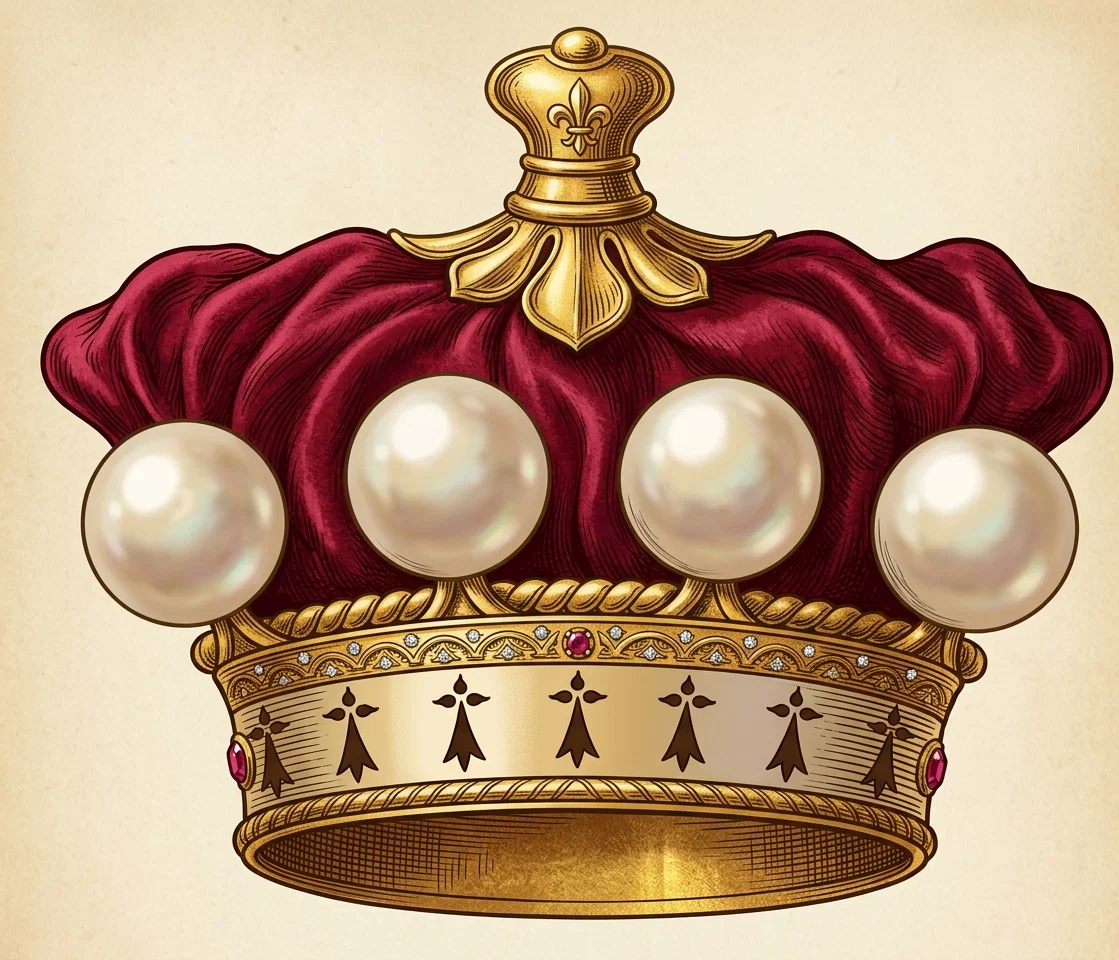
In the ducal coronet, above a rim of gold rise eight strawberry leaves of equal height. The coronet of a marquis displays only four strawberry leaves, but alternated with these are four pearls or silver balls. An earl may wear eight pearls or silver balls, raised on golden spires, between eight small golden leaves. A viscount wears pearls or silver balls only, but there are eighteen of them. A baron may wear six pearls or balls only.
All, both crowns and coronets, are made over a cap of crimson velvet, which is lined with white silk, edged with ermine, and, when the mound and cross are not used, surmounted by a golden tassel. The peers will don their coronets when the crown is placed on the king’s head, and the peeresses when the queen is crowned.
About two thousand coronets will be required by the peers and peeresses who are entitled to attend the coronation. Custom has fixed the style of each; but they may be simple or elaborate according to the taste or purse of the wearer. A silver coronet is estimated to cost about $80, while those of gold may cost $300 or more. Some of the peers are wealthy, and can well afford elegant coronets, while to others even the cheapest will seem dear; so there is sure to be heart-burning and jealousy. Then, too, while large sums are being lavished for display, thousands, even in the island kingdom, are suffering for the necessaries of life. Thus it is that a minor strain runs through all notes of human festivity and rejoicing.
And yet it is not hard to imagine that King Edward’s heart will thrill with proud joy, when, as the heir to a long line of mighty “kings of the sea,” the priceless historic crown of the great British empire is placed upon his brow, amid a brilliant throng of princes, dukes, and nobles who are glad to do him homage.
The coronation will be a grand pageant, but it is of the world, and “passeth away.” But when the Man of Nazareth and Calvary receives His “many crowns” as “King of kings and Lord of lords,” there will be “given Him dominion, and glory, and a kingdom, that all people, nations, and languages should serve Him; His dominion is an everlasting dominion, which shall not pass away.” And there will be no bitterness or heart-burning connected with the crown of “life” (James 1:12) and “glory” (I Peter 5:4) which He will then bestow upon His people. E. J. BURNHAM.

ALFRED MALLETT,

YOUR CLOTHES LAST LONGER and look white if they are washed with E-Z Washing Tablets. They last longer because they need no rubbing. They look whiter because they are cleaner than when rubbed on a board. E-Z Washing Tablets positively contain no acid or other injurious ingredient. Give it a trial. Samples for 3 washings 10 cents. Agents and General Agents Wanted.

ALFRED MALLETT,

710 EAST 171ST STREET, NEW YORK CITY

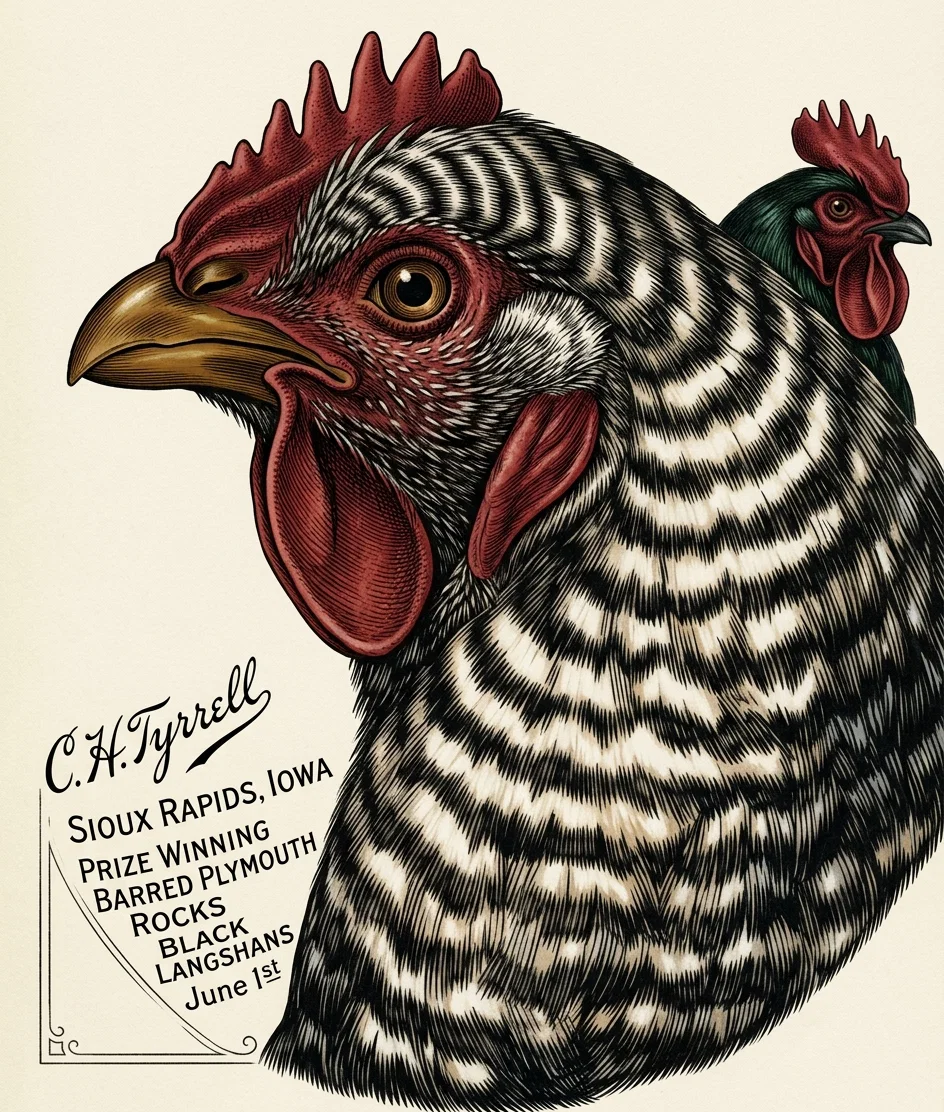
Eggs for Hatching

At $1.00 per 15 from Prize Winning BARRED PLYMOUTH ROCKS and BLACK LANGSHANS, after June 1st.
C. H. TYRRELL, Sioux Rapids, Iowa

Something for the warm weather

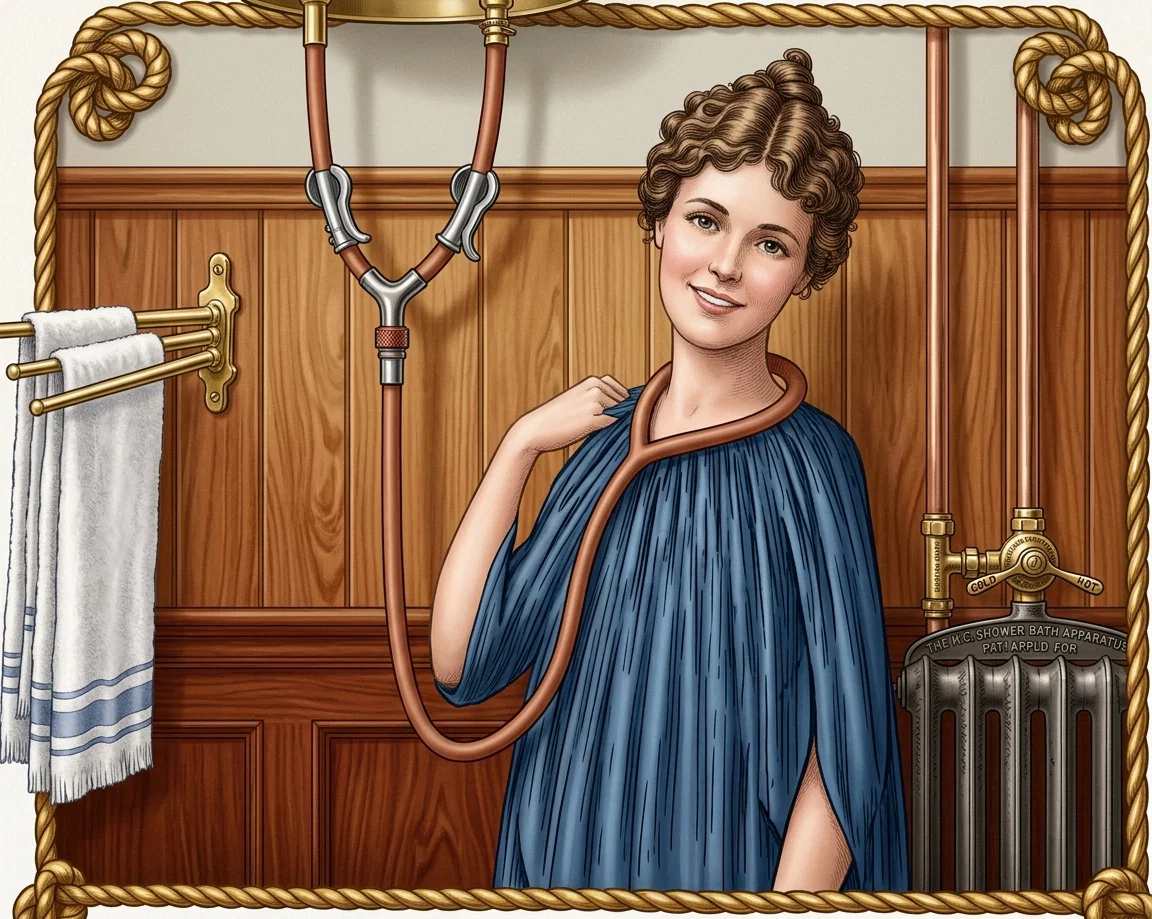
The Shower Bath is a Natural Tonic and Stimulant
It fortifies the body against weariness, the brain against fatigue, insures immunity from colds and kindred disorders, imparts a feeling of vigorous, glowing health and strong vitality. Just the thing for warm weather.
Price $3.50. Style No. 2, same arrangement as this, instead of tank four-quart rubber bag. Price $3. Agents Wanted.
No human being can live a life of bodily purity, healthy mentality and higher morality, who does not have free and frequent association with water.
Send for one and take a cold shower morning and night and keep cool and clean. Write to-day for particulars and free booklet on health and hygiene.
When writing please mention the SIGNS OF THE TIMES

On Jellies

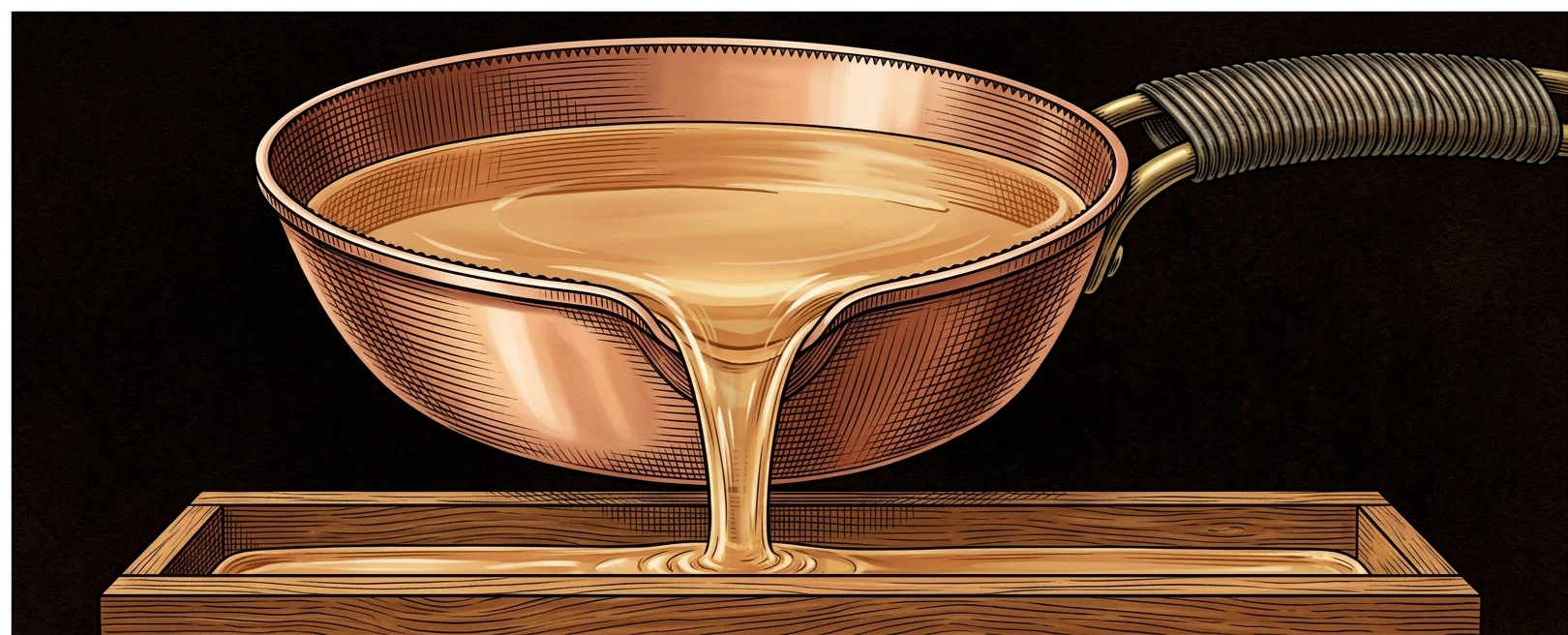
preserves and pickles, spread a thin coating of PURE REFINED PARAFFINE
Will keep them absolutely moisture and acid proof. Pure Refined Paraffine is also useful in a dozen other ways about the house. Full directions in each package, sold everywhere.
STANDARD OIL CO.

A BOOK YOU NEED

By Mary Wood-Allen M. D.
TEACHING TRUTH. — — — .25
Answers in chaste and scientific yet simple language, the queries of children as to the origin of life.
Wood-Allen Publishing Co., 300 Summit St., Ann Arbor, Mich.

LESSON 13.—JUNE 28.—THE SURE MERCIES OF DAVID.

NOTE.—This series of lessons is entitled, “Studies on the Gospel Message.” For introduction and excellent suggestions as to their study, we refer the student to the Lesson Quarterly.
It is death which prevents the continuance of a house or family (Heb. 7:23); and sin is the cause of death (James 1:15); and sin is disobedience to the law of God (1 John 3:4). Righteousness gives permanence to a house. Prov. 12:7. Therefore the promise to establish David’s house forever (2 Sam. 7:16), and that his seed should never cease to exist (Ps. 89:35–37), was the promise of a Saviour to come in the flesh, who should save from sin (Matt. 1:21), and bring to humanity complete victory over death and the grave (Rev. 1:17, 18). This was the blessing which David asked for his house (2 Sam. 7:29), the blessing of righteousness by faith (Rom. 4:6–8), that righteousness which is the basis of God’s eternal throne (Ps. 97:2), and which has in it the assurance of eternity to man (Isa. 51:7, 8). Through the promises made to David of a throne and a house to be established forever, the covenant was made that the Son of God should become the Son of man and occupy David’s throne (Luke 1:31, 32), as David’s Son (Matt. 22:41, 42). This is the last Adam, the second Man (1 Cor. 15:45–47), the head of the new humanity, the promised Seed. Thus David’s house became the Lord’s house, and in this union of divinity with humanity the rock foundation was laid upon which the house was to be built which would continue eternally. Matt. 16:15–18. We personally share in “the sure mercies of David” by building upon the sure foundation (Isa. 28:16), and becoming a spiritual house (1 Peter 2:4, 5), the temple of the Lord (Eph. 2:21, 22). In this house the law of God is enshrined (Heb. 8:10), as in the tabernacle of old, and over it Christ the Lord is also Son (Heb. 3:6), as the pledge of its eternal continuance.

QUESTIONS.

  1. What causes the extinction of a house?
  2. Of what is death the result?
  3. What does the Scripture declare sin to be?
  4. What will cause a house to stand permanently?
  5. What promise was made concerning David’s throne?
  6. What promise was made concerning his seed?
  7. Whose coming was bound up in these promises? For what purpose?
  8. What victory was thus assured for humanity?
  9. With what petition did David close his prayer after Nathan’s vision had been told to him?
  10. What is the experience of this blessing?
  11. What relation does this righteousness sustain to God’s throne?
  12. Because of its very nature, what will it be to the one who receives it?
  13. In the fulfilment of the promises to David, who would occupy his throne?
  14. As David’s throne was a man’s throne, what must he become who sits upon it?
  15. What names does the Scripture give to this occupant of the throne?
  16. What foundation was laid by giving the Son of God to humanity? What has been built upon this foundation? What will this house be able to resist? Why?
  17. What is the experience through which we shall be able to share in the benefit of the promises to David? What do we thus become?
  18. What will be found in this house?
  19. What is the assurance that all the members of this house will live forever?

Continue reading: THE SUNDAY SCHOOL