Your ShelfYour Projects

Signs of the Times, Vol. 33, No. 7.

Contained in this Issue
Earlier text: THE GREAT SALVATION

THE PILLARS OF HEALTH

By WILLIAM S. SADLER, M. D.

I. THE BIBLE ON DIET.

It may be a new thought to some that the Bible contains all the essential principles of the diet question. Remember, we say principles, not rules; for the Bible is a Book complete in principles, but very meager in rules.
The first great underlying principle—pillar of health—which we will notice is temperance. Yes, we might even say that temperance is the foundation of all the pillars of health. Temperance is the very key-note of all the practises of the successful health-seeker. True Christian temperance should regulate all the habits of mind, soul, and body.
We are to practise temperance not merely to gain peace of mind and ease of body here on earth, but because it is essential to that state of mind and body which is to prepare us to win the everlasting prize. Said Paul: “Every man that striveth for the mastery is temperate in all things. Now they do it to obtain a corruptible crown; but we an incorruptible.” 1 Cor. 9:25.
The glory of God, and not merely the satisfaction of the sense of taste, is to be considered in all our eating and drinking. “Whether therefore ye eat, or drink, or whatsoever ye do, do all to the glory of God.” 1 Cor. 10:31.
Probably no other one physical habit has so much to do with human happiness and health as the one question of what we eat, how we eat, and when we eat.
The wise man recognized the diet question as one of prime importance when he wrote: “When thou sittest to eat with a ruler, consider diligently what is before thee; and put [Jewish translation, puttest] a knife to thy throat, if thou be a man given to appetite. Be not desirous of his dainties; for they are deceitful meat.” Prov. 23:1-3.
Wrong habits of eating, with their consequent train of dyspepsia and disease, are responsible for more suffering and misery than almost all other means of physical transgression combined.
The Bible long ago recognized what modern scientists are just awakening to—that is, that some foods are nourishing and others stimulating. In other words, some foods produce strength, others drunkenness; for it was Solomon who wrote: “Blessed art thou, O land, when . . . thy princes eat in due season, for strength, and not for drunkenness.” Eccl. 10:17.
All food substances taken into the body, which can not be immediately and normally converted into tissues and energy, must exert a deleterious effect upon the body; and it is this stimulation, this reaction of the body to substances in the circulation which are not food, that produces a state of intoxication, or drunkenness. And this becomes a serious question when one stops to consider that a state of continual intoxication—auto-intoxication—may be produced by indigestion and chronic dyspepsia.

SCHOOLING FOR GROWN-UPS.

It is the child who sends his parents to school—not so much the parents who send the child. And every disciple of the Master Teacher, whether parent or not, must go to school to the child if he would learn the ways of the Kingdom. A father sat by his little boy’s bedside at night, trying to soothe into quiet a wakeful and restless mind, busy with a hundred child-interests that the night did not seem to shut out. Suddenly the little fellow disclosed the deeper cause of his troubled thought.
“Father,” he said, with a sob, “I’m afraid to tell you things sometimes, because you speak so quickly!”
“Why, what do you mean, little boy? I don’t intend to speak quickly to you, and I never want you to be afraid to tell me anything you please,” was the earnest response.
“Yes, father, but you do speak quickly sometimes, and you say No, so that I’m afraid, and don’t ask you lots of things I want to ask.”
That father was in school, and a hard schooling it was. He came to his knees beside the bed then, and he made some promises to the boy which are to be kept. But when the father was alone, this lesson began to come out of the schooling: “What if my Father in heaven should answer me quickly, and say No, so that I should be afraid to ask Him lots of things I want to ask? If He can be so patient as He is with my questionings, what right have I to be other than that with a child’s questionings?” The little boy had not been wakeful in vain.—Sunday School Times.

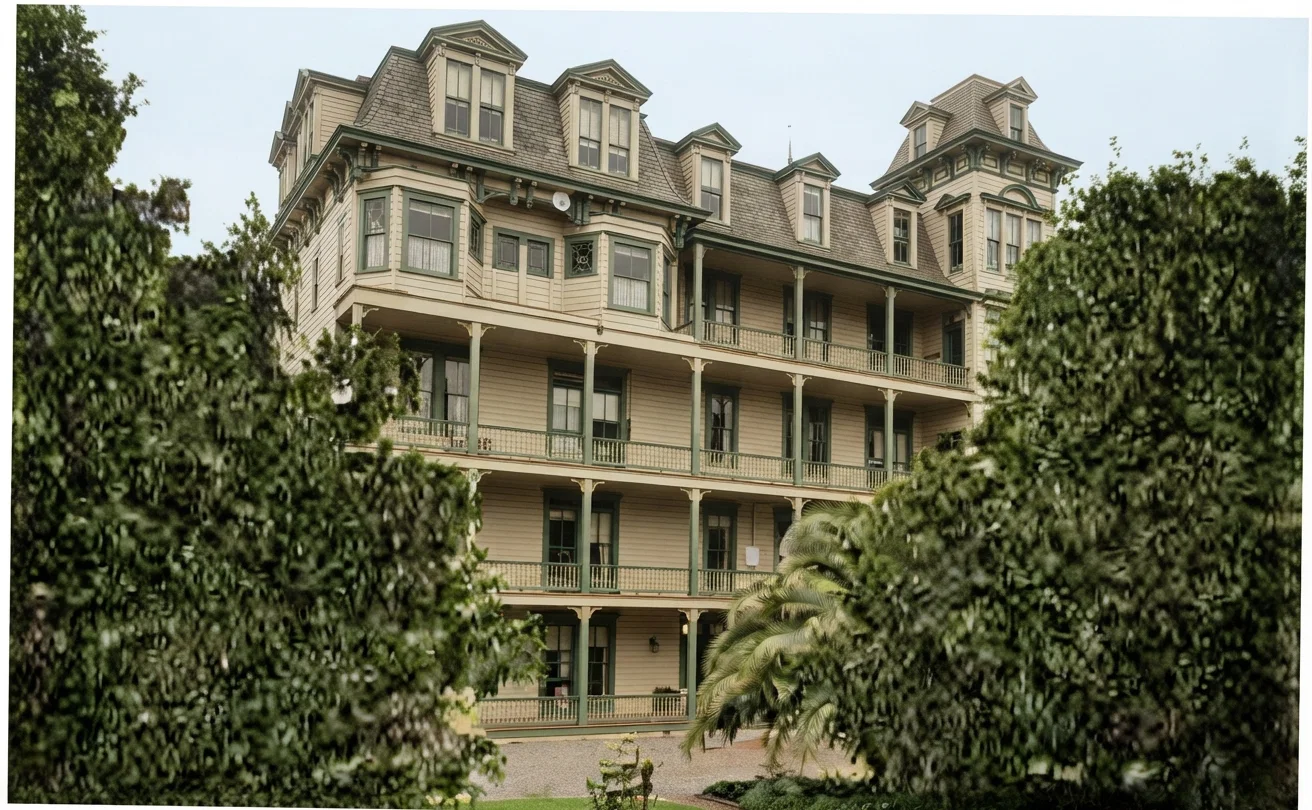
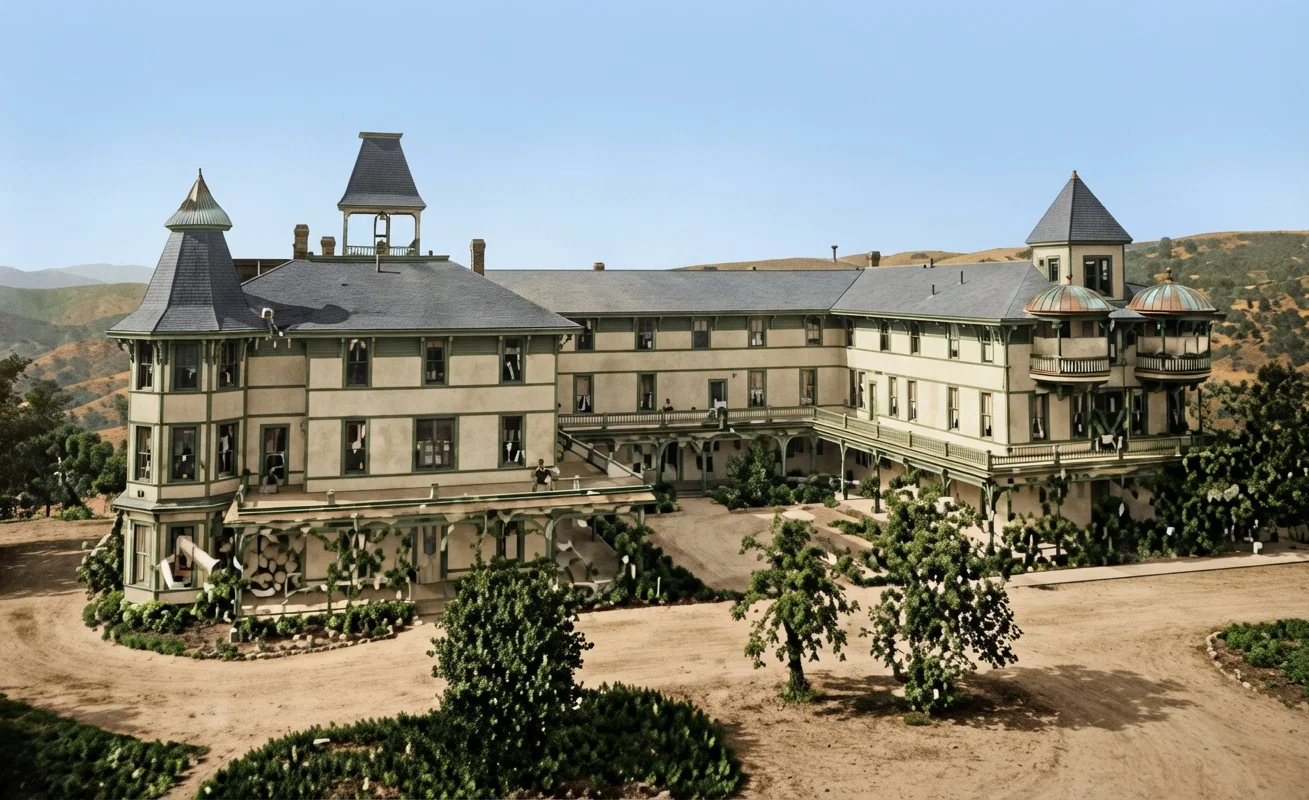
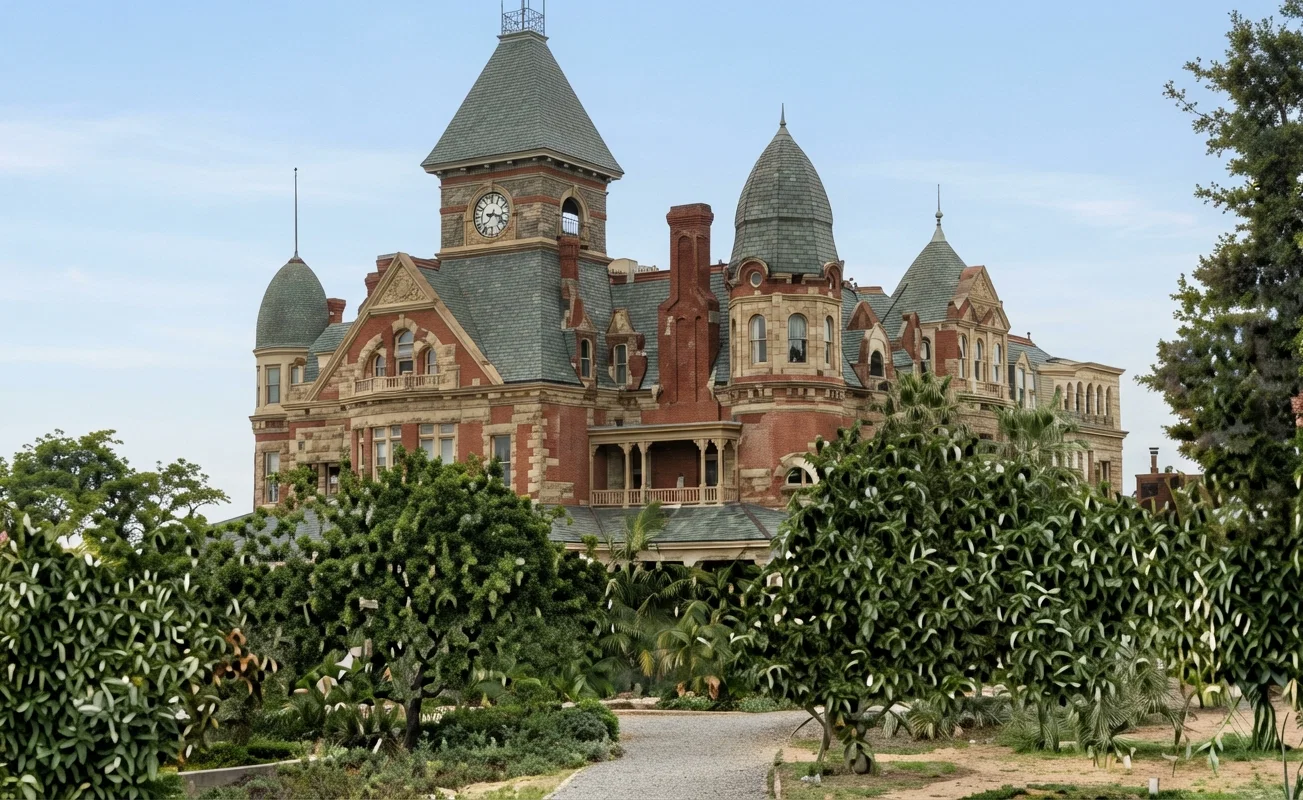
Winter in California

at the

California Sanitariums

LOMA LINDA SANITARIUM (Redlands)
ST. HELENA SANITARIUM
(Napa County)
ST. HELENA SANITARIUM (Napa County)
PARADISE VALLEY SANITARIUM. (San Diego)
GLENDALE SANITARIUM (Los Angeles)
Where the charm of country life at a high-class health resort, with your comfort and perfect rest, is the aim of the management. Medical attention if desired. Rates, $15.00 per week.
Where the same methods are used as at the Boulder, Colo., Portland, Ore., Melrose, Mass., Battle Creek, Mich., and nearly a score of other successful sanitariums. Christian physicians and employees attend to the needs of each guest.

Open Every Day in the Year

A GOOD DRIVER IN A BAD PLACE.

We had ordered some coal from J. T., dealer. I sat by the window when the first load arrived, and as the team came up the soft, muddy avenue toward the house, I feared to see whipping and to hear swearing, and was on the point of retreating to the back part of the house to avoid the expected shock, when the driver began coaxing and patting the horses in the kindest manner. The poor beasts in return strained every muscle in their efforts to bring the load up the ascent. The driver encouraged and coaxed, and all three seemed to work with mutual endeavor and good-will. But all to no purpose. The wheels sank into the soft mud, and it was evident the thing could not be done; so he dumped the coal right down in front of the house.
I could not help going out and telling him how much it gratified me to see a man who had feeling for his horses. "Well," said he, "I don't see any use in beating animals when they are doing the best they can for us."
The same man came again and was equally kind and considerate, tho he succeeded in getting his load to its destination. I have seen him bring coal to a neighbor since the last snow came, and he took his shovel along to ease the bad places.
May this good driver, in his turn, be kindly dealt with; and in his journey thru life find some friendly hand to ease him in the bad places.—Our Dumb Animals.

A Good Decision Is Based on Knowledge

A good decision is based on knowledge, and not on numbers.—Plato.

Overland Limited

Chicago 68 Hours

Electric Lighted Equipment
World's Events Telegraphed, Train Daily
Unexcelled Dining Service
Observation---Parlor---Cafe Cars
Drawing-room---Stateroom Sleepers
Through without Change
Across Great Salt Lake and High Sierra by Daylight
Fastest Time---Most Direct Route
VIA

Southern Pacific

WANTED.

A dishwasher. Steady employment to right person. The Vegetarian Cafe, 105 Sixth St., Portland, Ore.

WANTED.

A good farm-hand to work by the month, single man, S. D. A. preferred. Address, Carl Christiansen, Route 2, Sebastopol, Cal.

NEW YORK AND PHILADELPHIA, VIA NIAGARA FALLS.

An attractive way is via the Grand Trunk-Lehigh Valley Route; double track; solid trains. Write Geo. W. Vaux, A. G. P. & T. A., Grand Trunk Railway System, 135 Adams Street, Chicago, for particulars.

OUR LITTLE FRIEND.

DO YOU WISH a pure, sweet, instructive paper for your little ones, one not filled with cheap sentimental nothings nor foolish, silly tales, but interesting, instructive, entertaining reading, helpful both to parents and children? If you do, send for
OUR LITTLE FRIEND,
eight bright pages, illustrated, weekly, 50 cents a year. Address OUR LITTLE FRIEND, Mountain View, Cal.

Bank of Mountain View

If you haven't already done so, why don't you drop us a postal asking us to send you a copy of our monthly paper, "The Bank of Mountain View Journal." It is very interesting. It is full of good ideas, and it is free to you for the asking. If you live in the East, send for a copy and see how we do it in California. We still hold ourselves ready to furnish you with information about Mountain View. Write us.
Address

Bank of Mountain View

Mountain View, Santa Clara County, California

THE CALAMITY IN JAMAICA.

WE present in this issue from several sources reports from the great calamity in Kingston. These reports come either from reliable eye-witnesses, or from reliable persons who have obtained their facts from eye-witnesses. Learning nothing, we wired for information.

LETTER FROM A. G. DANIELLS.

The following is a letter from Pastor A. G. Daniells, of Washington, D. C., President of our General Conference, written under date of January 24:
My dear Brother Wilcox:
Your telegram, sent to the "Review and Herald," the 20th, was handed to me for attention, and I have held it until we could get information from Kingston. We have just received reports from there, and I hasten to pass on the word to you. Have just sent a telegram as follows: "American brethren safe. Four Jamaicans killed. Situation terrible. Photographs to-morrow."
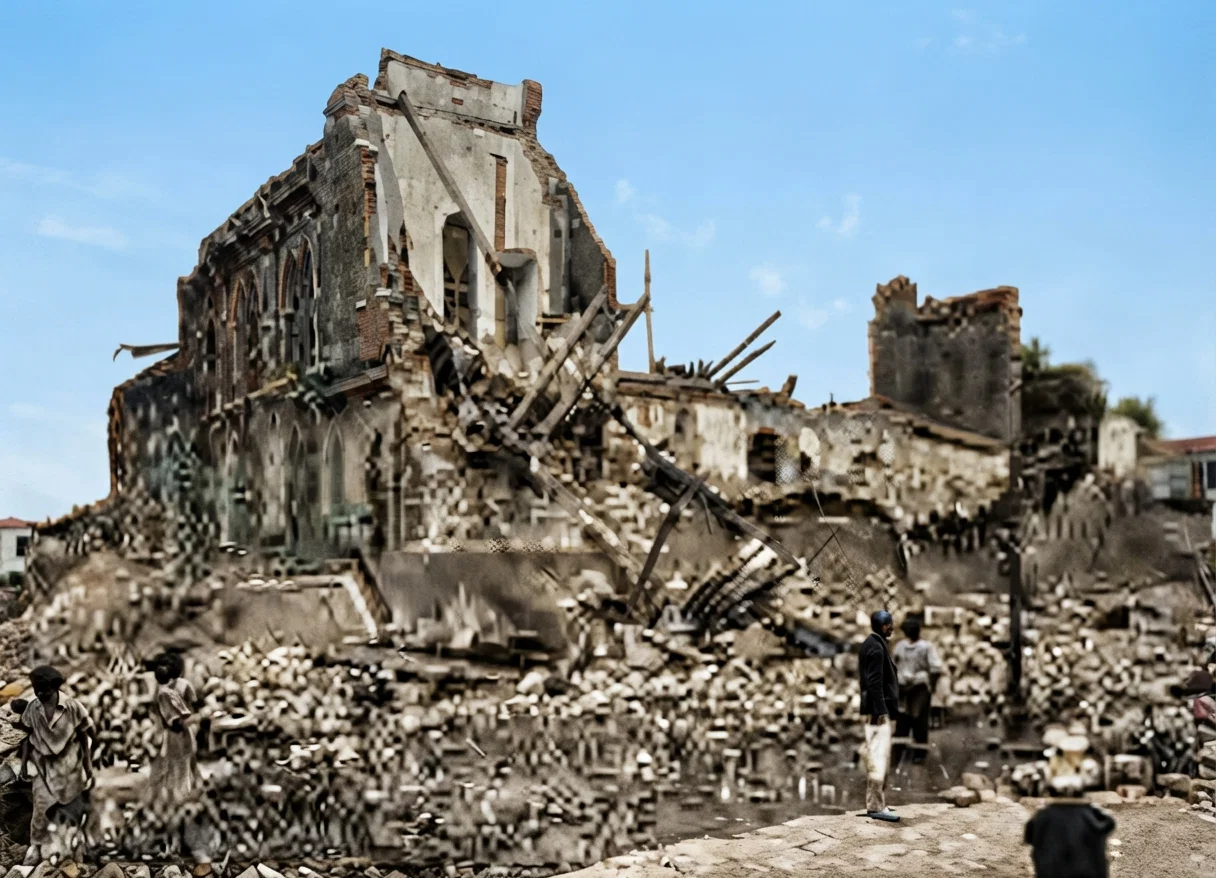
Catholic Church, Kingston.
We have just received our information from Pastor L. E. Wellman, President of the East Caribbean Conference, who has just come from Kingston. I will endeavor to give you a synopsis of the account he has given us of their experience.
The Union Conference session opened Friday, the 11th, in our church building in Kingston. There was a large delegation from all parts of the West Indian Union Conference. The American delegates were Pastors Evans, Farnsworth, Warren, and Bender, Mrs. Bender, and Professor and Mrs. C. B. Hughes. The brethren had engaged the largest hall in the city for evening public services. Sunday night the hall was packed by a deeply interested audience to hear Brother Warren speak on the subject of the judgment.
Monday morning, a large committee went from the city of Kingston to our school farm about twenty miles away. During the forenoon they inspected the school site, and held a counsel meeting. In the afternoon they were in our school building in counsel when the earthquake occurred. The building rocked and tossed like a ship at sea. The brethren rushed out quickly, but the building did not fall. The violence of the quake convinced them that a serious shock had visited the island, and they immediately started back to Kingston.
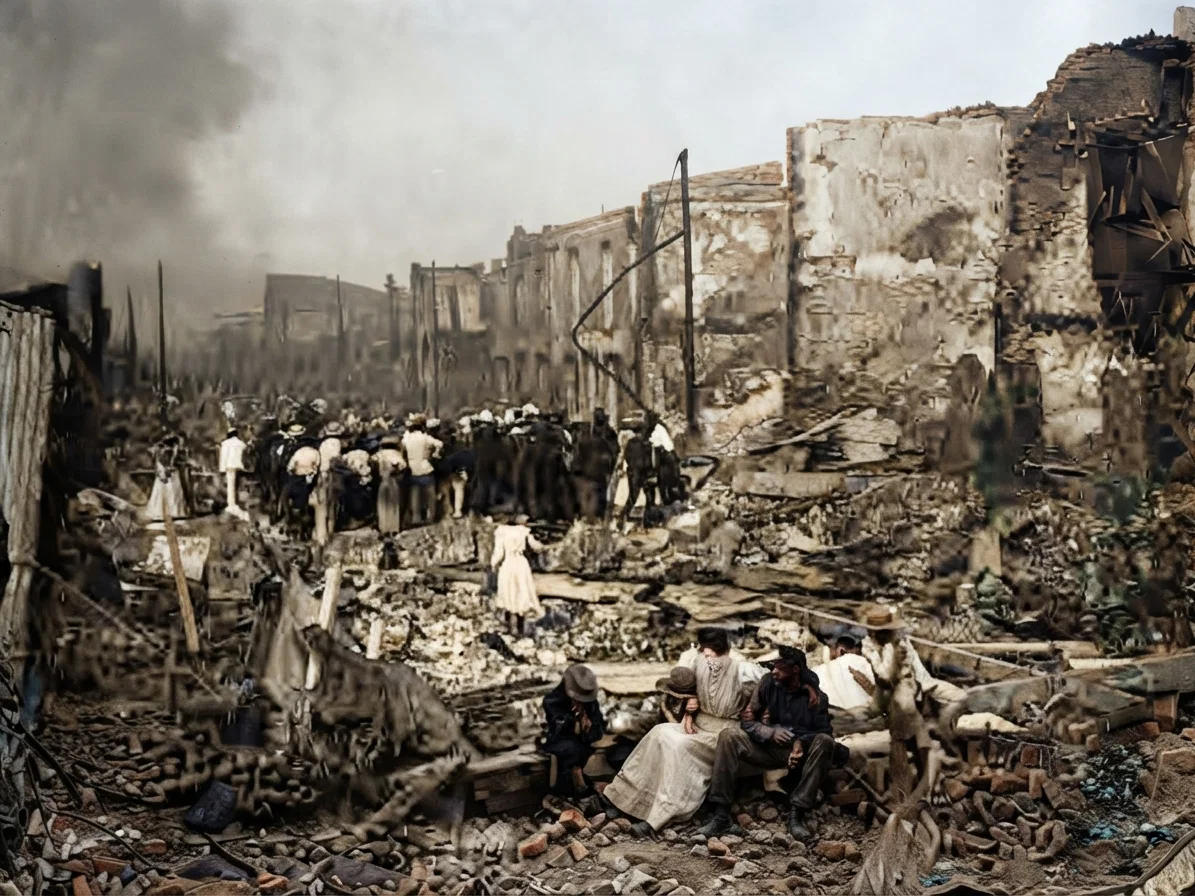
Harbor Street in Kingston, Jamaica, after the Earthquake of January 14.
On their way to the local railway station, they met evidences that confirmed their fears that a terrible disaster had occurred. The first thing they saw was the ruins of a stone church belonging to the Episcopalians. Of this building nothing was left standing.
When they reached the railway station, they found the wires all down. They learned also that the tunnels between them and the city had been partially blocked. They took the first train they could get for Kingston, but owing to the obstructions of tunnels by rocks and earth shaken down, they could not get to the city before eight o'clock at night. Within a few miles of Kingston, the lurid sky told them that the city was on fire.
Unspeakable was the anxiety these brethren felt for the large number of our people gathered in the city. Brother Wellman tells us that what they saw on arriving in the city was terrible beyond all description. The entire business part of the city was in ruins, and a large part of it was on fire. They hastened to the part of the city in which our people were located, and were greatly relieved to find that the most of them had escaped without serious injury.
Brother Norman Johnson, the treasurer of the Union Conference, had been killed; he went to the bank in the afternoon to cash a check we sent him from our Washington office, and was buried in the ruins. They were not able to recover his body. Owing to the heat, the bodies quickly decompose, and in order to avert pestilence, a large fire was built, and cart-loads of crushed, mangled bodies were drawn from the ruins and cremated. Our brother's body may have been here. If he had cashed the check, the money secured was either taken by those who found his body or burned in the fire. As far as can be learned, three other Jamaican brethren were killed. A number received injuries, but they think none will prove fatal.
Our people had met in the church for service, and were singing the opening hymn when the shock came. Immediately there was a rush for the door, but as they were in an upper story, and the passageway was narrow, Pastor Strickland, who was leading the singing, saw in an instant that they would stop the passageway, and probably trample each other to death, so he quickly placed himself
in front of the door between the people, and continued singing. This quieted the people and they kept on singing until the whole affair was over. Then they were allowed to leave the room in an orderly way. Our church building was a brick structure about 125 years old. It stood the shock remarkably well. They found on leaving the building that it was badly cracked, but it held together so that the congregation suffered no harm whatever. It will have to be taken down and rebuilt, to be made safe.
We thank the Lord for this wonderful preservation. The moment I heard of the disaster, I thought our people must have been in church at the time, and feared that we would get a heart-rending report regarding them. But the Lord certainly delivered them; for people in nearly all other brick and stone structures in the city were either badly injured or killed. There is scarcely a house in Kingston that is not ruined.
Our brethren endeavored to rally from the effects of the disaster, and continue their meetings as had been planned, but it was impossible to do so. However, Brother Wellman says that our people, white and black, behaved themselves splendidly. They were not terrified, and had no desire to run away from the place. He said that our colored brethren exhibited a calmness and confidence in God that was truly remarkable.
The difficulties they faced in their endeavor to continue their meetings were these: no homes in which to live; scarcely any food to eat; no suitable place in which to hold their meetings; and no suitable protection from the half-crazed mobs which created pandemonium in all parts of the city. They held a number of business meetings in order to arrange their conference affairs properly, and they closed their meeting, and all returned to their homes. Pastors Luther Warren and L. E. Wellman sailed direct to New York City, and arrived there Tuesday, the 22d. Pastors Evans and Farnsworth remained a few days to counsel with the local brethren left in charge of the work. They hoped to return by way of Cuba, and we suppose they are on their way now. Pastor Bender was elected president of the West Indian Union Conference. Prof. C. B. Hughes was elected principal of the training school. Pastor Geo. Enoch was released for India.
Now, I have given you, in brief, as clear a statement as I can. On the whole, it was a great disappointment to our brethren in the West Indies to have their meeting broken up in this way. But on the whole, we thank our heavenly Father for the protection granted to our people, and that the affair terminated as well for our cause as it did. As you have recently witnessed the terrible results of a fearful earthquake, it is not necessary for me to attempt to give you a picture of the awful scenes Brother Wellman told us about. It is awful to contemplate, and I pray the Lord to be merciful to poor, sinful humanity, and bring this terrible situation to an everlasting end.
Yours very sincerely, A. G. DANIELLS.

"PERFECT THRU SUFFERING."

PERFECT thru sufferings may it be, Saviour made perfect thus for me; I bow, I kiss, I bless the rod That brings me nearer to my God.
Perfect thru sufferings, by Thy cross, The crucible to purge my dross; Welcome for that its pangs, its scorns, Its scourge, its nails, its crown of thorns.
Perfect thru sufferings, heap the fire, And pile the sacrificial pyre, But spare each loved and loving one, And let me feel the flames alone.
Perfect thru sufferings, urge the blast, More free, more full, more fierce, more fast. It recks not where the dust be trod, So the flame bring my soul to God. —Bishop S. W. Doane.

Earthquake and Fire in San Francisco

FROM PASTOR E. W. FARNSWORTH.

(Excerpts from a letter to his wife, January 15.)
THE city is ruined. It seems to me that by far the greater part of the houses are flat on the ground, and those that have not fallen are so badly shaken, and the walls are so broken, they will have to be taken down before they can be inhabited.
Soon after the earthquake, the fire broke out in several places at the same time, and it burned and burned all night till there is not one store left in the city, and some tell me that not a business place of any kind is left.
We soon found all we could do in helping to dig people out of the ruins. We worked at this until one o'clock last night. At four o'clock in the morning we went to the hospital and found plenty to do. There were 150 people who had been brought in. Some of these had already been cared for. The surgeons had already taken off twenty-six legs, and several arms. Twenty-seven people had died there of their injuries. . . . Fortunately, only a part of the hospital was ruined. There were six surgeons at work all night.
While I was at the morgue I saw them bring in a load of dead bodies. As the wagon was short, they had to put them on top of one another, like so many logs of wood. I then went to the wharf, and while standing there a boat came in with thirty or forty dead on it. While Brother Evans and I were traveling about last night, we came across many dead people lying on the sidewalks and other places. They had been found, but as there was no conveyance to carry them away, nothing could be done but to leave them where they were until some time to-day. I saw several bodies to-day as I was going about. The people are at work trying to get the bodies out of the ruins. It is reported that fifty soldiers were killed at the barracks. It is also reported that nearly all the inmates of the penitentiary were killed. The leading men in the city declare that hundreds of people were buried in the ruins and burned; for all the business houses went down, and it would seem that but few escaped. Some say there must be as many as two thousand killed, but you must remember that everything is in the wildest confusion. Every one seems to know it all, and no one really knows anything scarcely. We all know this,—that the city, as such, is wiped out; that nearly all are houseless and homeless; that hundreds and probably thousands are dead; and that several hundred more are in the hospitals suffering from terrible wounds.
No one slept in their houses last night, and none will to-night. The streets are full of people, and the parks are swarming with them. The weather is warm and dry, so there will be little suffering on that account, which indeed is a great mercy. As I went out last night I saw hundreds of people going to the parks and to the fair ground with great bundles and packs on their heads. I saw more than a hundred women carrying trunks that way, many of them of good size. How heavy they were I can not tell.
It was the most pitiable thing I ever witnessed to see the people at the hospital. Men, women, youth, and little children were all lying side by side on the grass, many of them badly bruised, nearly all bleeding; some were dead, some were dying, and all were suffering whose sufferings had not ended. I saw a good many children, bruised and wounded, lying with the rest, and they were so patient. I did not see one that was crying. They did the best they could to answer all the questions asked them.
While there are many people carrying on some kind of religious work, I see none who are having a hilarious time. I hear no foolish songs, but frequently hear such hymns as these:
"While on others Thou art calling Do not pass me by."
Again in another place we hear:
"Jesus, lover of my soul, Let me to Thy bosom fly, While the billows near me roll, While the tempest still is high."
And yet in such a dreadful time, to-day (Wednesday) theft and robbery are going on all over town. They have looted two stores on each side of us, and the police seem to be in sympathy with the robbers.

An Eyewitness Account of Disaster

FROM ONE ON THE GROUND.

(From Elder I. H. Evans, January 17, to the Secretary of our General Conference, Elder W. A. Spicer.)
Our meeting is broken. We shall remain a few days to help. We are sleeping out doors, as we dare not sleep in the houses. There are no troops here but colored ones. The business white people are largely dead. These blacks are like mad savages. We had a mob attack us this morning. They tore off the gates, tore down the wall, threw stones and bricks like demons. A squad of policemen of thirty men came up and fought the mob for half an hour and drove them away. About 10 a.m. they looted a store across the road, and fought like furies.
It rained last night and drove us into the house. Then an earthquake drove us pell-mell out of doors. Food is short. We have had bread and porridge for three days; but we are informed there will be no more bread after to-morrow morning. The city is looted by these savages, and hunger is delayed, but come it must, unless United States and England send us help.
I am sorry for this misfortune, yet God only can tell why it was permitted. No reports from outside have reached us here. Pandemonium reigns. There are no white soldiers here. The colored troops have little heart to maintain order in such a time as this.
We had a terrific earthquake shock this forenoon. We had been holding a conference meeting this morning out of doors. It rained, and we went into a house with the end out; but a shock of earthquake took place, and we rushed madly for the door. Shall leave for home next week some time.

German Atrocities in Southwest Africa

THE PORTLAND, ORE., "CATHOLIC SENTINEL" declares that the colonial report of Germany is equal in its cruelty to that of Belgium. These cruelties were committed by the German soldiery in German Southwest Africa. They tell of a case that after a village had been captured and all its inhabitants slaughtered, fifty-two children were placed in wicker baskets and thrown into the rapids. Three natives of a certain village were mutilated most horribly by the mistake of a sergeant charged with punishing three natives for sustaining too intimate relations with the officer's concubine. The bestiality of some of the soldiers exceeded that of the natives themselves. No wonder the Psalmist, looking upon the wickedness of man, was forced to cry out, "How long, O Lord, how long?" There will come a time when "God will arise and do His strange work and bring to pass His act, His strange act," and men who seem to be completely immune from civil punishment will meet the just reward of their deeds.

OUR WORK AND WORKERS.

A CHURCH of twelve members was organized at Aurora, Ill., January 12.
BROTHER MILTON ST. JOHN reports that ten have begun to keep the Sabbath, after only ten meetings, at McKinleyville, Cal.
AT Rose Lawn, Wis., five church-school children and young people have been received into the church as a result of the training received in the school.
FIFTY-SIX new members were added to the Sabbath-schools of Utah during the last quarter of 1906, which is a good report, indeed, for that hard field.
Do OUR workers know what the SIGNS OF THE TIMES will contain in the year to come? Write for a little booklet that tells about the paper. It is free.
BRETHREN N. J. Ronlund and H. S. Stenberg report three converts to the truth near Clarno, S. D., two of whom plan to enter the work after a short training in one of our schools.
SIX in Salt Lake City, Utah, have, after a full investigation of the truth, decided to obey, making in all sixteen who have been baptized within the last two or three months in Utah.
ANOTHER new church has been organized in Chicago. It is located at a place where a camp-meeting was held last summer. About one-half of the members are new converts to the truth.
ONE of the most successful bookmen's meetings ever held among our bookmen convened at College Place, Wash., January 15. The fundamental principles of the book work were considered, the field carefully studied, and plans laid for future work. At the last meeting fifty students signified their intention of taking advantage of an institute to be held later. 1907 promises to be the banner year in the book work in the Northwest.

WANTED FOR MISSIONARY WORK.

(Always prepay postage.)
SIGNS, Watchman, Liberty, tracts, and other clean periodicals for home work. Address, Mrs. Ella Malony, 667 Hoyt Ave., Muncie, Ind.
Continue reading: European Letter