WHILE I am still talking about this little country, I might mention an economical and political danger threatening it, as a result of that world-evil of our days, that is, the excess of industrial production over and above the actual demands, which forces so-called civilized nations to tariff wars among themselves and to colonial wars with the rest of the world. Due to her small area and political weakness, Switzerland is obliged to submit to conditions offered her by her mighty neighbors. Mr. Forrer, who was president of the Confederation last year, said in a discourse delivered in Berne a few months ago:
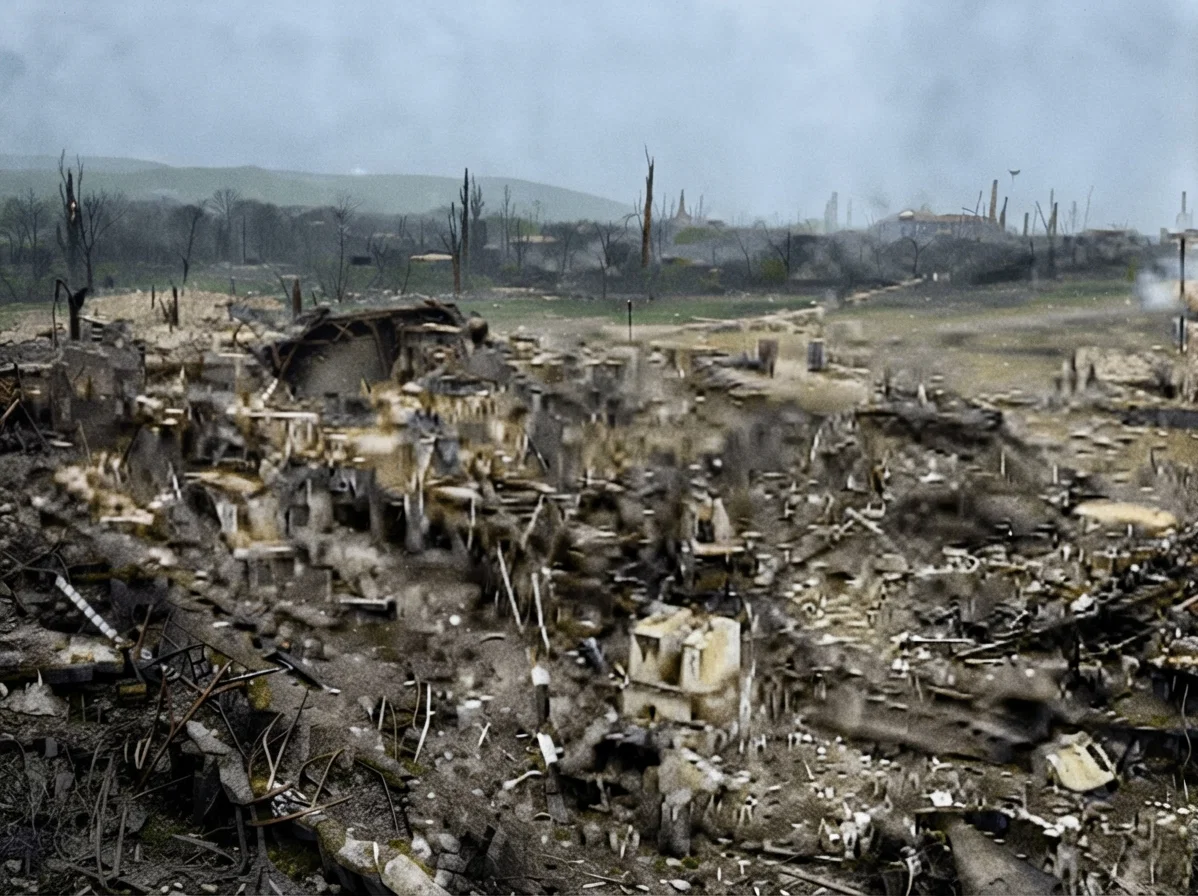
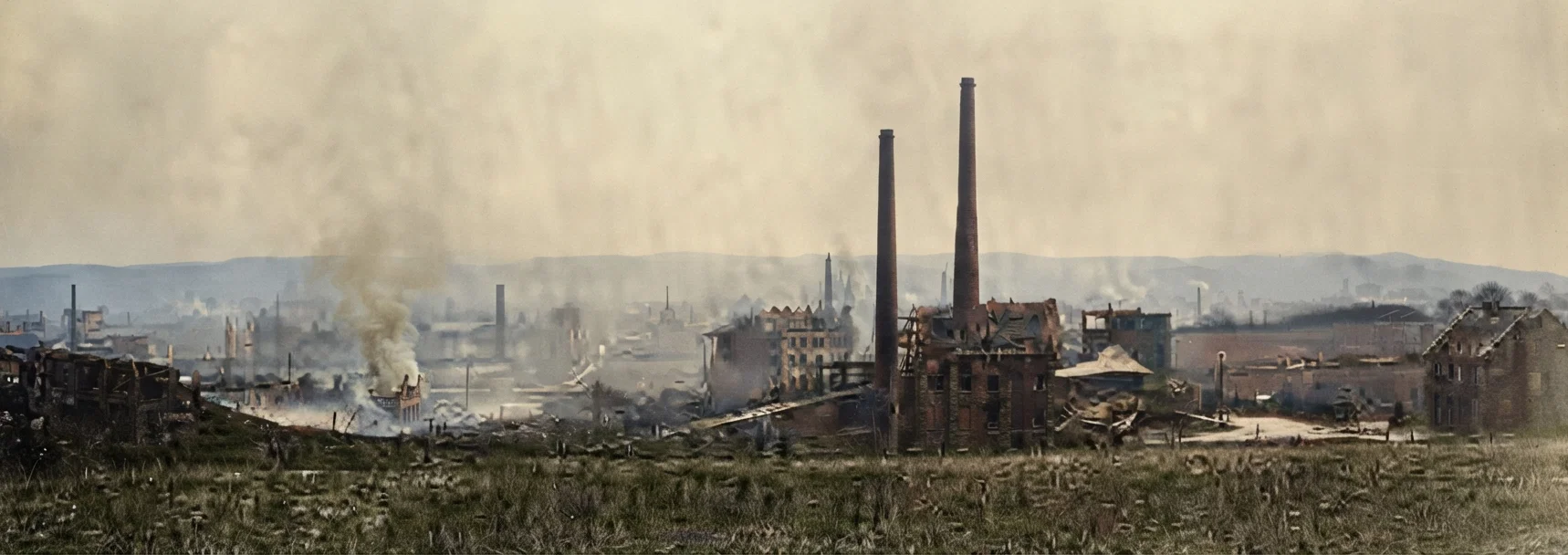
Portion of the Wrecked Town.
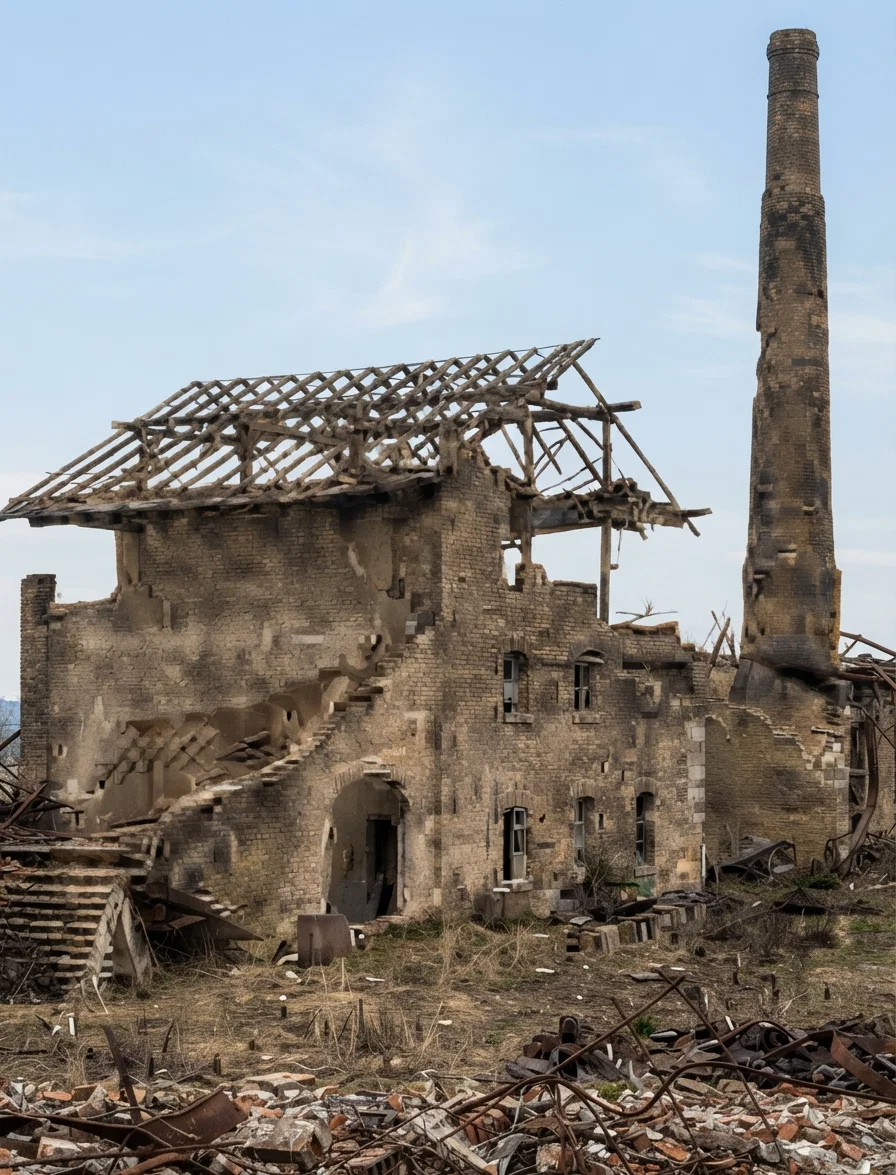
The Roburite Factory Itself in Ruins.
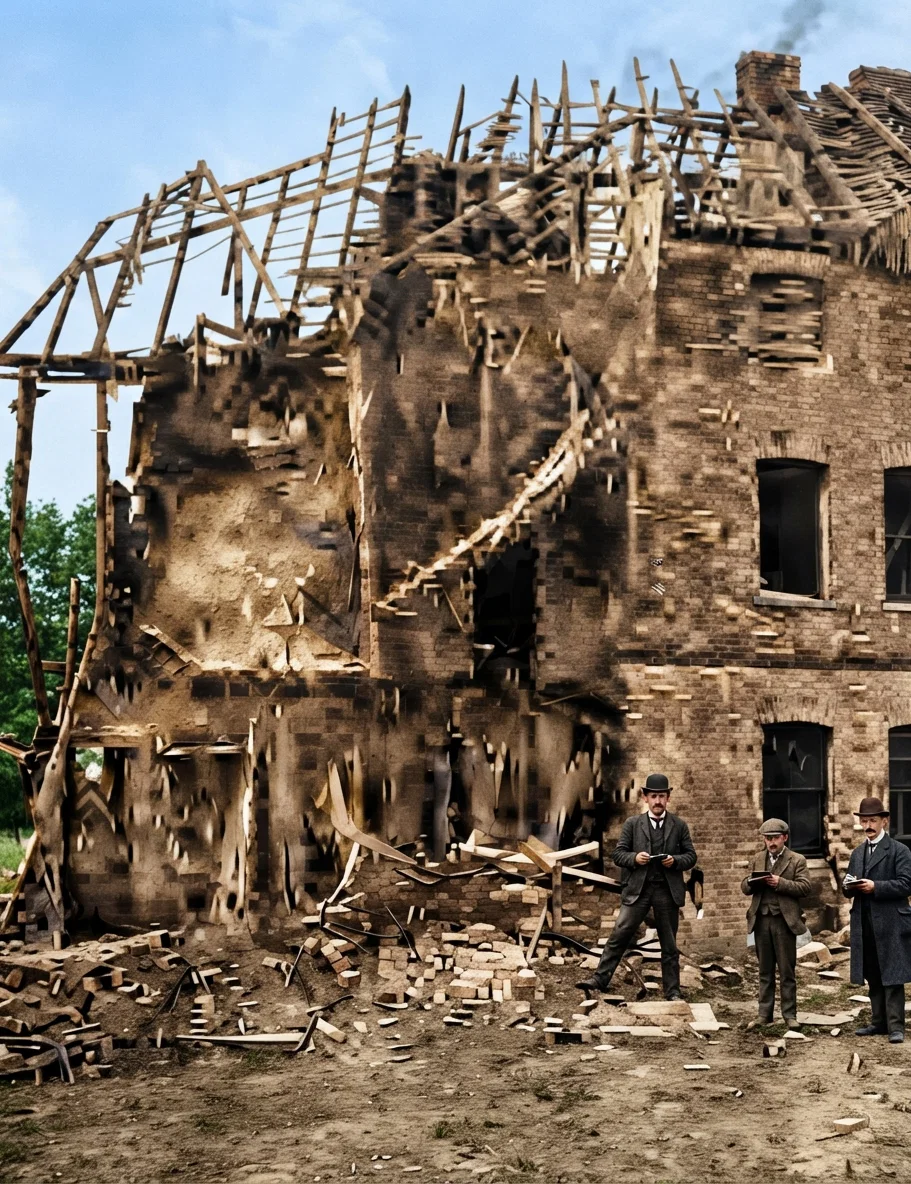
Effect of the Explosion on a House over 300 Feet from the Factory.
"There is not another country in Europe, whose economic existence is as threatened to-day as our own. Custom barriers have become higher and higher around our frontiers. Our economical independence may be ruined as a consequence, and what will become then of our political independence?"
A few days later, M. Comtesse, a member of the Federal Council, said in a speech delivered at Neuchatel:
"In this economic struggle, which is becoming more and more intense, defects may be more dangerous than those which take place on the battlefield. A small country like ours, whose produce could not be sold on the foreign markets, would soon be led to ruin and economic death, and left to the only resource of seeking refuge in the arms of a mighty neighbor. This would soon put an end to our political independence."
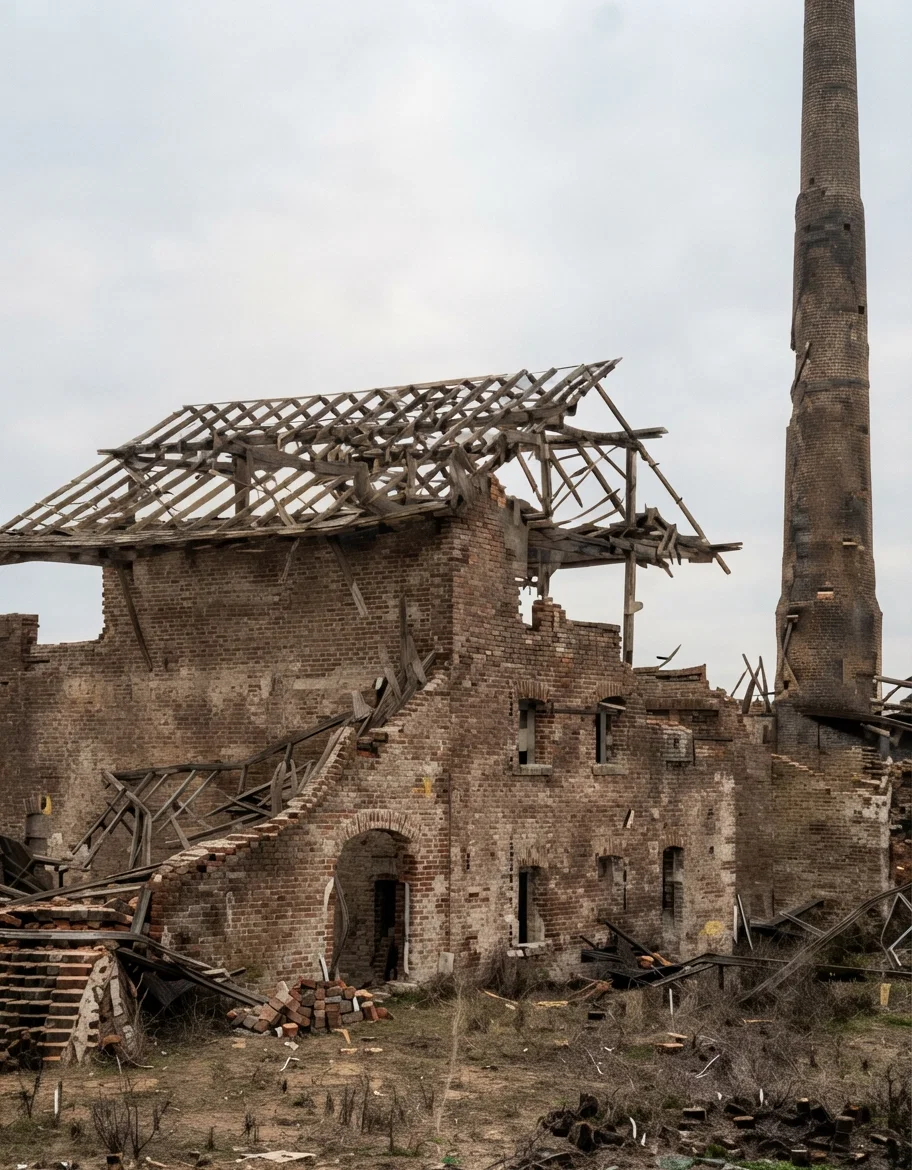
Brick Factory Blown Down by Air Concussion.
Brick Factory Blown Down by Air Concussion.
This situation has given rise to the idea of a large international tariff union (Zollverein), to include Switzerland, Austria-Hungary, Belgium, and Holland, and of which Germany would be the center. Swiss economists are seriously weighing the advantages of this plan. They see in it important economical advantages, but they are united in foreseeing in it a great danger to Swiss political liberties. And yet, how else can Switzerland avoid economical failure? This question shows that this country's future is ominous indeed.
GERMANY AND FRANCE VERSUS THE GENERAL STRIKE.
But the greater nations which threaten the smaller ones have equally if not more distressing problems to face. Think of Germany, overstocked with the products of her manufactories. Her intelligent and earnest Kaiser is giving a good share of his attention to the problem of selling these products, and thus keeping famine and revolution from his country. In spite of all that can be done, the elements of discontent, as organized by Socialism, are growing from year to year.
One year ago, the socialist congress at Iena, presided over by Mr. Bebel, voted a resolution recommending a general strike as the most efficient means of action. Last October again, at Mannheim, the socialist forces passed a resolution in the same sense. Mr. Bebel, indeed, was in favor of the more moderate element in the party, the laborer's unions who are opposed to the general strike. But the extreme element carried the day, and Herr Bebel himself saw fit to propose the following resolution:
"The Congress endorses the resolutions of the Iena Congress respecting the general political strike (politisches Massenstreik). . . . As soon as the managers of the party shall deem the general political strike necessary, they will connect with the laborer's union's general board, and take all the measures necessary to carry the action to success."
The same thing happened last fall at the French Socialist Congress at Limoges. M. Jaures, the leader, tho inclined toward moderation, had to endorse a resolution in favor of the general strike and the armed revolution in the fight with capital.
Useless to say that when such measures are openly advocated and resolved by strong political parties, as is being done in Germany and France, there is the peculiar smell of powder in the air. Kings and governments, who are directly aimed at, must feel as if living in strange times. Especially is this the case when, every morning, the papers come to them filled with the horrors of the Russian Revolution.
A ROBURITE FACTORY BLOWN UP IN GERMANY—TWO CITIES SHATTERED.
A sad visitation to Germany was the recent disaster at Witten, not far from Essen, the Krupp cannon-city. In this most thickly settled district in all Germany, a large factory was blown up by a roburite explosion. Two cities, Annen and Witten and their suburbs, were completely wrecked, 2,000 persons remain without shelter; eighty lives are lost, and many more are wounded and mangled. "An extraordinary number of people," so says15a German paper published in that section, "have had their hearing permanently injured by the awful detonation. On every hand, people are being met whose ear-drums have been shattered.
Two explosions took place. The first one caused hundreds of people to rush to the scene of the disaster. Alas for them! The second explosion claimed them for its victims. A witness thus describes the scene which presented itself to him as he came into the city the next morning:
"On the way, we met hundreds of people laden with the last fragments saved from their houses. Mothers were leading by the hand their starving or weeping children. In Annen not a house is fit to live in. On every hand I met with scenes of devastation. I know a man who was thrown ninety feet (30 meters) away by the force of the concussion of air. Two persons lost their mind by finding that their relatives were missing. In one hospital alone, 76 persons were dressed for small wounds, while 38 are considered as hopeless cases."
"The scenes at the hospitals," says a reporter, "are terrible to witness. I saw a crowd of trembling women and weeping children waiting to see if they could learn anything about their missing relatives. They walked back and forth with expressions of despair, watching the doors thru which the wounded pass in and out. How eagerly they looked, but looked in vain. An aged woman, leaning on her 16-year-old son, was seen going to each door, asking with heart-rending voice: 'My husband, where is my husband?'"
SPANISH LIBERTIES POSTPONED.—A LOOK AT THE SITUATION.
My last letter closed with some extraordinary news which indicated clearly that religious liberty was dawning on the benighted peninsula across the Pyrenees. Alas! we were not allowed to enjoy this expectation long. Inside of a week, two cabinets were overthrown, and the third one, tho made up of liberal men, presided over by Senor Vega de Armijo, an octogenarian, has left religious freedom out of its program. It is hard, just now, to say how this all happened and by what secret springs. But it is the general opinion that the pope had most to do about it. To those who are the least bit acquainted with Spanish affairs, this is the most probable explanation. It will be by no means an easy thing for Spain to shake off the shackles placed over her by the hierarchy. Many signs show that the time of her deliverance is drawing near. But if we may judge by what is taking place in France, the effort may cost the very life-blood of liberal-minded Spaniards. That such is the case may be gathered from a paragraph of a recent book written by a Spaniard, Dr. Madrazo:
"Large and deep are the wounds which the church has inflicted to us. They are old and remain blood-stained. With what intense joy will we close them when the time comes! The burden has been crushing, and when we shall shake it off, we shall find our arms so light that we shall need some compensation for our sufferings."
An Argentine writer, D. Manuel Ugarte, thus sadly and vividly echoes in his "Visions of Spain" the complaints of Spaniards against the Church of Rome:
"Our race is not tired; it is smothered by those who are averse to anything that is alive. What hinders our progress is the selfishness of those who persecute the new men until they are obliged to flee or to hush. It seems as tho there were at every step a conspiracy against thinking. The state of things must be accepted just as it is and every bit of it. Thinking is a vice and the worst of vices. Crimes are tolerated, but to think, O, no! That is forbidden. Wo to the man whose voice is discordant! He must emigrate toward the large cities, or abandon the truth. The order is to sleep; close your eyes, please; and if you have ideas, shut them up. Your situation, your future, are at the cost of your silence."
When in Spain a few years ago, I remember speaking with a soldier of the Cuban war. He had received a couple of bullets from the guns of the revolutionists. As we were talking over the situation in Spain, he arose, a strange fire in his eyes, and exclaimed: "You see these wounds, sir; I got them fighting for my country. But I would much rather have received them by North American bullets, if only my country could have fallen under Yankee rule and be properly administered." A few days later, I heard the same wish from the lips of an educated Spaniard.
And yet how little these men know that what makes America any better than Spain is due to the influence of that very Bible and that very Gospel which the natural heart rejects and despises! May God greatly bless the earnest evangelists who are now endeavoring, in Catalonia and around Valencia, to bring the water of life to thirsty souls!
JEAN VUILLEUMIER.
A New City
A NEW CITY.—Conversing with a gentleman well acquainted with conditions in Oakland, one of its leading merchants, the other day, the writer spoke of how changed Oakland is since the earthquake. "Yes," said he, "it has been well remarked that two towns were lost in the days of the earthquake and fire last April, one San Francisco, the other Oakland." From the quiet, respectable, moral city that it was before the earthquake, it has blossomed out in a few months to a metropolitan town, with double the amount of vice that a town of its size would be expected to have. Its Chinatown has been enlarged by blocks and blocks of those who came over from San Francisco. Traffic in Japanese girls for a life of shame has been begun on a scale that is simply appalling, where large houses of assignation buy and sell them as so many chattels, segregating them in little rooms that are consecrated to the lusts of bestial white men. Dr. Dille, one of Oakland's leading ministers, made the open charge recently in a sermon in Oakland that "in the heart of Oakland there is a fashionable milliner shop where hard-working girls are not only underpaid, but compelled to slave to an outrageous time
schedule. THE PROPRIETOR ADVISES THEM TO SELL THEMSELVES TO THE HIGHEST BIDDER. THEY ARE TOLD THAT VIRTUE IS OF NO USE SAVE FOR ITS PRICE. To all who wish to interest themselves in the welfare of these unfortunate girls I will give the name of this infamous milliner." This and many other charges of corruption of many other kinds Dr. Dille made in a sermon on the conditions in what has been called the Athens of the Coast. It would seem as tho the appalling calamity of last April would lead men to think of serious things rather than to rush on, blindly and morally dead to the certain judgment which lies before.
BOYCOTT IN PROPHECY AND PRACTISE.
In a forewarning of the last days and the powers that will be operative then, the thirteenth chapter of Revelation tells us there will come a day when certain powers will boycott those who are antagonistic to their aims and objects, so that "no man might buy or sell, save he that had the mark, or the name of the beast, or the number of his name." The matter of the boycott has been confined almost wholly to labor unions, but now, since the trouble between France and the Vatican, papers like the "Catholic Mirror," the organ of Cardinal Gibbons, and others thruout the country, are advocating a boycott on French goods. So states the "Mirror" of January 12: "To make a boycott of French goods effectual, it becomes the first duty of every earnest believer in this form of expression of resentment and indignation to ask concerning every product that he does not absolutely know about, IS THIS OF FRENCH MANUFACTURE?" If the Catholic Church can use such weapons as this against Catholics in another country, how long would it be before the same weapon would be used for religious purposes, as declared in the prophecy of Revelation 13?
Abuses of Building and Loan Associations
A BUILDING AND LOAN ASSOCIATION has on the face of it a wonderfully beneficent sound. Advertisers and agents sing their praises as means by which a working man can get a home on easy terms. And yet, some of them have so manipulated law that he who is in debt to them pours his money into a great vacuum for years, finding himself as deeply in debt after paying for his home twice over, as he was when he began. For instance, a man in San Rafael, Cal., borrowed $2,800 from the Continental Building and Loan Association in July, 1896. The demand upon him, shown in a suit at law, to the present time was $7,764.63, and yet, when he sued for recovery of this sum, the simple defense which the company made was that it was the State law. A law sanctioning such proceedings certainly ought to be ruled out as unconstitutional.
California’s Divorce Record
THE CALIFORNIA RECORD ON THE DIVORCE QUESTION for a year is said to be 1,266 cases of divorces granted. Seventy per cent. of the women were plaintiffs; infidelity, failure to provide, cruelty, and intemperance were the dominant causes. In all this number there were only 817 minor children to be found, and in all these cases it is said that only a dozen did not contain the mention of drunkenness as a cause of separation. A San Francisco paper states in its issue of January 24 that Judge Ellsworth, of Oakland, signed eleven decrees of divorce the day before. Looseness of the marriage relation is one of the signs of the last days.
Little Things
LITTLE THINGS.—In one of the great insurance suits after the San Francisco fire, the company lost $4,500,000, it is stated, simply by a mere matter of punctuation, the decision resting on the position of a comma or a semi-colon. There will be very great consequences which follow wrong moral decisions. It is impossible to overestimate the importance of little things.
THE SUNDAY AMENDMENT TO THE CONSTITUTION OF CALIFORNIA.
What California Papers Are Saying.
WANTS NO SABBATARIAN LAW.
[From the Sacramento Bee of Jan. 12, 1907.]
THE Legislature would make a mistake should it pass any Sunday law. Such a measure has been prepared by certain Sabbatarians. It is designed to put a stop to all outdoor games and sports on the Christian sabbath, and to prevent the hiring of horses, automobiles, or any other vehicle; also to close saloons on that day.
California once had such a Sunday law, but it remained for many years a dead letter on the statute books. Then a spasmodic attempt was made to enforce it, chiefly against saloons, but with such unsatisfactory results that the Legislature repealed the law.
The sentiment of the great majority of the people of this State is unquestionably against any sort of Sunday legislation. And some of our churches and clergymen do not object to such wholesome outdoor sports and recreations as baseball, or to driving, or automobiling, and like harmless pleasures, provided religious duties be observed.
The old puritanical spirit of intolerance has comparatively few adherents in California, her people as a whole, believing in leaving everybody free to worship on any day that suits him best, or not to worship at all. And a Sunday law necessarily interferes with the civil rights and religious faith of the Jewish people, who do not observe the Christian sabbath, and are as much entitled to consideration and respect as any other class of citizens.
THE SUNDAY LAW.
[From the Sacramento Union, Jan. 21, 1907.]
THE proposed Sunday law will come up for consideration in a few days. The Union has already expressed its opinion of such legislation, and it adheres to that opinion and reiterates it. If such a measure could advance the interests of religion,—and religion is vital to this and to every other community,—if it could in any way whatever guarantee a day of rest to those who need it without infringing upon inalienable rights, it would be welcomed by every good citizen, and its passage would be hastened and urged. But it can not do these things. It can not do anything but unadulterated mischief. It can not soften any of the hardships of modern commercial life, but it can be the prolific cause of heartburnings, resentments, and illegalities. It would be a calamity and the never-ending source of dissensions, discords and injustices.
It is not easy to believe that the Legislature can be so far seduced from the path of common sense as to countenance such a measure as this. It would be received with deep-seated indignation by the state at large as an unwarrantable interference with liberty and as an aggravation of the existing situation. It would do more to render religion unpopular than anything that could be devised and to rob our churches of the influence that they possess and that they can increase only by moral suasion and precept.
Religion First
By Editor
How to pray will become more and more of a perplexity to our political legislative chaplains. California's Legislature has some members of the Hebrew faith, and one of them, Senator Wolfe, requested that the name of Jesus should not be used in the prayer, because he could not join with the chaplain in thus praying; and then came a "tempest in a teapot," nay, in many teapots. It has helped out various ministers looking for modern texts, and there has been all sorts of things said in praise or dispraise of the services of legislative chaplains. One prelate says, and with force, that the legislators knew the chaplain was a Christian when they hired him, and they must suppose that he would pray as a Christian. Then, as a Christian, if he were asked to do otherwise, he could resign. But presumably some of the legislators concluded as did Balak of old. He hired Balaam to come down to Moab to curse Israel, and surely he ought to prophesy as Moab desired. So if the chaplain is hired to pray for a non-sectarian Legislature, he ought to pray non-sectarian prayers, or "Pope's Universal Prayer," at least, he ought not to offend those who voted for him.
The whole controversy shows the farce and mockery of the thing. First, the squabble for the place of saying prayers at so many dollars per prayer, and then the formal prayers too often offered to the Legislature and the listening public. If the Christians in this State follow the Christian Bible, the Legislature and government have many prayers offered in their behalf; for thus we read: "I exhort therefore, that, first of all, supplications, prayers, intercessions, and giving of thanks be made for all men; for kings and for all that are in authority; that we may lead a quiet and peaceable life in all godliness and honesty. For this is good and acceptable in the sight of God our Saviour." 1 Tim. 2:1-3. If Christians would do more praying and less lobbying for place and power and class legislation, the church of Jesus Christ would increase in power and influence, and Sunday laws and paid sectarian chaplains would not be deemed needful.
Religion First.
The Pacific Christian Advocate of January 3 most forcibly and truthfully says: "Unless there is a tremendous revival of religion in this country, patriotism will ferment into bitter antagonisms, and American freedom, for which so great a price has been paid, will be evaporated into demagogery. This is not a theory, not a prophecy, but an actual condition now facing the statesmen and political leaders of this great American republic."
But the Pacific Christian Advocate will never help to a religious revival by demanding religious legislation, and denouncing those who oppose it as unpatriotic, fanatical, etc. The revival needed is religious, not political; a religious revival of the old-fashioned, Pentecostal sort, in which there is repentance of sin, renunciation of the world, regeneration in soul and character. Indirectly such a revival will help the government and citizenship more than all the religio-Sunday law politics in the world.
Publications and Preachers.
Because it is said—and it is doubtless true—that our publications are doing a greater work than the living preacher, it does not follow that the living preacher should be ignored; nay, more, it does not follow that he is not the most important agency in God's plan. The reason of the above statement lies in the fact that the ministers are very few, while the publications are many, and may be used by all classes. It is still true that it has "pleased God by the foolishness of preaching to save them that believe." Still there are different ways of preaching. The lesson is, Use both preacher and publication as thoroly and widely as possible.