The walk leading up to Main Street was an attractive one. A few years before, a village ordinance had been enacted that all new walks put down must be made of cement, and soon the whole place showed their neat effect. This one side had a walk of unusual width, as it ran along a business block which fronted on Main Street. Its steep incline for a short distance made it dangerously slippery in icy weather; therefore the owners of the property, with due dread of damages for broken bones, had placed long iron rails on either side of the descent, at the right height for clinging hands.
“What a blessing!” was the universal exclamation, and nobody dreamed these protective rails would become a nuisance. But they did. When spring opened with balmier air, this particular corner became a gathering place for idle men and boys. They could sit on the rails, or ride them astride, or perform acrobatic feats on them. So it came about that even in the daytime there would be a half dozen or more at this rendezvous. Women of refinement chose the other and less comfortable side of the street, rather than pass between these ranks of bold-eyed, loud-voiced jokers.
Such a crowd is tempting to a boy; there is a certain jolly fellowship which attracts. George Martin had no intention of lying to his mother when she asked him at night after tea where he was going. She always asked, for she felt deeply the responsibility of his training now that his father was dead, and it devolved upon her alone.
Usually his answer was, “I'll drop in at the library, I think, mother, and read there awhile,” and Mrs. Martin felt more and more relieved that her son's tastes led him into safe society.
The library building stood at the foot of the steep hill, and to save his conscience, George always did go in first. But his “awhile” became shorter and shorter. Then with that eagerness for outdoor companionship, and that carelessness of risks which belongs to a boy by nature, he would join the company of loafers. If at first he was somewhat shocked at the jokes, there was often an undeniable humor in them, or the simple incongruities appealed to the sense of the ludicrous, and he learned to laugh at speeches which would once have seemed sacrilegious. Soon in a small way he began to make jokes himself which met applause. It was being so manly, so up to date, so like “other fellows.”
“I heard this afternoon that Mr. Mundy wanted another clerk,” Mrs. Martin remarked as they sat at tea one night, “and I believe you'd better apply. It would be a good place for you; your father always said Mr. Mundy was such an honorable man.”
“All right, mother; I'll see him in the morning.” George was really pleased with the notion of getting this position.
“Why not to-night?”
“Oh,” he replied, “the morning's the best time to tackle a business man. He's fresh then; he'd be tired and cross at night.” Again George salved his conscience with this reason, though he knew he hankered for another evening with the boys.
“If I get the place, I suppose I'll have to stay in the store evenings,” he thought, regrettably.
The next morning, neatly dressed and looking his best, George applied at Mr. Martin's store. He was shown into a small private room at the back, where the proprietor had his desk.
“Too late,” Mr. Mundy said, somewhat curtly, “I engaged a clerk last evening.”
Last evening! George's mind rapidly went over what he was doing then. Mr. Mundy watched the boy's face, and his own became less severe.
“Stop a moment, George,” he resumed. “I want to say a few words. I knew and respected your father. I know and respect your mother. I don't want their son to make a mess of life. So let me tell you frankly, it would make no difference if I had not engaged some one else; I take no boy or man into my employ who belongs to the Street Corner Brigade. I want self-respecting people, not loafers, to work for me. Other business men feel the same. If you're wise, you'll remember it. Good morning.”
Crestfallen, George bowed himself out, though even at that moment he was glad he could truthfully tell his mother that the place was already filled.
“Faithful are the wounds of a friend.” Mr. Mundy's words had cut as he meant they should. George did some serious thinking. He had will-power, once it was aroused. “Loafer”—the term stung. George Martin a loafer? Not if George Martin could help it!
“I'll not be seen in that vicinity again at present,” he said; “I'll go a mile round, rather than up and down that walk. I'll read and study at home. Mother'll like that. I'll take up book-keeping, and be ready for a higher position.” George kept to those resolutions, though he had to set his teeth to do it.
Six months from that time, a message from Mr. Mundy surprised him. He went once more into the little office, and the prompt business man broached the subject at once.
“James Burton has fallen sick, and isn't likely6to get well in a hurry. The position is yours, if you wish to take it. I've watched you all these months. I've seen that the bitter pill did you good. A young man who will break off evil associations short and sharp, as you did, is the one for me.”
George lifted a frank face—no shame in it now.
“I've wanted to thank you, sir,” he said. “It's been the making of me,” and with a smile, he earnestly said, “I'll be glad to come, Mr. Mundy.”
A year later George Martin was Mr. Mundy's bookkeeper, while the shiftless members of the Street Corner Brigade wondered why he had such good luck, and they didn't.—Selected.
A Spelling Test Sentence About a Pedler
A SENTENCE that will test the ability of one to spell accurately is the following; it has nothing but this one thing to give it favor: “It is disagreeable to witness the unparalleled embarrassment of a harassed pedler gauging the symmetry of a peeled pear.”
The Lady of Deer Isle
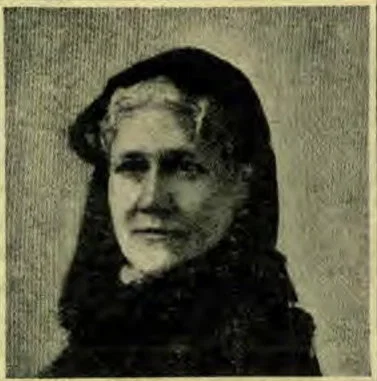
HARRIET PRESCOTT SPOFFORD is a name which has long been familiar to the reading public, though there is such a spontaneous youthfulness in her writings that it is almost a surprise to see the gray hair which wreathes her attractive face. Mrs. Spofford was born in Maine, sixty-eight years ago. She received but a limited education, and has been largely self-taught. She began writing stories and poems in her very young womanhood, and was successful from the first.
Her work has always appeared in the best periodicals, and in her writing she has been inspired by the lofty sentiment that once caused Margaret Fuller to say: “All the good I have ever done has been by calling on every nature for its highest.”
Mrs. Spofford’s home has for many years been on a tiny and most charming island on the Merrimac River, in front of the old town of Newburyport. There is no house on the island but Mrs. Spofford’s, and it is reached by crossing the first chain or suspension bridge ever built in America, one end of the bridge being so close to the house that the great links in the bridge chains show in the picture of the house.
Here Mrs. Spofford lives from early May until very late in the autumn, when she goes to Boston and to Washington for the winter. Her work is in such demand that she gives herself very little time for rest when she is in her own home.
Deer Isle, Mrs. Spofford’s home, is on the border of what people call “Whittier’s country,” and one may almost see the site of the good Quaker poet’s home from Mrs. Spofford’s piazza. These two poets had much in common, and they were good friends.
It has always been a great sorrow to Mrs. Spofford that there were no boys and girls of her own playing in her home, her one child dying in its earliest infancy; but it lived long enough to strengthen the mother-love that has always made her feel tenderly and kindly toward all children. Were it not for this, she might never have written these lines, suggested after reading in the eighth chapter of Zechariah, “And the streets of the city shall be full of boys and girls playing in the streets thereof:” —
“When I see at the flood-tide of springtime
The sky with high luster brimming,
And the little white clouds of heaven
On a happy west wind swimming;
And in all the streets of the city,
The morning about them delaying,
The fulness of life in their being,
The boys and girls singing and playing—
“Then I hear an old verse in the Bible,
With its burden sweet and tender,
Where the Lord had promised the prophet
He would come again in his splendor,
And as though no joy could surpass it,
Exile and sorrow repaying,
That then all the streets of the city
Should be full of boys and girls playing.”
The author of these charming lines has written many other sweet and tender poems to and about children, and she has written a great many stories that hundreds of boys and girls have been delighted to read. Some one once gave her the name of the “gracious lady” because of her exquisite courtesy and kindliness. It is a great pleasure to “the gracious lady” of Deer Isle to write poems or stories that please the children. Evidently she believes with Douglas Jerrold:—
“Blessed be the land that prepares a pleasure for a child, for there is no saying when and where it may bloom forth.”—Young People’s Weekly.
Bark for Bread
It is in the north of Europe that the strangest substitute is to be found for wheat flour. This consists of fir-tree bark, which at first sounds the most unpromising material possible for the purpose of food. Yet during the great famine in northern Scandinavia two years ago, whole families lived upon bark bread for months, and both in Finland and in northern Siberia it forms a staple article of diet for the majority of the people.
The bark is stripped from the trees in spring, this being the season when the operation is most easily performed. The outer or scaly bark is first carefully removed, as it is the inner or stringy bark which is the only part fit for food. This inner bark is then dried in the sun, and stored for winter. When required for use, the bark is again dried over a slow fire, and ground. The meal is moistened with cold water into a dough, but no yeast or baking-powder is employed, and the dough is then thoroughly kneaded into large flat cakes as thin as parchment.
These cakes, before baking, are pricked full of holes with an instrument made of ptarmigan feathers, and then put into the oven, where they have to be carefully watched, in order that they do not burn. The cooking process takes only a very short time; and when done, the cakes are lifted out, and hung on a rail to cool. After this they are piled in a large heap, and laid by for future use. There is a considerable amount of nourishment in this queer bread, but its taste is distinctly bitter and unpleasant to any unaccustomed palate.—Selected.
The Surprise
In a rickety hovel across the way,
All beaten and broken by wind and weather,
Lives “Old Granny Bronson,” wrinkled and gray,
Scarce keeping her soul and body together.
By sorrow and suffering wasted and worn,
In body and mind and spirit shattered,
She lives on what to her door is borne—
The scanty pittance by charity scattered.
The other evening, some lads I know,
Bent on a mischievous undertaking,
For Granny Bronson’s started to go,
“To give the old lady’s wits a shaking.”
“What fun it will be,” from one of them came,
“To see her frightened quite out of her senses!
I only fear, boys, that the scary old dame
Will fall in a fit ere the sport commences.”
But conscience was smiting the hearts of some,
And his the most who the rest was leading;
And just ere the band to the house had come,
He gave to the voice within him heeding.
“Say, fellows,” he said, with a laugh to hide
Convictions he vainly had sought to stifle,
“Suppose we should frighten her so she dies;
You know she is scared at the merest trifle.”
“I’ll tell you what,” quick another said,
Whose purpose had more than once relented,
“Let’s give her a pleasant surprise instead.”
“That’s it! That’s it!” They all assented.
Then long they talked with growing delight,
All eager some scheme or service to proffer,
Till at length ’twas agreed the following night
To meet with whatever they had to offer.
To have seen them would have done you good,
Each striving hard to excel the others;
There were baskets of food, and sleds filled with wood,
And bundles of clothing from sisters and mothers.
There was one who came with his saw and ax
To cut what he knew another was bringing;
And one who had listing to stop up the cracks
Through which came the west wind, cold and stinging.
I need not tell you what now took place
In the lonely home so suddenly gladdened,
The hope that shone in the haggard face,
The joy that flooded the heart long saddened.
I will only say that the lesson learned
That night by those boys, no wealth could buy it,
And all of them said, as they homeward turned,
“How much more fun!” Suppose you try it.
— Selected.
Oil Proposed for Irrigating Arizona Desert Land
IRRIGATING land with oil is the plan now proposed by the Sante Fe Railroad and the Standard Oil Company. A piece of land near Phoenix, Arizona, is to be subjected to the new experiment. It is said that the scheme may open up the great Western desert to all the possibilities of agriculture.
Mexico City: The Photographers' Paradise
MEXICO City is called the “Photographers’ Paradise;” for the peculiar atmospheric conditions existing there and in only a few other cities in the world, give a wonderful distinctness to the details of the picture. In the heavy air of the northern cities every ray of light that extends from the object to the sensitive film in the camera must struggle through a million particles of carbon that hang constantly in the air. Each of these particles has a certain deflecting power, and very great skill is required to prevent a distorted detail. In Mexico even an amateur is surprised at his successes.
Adulterated Flour in Foreign Countries
SOME foreign countries prohibit by law the importation of flour. Portugal has such a law, and, as a result, the so-called flour of that country is adulterated in an appalling fashion; sometimes fifty-three per cent of it is kaolin, or China clay; the remainder is mostly rice husks and finely powdered sawdust. In Italy ground chestnuts are used as a substitute for flour among the poorer classes. Acorn flour is also largely used for bread making. In the northern part of Europe fir-tree bark is the main substitute for flour. One look at our great wheat fields in the West ought to convince the most conservative nation that America has solved more satisfactorily the bread question, and should lead such a nation to open her ports to American flour.
MEMORY VERSE: “Honor thy father and thy mother: that thy days may be long upon the land which the Lord thy God giveth thee.” Ex. 20:12.
We will now go back a little in our study about the captive Jews in Medo-Persia, and learn what happened to them in the reign of one of the kings who bore the title of Ahasuerus. In the third year of the reign of this king he gave a great feast, which lasted one hundred eighty days. All the princes and nobles of the kingdom were present, and the king showed them all his riches, his beautiful palaces, and all his power. After this he made another feast, which lasted seven days, for the people who lived in Shushan, the palace. This feast was held in the court of the garden of the palace, a very beautiful place. The hangings were of white and green and blue, fastened with silver rings to the polished marble pillars. The beds were of gold and silver upon a pavement made of colored marbles,—white and black and red and blue. All the drinking vessels were of gold, and each was different from all the others. There was great feasting and royal wine in abundance.
On the seventh day of the feast, when the king was drunken, he sent for Vashti, the queen, to come before them, that all might see her beauty; for “she was fair to look on.” Now it was the custom in those days for the women to wear a long veil, hiding their faces; and Vashti did not wish to go before that drunken company without her veil. So she refused the request of the king, and would not appear before him.
Ahasuerus was very angry because Vashti would not come at his command, and he put her away from being queen, and chose another to fill her place.
The new queen was Esther, a Jewish maiden of great beauty. She was an orphan, her father and mother being dead; but she had been adopted and brought up by her cousin Mordecai, a Jew who had been among the captives brought from Jerusalem to Babylon in the days of Nebuchadnezzar. Not only was Esther “fair and beautiful,” but she was loving and kindhearted and obedient. She was just as careful to obey the wishes of her adopted father when she was queen as when she had been a little girl at his side. We are told that when Esther was chosen to be queen, she did not tell the king that she was a Jewish girl; for Mordecai had charged her not to reveal her kindred or her people. And “Esther did the commandment of Mordecai, like as when she was brought up with him.”
Not long after Esther was made queen, the king chose a man whose name was Haman, and exalted him to be the chief man in his whole kingdom. “And all the king’s servants, that were in the king’s gate, bowed and reverenced Haman; for the king had so commanded concerning him. But Mordecai bowed not, nor did him reverence.”
Haman was full of wrath when he saw that Mordecai did not bow before him, and he made a plan to have all the Jews in Persia put to death. He told the king that the Jews were different from all other people, and that they did not keep his laws. He also promised to pay a large sum of money into the king’s treasuries if the Jews were destroyed.
So the king made a decree, and copies of it were sent to every province of his kingdom, saying that on a certain day all the Jews, young and old, women and little children, were to be slain. The king sent the letters out in haste; and when they were sent, he and Haman sat down to drink wine. But the Bible tells us that the “city Shushan was perplexed.”
“When Mordecai perceived all that was done, Mordecai rent his clothes, and put on sackcloth with ashes, and went out into the midst of the city, and cried with a loud and a bitter cry. . . . And in every province whithersoever the king’s commandment and his decree came, there was great mourning among the Jews, and fasting, and weeping, and wailing: and many lay in sackcloth and ashes.”
Questions
1. Describe the feast that Ahasuerus gave to the nobles and princes of his kingdom. What second feast was then held? Describe the place where it was given. Esther 1:1-7.
2. What command did the king give on the seventh day of the feast? Why did the queen refuse to come before him?
3. Who was then made queen in place of Vashti? Who was Esther? By whom had she been brought up? Esther 2:5-7.
4. Give one reason for believing that Esther was obedient and loving. Verse 20.
5. What man was exalted to the chief place in the kingdom about this time? For what cause was Haman’s anger kindled against Mordecai?
6. What did Haman resolve to do? How did he persuade the king to carry out his wishes? What decree did Ahasuerus then make? Where were copies of this decree sent? Esther 3:10-13.
7. What did the king and Haman then do? What was done by Mordecai? Who else mourned and fasted at this time?
V—The Powers That Be; When, by Whom, and for What Purpose Ordained
(February 4)
MEMORY VERSE: “Let every soul be subject unto the higher powers. For there is no power but of God: the powers that be are ordained of God.” Rom. 13:1.
15. Relate a similar experience which came to the apostles. Acts 5:17-20, 27-29.
16. What lesson is taught from all these examples? Note 2.
Notes
1. We should not disparage the utility or importance of civil governments. They are a necessity under the existing condition of things. They became a necessity in consequence of the fall, to secure men in their persons and property, and to check the vicious in what would have been otherwise an unrestrained career of crime.
Andrew W. Young, in his “Government Class Book,” page 12, explaining why civil governments are necessary, says: “Man is by nature selfish, and many would infringe the rights of others, for their own selfish ends, unless restrained. Hence we see the necessity of some fixed rules, that each one may know what he may do, and what he must not do. These rules for regulating the social actions of men are called laws. . . . But law can not exist without government. Law is a rule of action laid down by the supreme power, and if there is no supreme power, there can be no law. Hence we see the necessity of government.”
2. From all the examples and test cases which have occurred from Pharaoh’s time to our own, it would seem that the world should have learned that it is not the business of civil rulers to attempt to direct men by force in matters of religion, and especially that it is a wrong and vain thing for them to command that which is contrary to God’s command. That it has not, shows how slow men have been to learn God’s lessons, and how great and how gross is the darkness that still covers the earth and the people. Isa. 60:1, 2. An experience awaits those who are true to the last message, showing that this lesson will never be learned; but just as the three Hebrew children, and Daniel, and the apostles were delivered, so deliverance will come to God’s faithful children.
The Words of God
By J. F. Olmsted
THE Bible is the Words of God
Revealed to holy men,
Who wrote the words of life and truth
With Inspiration’s pen.
Those words sublime are written there
To make us think of heaven;
They cause the mind to higher soar,
And reach for blessings given.
This world would be a heaven here,
And would with anthems ring,
If men would do the Master’s will,
And to each promise cling.
But why will men perversely walk
In paths that lead them down
To planes of life where misery dwells,
And wrecks of life are found?
A faithful guide the Bible is
To every pilgrim here.
It points the way to God above,
Who gave the Saviour dear;
Then if the Lord in anguish died,
Reviled upon the tree,
Why not accept the sacrifice,
And have salvation free?
J. F. OLMSTED.
Over and Over
By B. F. M. Sours
OVER and over come blossom and clover;
Over and over the frost and the snow:
Over and over the dark tempests hover;
Over and over the angry winds blow:
Over and over the bright sunbeams cover
The whole waking world with their jubilant glow.
B. F. M. Sours.
Service: The Law of the Universe
Service
SERVICE is the law of the universe. Nothing save the selfish heart of man lives unto itself. There is no bird of the air, no animal of the ground, no leaf nor blade of grass but has its ministry. The mineral kingdom exists for the plant world, the plant for the animal, the animal for its highest representative, man, and man, through service to his fellow men, for the honor and praise of his Creator. Every part of a plant serves every other part, and it, in turn, is served by those it serves. Each organ of the human body exists for the good of all the other organs, and each system for the other systems.
But almost with the first breath of sin that blew over this fair earth of ours came the question, “Am I my brother’s keeper?” By this shortsighted interrogation the author unwittingly laid bare his selfish soul. A heart sensitive to the delicate vibrations borne to him from the altar upon which lay his unconsumed offering, would have heard a chorus of voices saying, “Nothing lives unto itself; you are your brother’s keeper.”
The myriad things about us point to the path of service, and say, “This is the way, walk ye in it,” and hearts attuned to infinite harmonies hear and obey.
The flower, the dew, the snowflake, the raindrop, the cloud, all bring their offering for the common good. As the brook speeds along over the rocks, it sweetly echoes the sound of the busy mill below, and the waters of the great rivers are stirred by oars and wheels of service. Even the vast ocean to its very depths responds in the daily tides to this law of the universe.
The mountains, in their isolation, alone seem unmoved by any appeal to serve; but their brows are scarred by thousands of storms, each of which brought to the valley from the heights a wealth of good. Miracles of service are wrought daily by the sun as he goes forth in his circuit, and the moon and stars lend their kindly influences. And the miracle ends not here. Heaven and earth are united, bound together forever, by the loving, saving service of the Ideal Life.
Words of Wisdom
A NATION'S greatness is not measured by its miles or its millions, but by the true worth of its men.
It is not by regretting what is irreparable that true work is to be done, but by making the best of what we are. It is not by complaining that we have not the right tools, but by using well the tools we have.
EVEN in ordinary life the unselfish people are the happiest—those who work to make others happy, and who forget themselves. The dissatisfied people are those who are seeking happiness for themselves.
Some people contrive to get hold of the prickly side of everything, to run against all the sharp corners and disagreeable things. Half the strength spent in grumbling would often set things right. No one finds the world quite as he would like it.
If it was worth God's while to give us the Book, it is worth our while to toil and fathom its depths, to saturate our thinking and feeling with its truths.
CHEERFULNESS is not always spontaneous; it is greatly a matter of habit, and bears cultivation. One who can contrive to bear a smiling face through a world where there are so many troubled hearts may unconsciously be a public benefactor.
THINGS should not be done by halves. If a thing be right, do it boldly; if it be wrong, leave it undone. Every day is a little life, and our whole life is but a day repeated.
TRUE politeness is perfect ease and freedom. It consists simply in treating others as you love to be treated yourself.—Selected.
Suggestions in Dr. Paulson's Article
THE suggestions in Dr. Paulson’s article are well worth carrying out.
Life of Martin Luther
THE article on the Life of Martin Luther, by Miss Carrie Robie, is well worth your reading. It will interest you, and will awaken a deeper longing in your heart for a fearless adherence to truth.
Letter Regarding Returned Stamps for Oren Durham
According to my promise I sent Master Oren Durham some stamps; but the letter containing them was returned not long ago. If he will send me his full address, I will make another attempt to fulfil my promise.
Melrose Sanitarium Destroyed by Fire
By Editor
The Instructor goes to press so long before the time of its date that an attempt to record news seems useless; but we will mention the recent burning of the sanitarium at Melrose, Massachusetts. The fire occurred on the night of January first. Through the earnest efforts of physicians and nurses, no lives were lost; but we know that this event has been a great grief to those in charge of the work at the sanitarium, and they have the sympathy of all who love the third angel’s message and the institutions for the spread of the truth.
The Great Master
“I AM my own master,” cried a young man proudly when a friend tried to persuade him from an enterprise which he had on hand. “I am my own master.”
“Did you ever consider what a responsible post that is?” asked a friend.
“Responsible, is it?”
“A master must lay out the work he wants done, and see that it is done right. He should try to secure the best ends by the best means. He must keep on the lookout against obstacles and accidents, and watch that everything goes straight, or else he will fail.”
“Well?”
“To be master of yourself you have your conscience to keep clear, your heart to cultivate, your temper to govern, your will to direct, and your judgment to instruct. You are master over a hard lot; and if you don’t master them, they will master you.”
“That is so,” said the young man.
“Now, I could undertake no such thing,” said his friend, “I should fail if I did. Saul wanted to be his own master, and failed. Herod did. Judas did. No man is fit for it. ‘One is my Master, even Christ.’ I work under God’s direction. When he is Master, all goes right.”—Selected.
Never Fear
By B. F. M. Sours
NEVER fear the darkness,
Never fear the cold,
Love is watching over
From the streets of gold.
Never fear the struggles
Of some future day.
Morning stars of rapture
May drive all away.
Never fear nor question
If God's will you know,
Every path of duty
Finds Love's overflow.