Your ShelfYour Projects

Review and Herald, Vol. 50, No. 15.

THE OUTLOOK
Earlier text: INTERESTING EXTRACTS FROM LETTERS

THE PROPOSED CONSTITUTION.

At the late camp-meeting in Michigan, a committee was appointed to revise the Constitution of the various Tract Societies. When the Constitution was first gotten up, it was an experiment. It had not been tried. No constitution of any other society was followed. The necessity of the case called for something to be done. After seven years’ experience, it is no marvel that some changes can be made for the better. The Constitution is now presented with slight alterations and explanations, and proposed to the different T. and M. Societies for their consideration, and if they find it unobjectionable, their adoption. In this no one claims perfection. We shall wait a short time before it is put in book form. If any have suggestions to make or questions to ask in reference to the system, the committee will be happy to receive them and give them proper consideration. The basis of this is a plan drawn up by J. E. White, a practical book-keeper at the Signs Office, at the suggestion of the General Conference Committee.

CONSTITUTION.

ARTICLE I. NAME.

This society shall be called the Tract and Missionary Society of the Seventh-day Adventists of the Conference of _____.

ARTICLE II. OFFICERS.

The officers of this society shall be a President; Vice-president; State secretary, who shall also act as Treasurer; and a Board of Directors of _____, of which the President, Vice-president, and State secretary shall, by virtue of their offices, be considered as members. These officers shall be elected yearly. In the district the director shall appoint a secretary, and in each church he shall appoint a librarian. He may also appoint a business agent in large churches where such an officer is needed.

ARTICLE III. OBJECTS.

The objects of this society shall be: 1. The proper distribution of our tracts, pamphlets, and books. 2. To obtain subscribers for our periodicals; to collect dues and renew subscriptions; and to pay subscriptions for the worthy poor. 3. To visit and labor (by correspondence or otherwise) for the encouragement and help of the scattered ones of like precious faith; for those who are falling back because of discouragements; and to interest all within our reach in the great truths connected with the last message of mercy to the world. 4. To find homes for those who may be destitute and needy for the truth’s sake. 5. To bring about among our people that uniform liberality in the payment of Systematic Benevolence which is indicated in the plan, and to encourage equality in the taking of stock in our several denominational institutions, and in donations to other benevolent enterprises which may arise for the advancement of the work.

ARTICLE IV. MEMBERSHIP.

Any person of good standing in a Seventh-day Adventist church, or who is recommended by such a church, may become a member by the payment of one dollar.

ARTICLE V. DUTIES OF OFFICERS.

Section 1. President. The duties of the President shall be (1) To preside over all State or district meetings wherever he may be present; (2) To see that there is a full supply of tracts, books, and papers for the entire State; (3) In fine, to keep his eye on the workings of the society throughout the State, and see that uniformity of action is maintained, and that directors and officers are doing their duty.
Sec. 2. Vice-president. It is the duty of the Vice-president to act in the place of the president in his absence, and to work in connection with the president at his request.
Sec. 3. State Secretary. The State secretary shall keep on hand a full supply of tracts, books, papers, &c., and shall supply the different districts as their wants may require. All the credit business of the State with the offices of publication shall be done through the State secretary, who shall keep an account of all such transactions. In his duty as treasurer he shall receive all moneys from the districts, and from time to time forward the same to the offices of publication as the indebtedness of the society may demand.
Sec. 4. Directors. There shall be a director for each district in the State, and his duties in the district shall be similar to the duties of the president in the State. In the absence of the president and vice-president the director of the district shall preside at all district meetings, and at all church meetings at which he may be present.
Sec. 5. District Secretary. His duties in the district shall be similar to the duties of the State secretary in the State.
Sec. 6. Librarian. His duties in the church shall be similar to the duties of the district secretary in the district. He should preside at all church missionary meetings where the director is not present, or he may request the business agent, or some active member, to preside, when it will be for the interest of the society to do so.
Sec. 7. Business Agent. He shall act as collector for the society.

ARTICLE VI. QUARTERLY MEETINGS.

General quarterly meetings shall be held under the direction of the board of directors, at which time all business of importance that relates to the Tract and Missionary Society, shall be considered.

ARTICLE VII. FUNDS.

The funds to be employed by this society shall consist of the one-third and money received for memberships, book sales, and as free-will offerings.

ARTICLE VIII. MANAGEMENT.

The Board of Directors shall have the general management and oversight of the work of this society, both in disbursing funds and in counseling in regard to labor.

ARTICLE IX. AMENDMENTS.

This Constitution may be amended at any annual meeting, by a vote of two-thirds of the members present.

INSTRUCTIONS TO OFFICERS AND MEMBERS.
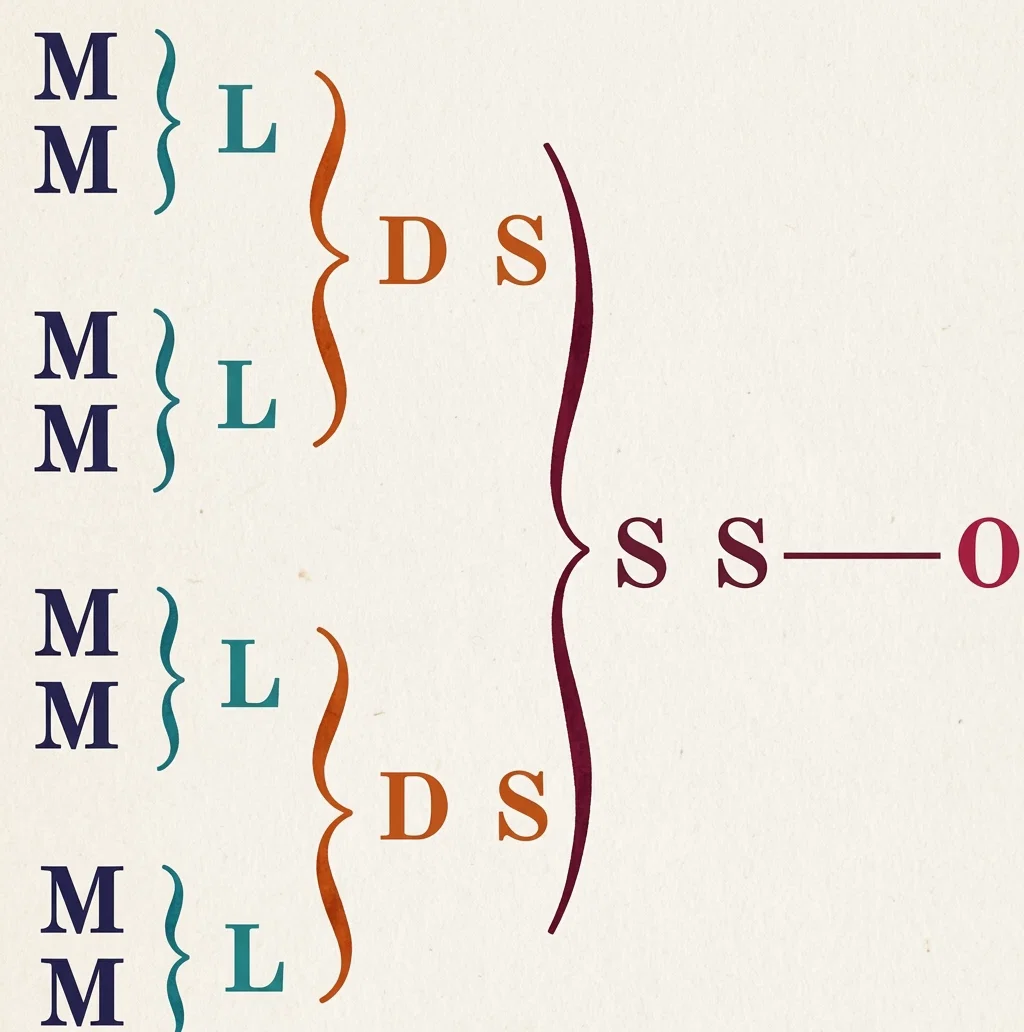
All the business of the Society is done through three grades of secretaries: (1) The librarians, who are secretaries of the church societies; (2) The district secretaries; and (3) the State secretary.
The method of doing business according to this system may well be illustrated by the following diagram:—
M represents the members, L the librarians, D S the district secretaries, S S the State secretary, and O the offices of publication.
The members in the church society, (and the business agent also, when there be one,) bring their business to the librarian. The librarian forwards it to the district secretary. The district secretary forwards to the State secretary all business received from the librarians in his district; and the State secretary forwards the same to the offices of publication.

MEMBERS.

However capable the officers of a T. and M. society may be, its real efficiency depends upon the activity of its members. After joining the society each member should obtain from the librarian a pass book in which to keep a record of all work performed, and any items of interest which may arise while engaged in missionary labor. From the record kept in this pass book the quarterly report is to be made out. He shall also draw from the librarian such reading matter as he may wish to use in his missionary work. A full record of such reading matter drawn should be entered in the pass book, with the number of pages of each kind and the value of the same.
One week before the church quarterly meeting each member will receive from the librarian a blank report, which should be filled out from the record kept in the pass book, to be read at the quarterly meeting. See article on Reporting.
The real work of the members consists in obtaining subscriptions to our periodicals; distributing copies of the same; lending and giving tracts to those who are willing to read; visiting those who are interested in the truth, praying with and for them, and endeavoring to interest those who are still indifferent; calling upon the poor and needy, ascertaining their circumstances, and reporting the same to the proper officers in the church; relieving the widows and orphans; and corresponding with those who may be benefited by such correspondence. A record of all such work should be entered in the pass book.
All moneys received by members, whether on subscriptions for periodicals, from book sales, or from any other source, should be promptly handed to the librarian with a full statement of the business.

BUSINESS AGENT.

The business agent should see that all pledges to the society are promptly paid, and collect dues from old subscribers to our periodicals. He is to collect money on all enterprises that may be entered upon by the society. When money is received on periodicals great care should be taken to give the name of the individual in a clear, legible hand, so that there may be no mistake.
The business agent will need but one book, which may be called a Record Book. In this he will enter the different transactions in full as they occur, and from it a statement should be made out once a week, or oftener if much business is done, to be handed, with the money, to the librarian. Business on periodicals should be reported immediately.

LIBRARIAN.

The work of the librarian is three-fold. First, as librarian, second, as secretary, and third, as treasurer.
1. In his duty as librarian he shall keep in some convenient place, the church is frequently the best, a supply of papers, tracts, &c., to be used by the members in their missionary operations. Care should be taken that a full assortment be kept on hand. He shall supply each member with a pass book in which to enter a record of all work accomplished, and give instruction in regard to its use. He shall keep a supply of blank reports, and hand them out to the members one week before the church quarterly meeting, and see that they are promptly and properly filled out. See article on Reporting.
2. As secretary of the church missionary society he shall keep a list of members, a record of all meetings, and an account of all business transactions. In order to do this, two books will be necessary: a Record book and a Journal. In the first part of the record book should be entered a list of all missionary members in the church, and a record of all meetings of the church missionary society. In the last half of this book should be kept a copy of all business letters. See article, Business Letters.
In the Journal an account should be opened with the district, and with each member in the church. The district should be credited with all books, &c., received by the librarian, and for all periodicals ordered; and charged with all money sent to the district secretary on account. Each member should be charged with all reading matter drawn, and credited with all money paid in by him. The object of these individual accounts is to show what each member is doing, and to guard against the indiscriminate drawing of large quantities of reading matter which may not be judiciously used.
3. As treasurer he shall receive all moneys from the members, and from the business agent, and shall forward the same to the district secretary once a month with a statement specifying for what received. All business on periodicals should be reported the same day that it is received. Accompanying this monthly statement should be a list of those who have joined the society during the month, with their post-office address; and also a list of members who have removed from the district, who have withdrawn from the society, or whose names have been dropped on account of inactivity and failure to report. This is necessary that the record of the district secretary may be complete and correct. As treasurer he shall keep a Cash book, on the debit side of which shall be entered all moneys received, and on the credit side all moneys paid out. See article, How to do Business.

DISTRICT SECRETARY.

The District Secretary shall keep a list of the members in the district, a record of all district meetings, and an account of all business transactions. He shall supply the librarians in his district with blank reports, and see that the reporting in the district is promptly and properly done. See instructions on Reporting. He shall also keep on hand a full supply of tracts, pamphlets, &c., for the supply of the districts, and shall see that the supply does not become exhausted. Immediately after the district quarterly meeting an inventory should be taken of the books on hand, that a full supply for the next quarter may be drawn from the State secretary at the State quarterly meeting.
As secretary two books will be needed, a Record book and a Journal. In the first part of the Record book will be entered, first, a list of members in the district, keeping each church by itself, and giving the post-office address of each member; and second, a record of all district meetings. In the last half should be kept a copy of all business letters. See article, Business Letters.
In the Journal should be opened an account with each church in the district, and with the State. Each church should be charged with all missionary documents sent to it, and for all periodicals ordered by it; and credited with all money received from it. If any church is overdrawing its account, notice of the fact should be sent to the director of the district, and to the librarian of the church overdrawing, that more funds may be raised. Each church should pay its own way as far as possible.
The State should be credited with all books, &c., received by the district, and for all periodicals ordered; and charged with all moneys sent to the State secretary.
As treasurer he shall receive all moneys from the librarians in his district, and forward the same to the State secretary once a month, with a statement of account. Accompanying this statement should be a list of members who have joined during the month, specifying the church which they have joined and giving their post-office address. This is necessary that the State secretary may keep a full record of the membership in the State.
As treasurer he shall keep a Cash book, on the debit side of which shall be entered all moneys received, and on the credit side all moneys paid out. See article, How to do Business.

STATE SECRETARY.

The State secretary shall keep a list of members in the State, a record of all State and directors' meetings, and an account of all business transactions. He shall keep on hand a full supply of tracts, pamphlets, books, specimen copies of our periodicals, and such other missionary documents as are needed throughout the State. The wants of the society should be anticipated by the State secretary, and the greatest care taken that nothing shall hinder its activity. He should keep a supply of blank reports for the State, and see that the districts are supplied with them, and that reporting is properly attended to. See article on Reporting.
As Secretary three books will be required; a Record book, a Letter book, and a Journal. In the first part of the Record book will be kept a list of members, classified according to the church and district to which they belong, giving also the post-office address of each. In the latter part of the Record book should be kept a record of all State and directors' meetings. In the Letter book will be kept a copy of all business letters. See article Business Letters. In the Journal, an account should be opened with each district in the State, and an account with each of the offices of publication. In this book, each district should be charged with all books sent to it, and for periodicals ordered by it, and credited with all moneys received from it on account. If any district is overdrawing its account, the State secretary shall notify the president and the director of the district, that more funds may be raised in the district, as each district should bear its own burden. On the accounts with the offices of publication, they should be credited with everything received from them, and charged with all money sent on account.
As treasurer, he shall receive all moneys from the district secretaries, and forward the same to the offices of publication once a month with a statement of account. As treasurer, he shall keep a cash book, on the debit side of which shall be entered all moneys received, and on the credit side all moneys paid out. See article, How to do Business.

PRESIDENT.

The President shall preside at all T. and M. meetings in the State whenever he may be present. He shall see that the whole State is supplied with everything necessary for the successful prosecution of the work. He shall thoroughly acquaint himself with the duties of all officers in the State, and be prepared to give them full instructions in regard to their duties and how to perform them. He shall make himself familiar with the plans for keeping accounts for all the officers in the State, as brought out in article, How to do Business, and be prepared to audit any officer's account in the State, and give instructions to all who do not fully understand how to keep their books. In fine, his eye shall be open to the wants of the whole State, and his efforts shall be exerted to produce harmony and efficient work.

VICE-PRESIDENT.

Too often the Vice-president has acted as though no responsibility rested upon him. By reading Art. II. of the Constitution, it will be seen that he is one of the Board of Directors, although he may have no district specially allotted to him. In Art. V., Sec. 2, it will be seen that he is expected to preside over all meetings of the society which he may attend in the absence of the president.
He is also to work in the interests of the society as the president may request. It will therefore be necessary that he become fully acquainted with the workings of the society, and the method of book-keeping adopted.

DIRECTORS.

The first work of the director after his election will be to make himself conversant with the plan of doing business adopted by the society.
The same work will be required of the director in the district as is required of the president in the State. Please read instructions to president. After acquainting himself with the duties of each officer in the district, he shall appoint a secretary for the district, and a librarian and a business agent for each church. In the absence of the president and vice-president, the director shall preside at all district meetings and at all church missionary meetings at which he may be present.

REPORTING.

The object of the reporting system is to obtain a summary each quarter of all the missionary work accomplished in the State.
If this is properly done, it will show whether the State is accomplishing the work it should, and what branches of the work, if any, are being neglected. It will also show which districts are alive and active, and which districts need arousing to greater activity. The same will be manifest to each director in regard to the churches in his district. The reporting system will prove an incentive to activity to every member and officer in the State, which cannot well be neglected. One week before the church quarterly meeting, the librarian should hand to each member a blank report, which should be filled out by the member from the record kept in his pass book. The manner of filling out this report is fully described on the back of the report. These reports should be read by the members at the church quarterly meetings and passed to the librarian.
The librarian makes out upon a similar blank a summary of the reports of members, which he reads at the district quarterly meeting and passes to the district secretary. The district secretary makes up a summary from all the reports received from the librarians, which he shall read at the State quarterly meeting and pass to the State secretary. From these district reports, the State secretary makes out a summary for the State. The plan of holding the church quarterly meeting the first Sunday in the quarter, the district quarterly meeting the second Sunday, and the State quarterly meeting the third, makes this plan of reporting easy to carry out.
Any member who fails to report for two quarters in succession should be dropped from the list of working members. They may be reinstated again upon resuming work. This is necessary to prevent the list becoming cumbered with names of inactive members.

A FULL CANVASS.

When a thorough canvass of any place is desired, it is a good plan to divide the territory into districts, and divide the workers into as many companies as there are districts, and appoint a leader from their number for each district. The leader apportions to each individual the streets, or portions of the territory he is to canvass, receives the business done by the members in his district, and passes the same to the librarian. By following this system the same ground will not be gone over by two or more individuals.

QUARTERLY MEETINGS

According to the plan suggested by the General Conference Committee, the missionary year should commence with January, and the quarters commence with the months of January, April, July, and October. The church quarterly meeting should be held the first Sunday in the quarter, the district quarterly meeting the second Sunday, and the State quarterly meeting the third. By following this plan, reports can be ready in time for the State secretary's summary. At the church quarterly meetings, every member should, if possible, be present. At the district quarterly meeting, the librarian and business agent from each church, and as many of the members as possible, should be present. It is important that all the church officers should be present at these meetings, for there plans are matured which can be taken home and put into active operation. At this time the librarians should obtain a supply of books and papers for the next quarter. At the State quarterly meetings the director and secretary of each district, and as many of the church officers and members as possible, should be present. Every district officer should be present at the State quarterly meetings, as the workings of the society in the whole State are here discussed, and the spirit of the work should be fully entered into and carried to their respective districts. At this time the district secretaries should obtain a supply of books and papers for the coming quarter.

GENERAL TRACT AND MISSIONARY SOCIETY, ITS NATURE AND OBJECT.

Pope once said, “Order is Heaven’s first law.” Everything in nature which bears the impress of Deity is stamped with the divine mark of order. A well-directed effort will accomplish a hundredfold more than the same effort where no definite object is before the mind, or where there is no plan to accomplish that object. Nineteen-twentieths of our efforts are fruitless unless well directed. S. D. Adventists are a power in the land, and dreaded by their opponents everywhere, because they are united in their efforts. Every blow they strike is not the blow of one man, but of a thousand; and in the ranks of their enemies it brings confusion. Some restless spirits, from time to time, get tired of waiting for the united judgment of the body, and the folly of their moves is manifest in the results. We might spend $100,000 in missions without accomplishing anything. But with system, which concentrates, gathers the forces, directs the strength, a few hundred dollars will accomplish a work, with God’s blessing, that defies all the artillery of the devil. At times the work seems to move slowly, but the apparent tardiness is made up in the maturing of plans which gives efficiency to the moves.
That the labor of our brethren might be more efficient in the advancement of the truth, and that there might be no confusion, a system has been devised called the Tract and Missionary Society, the object of which is a judicious distribution of our publications among the millions of people inhabiting about 40,000,000 square miles of territory. This is a work of no small moment, and successfully to accomplish it the different Tract Societies have been organized. Each Conference Tract Society is molded after the same system, adopting the same constitution. This is as it should be. These Conference organizations are becoming large and numerous. More fully to consolidate the strength of our missionary effort, and to make it available in all parts of the world at the same time, a general organization has been effected, which takes a general oversight of all the Tract Societies, and makes such suggestions, and imparts such counsel as the varied circumstances may require. This organization renders harmonious the workings of this important branch of our cause, the influence of which is being felt in every portion of the civilized world.
Through the State secretaries of the different Tract Societies, its officers will acquaint themselves with the circumstances and wants of each Society. This is one object of the General Tract and Missionary Society. The General Conference Committee has the supervision of this work in common with every other branch of this cause, and this Committee, among S. D. Adventists, is the highest authority under God upon earth.
There are individuals and small companies of Adventists in every Southern State, and in the Territories of this country, also in the different countries of Europe, and in Asia and Africa. These should be looked after, and should be instructed to co-operate with us in the spread of those truths that apply to the time in which we live.
Then there are sea-ports trading with every nation bordering on the sea, and with numerous islands, in many of which places our publications would be gladly received. These should all be supplied. We have hitherto lacked a method whereby this could be done, and the means with which to do it. The burden of this should not come upon one society, but the expense of entering these unexplored fields, outside the limits of any Conference tract organization, should be supported by the various Tract Societies in the same manner that the General Conference is sustained by the various State Conferences.
To illustrate more fully what we have said in the preceding paragraph, and that our brethren may more fully understand, some of the ways that the funds of this society will be used, we mention the necessity of putting our publications into more than one thousand reading rooms in foreign countries and islands of the sea.
There are one hundred and sixty-three whaling vessels in the United States, having only eleven ports. All of these ships have their regular points which they make. We are in possession of weekly news, giving the name of each vessel, the date of its sailing, where bound, and the points it designs to make, with the names of masters and agents. Now, through proper brethren to act as agents to visit these different vessels at the time of sailing, and make arrangements with the proper officers, packages of our publications can, without any expense of transportation, be sent to all of these different places. The general secretary can notify the agents when these vessels sail, and give the names of their officers. Each vessel should also be furnished with a small library for its own use. The utility of this work’s being done under the direction of one general head cannot fail to be seen; for what is everybody’s business is nobody’s, and many vessels would receive no publications whatever. The advantage of sending by ships to these points, instead of by mail, is very great. We have furnished very many vessels, and have found, thus far, that the officers have taken an interest to assist us. The cost of mailing a single letter to some of these places is twenty-six cents.
What is true of these whaling ships is also true of the merchant vessels, and in this manner every sea-port in the world may be furnished with reading matter on present truth, with only the cost of the publications. Thousands of copies of our periodicals could thus be used weekly, to say nothing of other publications. This will be thought by some to be a wild statement; but I know whereof I speak, and what I am talking about in this matter. Imagine my feelings when I have seen old REVIEWS, REFORMERS, INSTRUCTORS, and SIGNS cast aside as waste paper. We appeal to our brethren and sisters everywhere; save all your old periodicals on present truth, box them, place them in the hands of your State secretary or president (if you have no use for them yourselves); and in due time we will find a place for every one of them, where they will be read and re-read.
Our soul is stirred while we write, as the magnitude of the work comes up before our mind, and we see the different means for accomplishing it which the providence of God has made available to us. We are pained at the lack of a realizing sense of these things by our brethren and sisters. Then, where are the means to accomplish this work. We appeal, in behalf of the cause of present truth, to those who have an abundance of this world’s goods for one-hundred-dollar men, five-hundred-dollar men, and even one-thousand-dollar men. Such can here make an investment that will place stars in their crown of rejoicing in the day of the Lord, representing souls saved from many nations, kindreds, tongues, and peoples. S. N. HASKELL.

EXPLANATIONS

It will be noticed in article V., sections 3 and 5, of the Constitution, that the State secretary is made treasurer of the State, and that the district secretary is made treasurer of the district, instead of the director. The utility of this plan is readily seen, especially in the latter case, as the district secretary keeps the records of all business done in the district, and therefore should have a correct account of all moneys received, for what purpose, and from whom, and also a record of all moneys paid out. His being treasurer will save much of the director’s time, and will obviate confusion which is liable to occur. He does the corresponding, acting under the direction and supervision of the director; and the director sustains the same relation to the district secretary that the president does to the State secretary. All money received by the district secretary should be forwarded to the State secretary, at regular intervals.

THE LOSS OF TIME.

It will be seen by the diagram and its explanation that the business when properly done, passes through the hands of three different secretaries before reaching the Office of publication. This in most cases is the very best and easiest, as well as the most thorough way of doing the work; but in some of our large States where the brethren are mostly farmers, and are widely scattered from each other and the post office, a difficulty has arisen from the loss of time in getting business to the Office. This trouble can be largely alleviated by choosing secretaries, and especially a State secretary, who live near a post office, and who are prompt in doing the business sent to them.
Where this does not remove the difficulty, those large Conferences, such as Iowa, Missouri, and Kansas, where the brethren are scattered, can arrange the matter among themselves, allowing the different librarians or individuals to send business direct to the State secretary. All moneys, however, should go through the hands of your district secretary. When the Board of Directors decide upon this plan, the individual who does business thus must notify the secretary in his district of the business thus done. All the tract business in the Conference should be done through your State secretary with the Offices of publication; for all charges are made to the State Tract Society. A copy of all business letters to the Office should be numbered and preserved by your State secretary. This will save all confusion. Should any misunderstanding arise, an exact copy of the letter can be referred to.
—An elevated purpose is a good and ennobling thing, but we cannot begin at the top of it. We must work up to it by the often difficult path of daily duty always carefully performed.

MEETING OF THE GENERAL T. AND M. SOCIETY.

The general Tract and Missionary Society held its second annual meeting in connection with the General Conference, at Lansing, Mich., Sept. 27, 1877, at 10:30 A. M. President, Elder James White, in the chair. Meeting was opened by singing. Prayer was offered by Eld. H. W. Decker.
H. W. Decker was chosen secretary pro tem. Remarks were made by Eld. S. N. Haskell on the general working of the society, after which the Chair was authorized to appoint a committee to nominate officers for the ensuing year. The following brethren were named as said committee: E. R. Jones, D. H. Lamson, and W. C. White.
Voted. To appoint a Committee to examine and suggest changes in the Constitution and By-laws of the Society. S. N. Haskell, W. C. White, and U. Smith were chosen as this committee.
Further encouraging remarks were made by Eld. Haskell on the increase of labor performed, and suggestions as to the most effective means to be used in missionary labor.
The Committee on Nominations reported the following persons for election as officers for the year to come who were severally and unanimously elected; viz., President, Eld. S. N. Haskell; Vice-president, W. C. White; Secretary, Maria L. Huntley; Assistant Secretary, Mrs. S. H. Lane; Treasurer, Mrs. M. J. Chapman; Business Agent, Wm. Ings.
Voted. That the Chair appoint a committee to revise and print the constitution of State Tract Societies, and furnish them to the different State organizations. S. N. Haskell, W. C. White, U. Smith were appointed as that committee.
Voted. That the General Conference Committee be empowered to fill vacancies which may necessarily occur in the offices of the General T. and M. Society for the following year.
Adjourned to call of Chair.
JAMES WHITE, Pres.
H. W. DECKER, Sec. pro tem.

Education Must Accord With Nature

—All education must be in accordance with nature. School and life should be treated as a unity, the aim of which should be to make a citizen.— Froebel.

Five Reasons Why our Brethren Should Circulate the Health Annual.

1. THERE is no discount to be made on its teachings. It advocates principles of temperance and moral reform, and builds up the cause of righteousness.
2. It prepares the way for obtaining subscribers for the HEALTH REFORMER. One who has obtained hundreds of paying subscribers remarked to me, “I have never failed in obtaining a subscriber where they have read the Health Almanac.”
3. It calls the attention of the readers to the Sanitarium at Battle Creek, where many are thus induced to go to be treated for some malady; and scores by so doing have been led to embrace the truth.
4. By it many have been brought to the Sanitarium or led to read our books, who, although they have not embraced the truth, have been favorably impressed with the views held by Seventh-day Adventists; and through their influence the way has been opened for a course of lectures to be given, and churches have been raised up.
5. The problem has been demonstrated that they will sell; and the only objection to their selling has been the term “almanac.” Now this is removed.
Continue reading: INTERESTING EXTRACTS FROM LETTERS