The Youth’s Instructor, Vol. 47, No. 46.

THE “HERALD” AND ITS WORK
Earlier text: THE “HERALD” AND ITS WORK

WHAT HAPPENED AT THE BIRAHI GUNGA

The memory of the awful flood that overtook the people in village and town throughout the length of the deep, narrow valley of the Connemaugh River, in western Pennsylvania, is still fresh in the minds of many, who will never forget how all the sunshine of the first bright day of June, 1889, was darkened with the thought of the horror at Johnstown. Later every one learned just how it had happened,—how the great reservoir, two hundred and seventy-five feet above the Johnstown level and over eighteen miles away, was filled to overflowing by the spring rains: how, about noon on May 31, a tiny break was made in the condemned dam: how, at the first appearance of danger, messengers were sent to warn the dwellers in the valley, who refused to believe the peril greater than on the occasion of former freshets: how the men at the dam worked with all their energies to stay the flood: how the threatening water gained on them, and another messenger, taking his life in his hands, rode away to give the warning: how, three hours after the first tiny break in the dam, it gave way, and the angry flood tore down the valley: how, seven minutes later, “the great catapult, half a mile in width, nearly forty feet in height, and carrying on its seething front a vast, compact mass of trees, logs, railway iron, house-fragments, wheels, machinery, hundreds of miles of barbed wire, and hundreds of human bodies,” struck Johnstown; was repelled at the railway bridge; circled back, destroying another town in its mad rush, to meet the oncoming flood; and thus completed the destruction of the city: and how, at last, when the water began to subside, and men were busy rescuing the living from the colossal pile of drift,—for there were survivors of that awful night,—fire broke out, and prevented the completion of their work.
Something over five years later, in August, 1894, at Gohna, northwestern India, a similar flood took place. In this, however, very few persons were drowned. A writer in Mc Clure’s Magazine tells how a loss of life even greater than that at Johnstown was prevented. It is an interesting story.
Gohna lies in the Himalayas, on one of the smaller tributaries of the Ganges,—the Birahi Gunga. In September, 1893, an immense mass of rock and soil swept down the side of a mountain, and into the stream; a month later a similar landslide occurred, the two forming a great natural dam, nine hundred feet high, and three thousand feet long, across the valley. Being thus cut off, it was apparent to every one that the stream above the dam would be converted into a lake, which would rise higher and higher until it reached the level of the dam. Then it would keep on rising, would overflow, and destruction, swift and terrible, would overtake the valley. All this the observing British officers saw; and since there was no possible way to avert the disaster, they set about to devise means to protect life and property.
“From surveys they knew the area of the watershed from which the water would come to fill the lake, and from records they knew the ordinary rainfall; and so, in the autumn of 1893, they calculated that the overflow would begin Aug. 15, 1894. It actually began August 25. No doubt the officers intended to make the error on the safe side, and hardly expected the overflow to take place as early as August 15.”
“Having satisfied themselves when the flood would take place, they began to prepare for it. They built a telegraph line from Gohna, down the river, one hundred and fifty miles, and established stations at all important points. They put up pillars of masonry on the slopes of the valley: in the upper part, two hundred feet above ordinary flood-level, and farther down the valley, one hundred feet above floods. These pillars were established near all villages and camping-grounds, and at intervals of half a mile down the river. The people were directed to retire above the line of pillars when they should receive warning of the flood. . . . The permanent bridges along the valley were taken down, and stored high up the slopes, and replaced by temporary rope bridges. In two cases the local authorities requested that the bridges should be left, and these two were completely destroyed. . . .”
“When they had done all they could, the officers waited for the flood. At half past six on the morning of August 25, a little stream began to trickle over the dam. At two o’clock in the afternoon a message was sent down the valley, saying that the flood would come during the night. A thick mist overhung the lake and the dam. At half-past eleven at night a loud crash was heard, a cloud of dust rose through the mist and rain, and the flood roared down the valley.”
“Just below the dam the wave rose two hundred and sixty feet above the ordinary flood-level. If this wave had swept down Broadway, it would have risen to the cornices of some of the recent twenty-story buildings. Thirteen miles below the dam the wave was one hundred and sixty feet high; and seventy-two miles below, at Srinagar, it was forty-two feet above ordinary flood-level; and at Hardwar, one hundred and fifty miles down the stream, at the mouth of the valley, the wave was still eleven feet high. The average speed of the flood going down the valley, in the first seventy miles of its course, was estimated at about eighteen miles an hour; but in the upper twelve miles it must have moved at a rate of over twenty-seven miles an hour. In four and one-half hours ten thousand million cubic feet of water, almost two thirds of the whole contents of the lake, was discharged. This mass weighed more than three hundred million tons. Nothing could withstand that weight, moving at such a speed. Rocks were ground to dust. The town of Srinagar was entirely destroyed, with the rajah’s palace and the public buildings; and a thick bed of stones, sand, and mud was deposited where the town had stood. All the villages of the valley were swept away; but, wonderful to relate, there was absolutely no loss of life, except the Gohna fakir and his family. This old fellow scorned the warning of the Christians, and though he and his family were twice forcibly moved up the slope, they each time returned, to be finally overwhelmed in the flood.”

WHY 1900 IS NOT A LEAP-YEAR

THE year 1900 will not be counted among the leap-years. The year is 365 days, 5 hours, and forty-nine minutes long. Eleven minutes are taken every year to make the year 365¼ days long, and every fourth year we have an extra day. This was Julius Cæsar’s arrangement. Where do those eleven minutes come from?—They come from the future, and are paid by omitting a leap-year every one hundred years. But if the leap-year is omitted regularly every hundredth year, in the course of four hundred years the eleven minutes taken each year will not only have been paid back, but a whole day will have been given up. So Pope Gregory XIII, who improved on Cæsar’s calendar in 1582, decreed that every centurial year divisible by four shall also be a leap-year. So we borrow eleven minutes every year more than paying our borrowings back by omitting three leap-years in three centurial years, and square matters up by having a leap-year in the fourth centurial year. Pope Gregory’s arrangement is so exact, and the borrowing and paying back balance so closely, that we borrow more than we pay back to the extent of only half a day in three thousand eight hundred and sixty-six years.—Exchange.

Prosperity Through Early Rising, Hard Work, and Integrity

“NO MAN ever prospered in this world by luck,” said Henry Ward Beecher; “unless it was the luck of rising early, working hard, and maintaining honor and integrity.”

ETHYL'S LESSON

ETHYL sat by the window, looking out at the pleasant landscape, in the midst of which grandma's cozy house nestled, forming a pretty picture. There was a serious look in her eyes, and her hands lay idly in her lap.
Grandma looked up from her mending, and smiled to see the earnest look in the big brown eyes; for she knew that the brain was very busy, though the hands were idle.
“Well, dearie, something is troubling you; do you suppose grandma's old head could help you settle the question?”
Ethyl turned quickly, and met the pleasant gray eyes of Grandma Phillips bent full upon her. The pink cheeks grew a shade pinker, and there was a worried note in the girlish voice, as Ethyl answered, hesitatingly: “Why, grandma, I didn't know you were here. I don't see how you can always tell so quick when I am in trouble. I suppose I might just as well confess, first as last.”
“I'll tell you, dear, how I can always tell when you are worried about anything. This time I think there is something on your conscience. I can tell by looking into those brown eyes of yours—I might as well call them ‘spiritual windows.’”
“Well, you know I went to stay last night with Meta and Lura Hill. They are not Christians, grandma, and I did not have the courage to let them know that I am—that is—I profess to be. Oh, I feel so bad about it! I wish I had stayed at home.”
Grandma said nothing; she only looked sad, and Ethyl continued: “I just feel as if I'd been acting like Peter—denying my Lord. If I had known that I was to sleep in the same room with the other girls, I would never have gone. But I did go—and —grandma, I didn't have the courage to kneel before them, and pray.”
“Blessed is the man that endureth temptation,” quoted grandma, still looking very sad.
“I'll tell you what I thought, grandma; I thought that they would only laugh at me,—you know Mr. and Mrs. Hill are unbelievers,—and so I said to myself that if I only whispered my prayers, that would be just as well; for God would hear me, the same as if I knelt. And then, at the table, Jack Hill made some very hard speeches against the Bible, and, grandma, I never said one single word, I was so afraid he would laugh at me. But I have been trying to comfort myself with the thought that the Lord knows I believe in the Bible, even if Mr. Hill's people don't. But someway I feel like a miserable coward, after all. I've been looking in the Bible to see if any one ever did as I've done, in those days. I read the story of Peter, but I wish I could find an example now of somebody who was brave enough to do right, even if nobody else did; seems as if it would help me, to read about such a hero as that.”
Grandma smiled as she slipped her glasses over her eyes, and reached for her Bible on the stand. “See here, Ethyl. What you need to read is the beautiful story of Daniel. His enemies were determined to do him harm, and urged the king to make a decree that for thirty days no one should pray. This was nothing more nor less than wicked tyranny,—it was persecution for conscience’ sake. But the brave man paid no attention whatever to their threat, though he might have reasoned as you did, Ethyl, that it would be just as pleasing to the Lord for him to pray with his windows closed,—and he had very much more at stake than you had, my child; in fact, it meant death for him to be found disobeying the great king.”
By this time Ethyl had begun reading the story. Presently, when she had finished, she said: “I remember it; I have read that account before; but if I had only thought of it last night, I would have been braver, I am sure.”
“Now you would do well to read the lesson of the three men who refused to bow down to the great image on the plains of Dura. They might have reasoned in their hearts that it would be better to bow their knees, although they need not really worship the image from their hearts. But no; they were true to principle. They knew that the king had made a wicked and unjust law,—one which they could not obey without doing violence to their sense of right,—and like noble men, they determined to obey their heavenly King, at the terrible risk of losing their lives.”
“I am very sorry that I did not have true courage enough to show my principles, but I have learned a lesson, and one that I hope I shall not forget very soon.”
Grandma smiled, while Ethyl leaned back in her chair, and sang:—
“Dare to be a Daniel, Dare to stand alone; Dare to have a purpose firm, Dare to make it known.”
MRS. L. D. AVERY-STUTTLE.

AN ACORN

NORNA had been sick a long while, and she was so tired of lying in bed that all the family tried to amuse her. Papa brought her a little musical box, and mama gave her picture-books; Tom bought a new game for her, and Dotty a bunch of grapes; even baby offered her an acorn, which he had picked up under the great oak-tree.
What a beautiful little thing it was, fitting neatly in its tiny saucer! and what a dainty saucer, too, with row after row of wee brown scales folded so prettily over one another!
Mama tied a string around the acorn, hung it over a glass of water, and told Norna that now she could see it grow.
“But how can it find its way to the water, mama?” asked Norna.
“Watch and see,” said mama, smiling.
The next day Norna thought the acorn looked a little larger, but soon after that,—oh, dear! there was a dreadful crack all along its side.
“It is spoiled, mama,” sighed Norna; “it will never grow now.”
“Watch and see,” said mama again.
Norna did watch. At last she saw something white and something green coming out of the crack. The white shoot grew down into the water, and made a root; but the green shoot grew upward, and made two little leaves. And so the acorn turned into a baby oak.
And Norna so enjoyed watching it all that she forgot she was sick, and was almost as happy as if she had been outdoors in the sunshine.—Selected.

THE MOST PRECIOUS METAL

If I were to ask you which is the most precious metal, what would you name? “Oh,” you say, “what a foolish question! Gold is the most precious metal, of course.” But wait a moment, and think what it is that makes a thing precious—is it its costliness or its usefulness? Iron is the cheapest of metals, but the many ways in which it can be used make it even more precious than the shining gold.
“Iron vessels cross the ocean; Iron engines give them motion; Iron needles northward veering; Iron tillers vessels steering; Iron pipe our gas delivers; Iron bridges span our rivers; Iron pens are used for writing; Iron ink our thoughts inditing; Iron stoves for cooking victuals; Iron ovens, pots, and kettles; Iron horses draw our loads; Iron rails compose our roads; Iron anchors hold in sands; Iron bolts and rods and bands; Iron houses, iron walls; Iron cannon, iron balls; Iron axes, knives, and chains; Iron augers, saws, and planes; Iron globules in our blood; Iron particles in food; Iron lightning-rods on spires; Iron telegraphic wires; Iron hammers, nails, and screws; Iron in everything we use.”

WHAT I WOULD DO

If I were a rose upon the wall, I'd grow so fair and sweet and tall, I'd scatter perfume far and wide; Of all the flowers I'd be the pride. That's what I'd do If I were you, O little rose!
Fair little maid, if I were you, I'd always be kind, good, and true; I'd be the merriest, sweetest child On whom the sunshine ever smiled. That's what I'd do If I were you, Dear little maid.
— Selected.
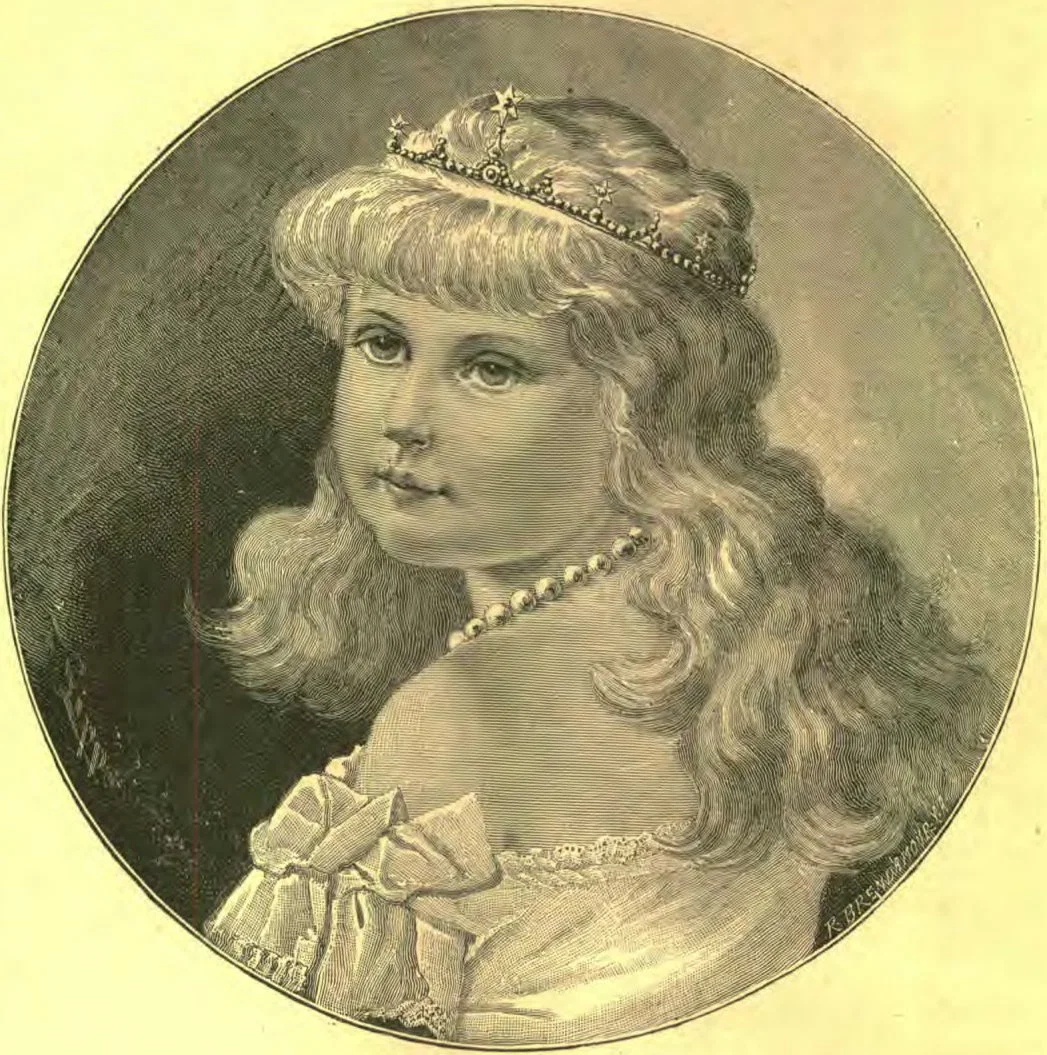
“FAIR LITTLE MAID.”
“FAIR LITTLE MAID.”

(December 2, 1899)

SABBATH-SCHOOL LESSON—NO. 9

(December 2, 1899)

Destruction of the Temple Predicted

Memory Verse.—Mark 13:11.
Time: A. D. 31. Place: Temple, Mount of Olives. Persons: Jesus, disciples.

Questions

1. Having spoken the words, “Behold, your house is left unto you desolate,” what did Jesus do? Matt. 24:1. As he did so, to what was his attention called? Mark 13:1. What did Jesus say in response? V. 2.
2. To what place did Jesus and his disciples go from the temple? Matt. 24:3. Who came to him here? Mark 13:3. What questions did they ask? Matt. 24:3; note 1.
3. What words of caution did he utter in response? V. 4. Why should they take heed? V. 5; note 2.
4. As one of the signs of his second coming, what did Jesus first mention? What should be their frame of mind, and why? V. 6. What other things would come in? V. 7; Luke 21:11. Previously to all these events, what treatment would Christians receive? V. 12.
5. Why would God’s people thus be brought into trying places? V. 13; note 3. What instruction and promise did Jesus then combine for the comfort of his followers? Vs. 14, 15. What would be their help in the hour of trial? Mark 13:11; note 4.
6. How dark did Jesus say the experience of his children would finally become? Luke 21:16, 17. Of what, however, did he assure them? What grace would they especially exercise? Vs. 18, 19. Notwithstanding his promise of aid and protection, what spirit did he say would come among his people? Matt. 24:12. Who, alone, will receive the final reward? V. 13. What must be accomplished before the end? V. 14.
7. Returning to the destruction of Jerusalem, to what did Jesus refer the disciples as a sign of that event? V. 15. When the sign should be given, what course were Christians in Judea to take? Vs. 16–18. Concerning that time, what prayer were they to offer? V. 20.

Notes

1. The disciples asked three questions: (a) When shall these things be? (b) What shall be the sign of thy coming? (c) What shall be the sign of the end of the world? In reply, Jesus went over at least three times the events that would point out the things mentioned. Matt. 24:4–14 covers the entire time from Jesus’ day to the close of earth’s history; verses 15–28, the time from the destruction of Jerusalem to the final end; and verses 29–51, from 1798 to the coming of the Lord. The question that is uppermost is that of Christ’s second coming, an event concerning which Jesus would have none ignorant. And if he has taken so great pains to make the matter plain, how earnestly his people should study his instruction, that they may not be deceived! Let us know the signs well, that when they are seen, our faith may grow stronger, and our hope brighter.
2. During the few years immediately following the close of Christ’s work on earth, this prediction was many times fulfilled. Indeed, many arose claiming to be Christ, and did deceive many. And just before the second coming of Jesus, Satan will again seek to lead men to destruction by the same way. In fact, he is now doing so; for in different parts of the world, men are arising who claim to be Christ, and do many wonderful things to prove their claim. Satan himself will finally come in the appearance of Christ, and the whole world will be deceived. But the child of God is safe, and will be safe. The love of truth will keep him from every deception.
3. The Lord has a purpose in bringing his people into dark and trying places, and that is, that they may bear witness to the truth. He who walks with God need never fear the time of persecution; for God is planning for him an opportunity to testify for Christ. Many “kings and rulers” could be reached, and made to hear the gospel message, in no other way. Persecution opens many a door for the preaching of the gospel; it was thus that Paul was able to teach Christ in the household of Cæsar. Therefore, if we are living righteously, we may rejoice in the hour of trial, because we are able at such times to specially glorify the name of our Master.
4. Jesus does not teach us that we have no need of preparation for these times of trial. Nothing is more important than preparation. Every day, by earnest study of the word of God, we should be filling our hearts and minds with the living testimony. Then, when brought into court, we shall not need to prepare any set speech, or arrange in order our arguments. The Holy Spirit will bring to remembrance the word that has been hidden away by our study, and enable us to speak it with power, to the conversion of souls. A constant, daily preparation is our most pressing need just now.

The Avocado, or Alligator, Pear

When I first heard of the alligator pear as one of the productions of Jamaica and other portions of the tropics, I pictured a rough, coarse, tough-skinned, and inferior-flavored fruit, otherwise very like the pear grown in the United States. But upon becoming acquainted with it, my mental picture has undergone some essential changes; for in no respect but shape does it resemble the ordinary pear. Even the trees are very unlike, except in the form of the leaf, which, in the avocado, is smooth, glossy, and dark-green. The tree is usually tall and irregular, sometimes reaching a height of forty feet, while at its base its diameter is but fifteen inches. It belongs to the laurel family. The blossom is small and inconspicuous.
The fruit, if such it can be called, usually hangs thickly among the leaves, often in clusters. Its glossy skin, sometimes green, sometimes purple, gives it a highly “polished” appearance. The ripened fruit does not hang upon the tree, but drops a few days before it is “fit,” as the natives term an article ready for use. It is stored away, usually in some dark place, until it begins to soften, when it is ready to eat. It is never cooked, but is eaten raw, with salt, as a relish with vegetables or bread. It has a rich, buttery flavor, and is said to be very fattening. No more delicious and wholesome relish could have been provided for man.
The fruit scarcely changes a shade in color as it matures, except that some that is green takes on a slight tinge of yellow. The meat is greenish-yellow in color, and pulls away easily from the rind. The seed is shaped much like the kernel of a hazelnut, though the size of a walnut or larger, according to the size of the pear. The tree reproduces itself from the seed.
The time for maturing differs according to locality, the pears grown in the lowlands ripening much sooner than those in higher places; so that pears are in season, according to the elevation, from the first of July until Christmas. A few trees mature their fruit out of season; these are known as “mid-year pears.”
As the fruit, though gathered when hard, begins to soften in two or three days, and is easily bruised, it can not be shipped, and for this reason is not seen in the markets of the United States. ANNA AGEE HALL.

COMMON THINGS

Seen with the spiritual eyesight, there is a halo of glory surrounding every material thing. There resides in each smallest object an infinite and immortal creative idea. The humblest living creature, and every stock and stone, when seen and studied with this thought in mind, becomes radiant with immortal light. When so seen, they are to us luminous, shining with the reflected glory of the Creator, as the moon reflects the sun, and are beacon lights to our thought. So we come to be in sympathy with all created nature, and even every common thing is to us lovable. W. H. McKef.

YERBA MATE GATHERING IN PARAGUAY

YERBA MATE is the name given to a small tree, or shrub, which grows in Paraguay, in northern Argentina, and in some parts of Brazil. It is used alike by rich and poor in the two first-named countries as people of other lands use tea and coffee. In the season, the natives go into the forest with baskets, and gather the twigs, leaves, and bark. These are then dried in the sun, ground in a mill, and pressed into wet rawhide sacks. As the sacks dry, they contract, making the yerba almost as hard as a rock; it is then ready to ship. This is one of the principal industries of Paraguay.
L. BROOKING.

SUCCESSFUL OFFICE BOYS

An editor of a great city daily was speaking a few days ago about the service of his office boy. “I don’t believe there is a person in the building who has anything against the boy,” said he. “Arthur is always ready and quiet, and thoroughly reliable.”
Some one who stood by took the occasion to ask a question: “Is it true that a boy who is responsible and willing is always noticed?”
“Oh, yes!” said the editor; “noticed almost at once and all over the office.”
“But what are his chances of promotion? In a large office I should think there would be really little opportunity, yet one continually sees it stated that reliable boys are sure to be promoted.”
The editor answered, with decision: “The opportunity is certain. A boy who is reliable and willing to work, and who shows a disposition to do his best, is sure to be promoted as fast as he deserves to be. Of course, we have all sorts of boys in our office,—boys who are shiftless, have no interest in their work, stay a short time, and drift away. That sort of boy doesn’t count. But Arthur has been with us two years. In all that time he has been keen and businesslike, ready to do anything, always pleasant, prompt, and capable. The boy before Arthur was much the same sort of boy. He grew interested in the typewriter; so he stayed after hours and practised on it till he became thoroughly skilful with it. That boy is now the business manager’s stenographer.”
“The two boys before him are clerks in the counting-room. Still others are at work in the building in good places. It is entirely true that a boy who wants to make the most of himself can do so.”—Our Sunday Afternoon.

TO MAKE YOUR HOME HAPPY

Use “Garland” Stoves and Ranges.

GOD'S SUNSHINE

God's sunshine! How it can illume a heart! How it cheapens every art! Tell me, is there any grace, Anything in form or face, Anything that can endure, Half as beautiful and pure, Aught that is the counterpart Of this radiance in a heart— God's sunshine! —Emma C. Dowd.

The Desire of Ages

“The Desire of Ages.”
“Daniel and the Revelation.”
BOOKS YOU SHOULD READ.
“Patriarchs and . . . Prophets.”
“The Great Controversy.”
Four books, whose titles are the only introduction necessary to recommend them to the careful consideration of every Bible student, as well as to all others.

“The Desire of Ages.”

By Mrs. E. G. White. This book gives a complete outline of the life and work of the Saviour, including the prophecies concerning him as found in the Old Testament Scriptures, and is read with interest and profit by old and young. The chapter, “As a Child,” is well worth the price of the entire book to every parent.
Profusely Illustrated. Bound in the following styles:— Cloth, marbled edges $3.50  Library, marbled edges $5.00 Cloth, gilt edges 4.25  Full morocco, gilt edges 7.00

“Daniel and the Revelation; OR THE RESPONSE OF HISTORY TO THE VOICE OF PROPHECY.”

By Uriah Smith. The books of Daniel and the Revelation are counterparts of each other. They naturally stand side by side, and should be studied together. Never was there a time in the history of the world when the study of the prophecies was so imperative. The book contains many illustrations to aid the reader in understanding the subject-matter.
The following remarkably low prices bring the book within the reach of all:— Cloth, plain edges $1.00  Cloth, gilt edges $2.75 Cloth, marbled edges 2.25  Library, marbled edges 3.00 Full morocco, gilt edges $4.50

“Patriarchs and Prophets.”

By Mrs. E. G. White. The first chapter of this wonderful book is entitled “Why Sin Was Permitted,” and shows that “God is love.” “His nature, his law, is love. It has been and ever will be.” It tells how sin came into existence, and why it was permitted to continue. “It could not be made to appear the evil thing it was until fully developed.”
Chapter Two gives an interesting and vivid description of the earth as it came “from the hand of its Maker,” “teeming with animal and vegetable life;” also the genealogy of our race, as given by inspiration. The history of the early lives of Joseph, Moses, Samuel, Saul, and David will be of special interest to the young.
The book contains many choice full-page illustrations. Bound in the following styles:— Cloth, marbled edges $2.25  Library, marbled edges $3.00 Cloth, gilt edges 2.75  Full morocco, gilt edges 4.50

“The Great Controversy BETWEEN CHRIST AND SATAN DURING THE CHRISTIAN DISPENSATION.”

By Mrs. E. G. White. This book gives a most wonderful and intensely interesting history of the conflict between the forces of good and evil, from the time when our Saviour was here upon earth to the final consummation of all things at his second coming. The chapters on the “Agency of Evil Spirits,” “The Snares of Satan,” “Spiritualism,” “The Character and Aims of the Papacy,” “The Impending Conflict—Its Cause,” “The Scriptures a Safeguard,” “The Final Warning,” and “The Time of Trouble” will be read with more than usual interest by all.
The book contains over seven hundred octavo pages, exclusive of more than forty full-page illustrations. Bound in the following styles:— Cloth, marbled edges $2.25  Library, marbled edges $3.00 Cloth, gilt edges 2.75  Half morocco, gilt edges 3.50 Full Morocco, gilt edges $4.50

Subscription Renewal Notice for December 1899

DECEMBER, 1899.

If the yellow address-label on first page of this paper, or on the wrapper, bears this month and year (John Brown 7 99), it indicates that the following blank should be filled out by you now, and mailed to Review and Herald, Battle Creek, Mich., before the end of this month:—
Name, ............................................................
Post-office, ............................................................
Street, ............................................................
County, ............................................................
State, ............................................................
Enclosed find $........ (money-order, express order, registered letter, or bank draft), for which please send ..... copies of the YOUTH'S INSTRUCTOR ..... months to above address.
P. S.—If you object to clipping this out of your paper, or wish to forward other subscriptions, please write names and full addresses on a separate sheet, stating amount enclosed for that purpose.

To Reach BATTLE CREEK

FROM
CHICAGO, BUFFALO, DETROIT, OR TOLEDO,
Purchase Tickets
Reading over the MICHIGAN CENTRAL
“The Niagara Falls Route.”
A First-class Line for First-class Travel between Chicago and New York and Boston. Elegantly equipped through trains pass Battle Creek in each direction daily.
R. N. R. WHEELER, Ticket Agent, Battle Creek.
O. W. RUGGLES, Gen'l P. and T. Agt., Chicago, Ill.

TAKE THE Canadian Pacific Railway

for . . . CHATHAM, LONDON, WOODSTOCK, PORTLAND, OTTAWA, GALT, TORONTO, and MONTREAL, QUEBEC, BOSTON,
All points in New England, the Maritime Provinces, Great Britain, and the Continent.
Illustrated literature, time-tables, and full particulars, upon application to—
J. FRANCIS LEE, GEN. AGENT,
Passenger Dep’t. 228 SOUTH CLARK ST., CHICAGO
Branch: 76 Ottawa St., Grand Rapids, Mich. Offices: Room D, Chamber of Commerce, Cincinnati, Ohio. 315 Chestnut St., St. Louis, Mo.

Cincinnati Northern Railroad Co.

TIME TABLE NO. 3.

In Effect Sept. 24, 1899.
Trains Pass Battle Creek, as follows:

WEST-BOUND.

No. 21, Mail and Express ............ 6.58 P. M.
No. 23, Accommodation ............... 2.07 P. M.
No. 27, Local Freight ............... 8.25 A. M.

EAST-BOUND.

No. 22, Mail and Express ............ 8.25 A. M.
No. 24, Accommodation ............... 1.45 P. M.
No. 28, Local Freight ............... 5.30 P. M.
Direct connections are made at Toledo with all roads diverging. Close connections for Detroit and Cincinnati. J. L. READE, Ticket Agt., Battle Creek.
E. R. SMITH, City Pass. Agt., 6 West Main St.
Continue reading: GRAND TRUNK RAILWAY SYSTEM