It seemed an age to Pharaoh before the lad finally returned accompanied by Moses and Aaron.
Haggard with anxiety and fear, the haughtiness all gone from his countenance, he met them with a hoarse cry: "I have sinned this time; the Lord is righteous, and I and my people are wicked. Entreat the Lord (for it is enough) that there be no more mighty thunderings and hail; and I will let you go, and ye shall stay no longer."
It was fear that wrung the confession from his lips, and the prophets knew that the struggle was not ended; but they would give him the opportunity, nevertheless, so that he might be without excuse.
"As soon as I am gone out of the city," said Moses, "I will spread abroad my hands unto the Lord; and the thunder shall cease, neither shall there be any more hail; that thou mayest know how that the earth is the Lord's. But as for thee and thy servants, I know that ye will not yet fear the Lord God."
Palms in Egypt by the Nile.
Out again into the storm the two ambassadors went, unheeding its terrible raging, and anxiously the king and the people waited. Soon the wind abated and the hail and rain ceased falling; and before long the sun broke through a rift in the clouds, throwing a beautiful rainbow on the dark western sky. A bow of promise it could and would have been had Pharaoh accepted the mercy of God. But as the clouds cleared away and the serenity of Egypt's climate succeeded the elemental war, so his fears disappeared and his promises vanished into thin air. All the hardness and stubbornness of his nature again asserted itself.
Ample time was given him for deciding, but finally, as no decree was forthcoming bidding the release of the enslaved people, the brother prophets appeared again and warned the monarch that if he still clung to his obstinacy a terrible plague of locusts would be sent to devour every green thing that remained in Egypt.
But the king showed no signs of relenting. Exasperated beyond measure at his stubbornness, princes and courtiers, forgetting their rank, fiercely exclaimed, "How long shall this man be a snare unto us? let the men go, that they may serve the Lord their God; knowest thou not that Egypt is destroyed?"
The priests retorted in favor of Pharaoh, and open hostilities were imminent in the court, but the disturbance was quelled by a word from the king. "The words of the princes are good," said he. "The men shall go and do sacrifice to their God. But their wives and their little ones shall remain in the land. Call the men again." When they returned the king inquired, "Go, serve the Lord your God; but who are they that shall go?" "We will go with our young and with our old," said Moses, "with our sons and with our daughters, with our flocks and with our herds will we go; for we must hold a feast unto the Lord."
The monarch realized in desperation the futility of argument; and his anger, long suppressed, burst out uncontrolled, and furiously he railed: "Let the Lord be so with you, as I will let you go, and your little ones; look to it; for evil is before you. Not so; go now ye that are men, and serve the Lord; for that ye did desire."
He motioned to the soldiers and they sprang forward with spears set menacingly. The prophets looked at them calmly and unflinchingly, but did not move. The soldiers feared these men far more than the king, but they must keep up appearances; and, swinging their spears, they spoke in an undertone begging the men to go. So they departed.
The next day a fierce wind blew steadily from the east, continuing all the following night, and with the gale on the second day came the locusts in clouds, darkening the sky and spreading all over the land, devouring every particle of verdure and leaving desolation in their wake. They entered the houses like flies, and swarmed about until the Egyptians were nearly frantic.
The proud nature of the king rebelled against humbling himself again to these Hebrews, but there was no other way, and the extent of the calamity bade him hasten. Sending for them, he exclaimed, "Now therefore forgive, I pray thee, my sin only this once, and entreat the Lord your God, that He may take away from me this death only." The prophets were obedient to his wish, and while entreating the Lord a mighty west wind arose that swept the plague into the Red Sea.
But no order was received to vacate the land. In the perversity of his heart, Pharaoh held out against all importunities of his people, declaring that the Hebrews must remain in servitude. But while the words were being spoken a darkness like an outspread pall of death settled down over the land. It was a darkness that was close and oppressive; breathing was difficult, and absolutely nothing could be seen, tho held before the eyes. Movement was impossible except by careful groping. Everything was at a standstill, and the people sat in mute horror at this new judgment. The laborers in the fields attempting to find their way to their homes wandered about in the darkness until exhausted. In the houses "none rose from his place."
Yet even this occasion was mercifully given that they might have time for deep reflection; and to the whole nation it was made manifest how completely impotent were their gods, and how useless and ineffectual were any appeals to them. Even their greatest gods, Isis and Osiris, who controlled the lights and the elements, were now smitten by the great Power that had undertaken the cause of the Hebrews.
Three days the deep gloom prevailed, and when at last it lifted, the king sent for Moses and Aaron. He was haggard and worn from his long vigil through the darkness, and exhausted with the struggle. "Go ye, serve the Lord;" he commanded, "only let your flocks and your herds be stayed; let your little ones also go with you."
Previously he would have retained their wives and children as surety for the men. Now if they will leave their cattle he would concede to their demands, for it was from their abundant herds that he must replenish his own depleted land.
"Thou must give us also sacrifices and burnt offerings, that we may sacrifice unto the Lord our God," said Moses. "Our cattle also shall go with us; there shall not an hoof be left behind; for thereof must we take to serve the Lord our God."
The wrath of the king knew no bounds. He would have slain the two Hebrews himself had not God been their protector. "Get thee from me," he shouted. "Take heed to thyself, . . . for in that day thou seest my face thou shalt die." "Thou hast spoken well," said Moses. "I will see thy face again no more."
He himself, a man of peace and the meekest on earth, was weary of the conflict, and he knew it was about ended. His people had been instructed and drilled for the departure. Leaders had been appointed, and all plans laid, and they waited but for the signal.
CHAPTER IX.
The faith and courage of Israel, long depressed by their afflictions, had risen as they had witnessed their miraculous protection from the plagues. They had been instructed to ask valuables of the Egyptians, and the people of Egypt were so anxious for the Hebrews to depart before the falling of another plague, that they gave them what they asked. But it was a just and legitimate remuneration for their many years' labor as bondmen.
Tho under sentence of death, Moses was bidden to appear again before Pharaoh. The last great judgment would not be sent without a specific warning of its terrible results. Fearing the outstretched arm and the holy countenance, Pharaoh cowered as he listened to the scathing denunciation that announced the cutting down of the flower of Egypt's forces.
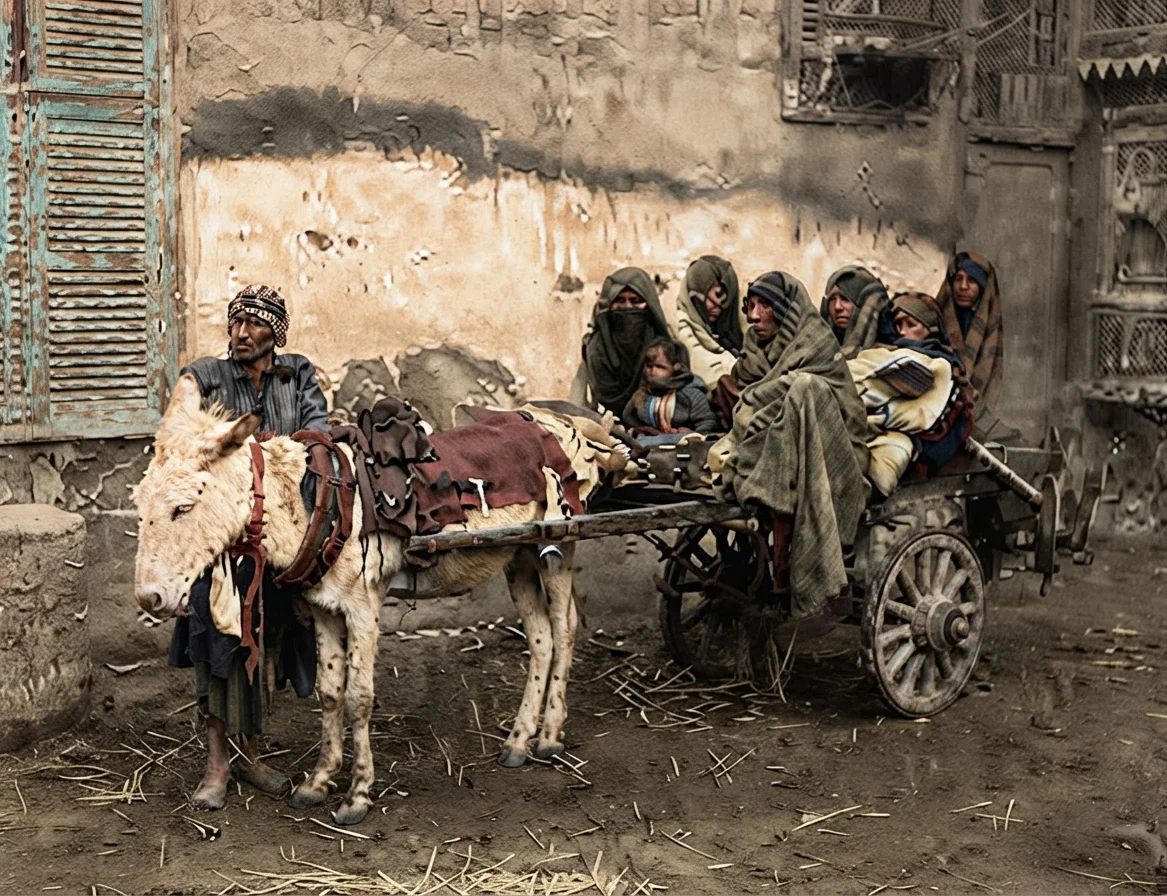
Arabs in Egypt.
Said the prophet: "Thus saith the Lord, About midnight will I go out into the midst of Egypt; and all the first-born in the land of Egypt shall die, from the first-born of Pharaoh that sitteth upon his throne, even unto the first-born of the maid-servant that is behind the mill; and all the first-born of beasts. And there shall be a great cry throughout all the land of Egypt, such as there was none like it, nor shall be like it any more. But against any of the children of Israel shall not a dog move his tongue,13against man or beast; that ye may know how that the Lord doth put a difference between the Egyptians and Israel. And all these thy servants shall come down unto Me, and bow down themselves unto Me, saying, Get thee out, and all the people that follow thee; and after that I will go out."
The monarch made no sign. His own life was not in danger, and he cared naught for the lives of others. Covetousness was his bane, gain his god; and his wicked heart, stultified with stubbornness, saw in this calamity no excuse for yielding. He had embittered his people and his courtiers against him, but he would still be king and ruler of the land.
In righteous indignation the prophet left the palace. The work of emancipation, as far as he was concerned, was done.
CHAPTER X.
Darkness was gathering on the eve of the Passover night. In Goshen the families of Israel were gathered together; the paschal lamb was slain, the flesh roasted, unleavened bread and bitter herbs prepared. On the doorposts the blood had been sprinkled, and in awe the people watched and prayed.
In the houses of many there were absent members, and, tho the prophets had assured them that God would bring again the absent ones, they bowed in prayer for their restoration.
These loved ones were locked in the stone-walled corridors of Egypt's dungeon. Nervously and with burdened, anxious hearts they paced to and fro in their cells, realizing the awfulness of their situation, for they had been informed of the dreadful visitation that would be meted out that night.
They had not been called to their duties that day nor permitted outside the prison walls. Carefully they had watched for an opportunity to escape, but as if in anticipation of this, Pharaoh had given strict orders that the keepers should exercise extra precaution, and that the number of guards should be doubled.
Heber's fair, manly face was a puzzle to his comrades all that day. It depicted anxiety and excitement, but still there was a hopeful look in his eyes, that the others could not share. His strong athletic frame was nervous with pent-up energy. It was plain as the hours grew late that he was expectant of something they knew not what. "Heber," said one finally, "tell us what is in thine eyes; if thou knowest ought more than we, tell us." "I think thou shouldst know, now," was the reply in a low, tense voice. "There is help for us." "How?" was the exclamation from all.
"The first day when the prophet warned the king of the death of the first-born, I heard it at the court. I sought Anathpherah alone, and said, 'Keeper, believest thou the prophets, or why didst thou keep them in thy house at the time of the hail?' 'By the king's beard,' said he, 'if thou art not mindful thou wilt do me harm. Yea, lad, I believe the prophets, and I believe their God; He is my God for forty years since; Moses taught me so before he fled from Egypt; but this is to thee, mind, not to Pharaoh, nor any other.' 'But hear me,' I spake, 'thou hast heard the warning, thou knowest not that I am one of the first-born, as are also some of my comrades here; must we perish with the king's people?'"
"The keeper looked this way and that, and then said, 'Thou must not speak, but I have sworn to the prophets to aid thy escape.' So now wait, my brothers, and be ready," said Heber.
After a short period of darkness a silvery moon rose, shedding its mellow, peaceful rays over the land. Through a small grated opening high up on the wall the light stole in upon them. It seemed a long time in their anxious waiting since the last keeper's footstep had echoed through the corridors.
But suddenly they heard stealthy footsteps and saw a faint glimmer of a taper. Their door was carefully unbarred and swung back, and they saw Anathpherah holding up a warning hand for silence. Beckoning them to follow, he led them down the passage; at one of the large cells he stopped and unbarring the door, disclosed a group of a score or more gaunt Assyrian captives, taken in battle.
They sprang up surprised and blinking at the light of the taper. To them was held the warning hand. "Canst thou fight?" whispered the keeper in their tongue. They nodded eagerly and hopefully. "If thou canst fight thou canst be free. Come."
They followed with cat-like agility and carefulness. The keeper opened another door, revealing the prison arsenal, where shining spears and battle axes hung in array. Quickly each man was armed, and, leaving the room, they stood before the large stone door opening to freedom.
The keeper spoke low to the Assyrians; then to the Hebrews he said, "Heber is the strongest and quickest, he shall lead. I am not afraid, but I am old. He knows the way. Wilt thou, lad?" In response Heber swung his spear in exultant assent. With a sharp look about at them all, the keeper stepped to the great door and swung it wide.
(Concluded next week.)
HOSPITALITY IN THE HOME.
By Mrs. L. D. Avery-Stuttle
MRS. L. D. AVERY-STUTTLE.
"Be not forgetful to entertain strangers; for thereby some have entertained angels unawares."
WE all love to entertain our friends; there is no question about it. We would willingly, gladly, put ourselves out, and be to all sorts of trouble to make them feel at home when they visit us. But when it comes to entertaining strangers, why that's another thing. But I suppose the text above quoted applies to all strangers of every nationality—even to that much-despised and often much-dreaded stranger, the tramp. The duty can not exclude even him. Whether this means that we ought to give them a piece of bread and a drink of milk in a tin cup, out in the back shed, or not, I shall leave to the individual conscience of my reader. But we all know this kind of entertainment would not work at all with our friends.
We have read the wonderful account of the regal entertainment Abraham gave the three angels who came to him one evening, in the plain garb of men. As I have read the simple story, I have tried to imagine how it would seem for people nowadays to offer such courtesies to strangers. Can we imagine a wealthy man—for such Abraham must have been considered in his day—hurrying to meet the party of entire strangers whom he sees coming, and bowing to them as politely as if they represented some royal personage? Ah, little does the grand old patriarch imagine that they are fresh from the courts of glory. Did you ever think what trouble and pains he took to get them a good supper? Most of us would hardly feel like taking so much pains as that, even for our friends. O, what is the reason that we so seldom have, nowadays, an example of real, old-time, old-fashioned Christian hospitality?
How would we feel if we thought that we had ever refused a drink of water or a morsel of bread to an angel from heaven? I trust we have none of us ever done that, but we can not be sure, if we ever turn the stranger away from our doors when he is hungry. I suppose that eternity will bring us many surprises. It will reveal the fact that many and many a time when we supposed we were dealing with men, we have been making a record that will be read throughout eternity,—for we have been entertaining a divine messenger.
O, if we could only remember the priceless value of a human soul! It matters not how the poor body may be clothed, whether in the height of fashion or in the dusty garments of the wayfarer,—that soul is worth more in the sight of heaven than a whole world of gold and silver. Yet how carelessly and with how little respect we sometimes treat these same poor souls.
The rich Mrs. Blank has a necklace of diamonds. She values it highly because it cost almost a fortune. She keeps it locked in a safe when not in use, and bestows great care upon it. But ah! the price of the human soul is above rubies. The cost was the life-blood of the Son of the Eternal. Then can we do less than to exercise the kindest hospitality toward those precious ones for whom such a price has been paid?
Have you ever called at certain homes, and, altho an entire stranger, felt such a kindly feeling of hospitality in the very air, that it was with regret that you left the house? But alas, it is not often so. Even the little children partake of the spirit of the home.
One day I remarked to a friend—a dear, warm-hearted, sensible, little body,—"I think I would teach a child to discriminate between a decent, cleanly person and a tramp."
I shall never forget her noble reply:
"O yes; but, my dear, even the poor tramp has a soul, and it might be the touch of baby's pure little lips that would save that soul for whom Christ died; and so, should my child incline to kiss even a ragged beggar, I could not forbid her."
My eyes filled with tears; and to-day, I say, God bless that noble little woman.
O, we can find room in our hearts and homes for our own, but it is hard to remember that we are all brethren.
More than fifty years ago a very sad tragedy occurred in western New York. It was related to me a number of years ago, by a friend who was an eye-witness of the affair, and I was so deeply impressed with his recital, that I penned the following lines. Ah! if we would only learn to use hospitality one toward another, without grudging:
I saw a lone wanderer, wretched and old,
As on through the shadows he pressed,
The bleak winds of winter were cheerless and cold
As the day king surrendered his chariot of gold,
And sunk in the shadowy west.
I saw him again in the darkness of night,
As he wearily tottered on,
He had seen the gleam of a friendly light
Which shone like a star on his failing sight,
When his courage was almost gone.
I saw him again, as with trembling form,
He stood at the rich man's door,
Within, there was nourishing food so warm,
Without, there was darkness and pitiless storm,
O, how could he wander more?
Within was life, and without was death;
For the wintry blast was cold;
Without was the storm king's angry breath,—
"O give me shelter!" the old man saith,
"I am weary and poor and old."
But the rich man turned with a cruel stare,
And a cold and pitiless tone,
Not a crust from his bountiful board could spare,
Not a crumb for the perishing soul to share,
For his heart was as hard as stone.
I saw him again, as with tottering feet,
And with wild eye fierce and bright,
He sunk to rest, and his rest was sweet,
And the spotless snow was his winding sheet,
On that terrible winter's night.
When earth in her springtime robes was dressed,
And the wintry storms were o'er,
They found him where he had sunk to rest,
With his Bible clasped to his frozen breast,
He slept to wake no more.
WHAT NOTED MEN SAY.
By James Hamilton
If we have ever tried it, we must have been struck with the few solid thoughts and the few suggestive ideas which survive the perusal of the most brilliant of human books. Few of them can stand three readings, and of the memorabilia which you had marked in your first reading, on reverting to them you find that many of these were not so striking, or weighty, or original as you thought. But the Word of God is solid. It will stand a thousand readings, and the man who has gone over it the most frequently and carefully is the surest of finding new wonders there.—Rev. James Hamilton.
The Bible in Scientific Studies
By Lieutenant Maury
I HAVE always found in my scientific studies, that when I could get the Bible to say anything upon the subject, it afforded me a firm platform to stand upon, and another round in the ladder by which I could safely ascend.—Lieutenant Maury.
LESSON 12.—DECEMBER 18.—REVIEW OF THE QUARTER
By Editor
The Sabbath-school lessons have been discontinued. The Lesson Quarterly may be obtained, containing three months' lessons and notes, for five cents. Address, Pacific Press, Mountain View, Cal. The Sunday-school lessons will continue.
INTERNATIONAL SERIES THE SUNDAY SCHOOL
LESSON 12.—DECEMBER 18.—REVIEW OF THE QUARTER.
Golden Text.—"Thou shalt worship the Lord Thy God, and Him only shalt thou serve." Luke 4:8.
LESSON 1.—Elisha Succeeds Elijah.2 Kings 2:12-22. Golden Text: "Let a double portion of thy spirit be upon me." Verse 9. Elijah's mantle is Elisha's parchment, and his commission is verified in the dividing of the waters of the river. The confidence of the young students is strengthened by their fruitless search for Elijah in the mountains, and the people of Jericho are convinced of Elisha's divine approval by the purifying of their unwholesome water supply.
LESSON II.—The Widow's Oil Increased.2 Kings 4:1-7. Golden Text: "Trust in the Lord, and do good; so shalt thou dwell in the land, and verily thou shalt be fed." Ps. 37:3. Elisha helped the poor widow by setting her and her sons to work in a way that tested their faith. So the blessing that came to her and her family was the reward of faith.
LESSON III.—Elisha and the Shunammite.2 Kings 4:35-37. Golden Text: "The gift of God is eternal life through Jesus Christ our Lord." Rom. 6:23. The prophet's staff had no virtue in the hands of Gehazi, whose deceptive, selfish heart was afterward exposed when Naaman the Syrian was healed of leprosy (2 Kings 5:20-27). But Elisha demonstrated that "the effectual fervent prayer of a righteous man availeth much." James 5:16.
LESSON IV.—Elisha and Naaman.2 Kings 5:1-14. Golden Text: "Heal me, O Lord, and I shall be healed; save me, and I shall be saved." Jer. 17:14. In this lesson we have a "little maid," who is a captive among the enemies of her people, doing missionary work in behalf of her master. We have also a heathen man healed of leprosy by a very simple act, because he obeyed the direction of a prophet of Jehovah. And the leprosy of this same heathen attached to a professed child of God because of his covetousness.
LESSON V.—Elisha at Dothan.2 Kings 6:8-23. Golden Text: "The angel of the Lord encampeth round about them that fear Him, and delivereth them." Ps. 34:7. That Jehovah overrules in the affairs of nations is shown by His revealing the secret plans of the commander of the Syrian army to the king of Israel through His prophet. That He has forces for the protection of His servants that are unseen by the natural eye; was demonstrated by the invisible army that protected Elisha and his servant at Dothan.
LESSON VI.—Joash, the Boy King.2 Kings 11:1-16. Golden Text: "When the righteous are in authority, the people rejoice." Prov. 29:2. Athaliah was the daughter of the notorious Jezebel, wife of Ahab, king of Israel, and inherited her mother's cruel and ambitious disposition. When her son, King Ahaziah, died, Athaliah thought to put to death all his children, and seize the throne. All were slain excepting the infant Joash, who, with his nurse, was hid in the temple by his aunt, the high priest's wife, until he was seven years old. Then, by an uprising of officials, Athaliah was slain and Joash was placed on the throne.
LESSON VII.—Jehoash Repairs the Temple.2 Kings 12:1-15. Golden Text: "We will not forsake the house of our God." Neh. 10:39. Joash, or Jehoash, was for many years under the guidance of Jehoiada, the high priest, and for this reason his earlier inclinations were toward the religious interests of the kingdom. And his determination to repair the house of the Lord was beyond any suggestion of even his aged and pious uncle. The king was at this time about thirty years of age.
LESSON VIII.—Isaiah's Message to Judah.Isa. 1:1-9, 16-20. Golden Text: "Cease to do evil; learn to do well." Verses 16, 17. Israel had been often and sorely chastened, and the Lord appeals to her once more by His prophet, "Why will ye be still stricken, that ye revolt more?" The Lord does not willingly afflict His people; the necessity for it causes Him sorrow; and with it all He holds out the offer of pardon even for the worst of offenders.
LESSON IX.—World's Temperance Lesson.Isa. 28:1-13. Golden Text: "They also have erred through wine, and through strong drink are out of the way." Verse 7. Samaria, the "crown of pride" in Israel, sat in the midst of fertile valleys with extensive vineyards. Through perversion of these vast resources, the rulers and priests had become drunken to the extent that the kingdom was about to be overthrown. The warning is given to Judah, whose people were inclined to follow in the same way. "Wine is a mocker, strong drink is raging; and whosoever is deceived thereby is not wise." Prov. 20:1.
LESSON X.—Hezekiah Reopens the Temple.2 Chron. 29:18-31. Golden Text: "Them that honor Me I will honor." 1 Sam. 2:30. Hezekiah came to the throne after a season of great decline both in temporal affairs and in morals. His grandfather (Jotham) and his father (Ahaz) had each left a bad influence upon the people. Hezekiah was but twenty-five years old when he began to reign, having been given a pious mould through the influence of his mother, and he immediately set about restoring the work of the temple and the worship of Jehovah.
LESSON XI.—Captivity of the Ten Tribes.2 Kings 17:6-18. Golden Text: "The face of the Lord is against them that do evil." 1 Peter 3:12. After the division of the kingdom of Israel in the time of Rehoboam, the northern kingdom had a trial, or probation, of 215 years. The cause of the final rejection is brief—the people did the things that caused the rejection of the nations who were cast out to make room for Israel. And God is not a respecter of persons; they that persist in transgressing the law of the Lord must eventually be cast out.
Discounted Musical Instruments
Brother L. I. Sage, who is in the music business at Ventura, California, has agreed to sell pianos, organs, and small instruments on easy payments at one-third discount to all readers of the SIGNS OF THE TIMES. Direct all correspondence to L. I. Sage, Ventura, California.
BROWN'S MILLENNIAL TEXT-BOOK
500 References. Price, 10 Cents
EUGENE A. BROWN
Phoenix, Arizona
OLIVOILINE
Is the
Hygienic Cooking Oil of To-day
A Pure Vegetable Shortening. No Animal Fat. No
Taste and No Chemicals.
Like Olive Oil, and Keeps in Any Climate
Price, F. O. B., Cash with order
5 gal. can, $3.50; 10 gal. can (75 lbs.), $6.75. Write
for circulars on Bbl. and ½-Bbl. lots.
(Refined Cotton Seed Oil, 10 Gallons, $5.50)
Address O. C. GODSMARK
2005 Magazine St.
LOUISVILLE, KY
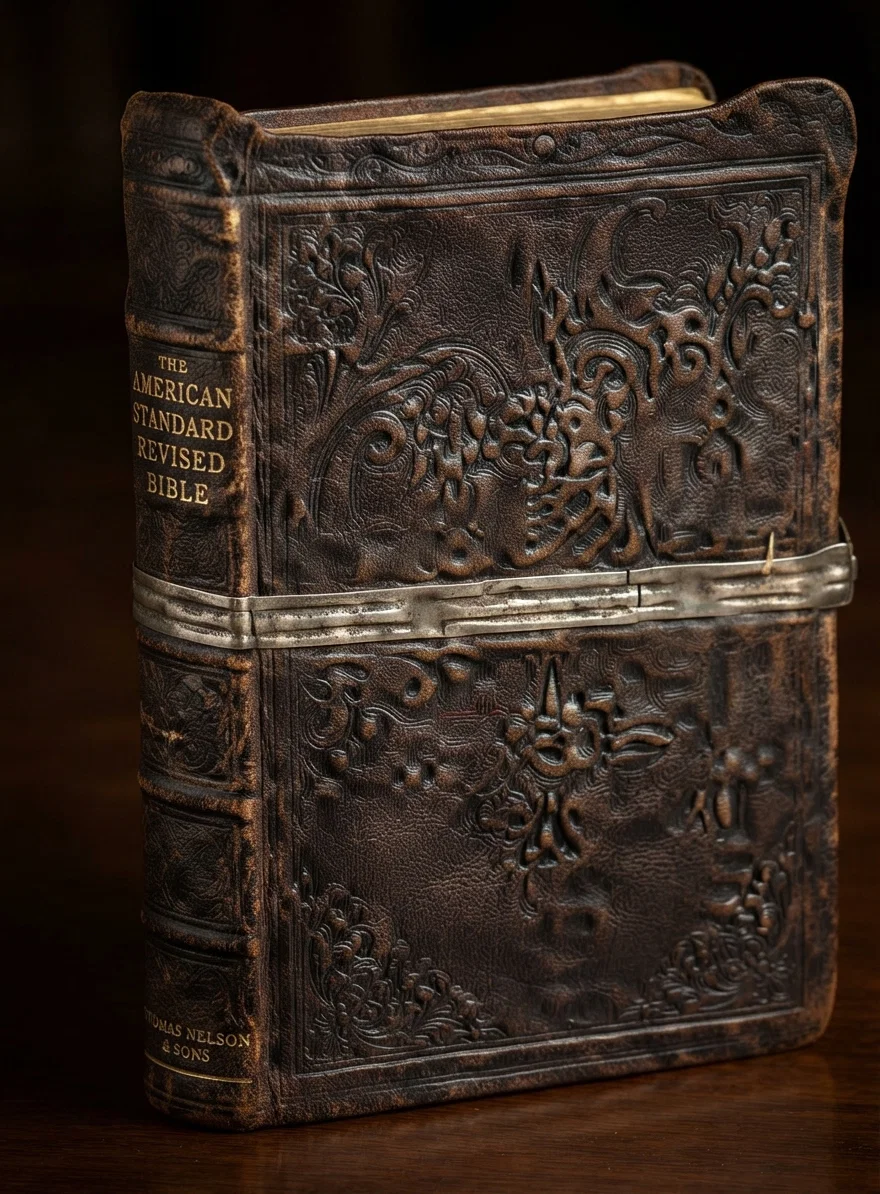
The American Standard
Obscure verses and difficult phrases are made clear, and the precise thought of the writers rendered plain.
The American Standard
Revised Bible
"The best translation of the Bible ever published in the English language."
Over 80 styles. This is the only edition authorized by the American Revision Committee, and their endorsement is on back of title page. Ask for Standard Edition, 35c. to $12.
Sold by all booksellers. Catalogue and specimen pages sent free. Address
Thomas Nelson & Sons
Publishers
37 E. 18th Street, New York
A PERPETUAL CALENDAR for 25 cents
"The Universal Standard Calendar"—A practical calendar, for daily use in the home, school, or office, by Editors, Historians, Chronologists, Astronomers, Lawyers, Bankers, Writers of fact or fiction, or any who desire accuracy of the day of week and month, past or future, and is a quick and convenient reference for any date in either Julian or Gregorian time, B.C. or A.D., answering nearly every question pertaining to the two calendars. In large, clear type, on durable cardboard, 9x14 inches. Post-paid, price, 25 cents. Address H. H. Perry, Pacific Press, Mountain View, Cal.
Small Tracts
With
Great Messages
Topical Bible Studies
A 24-page study of such important Bible topics as:
The Second Advent
The Law of God
The Sanctuary
Soul and Spirit
Spiritism
Nature of Man
A mine of suggestions to the Bible student. 1½ cents each or $1.00 a hundred, post-paid.
Heralds of His Coming
The character and scope of this tract is indicated by the following list of articles which it contains:
May We Know the Time?
Is the End Near?
When Will He Come?
Increase of Knowledge
Last-Day Scoffers
Signs in the Sun, Moon, and Stars
The Peace-and-Safety Cry
Preparing for World War
Accumulation of Wealth
Increase of Crime
Great Spiritual Declension
HERALDS OF HIS COMING. "When ye shall see all these things, know that it is near, even at the doors." Matt. 24:33.
Price, 1½ cents each, or $1.00 a hundred, post-paid.
The Gospel Message for To-day
By Editor
This 16-page tract is introduced by a brief study of the character of God's messages, how they are given, and the danger of rejecting them. The Editor of the SIGNS OF THE TIMES then speaks of the present divided condition of the church, and points out the Gospel remedy, which is The Gospel Message For To-day. Price, 1 cent each, or 70 cents a hundred, post-paid.
Waymarks to the Holy City
A very interesting study of the 7th chapter of Daniel in which the prophecies relating to the different kingdoms of earth and those pointing to the New Earth as well, are clearly tho briefly explained. Price, 1 cent, or 70 cents per hundred, post-paid.
Who Changed the Sabbath?
By Editor
The majority of people probably know that Sunday is not the day originally set apart for observance. How has the change come about? Perhaps this little tract contains the briefest statement of the reasons ever published. Read it. Price, 1 cent, or 70 cents a hundred, post-paid.
Address Publishers of This Paper
AGENTS WANTED
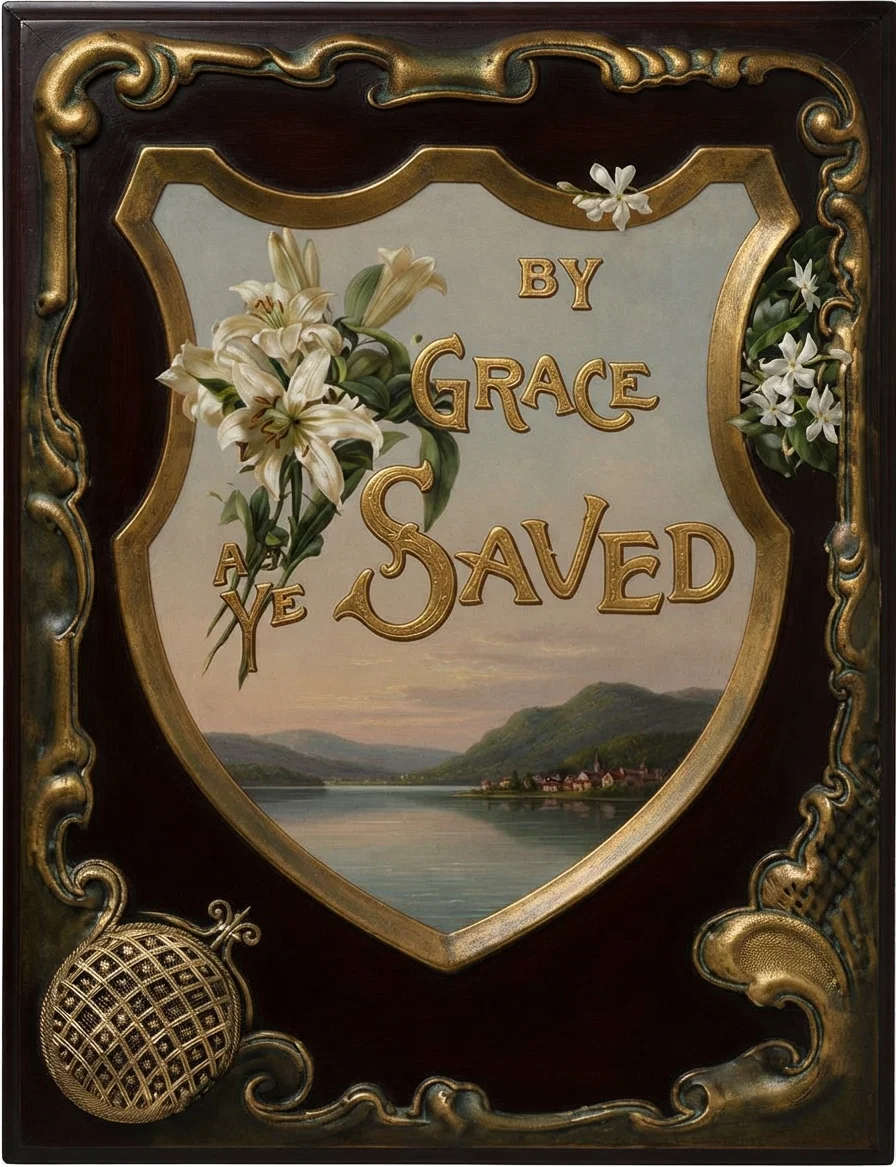
For Wall
Mottoes
New
Imported
Styles
Finest in
the World
###
YOU CAN
EARN
$4.00
Per Day
Selling
These
Mottoes
35c sample and agent's terms for 15cts. Write at once to MRS. O. E. CUMMINGS,
Box 114, College View, Nebraska