The Youth’s Instructor, Vol. 65, No. 47.

Courage, Boys
Earlier text: A Bird's-eye View of Palestine

God Knows Us

(Texts for November 25 to December 1)
“LORD, thou hast searched me, and dost know Where’er I rest, where’er I go; Thou knowest all that I have planned, And all my ways are in thy hand.
“My words from thee I cannot hide, I feel thy power on every side; O wondrous knowledge, awful might, Unfathomed depth, unmeasured height!
“Where can I go apart from thee, Or whither from thy presence flee? In heaven—it is thy dwelling fair; In death’s abode—lo, thou art there.
“If I the wings of morning take, And far away my dwelling make, The hand that leadeth me is thine, And my support thy power divine.
“Search me, O God, my heart discern; Try me my inmost thoughts to learn; And lead me, if in sin I stray, To choose the everlasting way.”
God knows us very well. He is acquainted with all our plans. He even knows what we are going to think about day after tomorrow. He knows us from A to Z; and, strange as it may seem, we really need to know him in order to understand ourselves fully. The fact that he knows us so well makes him a most wonderful Friend to each one of us; for he can teach us how to make our lives most useful to others.
An incident that comes to my mind helps me to understand how much it means to have God control my life. Something had gone wrong with the automobile, and none of the tourists understood the machine well enough to fix it, so they had to be towed in to the nearest town; but even the assistant in the garage met his Waterloo in their trouble. He did everything that he could think of, but the machine would not start. For hours he wasted muscle and gray matter on the obstreperous machine. Why didn’t it go as it should? The tourists were stranded. What could they do? Their anxiety to be off made waiting desperately hard. They felt themselves on the ragged edge of despair. But they were helpless; they could not manage their own machine.
Then something happened. A man drove up to the garage. He was attracted to the unknown friends in trouble. Examining the machine quickly, he drew off his coat and worked a few minutes. Then he pressed the button, and immediately the engine started. He was master of that machine; he understood it in every detail; and when it was placed under his control, it became useful as before.
How often we get stranded! We meet problems that we cannot solve; temptations with which we cannot cope; obstacles we cannot overcome. And how often in these dilemmas we flounder about trying every source of help we can think of except God. Somehow it seems so hard for us to learn that he is the only unfailing source of help. He is the panacea for all our failures. He knows us, and knows how to give us success; he knows our hearts and knows how to comfort them. He knows our possibilities, and if we will let him, he will guide our feet in the path that will lead us to his ideal for our lives.
And God has always known us. He knows when we have tried and failed; and he knows when we have failed to try. All along the way his eyes have followed us and his hand has been upon us. He has heard every word we have spoken. He knows the weakest point in our character; he knows the deepest desire of our hearts. Everything, however small, that has made our hearts ache has hurt him, too. We have made many mistakes; we have often forgotten him, neglected him, and even scorned his friendship. He knows all about this; but it does not change his attitude toward us. He loves us just the same; his thoughts “are very precious toward” us. He wants to take us just as we are today, restore his image in our lives, that we may be happy and successful ourselves, and become a daily blessing to others.
Then let us this morning pray with the psalmist: “Search me, O God, and know my heart: try me, and know my thoughts: and see if there be any wicked way in me, and lead me in the way everlasting.” As he searches our hearts day by day, he will keep us busy putting things out of them that should not be there, and drawing in graces that we need. But if we really make this prayer of the psalmist the daily petition of our hearts, he will lead us “in the way everlasting.”
“He knows and loves and cares— Nothing this truth can dim; He does the very best for those Who leave their choice with him.”
M. E.

Friendship: A Nobler Pleasure Than Life Affords

LIFE holds no pleasure nobler than that of friendship.—Johnson.

Missionary Volunteer Society Programs for Week Ending December 1

THE programs for this date, with notes, illustrations, and other helpful material, will be found in the Church Officers' Gazette for December.

The Bible Year

Senior Assignment

November 25. 1 Corinthians 14 to 16: Spiritual gifts; the resurrection.
November 26. 2 Corinthians 1 to 4: Forgiveness; living epistles.
November 27. 2 Corinthians 5 to 7: Paul's motive in service; godly sorrow.
November 28. 2 Corinthians 8 to 10: Liberality.
November 29. 2 Corinthians 11 to 13: Suffering for Christ; exhortations; benediction.
November 30. Galatians 1 to 3: Law and works.
December 1. Galatians 4 to 6: Adoption; fruits of the Spirit.
For notes on this assignment, see Review for November 22.

Junior Assignment

November 25. Acts 18: Paul as a tentmaker.
November 26. Acts 19: Paul at Ephesus.
November 27. Acts 20: Paul in Macedonia.
November 28. Acts 21: The journey to Jerusalem.
November 29. Acts 22: Paul tells how he was converted.
November 30. Acts 23: Conspiracy against Paul.
December 1. Acts 24: Paul before Felix.

Who's Who

Spelling matches! aren't they the most fun? When I used to go to country school, we always looked forward to Friday afternoon, for it was a regular thing to have the whole school line up at the front of the room, with feet toeing a certain large crack in the floor, and there to “spell down.” There is something exhilarating about testing the mind in this way. Geography and arithmetic matches are interesting also, for they, too, sharpen one's wits and stimulate thought.
What do you say to having a little drill or “match” on some of the names found in the chapters in Acts, which are assigned for this week's reading? After you have read Acts 18-24 carefully and thoughtfully during the week, have some one question you about the following names, all of which appear in the chapters you will read: Ananias, Antipatris, Agabus, Cæsarea, Cyprus, Damascus, Drusilla, Eutychus, Ephesus, Felix, Gamaliel, Mnason, Patara, Philip, Tyre, Troas, Timotheus, Trophimus, Tertullus, Tarsus.
Which are names of places? Which is the name of a famous teacher? of a prophet? of a high priest? Can you find a governor's name in the list?
It would be a good drill for several of you Juniors who are taking the Bible Year, to line up in a row, and “spell down” on these names, not really spelling them (though that would be interesting too), but telling who or what each one was. It is a fine thing to be well posted on the names of people and places referred to in the Bible. I wonder who will be able to stand up longest, should you try this plan.
There is one man mentioned in our reading this week to whom we should surely like to express our gratitude if we could, and that is Claudius Lysias, the chief captain at Jerusalem, who twice saved Paul from being killed by the angry multitude. Lysias was a military leader of one thousand men, in command of the garrison stationed in the castle overlooking the temple at Jerusalem. When he learned of the riot which the Jews had stirred up at the temple, he hastened down with his soldiers, and rescued Paul from the hands of the infuriated mob. Later, in a meeting of the Sanhedrin, he it was who with great difficulty again bore God's faithful servant away from those who would no doubt have torn him in pieces. Paul's work was not yet completed, and God used Lysias as his instrument to save the life of the great apostle to the Gentiles, until he had “finished his course.”
ELLA IDEN.

God's Soldiers Promoted Through Hard Drill

“WHENEVER God permits hard drill, it promises promotion for his soldiers.”

IX — Temperance

  • (December 1)
MEMORY VERSE: “Every man that striveth for the mastery is temperate in all things.” 1 Cor. 9:25.

Questions

1. What lesson is drawn from the self-denial practiced by men who prepare for games that require great strength and endurance? 1 Cor. 9:25-27.
2. Why are kings and rulers admonished to be temperate? Prov. 31:4, 5.
3. In olden times what warning was given to Aaron concerning the priests? Lev. 10:8-10.
4. How did Daniel and his companions stand the test that was brought upon them? Dan. 1:8-15.
5. At the end of the three years’ course in the school of Babylon, how did the wisdom of these young people compare with that of others? Verses 17-20.
6. What is said in the Scriptures concerning wine? Prov. 20:1. Note .
7. What six things are mentioned as accompaniments of intemperance? Prov. 23:29, 30.
8. What is one of the evil results of intemperance? Verses 20, 21.
9. What is the final effect upon the one who uses strong drink? Verses 31, 32.
10. What warning is given against leading others into intemperance? Hab. 2:15.
11. What admonition is given concerning association with those who use strong drink? 1 Cor. 5:11.
12. With whom are drunkards classed by the apostle Paul? 1 Cor. 6:9, 10. See Rev. 21:27.
13. What testimony do we have as to the defiling and injurious effect of tobacco? Note .

Do You Do These Things?

When He Borrows

A MAN borrows a dime or a quarter or a dollar from a friend. He is perfectly able to pay it back, but he never does. Many of us go through that experience. And unless we are superhuman, the incident, small as it is, leaves a mark, sometimes a hurt. And the failure to pay is put down to a lapse of memory. But that isn’t so. It is really a character defect. Our memories may be treacherous, but usually we can train them to do just about what we want them to do. And paying back a borrowed sum of money, no matter how small, is not beyond the capacity of the average memory. We cannot be too careful about money matters: folks are sensitive on that point when they are impervious on all others. Many a good friendship has been damaged by forgetfulness in money matters. No sum of money is so small that we can be too punctilious about paying it back at the earliest possible moment.” Failure to do this brands one as a criminal,—a thief.

When He Promises to Pay

A man owes a bill. He has owed it for months. His creditor tells him he must have the money; so the debtor promises to pay a certain sum each week; but he does not do it; and makes no effort to apologize for his failure to do so. Upon a second visit from his creditor the debtor makes another definite promise to pay. He fails to keep this promise, and does not voluntarily give the creditor his reasons for not doing so. Neither does he seek to forestall any inconvenience his failure to keep his promise may occasion his creditor. No excuse can palliate such a course. This way of dealing is altogether reprehensible. One must keep one’s promises, or make it clear why one cannot before the promise falls due. It is not honest or courteous to wait until after the date of fulfilment. Meeting obligations in this slipshod way is not good business. It is not honest. It is not manly. It is not Christian. Why, then, do you do it?

Too Uncommunicative

If a person is hard pressed financially and cannot meet the payment due, he should frankly tell the creditor the exact state of his affairs. It is not good business nor courtesy to be uncommunicative at such a time. Perhaps the creditor may offer some suggestion that will satisfy both parties concerned.
If a man has a pressing obligation to meet and he goes to a friend to borrow money to meet the obligation, it is only fair to his friend to tell him the nature of the obligation and what is involved in a failure to meet it. This is only courtesy to the one of whom the loan is desired.
If a person writes you concerning a business matter, a prompt response is due the writer. To ignore such letters, even though the matter does not primarily concern the writer of the letter, is very discourteous and disrespectful. No business communication should be ignored.

What They Did

ALEXANDER HAMILTON was seventeen when he stood up on a soap box in City Hall Park and urged resistance to England.
Alexander the Great, holder of the world's record in conquest, subdued Greece and destroyed Thebes when he was twenty-one.
Sir Isaac Newton was only twenty-one when he turned traitor to his classmates and invented the binomial theorem; and it was only two years later that gravitation occurred to him.
Lafayette was only nineteen when he printed “Why not?” on a flag, nailed it to the mast, and sailed across the sea to help the American colonies win their freedom. What have you done? — Selected.

Hints on Conservation

“She wants not because she wastes not.”
IN some of the European countries at war, fines up to $500 are levied on persons who throw away stale bread.
We consume from eighty-five to ninety pounds of sugar per person annually. France now allows only one pound a month per person. She has asked us to send her 100,000 tons, or they must stop the ration altogether. We are advised therefore to make use of sirups instead of sugar where practicable.
If each family saves a pound of flour a week by using more potatoes, rice, or cornmeal, it will mean a total saving of 125,000,000 bushels of wheat a year.
If every one would use one tenth less coal this winter than last winter, sixty million tons would be saved, and thousands of freight cars would be released for other needs.
Save gas and electricity by not using these when unnecessary. This will conserve the coal, for most of the gas and electricity is obtained directly or indirectly from coal.
The government urges the use of no butter in cooking. Vegetable fats make a good substitute. If each one uses one third of an ounce less of fats a day, 395,000 tons of fats will be saved.

Meditation Thoughts

“BUT for our difficulties we might forget our Deliverer.”
A good book is the best of friends — the same today and forever.—Milton.
“EVERYBODY makes mistakes. That is why the rubber is on the end of the pencil.”
“To admire the virtues and the achievements of others is a mark of greatness.”
“HE also that is slothful in his work is brother to him that is a great waster.” Prov. 18: 9.
“CONCEIT is a wet blanket that conceals a man’s virtues and extinguishes the glow of his good deeds.”
“THE man who waits to see which way the other fellow is going will always be a laggard in life’s race.”
NEITHER a borrower nor a lender be; For loan oft loses both itself and friend, And borrowing dulls the edge of husbandry. —Shakespeare.
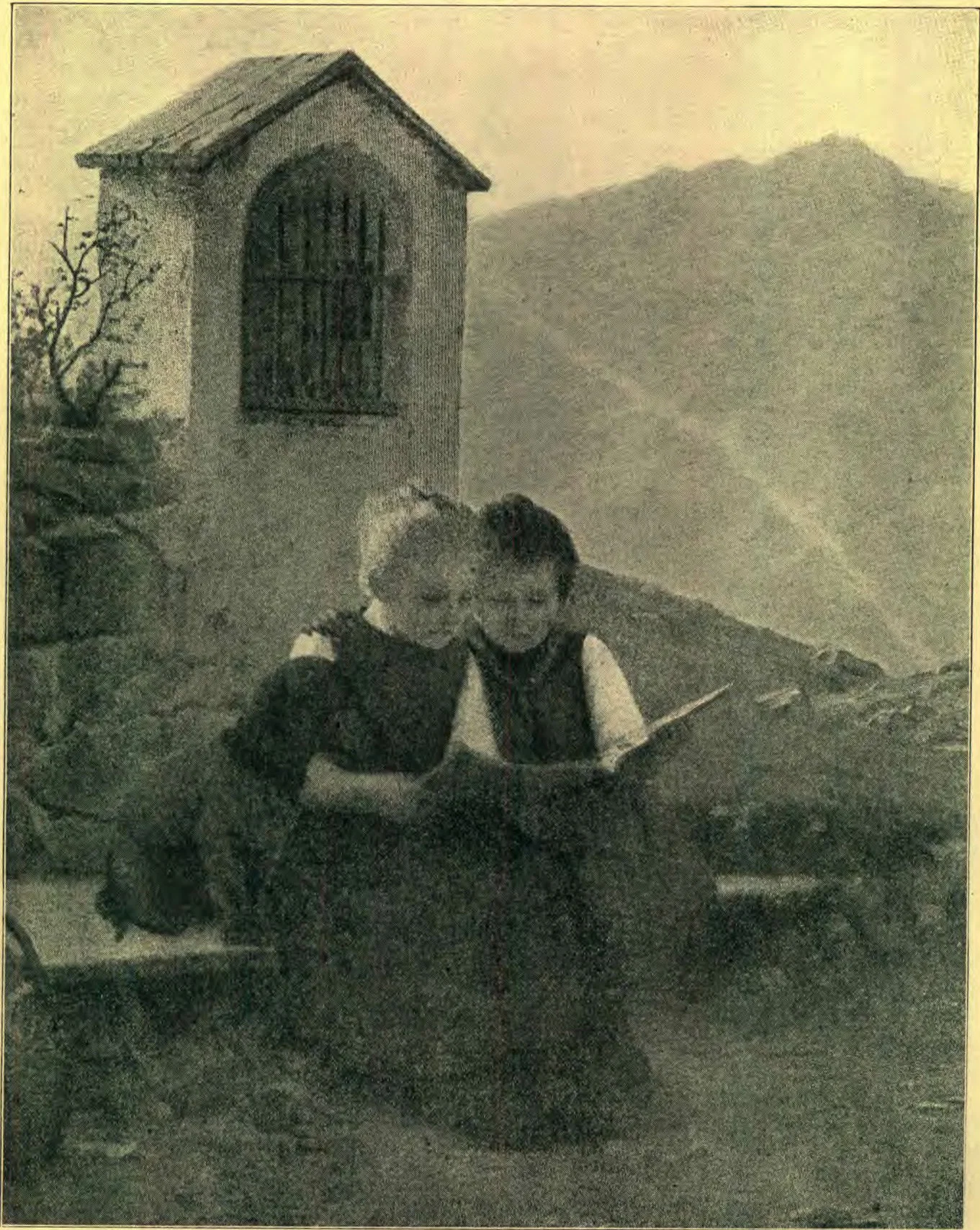
IN THE DAYS OF PEACE
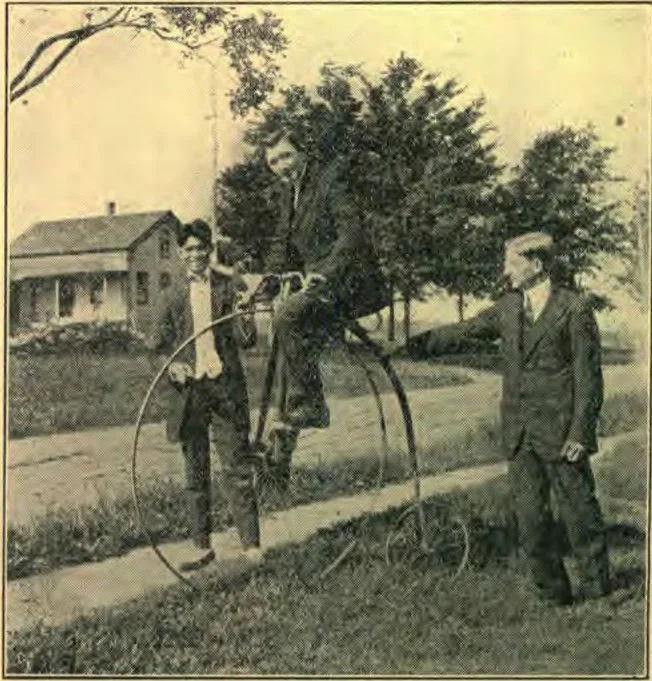
RELIC OF “YE OLDEN TIME”
DR. AND MRS. D. E. DA VENPORT, YEN-CHENG,
HONAN, CHINA
DR. AND MRS. D. E. DA VENPORT, YEN-CHENG, HONAN, CHINA

You have reached the end of this edition.

The Youth’s Instructor · Nov 20, 1917