The Youth’s Instructor, Vol. 47, No. 29.

THE NEW ZEALAND MAORIS

The Youth’s Instructor

Jul 20, 1899

Review and Herald Publishing Company · Battle Creek, Mich. · Jul 20, 1899

THE NEW ZEALAND MAORIS.
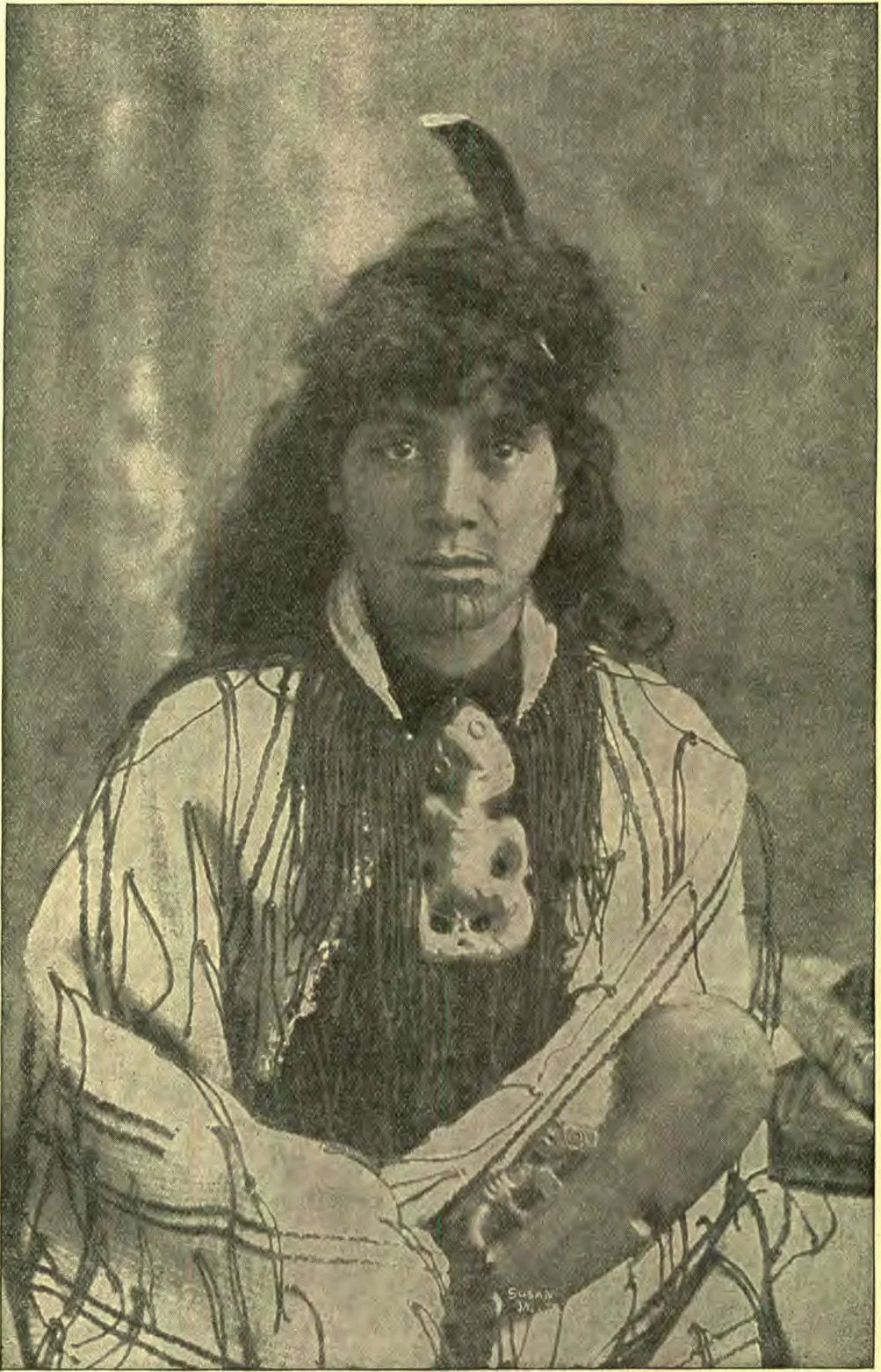
The Maoris are said to be the most interesting and intelligent of any of the native peoples inhabiting the South Sea Islands. The Mormons of Utah have found in these natives a fruitful field for their missionary operations.
A MAORI BELLE.
A MAORI BELLE.
In April, 1899, their annual conference was held at Tologa Bay, and this gathering gave those present an opportunity to study native manners and customs.
The place where the meeting was held is situated on a small bay on the east coast. Here Captain Cook, on one of his voyages, found shelter and spent considerable time. An old well is still shown, which he dug, and from which he drank. Before leaving the locality, he gave the Maoris some gunpowder; and they, ignorant of its nature, thought it must be some kind of valuable seed. They labored industriously to clear some land, and carefully prepared a large field, in which they sowed the supposed seed. Contrary to their expectations, and greatly to their disappointment, it did not grow.
The only way to reach Tologa is by a small coast-steamer or by coach. There may be twenty houses in the community, and nearly every family is Maori or half-caste. The conference was held in a grassy paddock on the bank of a river. A large building about one hundred and fifty feet long and forty feet wide was used as an assembly hall. It was built of poles, and thatched on roof and sides with coarse grass. There were several openings, which served as doors on one side, and as windows on the ends. More than half the building was used as a dining-room. Three long tables were provided, at which about two hundred could be seated at one time.
There was no floor; but in the meeting-room the ground was covered with the branches of a small, bushy shrub, and over these were spread native mats made of grass. Another large building near by was used as a lodging-house.
This was better than the one just described, the front part being made of wood, the roof and sides thatched, and the inside woven in fine, tasteful patterns, which gave it a beautiful appearance. No doubt the carving outside appears very artistic to a Maori; but though it is executed at the cost of much time and labor, most observers would find little to admire in it.
The floor of this second building was also covered with branches and mats; and along the sides, blankets and clothing were folded away. Everything looked neat enough, but one sniff of the air inside proclaimed in no uncertain way that the Maori has no use for ventilation. In this large building, where as many as two hundred slept each night, ranged in a long row on each side, there were only two small windows, and one door, all at the front end of the building. One can hardly imagine how a person could live, much less sleep, in such an atmosphere. A few lived in small tents; but by far the larger number occupied this building. One of the superstitions of this people is that if a draft circulates through a dwelling, it admits evil spirits; hence, so far as possible, they rigidly exclude the air.
The Maoris came from many parts of the colony to attend this conference, some traveling hundreds of miles, most of them on horseback. Judging from appearances, their motive was certainly not a religious one, but to enjoy the pleasure of visiting and feasting.
There were but few Maoris of the Mormon faith in Tologa, where the conference was held; yet the provision for entertaining all who came to the hui (meeting) was provided by the persons living there; they not only furnished the food, but cooked and served it, without money and without price, to all who came. It was as if a Methodist camp-meeting should be appointed in some locality, and the resident Baptists and Presbyterians should provide free entertainment for the whole encampment. From this it will be seen that hospitality is one of the Maori virtues; they would rather go without food themselves for a long time, than that there should be any stint in the provision for one of these occasions of feasting.
Nor is the provision and preparation of this food a light task; for the Maori appetite is by no means delicate. For this conference, which lasted four days, they used thirty-nine hogs, fifty fat sheep, three oxen, thirty geese, three tons of Irish potatoes and two tons of sweet potatoes, two tons of flour, one ton of sugar, besides large quantities of shell-fish, butter, jam, tea, coffee, and cocoa.
The manner of cooking was interesting to the uninitiated. It was all done outdoors and without a stove of any kind. Shallow circular holes, about two feet across the top and ten inches deep, were dug in the sandy soil. Fine, dry wood was placed in order over each, and small stones were arranged on the wood. The wood was lighted, and allowed to burn till it was consumed, thus heating the stones, and causing the heap to sink into the cavity. The stones were then rinsed with water; and meat, potatoes, and other vegetables were placed on them, a clean cloth was folded over them, and heavy sacking placed over all. Where a whole sheep or pig was cooked, earth was thrown over the sacks. It is surprising to see in how short a time food can be cooked in this way.
Bread and cakes were baked in large iron kettles with heavy lids, called “camp-ovens.” Hot coals and ashes were placed beneath and above them, and the baking was as nicely done as if the best oven or range had been used.
Meals were announced by the vigorous ringing of a small bell; and at its call any service, however important, was immediately postponed, and due attention given to the food provided. The different tribes and families were called by name to take their places at table. There was no rush, no crowding to be first, or to get the best place; in this respect the conduct of these people might be imitated with profit by those who profess to be more civilized.
The Maori men dress much like Europeans, and some of the younger ones appear quite dandified. Most of the women have forms fashioned after nature’s model, and they are usually attired in a simple sacque and full skirt. They delight in bright colors and pronounced patterns. One was seen at this meeting clad in an orange-colored plush gown, trimmed with bright plaid velvet; others appeared in costumes equally showy if not so expensive.
The Maori women have beautiful hair, as can be seen by the accompanying illustration. It is often worn in two braids, or plaits. Some have the lips and chin tattooed a kind of blue color, as they fancy this makes them beautiful, and they do not like the natural red color. Tattooing, by which the dye is pricked into the skin with fine needles, is a very painful operation, the face often becoming swollen and distorted; but they gladly endure the pain, in order that they may become “beautiful.” Years ago the men had their faces and bodies tattooed in various fantastic patterns, as shown in the illustration; but this custom has almost entirely disappeared.
MRS. V. J. FARNSWORTH.
(Conclusion in next number.)

THE CHANGE CHRISTIANITY MADE.

A MISSIONARY in Korea tells how he passed along the street of the city of Pyeng Tang, where he was preparing to establish his mission, and saw a sight very terrible to him, but evidently so common as not to cause any comment by the citizens. A poor old man had been thrust out-of-doors by an innkeeper the night before, because he was unable to pay for his lodging any longer, and had died from the cold and exposure.
The street boys had attached some ropes to the worn straw mat on which the body was lying, and were dragging it about the street, laughing and joking, as if it were capital sport. It was on the main thoroughfare of the town; and the merchants, sitting among their wares at the side, were not at all concerned, but smiled at the frolic the lads were making.
That is the heathen side of the picture. Now let us look at the work of Christian missions. In that same cruel city the missionary baptized eight converts that year. Before they had been in the church a month, they came to him, and told him that they wished to use the money they could collect among themselves for the support of a little orphan child who, they feared, was dying of starvation. The missionary gladly encouraged the idea, and the eight men who, a year before, would have laughed at the child's misery, became its self-sacrificing benefactors, giving out of their scanty earnings a proportion that might well shame many Christians at home.
Could any more convincing testimony be given of the absolute transformation worked by the gospel of Christ in heathen hearts: “I will take the stony heart out of your flesh, and I will give you a heart of flesh”? The promise is as old as the days of Ezekiel, but it is as true to-day as it was then.—Selected.

“SACRIFICED FOR US.”

In the councils of heaven God said, “Let us make man in our image, after our likeness. . . . So God created man in his own image, in the image of God created he him.” The Lord created man’s moral faculties and his physical powers. All was a sinless transcript of himself. God endowed man with holy attributes, and placed him in a garden made expressly for him. Sin alone could ruin the beings created by the hand of the Almighty.
The malice that Satan bore to God led him to form the purpose of destroying the Creator’s work. But no sooner was Satan, as he supposed, wholly successful in placing Adam on his side, to work in unison with the fallen angels, than God interposed to rescue him. He “so loved the world, that he gave his only begotten Son, that whosoever believeth in him should not perish, but have everlasting life.” Thus he showed to the heavenly universe and to the fallen world the value he placed on man. Not one jot nor tittle of his law could be changed to meet man in his fallen condition, and save him from eternal death. But God could give up his Son, to vindicate the honor of his law, and rescue the beings he had created. So Christ took upon himself the work of redemption,—a work which it was impossible for angels to do. The Son of God was made an offering for sin.
The work of redemption is called a mystery, and it is indeed the mystery by which everlasting righteousness is brought to all who believe. In consequence of sin, the race was at enmity with God. At an infinite cost, and by a process mysterious to angels as well as to men, Christ assumed humanity. Hiding his divinity, laying aside his glory, he was born a babe in Bethlehem. In human flesh he lived the law of God, that he might condemn sin in the flesh, and witness to heavenly intelligences that the law was ordained to life, to insure the happiness, peace, and eternal good of all who obey. But the same infinite sacrifice that is life to those who believe, is a testimony of condemnation to the disobedient, speaking death and not life.
This is the mystery of godliness,—that he who was equal with the Father should clothe his divinity with humanity, and laying aside all the glory of his office, descend step after step in the path of humiliation, enduring severe and still more severe abasement. Sinless and undefiled, he stood in the judgment-hall, to be tried, to have his case investigated and pronounced upon, by the very nation he had delivered from slavery. The Lord of glory was rejected and condemned, yea, spit upon. With contempt for what they regarded as his pretentious claims, men smote him in the face. These men will one day call upon the rocks and mountains to fall upon them, and hide them from the wrath of the Lamb.
Pilate pronounced Christ innocent, declaring that he found no fault in him. Yet to please the Jews, he commanded him to be beaten, and then delivered him up to suffer the cruel death of crucifixion. The Majesty of heaven was led as a lamb to the slaughter, and amid scoffs and jeers, ridicule and false accusation, he was nailed to the cross. The crowd, in whose hearts humanity seemed to be dead, sought to aggravate his sufferings by their revilings. But as a sheep before his shearers is dumb, he opened not his mouth. He was giving his life for the life of the world, that all who believed in him might gain immortality.
Sweat-drops of agony stand upon the Saviour’s brow, while from his murderers are heard the words, “If thou be the Son of God, come down from the cross.” He is about to speak. What will he say?—From his pale, quivering lips come the words, “Father, forgive them; for they know not what they do.”
What an exhibition of divine love! Thus Christ proclaimed the good news of pardon, even to his murderers. On the cross he revealed the love of the unknown God. There is mercy for all. The most hardened sinner, if he repents, will be forgiven.
“Behold the Lamb of God, which taketh away the sin of the world.” Why, then, do those professing to believe in him show a hardness of heart, a lack of pity and love, which crucifies him afresh, and puts him to open shame?
Had the people known God, they would not have thought they were doing him service by persecuting and putting to death the prophets. But they forgot their Creator; and waxing bold in their supposed superiority, they put to death him who alone was able to give them life.
Christ’s heart was pierced by a far sharper pain than that caused by the nails driven into his hands and feet. He was bearing the sins of the whole world, enduring our punishment,—the wrath of God against transgression. His trial involved the fierce temptation of thinking that he was forsaken by God. His soul was tortured by the pressure of great darkness, lest he should swerve from his uprightness during the terrible ordeal. Unless there is a possibility of yielding, temptation is no temptation. Temptation is resisted when man is powerfully influenced to do a wrong action; and, knowing that he can do it, resists, by faith, with a firm hold upon divine power. This was the ordeal through which Christ passed. He could not have been tempted in all points as man is tempted, had there been no possibility of his failing. He was a free agent, placed on probation, as was Adam, and as is every man. In his closing hours, while hanging on the cross, he experienced to the fullest extent what man must experience when striving against sin. He realized how bad a man may become by yielding to sin. He realized the terrible consequence of the transgression of God’s law; for the iniquity of the whole world was upon him.
Reason, lost in an unfathomable depth of wonder and amazement, would question the truthfulness of such a history; but faith accepts the inspired record. It is true, and it would be blasphemy to attempt a denial. By giving his only begotten Son to die on the cross, God has shown us the estimate he places on the human soul. All that the world admires, all that it calls precious, sinks into insignificance when placed in the balance with one soul; for a priceless ransom has been paid for that soul. All heaven was given in one gift.
Christ is the representative of God to man, and the representative of man to God. He came to this world as man’s substitute and surety, and he is fully able to save all who repent and return to their allegiance. Because of his righteousness, he is able to place man on vantage-ground. Christ our Passover has been sacrificed for us. He gave his precious, sinless life to save guilty human beings from eternal ruin, that through faith in him they might stand guiltless before the throne of God. What return have we made for this great sacrifice? MRS. E. G. WHITE.

The Independence of Solitude

“The great man is he who in the midst of the crowd keeps with perfect sweetness the independence of solitude.”

SOME BIRDS, THEIR HOMES, AND THEIR HABITS.
Illustrations by the Author.
House wren's nest
House wren's nest
The sunshine and soft rains of an early summer have brought clouds of foliage to wood and orchard, and there is a fulness and variety of life in the shady nooks of even a single large tree. At this season we shall find great pleasure in making friends with the birds. Some are too shy and restless to encourage acquaintance, while others freely allow a study of their ways.
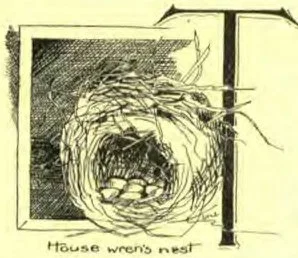
The little chirping house-wren is one of the most friendly, as well as one of the best-known of the feathered tribe. It is about five inches long, with short, rounded wings, short tail, and slender legs. Its plumage is generally dull, but its song is sweet. The accompanying picture was drawn from a nest in a secluded corner of the every-day sitting-room of a rural home. The wren and its mate are a jolly pair of home-makers, and do not appear annoyed by the motions of a spectator. There were in the nest six tiny, pale-pink eggs, speckled with autumn-leaf brown; but the number usually ranges from seven to ten.
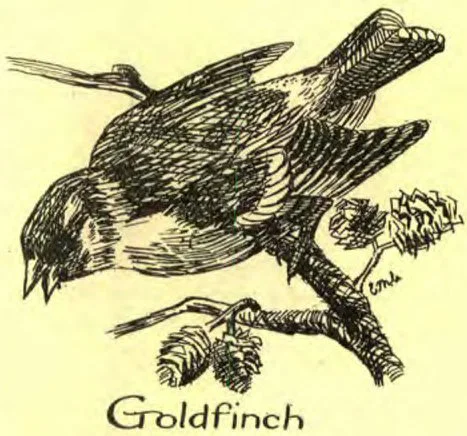
Common in our gardens, orchards, and shrubberies, is the American goldfinch, or yellow bird; and it is pleasant indeed to lie upon the grass and watch its graceful flight, which is nothing more nor less, apparently, than a succession of joyful bounds through the air. With its beautiful color, dainty habits, and soft, pleasing song, it is a captivating little creature. It drops upon a grass stem so lightly as scarcely to bend it, while it plucks at the tiny seed. It is always happy, no matter how dismal the weather; and during a shower will sit upon a twig, its wings folded close, to shed the rain-drops, and sing its sweetest song, as if to remind us that “behind the clouds is the sun still shining.” Its nest is remarkable for its neatness, and is lined with a fine, downy material. The eggs are bluish-white, with a few spots and lines of pale purple and brown.
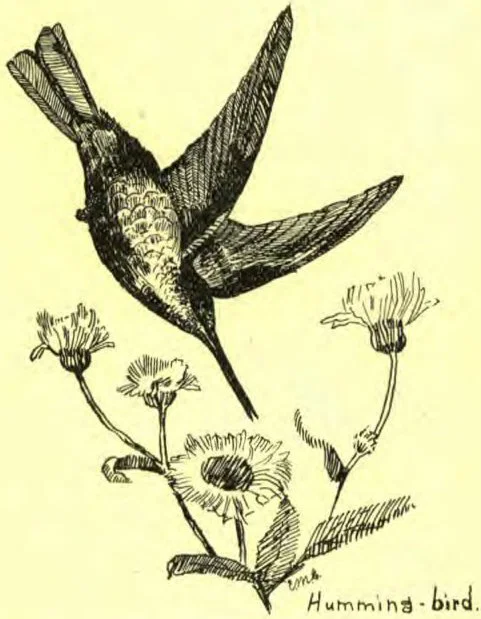
Humming-birds have attracted universal admiration ever since the discovery of America. Their brilliancy of plumage, endless variety of color, diminutive size, and the rapidity of their movements have caused them to be objects of special interest. They are the smallest members of the bird family, and have been poetically called the “fairies of the feathered tribe.” They have long, slender bills, which enable them to obtain honey from the flowers; but they do not, as some have supposed, feed on honey alone, but also on insects. The wings of these birds are long, and move so quickly as to be almost invisible. The humming-bird lays two tiny white eggs in a nest constructed of fibrous substances, such as lichens and cotton.
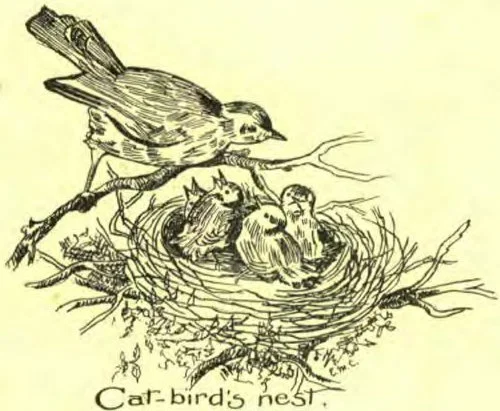
A pair of catbirds that have set up housekeeping in a crotch of the old apple-tree often make friendly calls around the doorstep. Perhaps the crumbs to be found there prove too attractive to be resisted by creatures so busy as they. The catbird belongs to the same family as the mocking-bird, which it resembles in its vocal powers; its song is most bewitching in its lack of method and arrangement. When disturbed, it utters the cry from which it takes its name, and which resembles nothing so much as the cry of a young infant. These birds are graceful and somewhat dandified in manner. Their plumage is dark-gray in color, and is very smooth. They do not attempt to conceal their nest, but often build it near our homes, and display great boldness in the defense of their young. The eggs are of an electric-blue color.
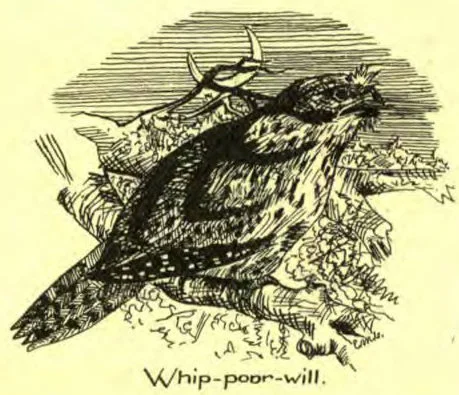
The praises of the whippoorwill, which takes its name from its clear call at twilight and during the night, have often been sung. This bird is about ten inches long. Its plumage is mottled, the head is streaked with black, and a band of white is on the throat. It feeds on beetles, moths, and other insects. Though extremely shy, the persistent bird-lover will find it out. It builds its nest near the ground. The eggs are light-blue, speckled with brown.
EVA M. CARTER

BIRDS’ NESTS.

“ABOUT as much use as a last year’s bird’s nest,” is an expression we sometimes hear; but if we only knew it, last year’s birds’ nests are like old ideas,—they form substantial foundations for new ones.
The eagle, hawk, crow, and other large birds build their nests year after year in the same spot, until, large in the beginning, they sometimes attain enormous dimensions. Even the smaller species of the bird family do not reject a desirable building location, simply because it has been used before. It is an interesting sight to watch the feathered house-builders trying to pull a piece of string from an old nest, to place in a new one.
Cat-bird's nest.
Cat-bird's nest.
Goldfinch
Goldfinch
Whip-poor-will.
Whip-poor-will.
In Texas the hawk, which lives mostly in the western counties of the State, builds its nest in the mesquit tree, ten or twelve feet from the ground. The nest is composed of sticks about one foot long, and the size of one’s little finger. The inside of this rough home is lined with grass, horsehair, feathers, and other soft materials.
The crow builds her nest in the top of a lofty tree. It is much like the hawk’s nest in appearance, but is not so flat, nor so large in circumference. The mocking-bird also builds its nest of almost the same materials, only on a much smaller scale, except that it uses a few sprigs of “Indian tobacco,” a plant which bears no resemblance to the tobacco-plant of commerce, either in taste or smell. Texas birds seem to have a decided liking for it.
Sparrows’ nests are somewhat similar to those of the mocking-bird, with this difference: instead of being composed of sticks or twigs, they are made of broom-weed and the lightest material obtainable. They are lined with the Indian tobacco, moss, cotton, horsehair, feathers, etc.
The scissortail builds its nest of soft grass, Indian tobacco, cotton, etc., high up in the steady forks of trees, usually the mesquit. The nest of what is known as the wheat-bird resembles that of the scissortail, except that it is built low, in a small bush, and generally near a pond or sluggish stream. On one occasion, greatly to her grief, the approach of the writer so disturbed a family of these birds that they all left the nest, and hopped into the water.
A nest that is much admired, not only for its beauty and utility, but also for its comfort, is that of the oriole. This nest is made, in the South, of fine, soft, yellow grass, and lined with cotton and the soft down from the breast of the mother-bird. It is swung to the ends of several slender twigs, which interlap, or come close together, and have a tuft of green leaves. In this wind-swung home are cradled some of the sweetest and brightest of nature’s songsters.
The little dove, though innocent and harmless, is not a very good house-maker; for she simply finds a place where two or three limbs join, and there lays some dried peppergrass stalks together until she has a flat nest. This does not always keep her eggs nor her young safe; for many times, after a wind-storm, one may find on the ground either a capsized nest and tell-tale shells or her two birdlings, cold and stiff. The dove often makes her nest on the ground, as do many other birds.
The field-lark makes a beautiful nest under a weed or tuft of grass; but instead of being open at the top, it has a roof, and opens at the side. The quail builds a nest very much like that of the field-lark, though larger, and of a different variety of grass.
The curlew and the whippoorwill simply collect a few little pieces of grass roots for the home of their young.
A peculiar and interesting nest is the edible bird’s-nest of the swift, which inhabits the Malay Archipelago, Java, and the Philippine Islands. This nest is composed of a glutinous substance, and is regarded by the Chinese as a great delicacy. The bird first swallows a peculiar sort of seaweed, which is mixed with the mucus secreted by its salivary glands, and then disgorged, and made into the nest, which is clear and wax-like. This is the stage at which the nests are most prized.
MRS. A. G. BODWELL.

THE EVIDENCE OF THINGS NOT SEEN.

Synopsis of Study Given to a Training-class.

Study these leaves that I have put into your hands, and tell me what you observe. They are green, moist, triangle-shaped, smooth on one side and rough on the other, and have ribs, veins, etc. By placing one of these leaves under the microscope, I see a revelation of wonderful things,— multitudes of cells, beautiful downy hairs. Although you can not see these things, you are willing to accept my word that they are here. That is an example of faith,— believing a thing that you are satisfied is so, although you have not yet seen it in tangible form. I place this blackboard eraser behind this book: none of you can see it; but for all that, none doubt its being there. As I gradually turn the leaves of the book, some of you catch a glimpse of the eraser; in other words, your faith becomes sight.
Several years ago there were some of God’s promises, which, as far as my personal experience was concerned, I had to accept by faith. Since then some of them have become sight to me. I have seen them worked out as plainly as you see that eraser. I believe it will be our privilege, day by day, from now until translation, to have more and more of our faith become sight; for it is our privilege to have much more of heaven in this life than we used to think possible.
I take this piece of bread: like the leaf, there are many things about it that you can see; but put Christ’s words over this, just as I put the microscope over the leaf, and something is revealed that your eyes will probably never see in its fulness until they become immortal. It is the cross of Christ stamped there,— a channel through which divine life comes to us. Though you can not see it, any more than you could see that eraser a few minutes ago, it is none the less real.
Here is water: just in proportion as it is free from germs and sewerage, it is really from the river of life; for to the eye of faith the cross of Christ is reflected in every pure drop of it.
Every passing breeze that fans our brow would be a part of the breath of God to us, if we could see as we shall see.
When we take exercise in useful work, we are simply passing on God’s energy to the world. Wonderful privilege, to be simply a channel through which God’s force is flowing! It is not difficult for us to see how Christ is all in all; for all we take in comes from him, so there is no occasion for self or boasting. The more fully we can realize, or have faith, that God’s life comes to us through all these channels, the more of it he will be able to entrust us with, and we shall thereby “grow up as calves of the stall.” This view, instead of leading us to disregard health principles, will lead us to give the more earnest heed that nothing shall obstruct or interrupt the life of God, which comes to us through these channels. The man who uses food that contains decay or waste matter is to just that extent holding down the life of God in unrighteousness. The one who takes in poison with his drinking-water is just to that extent failing to drink of the river of life
We must get these truths, not simply in our heads, but so thoroughly in our hearts, that every meal will become a sacrament to us, and every drink of water will remind us of God, as does the wine at the communion service.
This is true also of other things by which God’s life comes to us. Nearly all of you have learned that Satan comes to you when you are not thinking of God. When we fully realize these things as they are, we shall find that, not only in a spiritual, but also in a physical, sense, has God moved our camp away up on the side of that mountain from whose top we shall one day be translated. DAVID PAULSON.
Continue reading: Chapter VI