NOTE.—This lesson may be used as a temperance lesson. Read the whole of 1 Peter, committing verses 7 and 8 of chapter 4. It is suggested that the great principles in the lesson be first brought out, then a general application made, and finally a special application of those principles to temperance. This epistle was written about the time of 1 Timothy, between A.D. 64 and 67, during the great persecution under the emperor Nero. In view of this many of the passages in this epistle will have special significance. It was written from Babylon to the churches in northern Asia Minor.
1 “Forasmuch then as Christ suffered in the flesh, arm ye yourselves also with the same mind; for he that hath suffered 2 in the flesh hath ceased from sin; that ye no longer should live the rest of your time in the flesh to the lusts of men, but to the 3 will of God. For the time past may suffice to have wrought the desire of the Gentiles, and to have walked in lasciviousness, lusts, wine-bibbings, revelings, carousings, and abominable 4 idolatries; wherein they think it strange that ye run not with them into the same excess of riot, speaking evil of you; 5 who shall give account to him that is ready to judge the quick 6 and the dead. For unto this end was the Gospel preached even to the dead, that they might be judged according to men in the flesh, but live according to God in the Spirit. 7 “But the end of all things is at hand; be ye therefore of 8 sound mind, and be sober unto prayer; above all things being fervent in your love among yourselves; for love covereth a multitude of sins.”
Golden Text: “Be ye therefore sober, and watch unto prayer.” 1 Peter 4: 7.
SUGGESTIVE QUESTIONS.
(1) In what way does Peter speak of Christ's suffering for us? Verse 1. (2) What armor does he advise man to adopt for his success in the Christian warfare? Same verse. Note 1. (3) What is said of those who have suffered in the flesh? Same verse. Note 2. (4) What is the purpose of this crucifixion of the flesh? Verse 2. (5) What will it enable us to do? Same verse. (6) After accepting Christ, how much of our life can be given to the pleasures of the world? Verse 3. Note 3. (7) What sins does the apostle mention among those from whom the early Christians had come out? Same verse. Note 4. (8) What surprise was occasioned by the Christians' abstinence from these intemperate revels? Verse 4. (9) To what must they submit from their former associates? Same verse. (10) What will these wicked accusers be called upon to do? Verse 5. (11) To whom does the judgment of God extend? Same verse. (12) Why was the Gospel preached to those who are now dead? Verse 6. Note 5. (13) How would it enable men to live who obeyed its teachings? Same verse. (14) At the time when men are being judged, what is said of the nearness of the end? Verse 7. Note 6. (15) What is it therefore expedient for those to do who would meet the Lord in peace? Same verse. (16) What is one of the great essentials of the Christian life? Verse 8. (17) Why is love such an important factor? Same verse. Note 7.
NOTES.
1. Arm ye yourselves also with the same mind.—The mind of Christ will be an effective armor against all the wiles of the wicked one. The mind of Christ is in every sense an armor. The mind of Christ was a mind subject to the will of the Father and opposed to every evil way. It led him to give up the glories of heaven for the sufferings of earth in the form of humanity—to empty himself of the glory which he had with the Father; to pass unharmed through the fiery trials of Satan's temptations; to submit without reviling to the abuse of the maddened throng and the sufferings of the cross. But it made him a victor; and the Christian who is armed with that mind will be a victor also.
2. Suffered in the flesh.—He who yields to sin will eventually receive in his flesh a natural punishment for his indulgence, and will suffer in the flesh; but it is evidently not that kind of suffering to which the apostle here alludes. Christ suffered in the flesh upon the cross, and previous to that time, because of the sins of the world that were rolled upon him; he suffered in the flesh through the temptations to which he was subjected. The one who would follow Christ suffers in the flesh when he begins to change his former evil course to conform to the divine pattern. Every sinful practise from which he extricates himself is a struggle, a suffering, in the flesh; and the successful struggle with a particular sin makes a cessation from that sin. Through faith and the power of the Spirit he mortifies the lusts and deeds of the flesh. Rom. 8: 13; Col. 3: 5. Thus it is that “he that hath suffered in the flesh hath ceased from sin.”
3. The time past may suffice.—The idea is that when men have accepted Christ, there is no portion of their future lives which can be given up to the sinful pleasures of the world. We have spent enough time for that already, yea, more than enough. The time that is past can not be altered; and there is enough in it of evil and yielding to worldly pleasure without adding to it after we have come to a knowledge of the things of God.
4. Walked in lasciviousness, etc.—The word in the original is plural, showing that this class of wickedness was seen in manifold forms. The “lusts, excess of wine, revelings, banquetings, and abominable idolatries” were thoroughly intermingled with the idolatrous worship of the heathen world, which placed no bridle upon the vices of sinful hearts, but was rather designed, by the author of such false worship, to encourage them. Such wicked practises were not only countenanced, but in some cases directly enjoined, by the idolatrous worship from which these early Christians had but recently emerged.
5. Unto this end was the Gospel preached.—The preaching of the Gospel serves a twofold purpose. It is a witness and a judge against those who refuse to hearken to its admonitions; and it outlines a way whereby men may live “according to God in the Spirit.” There is a twofold witness against those who will not yield to the Gospel of Christ, the Gospel itself being one, and the man's own condition being the other. The unrepentant sinner is thus judged even “according to men” to be unworthy of what the Gospel holds out to men. The judgment work brought to view in verses 5 and 6 leads up naturally to the opening clause of verse 7.
6. For the end of all things is at hand.—That the apostle is not writing wholly of the days in which he lived may be reasonably inferred from what he says of the writings of the prophets (1 Peter 1: 10-12), which referred not always or wholly to the times in13which they lived, but had met their fulfilment, many of them, in the days in which Peter lived; and also from what he says in 2 Peter 1: 20. In verses 5 and 6 of this lesson Peter had been speaking of the judgment work. When that judgment work begins, then the end of all things will be at hand. Then especially will it behoove the people of God to be sober and to watch unto prayer; for there is a space between the beginning of God's judgment and the time when the Son of man shall appear in the clouds of heaven. See Rev. 14: 7.
7. Love covereth a multitude of sins.—In the first place, the love of God will cover the sins of every repentant sinner from Adam down through to the close of the Christian dispensation, accepting the righteousness of Christ in their stead, putting them as far from him as the east is from the west, casting them into the depths of the sea. In the second place, the love of the Christian for his fellow-man will cause him to cover the sins, mistakes, failures, of that individual from his own eyes, so that he will see in him a struggling soul for whom Christ died. It will enable him to seek for the good there may be in him, and to take up no reproach against him
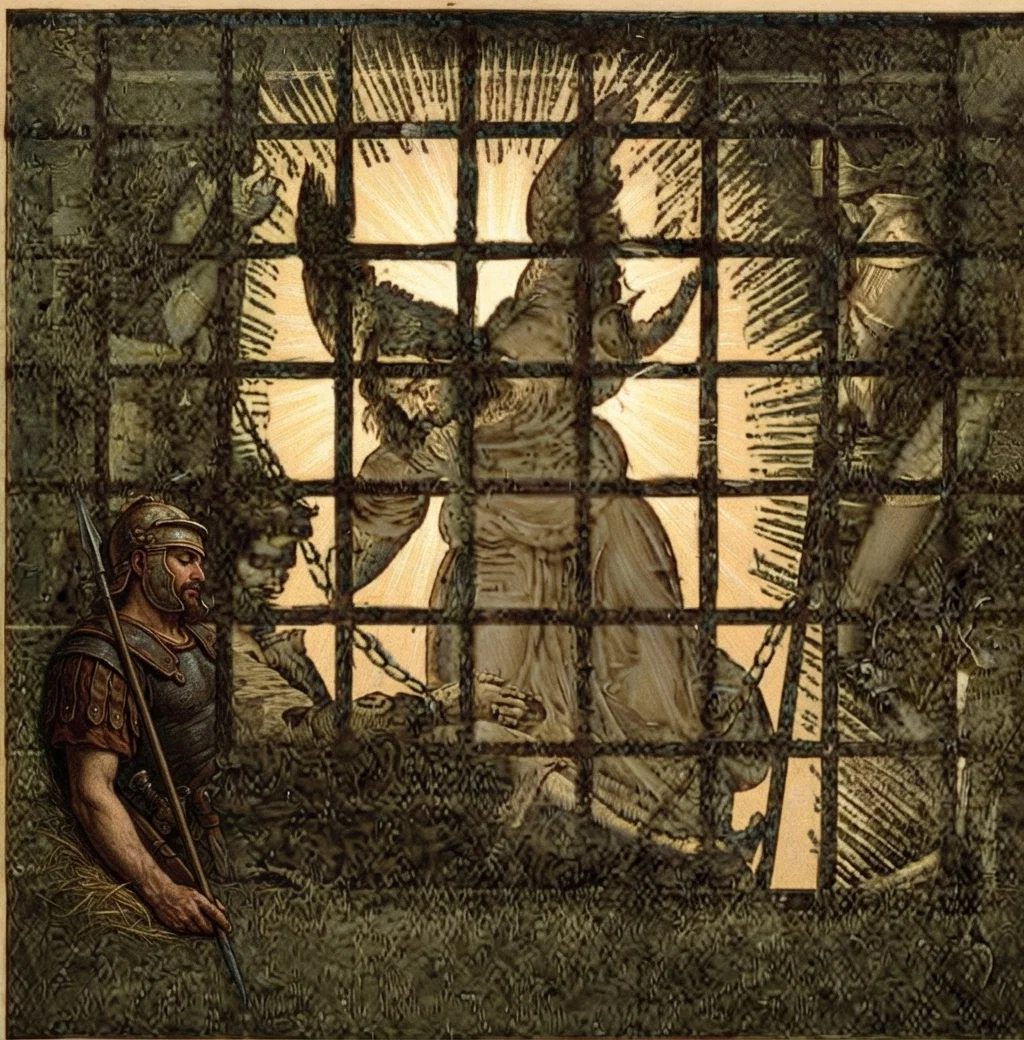
"Now about that time Herod the king put forth his hands to afflict certain of the church. And he killed James the brother of John with a sword. And when he saw that it pleased the Jews, he proceeded to seize Peter also. And those were the days of unleavened bread. And when he had taken him, he put him in prison, and delivered him to four quaternions of soldiers to guard him; intending after the Passover to bring him forth to the people. Peter therefore was kept in prison; but prayer was made earnestly of the church unto God for him. And when Herod was about to bring him forth, the same night Peter was sleeping between two soldiers, bound with two chains; and guards before the door kept the prison. And behold, an angel of the Lord stood by him, and a light shined in the cell; and he smote Peter on the side, and awoke him, saying, Rise up quickly. And his chains fell off from his hands. And the angel said unto him, Gird thyself, and bind on thy sandals. And he did so. And he saith unto him, Cast thy garment about thee, and follow me. And he went out, and followed; and he wist not that it was true which was done by the angel, but thought he saw a vision. And when they were past the first and the second ward, they came unto the iron gate that leadeth into the city; which opened to them of its own accord; and they went out, and passed on through one street; and straightway the angel departed from him. And when Peter was come to himself, he said, Now I know of a truth, that the Lord hath sent forth his angel and delivered me out of the hand of Herod, and from all the expectation of the people of the Jews. And when he had considered the thing, he came to the house of Mary the mother of John whose surname was Mark; where many were gathered together and were praying. And when he knocked at the door of the gate, a maid came to answer, named Rhoda. And when she knew Peter's voice, she opened not the gate for joy, but ran in, and told that Peter stood before the gate. And they said unto her, Thou art mad. But she confidently affirmed that it was even so. And they said, It is his angel. But Peter continued knocking; and when they had opened, they saw him, and were amazed. But he, beckoning unto them with the hand to hold their peace, declared unto them how the Lord had brought him forth out of the prison. And he said, Tell these things unto James, and to the brethren. And he departed, and went to another place. Now as soon as it was day, there was no small stir among the soldiers, what was become of Peter. And when Herod had sought for him, and found him not, he examined the guards, and commanded that they should be put to death. And he went down from Judea to Cæsarea, and tarried there."
QUESTIONS.
At the time of which we are studying, what did Herod begin to do?
Who was the chief victim?
What was one motive that prompted Herod to this persecution? Seeing that the beginning met with favor, what did he proceed to do? What feast was then at hand?
What precautions were taken to prevent Peter's escape? When was it proposed that he should be put to death?
How closely was he guarded the night before he was to be killed? How much anxiety did Peter manifest?
Meanwhile, what steps had the church taken to effect Peter's deliverance? To whom did they present a petition for his release?
As Peter was soundly sleeping the last night in the prison, what took place? What appeared in the prison? What did the angel do and say?
What further did he say, and what followed?
As Peter mechanically followed the angel, what did he think?
Where did the angel conduct him? What did the angel do when he had conducted Peter clear of the prison?
When Peter came to himself, what did he say? Give the exact words.
Where did he then go? How can you tell that he had a reason for going there? What was going on there?
Who came to the door when Peter knocked?
What did she recognize, and what did she then do? Why did she not at once open the door?
When she told them in the house that Peter stood without, how did they regard her? What did they say when she insisted that it was so?
As Peter continued knocking, what did they finally do? How did they then feel?
What did Peter do and say? Where did he then go?
What took place as soon as it was day? What was done with Peter's keepers? Where did Herod then go?
SUGGESTIVE QUESTIONS.
Repeat the verse in the Psalms that is strikingly illustrated in this lesson, and tell where it is found.
Who was "Herod the king"? How many Herods are mentioned in the New Testament?
How many of the twelve apostles were named James?
Note that the Revised Version has "Passover" in verse 4, instead of "Easter." The use of the word "Easter" is really a perversion; the disciples knew nothing either of the word or the festival, unless they had chanced to hear the name of the heathen deity from which it comes.
News and Notes
FOREIGN.
—Grain reports from Austria-Hungary show a shortage for the present year of over 60,000,000 bushels.
—The British gunboats on the Upper Nile shelled the city of Metemmeh on October 20, killing 600 of the Dervishes.
—It is reported that the States constituting the Greater Republic of Central America have again refused to accept U. S. Minister W. L. Merry.
—The sultan of Morocco has won a victory over the Bananier tribe at Tadla. Many prisoners were taken and fifty-five heads were spiked on the walls of Markesh.
—The steamer Acapulco, from Panama, which arrived in San Francisco on October 30, brought word to the effect that the revolution in Guatemala was at an end, with Barrios victorious.
—An English syndicate has secured control of the customs revenue of the republic of Santo Domingo for a period of one hundred years, by making a loan of $7,500,000 to the local government.
—The Chinese Government has contracted a loan of £16,000,000 with a wealthy London syndicate. The loan will be used in building Chinese railways, and is secured by the customs of China.
—It is reported that Bulgaria has sent an ultimatum to the sultan stating that unless her demands in regard to the Bulgarian bishops are granted by November 3, she will throw off the Turkish yoke.
—An attempt to decrease the wages of cotton operators in England has resulted in a threatened strike, which will involve 200,000 laborers, and will mean the ruin of the cotton industry in England.
—Further details of the fearful panic in the village church of Kheiloff, Crimea, on October 26, place the number of persons who were trampled to death at seventy-four. One hundred and sixty others suffered severe injury.
—The strike of bakers became general in Madrid, Spain, on October 29, and residents of the city are experiencing great difficulty in procuring bread. The government is using soldiers to operate the bake ovens to a limited extent.
—The British dependencies in the West Indies and South America are making a concerted move for the securing of reciprocity arrangements with the United States which will give them better commercial facilities under the Dingley Bill.
—A report from Argentina states that the present prospects for a large wheat crop in that country are very good, much better than had been expected. Argentina is buying no American wheat, but will instead have wheat to export.
—The Ottoman Government has notified the powers of its objection to Colonel Schaefer of the army of Luxemburg as provisional commissioner of the powers for the island of Crete, and in her objection she is sustained by Germany.
—Eight whaling vessels, instead of five, as reported last week, are fast in the ice off Point Barrow, northern Alaska, one of them being 150 miles from shore, where it is said to be impossible either to reach them with supplies or for them to reach the mainland.
—On November 1 two expeditions started from Norway to search for Professor Andree, concerning whom nothing certain has been heard since he started in his balloon to cross the north pole. One of these expeditions will be under Captain Sverdrup, in the ship Fram, the same captain and ship that were with Nansen in his polar exploration.
—Serious trouble is anticipated between Germany and Haiti over the imprisonment of a German citizen. The German minister to that republic has hauled down his flag, and three German war ships are expected there soon to back up the minister's ultimatum.
—A fatal railroad accident occurred in Japan on October 3, in which a train carrying forty persons leaped down an embankment several hundred feet. Only ten of the victims were rescued alive at the time the despatch was sent, and these are in a badly mutilated condition.
—During the week a number of victories are reported by the British in the region occupied by the rebellious Indian natives, who, tho strongly intrenched, have been forced to give way before the superior generalship and more effective war implements of the English forces.
—The distressing news comes from Calcutta that the ship load of wheat sent to the famine sufferers of India by American philanthropists has been seized at that port and is being held for customs duties. The captain has objected to paying the duties because of the exorbitant rate charged.
—Affairs in West Africa are drifting toward a collision of the national parties concerned, France and England, and the press of both nations are assuming an attitude which is calculated to hasten the event in that quarter as well as in the Upper Nile region, where England has always claimed the right of supremacy and where two French expeditions are now established.
—General Weyler has sailed for Spain and General Blanco in command in Cuba. He has issued a declaration stating his intentions to carry out a new government policy, calling upon all classes to yield allegiance to Spain, and avowing it to be his purpose to "vigorously fight" those now in rebellion. No hint is given of autonomy, and this is producing a bad effect upon Cuban sympathizers.
—On October 25 several hundred Grecian volunteers invaded the shops of Athens and seized clothing and food. Many of the shopkeepers defended their goods with arms. The rioters defended their course on the ground that they were cold and hungry. It has recently been brought to light that the torpedoes with which the Greek war vessels were armed during the war with Turkey were absolutely harmless; and the government will court-martial several officers who were responsible for the negligence.
—The Spanish Government is much exercised over the preparations now going on in different parts of that country for a grand reception to be given to General Weyler. The Carlists and Republicans are doing what they can to make the demonstrations a success for the embarrassment of the present government. Spain's latest attempts at purchasing war ships in England have failed, owing to her lack of credit, and a number of destroyers are being held by their makers until Spain shall pay the cash for them.
DOMESTIC.
—Fire at Healdsburg, Cal., on October 31, destroyed property to the value of $50,000.
—Six men were killed and a number wounded during election riots in Kentucky on November 2.
—Fire in a coal mine at Scranton, Penn., on October 30, cut off the retreat of eight miners, and they were suffocated in the shaft before assistance could reach them.
—The United States cruiser Baltimore sailed from San Francisco for Honolulu on October 30 where she will be made the flag-ship of the squadron in Hawaiian waters.
—A burning cigarette stub thrown down by a careless laborer in a mine in Sonora, Mexico, caused an explosion on October 28, which resulted in the death of thirteen men and the fatal injuring of five.
—The American ship Commodore is reported wrecked on Malden Island, a small coral atoll in the South Pacific Ocean. The entire crew was saved, a portion of them being now at Launceston, Tasmania.
—A sixteen-year-old boy while digging fish bait on a small island in Clinton, Iowa, October 29, unearthed an iron box containing $50,000 in gold and currency. There are various conjectures as to the owner of this buried wealth.
—Two passenger steamers, the Alice and Merwin, which were frozen in the ice at the mouth of the Yukon River, have been released from their perilous position and have sailed into the river, where they expect to make a safe harbor for the winter.
—The pastor of the Mintonville, Kentucky, Christian Church preached a sermon recently in which he took the position that there is no devil. When he attempted to speak again, he was ejected from the house and about twenty shots were fired after him.
—There is still little change in the fever-infected districts of the south. A slight frost on November 2 was expected to retard the progress of the disease, but failed to do so. The average number of deaths is about five daily, with from forty to fifty new cases.
—The Seventy-six Stone House, at Tappan, N. Y., from which Major Andre was taken to be hanged, was blown down in a gale on November 2. This building was erected a number of years before the Revolution, and during that time was used as an inn.
—The new Congressional Library at Washington, which has been in process of construction for six years, was opened to the public on November 1, all the departments except those of fine arts and music being ready for use. About 350,000 volumes are now on the shelves of the library.
—The grand jury of Wilkesbarre, Penn., have returned true bills against Sheriff Martin and his deputies for the Latimer shooting. The bills include nineteen counts for murder, one for each man killed, and one for the victims considered collectively. Thirty-six true bills were found in the same way for felonious wounding.
—Important preparations are in progress for the signing of the new treaty between the United States, Russia, and Japan for the suspension of Pelagic sealing in Bering Sea and the North Pacific. Before the day of signing the treaty the delegates of Russia and Japan will have been raised to the rank of envoys extraordinary and plenipotentiary.
—Greater New York held her first municipal election on November 2, with seven candidates for mayor, one Tammany Democrat, one Jeffersonian Democrat, one Gleason Democrat, one Republican, one Citizens' Union, one Prohibition, and one Socialist. Judge Van Wyck, candidate of the first-mentioned party, received a plurality of about 86,000 votes.
—Henry George, the well-known single-tax advocate, and candidate for mayor of Greater New York, on the Jeffersonian Democratic ticket, died on October 29 in the heat of his political campaign, only three days before election. His son, Henry George, Jr., took his father's place on the ticket, and it is believed polled a small portion of the votes which his father would have received had he lived.
—The auction of the Union Pacific Railroad took place on November 1, at Omaha, Nebraska. There was but one bid for the road, that offered by the reorganization syndicate, and amounting to $58,065,748. The Kansas Pacific branch of this road and the Central Pacific remain to be disposed of, but their sale will not take place until after Congress meets. The auctioneer received $100,000 for his half-hour's work.
PERIODICALS WANTED.
CLINTON DEW. SHARP, 5 Jennings Street, Rochester, N. Y., desires Signs, Sentinels, Reviews, or tracts (post-paid) for missionary work.
WILL the parties who are sending the Signs to Mrs. Lillie Adkins, 724 N. Third Avenue, Knoxville, Tenn., please change the address to Briceville, as Mrs. Adkins does not live in Knoxville. We are thankful for the paper, but do not wish to pay each week for having them forwarded.
A LESSON HELP.
By Editor
Biblical Atlas and Gazetteer. It contains 16 full-page maps, much valuable descriptive matter, and an excellent gazetteer.
The Journey of Paul, the places mentioned in the Acts and Epistles are well mapped out, and the descriptive matter connected will be a great help to Sabbath-school officers and teachers. The Gazetteer is complete, including every place mentioned in both Old and New Testaments. It is a book of real worth, and one that should be in every Sabbath-school library.
Special reduced price while stock lasts, $1.25 per copy, post-paid.
Pacific Press Publishing Company, Oakland, Cal.
39 Bond Street, 18 W. Fifth Street,
New York City, N. Y. Kansas City, Mo.
CHRIST, OUR ADVOCATE
His Ministry in the True Tabernacle
An up-to-date pamphlet on the work of Christ in the sanctuary in Heaven. Bible Students' Library No. 128. Fully illustrated. Paper covers. Price, 10 cents. Address,
PACIFIC PRESS PUBLISHING CO.
OAKLAND, CAL.
sas City, Mo. New York City, N. Y.
"Angels of God." (Spanish.) A collection of five Bible readings on the following subjects: 1. The Angels of God. 2. Satan and His Work. 3. Christ the Resurrection and the Life. 4. The Second Chapter of Daniel. 5. Signs of the Coming of Christ. Two illustrations; paper; price, 6 cents. Address, PACIFIC PRESS PUBLISHING Co., Oakland, Cal.
IN EVERY RESPECT
By Editor
A Rare Opportunity
AND THE TIME IS RAPIDLY PASSING.
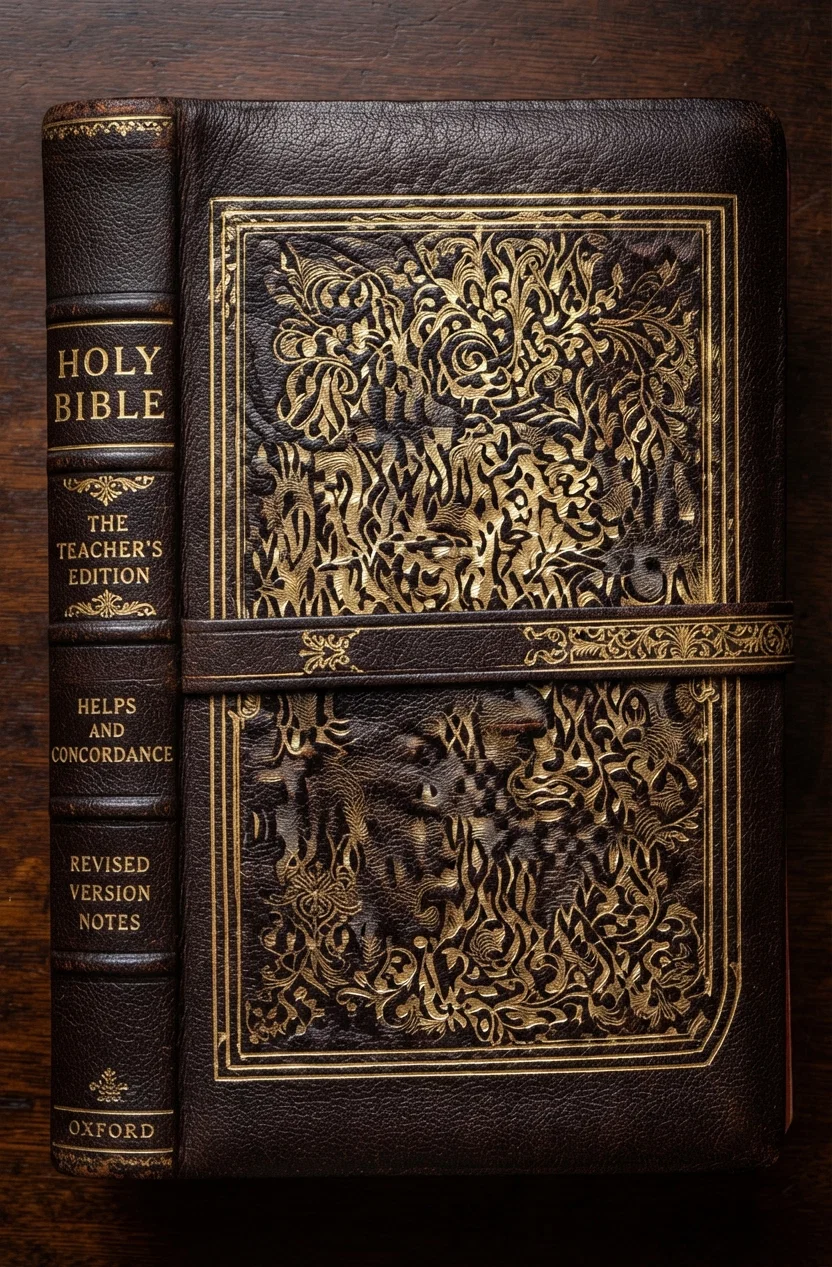
Not alone a clearly printed, conveniently arranged Bible with handy, center-column references, but, in addition, a fund of useful and valuable information concerning Bible customs, manners, history, geography, weights, measures, etc., with side lights from recent explorations, with
More than 350 Fine Illustrations
scattered through the helps, making really two volumes in one cover, of convenient size. The Bible has round corners, red-under-gold edges, minion type, and cover leather lined to edge (an important feature), divinity circuit. Size of page, 8x5½ inches.
Under One Alphabet - -
A new Concordance combined with a Subject Index and a Pronouncing Dictionary of Scripture
Proper Names Diacritically Marked
For their pronunciation, with meaning. In addition to the carefully compiled Concordance of passages in the common version, there are given over 10,000 REFERENCES TO THE REVISED VERSION. Thus for the first time Bible students may, at a glance, see all the principal changes of the Revised Version placed side by side with the passages according to the common or Authorized Version. Every change of proper names made by the revisers is given. Most of the important changes suggested by the American Revisers are also given, and thus an important additional explanation of the original text is furnished to all Bible readers.
Special Features of the Treasury.....
A LIFE OF JESUS, AND HARMONY OF THE GOSPELS
PARABLES AND MIRACLES OF JESUS
LIFE AND TRAVELS OF PAUL
SACRED CHRONOLOGY
HISTORY OF THE PATRIARCHS, ETC., ETC.
Twelve Colored Maps with Index. In all
Over 650 Pages of Valuable Helps
to the Bible student.
We have no hesitancy in saying with every one else that this is AN EXCEPTIONAL OFFER FOR THE MONEY.
JUST THINK OF IT!
A sixteen-page, weekly, illustrated paper for one year—800 pages—and this SPLENDID BIBLE for only
= $ 3.00 =
To Those Who Renew,
Or to New Subscribers
For the SIGNS
One Year
Specimen Page from the ILLUSTRATED BIBLE TREASURY
— Portion of Our Bible —
DICTIONARY OF PLANTS, ANIMALS, ETC.
Copyrighted by Thos. Nelsons & Sons, 1896.
TREASURY OF BIBLE SCIENCE.
CAPER PLANT.
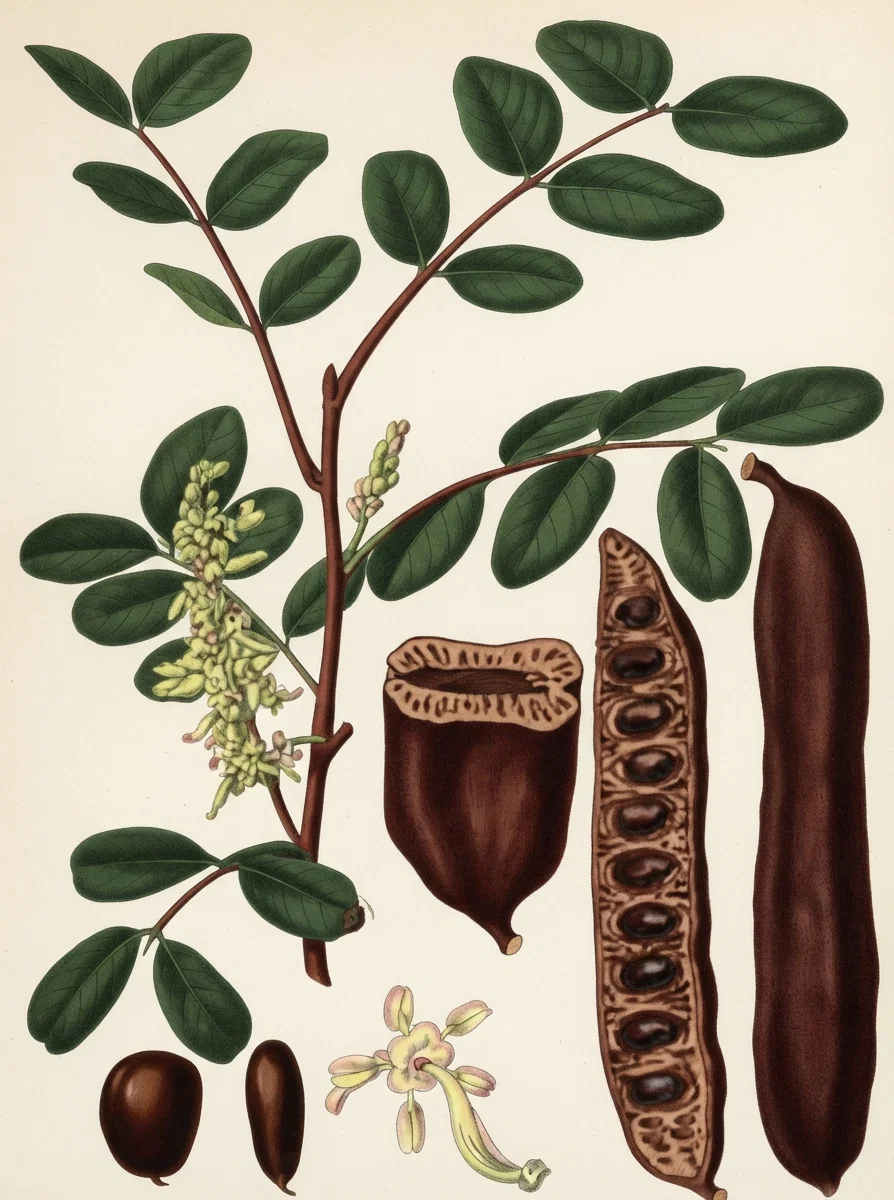
seeds, separated from each other by a fleshy pulp. From the large quantity of sweet mucilage they contain, they form a good and agreeable food for animals, and are largely exported as a feeding stuff for stock. The pods are sometimes called locust beans and St. John's bread; from the notion that they were used as food by John the Baptist; but this is an error.
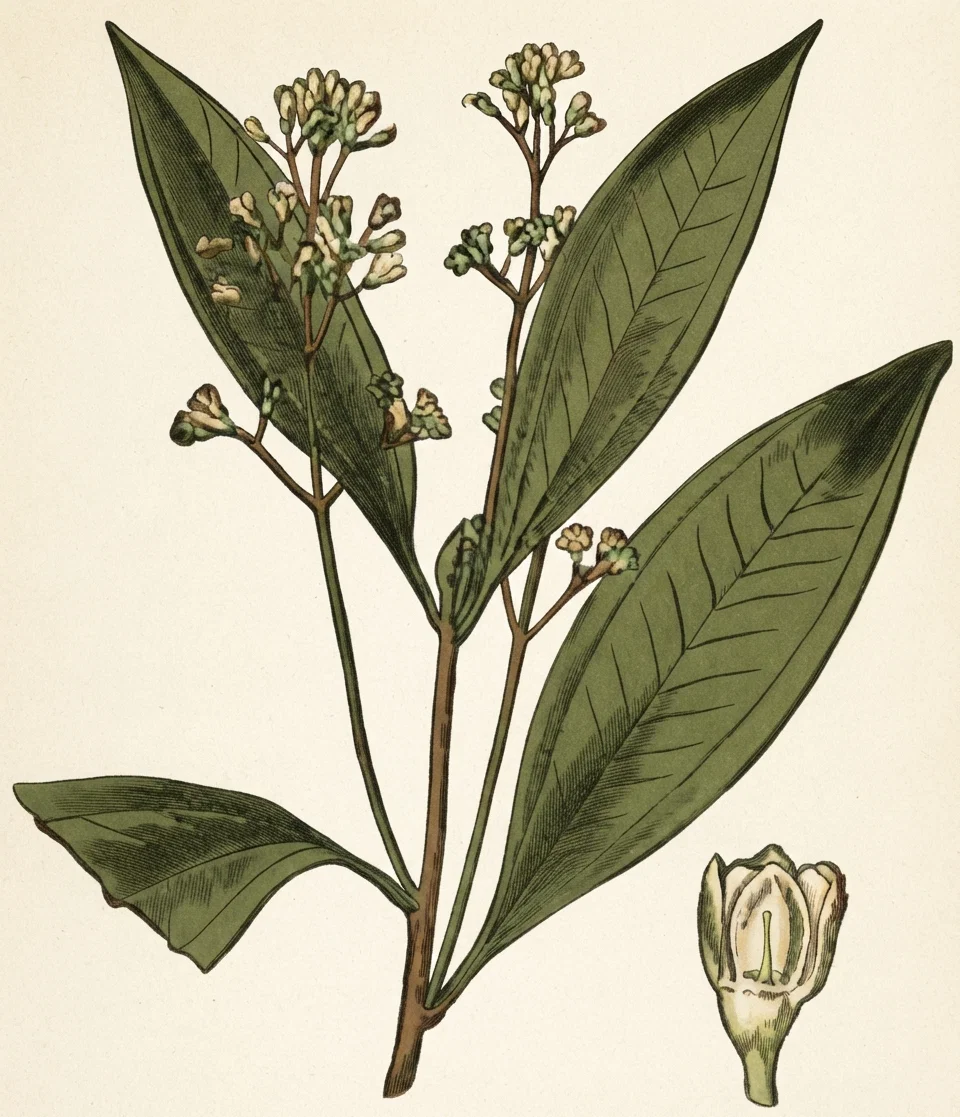
CASSIA CINNAMON.
aromatic root is largely dug up in the autumn, and is exported to China to be used as an ingredient in the incense in the temples. It is specified as one of the articles of Syrian commerce (Ezek. 27, 19). The cassia of Ps. 45, 8 is the translation of another Hebrew word, but most probably it refers to the same plant.
With separate flower, pod (external aspect, longitudinal and transverse sections), and two seeds.
CASSIA.—One of the ingredients of the holy anointing oil (Ex. 30, 24), and not the same as cinnamon, which was another ingredient. Some, however, hold that cassia was obtained from another species of cinnamon, and that the barks of both Cinnamomum zeylanicum and C. cassia were used in making the holy oil. It is more probable that the revisers are right when they suggest in the margin that the plant is costus. This is obtained from an Indian composite plant called Aplotaxis lappa, which grows on the mountains of the Cashmere Valley, where the
CEDAR.—This is generally used in Scripture for the famous cedar of Lebanon. This tree was supposed to be confined to the grove on Lebanon usually visited by travellers, but it grows in other places in that range of mountains as well as on the Taurus Mountains, on the heights of Cyprus, and on the Atlas Mountains. It is a noble tree, the glory of the vegetable kingdom in Palestine, and is consequently used throughout Scripture as the symbol of grandeur, might, loftiness, and ever-increasing expansion. Though it grows rapidly, it produces a compact, firm, durable, and odoriferous wood, which was used in the successive temples at Jerusalem. Layard brought to England fragments of cedar joists from the palace of Nebuchadnezzar, and cuneiform inscriptions have since shown that this was obtained from Lebanon. The cedar of the Pentateuch (Lev. 14, 4, etc.) is probably an aromatic juniper, which was used as the stalk of the hyssop sprinkler.
CAROB TREE.
CHESTNUT TREE.—In the R.V. this is trans-
290
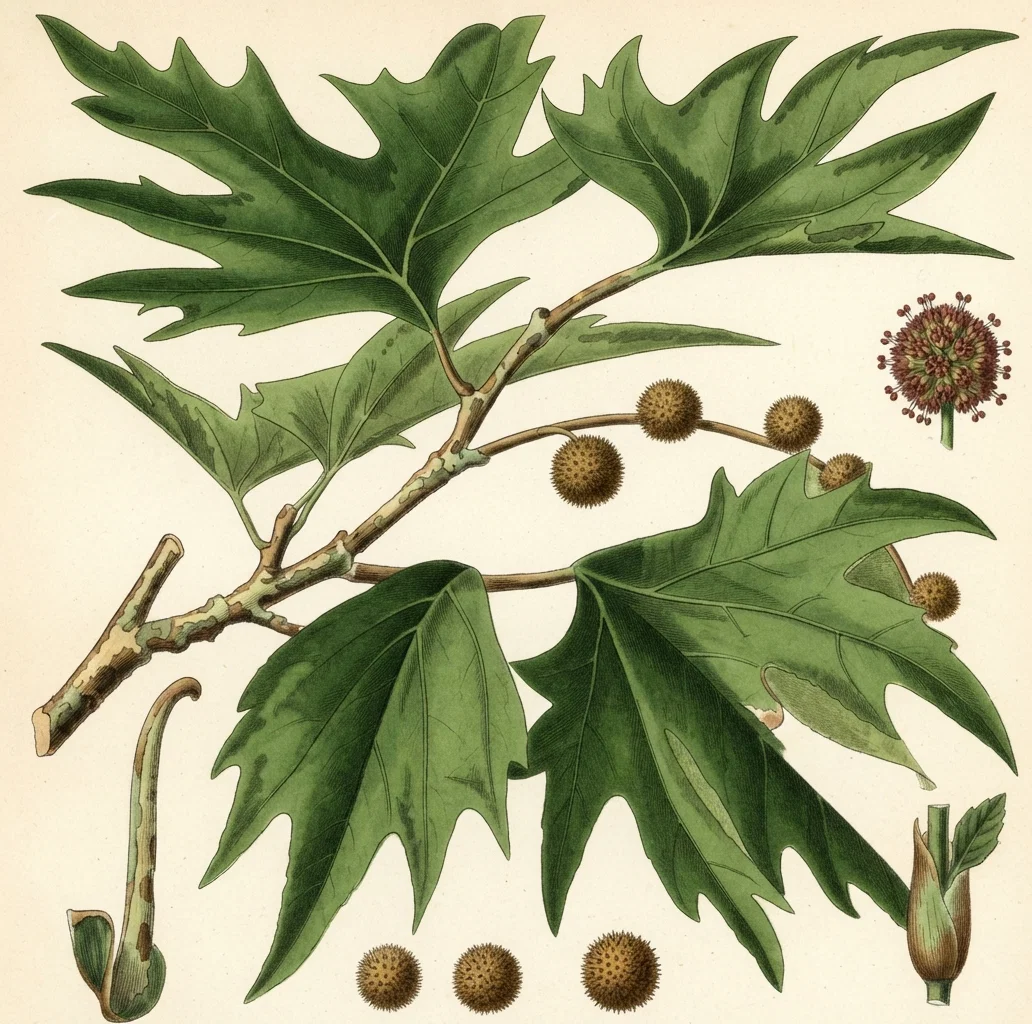
CHESTNUT OR PLANE TREE.
Separate staminate flower with one petal, and below separate pistil with one petal.
We Will Send the Bible Free
Post-paid, for Seven New Names and $7.00.
Solicit the subscriptions and make it free for yourself. The price of the SIGNS is $1.00 per year. The Bible will be sent to any of these subscribers for $2.00 extra.
The Bible and papers will be sent to different addresses if desired
Your name on the cover for twenty-five cents extra.
We Want Agents. Write at Once for Special Terms. The Holidays are Just Ahead of Us. Now is the Time to Do a Good Work in Several Directions.