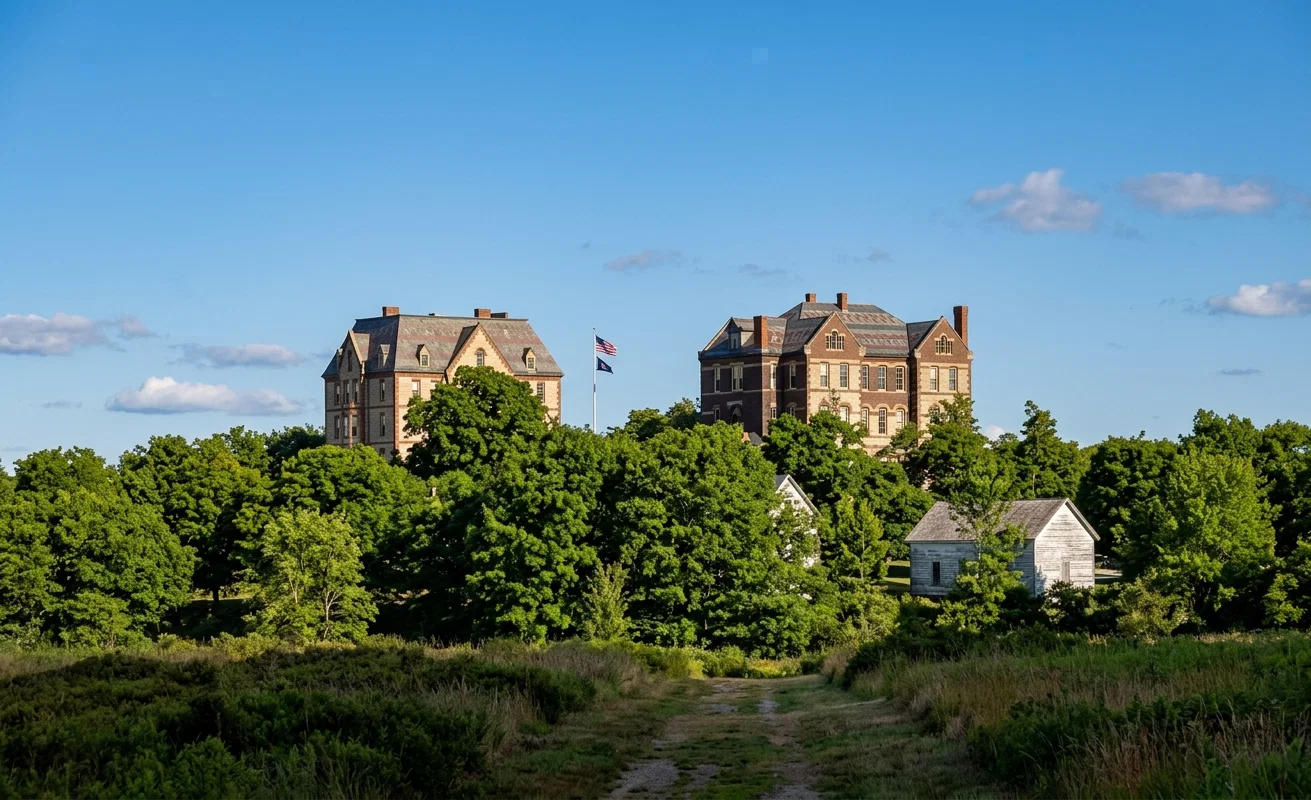
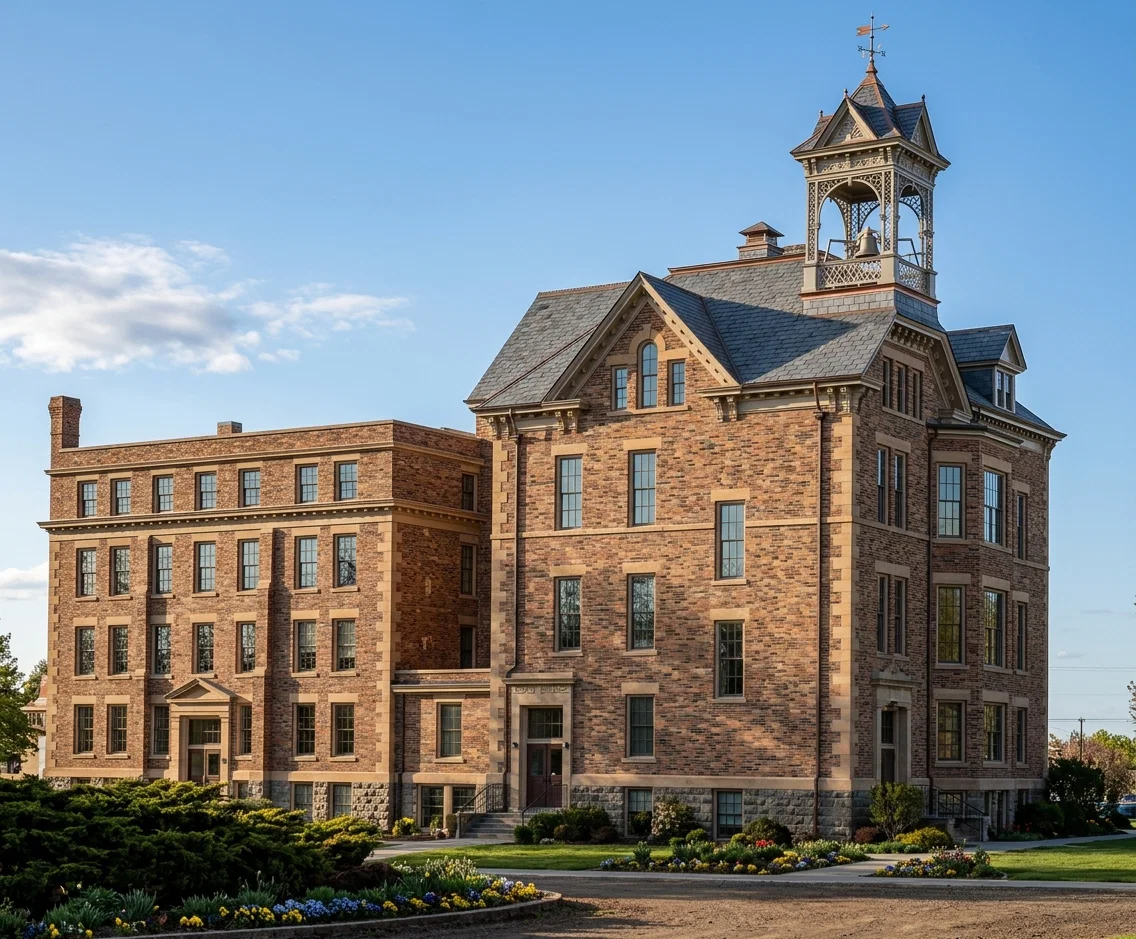
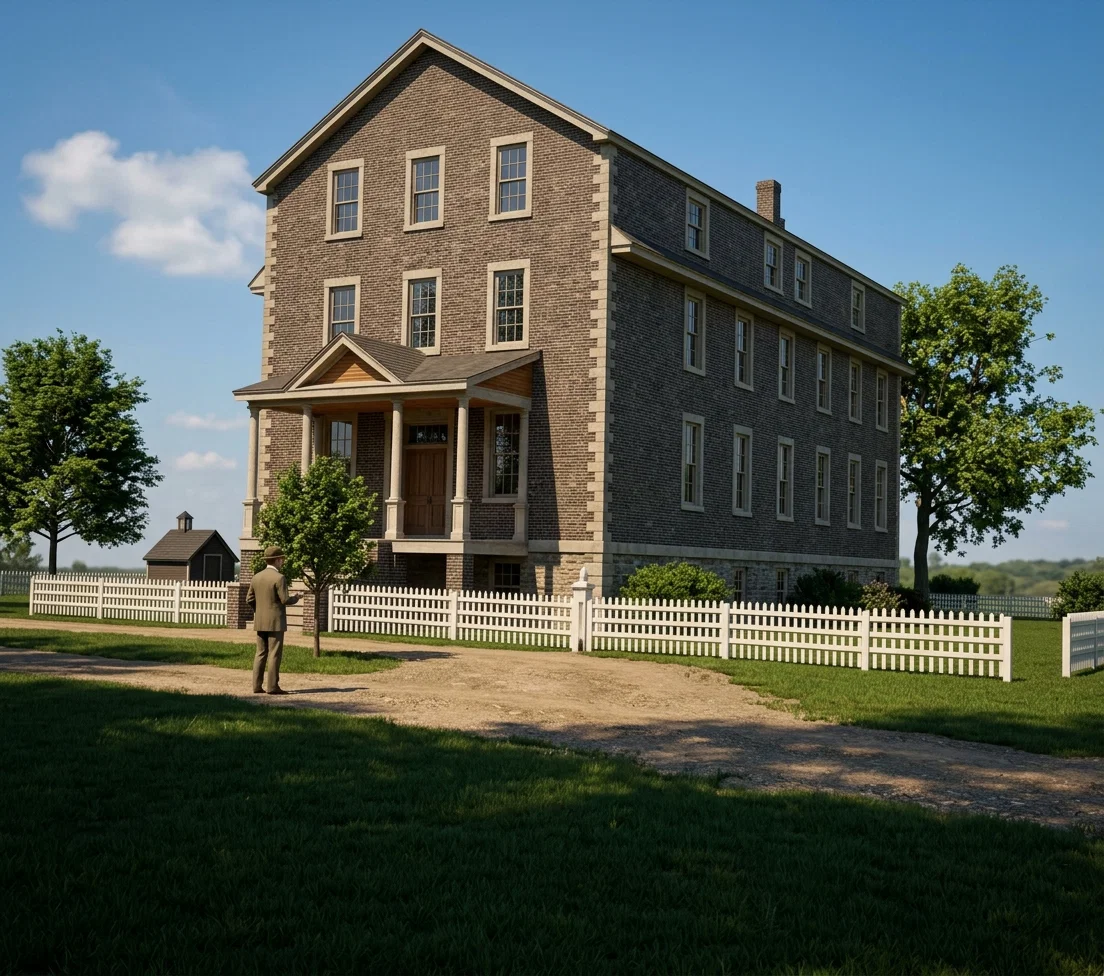
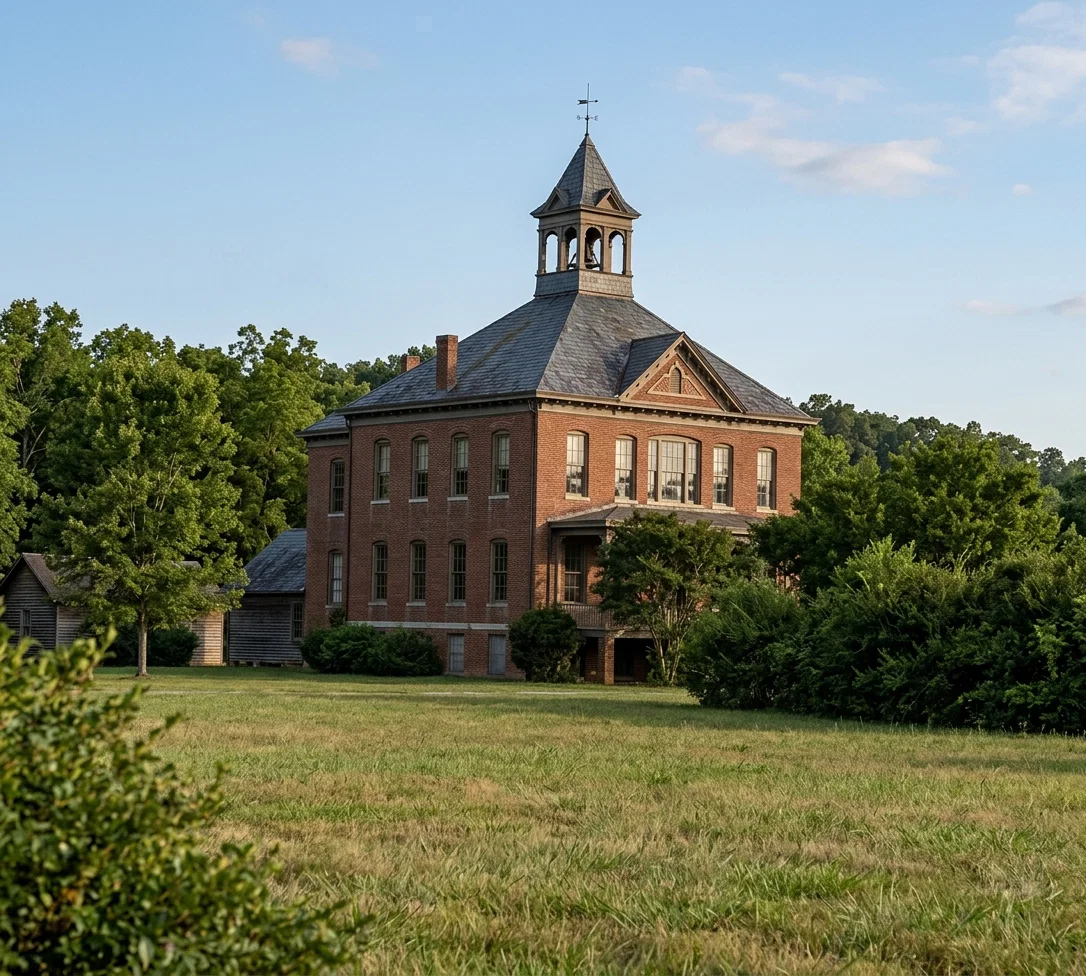
FINANCIALLY the last year has been one of the hardest that the academy has ever passed through. The severe drought last summer made it impossible for many to attend who had planned to do so, and some who are attending will not be able to pay their tuition before fall. The attendance is about the same as it has been for the past two or three years, though there are not so many students in the home.
This is due to the drought, and to the large number of church schools that have been established in the territory. The total enrollment is two hundred and twenty-five, with ninety-four in the Model Church School, covering grades one to six.
In all other respects the past year has been one of the most successful in the history of the school. Nearly all the students have an earnest desire to do good, faithful work, and a large proportion are preparing to labor in some department of the cause. In matters of discipline, we have had a quiet year. Not a student has been dismissed, and only a few cases have arisen where anything more than private admonition has been needed.
Every student has taken one industrial study. Classes have been maintained in carpentry, blacksmithing, cooking, sewing, dressmaking, typewriting, printing, broom making, gardening, and floriculture; and the interest in all these studies has been good.
Another new feature of the school is the canvassers' course, which began January 1 and continued three months, ending in an institute of about two weeks. Twenty-five students were enrolled in this course. Aside from the book studies, the pupils joined regular classes in Bible, language, accounts, etc., according to their individual needs. Nearly all these students have entered the canvassing work, and others from the academy will do so as soon as school closes. All are agreed that the canvassing course was a success, and the Southwestern Union Conference has recommended that it become a permanent feature of the work.
The last three days of the school year were devoted to a canvassers' institute and a Sabbath-school convention, and more canvassers entered the work at the close of this institute than at the close of the regular canvassers' school.
Brother J. B. Fitch, of El Paso, was secured to take charge of the printing office, and to teach the Spanish language. Three classes in Spanish have been maintained, and over thirty pupils have been enrolled. This department is to be continued the coming year.
Spiritually, the school is accomplishing a good work. Quite a number of the students have been converted the past year, and many more are growing in grace. For five years every Wednesday evening at six o'clock a young men's prayer meeting has been held in the chapel, and a young women's prayer meeting in the home. These are conducted entirely by the students themselves,—the teachers holding a meeting in another place at the same time. These meetings are regarded by the students as among the most helpful means of grace. Every Wednesday at the time of chapel exercises a full hour is given to the students' missionary meeting, with all the students present. Officers for this society are elected monthly from the students, who take entire charge of the exercises. These consist of readings, addresses, and hymns upon missionary subjects. The students are deeply interested in them. One important and interesting feature of these meetings is the frequent reading of letters from former students who are now missionaries in different parts of the world. During the past year nine of our students have gone to foreign fields: Brother and Sister A. G. Bodwell to Mexico; Brother and Sister L. O. Corwin to the Bay Islands; Brother and Sister G. F. Jones and Brother and Sister Geo. Beckner to the Society Islands; and Brother Ernest Taylor to England.
The work of training teachers, which has been carried forward by the Normal department for the past three or four years is beginning to show good results. Nearly all the schools in the academy territory are now taught by teachers who have had training in this department; and it is worthy of notice that the few schools that have not been successful were taught by teachers who had received no special training for the work. Thus far the academy has met15every call that has been made upon it for church-school teachers, and it hopes to be able to meet all future demands in this direction.
A year ago the academy graduated the largest class in the history of the school; it consisted of about thirty members, including six or eight music pupils. The present class numbers nine members, exclusive of the music graduates. Two of these expect to enter the ministry, one the Bible work, one editorial work, and five church-school teaching. During the past five years about seventy graduates have gone forth from the school, the larger number of them into various departments of the work of the Lord.
The exercises of commencement week, which have just closed, showed thorough preparation, good natural talent, and consecration to the cause of the third angel's message.
The prospect for the future of Keene Academy is excellent. The board of trustees by a unanimous vote, has just called to its principalship Prof. Alvin Covert, of Patterson, La. Brother Covert is the son of Elder Wm. Covert. He studied in Battle Creek College, was graduated from the Peabody Normal College, of the University of Nashville, and has been teaching nine years in the schools of Kentucky, Tennessee, North Carolina, and Louisiana. During all these years he has held himself in readiness to respond quickly to any call from the Lord. He will attend the summer school at Berrien Springs to acquaint himself better with the educational plans and methods of our people.
One important plan for the future of Keene Academy should not be overlooked—the opening of a German department next fall, under the direction of Prof. August Kunze, whose long experience in this message, as translator, editor, and teacher, has qualified him to render this department excellent service.
Closing now six years of labor for the Keene Industrial Academy, I desire, in this my last official utterance for the institution, to say that from the results already apparent, with a good prospect for speedy release from the bondage of debt, with a corps of able and faithful teachers in charge, with a large body of vigorous young people as material with which to work, and with a compact and loyal union conference at its back, there seems to be every reasonable expectation, under the blessing of Heaven, for Keene Academy to enter the coming year upon a new era of successful effort in the fulfillment of the purpose of God in its foundation.
Walla Walla College
By E. L. Stewart
E. L. STEWART
This institution has just closed its ninth year. In spite of hindering influences it has prospered. Two hundred and fifteen students were enrolled. Seventy-five or eighty of these were in the college home. The average attendance has been about one hundred and forty. Sixteen bright, intelligent young people were graduated. Nearly all of these will engage actively in the Lord's work.
The school has been blessed with an exceptionally fine class of pupils the past year.
Quite a large per cent of the students are preparing to enter some branch of the Lord's work. A good spirit has pervaded this company of young men and women. Young people's meetings have been conducted regularly by them, a deep interest has been manifested, and a number have been converted. During the week of prayer much of the Holy Spirit was felt, and a large number yielded and were baptized. Some of these, however, have since given up; but others are growing in grace, and will become a power for good.
There was more interest shown in the distribution of our publications during the institute held the latter part of the year than has been known for several years in the past. About thirty took the instruction with the view of entering the canvassing work. The students and teachers are all looking forward to the jubilee song of freedom from debt, and as these words are being read, this army of workers will be busily engaged in selling “Christ's Object Lessons.”
The industrial department has not made the progress we had expected. There has not been the co-operation in this work which there should have been.
The School in Germany
By Otto Lupke
OTTO LUPKE
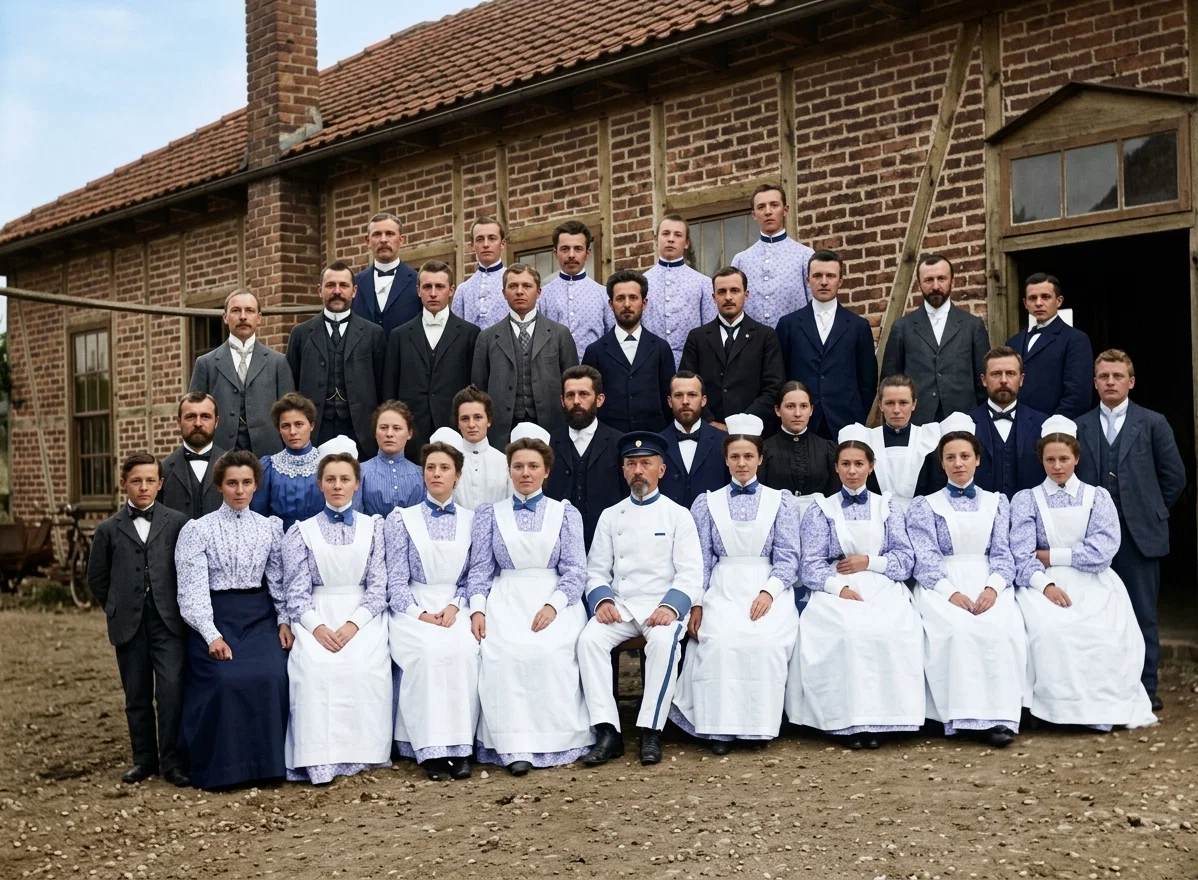
THE Friedensau school, with the close of this quarter, completes its second year. We have reason to feel thankful for the blessings which we have enjoyed. The year began the first of September, with twenty-one students. This number has increased to forty-two. Just one half of the students have decided to take the Missionary course, the rest the Nurses’ course.
All the students attend the Bible study, history, geography, German, and singing classes. The missionary students are allowed to pursue other branches, according to their ability. At present, English and Russian are taught. The Missionary course may be finished in one year, the Nurses’ course in two years. The nurses have their instruction free, but bind themselves to work for three years after completing their course; while the missionary students may go out to work before the end of the second year, but are then expected to pay the amount of their tuition. In the course of the present school year three workers went into the field,—one to Berlin, the capital city, one to Holland, and one to former Hungaria,—where they are engaged partly in canvassing and partly in Bible work.
The instruction given has been both theoretical and practical. Our school bears the appearance of a school of practice, as the opportunity is given the students to do active work in the field. Our young people are not permitted, by the law, to earn money by selling our periodicals, as no one under twenty-five years of age receives license to canvass in Germany. It would be altogether impossible for foreigners to receive permission to work, and our students would have to pay from three to six dollars to receive license. But the Lord has made it possible to work with our periodicals in Germany, inasmuch as we present the printed matter to the people without asking a price. At times we have to give away papers, but at other times we receive more for them than the price, and the surplus received goes into the missionary fund.
We go once or twice a week with our Herold der Wahrheit, Gute Gesundheit, and tracts to neighboring towns of from two hundred to one thousand inhabitants, and to larger towns that may easily be reached by the train. We improve our opportunities to speak to people about the present truth, and thus the way is opened to give Bible readings or deliver sermons and lectures at different places. Fruit is already seen as the result of this labor.
Of special advantage do we find our efforts in nursing and treating the suffering. A glad heart and a cheerful spirit, with a willing, helpful hand and a good treatment, have in many cases removed prejudice; for we have no lack of opposition, especially on the part of the clergy, who regard our work as nothing more than an effort to make proselytes for our church.
The influence of these difficulties has reacted upon our young missionary students and upon our school. Through such missionary work character is formed. Although tears may sometimes flow because of rebuffs, rough words, and unkind deeds, yet by lifting the heart to God in prayer, the worker is consoled, the work is pursued, and another door is reached. These struggles make the worker polite, quiet, peaceful, and diligent.
When this course closes in July, we hope to place fifteen young workers in the field, to the honor and glory of our merciful Lord. To him be the praise!
The Soul’s Summer
By Wayland Hoyt
In the winter the earth has swung itself out of the sun's direct rays, and the birds vanish, and the beauty dies. But when the earth again rolls into straighter companionship with the sun, all the glory of the summer is the result. Self-surrendering companionship with Jesus makes the soul's summer. All transforming ability and various graciousness is in that companionship.—Wayland Hoyt.
China Inland Mission Finances and Converts
The financial statement of the China Inland Mission for the year 1900 shows that the total income from all sources have amounted to $266,820. Twenty-one new workers joined the mission during the year; and although the terrible experiences through which every mission passed in China last year had its effect upon mission work, the converts to this mission alone aggregated five hundred.
Oakwood Industrial School
By B. E. Nicola
B. E. NICOLA
The work at Huntsville, Ala., was begun about six years ago with two or three students, and has ever since been steadily developing, both as to the number of students and the grade of work they are able to do.
The students are intelligent, progressive young people, and their energies for study and their earnest desire for the most useful education are no small source of encouragement to those having their training in hand.
The Students
Students are not regularly admitted under fifteen years of age, and the average is above twenty. All who enter are supposed to have some knowledge of books, yet this is not always the case, as some of mature years have been received, and given their first lessons. Such cases as these, by their sincerity and rapid progress, often give promise of usefulness. Others have had a good start in public schools, and compare favorably with pupils of any locality having such school advantages, though, as a rule, several years' training is required for their preparation for the work.
The Course
It has not been the policy of the school, however, to offer a long course. Work is offered covering the common branches, and some of the elementary sciences to give a practical knowledge of nature, with the study of the Bible and the Testimonies as a part of each year's work.
As a rule, the students have quite definite ends in view, mainly, teaching, Bible work or the ministry, canvassing, and nursing. Already some are successfully laboring in these lines, and others are in readiness to enter the work. There is a deep earnestness in the heart of nearly every one to do all in his power to lift up his race. Many of them desire to go to Africa, Cuba, or other foreign fields to labor for their people. We are certainly thankful for a training school for the colored race, but when we realize that from a school of only fifty or sixty are to be chosen workers for a vast field ready for a laborer in every county, we feel that much more ought to be done here than can be done with our limited means.
How They Pay
How to make it possible for a class of poor people to attend, who can bring no money with them, has been the question. To require the payment of any reasonable amount of cash is simply to require impossibilities of many even of the most worthy and promising. But it has been undertaken to accommodate such a class by supplying them with work, which is taken in return for their school privileges. To do this, however, puts the institution on a—
Philanthropic Basis
The student works five hours a day, the returns from which are made to go as far as possible toward the support of the work, and the institution must look to its friends for the remainder. Thus almost every student works his entire way through school, except his books and clothing.
The Farm
It is evident from such arrangements that the student and the institution must seek such work as will bring the best possible returns for the labor, and this is found on the farm. The Lord directed in finding an ideal school location five miles from Huntsville, Ala., on one of the best farms in northern Alabama, where almost all kinds of farm and garden crops may be made to produce well. While the farm is employing the young men, the home is giving useful training to the girls in the art of practical domestic duties, a training much neglected by young women who seek a literary education.
They are constantly encouraged to do a high standard of work, and they acquire a degree of thrift and industry and faithfulness that is unusual among the laboring class of their race. In the schoolroom they are taught not to be satisfied with a low standard of school work. They seek to be reformers among their people in all lines of usefulness. It is encouraging that our students are in demand in the homes and on the farm as well as in the schools where our work is known. As soon as the students are prepared, they engage in canvassing or in teaching church schools to help themselves on in the work here.
The present year's work has been a very encouraging one. The students have made good advancement, and have taken special interest in the study of Christian education as setting forth the true object of education.
Our Needs Are Legion
Among other things, we need more room, better school and industrial equipments, and more of the right kind of students. We need one hundred friends of this worthy work who will each give, in addition to the student's work, fifty dollars to support a student in school next year.
We are glad to see large donations going to our established schools. But17this is a field that none of our old schools can supply, and its importance and worthiness demand a hearty support.
Duncombe Hall College, London N, England
By H. R. Salisbury
H. R. SALISBURY
In no part of the world where the message has gone, and churches have been established, have we needed a school more than in Great Britain. Our churches in England, Ireland, Scotland, and Wales, like those all over the world, are made up very largely of people with limited means. With the exception of the youth of well-to-do families, education is confined to the knowledge of the common branches, the pupil leaving school at thirteen to begin a trade at fourteen, only those of means having recourse to private schools, colleges, and finally the university. The result has been that very few of our young people have been fitted to enter the work, and many have drifted away from the church. To save them by fitting them for usefulness, and above all to provide more laborers for a field where we now have less than one worker for every two millions of our population, Duncombe Hall College began its work January 6 of this year. Of our attendance, which has reached forty, one half of the pupils live in London; and as we are yet in temporary quarters, those coming to the school from outside of London have been provided with rooms among our brethren who live near the hall. The average age of our students is about twenty-five years.
Over two thirds of our students have paid their entire way by canvassing or working in the International Tract and Missionary Society printing office, while doing full year's work at school. London is one of the hardest cities in England in which to canvass, yet during the sixteen weeks in which the school has been in progress, the students have sold 9,689 copies of Present Truth, 11,061 copies of Good Health (English), 389 copies of "Christ's Object Lessons," 180 of "Great Controversy," 30 of "Home Hand Book," with other books, amounting, in all, to $1,270.81. Many have learned their first lesson in canvassing since coming to the school.
With hardly an exception, the students are planning to spend the entire summer vacation in the work. Our next session begins in September.
Bethel Industrial Academy
By H. A. Washburn
H. A. WASHBURN
THIS is an intermediate school, located in central Wisconsin, serving as a preparatory school to the Emmanuel Missionary College. The third year of its work is now closing. From the first, rapidly the Lord has blessed the work of the school, and its influence has already been widespread. Not only have a large number of young people been instructed in the ways of God, and their parents encouraged and blessed, but a light is here shining out to the world, and exerting an influence beyond denominational limits. By the blessing of the Lord, the summer school has readily met its running expenses from the beginning, and a goodly number of our youth have been converted, and inspired with a spirit of consecration to the work of the third angel’s message. During the first year, which began in December, 1899, there was an attendance of 90 pupils; the enrollment of the second year was 160, and of the present year, 176. These figures include the pupils of the primary department.
It is the aim of the managers of the school to make advancement each year, as light is received from the Lord. The past year has witnessed the introduction of industrial class work as a part of each student’s study. This work is conducted by the regular teachers on the same basis as the customary literary studies. The value of this innovation was not at first seen by all, but the results have been such as to impress all with the importance of this kind of education, practically and spiritually. It is the aim of the school to give a good education in agriculture and domestic economy to the students who pass through the higher grades of the school. The work is growing in strength as we advance. During the past year the following classes were conducted: agriculture, horticulture, floriculture, carpentry, cookery, sewing, nursing, and stenography. The people of Wisconsin are becoming interested in just this kind of education, and schools of this character will doubtless soon be scattered over the State as a part of the public-school system. It is evident that the Lord is leading his people in advance of this general movement, that when the public is fully aroused, the people of God shall have something to present which is superior to what the world has. We are planning and working with the idea in mind that our schools are to take that position in the educational work that our sanitariums have been taking in the medical world, to be “the head, and not the tail.” A devoted company of teachers are steadily working toward the accomplishment of this purpose, each studying diligently some phase of industrial education. We shall probably soon have a substantial patronage from those not of our faith, because of the industrial education here afforded.
We are now studying how to make the privileges of the school accessible to a larger number of our youth. As it is chiefly financial difficulty which hinders students from attending school, we are devising plans whereby they may earn a large part of their school expense. Resources for this we have in the soil; consequently we are clearing our land, and placing it under cultivation as rapidly as possible. The cultivation of a large garden and the care of considerable fruit will give much profitable employment to students during the agricultural season, and at a time when the expense for board, fuel, light, etc., is least. Class work of as high a grade and as great value as that of any other term will be provided, and thus the summer term is destined to become our strongest term. The education for which the Lord is calling, wherein teachers “take their students with them into the gardens and fields, and teach them to work the soil in the very best manner,” can be given only by holding school during the agricultural season. Our chief difficulty now is the lack of students, as most of them drop out of school when the farm work begins in the spring. Our people need to be better informed regarding this matter, that they may see the importance of sending the youth to the school during this season of the year.
The Southern Training School at Graysville, Tennessee
By J. E. Tenney
J. E. TENNEY
The tenth year in the existence of the school, and the sixth since it came under conference control, opened Sept. 25, 1901. Two terms of sixteen weeks each are in the past, and the summer term of twelve weeks opened on the 20th of May.
The Work of the School
With the beginning of the present year the name of the school was changed from the Southern Industrial to the Southern Training School. This change was in harmony with the plan of the Southern Union Conference to make the school a place for the preparation of workers for the entire field. A few had gone out from the school into different lines of evangelistic work previously to this time, but the training of workers had never been made the distinctive feature.
Co-operation
It was our privilege, during the summer and autumn before the opening of the present school year, to attend all the camp meetings held in those States comprising the Southern Union Conference, and to present to the people the plans and prospects of the school.
Without an exception the State conferences, most of which were organized at these meetings, most heartily indorsed the school and its objects, and pledged themselves to its support. This cordial co-operation has been enjoyed throughout the year.
The Attendance
The general purpose of the school having been changed, it seemed advisable to make other provision for the younger pupils. This was done by opening a primary school, composed of the first five grades. This school enrolled nearly sixty pupils during the year, and under the efficient management of Mrs. W. T. Bland, made most encouraging advancement.
The enrollment in the Southern Training School reached one hundred and three; this made the total enrollment about one hundred and sixty. All the States in the Southern Union Conference, except South Carolina, were represented among the students, besides several of the Northern and Western States. The average age of those enrolled was nearly twenty years; and it has never been our privilege to have a more earnest or a more intelligent class of students.
The Lines of Training
We came to this field entirely ignorant of its needs and the conditions to be met. It seemed best not to outline a definite policy at the beginning, but to take some time in obtaining such a personal knowledge of the work needed as would lead to the laying of more effective plans. We do not feel that the work has suffered from lack of definiteness, yet the course to be pursued in the future will be more clearly outlined.
There is great need in this field for laborers in all departments of the work; but medical missionaries, teachers, canvassers, and practical business men and women are specially needed; and though other branches of training will not be neglected, these will be given prominence.
Spiritual Condition
The school has been blessed in spiritual matters. From the beginning of the year there has been most perfect harmony among the board, faculty, and students concerning the principles underlying the work, and this has led to concerted action.
The devotional exercises of the school have been characterized by a deep religious fervor. A number of unconverted youth have turned to God, and ten, during the eight months, have gone forward in baptism. When the school closed, there were very few who were not enjoying an experience which can come only to those who know their Saviour.
The School Home
It may be interesting to know that during the year fifty-four students have lived in the school home. Nineteen of these have been young men.
There have been only six cases of illness during the year, and only one of these was at all serious.
The most perfect harmony has prevailed18and there have been many precious seasons of social and spiritual enjoyment in this large family circle.
What the Students Are Doing
About ten will spend the summer vacation in canvassing and Bible work. Six or more are doing practical nursing. Five or six are, or will soon be, in the church-school work. At least five have entered offices as stenographers and bookkeepers. Some have remained to attend the summer term, and others have gone to their homes, expecting to return to us at the beginning of the next school year.
We praise the Lord for the wonderful care he has had over the school during the year, and also for what we know he will do for us in the future.
The next school year will open September 24. Send for the new announcement. A most prosperous year is expected.