The Youth’s Instructor, Vol. 47, No. 36.

CANTERBURY AND ITS CATHEDRAL
Earlier text: Chapter XIII

MAN'S PLACE IN NATURE.

Man's Relation to Plants.
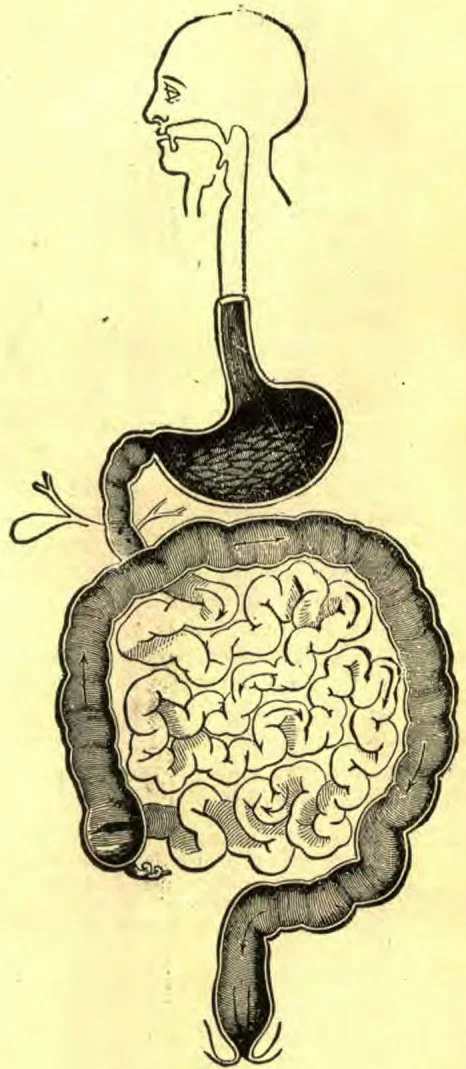
WHEN the Lord made man, he formed him out of the dust of the ground; and when man dies, he returns to the dust, as the Scriptures plainly tell us: “Dust thou art, and unto dust shalt thou return.” Not only was man formed from the dust of the ground, but the plants and animals were also made from the same material. In the Scriptures we read that the Lord is the Potter, and we are the clay. God, by his power, is able to take the soil, and change it from its dead, lifeless condition into beautiful forms, endowed with life. He is performing this miracle before our eyes all the time. When we plant seeds in the spring, they germinate, and send their roots down into the earth, and change the lifeless dust into plant tissue; and these various forms of vegetable life God has given to the animal creation for food. In studying the composition of the body, chemists have found that it consists of the same elements—oxygen, hydrogen, nitrogen, sodium, potassium, etc. (from fourteen to sixteen, in all)—that are present in good soil. In his wisdom, the Lord has made the soil of just such elements as are necessary to build up the body. When plants and animals die, their bodies decay, and return again to the earth, and make soil upon which future plants are to grow; and these new plants feed other animals, which have come upon the stage of action.
Let us study for a little while how the human body is related to the food that God has provided for man's use. We have learned, in a previous study, that the air is the food of the lungs, and that it enters the body at the nostrils. The food passes into the body through the mouth, a wonderful machine, composed of the lips, tongue, teeth, and palate. This machine is a mill, in which the food is ground up before it passes on to other parts of the body. Some of the teeth are used in biting the food, and others in chewing and grinding it. The tongue gives us the sense of taste. While the food is being ground by the teeth, there are several streams of watery fluid, called saliva, flowing into the mouth. This not only moistens the food, but also partially digests it by changing the starchy portion into sugar. If you will chew a dry plain graham cracker for some time, you will notice that the longer you chew it, the sweeter it becomes. The saliva acts upon the starch, and changes it to sugar. When the work is properly done in the mouth, the food passes down into a chamber called the pharynx; and if it were not for a trap-door covering the trachea, or wind-pipe, the food would go down into this, causing a coughing, choking sensation. Many of us have experienced this when we laughed while eating. After passing over the trachea, the food goes down into the esophagus, which leads to the stomach, the most wonderful machine in all the body. Here the food is churned very thoroughly by the contracting and dilating of the walls of the stomach. While this process is going on, the walls of the stomach secrete a fluid called gastric juice, which carries the work of digestion still further. This juice acts upon the albumen, changing it into a milky fluid called chyme. When the food in the stomach is fully digested, it passes through a small opening called the pylorus, meaning “gatekeeper,” which guards the opening at the lower part of the stomach. Here the food is further acted upon by the bile, which comes from the liver; the pancreatic juice, coming from the pancreas; also by the intestinal juice, secreted by the walls of the intestines. When these three juices have acted upon the food sufficiently, it is taken into the blood by little ducts found in the walls of the intestines. These ducts unite with others, which carry the food particles throughout the whole system, and thus the entire body is nourished, and built up wherever it is in need of repair.
THE DIGESTIVE TRACT
THE DIGESTIVE TRACT
As we study the body that the Lord has given us, we see that it is wonderfully constructed. No wonder David exclaimed, “I will praise thee; for I am fearfully and wonderfully made.”
What have we learned thus far in our study of the body?—We have learned that man sustains a certain relation to the things with which he is surrounded. The eye receives light, giving the sense of sight. The nostrils receive air, which gives life to the body. They also contain the organs of smell, which receive the fragrance given off into the air. The ears receive sound, borne by the air. The skin is so constructed that we are able to feel the material things about us. The mouth is made to receive food that will build up our bodies. In it is the organ of taste, the tongue, which helps us enjoy our food. God has made everything pleasant for us. He has so constructed our bodies that we may enjoy the things with which he has surrounded us. We should honor him by keeping our bodies in so healthy a condition that we can enjoy these blessings, and use them to his glory. M. E. CADY.

To Reach BATTLE CREEK

FROM
CHICAGO, BUFFALO, DETROIT, OR TOLEDO,
Purchase Tickets Reading over the MICHIGAN CENTRAL
“The Niagara Falls Route.”
A First-class Line for First-class Travel between Chicago and New York and Boston. Elegantly equipped through trains pass Battle Creek in each direction daily.
R. N. R. WHEELER, Ticket Agent, Battle Creek.
O. W. RUGGLES, Gen’l P. and T. Agt., Chicago, Ill.

TAKE THE Canadian Pacific Railway

for . . . CHATHAM, OTTAWA, MONTREAL, LONDON, GALT, QUEBEC, WOODSTOCK, TORONTO, BOSTON, PORTLAND, and
All points in New England, the Maritime Provinces, Great Britain, and the Continent.
Illustrated literature, time-tables, and full particulars, upon application to—
J. FRANCIS LEE, GEN. AGENT,
Passenger Dep’t. 228 SOUTH CLARK ST., CHICAGO.
Branch Offices: 76 Ottawa St., Grand Rapids, Mich.; Room D, Chamber of Commerce, Cincinnati, Ohio; 315 Chestnut St., St. Louis, Mo.

Grand Trunk Railway System

Time Card in Effect February 5, 1899.

C. & G. T. DIVISION.

WEST-BOUND FROM BATTLE CREEK.

LEAVE.
No. 11, Mail and Express, to Chicago 12.00 M.
No. 1, Chicago Express, to Chicago 9.00 A. M.
No. 3, Lehigh Valley Express, to Chicago 3.40 P. M.
No. 5, Pacific Express, to Chicago, with sleeper 12.55 A. M.
No. 75, Mixed, to South Bend 7.30 A. M.
Nos. 11 and 75, daily, except Sunday. Nos. 1, 3, and 5, daily.

EAST-BOUND FROM BATTLE CREEK.

LEAVE.
No. 10, Mail and Express, to Pt. Huron, East, and Detroit 3.45 P. M.
No. 4, Lehigh Express, to Pt. Huron and East 8.27 P. M.
No. 6, Atlantic Express, to Pt. Huron, East, and Detroit 2.25 A. M.
No. 8, Lehigh Exp. to Saginaw, Bay City, Pt. Huron, and East 6.50 A. M.
No. 74, Mixed, to Durand (Starts at Nichols) 7.35 A. M.
Nos. 10 and 74, daily, except Sunday. Nos. 4, 6, and 8, daily.
E. H. HUGHES,        A. S. PARKER,
A. G. P. & T. Agt. Chicago, Ill.   Ticket Agent, Battle Creek.

Only a Day at a Time

“ONLY a day at a time! There may never be a tomorrow. Only a day at a time, and that we can live. We know The trouble we can not bear is only the trouble we borrow, And the trials that never come are the ones that fret us so.
“Only a step at a time! It may be the angels bend o’er us, To bear us above the stones that wound our feet by the way. The step that is hardest of all is not the one just before us, And the path we dread the most may be smoothed another day.”

What Do You Want It For?

“Oh, if I could only have such an experience as you enjoy!” said a discouraged soul to an earnest worker at one of our large camp-meetings. “What do you want it for?” was the quick response; “what do you want it for?” It was a startling question, but one we should ask ourselves once in a while. Why do we sigh and cry for the gift of God’s Spirit—is it that we may enjoy a pleasant, comfortable experience, be able to meet our daily grievances bravely, and gain a home in the many mansions at last? Too often some such reasons as these will be found lurking in the heart, under the search-light of this testing question,—but God’s richest blessings never wait on selfishness in any form. The experience that wins is given only to those who desire and will use it for that purpose. How slow we are to understand the great truth that the secret of receiving much is giving much! But those who do understand have all the blessings of heaven at their demand.

ONE WAY TO HELP.

SISTER IDA CARMICHAEL, of Keene, Tex., sends the following request to the young people who read the INSTRUCTOR. The work that she is doing is a worthy one, and we trust the call will receive a hearty response:—
KEENE, TEX., AUG. 21, 1899.
DEAR YOUNG FRIENDS: I am going to ask a number of you to send me, regularly, each month, all your INSTRUCTORS. Put them away neatly when you have read them, and at the end of the month send them to me, and I will place them in the State reform school. I can use two hundred copies each month in this way. Do not send back numbers for the reformatory, but clean, up-to-date copies of both the INSTRUCTOR and the Little Friend. The following letter lately received from L. J. Tankersley, superintendent of the house of correction, shows how the papers are appreciated:—
DEAR MADAM: The box of papers was received yesterday. They will be properly distributed Sunday morning, and your kind note read to all. Thanking you in the name of the boys and for myself, I am,
Very respectfully yours, L. J. TANKERSLEY.
Who wishes to have a part in this great work, and will write and tell me so? Those who will send the papers faithfully and regularly, will please send me their names on a postal-card, and those only; for I must know what to depend on. We who take up this work will call ourselves “The Prisoners’ Friend Society.”
Your sister in Christ, MRS. IDA CARMICHAEL.

Subscription Renewal Notice for October 1899

OCTOBER, 1899.

If the yellow address-label on first page of this paper, or on the wrapper, bears this month and year (John Brown 5 89), it indicates that the following blank should be filled out by you now, and mailed to Review and Herald, Battle Creek, Mich., before the end of this month:—
Name, ........................................................
Post-office, ........................................................
Street, ........................................................
County, ........................................................
State, ........................................................
Enclosed find $........ (money-order, express order, registered letter, or bank draft), for which please send ...... copies of the YOUTH'S INSTRUCTOR ...... months to above address.
P. S.—If you object to clipping this out of your paper, or wish to forward other subscriptions, please write names and full addresses on a separate sheet, stating amount enclosed for that purpose.

THE DAHLIA.

More than a hundred years ago Baron Humboldt discovered the dahlia, a small, single flower, in Mexico. Could he have foreseen the dahlia of to-day in its dazzling hues and varied forms, he might, perhaps, have been prouder of that discovery than of all his other scientific achievements. It was sent by him to the Botanical Gardens, Madrid, where it received the name of dahlia in honor of the botanist, Professor Andrew Dahl. The same year it was introduced into England, where it was cultivated under glass.
For a few years it was lost to cultivation, then reintroduced into England. Cultivation soon developed the double form, and every color except blue. For many years the ideal dahlia of the cultivators was a perfectly double, ball-shaped flower. Those who remember the compact flowers of thirty or forty years ago know how nearly that ideal was realized, and remember the deserved popularity of the dahlia of that day. But people soon tired of the regularity of that type, and for a few years it was neglected. Florists were giving time, labor, and thought to the development of the rose, carnation, chrysanthemum, and other popular flowers. At last some far-seeing cultivator recognized the possibilities of the dahlia; and in new, improved, and more beautiful shades of color, it resumes its sway, and to-day greets us in so many varied and attractive forms that every taste may be suited.—Selected.

SOME GARDEN HINTS.

HAVE you verbenas growing in your garden, and do you desire very early bloomers next spring? Look for small plants, that have taken root, and cut them loose from the parent plant; or plant out slips, and when they begin to run on the ground, pot them. Keep them where the sun will reach them only in the morning. When it becomes cold, transfer them to the house, and keep warm, putting them, on sunshiny days, in a south window, carrying them back to a place near the stove at night. Don’t let the soil dry out, but avoid excessive moisture. Give more and more sunshine as they begin to grow. They will not bloom in winter, but will surprise you with their profusion of bloom early next spring. For soil try to find the black, sandy loam of the woods, and add well-rotted manure. Give good drainage.
Look over your carnations, and select soft, juicy stems. Cut these in pieces, allowing two joints to a slip, and plant them in rows, six inches apart, burying up to and over the first joint. As severe cold comes, mulch with straw. By next July you will have a grand display of bloom. Arrange your slips in rows, so that the colors will harmonize, and the growth be symmetrical. If convenient, plant in two or more parallel rows.
Now is the time to plant hardy perennial seed, as most seeds do better if planted as soon as ripe. Have you any of the oriental poppy?
Be sure to pot up some of the harissii lilies, if you like to have bulbs in winter. Use rich soil. Also eight or ten freesia bulbs in a six-inch pot. For decorative purposes put three callas in an eight-inch pot. Keep all in a partially shaded place until started. They will delight you with their bloom and foliage during the coming winter and spring.
UNOHOO.

A Clear Conscience Makes a Soft Pillow

“A CLEAR conscience makes a soft pillow.”

Man's Relation to Plants

Some of you will notice that Professor Cady’s article this week, “Man’s Relation to Plants,” covers some of the subjects treated in Mrs. Mc Kee’s article, “The Process of Digestion,” which appeared in the last number. It is thought best, however, to give Professor Cady’s article in full, as it is one of a series, and is needed to develop the plan of the studies. The subject is of such importance, also, that too much can hardly be said about it.

Choosing Companions in Books and Friends

A MAN is made by the company he keeps in the world of books no less than in the world of men. Low, coarse associates will leave their impress on the mind, whether we meet them at school, on the street, in the shop, or attractively set forth in the pages of some book. Just so with those that are pure and ennobling. If we seek their society, and enter into their aims, we shall become like them. Choose your friends with discretion, and your books with good judgment; and you will grow toward the high standard of the perfect Man.

Guardian Angels and the Believer's Trust

It is a beautiful thought that to each soul born into the world there is sent from the courts of light an angel, to watch over it from its first wailing cry till the eyes are closed in death. Be the way long or short, smooth or rough, this unseen guardian never leaves us. Think of it! What companionship! Who can truly say, “I am alone”? Like Elisha’s servant in the mount, when perplexities thicken around us, we cry out, “Alas! . . . how shall we do?” Like him, our eyes are often blinded to the angelic forms that surround us, ready to deliver in temptation, and save in the hour of danger: but they are none the less real; and to the believer, the thought of their presence must ever bring a sense of trust and repose.

You have reached the end of this edition.

The Youth’s Instructor · Sep 14, 1899