S. D. A. Publishing Association · Battle Creek, Mich. · Sep 7, 1887
NATURAL SCENERY OF SCANDINAVIA.
By A. Swedberg
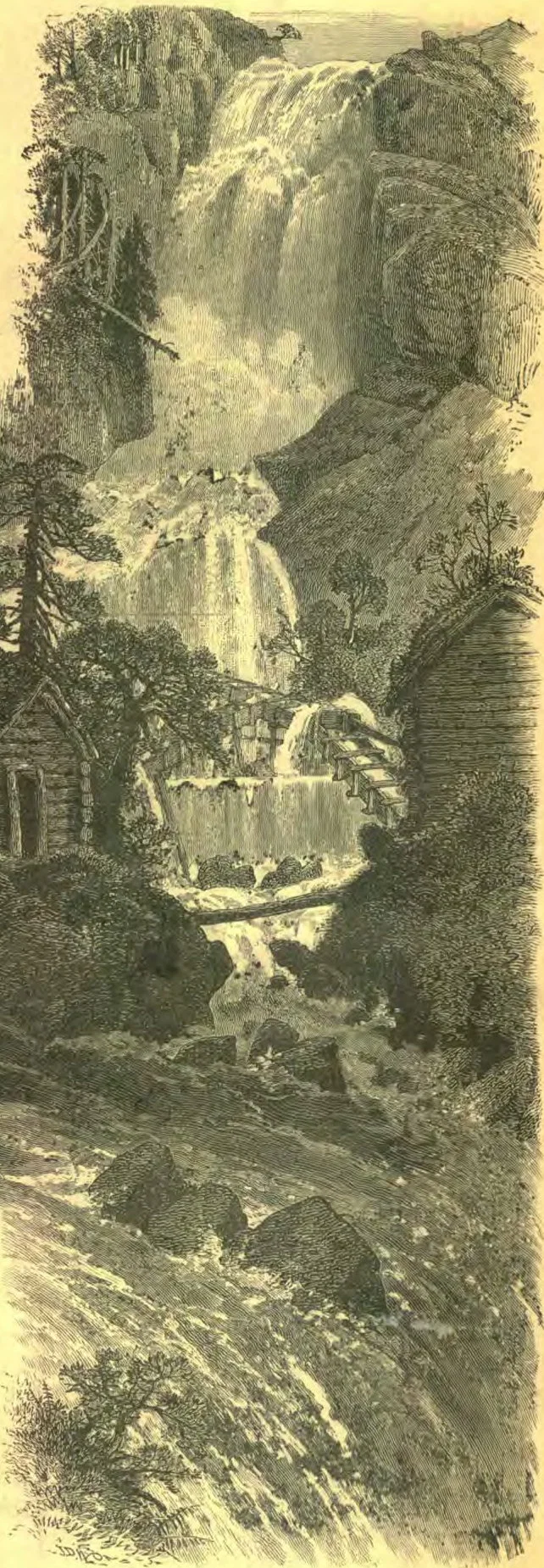
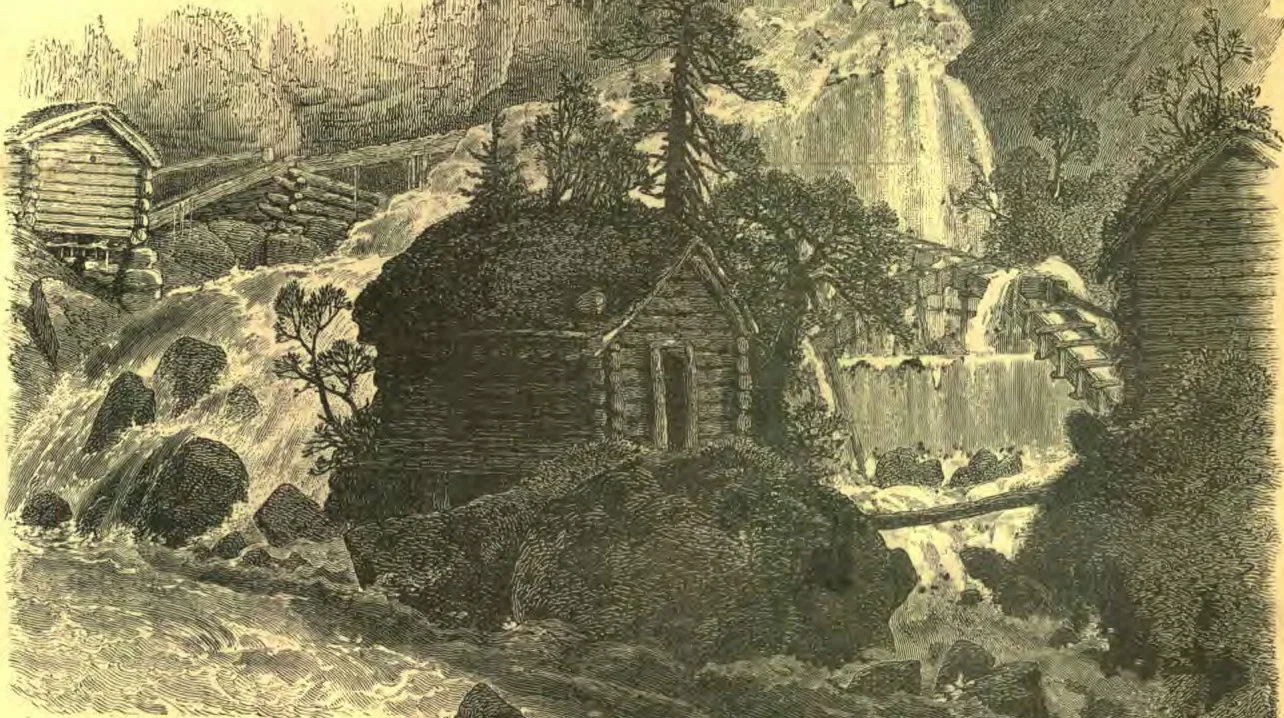
IN the illustration on this page, representing Jolster Cascade, in Norway, the artist has endeavored to picture one of the many beautiful and romantic scenes for which this country is noted. The natural scenery of Scandinavia, especially that of Norway and Sweden, is unique and varied. In this “Land of the Midnight Sun,” even the tourist who has traversed the great highways of the world can yet find “fresh fields and pastures new,” surpassing perhaps every other in Europe in their power to excite wonder and admiration.
In topographical respect, Sweden is naturally divided into three parts,—the Northern, or Alpine region, which rises gradually from the Gulf of Bothnia to the Kjolen range, belonging to the great Norwegian Fjeldmark, which constitutes the true watershed and natural boundary between Norway and Sweden; the central, or lake district, containing numerous fine lakes, of which the Vener, Mælar, and Vetter are the largest and most noted, and together with Hjelmar lake, nearly intersect the country from east to west; and the southern, or mining district. Nearly one-eighth of the entire country is covered by lakes. The rivers are generally short and rapid. South of the lakes we have named, the country is mostly level, though ranges of high ground and detached hills occur.
The waterways of Sweden are unique. By these we mean not only the fjords by which the coast is everywhere indented, and which, with their multitudes of rocky, pine-clad islands, present scenes of ever-varying delight to the tourist’s eye, but also the lakes, rivers, and canals, which afford facilities for inland navigation. One of the most delightful routes is that by steamboat across the country from the Baltic to the North Sea. A large part of the journey is made by the East and West Gæta canals, one of the greatest feats of engineering skill in the world. Starting from Stockholm, four or five hours on the fine Lake Mælar and as many more amid coast islands, bring us for one hour out on the open Baltic Sea; we then enter lakes and canals in frequent alternation, winding about through verdant fields, forests, and rocky hills, past historical castles, churches, and villages, for the most part of two days and nights,—if indeed that can be called night which in summer brings no darkness, but simply a dusky sky for three or four hours. While on Gæta canal, the boat passes Trollhetta Falls, and two hours are allowed the passengers to visit this celebrated cataract, which, in regard to volume, is greater than any in Europe, and in grandeur is equal to the most famous. The banks of Gæta River for fifty or sixty miles above the cataract present every variety of scenery,—now waste and dreary, now grand and elevating, and now beautiful and charming. Coming to the first of the cataracts of the Trollhetta, which, broken only by intervening eddying rapids, extend to the distance of nearly a mile below, the placid river all at once bounds over, in a broad, glossy sheet of water, to be broken at length by out-jutting rocks, and fall with uproar into a wild, seething, steaming abyss below. The stream is broken and narrowed by the interposition of several granite islands, forming small straits, down which the water dashes wilder and wilder. The scenery around and for twelve miles onward is romantic or grandly impressive. A road winds picturesquely all the way along the banks, now skirting the water’s edge, now rising steep up the mountain sides, from which are visible far-off reaches of the river, with ships wending to and fro over its peaceful bosom. Here and there in the woods are clearings, with broad lawns and blooming orchards, each ‘embosoming’ some stately mansion or tasteful villa, all contrasting beautifully with the somber tints and frowning heights around.
The falls themselves are four in number, aggregating 130 feet in height. The environment, the volume of water, the stillness of the current above and below, and the perceptible quaking of the rocks in their neighborhood, contribute to render them as impressive as any cataracts in the world.
The impression on the mind, particularly in calm weather, and still more by moonlight than by daylight, is so unique that you linger under the spell, and ever after are unable either to forget it yourself or to render an account of it to another.
An old geographer makes this startling description: “A few leagues from Gottenburg there is a hideous precipice, down which a dreadful cataract rushes with such impetuosity from the height into so deep a bed of water, that large masts and other bodies of timber precipitated down disappear, some for half an hour, and others for an hour, before they are recovered. The bottom of this bed has never been found, though sounded by lines of several hundred fathoms.”
There are many other beautiful and interesting places in the northern part of Sweden, but, as these are similar to those in Norway, we will now turn our attention to the natural attractions of this country. Here it may be said that every square mile possesses its water-fall, valley, or glacier, the whole comprising a continuous series of fjords, isles, mountains, and forests, Alps and glaciers.
Travelers regard it as a “stupendous museum, where the Creator has crowded together all the wildest and most beautiful effects of his power.”
On the steep slopes, nature seems to have delighted170herself in heaping together the sharpest rocks. Here in all their majestic grandeur and solemnity the mountains rise around and before you. The only sound that breaks the stillness is the roar of rushing rivers; and as the traveler ascends higher, the mighty rivers narrow into murmuring streams, falling down steeper and steeper precipices, till transformed at last into babbling brooks, they leap from stone to stone, plunging from steep to steep, twisting their silvery beds into the most fantastic curves. “The skies above, and the earth and waters below, will conspire to open in his soul fountains of novel and exquisite delight. Delicious bits of landscape, emerald valleys, waterfalls of every size, from trickling rills where a panting deer could scarcely slake his thirst, to roaring rivers leaping sheer down a thousand feet; limpid lakes with all conceivable shapes and settings, from mountain mirrors to inland seas; lofty peaks; bald, solemn headlands; islands studded by bays winding in and out with all conceivable and inconceivable lines of beauty; placid fjords (or inlets) cut by the keels of many nations, and skirted by jagged cliffs and somber pines and fishermen’s villages and peasants’ huts,—and all these to be seen in the changing and multitudinous lights of a far Northern summer, which range from the severe splendor of high noon to the weird loveliness of a daylight midnight—but words fail, and I pause.”
When we stand in the midst of such a panorama, who can but lift his thoughts to that great Being who is infinitely more wonderful than all we admire in nature? Well may we say, If the works be so beautiful and grand, what must their Creator be? Said King Oscar, the ruler of Scandinavia, when speaking of a trip up the mountains of Norway: “I seemed but a speck in the great universe; almost lost in infinity. . . . Here, away from the crowd of humanity, I am only a mere grain of dust upon the deep snowdrift.”
If the wonders and beauties of this sin-cursed world can so fill us with delight and admiration, what will be the feelings of the saints when they view the new earth restored to its Edenic beauty? When they shall have the privilege of contemplating, with expanded powers of comprehension and appreciation, not only the wonders of this renewed earth, but of other larger, and if possible, more wonderful worlds in the boundless universe of God? Will this be your privilege and mine? A. SWEDBERG.
IN THE WOODS AND OUT.
By Pansy
Eben was heavily loaded. He had a basket on one arm, and a pretty full pail swung at his left hand. Grandmother Carey was to have the contents of both basket and pail. Not his real grandmother, but a dear old lady who lived in a tumble-down house just at the edge of the woods; she was grandmother to all the children, and she lived well, for the children's mothers were sure to remember her when they did their baking to last over the Sabbath.
In Eben's basket was a layer of sweet biscuit, an apple-pie, a baked chicken cut in pieces and nicely packed in a bowl, and all the chinks were filled up with caraway cookies. The pail was full of soup; grandmother's dinner was over for the day, it is true, but the Sabbath was coming, and what could he easier to do than warm a bowl of the nourishing soup for the Sabbath dinner?
Everything would have gone on nicely if it had not been for meeting Eddie Burns just as Eben entered the woods. Not that Eddie Burns was a bad boy, but he always had some plan that he wanted others to help him carry out right away. No sooner did he catch sight of Eben, than he began:—
“Oh, ho! you’re just the fellow that I want; come back here a little way, and hold the limb of a tree down for me a minute, and I will show you something pretty.”
“Can’t,” said Eben; “both hands are full, and the things are heavy enough without holding any limbs.”
“Oh, but set the things down just a minute; it isn’t a rod from here, and it won’t take you but two minutes. Come along!” he coaxed.
“Eddie Burns,” said Eben severely, “are you trying to rob a bird’s nest?”
“Now,” said Eddie, looking injured, “you know I wouldn’t do that any more than you would. Some bird has got scared, and left her nest; the eggs are all drying up; there are three of them, the cutest things; a different kind from any I ever saw before. I can’t get them because that branch is in the way, and I’m afraid I’ll break them. If you will come and help me, I’ll give you one of the eggs for your collection.”
“Wait till I come back from Grandmother Carey’s, and I will.”
“I don’t dare do that. Joe Ball is hanging around in the woods, and I’m afraid he’ll get them; besides, I’ve got to be home by four o’clock, and it’s most that; oh, come, Eben, do, it won’t take but a minute, and you can set your things right down here under the tree.”
It looked innocent enough, so Eben set down the things and went. Alas for Grandmother Carey’s Sabbath dinner. The basket with its cover tied down was unhurt, but when in ten minutes Eben came back with the eggs, the pail was lying on its side, and nearly all the soup was gone.
Now begins the worst part of my story. What do you think that boy made up his mind to do? Why, not to say a word about the soup to his mother. “I won’t tell a lie,” he said, growing hot and angry at himself for thinking such a thing. “Of course not; but there’s no use in worrying her about it if I can help it. I’ll just keep still. She won’t see Grandmother Carey in weeks, maybe.”
His mother rather helped this resolution along by her questions: “What did grandmother say to the chicken?”
“She said it looked most too good to wait until to-morrow; that she had not had a taste of chicken for a long time; and the caraway cookies are just such as her mother used to make for her when she was my age; only mother, I know her’s weren’t near so good as you can make.”
“And did you carry the things down cellar for her?”
“Yes’m, and put them all away; and she said, ‘Tell her she never could thank you enough.’” And Eben went away whistling before more questions came.
It wasn’t a nice afternoon at all. He didn’t care for the speckled egg, and thought of throwing it away. He had a chance to ride old Whitie to pasture, and didn’t want to do it; his father said: “I’m afraid the boy is sick.” But the mother said, “No, I think not.”
By and by, to Eben’s satisfaction, the day was done; he wanted to go to sleep and forget it. But to his dismay he found that there was no sleep to be had out of his bed. He turned his pillow five times, and it was hot every time. At last he sat upright, and called: “Mother!” Of course mother went upstairs.
“Mother,” said Eben, “I want to tell you; I didn’t mean to, and I didn’t think it was wrong not to, but now I know it is: I spilled every drop of the soup before I got to grandmother’s at all; and I left the pail behind a tree, and grandmother doesn’t know anything about it.”
“But I did, my son,” said mother, quietly sitting down beside him and taking Eben’s hot, rough little hands in hers.
Then was Eben astonished. “You did?” he said. “How?”
“The pail told me first. It was all sticky outside, and grandmother never sends home dishes in that way. Then your shoes told me: when you changed them for slippers this evening, I saw that they were all greasy and smelled of soup. Then your face told me all the afternoon that something was wrong, and I have been waiting to hear about it. Shall I tell you what has made me feel bad? That it took you so long to make up your mind to tell me.”
There was a long talk about soup and several other things; and when Eben lay down again, he said with a satisfied sigh: “Mothers know everything, and they are nice every time; and I won’t try to hide anything ever.” Then he found to his joy that his pillow was full of sleep.—Pansy.
HONOR IN TRADE.
A YEAR or two ago an old French merchant died, who, for half a century, had carried on a large retail business in New York, Philadelphia, and one or two Southern cities, with marked success. His methods were peculiar. No clerk or salesman was permitted to urge or recommend any goods offered for sale. He was to show the article, and state the price. The customer thus bought at his own risk. The merchant did not cheat, but if the buyer cheated himself, he did not interpose.
Another merchant, a Scotchman, in a Virginia city, pursued a still more unusual plan. He would warn an ignorant customer if the cloth she was about to buy was not made of the best material, or if the chintz would fade, or if the hat was no longer fashionable.
His maxim was that the tradesman and customer should be friends, not antagonists trying to overreach each other. In consequence, many of his goods remained unsold. But his customers, finding that they could place absolute reliance on his word, crowded into his shop, and bought honest goods at an honest profit.
“The so-called ‘systems of trade,’” says a recent writer, “are based upon dishonesty. The grocer who sells adulterated sugar or vitriol vinegar at the same rates as the pure articles; the butcher who sends inferior meat to the ignorant housekeeper; the clerk who urges unsalable articles at high prices on country buyers, are breaking the law. ‘Thou shalt not steal,’ as much as the pick-pocket who pilfers a purse.”
A convict at one of our State prisons lately wrote to the warden, “I was sentenced for stealing. I am now employed in making shoes, and am ordered to insert two sheets of thick paper in the soles, and to color them to imitate leather. Is this the way in which you reform thieves?”
In Norway, it is said, some travelers last summer inadvertently left a gold-headed umbrella hanging on a tree beside a much-frequented road, and found it untouched after two days. Every man, woman, and child who passed that way helped to earn this noble character for the whole district.
Every boy who goes into trade, and firmly carries out the pure, strict principles of honesty which he finds in his Bible, will not only live a noble life, but will help to earn for America a character for uprightness and honor which her enemies lately have hoped that she would lose.—Selected.
SEPTEMBER
By Frank D. Sherman
THERE'S a lyric for September,
Best of all months to remember;
Month when summer breezes tell
What has happened wood and dell,
Of the joy the year has brought
And the changes she has wrought.
She has turned the verdure red;
In the blue sky overhead
She the harvest-moon has hung
Like a silver boat among
Shoals of stars,—bright jewels set
In the earth's blue coronet.
She has brought the orchard's fruit
To repay the robin's flute
Which has gladdened half the year
With a music liquid clear;
And she makes the meadow grass
Catch the sunbeams as they pass,
Till the autumn's floor is rolled
With a fragrant cloth of gold.
—Frank D. Sherman, in St. Nicholas.
The Petrified Woman of Pompeii and Mammon
In the ruins of Pompeii there was found a petrified woman, who, instead of flying from the doomed city, had spent her time in gathering up her jewels. She saved neither her life nor her jewels. There are multitudes making the same mistake. In trying to get earth and heaven, they lose both. “Ye cannot serve God and mammon.”
HE HEARS.
By Anon
“Of all that I brought with me from the home of my childhood into the world,” said a leading business man in the West, “the most valuable possession was the habit of kneeling to ask God’s blessing night and morning. Often it was a mere mechanical form; at times, when I was in desperate straits, my prayer was a single inarticulate groan for help. But it kept alive in me the idea that there was a Power stronger than I, than money, or business, or life itself. That idea saved me.”
An African explorer, one of the first to venture into the Dark Continent, wrote: “In all the dangers through which I passed, in the long fever, and even in the criminal excesses to which I, a young man and far from home, was a half-consenting witness, one thread kept me from sinking and utter ruin. It was the knowledge that on the other side of the globe an old, grey-haired woman was praying for me. No man can go utterly to destruction as long as his mother keeps one hand on him and the other on God.”
“Archimedes,” says a great teacher, “only wanted a lever long enough, and a place to rest it, to move the world. The lever is prayer. It rests upon the promise of God.” It is stated that John Wesley was first brought to the consideration of religious truth by the prayer of a poor servant for him. If this be true, that prayer was the lever which lifted not only one man’s soul, but ultimately the whole Christian church, into life and activity.
In one of our seaboard cities is an immense building which is lighted by electricity. At the touch of a knob in a closet, the countless lamps and huge chandeliers flash into radiance, and all the vast audience-halls glow with light. A sick child, the daughter of the janitor, usually presses the knob with her little finger, and is made happy by knowing that she has given light to thousands of people. The poor woman in her closet, the invalid on his bed of pain, praying for God’s blessing on others, put their hands in faith on that Power that controls the world. They do not see the result; they may even die without knowing the light that they may have caused to shine in dark places; but they have the sure promise that the Infinite Wisdom and Pity heeds their summons, and does not turn away from their pleadings.—Anon.
FAITHFULNESS AS AN ELEMENT OF SUCCESS.
By G. H. B.
THE value of faithfulness cannot be overestimated. Strength and skill are important, but it is the faithful ones who are most prized in any kind of business. True, it is very desirable to find skill and faithfulness combined, but a skillful man who is lacking in faithfulness is unreliable. We often hear it said of such a man, “He is a first-class workman, but cannot be depended upon.” Some of the most skillful physicians neglect their patients, and thus lose more lives than some who are far behind them in medical knowledge. The most important cases in law are often lost through the unfaithfulness of lawyers whose ability is not to be questioned. Train conductors and railroad engineers must be men of the utmost vigilance. No amount of knowledge or experience can make up for the slightest neglect; for by that neglect precious lives may be lost, and the most fearful destruction of property occasioned. Through some unfaithfulness of a workman or a master-builder, massive structures have almost in an instant fallen into shapeless ruins, crushing and burying hundreds of men and women. From the same cause ships have gone to pieces in mid-ocean, giving to hundreds a watery grave, and leaving thousands to mourn their loss.
In all these things the results of unfaithfulness are evident, but in the work of the minister or the teacher the fatal results of a neglect of duty eternity alone will fully reveal. In no place is faithfulness more important than in Sabbath-school work. The duties of the Sabbath-school teacher may appear very trifling, and thus many are led to neglect them who would be faithful in what they regard as greater things. But it is unfailing attention in these little duties that gives final success. A brilliant teacher may delight his class at first, but if his heart is not in the work, he will at times neglect suitable preparation, will in unguarded moments show his lack of real interest, will fail to give sympathy and encouragement to those who most need it, and sooner or later is sure to lose the confidence of his class, and his influence over them for good. If he is careless about his records, he will not only make trouble for the secretary and the whole school, but will make it impossible for a correct report to reach the State officers.
A careless secretary does harm on all sides. By slackness on his part, he causes neglect on the part of teachers, and makes any amount of trouble for the superintendent. Indeed, there are few greater sources of annoyance than a secretary who cannot be depended upon. But what shall we say of the careless superintendent? He can ruin the work of the best school in the land. All the members of the school look to him as a model worker, and an example in all that is excellent,—in short, a leader. But when he neglects the interests of the school, by want of study, by careless and injudicious classification, by failing to oversee and instruct the teachers, by not looking after the dilatory, by not keeping good order, or by not giving proper encouragement to those who do well, who can describe the pitiable consequences? How discouraging it is to every one who loves the work. Some superintendents even dare to be tardy, or at times to be absent. Would that the consciences of such men might be enlightened, and that they might be brought to realize some of the sad consequences that are sure to follow from such a course of action.
We might go further, and speak of the State officers and those who are responsible for the general management of the entire work, but we forbear; for these are supposed to be men and women to whom neglect of duty is a thing unknown.
We are far from underrating the value of tact and talent. Would that we had more of it, and that every one would cultivate what he has, till he makes it tenfold greater. But it is a sober fact that many of our best schools are somewhat deficient in these elements. Perhaps no one in the school has any remarkable gift; from the superintendent down, they are very ordinary people; but they study their Bible earnestly and prayerfully, not to be able to pass through the recitation creditably so much as to get from every lesson all the good it has for them. The question with them is not how little time will suffice for their Sabbath-school work, but how much good they can do. They realize their want of knowledge and skill, and feel their dependence on God, whose help in their work they humbly ask from day to day. They are ready to receive counsel, they eagerly read everything that is printed for the purpose of aiding them in their work. They are not afraid to take time to visit with their pupils, to see them at their homes, to encourage them in their studies, and, if need be, to aid them in learning their lessons.
Faithful work of this kind is sure to tell in the long run. Its success will be gradual, and it may be slow in coming, but it will be sure in the end. It is like the steady gains of an industrious family who by economy and temperate habits manage to lay up something from a very small income.
A faithful Sabbath-school worker, sickness and accident excepted, will be in his place in the Sabbath-school at the appointed time, fifty-two Sabbaths in the year, ready to greet with a smile the earliest pupil who comes, and to gladden the heart of his fellow-workers by his cheerful encouragement. He will not only have fifty-two perfect lessons every year, but these fifty-two lessons will be taken into his heart and life, and will, to some degree at least, be worked into the hearts and lives of those whom he teaches. The good precepts and the good impressions of these lessons will have gone out, through kind words and generous actions, on their mission of love to mankind, and will bear a part in gathering sheaves for the final harvest.
Much more might be said. The character and work of the faithful superintendent might be described, but it is unnecessary. The principle of faithfulness is one, whether in pupil or teacher, secretary or superintendent. What a blessing it would be if the seeds of faithfulness could be sown in every heart, and cultivated into a strong and healthy growth that should bear fruit to the salvation of men and the glory of God. G. H. B.
ORDER OF EXERCISES.
By Eva Bell-Giles
There should in every school be a time for everything, and everything in its time. There should be a time to begin; and when that time comes, the school should begin, whether half the members are there or not. If you wait ten minutes for laggards one Sabbath, you may wait half an hour the next, and so on. A certain number of minutes should be allotted to the opening exercises of the school,—prayer, singing, reading of the report, etc., and this time should not be overrun. There should be a definite time set apart for the recitation of the lessons, and also for the reviewing of the different divisions of the school. A few minutes should be allotted at the close of the school for the taking of records, and general remarks which the superintendent may need to make to the school, before closing. The secretary, or perhaps the superintendent in very small schools, should watch the clock, and call time with a stick or call-bell at the end of the time allotted to each exercise of the school.
Where schools have not followed any regular program, it would be well for the officers and teachers to consult together, and make one which they think suited to their wants, though of course it is the privilege of the officers to decide this alone, if they see fit. This program may then be plainly written on a blackboard where all may see it, or better still, printed in large letters on a sheet of heavy manilla paper. Sticks or rollers should be pasted to the top and bottom, and then it can be taken down and rolled up each week, and so will answer the purpose for a long time, unless it is found necessary to make changes in it.
If all in the school know just the time allowed for each exercise, they will be more apt to bring their work promptly within it. Too much importance can scarcely be attached to this matter of promptness in opening and closing the school on time, and of keeping each exercise within its own limit of time. This is as necessary in a small school as in a large one. A careful regard of this simple rule will do a great deal to infuse life and interest into your Sabbath-school.
One hour and twenty minutes is a very convenient length of time to devote to the Sabbath-school, and may be divided up into the different exercises as follows:—
OPENING EXERCISES.
First, come the opening exercises, consisting of singing, prayer, and reading of secretary’s report of the school of the previous Sabbath. These need occupy only about fifteen minutes.
Singing.—The singing should be earnest and spirited, and all who can sing should feel it a privilege to join in this part of the exercise. Though everything may not be critically correct, if there is manifested a unity and a hearty good-will, the singing will be found to be a wonderful means of making the school interesting and successful. We fear the importance of this exercise, as well as the desirability of its being well done, is too commonly overlooked. If the prayer and secretary’s report do not occupy more than their due time, there may be a song to open the school and another after the prayer, before the reading of the report. But the time allotted to opening exercises, should not be overrun in order to get in the second song.
Prayer.—In a public assembly of any kind, the one who offers prayer is supposed to be the mouth-piece of all those who are assembled, and should offer a prayer applicable to all,—one in which all can join from the heart. Thus the prayers offered in Sabbath-school should be short, so that the young children shall not become tired and inattentive; they should be simple, both in language and in thought, that they may meet the understanding of every one who listens; they should be earnest, that no listless, irreverent habits of prayer be cultivated. The one who offers the prayer should come forward to the rostrum or desk, and should speak in a clear, distinct, and pleasant tone of voice, rather than in a drawling, whining way. This is necessary that all may hear, and is also in keeping with the dignity of any public service to God.
Secretary’s Report.—An effort should be made to avoid dullness and sameness in these weekly reports. They should not, as it has been expressed, be “the same yesterday, to-day, and forever, with the exception of dates, number present, and amount of donations.” In addition to the formal minutes of the previous Sabbath, the report may give a brief general outline of the several lessons then recited. Any other items in regard to the workings of the different divisions of the school calculated to interest and encourage those engaged in it may also be given with profit. In this way those studying one set of lessons may be kept informed in regard to the interest and progress of the other divisions, and so the school be brought into a more perfect unison of feeling and sympathy. The report should not be too long nor too short. Its reading need not occupy more than two minutes at the longest, but it should be done in a clear voice and in an earnest manner. A well-worded report read in a muttering, stammering way will fail to secure the attention of the school, or to interest others who may be present. It is entirely unnecessary, and indeed out of place, to have this weekly report voted upon by the school, as is the custom after reading the minutes of a business meeting.
RECITATIONS.
The recitation of the lessons comes next in order, and should occupy thirty minutes. Any teacher who has made thorough preparation for his work, will find this amount of time all too short, rather than too long, for what he wishes to do. If time is left after thoroughly considering the lesson of the day, reviews on previous lessons are always interesting and in place. Indeed, the teacher should make it a point to bring in some review questions every Sabbath, especially on recent lessons. If in any case the teacher finds the majority of his class with unlearned lessons, he cannot employ the time better than in teaching the lesson to them then and there. It is a bad mark, and shows a sad lack of interest, to see half the teachers of a Sabbath-school sitting down before the time for recitation is through.
GENERAL EXERCISES.
After the recitation of lessons, another song makes a pleasant change, and gives the mind a relaxation before taking up the general exercises. These general exercises should consist of questions on the lesson of the day and previous lessons, and are to be conducted by the superintendent or some one whom he may appoint. It is a work that should not be carelessly done, and should claim the very best skill which the school can furnish. Whoever is to do it should be notified beforehand by the superintendent, that he may have a chance to look over the ground carefully, taking into mind the entire scope of the subject under consideration, as well as the capabilities of those to be questioned. However gifted the questioner may be, his best efforts will be worthily disposed on an exercise like this, even though the division before him may consist of little children. The questions should be brief but pointed, and calculated to draw out ready but not thoughtless answers. Meager, unsatisfactory answers should not be accepted, and there should be no delay in waiting for answers. If a good answer is not obtained from the first or second one called on, the one questioning may give the answer himself, rather than to allow a weak link in the chain. The aim of the questioner should be to impress the truths already taught by the teacher, rather than to dissipate them by striking or sensational efforts.
The closing exercises of the school, consisting of taking records of the classes, distributing lesson papers, making172announcements, and the closing song, may all be easily brought within ten minutes, and thus the school have accomplished its work thoroughly and satisfactorily in one hour and twenty minutes, provided each exercise has been kept within its proper limit of time.
The following program, which agrees with the preceding remarks, and has proved satisfactory to many schools, may at least prove a suggestion to others in getting up one which shall be exactly suited to their wants:—
Exercise
Details
Time
Opening Exercises
Prayer, Singing, Secretary’s Report
15 min.
Recitations
30 ″
Singing
5 ″
General Questions
20 ″
Closing Exercises
Taking Records, Distributing Lesson Papers, Announcements and Singing