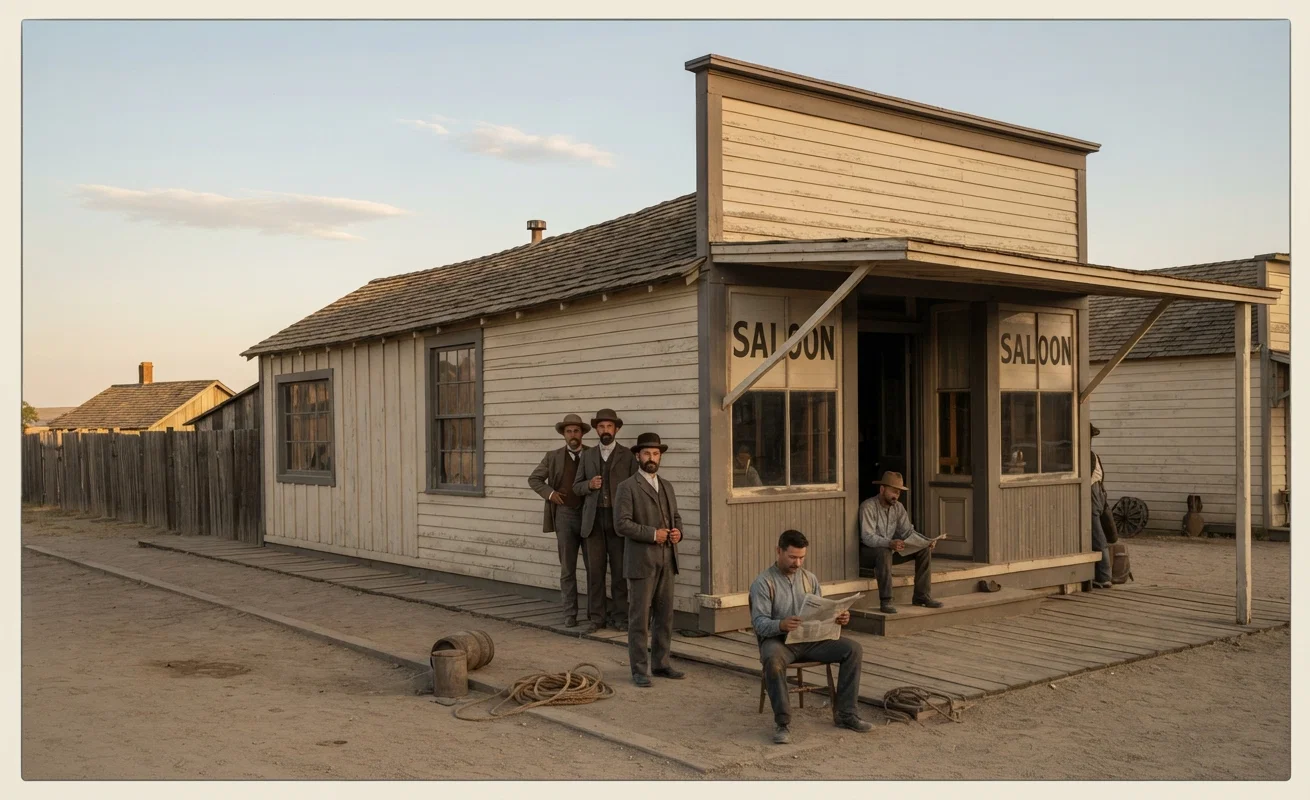
B. B. Comer, Alabama: "Before I entered upon my official duties as governor, while a strong temperance man, I was in no sense of the word a prohibitionist; but after a year as chief executive, I am an intense prohibitionist, having been made so by the mothers, wives, and children who have come to my office for the purpose of securing pardon or stay of execution for their sons, husbands, or fathers, who have been sentenced for murder, committed, in nearly all cases, while under the influence of whisky."
Hoke Smith, Georgia: "It is absolutely impossible to have a permanent decent municipal government where the saloon dominates municipal politics. The elimination of the saloon will help municipal politics everywhere."
John P. Altgeld, Illinois: "These saloons become lounging places where characters and habits of industry are destroyed, where habits of drinking and carousing are formed that pull down not only the individual, but his family; and every time the drunkard and his family sink a notch lower, the moral effect tends to blight the family of the saloon-keeper, the brewer, and the distiller, who created the condition from which this ruin proceeds."
J. Frank Hanly, Indiana: "I bear no malice toward those engaged in the business, but I hate the traffic. I hate its every phase. I hate it for its utter disregard of law, its ruthless trampling of the solemn compacts of state constitutions, for the load it straps to labor's back, for the palsied hands it gives to toil, for its wounds to genius, for the tragedies of its might-have-beens. I hate it for the human wrecks it has caused, the almshouses it peoples, for the prisons it fills, for the insanity it begets, for its countless graves in potters' fields, the mental ruin it imposes upon its victims, for its spiritual blight, for its moral degradation, the crimes it has committed, the homes it has destroyed, the hearts it has broken, the malice it has planted in the hearts of men, for its poison, for its bitterness, for the dead sea fruit with which it starves their souls."
A. B. Cummins, Iowa: "It can safely be said that the less liquor sold the better the morals."
E. W. Hoch, Kansas: "The devil never invented a bigger lie than that the revenue from illegitimate sources is necessary to the financial success of any town or city."
W. T. Cobb, Maine: "I intend to vote in September for the retention of the prohibitory amendment, and shall do this because I believe that a vote to that end is the best contribution I can13make to the moral, social, and economic welfare of Maine."
Chase Salmon Osborn, Michigan: "The saloon of to-day is a social saprophyte. It has always been a breeding place of lawlessness and a culture ground for vice."
E. F. Noel, Mississippi: "That our prohibition laws do immensely curtail the selling and use of intoxicating liquor is manifest to all intelligent and fair-minded men who have seen our laws tested, and is demonstrated by the immense expenditure of time, money, and work on the part of the brewery and liquor interests in their persistent endeavor to discredit and repeal prohibition legislation. The public sentiment of Mississippi is overwhelmingly in favor of the prohibition of the liquor traffic and the enforcement of the law."
Joseph W. Folk, Missouri: "The saloon is a business the natural tendency of which is toward lawlessness, and the time has come when it will either run the politics of the state or be run out of the politics of the state."
John Burke, North Dakota: "The merchant claims that under prohibition there is more money in the legitimate channels of trade, that collections are better, and people generally buy more. They are better fed, better clothed, better schooled, and are better citizens. Hence the business man becomes a prohibitionist, and prohibition becomes a settled policy in the state."
W. W. Kitchen, North Carolina: "Prohibition has now been in force throughout the state for two years. . . . Morality, industry, and frugality have increased, and politics and government have been to a great extent relieved of one of their most corrupting influences."
Lee Cruce, Oklahoma: "The people of Oklahoma are well satisfied with prohibition. . . . There is more money in the banks now than then. The stores are selling more goods now than then. Real estate is worth more now than then in both town and country. There are more miles of paving and sidewalks now than then, and all Oklahoma is more prosperous to-day than it was when it had open saloons."
T. M. Campbell, Texas: "I believe that the saloon is a bad thing—a thing from which no good can come. Those who vote for a partnership with the saloon, vote for the crack of the pistol in the saloon, and for all the other crimes that follow in the wake of the liquor traffic. Vote for it if you will. I wash my hands of it. The widows and the orphans shall never in the Judgment-day stand up and charge me with the iniquities which overtook them through the saloon. More than $40,000,000 is paid over the bar in the saloons of Texas annually. That is enough money to build and equip four railroads across the state every year. Abolish the saloon and allow this money to enter the legitimate channels of trade. Wherever it has been tried, the community has blossomed like a rose."
John Cutter, Utah: "The morals of a community are improved by a decreased sale of strong drink. The revenues of a state are increased, because temperance leads to frugality and thrift."
William Hodges Mann, Virginia: "The records of our penitentiary show that the criminal age is below twenty-three. If I am to judge from the applications for pardon I am constantly receiving, from ninety to ninety-five per cent of the crimes for which convicts are confined were committed while under the influence of liquor. I believe that if this temptation could be gotten out of the way of our young men, it would result in the greatest benefit to the state from every point of view."
W. M. O. Dawson, West Virginia: "Do men deplore the rule of corrupt political bosses? It is the saloon that rallies the mass of venal and unpatriotic voters, who constitute the phalanx of the bosses' power. Has crime become rampant on the streets? The saloon is the refuge of the criminals. Does vice seek protection? The saloon effects the arrangement with the policemen who are familiar with its dark secrets and comrades of its debased fraternity."
Ex-Governor Patterson, Tennessee: "All my arguments and all my conclusions, so far as they excused or justified the moral right or policy of the state to legalize the sale of liquor, and thereby give sanction to its ravages on society, were only the empty and hopeless statements of propositions which had no verity or application to a thing wholly and essentially evil, and concerning which no principle of right or liberty should ever be evoked for its existence."
Oswald West, Oregon: "I expect to see Oregon made 'dry' this coming election. The people are growing sick and tired of the effects of booze, and the everlasting attempts of the booze element to control the government, and thus use its machinery as a protection for organized vice. You may count on Oregon going 'dry,' and I earnestly hope California will be with us."
H. D. Hatfield, West Virginia: "The people of West Virginia have spoken in an unmistakable voice that they desire the complete elimination of the licensed saloon and all traffic in liquor. A majority of little less than one hundred thousand in favor of state-wide prohibition is decisive and positive, and as chief executive I propose to see that the prohibition laws are rigidly enforced."
The True Cost of Alcohol Revenue
“IF A LOSS OF REVENUE SHOULD ACCRUE TO THE UNITED STATES FROM A DIMINISHED CONSUMPTION OF ARDENT SPIRITS, SHE WILL BE A gainer a thousandfold in the health, wealth, and happiness of her people.”—License Cases versus Howard, 46 United States Supreme Court, page 573.
What Soldiers Say
Count von Moltke: “Beer is a far more dangerous enemy to Germany than all the armies of France.”
Emperor William of Germany, to naval cadets, 1911: “I can assure you that in my twenty-two years of government it has been my experience that a great number of the crimes which were laid before me for decision were to be nine tenths ascribed to the consequences of alcohol. In former days it was reckoned among young men particularly smart to be able to drink and carry a large quantity.”
“Those were obsolete views, which were all very well for the Thirty Years’ War, but don’t do to-day. As you will notice yourselves, in the course of your term on board, service in my fleet has attained a degree of intensity which can hardly be exceeded. It is your task to go through these prodigious efforts in time of peace without being used up, in order that you may be fresh in case of serious events. The next war and the next battle will demand strong nerves on your part. They will be decided by nerves. But these are undermined and endangered from youth upward, by indulgence in alcohol.”
“It is one of the questions of the future for our navy and for our nation. If you educate the people to do without alcohol I shall have sensible subjects. . . .”
“The nation which takes the smallest quantity of alcohol will win the battles of the future.”
What Labor Leaders Say
Samuel Gompers, president American Federation of Labor: “None better know than the so-called leaders in the movement for labor reform, the curse of liquor and the hindrance it is to the better education and activity in that field of operations.”
John Mitchell, vice-president A. F. L.: “If a brewery is closed down, in its place springs up a factory. If a saloon is closed, in its place comes a store. It is simply a process well known to union men, the same process as follows the introduction of machinery. It is a readjustment, a changed condition of society. Almost every disturbance in the ranks of organized labor can be traced back to some connection with the saloon.”
John B. Lennon, treasurer A. F. L.: “Wageworkers have been the mainstay of the liquor traffic on the North American continent, but, thank God, they are going to knock it out. The saloon does not produce a thing which is a benefit to the human race. It is a non-producer, and must be supported by those who work. Every man and woman should be against the liquor traffic from start to finish.”
Thomas L. Lewis, president United Mine Workers: “If you want to know where the miners of America stand upon the temperance question, I’ll tell you. In our constitution, we have a clause which forbids any member to sell intoxicants, even at a picnic. That’s what we think of the liquor traffic. Some people say that the saloon is a necessary evil. I don’t believe in that kind of doctrine. Because the liquor traffic tends to enslave the people, to make them satisfied with improper conditions, and keeps them ignorant, the leaders of the trades-unions are called on to fight the saloon.”
P. M. Arthur, of Brotherhood of Locomotive Engineers: “Every friend of the working man will vote against the saloon every time he gets a chance, and to close it up, not only on Sunday, but upon every day of the week.”
Beer and Stillborn Babies
Professor Hahnel says "three hundred out of every one thousand babies born in Bavaria, the greatest beer-drinking nation, are born dead." Yet brewers advertise beer as a health drink.
One Million Dollars
By Editor
Do you know, reader, that the liquor interests plan to spend one million dollars in California to perpetuate the liquor traffic, with all of its evils? That is what they voted to do here in California some time ago, and the recent national association of liquor men in Washington affirmed the decision made by the California liquor men, and voted to assist them in raising the million dollars.
That ought to show to the voters of California something of the immense profits that go to the distillers and the brewers. The wholesalers derive great profits also. Some of the saloon-keepers receive less, and some of them barely live. But the whole of the tremendous profit must be paid by the man who drinks. He gets out of it not dollars, lands, gorgeous palaces, expensive automobiles, and all the other accessories and appurtenances of wealth. He gets from it loss of manhood, disease, wreck of home, rags, poverty, immorality, criminality, and at last destruction.
The temperance forces have not one million dollars to spend; but on election day, it is not dollars we count, but ballots, unless the dollars buy ballots. Cast an unbought ballot for prohibition and prosperity.
Liquor Business and Labor
Compiled from United States Census Reports
(See Special Reports, 1905, Manufactures, Part 1, Table 3)
What Ten of the Leading Industries Do for the Workers, and What the Liquor Business Does Not Do
No. of wage-earners employed
No. employed for each $1,000,000 invested
Steam railway cars and shop construction
236,900
1,612
Women's clothing
115,706
1,563
Boots and shoes
149,924
1,222
Knit goods and hosiery
103,715
973
Men's clothing
137,190
896
Lumber and timber
404,626
783
Furniture
110,133
721
Cotton goods
310,458
513
Foundry and machine-shop products
348,380
412
Steel works and rolling-mills
207,562
296
Distilled, vinous, and malt liquors
57,461
91
All manufactures, capital...... $12,686,265,673 Manufacture of liquors, capital... $631,447,598
All manufactures employ...... 5,470,321 Manufacture of liquors employs.. 57,461
All other manufactures, with $12,054,818,075 capital, employ 5,412,860 wage-earners, or 451 wage-earners to every $1,000,000 invested.
The manufacture of liquors employs but 91 wage-earners to each $1,000,000 capital invested. At the same rate as other manufactures, the liquor business ought to employ 284,581 wage-earners. At the lowest rate, 296 to the million, it ought to employ 186,776. Its greed ought to sentence it to death.
Alcohol’s Cost in California Crime
Hammond, the statistician, places California’s crime bill at $39,000,000. $29,000,000 of that is due to the alcoholic traffic.
What Judges Say
Lord Chief Justice Alverstone, of Great Britain (1909): "Crime costs over £7,000,000 per annum. I have no hesitancy in saying that ninety per cent of the crime of this country (England) is caused by indulgence in strong drink."
Chief Justice Stephen J. Field: "By the general concurrence of every civilized and Christian community, there are few sources of crime and misery equal to the dram-shop, where intoxicating liquors, in small quantities, to be drunk at the time, are sold indiscriminately to all parties applying. The statistics of every state show a greater amount of crime and misery attributable to the use of ardent spirits obtained at these retail liquor saloons than any other source."
Chief Justice Walter Clark, of North Carolina (and he has the figures of the court to bear out his statement): "The state has been dry for two years (1911); and the records for the two years, as compared with the year previous to the enactment of the prohibition law, show that murder in the first degree has declined thirty-two per cent, manslaughter thirty-five per cent, murder in the second degree twenty-one per cent. Larceny has declined forty per cent. Burglary shows a drop of twenty per cent, and the reduction in minor crimes ranges from twenty to fifty-five per cent."
Let the Courts Work On.
By Editor
Nebraska has a mighty good law to the effect that saloon-keepers are liable for damage resulting from their sale of liquor, and that wife and children may legally lay claim to damage when the husband and father has become a habitual drunkard. Under this law, a Mrs. Bulger sued a saloon-keeper, Prenica, of Nebraska City, for damages, and the courts awarded her $5,000. The case was carried to the United States supreme court. Prenica's appeal was dismissed, as the Nebraska law was not unconstitutional. We wish every state would follow Nebraska. If liquor dealers paid the damage wrought by their business, that business would be annihilated. Another recent decision by the federal supreme court makes most of northern Minnesota "dry" under the old "Indian Liquor Treaty" provisions. It is said that the United States supreme court, on no less than twelve occasions, has declared that there is no inherent right in a citizen to sell intoxicating liquors; and the same decision practically has been made by twenty-two states and the District of Columbia. Here is an utterance by the highest judicial body in the country: "No legislature can bargain away the public health or public morals. The people themselves can not do it, much less their servants."
Two Plagues
By Editor
Two Plagues.—The great white plague, tuberculosis, kills 100,000 persons a year. $8,000,000 was spent last year to destroy it and prevent its further spread. All are working to destroy it. Plague two, the liquor traffic, kills yearly from 500,000 to 700,000. It is regulated, licensed to destroy. There is legislation for it. In many cases, it is increasing its hellish work. Suppose that 200,000 doctors, 200,000 nurses, 50,000 grave-diggers, 10,000 casket and coffin makers, should petition Congress, petition legislatures, demand of politicians, that tuberculosis must not be stamped out. Their trades, professions, prosperity, demand that the plague be left at liberty, just licensed and regulated. A worldwide cry of horror would arise. But that is what we do with the worse plague of the liquor traffic.
Why the Liquor Traffic Must End
By Editor
We have not said all we wished to say in this issue. We have been forced to leave out articles and poems that we would have been only too glad to use, and which will be used in later issues of this journal. We have been compelled to shorten, abridge, condense, and blue pencil, till it hurt to the quick, articles which herein appear. Some of these will be published in full in future numbers. We have aimed at one thing, whether we have hit it or not; namely, to show that from every human consideration, the manufacture and sale of alcoholic liquors—the entire liquor traffic—should be prohibited by law and prohibited forever. We have tried to show that it would be better for the victim of drink, better for his family, better for the people in general, better for the liquor dealers themselves if they would see it so, if the traffic were prohibited. Have we succeeded in our aim? Then, reader, help us to circulate the paper.
What Prohibition Has Done for Woodland
A Story Which Could Be Duplicated in General by Many "Dry" Towns
From Facts Furnished by Mr. W. F. Mixon, Editor of the Woodland Mail
WOODLAND, in Yolo County, California, had in 1910 a population of 3,187. It became "dry" on August 1, 1911, by a majority of 36. In the time between the election and the closing of the saloons, the local option law became effective, and the saloons then called another election. At this time, the women having a right to vote, the "dry" majority was increased to 318. Conditions improved from the very start. More cash business was reported by the business men, and the volume of trade at least was as great. Seventeen saloons were closed, but other lines of business filled vacated buildings. Rents, instead of falling, actually increased. New fronts were put in practically all the business houses, and a general clean-up followed.
In about three years the building inspector reported 300 new structures of one sort or another that had been erected. Two notable ones are the high school and manual training building, costing $110,000, and the new Porter Block, brick and steel, costing $80,000.
Bank Statement, from Published Statements Under Bank Commissioners Law
August 1, 1911, Woodland went "dry." January 7, 1911, all bank deposits in Woodland aggregated $2,843,756.95
February 9, 1912, bank deposits amounted to 3,087,590.67
Increase for 13 months 243,833.72
More than $727 increased deposits for each banking day of the period. The town continued dry, and deposits grew. February 2, 1914, after two years, six months, and two days of no-saloon régime, including two successive droughts and consequent crop failures, the deposits aggregated 3,911,276.98
Increase from February 9, 1912 823,686.31
770 banking days, at nearly $1,100 a day.
To summarize:
Banking resources January 7, 1911 $5,407,890.22
Bank resources December 24, 1913 6,699,982.03
Increase 1,292,091.81
Postal Business
1911 $16,306.12
1913 17,727.82
Population
1910 3,187
Census December, 1912 5,320
Increase, 2,133, or 67 per cent.
City jail practically empty, and used principally for free lodgings for tramps.
Yolo County Prisoners
The annual report of the sheriff of Yolo County for the year ending July 1, 1913, shows the following facts concerning the county prisoners:
From Dunnigan, a "dry" town 2
From Davis, a "dry" town 4
From Winters, a "dry" city 1
From Woodland, a "dry" city (population 5,000) 27
From Broderick, a "wet" town 129
Broderick, a small "wet" town, supplied nearly four times as many prisoners for the county jail as all the remainder of Yolo County. "Booze and crime are twin sisters."
"Vote 'Dry' for Me"
NEVER mind the place or the true names. Apart from this, the story is true. An election for a "dry" town is impending. The loss-of-revenue and grass-grow-in-the-street arguments are strongly used. An old drunkard accosts the manager of a factory, with "How are you going to vote, Smith?" "To vote out the saloons will increase our taxes," said the manager. "I guess, Jim, I'll vote 'wet.'"
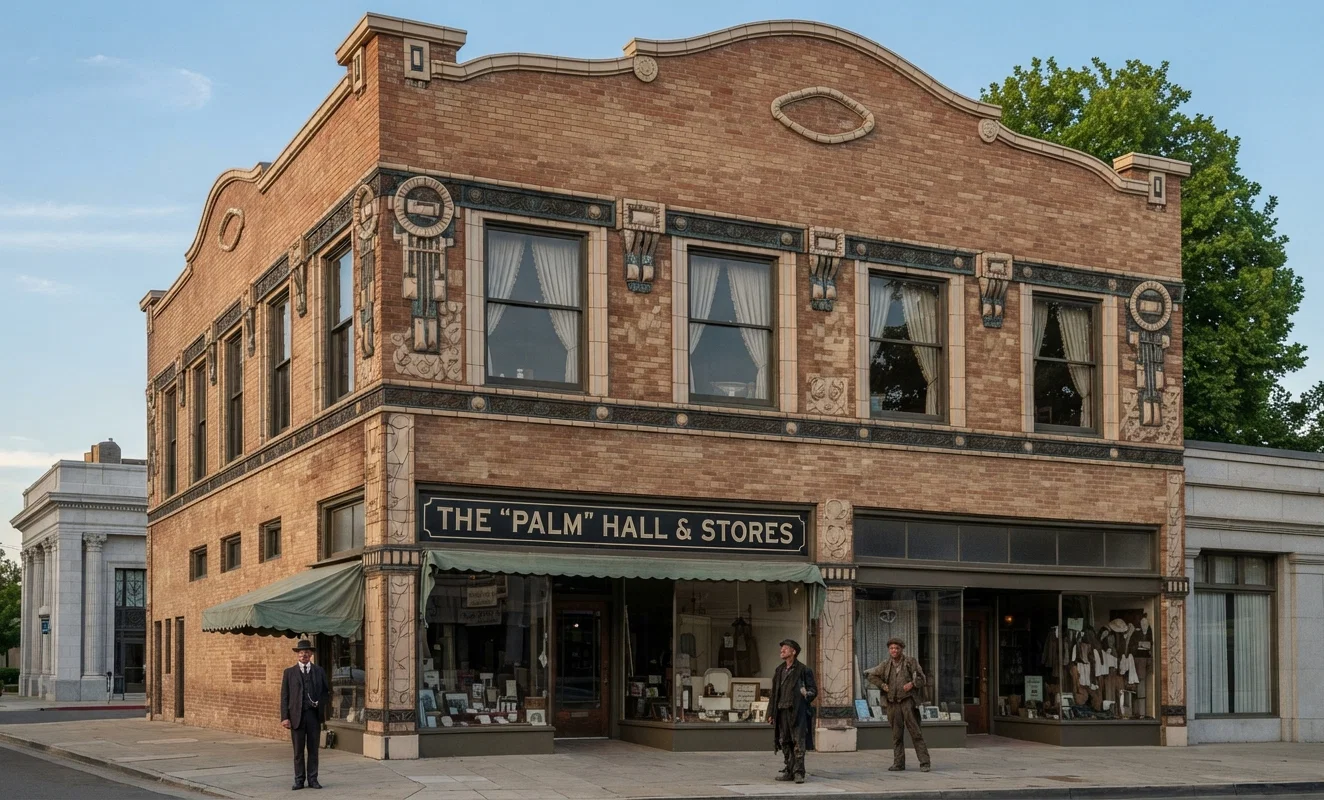
A business block in Mountain View, California, containing two good stores and a fine hall, occupying the space where once stood, in the "wet" days, the notorious "Palm" steam beer joint. On the opposite corner is a new bank. Both of these fine buildings were born of the "dry."
"Don't do it, Smith," said the slave of drink. "Vote 'dry' for me."
"Do you think," said the manager to the writer, "that after such a plea as that, I could vote 'wet'? Taxes or no taxes, I vote 'dry.'" May the mighty appeal of the drunkard's need and the need of his family reach the hearts of the voters in this crisis.
What Presidents of the United States Say
The "Presidents' Declaration"
IN 1834 Edward C. Delavan, of Albany, New York, secured the signature of James Madison to the "declaration" given below. He subsequently presented the same document to every succeeding president down to and including Andrew Johnson, with the exception of William Henry Harrison, and secured the signature of each thereto. Mr. Harrison died before Mr. Delavan had an opportunity to present the paper to him.
"Being satisfied from observation and experience, as well as from medical testimony, that ardent spirits, as a drink, is not only needless, but hurtful, and that the entire disuse of it would tend to promote the health, the virtue, and the happiness of the community, we hereby express our conviction, that should the citizens of the United States, and especially all young men, discontinue the use of it, they would not only promote their own personal benefit, but the good of the country, and of the world."
John Adams: "Several country towns within my observation have at least a dozen taverns and retailers. Here the time, the money, the health, and the modesty of most that are young, and of many that are old, are wasted; here diseases, vicious habits, bastards, and legislators, are frequently born."—Works of John Adams, by Charles Francis Adams, volume 2, page 85.
Thomas Jefferson: "Were I to commence my administration again, with the knowledge which, from experience, I have acquired, the first question which I would ask, with regard to every candidate for public office, should be, Is he addicted to the use of ardent spirit?"—Fourth Report American Temperance Union (1840), "Permanent Temperance Documents," page 232.
Abraham Lincoln: "The liquor traffic is a cancer in society, eating out its vitals and threatening destruction, and all attempts to regulate it will prove abortive. There must be no attempts to regulate the cancer. It must be eradicated, not a root must be left behind; for until this is done, all classes must continue in danger of becoming victims of strong drink."
William McKinley: "The liquor traffic is the most degrading and ruinous of all human pursuits. By legalizing this traffic, we agree to share with the liquor seller the responsibilities and evils of his business. Every man who votes for license becomes of necessity a partner to the liquor traffic and all its consequences."
William H. Taft: "He who drinks is deliberately disqualifying himself for advancement. Personally I refuse to take such a risk. I do not drink."
Theodore Roosevelt: "The business tends to produce criminality in the population at large, and lawbreaking among the saloon-keepers themselves. When the liquor men are allowed to do as they wish, they are sure to debauch not only the body social, but the body politic also."
Taxes
During the "wet" years 1903 to 1913 the tax rate ran as follows:
The last three years were "dry" years. The reason why 1910 was so low is that there was a surplus in the treasury, and the "wet" town board drew on that so as to make a low tax rate. The expenditures were as great as other years. The average city tax rate in seven years of saloon rule, 1903-1909, was $1.24 on the $100. The average rate for 1911-1914 was $1.235 on the $100. With much more money spent on streets and water and sewer extensions and city lighting, the average rate since the town went "dry" is less than from 1903 to 1909 inclusive, when the city had the yearly revenue of $6,800 from the saloons. The foregoing statement is absolutely correct. The estimate of the 1914 taxes, which are not yet levied, is based on the statement of the mayor, J. O. Maxwell.
The Whisky Interests as Taxpayers
By A. O. Tait
By A. O. TAIT
Editor "Signs of the Times"
THE last brewers' year-book is authority for the statement that the internal revenue from malt liquors for the fiscal year ending June 30, 1913, was $65,245,544.40, and from distilled spirits $157,542,063.70, or a total of $222,787,608.10.
This vast sum of money is paraded before our eyes, and we are excitedly asked what the government would do if this revenue were cut off. We are also told of the large additional sums that are paid into city and town treasuries by the license fees of the saloon.
A Look at the Other Side
To care for the product of the saloon has cost, in some localities, as high as ten dollars additional for each dollar paid in by the whisky men. Not very profitable to have some one give you a dollar when you immediately have to put ten more with it and turn around to spend it on the product of the donor!
Who Does Pay the Revenue?
But all this to one side. Do the liquor interests in reality pay any revenue after all? In order for this whisky revenue to be paid, men must flock to the saloons and drink. The money spent in the saloon, in myriads of cases is taken directly away from suffering mothers and children. It is money that these should have for bread and clothing and for fuel to keep them warm.
In order to supply the necessities of the home, the frail wife of the drunkard is often driven to the wash-tub to earn any pittance that she can. And even the money that she gets by her grinding toil is often snatched out of her hand and carried away to the saloon under the spell of the alcohol demon that possesses her husband.
Money that is taken and used in this way is the worst kind of blood-money. And yet much of what the liquor men get with which to pay their enormous revenue must come in this cursed way.
Then let it be affirmed that, after all, the liquor interests are not paying this big revenue. Instead, they use the demon of appetite to seize the money that ought to give bread to starving children, provide clothing for the shivering bodies, and supply the necessities of the suffering wife; and after getting their money in this cruel way, they wish us to regard it as a necessary and beneficial revenue.
Let us not be deceived by such sophistries. Let us as men stand up and pay whatever tax is necessary to support our government, local and national. Let us as men refuse to allow the saloon to collect our taxes from suffering women and starving and naked children.
Tear the cloak from the hideous falsehood. Let the fact be seen, in all its ugliness, that every dollar of liquor revenue should be labeled with "Murder," "Vice," "Robbery," "Starvation and Nakedness of Children," "Sorrow and Suffering for Helpless Women."
Efficiency Demanded
WHETHER the slaves of drink appreciate it or not, the fact is that the great commercial concerns of the country are shutting out of their employ the men that drink. They are doing this largely for three reasons,—efficiency, reliability, safety. Alcohol makes a man feel that he is more efficient, can do more and do it better. Actual scientific tests demonstrate to the contrary. It is the old fact told centuries agone by the wise king, "Wine is a mocker: . . . whosoever is deceived thereby is not wise." The man who drinks can not do as much nor do it as well as the same man sober.
The man who drinks is unreliable. He serves two masters, the one for his daily, weekly, or monthly wage, the other as a slave. And the slave-driver is the dominant factor. The word of a drunkard can not be relied upon, even if he intends to speak the truth. His mind, his faculties, his senses, are
Population to Liquor Dealers
(Some of the samples, highest and lowest)
From United States Census, 1910
State
Population in State
No. Liquor Dealers in State
Population to Liquor Dealer
Nevada
81,875
1,621
50
California
2,377,549
19,249
123
Montana
376,053
3,035
123
Alaska
64,356
446
144
New York
9,113,614
37,047
246
Georgia
2,609,121
1,920
1,322
Massachusetts
3,366,416
5,662
594
Oklahoma
1,657,155
1,842
899
Mississippi
1,797,114
891
2,016
Virginia
2,061,612
1,828
1,127
We have not noted others equally favorable. Nevada is the worst — one liquor dealer to 50 of the population! California and Montana, one liquor dealer to 123 of the population. Compare Georgia with California. Is it not time that men swept away this parasitic business that is sucking their very life-blood?
Alcohol and Workplace Reliability
perverted. His moral perceptions are blunted. Business is finding it out. It wants reliable men—men on the job when it is time to begin work, men who will speak the truth, men who are sober and right-minded, reliable men.
Safety in factories, with great and powerful machinery, on railways, and elsewhere, demands cool-headed, wise-acting men, whose brains are not muddled with alcohol, whose keen observation and moral perceptions are not under the inhibitions of the toxic poisons of whisky or beer or wine.
Hence over thirty railways in the United States consider liquor drinking sufficient cause for dismissal. Companies like the Standard Oil and its distributing firms, and many, many others, are examples of this. Japan, Russia, the United States, demand that their navies shall be free from it. Military men the world over are working to the same end. Even many saloon-keepers demand totally abstinent bartenders. It is condemned almost everywhere. It is time for the traffic to go. Help it along into oblivion.
Subscription Rates
By G. C. Hoskin
Three months ............................... $0.50
Six months ................................. .90
One year (50 numbers) ...................... 1.75
With "Questions and Answers" ............... 2.00
With Bible Atlas (maps only) ............... 2.25
With Bible Atlas (maps and text) ........... 2.50
With Bible Dictionary ...................... 2.50
G. C. HOSKIN, Circulation Manager.
LEAFLETS THAT APPEAL
The following leaflets are filled with facts, statistics, and experiences that appeal to the indifferent or even the enemy of this temperance movement that is now sweeping the land. They are selling by the hundreds of thousands. Help in passing them along.
The Wine Industry and Prohibition
An answer to the claim that the California grape industry would be ruined and 170,000 acres of land made barren by prohibition. Sixteen pages. Price, $1.00 a hundred.
Story of a Dry Town
A four-page leaflet, containing a graphic story of a town as it was with seven saloons, and the results two years after the saloons were closed. Price, 25 cents a hundred.
Why Does the Saloon Exist?
The physical, social, industrial, and personal rights aspects of the liquor business are dealt with in this tract. It is one of the strongest documents produced in favor of prohibition. Price, $1.00 a hundred.
Prohibition or the Liquor Traffic — Which?
Tremendous arraignments of the liquor dealers by the opponents of prohibition. Price, 50 cents a hundred.
For the Sake of the Other Man
A stirring, heart-to-heart appeal to the man who, having no personal interest in the cause of temperance, neglects to let his light shine before others. Written by John G. Woolley. Price, 25 cents a hundred.
Order of your tract society or
PACIFIC PRESS PUBLISHING ASSOCIATION
Mountain View, California
Portland, Oregon Kansas City, Missouri
Calgary, Alberta, Canada