The Youth’s Instructor, Vol. 64, No. 45.

Thoughts to Consider
Earlier text: Household Suggestions

A Path of Light Around the World

The Power House

The Bible House, at Astor Place in New York City, is the center of the world-wide work of the American Bible Society. Here the minds of the secretaries and committees think out the details and make the plans which direct and control the thousand-sided activities of the society. Here the thundering presses print by the millions the leaves “which are for the healing of the nations,” and busy fingers sew and bind them into books. From this center go out supplies of Scriptures on myriad and radiating lines to earth’s remotest corners. During 1915 over two million seven hundred thousand volumes, in over ninety languages and dialects, were issued from this New York Bible House. Let us follow the world-encircling path of the Society:—

Cities “Set on a Hill”

Starting from Brooklyn, the home of the Eastern Agency, we soon reach Philadelphia, where the Atlantic Agency has its headquarters. A few hours’ ride brings us to the South Atlantic Agency at Richmond; and, a day’s journey farther south, to Atlanta, from which the Bible needs of the colored people are supplied. Striking now to the north, at Cincinnati we find the headquarters of the Central Agency, and at Chicago that of the Northwestern Agency. A longer journey, this time to the southwest, brings us to Dallas, the center of activity for the Southwestern Agency. Mounting northwest, toward the Rockies, we reach Denver, the headquarters of the Western Agency, and, climbing westward over the Rockies, our journey through the Home Agencies will end at San Francisco, the headquarters of the Pacific Agency.

Illuminating Latin America

Passing south, we now leave the boundaries of the United States, and in Mexico City find the headquarters of a Foreign Agency, where again a fertile field for Bible work has begun to open up at the end of the revolution which has been darkening the land and retarding good works. Sailing from Vera Cruz, we soon reach the territory of the West Indies Agency, which is the source of supply to Cuba, Porto Rico, Haiti, Santo Domingo, and adjacent islands. Returning to the west, our third Foreign Agency reached would be that of Central America, including the Canal Zone and Colombia. At Cristobal a Bible House is rising which will be the center of service in this Agency, will serve the millions who will pass through the Canal, and will commemorate the Centennial of the Bible Society. South America is served by three Agencies. The Venezuela Agency has its headquarters at Caracas. From Rio de Janeiro, the Brazilian Agency covers the northern half of the continent. Still going south, at Buenos Aires we reach the La Plata Agency, which includes the southern and all the western parts of South America. During 1915 the American Bible Society circulated about 300,000 Scriptures in these Latin American countries.

Light in Dark Places

Following the sun in his western course, we reach the youngest Foreign Agency, that in the far Philippines, with headquarters at Manila. Though established only in 1899, this Agency of the American Bible Society has already been instrumental in providing the Scriptures, for the first time, in eight languages of those islands, in some of which a written language had to be first worked out. Turning now to the north, and threading our way through numberless islands, we reach Yokohama. This is the distributing point for all the islands of the young world-power, Japan. Since the beginning of its work here the American Bible Society has distributed 3,572,062 copies of the Scriptures in the Land of the Rising Sun. A short voyage and rail journey bring us to our next Foreign Agency, Seoul, from which the Bible work of Korea is directed. The circulation in this Agency for 1914 was almost treble that of the previous year, reaching 458,694 volumes. Our next stop is at Shanghai, the headquarters for the supply, by the American Bible Society, of the Bible needs of China’s hungry millions. In 1914 a wealthy young mandarin in one order purchased 5,000 Scriptures for distribution among his friends and acquaintances. In 1915 over 2,240,000 volumes were distributed in China alone.
Skirting the southwestern coast of Asia we next reach Bangkok, the center for the Siam Agency. An inspiring indication of the appreciation of the Scriptures was given by a church of lepers, whose members, not being allowed to go out as messengers themselves, paid for 4,250 Gospels, to be distributed among their countrymen.

Beneficent Rays in Southern and Western Asia

Still following the sun in its western course, on our journey to the next Foreign Agency we pass the great and ancient people of India, to provide whom with the Bible the American Bible Society has spent over a quarter of a million dollars through various American missions. Sailing on we see the shores of Arabia, for the supply of whose great need the society contributes through the great Arabic Bible which it has produced, by the aid of American missionaries, at an expenditure of $35,000, and which is the channel of bringing the light of God’s Word to the two hundred million Arabic-speaking people. At Suez we reach Egypt, the southern part of the Levant Agency, the twelfth and last Foreign Agency to be visited, which has its headquarters at Constantinople.

Even in Europe

Moving westward we see countries of Europe, in many of which the Bible Society, through correspondents and grants of money or Scriptures, is helping to supply the world need. These grants go to Austria, Russia, Finland, Sweden, Norway, Denmark, Germany, Switzerland, Italy, France, and Belgium. At present a special and very gracious service is being rendered by the American Bible Society among the soldiers of war-smitten Europe. It has supplied over 400,000 Testaments and Gospels to the soldiers of all the warring nations, as almoner of the Sunday school children of America through the World’s Sunday School Association, and as almoner of friends who have sent money directly to it for this purpose.
As we then speed on our journey homeward, we may reflect with joy that, as the sun in its daily journey around the earth, by its beneficent rays disperses darkness and brings light and life and gladness to all on whom it shines, so the American Bible Society, through the Holy Scriptures, disperses moral darkness, and brings spiritual light and life to all mankind.
— Prepared by the American Bible Society.

November Farewell: Autumn Verses on Chestnuts and Squirrels

“NOVEMBER stirs the boughs, and chestnuts fall; The busy squirrel stores his little cell; And where the asters nod above the wall The whitethroat trills a silver-voiced farewell.”

VII — Peter’s Experience Retold; the Gospel in Antioch

(November 18)
LESSON SCRIPTURE: Acts 11:1-30.
MEMORY VERSE: “The hand of the Lord was with them; and a great number believed, and turned unto the Lord.” Acts 11:21.

Questions

1. What report was brought to the brethren in Judea concerning the work of Peter in the home of Cornelius? Acts 11:1.
2. Where did Peter go after his visit to Cornelius? Who found fault with him? What did they say he had done? Verses 2, 3.
3. In defense, what did Peter relate? Verses 4-11.
4. Who did he say had told him to go to Cornelius? Of what use now were the men who went with him? Verse 12.
5. What did Peter say of Cornelius? Verses 13, 14.
6. What proof did Peter give that what he had done was right? What had he remembered? Verses 15, 16.
7. With what question did Peter close his defense? Verse 17.
8. How did the believers in Jerusalem show that their minds had changed? Verse 18.
9. Where did the scattered believers go after the death of Stephen? To whom did they preach in their travels? Verse 19. Note 1.
10. From what places did some of these teachers come to Antioch? To whom did they preach Jesus? Verse 20.
11. Who gave them success? What was the result of their labor? Verse 21. Note 2.
12. Who was sent from Jerusalem to help in the work at Antioch? Verse 22.
13. How did Barnabas feel when he saw what had been done? What exhortation did he give? Verse 23.
14. What is said of Barnabas? What results attended his work? Verse 24.
15. To what city did Barnabas go from Antioch? Why did he go there? Verse 25.
16. How long did Saul and Barnabas labor in Antioch? What new name was given the believers there? Verse 26. Note 3.
17. Who came to Antioch from Jerusalem at that time? What was the name of one of these prophets? What did he prophesy? Verses 27, 28.
18. How did the Christians in Antioch assist those in Judea? By whom did they send help? Verses 29, 30.

Questions for Diligent Students

1. Where is Barnabas first mentioned in the book of Acts?
2. How many countries are mentioned in this lesson, and where are they?
3. Name the cities of which we read in this lesson.
4. Learn all you can about Antioch.

Notes

1. The church was scattered, but not silenced.
Phenice (fe-nî'see) is Phenicia, the country of Tyre and Sidon.
Cyprus, a large island in the northeastern part of the Mediterranean Sea, about sixty miles from the eastern shore.
Antioch, capital of Syria, and an important commercial center, on the Orontes River, sixteen miles from the sea, and three hundred miles north of Jerusalem.
2. “Hand of the Lord.”—“The hand is the symbol of power and of work. Willing Christians are God’s hands. Through them God can accomplish what would be impossible to their unaided efforts. Here was a little group of refugees, poor, despised, pursued. Here was one of the world’s proudest, mightiest, richest, wickedest cities.” Yet God working through his people wrought such a work that this city became the center of missionary work for all the known world at that time.
3. Who coined the name “Christian”? The disciples did not, for they called one another brethren, saints, disciples, believers. Not the Jews, for they spoke of the followers of Jesus as Nazarenes, Galileans, or “this sect.” The people of Antioch were famous for the bestowal of nicknames, and as the Christians talked so much of Christ the name “Christian” was first used by them.
“Whoever wears this great name should ever be mindful of his privilege and responsibility. The honor of Christ and his church is in his hands, as whoever wears the uniform of his government, or even travels as a private citizen in a foreign land, injures the entire country if he falls into any disgrace.”

A Century of Progress in China

In 1807 China had one Protestant missionary; in 1907, there were more than three thousand Protestant missionaries.
In 1807 China had not one Protestant convert, but in 1907 there were estimated to be more than one hundred and fifty thousand Protestant communicants.
In 1807 the Bible was unknown in China, while in 1907 the Bible was so well known that parts of it were studied in the classical courses of government schools.
In 1807 there were no hospitals in China, while in 1907 there were more than three hundred of them.
In 1807 the opium trade was conducted freely and without molestation, while in 1907 a royal decree demanded its abolition in ten years.
In 1807 foot-binding was general among Chinese women, while in 1907 the custom was under the ban of the empress.
In 1807 Western learning was unknown; in 1907 the Western system of education was established in each of the eighteen provinces.
In 1807 there were no daily newspapers in China, while in 1907 one was published in each important city.
In 1807 there were no railroads in China, while in 1907 there were nine thousand miles of railroads in operation, or under construction.—Selected.

Leap Year Always

IN New Guinea it is always the women who make the proposals of marriage.
“When the ebony belle falls in love with a man, she sends a piece of string to his sister, or, if he has no sister, to his mother or another of his lady relatives.
“Then the lady who receives the string tells the man that the particular damsel is in love with him. No courting follows, however, for it is considered beneath a New Guinea gentleman’s dignity to waste time in such a pursuit.
“If the man thinks he would like to wed the lady, he meets her alone, and they decide straightway whether to marry or drop the idea.
“In the former case the betrothal is announced. The man is then branded on the back with charcoal, while a mark is cut into the woman’s skin.”

Strength for Today

STRENGTH for today is all that we need, As there never will be a tomorrow; Tomorrow is but another day With its measure of joy or sorrow. —Mrs. M. A. Kidder.

Sunshine Banks

MANY schools in Missouri, Kansas, and Oklahoma have established Sunshine Banks. These are banks in which are deposited the record of good deeds instead of the usual currency.
The plan generally followed in the schools is to have the children hand in each day slips of paper with lists of kind or good deeds which they have accomplished. These are given to tellers named by the teacher, who are usually the children having the greater number of credits during the previous week. The tellers transfer daily deposits to a permanent record. In Kansas City there is a printed form for each depositor. At the end of the term these forms will be returned to the children.
This plan may be varied to suit the convenience or ideas of the teachers or individuals who organize the banks. One teacher in a primary grade takes a picture of each child who gets one hundred credits, and places the picture in a book labeled “Sunshine Fairies.”
In the highest grammar grades in the same school the idea of practical banking is carried out. The children issue checks to each other. Each boy or girl witnessing a good deed gives the one who does it a check. The principal of this school has a separate Sunshine Bank in which the names of all the pupils are placed the first of each month. Infractions of the school rules cause her to take out the names of the offenders.
The principal of one of the largest schools says that since she adopted this plan the criticisms and reprimands for minor infractions have been reduced to a minimum.
One of the third-grade teachers, in writing about the assistance the bank has been to her, said:—
“It formed a little band, joining the children together in something new and interesting. It gave the children an opportunity of putting into practice the little stories of truth, kindness, unselfishness, and so on, that they had been reading and talking about. It brought the home and schoolroom in touch with each other in a new way. Besides giving the children a feeling of responsibility, it helped those who acted as tellers in the use and spelling of words.”

A Good Rule to Work By

MR. DAVID GIBSON, who is called the dean of business literature in America, is a strong advocate of the money value of courtesy. He offers for consideration the following resolution as a working one in both big and small businesses:—
“Resolved, That we all cease trying to get something for nothing — grafting, in other words; that we all do just a little more than we agree to do, rather than just a little less. That honesty is a question of efficiency here on earth, with its rewards in profits now, here on earth. That fear is the root of all evil; for if our neighbor cheats us in his store, it is to fortify himself against some element out of his store. That the basis of all life is business life; that business is the system by which we supply our wants and needs; that we are true to political life, true to social life, as we are true to business life. That we think of others as we would have them think of us; that we do as we think, the thought precedes the act; that coöperation is the real brotherhood of man; that the prosperity of one man does not require the poverty of another man; that both the idle man and the dishonest man, whether they be possessed of little or much, are fools in themselves and abominations to their communities.”

EDMUND C. JAEGER

Truth

THERE is a wonderful definiteness about the plans of God. The instructions of Christianity are not a vague call to morality and humanitarianism. While these virtues are laudable and a part of Christian living, they are in no sense the whole end of Christianity. Eternal life is the boon the cross of Christ won for men, and any teaching which does not point men to that has failed, and that most woefully.
All the suffering of our Lord, the anguish so inexpressible and bitter, was not endured just to help men to be able to live a little more at peace with one another and act a little more pleasant. Men have well-nigh lost sight of the purposes of their Maker. Wickedness and selfishness have possession of their minds. And God knows that the mud is deep. Nevertheless his love toward man does not cease. By every possible means he would win back his erring children. As deep as is the love of the Master, even so varied and far-reaching are his plans to save man. As the pedagogue must adopt and use new plans to inculcate the truths of each lesson, and suit her methods to the needs of each individual class, so God suits his means of calling men to holy devotion, to answer the needs of the times and circumstances under which they live.
The everlasting gospel has been the same through all the ages, but God has used different means in each age to call man’s attention to it. These special truths for special occasions are at the time of their giving called present truths. 2 Peter 1:12. They are but eternal truths suited to present needs.

EDMUND C. JAEGER

Nutting Days

Do you see what old November Scatters down so fast and free In the woodlands brown and sober, Little people, do you see? Where the squirrels sprightly Trip it, oh, so lightly, And the hickory shines brightly Like a golden fairy tree.
Do you hear the pitter-patter On the dead leaves dry and sear, When the ripe nuts downward clatter, Little people, do you hear? Come and join our rally, Come with us, and sally Up the hillside, down the valley, Nutting, nutting, far and near.
— Selected.
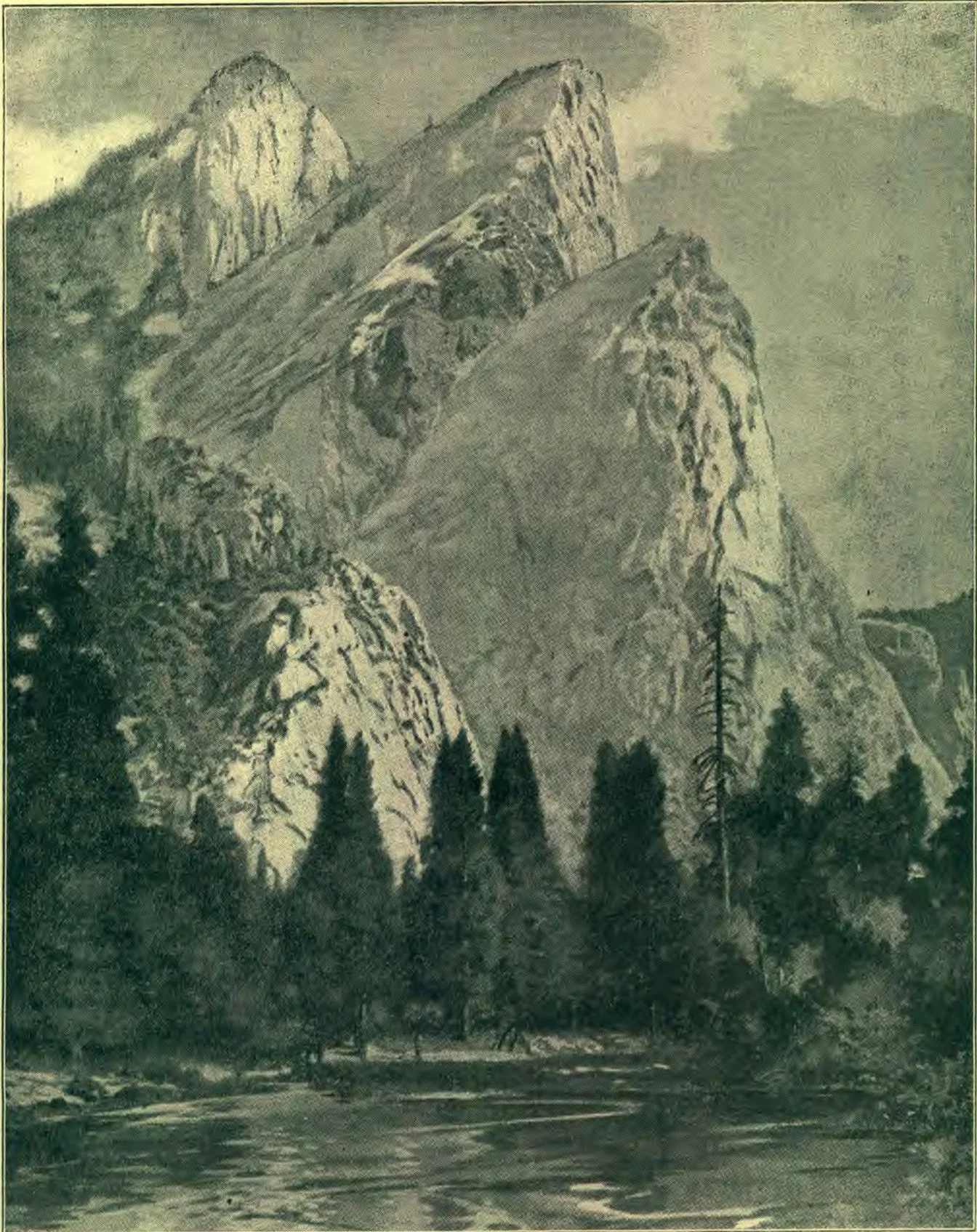
THE THREE BROTHERS, YOSEMITE NATIONAL PARK
“THE EARLY MORNING OFTEN FOUND JESUS IN SOME SECLUDED PLACE, MEDITATING, SEARCHING THE SCRIPTURES, OR IN PRAYER.”

You have reached the end of this edition.

The Youth’s Instructor · Nov 7, 1916