The Youth’s Instructor, Vol. 48, No. 1.

A DAY ON THE WHITE RIVER GLACIER
Earlier text: A DAY ON THE WHITE RIVER GLACIER

THE STORY OF DELIVERANCE

A True Story

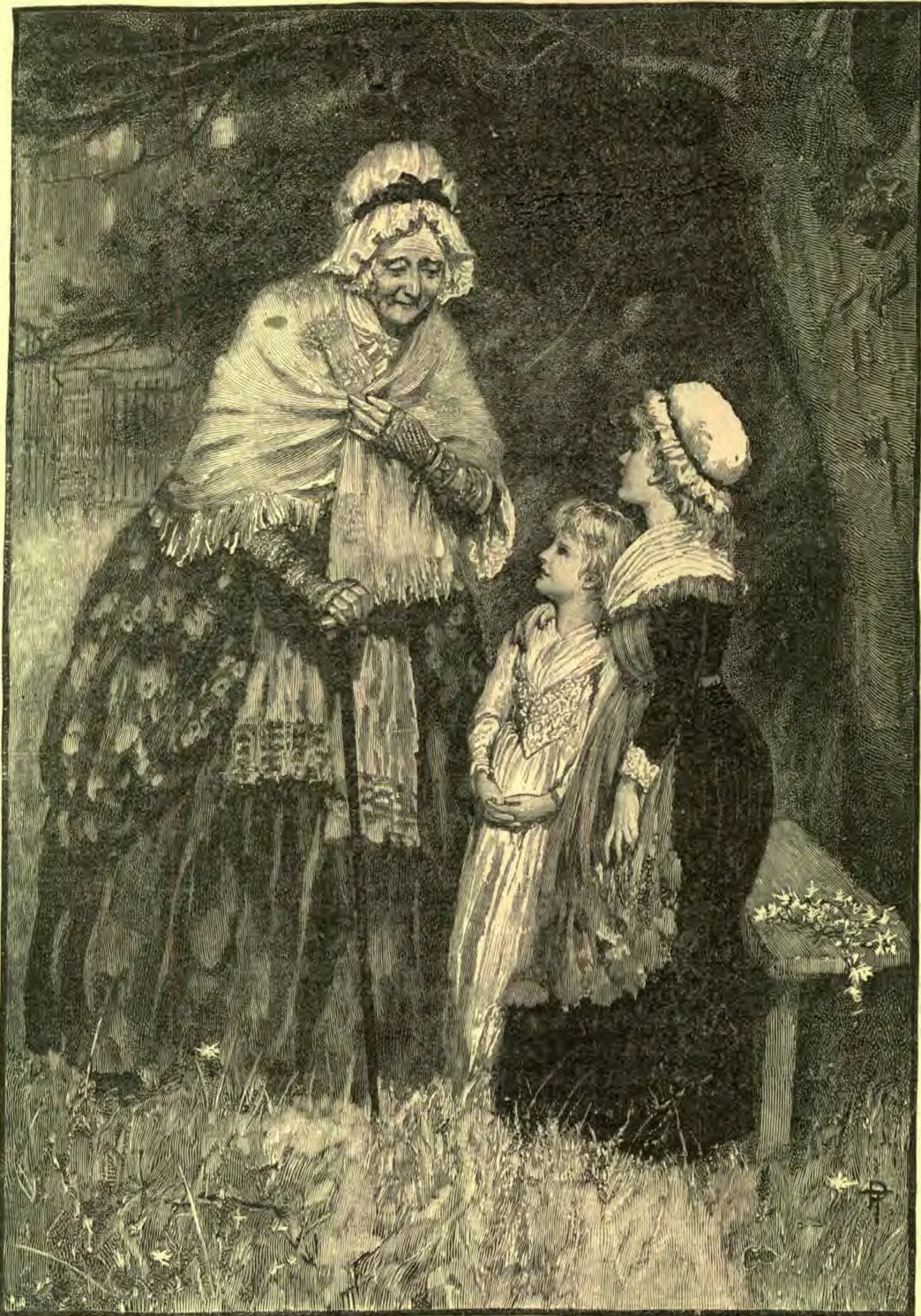
“What queer names the little girls of olden times used to have!” said Angelia. “Just listen, Aunt Dora,—‘Thankful,’ ‘Mercy,’ ‘Faith,’ ‘Hope,’ ‘Charity’! Wouldn’t you like to know why the parents gave such names to their dear little baby girls?”
“WE’LL BE HER GENTLE MINISTERS.”
“I hope their names fitted them better than some girls’ names I know now,” slyly whispered Tom.
But Aunt Dora shook her finger at him, and said: “My grandmother’s name was Thankful. I wonder if you can guess why her parents gave her that name?”
“Because they were so thankful she was a girl!” quickly cried Angelia, casting a triumphant look at her brother.
But that young American, not at all abashed, said: “Humph! don’t you know that she was born in 1782, and that her parents were so thankful the Revolutionary War was over, and we had won, that they called her Thankful?”
“I know,” continued Aunt Dora, “why one little girl was named Deliverance; for she was my great-great-aunt, and lived a long time before Thankful’s day. Would you like to hear about her?”
“Yes, yes!” cried the children; and, as they drew their chairs up to Aunt Dora’s, she began: “In the early part of the last century, a great number of people came from Pennsylvania to North Carolina, seeking a home where they could worship God as they pleased. Among them was a young man, who, on account of his religion, had been banished from his old home in Scotland. He fled to Ireland, but stayed there only a short time; for, hearing of this beautiful country across the seas, he determined to bring his young wife hither. “In those days there were no fine ocean steamers, and it took long, dreary months to cross the ocean in clumsy little sailing-packets. After a rough voyage, the young exile and his wife reached America. They first thought of making their home in Pennsylvania, where many of their friends and relatives had settled; but it was winter when they reached there, and everything was so cold and bleak and bare that they resolved, early the next spring, to seek a warmer and more genial climate. Long before the winter snows had disappeared, a little band of settlers started on their southward journey. For weeks and weeks they plodded on their weary way. Every path had to be cut, often through dense forests, rivers had to be forded, wild animals killed, and fierce Indians constantly warded off.
“At last they reached North Carolina, and resolved to settle there. So the men all went to work felling trees and clearing the ground. Each man lent a willing hand to his neighbor; and by summer all the rude little cabins were built, and things were beginning to look quite homelike and comfortable.
“One bright summer morning Zedekiah went, as usual, to the fields to work, leaving Mistress Mary in the house all alone. But she was not afraid; for many a time had she been all day beyond the sound of a human voice, so she went cheerily about her household duties.
“But for some time two hideous-looking Indians had been prowling around the place. They looked this way, and they looked that way. No one was in sight. They crept up to the little window, and peeped in. Mistress Mary was sweeping the hearth. They crept noiselessly into the room, and before she could cry out for help, they seized her, tied up her mouth and eyes, and led her away.
“Over rough roads, through briars and bushes, in and out of creeks, they carried her. At last they halted; and when her eyes were unbound, she saw that she was in a dirty Indian wigwam.
“For many weary weeks she was kept there. At first she was treated unkindly, but after a while her gentle ways and sweet smiles won the hearts of the children. She would gather them about her, and in her broken Indian language tell them sweet stories of Jesus. The women, too, would come and listen when the men were off fishing and hunting. At last the rude women felt sorry for the beautiful white squaw who had been stolen from her husband. They wished to help her escape, but what could they do? The men would kill them if they let the pale-face go back to her people.
“But God put it into the heart of a poor half-witted Indian lad to restore her to her husband. In the dead of night he carried her safely to her home. Then swiftly he sped back to his own wretched wigwam.
“The next morning the escape of Mistress Mary was found out, but of course no one thought of blaming Half-Wit. So, after a time, the matter was dropped. But Mistress Mary and her husband did not forget their terrible experience with the Indians; and when their baby girl was born, they said, ‘We will call her Deliverance, for the Lord delivered us in time of trouble.’”—Sunday-School Times.

“Beautiful Joe.”

An Autobiography By Marshall Saunders.
Beautiful Joe is a real dog, and “Beautiful Joe” is his real name. He belonged during the first part of his life to a cruel master, who mutilated him in the manner described in the story. He was rescued from him, and is now living in a happy home, with pleasant surroundings, and enjoys a wide local celebrity.—Author’s Preface.
This story awakens the interest of the reader in the first chapter, and sustains it to the end. It must make an impression for good, and in the interests of kindness and gentleness, upon all who read it.
The book is well bound in cloth, with gilt side-stamp; 304 pages; illustrated. Price, 60 cents. Smaller edition, cloth, without illustrations, 25 cents.
The 60-cent book will be sent, post-paid, for four new yearly subscriptions to the YOUTH’S INSTRUCTOR, at 75 cents each; or with the INSTRUCTOR one year for only $1.25. The 25-cent book will be sent with the INSTRUCTOR one year for $.90.

Dr. Worst's New Scientific CATARRH INHALER ON TRIAL FREE!
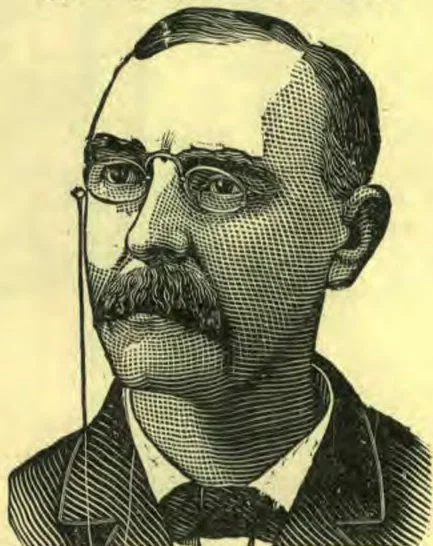
DR. E. J. WORST, ASHLAND, OHIO.
It cures Catarrh, Colds, Pains and Roaring in the Head, Bronchitis, Sore Throat, Headache, Partial Deafness, and all diseases of the Air Passages.

CURES BY INHALATION.

Air is the only agent fine enough to carry any medical influence into the small air cells and homes of the living germs, that will effectually destroy the causes of these diseases. It was the agent that carried the disease there, and it must be the one to successfully remove it.

SPECIAL OFFER.

For a short time I will mail to any reader, naming this paper, one of my new Scientific Catarrh Inhalers, with medicine for one year, on three days' trial, free.
If it gives satisfaction, send me $1.00; if not, return it after three days' trial. If you are willing to comply with such reasonable terms (agents wanted), address—
DR. E. J. WORST, 402 Main St., Ashland, O.
ON TRIAL FREE!

THE COMMUNION

SABBATH-SCHOOL LESSON—NO. 2

THE COMMUNION

(January 13, 1900)
Memory Verses.—Luke 22:19, 20.
Time: A. D. 31. Place: Jerusalem. Persons: Jesus, disciples.

QUESTIONS

1. When Jesus first seated himself at the Passover table, and before washing his disciples’ feet, what did he say? Luke 22:15–18; During the progress of the supper, what special ordinances did he institute for his church? Matt. 26:26–28; What did he then say concerning his own relation to these things? V. 29.
2. While they ate, what painful statement did Jesus make? Mark 14:18. What was the effect of his words? Except Judas what did they all begin to say? V. 19. What answer did they receive? V. 20.
3. Learning that one of their own number would be the traitor, what did the disciples begin to do? John 13:22. In what position was one of the twelve at this time? V. 23; What did Peter therefore motion to him to do? V. 24.
4. Acting upon Peter’s suggestion, what did the beloved disciple ask? V. 25. What answer did Jesus give in pointing out the guilty one? Matt. 26:23; John 13:26, first part. Concerning his betrayer, what words did Jesus then utter? Matt. 26:24. What did Jesus then immediately do? John 13:26, last part.
5. Not having heard what Jesus had said (“The Desire of Ages”), what did Judas Iscariot now ask? What answer did Jesus make? Matt. 26:25. With the exposure of his wicked purposes, what change came over Judas? What were Jesus’ last words to him? John 13:27;
6. Though Judas had been plainly exposed, how did the eleven regard these words of Jesus? Vs. 28, 29. What did Judas then do? V. 30.
7. As soon as he was gone out, what did Jesus say? Vs. 31, 32.

Making Home Peaceful

By Mrs. L. D. Avery-Stuttle.

A Happy Sequel to Making Home Happy.

The purpose of the author has been to show the reader, by means of a happily conceived object-lesson, how the true Christ-love can be given tangible expression in every-day home life, and how the incoming of that love will transform a joyless abode into a happy home.
The book is uniform in size and style of binding with “Making Home Happy.” Price, bound in cloth, 50 cents; in paper covers, 25 cents.
The cloth-bound 50-cent book will be sent, post-paid, for three new yearly subscriptions to the YOUTH’S INSTRUCTOR; or with the INSTRUCTOR one year for only $1.00.

The Youth's Instructor for 1900

Announcement!

The Youth's Instructor for 1900.

Eight Pages a Week: Over Four Hundred Pages a Year.
For nearly half a century THE YOUTH'S INSTRUCTOR has stood for purity and excellence in literature for the young; and during the year to come, editor, publishers, and contributors will endeavor to maintain this high standard, and to set before INSTRUCTOR readers only such matter as shall tend to build up strong, sound Christian character. The INSTRUCTOR is a missionary paper; and as such it will give special prominence to missionary topics. Its special aim will be to awaken in the hearts of the youth a love for present truth, and a desire to carry it to others.

A FEW SPECIAL FEATURES FOR THE COMING YEAR.

What Bernice Learned about the Apostles.

By Mrs. L. D. Avery-Stuttle. A series of short articles in story form, setting forth various incidents in the life and death of the Twelve.

Missionary Work in China

Will be described by Brother Erik Pilquist, who spent ten years spreading the light of the gospel in the interior of China, and who expects to return to that field early next spring.

Nature's Secrets.

Dr. L. A. Reed's series of illustrated articles under this heading will be continued. The subject is presented in a simple, delightful style, which will attract older readers as well as the children. Illustrated by original pen drawings and photographs.

Notes from the Log-Book.

R. W. Munson, who is already well known to INSTRUCTOR readers, will tell of his recent long ocean journey to Sumatra. We expect interesting contributions from him also concerning the progress of the message in that far-away island.

Character Building, Precious Promises, The Christian Pathway, The Eternal Inheritance, etc.

Under these and various other general headings, Mrs. E. G. White will continue from week to week her words of warning, admonition, and counsel to the youth, in whom she has always taken so deep and tender an interest. These articles are invaluable to every young Christian.

Man's First Schoolroom, and How He Was Turned Out.

Elder S. N. Haskell, who has lately returned to this country from the Avondale School for Christian Workers, at Cooranbong, Australia, will write under this head a series of articles on the subject of cultivating the soil, and its relation to important truths in the plan of redemption.

Drawing from Nature.

This series of practical drawing studies, by Pedro Lemos, will be continued, and will increase in interest from lesson to lesson. The fact that several have asked that their subscription begin with the number in which these lessons were started, shows that they are appreciated. They are invaluable to church-school teachers and all others who have a desire to ground themselves in the rudiments of drawing. Every point brought out in the lessons is fully illustrated with original pen sketches by the author.

Bible Topics for Children.

By Mrs. S. M. I. Henry. As she has gone from camp-meeting to camp-meeting during the last two years, many parents have said to Mrs. Henry, “I do wish you could tell me how to interest my children in the Bible;” and to meet this call she will write, sometime during the coming year, a series of articles on Bible Topics for Children. Mrs. Henry does not feel free to promise these articles soon, in view of the many calls upon her pen and in other lines; but she has a true love for our young people and a genuine desire to help them, and she will do what she can.

With Pen and Kodak, Beauties of Our Own Land, Travels in Far-off Lands, etc.

Under these general headings will be presented illustrated articles on travel and description by various writers both at home and abroad. Elder G. C. Tenney will tell of Queensland; Gold-mining in Queensland; Farming in Queensland, etc.; J. H. Krum, of Jaffa, Palestine, has promised a series of articles on that interesting land, early in 1900; and J. Edgar Ross will describe Climbing Mt. Rainier; Playing Eskimo Two Miles above the Sea; Making Lumber of California Big Trees; A Day on the White River Glacier; etc. Other subjects will be presented under these headings.

Missionary Reading Circle.

The study of the message and of the field is one of the most important topics that can engage our attention; and if rightly entered into, it will surely hasten the time when “thousands and thousands of live, active missionaries will rise up all over this land, and in other lands, to give the message that Jesus is soon coming.” Every one who is taking the Berean Library Lessons and the Field Studies should have access to the Supplementary Notes on both these topics, which appear every week in the INSTRUCTOR, from Mrs. L. Flora Plummer and Miss Estella Houser. In addition to the Notes, the department will contain short articles from other writers on the various lessons brought out in the studies, suggestions for practical work, bits of helpful experience, etc., etc.

Elementary Photography.

By J. Edgar Ross, an experienced photographer, who has contributed to several photographic journals. These articles will be illustrated, and will be greatly enjoyed by all interested in the art. The following are some of the sub-headings under which this subject will be presented: History and First Principles of the Science; Use and Misuse of Photography; Light, Camera Obscura, and Lens; Selecting a Camera; Fitting up a Dark Room; How to Make Trays and Washing-boxes; Plates, Paper, and Chemicals; Exposure; Development; Printing; Toning and Mounting; Correcting Mistakes; Caring for Negatives; A Book of Photographs; The Artistic Side; Paper Negatives; Blue Prints; The Stereoscope; Panoramic Pictures; Lantern Slides; Bromide Enlargements; The Camera and the Microscope; etc., etc., etc.

MISCELLANEOUS SUBJECTS.

Prophetic Voices Christian Help Work The Word of Power An Onward Glance God's Handiwork Character Building Crumbs of Counsel Bible Characters Good Manners
Echoes of History Famous Authors Great Musicians Bits of Biography Pen and Pencil On the Frontier Among the Islands Modern Inventions In the Field of Letters
Our Wonderful Bodies Health Culture Pointers to Success Notes and Comments Below the Surface Current Events Nature's Wonders Our Dumb Friends Insect Life
Little Folks Chats with the Children The Children's Library Around the World Fins and Feathers Little Facts for Little People The Chimney Corner Funny Faces Our Pets
Mission Fields Our Missionaries In Heathen Lands Science Stories From Nature's Book Temperance Themes From Distant Climes Humane Topics Hand Training
Single yearly subscription, 75 cents; 5-9 copies to one address, each, 55 cents; 10-100 copies to one address, each, 50 cents; 100 or more copies to one address, each, 45 cents. Address—
THE YOUTH'S INSTRUCTOR, Battle Creek, Mich.

Self-Pronouncing S. S. Teachers’ Reference Bible.
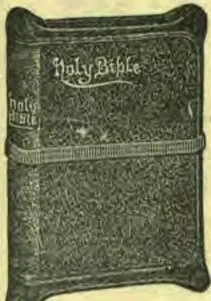
CONTAINS the celebrated Teachers’ Helps, comprising nearly 400 pages. Also a complete series of fifteen new maps.
Description. — Imperial Seal Binding, Tuck Edges, known as “Divinity Circuit,” Rounded Corners, Full Red under Gilt Edges.
We offer this Bible, post-paid, for only SIX NEW YEARLY SUBSCRIPTIONS at 75 cents; or TWELVE NEW SIX MONTHS’ SUBSCRIPTIONS at 40 cents.
We will also send it, post-paid, with the INSTRUCTOR one year for $2.25. For 20 cents extra we will stamp your name in gold upon the cover.

Learning Something From Everyone We Meet

NO ONE person can learn everything; no one can learn even a few things all at once. Knowledge comes to us a little at a time, and from various sources. If we close our eyes to all but what we can understand and enjoy, we shall miss many a sweet and precious lesson; for we may set it down as a fact that there is no person, however unfortunate, poor, or unlettered, of whom we can not learn something. Often those whom we half unconsciously look down upon could teach us lessons in patience, gentleness, courtesy, or even give material help in the subjects we take pride in knowing well.
FOR months astronomers had predicted, and the press had spread the information all over the world, that on the nights of Nov. 14, 15, and 16, 1899, would take place a grand meteoric shower, similar to that witnessed by our grandparents on the night of Nov. 13, 1833. But though every one was looking eagerly forward to viewing the promised display, and elaborate preparations were made in the great observatories for photographing the falling meteors, all agree that the looked-for shower was disappointing. In England, where a balloon ascended above the clouds, only five meteors were seen. Varying numbers were seen at other places, the greatest display being in the Austrian Alps, where over three hundred Leonids were seen and photographed. How far short this comes of the star-shower of 1833, when, it has been computed, no fewer than “two hundred and forty thousand meteors were visible at one time above the horizon of Boston;” and when the display at Niagara Falls appeared like the “firmament descending in fiery torrents over the dark and roaring cataract.” Though astronomers may ascribe this meteoric shower to natural causes, none deny that it was the most brilliant on record; and to the student of prophecy, it marks a plain fulfillment of one of the signs of Christ’s second coming.

FOR EVERY DAY OF THE WEEK

Sunday:

“Never a day is given, But it tones the after-years, And it carries up to heaven Its sunshine or its tears; While the to-morrows stand and wait— The silent mutes by the outer gate.”

Monday:

“All growth comes from within. We do not take on virtues as we put on clothes. Outward graces are but the manifestation of the inward spirit.”

Tuesday:

“He who loseth wealth loseth much; he who loseth a friend loseth more; but he who loseth his energies loseth all.”

Wednesday:

“There is no God,” the atheist said, And gazed into the lily’s heart; But in its pure, sweet depths he read, “What man can make my counterpart?” — Emma C. Dowd.

Thursday:

“Great faith finds great things. The heart that believes much will ask much. God is honored most by the faith that makes largest demands upon him. According to our faith is it unto us; this is the law of God’s dealing with his children.”

Friday:

Dear, patient Father, lift us up To meet thy thought divine; Then shall our life horizons sweep And broaden unto thine. Then shall our hearts grow great to hold The love our Saviour bears; And all thine own, nay, earth, shall feel Thy answers to our prayers. — The Echo.

Sabbath:

“Be ye kind one to another, tender-hearted, forgiving one another, even as God for Christ’s sake hath forgiven you.”

HOW TO WIN

Mr. Charles Dana Gibson, one of the most famous and popular artists of this country, gives in the Saturday Evening Post his experience with his first published sketch,—a little dog barking at the moon,—and its effect on his work. The incident is worthy the consideration of beginners in all kinds of work:—
“I took in the little sketch to Mr. Mitchell, the editor of Life, and waited, not without some trepidation, while he scanned it. Presently Mr. Mitchell wrote out a check for four dollars, and handed it to me with the remark that he would like me to bring some more stuff just as good. I tried to conceal my joy, and tucked the check in my pocket without so much as glancing at it. I thought that was the kind of professional indifference all successful artists showed when checks were given them. When I was well away from the place, I took out the check, and saw that it was more than is usually paid for little dog pictures with mechanically drawn moons in them.”
“I calculated on my way home that if one small sketch sold at four dollars, more ambitious work would bring twice as much; and as the best things that I could do would command at least the price of the purchased drawing, there was a fortune ahead of me. I figured that I could make five sketches every day at four dollars apiece, which would net me one hundred and twenty dollars a week.”
“At this rate I would make an annual income of more than six thousand dollars. That was a bright prospect for a beginner. Accordingly, I hurried home, and made five hasty drawings before going to bed, and brought them over to Mr. Mitchell the next day. I waited for my check, but instead, I received all my drawings back, with the remark that I had better try again, and put more time and work into my sketches. The rebuke was a heavy blow then, but it saved me from myself and future bad work.”

NOTICE!

THE retail price of “Beautiful Joe” is sixty cents for the larger book, and twenty-five for the smaller, instead of the prices heretofore advertised.

To Reach BATTLE CREEK

FROM
CHICAGO, BUFFALO, DETROIT, OR TOLEDO,
Purchase Tickets Reading over the MICHIGAN CENTRAL
“The Niagara Falls Route.”
A First-class Line for First-class Travel between Chicago and New York and Boston. Elegantly equipped through trains pass Battle Creek in each direction daily.
R. N. R. WHEELER, Ticket Agent, Battle Creek.
O. W. RUGGLES, Gen’l P. and T. Agt., Chicago, Ill.

TAKE THE Canadian Pacific Railway

for . . . CHATHAM, OTTAWA, MONTREAL, LONDON, GALT, QUEBEC, WOODSTOCK, TORONTO, BOSTON, PORTLAND, and
All points in New England, the Maritime Provinces, Great Britain, and the Continent.
Illustrated literature, time-tables, and full particulars, upon application to—
J. FRANCIS LEE, GEN. AGENT,
Passenger Dept. 228 SOUTH CLARK ST., CHICAGO
Branch Offices: 76 Ottawa St., Grand Rapids, Mich.; Room D, Chamber of Commerce, Cincinnati, Ohio; 315 Chestnut St., St. Louis, Mo.

Cincinnati Northern Railroad Co.

TIME TABLE NO. 3.

IN EFFECT SEPT. 24, 1899.
Trains Pass Battle Creek, as follows:

WEST-BOUND.

Train Time
No. 21, Mail and Express 6.58 P. M.
No. 23, Accommodation 2.07 P. M.
No. 27, Local Freight 8.25 A. M.

EAST-BOUND.

Train Time
No. 22, Mail and Express 8.25 A. M.
No. 24, Accommodation 1.45 P. M.
No. 28, Local Freight 5.30 P. M.
Direct connections are made at Toledo with all roads diverging. Close connections for Detroit and Cincinnati.
J. L. READE, Ticket Agt., Battle Creek.
E. R. SMITH, City Pass. Agt., 6 West Main St.
Continue reading: GRAND TRUNK RAILWAY SYSTEM