The Youth’s Instructor, Vol. 49, No. 45.

THE MINERAL STATE
Earlier text: THE MINERAL STATE

A LITTLE PRINCE'S STORY

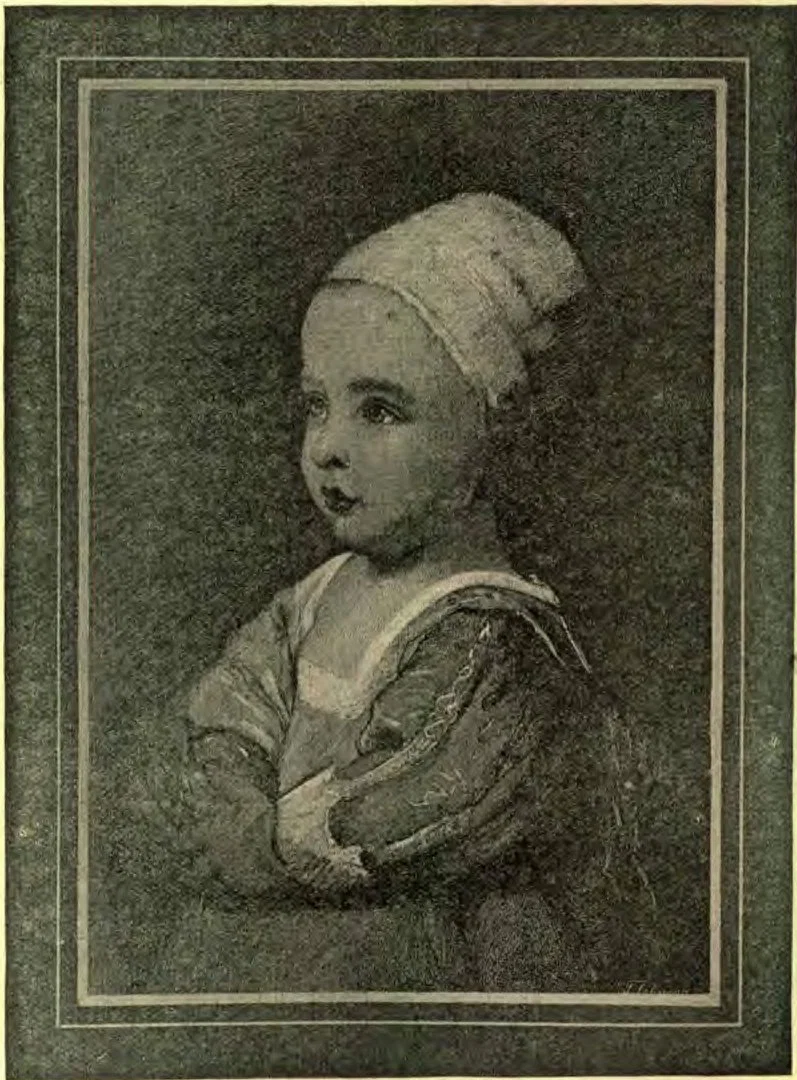
If Baby Stuart, whose picture looks down from many a school-room and nursery wall, could tell his own story, perhaps this is what he would say:—
“My father was King Charles I, of England. He was beheaded when I was sixteen years old. That was a long time ago—more than two hundred and fifty years. One hundred years before that, my great-grandmother, Mary Queen of Scots, was beheaded. So you see that to be a prince of the blood, as I was, was not the happiest thing in the world. After my father had been put to death, Oliver Cromwell, who had no royal blood in his veins, was made ruler of England. But it was not long before England decided to have a king again—to call back the Stuarts; and so my eldest brother was crowned Charles II. As Duke of York and Albany, and the next heir to the throne, I was as important a personage as could be seen at court; and I held high positions in the army. This picture was painted when I was about two years old, by a famous Dutch artist named Vandyke, whom my father, the king, kept busy painting his portraits and those of my mother, the queen, and of my brothers and sisters as well. It is one of a group known as the ‘Children of Charles I.’ That is my brother, Prince Charlie, with his hand on the dog’s head. My sister, the Princess Mary, stands between us. She was afterward married to the Prince of Orange of Holland, and it was their son, William III, who married my daughter Mary,—they are the ‘William and Mary’ that ‘together came on,’ after my reign in the rhyme you recite about the kings and queens of England. After William and Mary, Anne, my youngest daughter, succeeded to the throne,—‘Good Queen Anne,’ she was called.”
BABY STUART
BABY STUART
“I reigned—well, only some three years. I was past fifty when I ascended the throne, and, as perhaps you know, the most of my subjects did not like me overmuch, and I was glad to escape from London with my life, and run away to France, where my uncle, Louis XIII, was king. He gave me a palace to live in for the rest of my days. In history I am called James II, the last Roman Catholic King of England.”
“When I was in the prime of life, my royal brother, the king, gave me, as a reward for some hard fighting I had done for him against Holland, a great domain, millions of acres, over the sea in that strange New World neither of us had ever seen nor cared to visit. The king gave me two tracts, or ‘patents,’ as they were called; and one of them included ‘all the land from the west side of the Connecticut River to the east side of the Delaware,’—a grant of what, in truth, belonged to the Dutch, who had a settlement at the mouth of the Hudson River called New Amsterdam, and farther up the Hudson a thriving trading-post, Fort Orange. New Amsterdam we decided (the king and I) should be called New York, in honor of my Royal Highness, and Fort Orange we two renamed Albany. I was Duke of York and Albany, you know, and in those days it was by some thought that kings had the right to take anything they wanted, and do with it as they pleased. So you see that your Baby Stuart has two great monuments in your Empire State—the cities of New York and Albany. These names, York and Albany, are pretty well sprinkled over the United States, each a memorial of your Baby Stuart.
“One thing more should interest particularly the children descended from the soldiers of the Revolution. I had a great deal to do with the starting of what became, in less than a hundred years, your War of the Revolution. I was the first colonial proprietor who provoked an open revolt against England. In that part of my domain known as ‘the places upon the Delaware,’ a Scandinavian called Long Fin stirred up the people against my tyranny, as he called it,—my unjust, cruel laws,—and there was considerable uprising. But it was soon put down; Long Fin was whipped, branded with the letter R, and sold into slavery,—the beginning, you see, of ’76, which had another ending.”
“Had things been different from what they were some two hundred and fifty years ago, my son, James Francis Edward Stuart, would have had a place in the list of England’s kings, and would not now be known as the ‘Pretender;’ and my grandson, Charles Edward Stuart, would not be called the ‘Young Pretender,’ but Charles III of England. But after my flight, and the calling of William of Orange to the throne, another line of royal descent from my grandfather, James I, was fixed upon and accepted by the Parliament of England; and that is why King Edward VII is king, though not a direct descendant of your Baby Stuart.”
“Thanks to Anthony Vandyke, I have an enduring throne in the hearts of a multitude of children the world over—am crowned with their love. They look up from their books, and wonder how I spent the happy hours of my innocent childhood. I am never the proud, stern Duke of York to them, nor the runaway James II, but always Prince Jamie, ‘who tossed his ball so high, so high,’ in the gardens of Hampton Court, and who used to go sailing in the king’s barge up and down the Thames, and who loved his royal father dearly, even if many of the people of England did not.”
Yes, I think this is about what our Baby Stuart would say. Let us remember, when we look at our favorite print, that if James Stuart was not the best of kings, he was ever a loving father, and that separation from his children in his exile was the bitterest sorrow of his broken heart.—St. Nicholas.

BITTERSWEET MONEY

It all happened in a minute. In the little back yard, where Edna had begged a tiny strip of ground for her missionary garden, two boys were playing,—two rough, hearty, thoughtless little fellows,—throwing a ball back and forth, while a big, curly-haired dog watched the fun, one ear cocked up in a knowing fashion, and his wet, red tongue showing in his open mouth. Edna saw them as she glanced at her precious flowers, and was just opening her lips to say, “Be careful!” when Bruno made a quick dash, seized the ball in his strong teeth, and the next instant, dog and boys were rolling over one another among the ruins of geraniums, nasturtiums, and all her heart’s delights. They were up almost as quick as down; but the mischief was done, and the three culprits stood shamed and sorrowful while poor Edna sobbed over her pets, picked up the crushed flowers, and tried to straighten the broken stems.
“I guess they’ll grow up again all right,” said Rob.
“O, they never will! it’s too late!” wailed Edna, “and I was going to send my chrysanthemum for a prize—it was just full of buds. Now where’s my harvest home offering? It’s too bad! You——”
“So it is,” said Tom; “we just ought to be thrashed, all three of us.”
That was exactly what Edna was going to say, but she caught the words just in time, and said, rather ruefully: “I don’t see how that would help the flowers any, or me. I do want the money ever so much; but I just loved every one of my flowers, and I feel about as mama would if you boys had your legs and arms broken. But I know you didn’t mean to do it.”
Rob said, “Pshaw!” and tried to look as if he thought that was nonsense; but he really was sorry for Edna, and wished he could think of some way to help her. That was the reason he stopped to listen that evening when Mrs. Neal asked the postmaster if he knew where she could get some bittersweet to decorate the hall for the Harvest Festival. The postmaster did not know, but Rob did. He knew of a tree over in the Derry woods, all hung with long vines, and beautiful, shining berries. He and Tom had found it the day they went fishing at Long Pond, but Rob didn’t mean to tell. He knew very well somebody would ask them to go and get the bittersweet, and so spoil their plan for a holiday at Winston Park. He slipped quietly out of the post-office, as if he thought Mrs. Neal could read his thoughts through the back of his head, and was trudging sturdily along when he heard Mrs. Neal say, from her carriage: “Well, if you do hear of any, let me know. I’d be glad to pay almost any price for it.”
Pay for it? That was quite another thing. Here was a chance, maybe, to help undo the mischief to Edna’s flowers. A chance, perhaps; but it meant a long, hard tramp, and no fun at the end. Rob hesitated. What if he promised, and then Tom wouldn’t go? He would have to go alone. There wasn’t much time to decide; for here came the phaeton along behind him. He almost made up his mind to let it go by; but suddenly he whirled about, lifted his cap, and said: “If you please, Mrs. Neal, will you stop a minute?”
“O, it’s Robbie Ames,” said the lady, tightening the reins upon the gentle little pony. “What is it, Robbie?”
“I heard what you said about the bittersweet, Mrs. Neal,” said Robbie, in some confusion, “and I know I could find—we saw some over by Long Pond——”
“Robbie, you’re a treasure,” began Mrs. Neal, enthusiastically.
“Yes’m,” laughed Robbie, “but you see it’s for the money, because we spoiled Edna’s mission flowers—me and Tom and Bruno.”
“What!” said Mrs. Neal; “get in here, and tell me. I haven’t time to stop.”
Rob climbed in, and told his story to a very sympathetic listener as they drove along.
“I’ll tell you what, Robbie; I’ll hire you and Tom to help me on Friday, and pay you two dollars and a half. That’s what Oscar charges me, and you can do anything he can. You come over right after breakfast, and you shall have the pony and phaeton to go for the bittersweet, and then we’ll see what next.”
If Rob had been offered a kingdom, it would not have seemed so valuable as the chance to drive the pony that was the admiration of every boy in the village. The trip to Long Pond, with a luncheon stowed away under the seat, was an excursion into fairyland, and, though Mrs. Neal exacted steady work all through the day, they went home at night tired but blissfully happy.
“It’s a dollar for me,” said Tom triumphantly, as they counted their money into Edna’s lap, “and a dollar and a half for Rob, because he was the one to think of it.”
“You blessed boys,” said Edna, between laughing and crying; “how lovely of you to think of it and to do it!”
“Well,” said Rob, “I should say a fellow would be pretty mean not to think of something when he’d smashed things up the way we did. Maybe we can get some more before missionary day.”
“You can call it bittersweet money,” said Edna’s mother. “It is like a good many other things in this world, sweet that came out of bitter, for I think something better than flowers has grown in your garden.”
“What has?” said Tom.
“Love and sympathy and brotherly kindness,” said Mrs. Ames.
“And patience,” added Rob; “’cause she never scolded a mite, and that’s what made me feel all the sorrier. When folks scold, you feel kind of mad, and the mad drives out the sorry.”—Emily Huntington Miller.

HEALING THE WITHERED HAND

INTRODUCTORY

Preceding Events.—The only important event in the Saviour’s life since the last miracle, the healing of the impotent man, was the instance of the disciples’ plucking grain on the Sabbath. Matt. 12:1-8.
Main Reference.—Luke 6:6-11.
Other References.—Mark 3:1-6; Matt. 12:9-13.
Bible Story of the Miracle.—“And he departed thence: and it came to pass on another Sabbath, that he entered again into their synagogue and taught: and behold there was a man there, and his right hand was withered. And the scribes and Pharisees watched him, whether he would heal him on the Sabbath day, that they might find how to accuse him. And they asked him, saying, Is it lawful to heal on the Sabbath day? But he knew their thoughts, and he said to the man that had his hand withered, Rise up, and stand forth in the midst. And he arose and stood forth. And Jesus said unto them, I ask you, Is it lawful on the Sabbath day to do good, or to do harm; to save a life or to destroy it? But they held their peace. And he said unto them, What man shall there be of you, that shall have one sheep, and if this fall into a pit, on the Sabbath day, will he not lay hold on it and lift it out? How much then is a man of more value than a sheep? Wherefore it is lawful to do good on the Sabbath day. And when he had looked round about on them all with anger, being grieved at the hardening of their heart, he saith unto the man, Stretch forth thy hand. And he stretched it forth, and his hand was restored whole, as the other. And the Pharisees were filled with madness, and communed one with another what they might do to Jesus; and went out, and straightway with the Herodians took counsel against him, how they might destroy him.” (This quotation is an interwoven story of the miracle, gathered from Matt. 12:9-14; Mark 3:1-6; and Luke 6:6-11, but in the exact language of the Bible.)
Place.—Not mentioned.
Circumstances.—This miracle of the restoration of the withered hand was performed on a Sabbath day of rather uncertain date. Perhaps it immediately followed the accusation of Jesus and his disciples for plucking corn on the Sabbath. It would appear that he was especially watched on this occasion, to see whether he would heal this man on the Sabbath day. In this way they hoped to secure sufficient evidence to accuse and convict him as a Sabbath-breaker,—a transgressor of the law. The Saviour, understanding their motives, asked them, “Is it lawful on the Sabbath days to do good, or to do evil? to save life, or to destroy it?” “But they held their peace.” Having thus, for the time being, silenced those who sought to “destroy” his life, Jesus set about to “save” the life of an afflicted man.
Great Lesson.—This miracle teaches us a great and important lesson concerning the proper observance of the Sabbath. Caring for the sick, relieving suffering, and administering necessary treatment to the afflicted, are clearly shown by the Master’s conduct and words to be proper Sabbath work.

STUDY OF THE MIRACLE

Is It Lawful to Save Life?—This miracle seems to have been deliberately planned and worked for the purpose of bringing to a focus the criticisms of the Jews concerning Christ’s observance of the Sabbath, and perhaps also to make a great object-lesson for the good of his disciples, and his followers down through the ages. The Pharisees taught that to neglect to save a life was to kill; so Jesus took them on their own ground, and showed that in healing the withered hand, he was doing no more than a Jew would do for a dumb animal. While they found fault with Jesus for “giving life” on the Sabbath day, they themselves were planning and plotting to “take life”—even the life of the Prince of Life.
Stretch Forth Thy Hand.—This is an instance where “He sent his word, and healed them.” Christ did not touch the withered hand. He simply spoke the word, “Stretch forth thy hand.” When God speaks the word, only willingness to obey is required on our part to reveal the power contained in the spoken word. Every command is a promise, which to the willing and obedient, contains the power to effect obedience to its own requirement. God’s commands are all positive, as well as negative. Many a Christian to-day bears about in his experience the evidence of spiritually withered hands,—withered purposes and aspirations. To such Jesus says, “Stretch forth thy hand.” Our being made whole is dependent upon the willingness with which we will yield obedience to his command to stretch forth the withered faculty or member. It is this withering influence of compromise with sin that brings us into such a debilitated condition spiritually that we are unable to do that which we would. The command, “Stretch forth thine hand,” was addressed to one who, to all human appearance, was utterly unable to yield obedience. Here, again, we learn the lesson that every command of God is enabling. Power goes with his word to enable us to obey.
And He Did So.—The man with the withered hand was willing to obey. He was willing to be healed in Christ’s way; therefore his restoration was quickly wrought. The stretching forth of his hand was an act of pure, simple faith. To will to put forth the withered hand was an indication of the perfect faith he had in the power of the Master who had commanded him to “stretch forth” his hand. He decided to believe, and it is a decision of this sort that constitutes half the battle in forsaking sin and turning to God.
W. S. SADLER.

TRIFLES

“To-day,” said pretty Dolly, as She opened her bright eyes, “I’m going to give my dear mama A beautiful surprise. I hardly know yet what ’twill be, But I’ll soon find a way To do some unexpected thing To please mama to-day.
“I’m tired of doing little things. Why, any one can sweep And dust, or wipe the dishes, Or sing Evelyn to sleep. ’Tis some big thing I want to do. If I could write a book, Or save the house from burning, now, How pleased mama would look.”
So after breakfast Dolly went And sat beside the fire, While mother cleared the table off, And mended baby’s tier; She wiped the dishes, made the beds, And braided Bessy’s hair. While Dolly sat and pondered long Within her easy chair.
And so Miss Dolly dreamed and planned That busy morning through; She could not think of anything Quite large enough to do! And when she went to bed that night, She really wondered why, When mother kissed her lovingly, The kiss was half a sigh!
— Youth’s Companion.

A LITTLE SERMON

A very little sermon, and a very good one, is this one for small readers:—
“Look not every one on his own things.”

LIKE THIS

“It’s my hat; I can’t find it!” “It’s my ball; I won’t lend it!” “It’s my ribbon; you mustn’t wear it!” “It’s my knife; don’t you touch it!”
“But every one also on the things of others.”

LIKE THIS

“It’s his hat; hang it up for him.” “He is such a little chap, let him have the ball.” “She likes blue; lend her the ribbon.” “I am sorry you can’t go out; don’t you want to whittle with my knife?”
Such would be Jesus’ way.—Little Ones.

Why Apologies Cannot Undo Unkind Words

It takes “I'm Sorry” a long time to overtake an unkind word or a hateful act.

THE PARABLE OF THE LEAVEN AND OTHER PARABLES

(November 23)
LESSON SCRIPTURE.—Matt. 13: 33, 44-52.
LESSON HELP.—“Christ’s Object Lessons,” pages 96-134.
1. How many parables have we studied about the seed? Name them. Who of Christ’s hearers would be specially interested in these?
2. What other parables did he give that day by the Sea of Galilee?
3. What particular class of people would be touched by the parable of the leaven? See first quotation.
4. How did the woman in the parable get the leaven? What did she do with it? Where did she hide it? What was the result? What is the leaven of truth?
5. How shall we get the leaven of truth? ; John 17: 17. Where shall we hide it? Ps. 119: 11. What will the truth do for us? John 17: 17, first part; .
6. The three measures of meal well represent the whole being of man—mind, soul, and body. Is the leaven of truth able to work a change in all this? Heb. 4: 12.
7. What parable did Christ give to the searcher of riches?
8. What does this hidden treasure represent? Col. 2: 3; .
9. What is the field that contains this treasure?
10. How much are we to give in order to obtain this holy field?
11. When we have given all that we have and are, have we then paid the price of God’s wisdom? Read Job 28.
12. Then why must we give up so much?
13. To whom is the parable of the pearl of great price given?
14. As a merchant, what goodly pearls did Christ go forth to seek? Luke 19: 10. Did he find the lost pearl?
15. From the meaning of this parable, what can we say that the kingdom of God is to us? What is the great price of this heavenly pearl? Acts 20: 28. What price did Judas set upon the blood of Christ?
16. What class of Christ’s hearers would be interested in the parable of the net?
17. Is the gospel net yet full? When it has gathered of every kind, what will take place? Compare verses 49 and 50 with Matt. 24: 14.
18. Why did not Christ explain these last parables? Verse 57.
19. With what parable did he close his day’s instruction?
20. To whom did it especially apply?
21. What portion of the Scriptures had the disciples in Christ’s time?
22. As householders, what work was left for them to do after he ascended?

ADDITIONAL THOUGHTS

1. “Jesus had a wise purpose in making use of so many parables by which to teach the same important truths. All classes were before him, for it was a place where many different people met in the pursuit of their business or in their journeys.” “There were many fishermen in the assembly that listened to the teachings of Jesus. The searcher for riches represented a large class, who could not but be struck by the parable of the hidden treasure. And the leaven, buried in the meal, while it was an illustration that could be understood by all, brought home the truth with added power to the minds of the women, who knew so well the action of the leaven upon the meal, and were thus enabled to draw a forcible comparison between that and the workings of God’s grace upon the heart.”—“Spirit of Prophecy, Vol. II, pages 253, 254.
2. “The parable of the merchantman seeking goodly pearls has a double significance: it applies not only to men as seeking the kingdom of heaven, but to Christ as seeking his lost inheritance.”—“Christ’s Object Lessons,” page 118.
3. In the parable of the scribe, “Jesus presented before his disciples the responsibility of those whose work it is to give to the world the light which they have received from him. The Old Testament was all the Scripture then in existence; but it was not written merely for the ancients; it was for all ages and for all people. Jesus would have the teachers of his doctrine diligently search the Old Testament for that light which establishes his identity as the Messiah foretold in prophecy. . . . The Old and the New Testament are inseparable, for both are the teachings of Christ.”—“Spirit of Prophecy, Vol. II, page 254.

A Baby’s First Wardrobe

Is the most trying proposition a young mother can meet. Often everything she makes is wrong. For 30 cents in stamps you can get twenty-two guaranteed patterns drawn on anatomical and hygienic lines, with full instructions for making. Also an illustrated booklet on care of the body—free. All in plain envelope. Everything essential to know. For information on garments for other ages, send stamp.
MRS. F. M. KELLOGG,
207 Hubbard St., - - Battle Creek, Mich.

GRAND TRUNK R'Y. SYSTEM.

Taking Effect June 2, 1901.
Trains leave Battle Creek.

WEST-BOUND.

No. 9, Mail and Express, to Chicago — 12.15 P. M.
No. 7, Limited Express, to Chicago — 7.00 A. M.
No. 1, Chicago Express, to Chicago — 9.23 A. M.
No. 3, Lehigh Valley Express, to Chicago — 3.50 P. M.
No. 5, International Express — 2.17 A. M.
No. 75, Mixed, to South Bend — 7.30 A. M.
Nos. 9 and 75, daily, except Sunday.
Nos. 1, 3, 5, and 7, daily.

EAST-BOUND.

No. 10, Mail and Express, East and Detroit — 3.45 P. M.
No. 8, Limited Express, East and Detroit — 4.50 P. M.
No. 4, Lehigh Express, East and Canada — 8.22 P. M.
No. 6, Atlantic Express, East and Detroit — 2.10 A. M.
No. 2, Express, East and Detroit — 7.00 A. M.
No. 74, Mixed (starts from Nichols yard) — 7.15 A. M.
Nos. 10 and 74, daily, except Sunday.
Nos. 4, 6, 8, and 2, daily.
W. C. CUNLIFFE, Agent, BATTLE CREEK.

SENT FREE

Read Special Offer Below.

THE CO-RO-NA MEDICATOR.

A natural evolution from E. J. Worst’s famous Catarrh Inhaler that has won a world-wide reputation. It is made of Nickel, and will last a lifetime; is so compact it may easily be carried in a vest pocket or reticule.

CATARRH.

Don’t take medicine into the stomach to kill germs of Catarrh in the head. If you will only stop and think for a moment, you will certainly realize that the germs of disease were carried into your head by air, and that air is the only agency that will carry a medication to the diseased passage capable of destroying such germs. Catarrh, Colds, Coughs, Pains and Sores in the Head, Bronchitis, Sore Throat, Headache, Partial Deafness, La Grippe, and all diseases of the air passages yield as if by magic to treatment with the Co-ro-na Medicator. Science and common sense can offer no improvement upon this little pocket physician. It is simple in construction, and may be used anywhere and at any time. It is the only positive cure for the diseases named. I make it easy to prove this beyond all question by the following remarkable

SPECIAL OFFER.

For a short time, I will mail free to any reader naming this paper one of my new Scientific Co-ro-na Medicators, complete, with medicine for one year. If it gives satisfaction, send me $1.00; if not, return it after three days’ trial. Could any proposition be fairer?
E. J. WORST, 112 Elmore Block, Ashland, O.
NOT SOLD BY DRUGGISTS. AGENTS WANTED.

THE COMMON HOUSE-FLY

THE house-fly (musca domestica) is found in nearly all parts of the world, and is so common that it needs no lengthy description. Doubtless every reader of the INSTRUCTOR has had a personal experience with it. But while this is true, it is probable that few have taken the pains to study carefully its form, color, structure, and habits.
It is about one-fourth inch in length, ash-colored, with a black face. The sides of the head are yellow, the forehead yellow with black stripes, the thorax marked with black lines, the abdomen pale underneath, speckled with black, and in the males a transparent yellow at the sides. The feet are black; the wings transparent, and yellowish at the base.
Those who enjoy the study of nature will, at the first opportunity, wish to capture a fly, and see if they can verify this description. A small magnifying-glass will be of much assistance.
The house-fly lays its eggs in clusters in almost any kind of decaying animal or vegetable matter, the filth of stables being a favorite place. In these decaying substances the decomposition continually going on supplies the heat necessary for the hatching of the eggs, which usually takes place within a day or two. The maggots attain their full size in about two weeks after emerging from the egg. They then crawl into some dry place, and change into the pupa state, emerging, after a week or two, as perfect flies.
Thus the insect passes through a complete metamorphosis, the young larva when first emerging from the egg having no resemblance to the adult fly. The larva is cylindrical in form, smooth and shining, and of a yellowish-white color. It has no legs, and no true head. It is about one-third inch long, and somewhat fleshy in appearance.
House-flies are to be found most abundantly about barns in August and September. They begin to appear in houses in June, and become exceedingly abundant in September. They do not disappear until killed by cold weather; although in excessively hot and dry weather, the writer has seen large numbers of them become weak and unable to fly, soon dying from the effects of the heat.
A few live through the winter, hibernating in houses, and when the rooms are heated, may often be seen flying about. Others hide away under leaves, the bark of trees, moss, etc., and fly about on warm days early in March.
The structure of the fly’s tongue is of considerable interest. The broad, knob-like end consists of two broad, flat, muscular leaves, which the fly can fold or unfold at pleasure.
When it settles upon a lump of sugar or other substance that it wishes to use as food, the muscular leaves of the tongue unfold, presenting a sucker-like surface, with which it laps up its food. If the substance upon which the fly is feeding is too dry to be sucked up, it exudes a moistening liquid from its proboscis.
The inside of this fleshy expansion is rough, and is employed by the insect in scraping or tearing delicate surfaces. It is by means of this structure that the house-fly scrapes the albuminous polish from the covers of our books, leaving a soiled and spotted appearance. The same instrument is used when it lights upon our hands and faces to sup the perspiration from the skin.
Americans have the reputation of being careless in regard to flies. They literally swarm in some houses, covering every article of food by day, and blackening the walls by night. In other houses comparatively few are found; for the tidy housekeeper takes every precaution to keep them out. She is especially careful not to leave food of any kind standing around uncovered, and drives them out at least once every day. This is important, too; for not only are flies an annoyance to the occupants of a house, but it is very probable that they are the carriers of many disease germs. It is possible that some diseases which physicians can not account for, originate from the germs carried by flies and deposited in our food, upon our clothing, or upon our hands and faces.
B. E. CRAWFORD.

TWO PROBLEMS FOR A LONG EVENING

Some evening after you have done all your lessons, try to work out the following little problem. It will be an amusement as well as a good exercise:—
A man who had three sons called them together, and told them that he had one hundred and fifty apples, of which he would give fifteen to his youngest son, fifty to his second son, and eighty-five to his eldest son.
“Now,” he said, “I want you to go out and sell those apples at the same price, and yet each of you must bring me exactly the same amount of money, and the eldest must fix the price.”
The boys were puzzled. The eldest, who had eighty-five apples, was to fix the price, and yet he was to take back the same amount of money as the youngest, who had only fifteen.
Finally they started out, and in an hour all three boys had sold their apples, and each took back to his father exactly the same amount of money. Now, at what rate did they sell their apples?
In some school arithmetics the answers to the sums are given at the end of the book, and many a boy will look at those answers to see if he has solved the problem correctly. I should like you to try this problem of the apples before you read any more, for I am going to give you the answer. Now, supposing that you have tried your very best to solve the question, it is only fair to tell you how the boys sold the apples.
When the eldest boy was asked how much he wanted for his apples, he set a price of one cent a dozen. He sold seven dozen at this price, and had one left over, which he sold for three cents. So you see he had ten cents for his apples, eighty-four bringing seven cents, and the odd one three cents. The second boy, learning the price, sold four dozen of his fifty for four cents, and received three cents each for the other two, so he also had ten cents. The youngest sold one dozen at one cent, and three left over at three cents each, which gave him also ten cents. So each sold his apples at the same rate, and each took the same amount home, though one had eighty-five, another fifty, and the third only fifteen apples.
Some years ago an educational journal puzzled its readers by asking a solution of the following problem: “Subtract figures equaling forty-five from other figures equaling forty-five so that the remainder may be also forty-five.”
Many said it could not be done, and for several weeks the question stood unanswered. At last it was solved in this way:—
987654321 = 45 123456789 = 45 864197532 = 45
You can have some amusement by asking your friends to solve these two problems for you; and if you do not give the answers too soon, an hour may be pleasantly passed in trying these brain twisters.—Children's Visitor.
Continue reading: A NEWSPAPER'S PALACE