Your ShelfYour Projects

Signs of the Times, Vol. 23, No. 33.

Independence

Signs of the Times

Aug 26, 1897

Pacific Press Publishing Company · Oakland, California · Aug 26, 1897

Independence
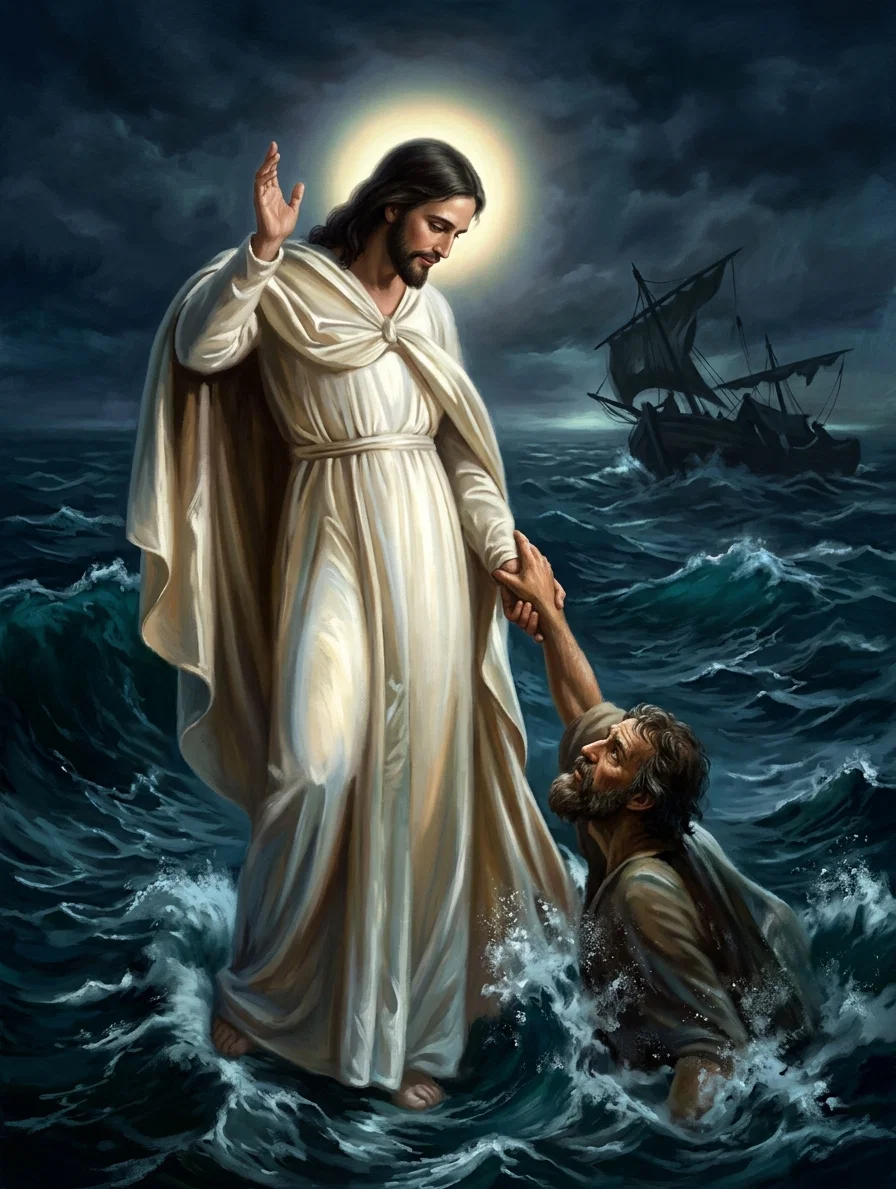
Independence.—The feeling of independence is inherent in human nature. The first declaration of independence against God was made by Lucifer, in the courts of heaven, and next, at his instigation, by man in the Garden of Eden, when he set about to make himself equal to God, and thus independent of his authority. The first marked feature to manifest itself in the infant is the disposition to have its own way; and unless this disposition is checked, it grows stronger with years until even in early youth he declares his determination to have his own way, regardless of what anybody else may say or think.
“Without Me ye can do nothing.”—“Lord, save me.”
Who Shall Rule?—This is easily answered in the case of the infant. That the child is of right subject to the parent, is so self-evident as to need no special argument. The child is not independent of its parents. Why not?—Simply because it is not.
It can not be. It depends upon them for existence in this world, and after it sees the light of day it is as dependent as before. It is absolutely impossible for it to maintain an independent existence. If forsaken by its mother, and left with no one else to take her place, it would perish in a very short time. For years the child is the most helpless of animals; it is absolutely dependent on the exertions of others for its existence. Then of course it must be subject to those who provide for it, because—
Dependence Means Subjection.—He who provides a thing has a right to say how that thing shall be used. To partake of one’s bounty,—to be absolutely dependent on it,—and at the same time to rail against him, and to use all one’s power against him, is the basest ingratitude. Whoever does that is by common consent regarded as lost to all sense of justice. So long as one is absolutely dependent on another, that other must of right have the controlling voice in the dependent one’s affairs.
Who Is Independent?—Who is there that is indebted to no one for his existence?—Not one; as already seen, every child is of right subject to its parents. But the parents themselves,—whence do they derive their support, their life itself?—“God that made the world and all things therein, . . . giveth to all life, and breath, and all things; . . . for in him we live, and move, and have our being.” Acts 25:24–28. The parents of every child, yea, every person in the world, are as absolutely dependent on God for existence and its continuation, as the infant is upon its parents. The strongest and wisest man in the world is far more helpless compared with God, than the newborn infant is compared with him. When Peter stepped out upon the water at the word of Jesus, he was conscious of the fact that he was dependent upon Jesus for support. But he was just as much dependent on that support when walking on the land.
God the One Ruler.—Those who are nearest to God, beholding his power and glory, and who themselves occupy the highest position of all created beings, do humble reverence to God, saying, “Worthy art thou, our Lord and our God, to receive the glory and the honor and the power; for thou didst create all things, and because of thy will they were, and were created.” Rev. 4:11, R. V. “Know ye that the Lord he is God; it is he that hath made us, and not we ourselves; we are his people, and the sheep of his pasture.” Ps. 100:3. Therefore, just as the child is of right subject to its parents, because dependent on them for existence, so all men are of right subject to God, absolutely dependent on him for life, and breath, and all things; and this is the very lesson that God would have both parents and children (and that includes everybody) learn from the relation of parent and child. The child is dependent on its parents, in order that both it and they may see their common dependence upon God; and the child is by the nature of things compelled to be dependent on its parents until it comes to years of discretion, in order that, in the proper order of things, it may learn the lesson of dependence, and pass from the recognition of dependence upon its parents to the recognition of its dependence upon God; nay, more, long before it ceases to be dependent upon its parents, it should learn the lesson that it is subject to them, for the reason that all are subject to God.
The Responsibility of the Independent One.—We speak now of the one who chafes under proper restraint, and who imagines himself to be independent, for God alone is independent. Well, since God alone is independent, from him alone may we learn the responsibility that one really assumes when he asserts his independence. God is self-existent; his name is I AM; no other being in the universe contributes the slightest particle to his support. Therefore he has a right to do as he will, and none can question him and say, “What dost thou?” “Our God is in the heavens; he hath done whatsoever he hath pleased” (Ps. 115:3); and none have ever been able to withstand him: “for the Lord of hosts hath purposed, and who shall disannul it? and his hand is stretched out, and who shall turn it back?” He who would stay the Lord in any of his purposes, must be one who has first given to him; but there are none such.
What It Means.—The one therefore who assumes that he is independent, and who asserts his independence, takes upon himself the responsibility of maintaining his own existence. When the headstrong youth declares his independence of his father’s control, the father sometimes allows him to carry his declaration to its legitimate conclusion, and attempt to provide for his own support. Now it may be that the youth from that time is able to live without his father, altho but for his previous dependence he could not now be seemingly independent, but it is impossible for him to be independent of God. He goes out into the world in his boastful pride, declaring himself to be independent even of God. He blasphemes the name of God. He will not be dependent on any being, not he. But wait! He is breathing, yes, even breathing out defiance to God. Where did you get your breath, my friend? Did you make it?—No, you didn’t have anything to do with it. You found it ready made and used it, and the supply is kept up while you are asleep. Now, no matter who made it, it is certain that you did not, and therefore if you are determined to be independent, you must at once cease using it. Of course no other man made it, any more than you did; God alone made it. Now the only way for you to be independent of God is for you to provide your own air, and use no other. Everybody who declares independence against God, puts himself under obligation to make his own air. You can not do it?—No, of course you can not. If you cease using God’s air you will immediately die. Whose life are you using, then?—Why, God’s and his only. Certainly then it is nothing more than common fairness that he be allowed to direct his own life. Every man who breathes is by that very act under obligation to devote his life to the Lord, for him to control.
“His Mercy Endureth Forever.”—We have said that sometimes an earthly father tells his rebellious son that he may look out for himself if he will not acknowledge parental authority; but this God does not do. “His mercy endureth forever.” “He maketh his sun to rise on the evil and on the good, and sendeth rain on the just and on the unjust.” Matt. 5:45. “He is kind unto the unthankful and to the evil.” Luke 6:35. This is the goodness of God that leads men to repentance. If men would only acknowledge the truth that is evident in every breath they breathe, the very drawing of their breath would draw them to God. How easy is it to believe God?—Just as easy as it is to breathe. Then “let everything that hath breath praise the Lord,” and thus prepare the way for God to show them his salvation.
E. J. W.

THE REASON OF SABBATH DESECRATION.

OUR esteemed contemporary, the Advance (Congregational), of Chicago, of July 15, has the following, under the heading “Sabbath Desecration a Sin against Nature”:—
It is an accepted fact that a failure to respect the sacredness of what we have come to name appropriately the Lord’s day [Sunday], is not a serious offense against the common conscience. Multitudes of men who would not steal, neither be guilty of slander, unchastity, nor the hate which is the substance of murder, do not scruple to pervert the sabbath [Sunday] by labor or loafing or riot. They are essentially without enlightened convictions of conscience in the matter. How is such a surprising fact to be accounted for? We have an easy answer in the common statement that the man of the world has not the fear of God in all his thoughts. He that fears God, it is said, will reverence the day that he has chosen for his own and blessed; the way, therefore, to protect the Sabbath is to make men pious in the substance of their thinking or feeling.
The Advance thinks that the reason of Sabbath desecration lies in the fact that men do not believe that the Sabbath law is moral or laid in the law of nature like the other commands of God. But, after all, is not the real reason lack of faith in the only true basis of faith, God’s Word? Once men believed the Sunday to be the Bible Sabbath enjoined by the fourth commandment of the Decalog. They kept what they believed to be the Sabbath of the Lord. God blessed them, not because of the day, but because of the consecrated heart, in spite of the error. But men have in later years learned differently. The Heaven-sent agitation on the subject of the Sabbath has driven many to the Word, and they have there learned, both clergy and laymen, that the Bible knows no Sunday sacredness, and that the only Bible Sabbath is the seventh day. But as the religious teachers, by a score of ingenious interpretations and excuses, have made the Sabbath law to mean almost anything and everything, rather than what God has said, the great mass of the people look upon the law of God as an indifferent matter. They know that Sunday is not holy, and the preachers say that the seventh day is not; and therefore they regard Sunday as a simple day for recreation; and more and more the other precepts of the Decalog are coming to mean of themselves nothing. Education, civil law, society customs, and policy restrain many, but fear and love of God, based on faith in his Word, restrain few.
This very condition the Lord has foretold in his Word. At that time when his glorious second advent is near (Ps. 50:1–3), there will a class of teachers exist who are “partial in the law.” Thus he addresses them:— “What hast thou to do to declare my statutes, or that thou shouldest take my covenant in thy mouth? seeing thou hatest instruction, and castest my words behind thee. When thou sawest a thief, then thou consentedst with him, and hast been partaker with adulterers. Thou givest thy mouth to evil, and thy tongue frameth deceit. Thou sittest and speakest against thy brother; thou slanderest thine own mother’s son. These things hast thou done, and I kept silence; thou thoughtest that I was altogether such an one as thyself; but I will reprove thee, and set them in order before thine eyes. Now consider this, ye that forget God, lest I tear you in pieces, and there be none to deliver.” Verses 16–22.
It may be asked, How are religious teachers guilty of the above? How are they partakers with thieves and adulterers? In what does the tongue frame deceit? And we reply, In respect to the teachings concerning the law of the Sabbath, the fourth commandment of the Decalog. The reproof does not say that they steal or commit adultery, but that they are partakers with those that do these things. How?—They are transgressors of the same law, despising the same Word of the same God; for that holy law of God which declares, “Thou shalt not steal,” and, “Thou shalt not commit adultery,” also declares, “Remember the Sabbath day, to keep it holy. . . . The seventh day is the Sabbath of the Lord thy God.” The Gospels reveal that the Sabbath of the commandment is the day just before “the first day of the week;” the seventh-day Sabbath is therefore the seventh day of the week. He who transgresses one command is a partaker with those who transgress others. “Whosoever shall keep the whole law, and yet offend in one point, he is guilty of all.” James 2:10.
How does the tongue frame deceit?—In the many contradictory and self-devouring arguments, often put forth by the same person, in defense of Sunday and against the Sabbath of the Lord, while those who proclaim the truth of God are defamed and slandered.
What should be done?—Let every Christian heed the words of reproof. God will not always keep silence. Sometime preacher and laymen will have to face the Great Judgment Throne, and the rule of that judgment will be God’s holy law. The whole-hearted toward him, who sinned ignorantly, God will excuse; but how will it be with those who by deceit and subterfuge endeavored to pass as the genuine Sabbath of the Lord a base, pago-papal counterfeit. Let every Christian turn to the Lord with all his heart. Let him take God’s Word as he has given it, confirmed not by commentators, or men skilled in theological prestidigitation, but by the eternally right and holy example of Jesus Christ, Creator and Redeemer, the Sabbath’s Maker and Preserver.
No Sunday laws or Sabbath laws will then be needed. God’s law, behind which is all the power of his throne, will be all-sufficient. Jesus Christ as the great Leader will compensate all the loss of earthly leaders. Every good conscience will be kept by the Word of God. Why not, reader, why not, obey God? Only so is the way of his Word, and in it are the footsteps of Jesus, it matters not where he leads you. The Way gives you his companionship, and it ends in the eternal bliss and ineffable glory of his everlasting kingdom.

“LABORERS TOGETHER WITH GOD.”

“For we are laborers together with God; ye are God’s husbandry, ye are God’s building. According to the grace of God which is given unto me, as a wise master builder, I have laid the foundation, and another buildeth thereon. But let every man take heed how he buildeth thereupon. For other foundation can no man lay than that is laid, which is Jesus Christ.” Before the world was, God destined his Son to minister to the human family, and in him we may receive the highest ideal of true ministry. God has exalted such ministry as worthy of the highest place in the work to be accomplished in our world; and only through his Son, who was equal with himself, could he exemplify it. God invested his Son with the ideal of ministry, and bade him work it out in humanity. It was not simply a theory that Christ was to hold in regard to the character of ministry; he worked it out after the similitude which God had given him. Out of his own fulness he ministered to all.
Christ was the greatest Teacher the world has ever known. And he is the example his followers are to copy, both in manner of address and in the subjects of his lessons. His words were most simple. The truth spoken bore its own credentials to the people who heard. The very tones of his voice expressed his warm, tender sympathy for his hearers. And Christ was a practical teacher. The truth coming to the people in deep, earnest tones from a man who was one in nature with themselves was what they needed above everything else. Never did so many people congregate to listen to the teachings of one man as gathered to hear Christ. Men, women, and children listened to his words with solemn, earnest attention.
Christ came to give expression to the law of God, to represent the Father’s character. He came to minister to man, to restore in him the moral image of God. Tho he was rich, yet for our sake he became poor, that we through his poverty might be made rich.
God did not create man sinful. Adam came forth from the hand of his Maker without the taint of evil. The holy pair might have retained their innocence, had they lived by every word that proceedeth out of the mouth of God, had they refused to listen to the strange voice declaring another story than that which God had told them. But they abused their high and holy privileges. They were left free to choose between good and evil, and they chose the evil. And as they chose to believe the lie of Satan and disobey the express command of God, that which was pure and godlike in their nature became perverted and defiled.
But Christ came to be the propitiation for man’s sins. John, the beloved disciple, declares: “Behold, what manner of love the Father hath bestowed upon us, that we should be called the sons of God; therefore the world knoweth us not, because it knew him not. Beloved, now are we the sons of God, and it doth not yet appear what we shall be; but we know that, when he shall appear, we shall be like him; for we shall see him as he is. And every man that hath this hope in him purifieth himself, even as he is pure. Whosoever committeth sin transgresseth also the law; for sin is the transgression of the law. And ye know that he was manifested to take away our sins; and in him is no sin.”
In his humanity, Christ lived a perfect life, thus elevating humanity in the scale of moral worth with God. With his human arm Christ lays hold of man; while with his divine arm he grasps the throne of the Infinite. Thus he imbues man with his own spiritual nature, and lifts him to his side, to be cherished and loved as the Father loves his Son.
Christ declared, “I am among you as one that serveth.” And yet how many of us want, not to serve, but to be served. Man’s selfish nature needs a divine teacher to show him by practical godliness the example he must follow. Christ sets our duty before us in clear lines. To those on his right hand he is represented as saying in the judgment, “I was an hungered, and ye gave me meat; I was thirsty, and ye gave me drink; I was a stranger, and ye took me in; naked, and ye clothed me; I was sick, and ye visited me; I was in prison, and ye came unto me.” Those who, with the love of God burning in their hearts, minister to their fellow-beings, are accounted as ministers unto Christ himself. And the reward offered to such is, “Come, ye blessed of my Father, inherit the kingdom prepared for you from the foundation of the world.” Christ has promised: “I go to prepare a place for you. And if I go and prepare a place for you, I will come again, and receive you unto myself; that where I am, there ye may be also.” But those who have no sense of the blessings of ministry will not appreciate heaven; they will not see the necessity of doing the will of God in this life, but will go where inclination leads.
Every faculty that we possess has been provided for us in Christ; for when God gave his Son to our world, he included all heaven in his gift. And God would have men value their powers as a sacred gift from him. A spark of God’s own life has been breathed into the human body, making man a living soul, the possessor of moral endowments, and a will to direct his own course of action. He has the privilege of becoming a partaker of the divine nature. This will give him power to conquer evil, and love and choose that which is good. He has a conscience, which, under the control of God, will approve the right and condemn the wrong. And he may, if he will, have fellowship with God. He may walk and talk with God as did Enoch. This holy companionship is denied to none who will believe on Christ as their personal Saviour.
By thus centering his affections upon the contemplation of God, man may develop a noble character. Consecrated to God, each faculty should be a worker in the character we are to build. Brick by brick these workmen are building the temple, and if the structure is erected on a solid foundation, the Rock, it will stand the storm and tempest that will surely beat against it. The warning comes to us, “But let every man take heed how he buildeth thereupon.” As one flaw makes the chain worthless, so one defect will spoil the character, and if not overcome, will gain the mastery. Self is our greatest enemy, and day by day each must strive for the victory. There must be no careless, haphazard work in the foundation chosen or in the structure built thereon. Our physical, mental, and moral powers must be trained, every ability must be cultivated and used to the fullest extent, every power must be brought into working order.
Man is called upon to cooperate with God. Day by day he must be careful how his work of character-building is performed; for this work is to last, not merely for time, but for eternity. He may, if he will, become pure in thought, noble and upright in action. Every deed may be of a character that will receive the approval of God. God takes pleasure in the man who through faith in Jesus will stand as a polished stone in his temple, honored of God and man. He declares, “I will make a man more precious than fine gold; even a man than the golden wedge of Ophir.”
God looks with pleasure upon the man, woman, youth, or child who will fear and love him, and refuse to be enticed amid a world of corruption. Through his prophet he has said: “O Israel, return unto the Lord thy God; for thou hast fallen by thine iniquity. Take with you words, and turn to the Lord; say unto him, Take away all iniquity, and receive us graciously; so will we render the calves of our lips. Ashur shall not save us; we will not ride upon horses; neither will we say any more to the work of our hands, Ye are our gods; for in thee the fatherless findeth mercy. I will heal their backsliding, I will love them freely; for mine anger is turned away from him. I will be as the dew unto Israel; he shall grow as the lily, and cast forth his roots as Lebanon. His branches shall spread, and his beauty shall be as the olive tree, and his smell as Lebanon. They that dwell under his shadow shall return; they shall revive as the corn, and grow as the vine; the scent thereof shall be as the wine of Lebanon. Ephraim shall say, What have I to do any more with idols? I have heard him, and observed him; I am like a green fir tree. From me is thy fruit found. Who is wise, and he shall understand these things? prudent, and he shall know them? for the ways of the Lord are right, and the just shall walk in them; but the transgressors shall fall therein.”
MRS. E. G. WHITE.

Discovering Truth.

The astronomer does not make the celestial bodies which his telescope reveals; they were in existence before he saw them, and all that he has done is to look steadily and patiently at some particular portion of the heavens, until the new light suddenly dawned upon his vision. Even so with a man searching for hid treasure or for something that is lost. He digs faithfully, or patiently searches for it, until he finds it; but when he has found it, he can not take any credit to himself for its existence. He did not manufacture it; he simply had the patience to keep looking until he found the right place, or till his eyes became accustomed to the light, and could distinguish objects. Then he had only to look and see that which was plainly visible. It is exactly the same way in the study of divine truth. Truth and wisdom come from God alone. He is the author of truth, because he is the truth. No man can manufacture or invent truth, for it exists from eternity. All that anybody can do is to open his eyes and see it. One reason why more people do not know and have the truth is that they think that to acquire it requires special qualifications and a sort of genius, whereas all that is necessary is open eyes. The natural man wishes to “work out” theories, so that he may have the credit of being wonderfully clever; but truth comes only to him who acknowledges his ignorance, and does not desire to gain applause for wisdom which does not and can not originate with him. If our sight is defective, we have only to pray to the Lord to anoint our eyes with eyesalve, and open them, that we may behold wonderful things in his law. Rev. 3:18; Ps. 119:18. E. J. W.

Inciting to War.

It does not augur well for the prospects of peace, when leading church teachers declare that the three conditions of justifiable warfare are,—the command of the prince, a just cause, and a good intention—and that the first cause “relieves the individual soldier from all moral responsibility for his military action,” that “it is lawful for Christian men at the command of the magistrate to wear weapons and to serve in the wars;” and, even worse still, that “in war men have the opportunity of rising to higher levels of virtue than they would have thought possible of attainment.” Such teaching is not calculated to make men acquainted with God as the One who “maketh wars to cease unto the ends of the earth.” He who “hath the power of death, that is, the devil,” has, by means of his skill in passing himself off as an angel of light, attained to a very prominent position as a religious teacher, so that counsels of war and death are largely supposed to be a part of the Gospel of life and peace. E. J. W.

“WHAT THOU GIVEST THEM THEY GATHER.”

ALL the little birds about, Flying in, and flying out, In the calm or stormy weather, Chirping cheerily and sweet, Never lack for food to eat. How they sing and plume the feather! What Thou givest them, kind Father With a song of thanks, they gather.
Tho they neither sow nor reap, Have no granary to keep, Whether it is dark, or whether It is bright, they chirp and trill, Trusting in the all-wise will, That hath failed the faithful never. Looking up to Thee, great Father, What Thou givest them, they gather.
What Thou givest wide and free, With unstinted ministry, Scattering over wood and heather, For the farmer’s open furrow, For the need of lark and sparrow, Seed to-day, and for to-morrow Hope, that none may sit in sorrow, Shaking heaven’s table-cover For all things that ’neath it hover, So Thou feedest all, O Father, Only bidding us to gather.
But the body’s more than meat, And the life than what we eat, And for that implanted nature In the human soul within, Washed and saved and cleansed from sin,— That renewed and heavenly creature, In thine image made to shine, With Thy holiness divine, Dost Thou that remember ever, ’Mid the bright or cloudy weather? And hast Thou for that, O Father! Given food that we must gather?
Ah, shall He who feeds the whole, Have no manna for the soul, In the bright or cloudy weather? All things else are but the token Of the heavenly bread that’s broken, And are only seal and sign Of his beautiful design. Trust, like birds upon the heather. Day by day in chapters holy, Food is scattered for the lowly, And, like birds, that fly and gather, Find soul-bread, and bless thy Father.
HOPE ONSLOW.

AN ACKNOWLEDGED FAILURE.

THERE are many evidences that Satan is wily enough to head off all the man-made schemes for moral reform. An illustration is found in the popular efforts at temperance legislation, and especially in the efforts to enforce a nominal Sunday observance under the guise of temperance. The Brooks High License Law of Pennsylvania was thought to be a masterpiece in the way of temperance reform, and some prominent advocates of civil-law morality undertook to work a great reformation in Philadelphia by forcing the execution of that measure. The result is given in the New York Christian Advocate of July 22, by one of the most ardent advocates of reform along such lines, Dr. Charles Roads. Here is what he says:—
The Brooks High License law of Pennsylvania was rigorously applied in Philadelphia in its first year, 1889, by four judges sitting as the License Court. They reduced the number of saloons from fifty-five hundred to sixteen hundred, and inspired such terror concerning violations of the law in the sixteen hundred that in one particular—that of suppressing Sunday selling—there is practically complete success. These apparent gains, however, are offset by a steady and alarmingly accelerating increase in the consumption of beer and distilled liquors, which Internal Revenue returns show to be far beyond the growth of population; by the great extension of the bottling business, which by energetic peddling has introduced beer into tens of thousands of homes hitherto free from it, and where now, as we know by many inquiries, it is freely given to the children; by young men's clubs, notoriously organized for drinking purposes, becoming very numerous and liberally furnished with all sorts of drinks on Saturday afternoons, which by the evasions of monthly dues are really Sunday saloons, thronged with men and boys all day. Besides these, there are still hundreds of “speak-easies,” or places selling more or less liquor without license.
Coming from such an authority as Dr. Roads, one would naturally suppose that men who persistently cling to such delusions in the matter of moral reform would learn some lessons as to the utter futility of such measures. Especially would we suppose that the well-meaning doctor would himself learn something practical from his own observations. But he seems to follow the same ineffectual tactics with as much zeal as tho he had not himself demonstrated their utter failure. He claims that the suppression of Sunday selling is “practically a complete success,” yet there is “a steady and alarmingly accelerating increase in the consumption of beer and distilled liquors.” Then, we ask, What becomes of the much-lauded Sunday-closing scheme?
But Dr. Roads, who is a great “Christian citizenship” enthusiast (and enforced Sunday observance is a prominent goal of this Christian citizenship movement), not only states the fact of the Sunday-closing failure in Philadelphia, but he shows the logic of the failure. Yes, he points out how it is worse than a mere failure, even a promoter of increased consumption of “beer and distilled liquors.” By cutting off the saloons, which every one knew to be evil, the licensed liquor traffic assumed a more respectable character, and through the “bottling business” entered the “homes hitherto free from it,” by the tens of thousands, “where it is freely given to the children.”
This is a most striking illustration of the practical effects of the “civic righteousness” of which we hear so much in these last days. It is a striking illustration of what becomes, and what must become, of all the efforts of professed Christians to bring about the moral reform of the State by means of civil law, or any other merely human effort. And the most striking feature of the situation is that men who have thus worked out the problem in their own experience will persist in foisting it upon the church as the acme of Christian endeavor. But such is the delusion that must inevitably follow when Christians lay aside the Word of God as a weapon,—the Christian’s sole weapon, offensive and defensive,—and take up in its stead the political methods of the world. “Take heed, beware of the leaven of the Pharisees, and of the leaven of Herod.”
W. N. G.

“TOUCHED WITH THE FEELING OF OUR INFIRMITIES.”

The human heart senses very keenly its many infirmities. Sin deadens these perceptions, but in every soul there come times when the weight of its own imperfections and sins nearly crushes out all hope for a better life. Then the “accuser” stands ready to smother the last smouldering ember of hope by saying, “God cares not for you.”
If God were as man, surely there would be no hope. But the Lord is gracious, and delights in mercy. Seeing beforehand what humanity would need, God provided in Christ One who could come near those full of infirmities. “For we have not an high priest which can not be touched with the feeling of our infirmities; but was in all points tempted like as we are, yet without sin.” Heb. 4:15.
If you feel your infirmities, your imperfections, thank God for this, and go to the One who can be touched with that feeling. Like the woman of old, press through the crowd of hindrances and touch him with your special infirmity. Hers was of long standing, and peculiar to her own experience. Yours may be an infirmity of a lifetime, and peculiar to your own experience, or it may be a common infirmity; however that may be, come to the Saviour with it, for he may “be touched.” He is touched already, but he wants you to come and exercise faith in his power over that infirmity, and the precious words to you will be, “Thy faith hath made thee whole; go in peace, and be whole of thy plague.”
We want to come to Christ with something beside our infirmities. We desire to present to him some good deeds of ours, but we shall never be healed of our infirmities and sins until we “touch” Christ with them. How precious the thought that we may “touch him” with them! We may come tremblingly, expecting perhaps a sharp rebuke, and instead hear the kind, gentle voice saying, “Go in peace.” The High Priest of heaven, glorious and exalted, before whom mighty angels of light bow in adoration and worship, yet is he “touched with the feeling of our infirmities”! “Precious Saviour! He “himself took our infirmities, and bare our sicknesses.” Surely he who took them upon himself “can be touched” with them. He bore them, and is touched by them, that he may remove them from us, and give us for them peace and fulness of joy.
Let it not be said of you, “Ye will not come to me, that ye might have life;” but come with all your burden of infirmities while our High Priest may “be touched,” before he leaves the heavenly sanctuary, and his work of intercession for fallen humanity ceases forever.
T. E. BOWEN.

THE MASTER IS COMING.

The Sabbath day was ending, like a benediction sweet, And I longed with an eager longing my blessed Lord to greet; For I was reading the promise, how He’d surely come again In the triumph of His glory, to dwell on earth with men.
And my heart it thrilled with rapture, as I came to understand, Like a radiant burst of sunshine, that the time was near at hand; For the promise spoke so plainly of that glad and glorious day, How the generation seeing these signs should not pass away Till all would be accomplished, and the Lord in peace and love Should reign with His saints forever, as He reigns with angels above; That the knowledge of His goodness, and the power of His might, Shall circle the world with splendor, like a glorious belt of light.
And I smiled for very gladness in the sunset’s fading ray, But my eyes with tears were flooded as I thought my hair was gray; And I felt so broken-hearted, I could only sit and weep, For I thought, when others see him, that I shall be wrapped in sleep.
Then the leaves of my dear Bible fluttered, like the wings of birds, And when I stooped to still them, my eyes fell on the words: When the Lord shall come with His angels in the clouds, all shining fair, The dead in Christ shall waken first, and meet Him in the air.
Dear Lord, did the hand of Thine angel kind turn that inspired page? I cared no more that my eyes were dim, and my hair was gray with age; For whether I die to-morrow, or wait for His coming sweet, I shall still see the King in His beauty, and kneel at His blessed feet.
MINNIE ALEXANDRINA SANDERSON.
Jacksonville, Florida.
Continue reading: THE COMING OF OUR LORD