Your ShelfYour Projects

Signs of the Times, Vol. 36, No. 27.

Question Corner
Earlier text: Mistakes and Charity

Fruit for India

In a letter recently received from Sister M. May Quantock, secretary of the India Seventh-day Adventist Mission, she expresses to all who joined in making the gift the heartfelt thanks of the workers in India for the splendid donation of dried fruit which had just been received by them. The shipment of which she speaks amounted to about 1,500 pounds, and was worth about $200. May God bless it to the health of the workers in that far-away land.

Take the Chicago and Northwestern Line for all points East.

Through daily and personally conducted tourist cars from San Francisco at 6:40 p. m. Low round-trip tickets on various dates to Eastern points. Apply to Southern Pacific agents, or
R. R. RITCHIE,
General Agent Chicago & Northwestern R. R.
878 Market St. San Francisco

An Interesting Letter

“——, N. C.,
“June 22, 1909.
“Pacific Press Publishing Co.,
“Mountain View, Cal.,
“Dear Sirs: I have just picked up a copy of the SIGNS OF THE TIMES. It is dated Oct. 16, 1907, and is the first copy I have seen of that paper. I have learned something from its columns, even if it is a back number. I am a mountain preacher, and am not aware that the paper is still being published. I notice this one says: ‘Sample copies sent on application.’ So please send me one or two sample copies, and if I like them as well as I do this, I will soon be one of your subscribers.”

SIGNS OF THE TIMES

Dear friend of the SIGNS, are you scattering widely the SIGNS OF THE TIMES in order that many more may become acquainted with its message? This is only one of scores of such communications reaching us which show how the paper is appreciated. Let us be faithful in giving others opportunity of reading it. Four or more new yearly subscriptions sent by one person, entered for $1.00 each.

SIGNS OF THE TIMES

An Ideal Home for an Adventist Family

For sale or rent, at Mountain View, within a block of church and church-school. Reasonable price, small cash payment. Owner leaving for foreign field. If interested, write at once to Box 176, Mountain View, Cal.

Education

The object of true education and how it may be realized by the youth, the parent, the teacher, the writer, the tiller of the soil, and the business man, is the great theme of this book. Its first chapter is devoted to First Principles; following that are illustrations taken from the history of Israel. Master Teacher, Nature Teaching, the Bible as an Educator, Physical Culture, Character Building, the Under Teacher, and the Higher Course, are titles of other chapters. 321 pages. Cloth, $1.25. Address this office.

Bibles

Bibles.— Remember that we are headquarters for anything in the Bible line. We shall be pleased to send you our catalog of Bible selections on application. Pacific Press, Mountain View, Cal.

Why? or Encouraging the Inquiring Mind
SHALL we cultivate the habit of using extensively this little word of three letters for ourselves, and encourage the same in our children? If so, why? and if not, why not?
To the latter portion of the first query, methinks I hear many a tired parent, so burdened and pressed each day with a multiplicity of family cares and duties, say emphatically, “No.” But stay, dear weary, overworked mother or father, this question is worthy of a moment’s reconsideration. Here is another “why.” Why did God make of every normal child a veritable interrogation point from the time he begins to lisp his first words? How many parents or older companions would ever take the pains to explain to him those common events and conditions of daily occurrence so apparent and simple to them, but deeply mysterious to the child mind, or would even think to do so were it not for that inevitable “why” from his lips as revelation after revelation unfolds itself to his understanding? O, let us not suppress this natural inquiring tendency; but while we foster it, let us direct it in the right channels. By patiently, cheerfully and correctly answering all the answerable questions of these young truth-seekers, we not only aid in the development of their mental activities, but we win their confidence and love, thus placing ourselves in a position to promote their moral and spiritual growth.
Whenever this spirit of inquiry will lead to obtaining useful knowledge and precious truth, let us continue to ask “why?”
Nature many times presents problems to us, the solution of which there seems little hope of ever obtaining, but let us continue to ask, Why is this rose pink, and that one red, and still another white or yellow, when all are planted in the selfsame soil, and drink in of the same life-giving moisture? Why does that subtle something called electricity sometimes make its presence known in destructive flashes and thunder tones, while far away in the Northlands it displays itself in the varied tints and fantastic forms of the silent harmless aurora borealis? Each “why” of this nature leads us into a deeper wonder and admiration of the love, power, and wisdom of the One who has seen fit to manifest these attributes in so many beautiful and sublime phenomena.
But there is a realm, where the questioner must tread softly, in which we must not be too insistent with our “whys.” It is in the pale of God’s providences.
Suffice it to know that He who withheld not His own Son, “but delivered Him up for us all,” will “with Him also freely give us all things,” and in the loom of life He is able and willing to bring out of our checkered career a beautiful harmonious pattern. Then let us not question why He permits this or sends that. Here we need not understand why afflictions and sorrows, apparently more than their due, fall to the lot of some, while prosperity and happiness are the heritage of many seemingly less worthy. He knoweth best and some day His purposes and plans will be clearly revealed to our everlasting joy and His eternal praise and glory.
There is another instance in which children should be taught to refrain from the use of “why.” If they are made to understand that their parents make no demand upon them but that which is just, reasonable and for their highest good, they can be taught to yield prompt, cheerful, implicit obedience without asking “why?” What a blessing this training will prove to be in after years when they enlist in the army of the Lord. Then it will be easier to stand as faithful soldiers, “theirs not to reason why, theirs but to do and” not “die,” but live eternally; for Jesus said, “If thou wilt enter into life, keep the commandments.”
MRS. H. A. ST. JOHN.

In the House of Too Much Trouble

In the House of Too Much Trouble Lived a lonely little boy; He was eager for a playmate, He was hungry for a toy. But ’twas always too much bother, Too much dirt, and too much noise, For the House of Too Much Trouble Wasn’t meant for little boys.
And sometimes the little fellow Left a book upon the floor, Or forgot and laughed too loudly, Or he failed to close the door. In a House of Too Much Trouble Things must be precise and trim — In a House of Too Much Trouble There was little room for him.
He must never scatter playthings, He must never romp and play; Every room must be in order, And kept quiet all the day. He had never had companions, He had never owned a pet. In the House of Too Much Trouble It is trim and quiet yet.
Every room is set in order — Every book is in its place, And the lonely little fellow Wears a smile upon his face. In the House of Too Much Trouble He is silent and at rest — In the House of Too Much Trouble With a lily on his breast. — Albert Biglow Paine.

Mercerized Cotton

MERCERIZED cotton was first introduced as a substitute for silk some ten or twelve years ago, altho the process for making it was invented about 1840 by a celebrated English dyer, John Mercer. He discovered that when cotton, either in cloth or yarn, was subjected for a short time to the action of strong caustic alkali, and then thoroly washed, the resulting material was much stronger than before, had shrunk very considerably, and had a much greater affinity for dyestuffs. Mercer patented his discovery and made some use of it in calico printing, but the process was nearly forgotten until, in 1889, it was discovered that by proper treatment cotton could by this means be made so lustrous as to compare not unfavorably with silk.
To make the cotton lustrous, the goods, after dipping into the strong alkali, are kept firmly stretched, and their strong tendency to shrink resisted, until the alkali had been thoroly rinsed off and the last traces neutralized with a little acid. If this is done carefully, when finally dried the cotton fibers will be found drawn out smooth and lustrous, while still retaining their new qualities of strength and increased dyeing power. To get good results in this process the materials treated; whether in yarn or cloth, must be made of the very best and longest stapled cotton, preferably Egyptian, and when well done the results are extremely satisfactory. The luster is not as good as the very best silk, but it is quite well marked, and for replacing the cheap grades of heavily weighed silks, as, for instance, for underwear, linings, etc., the mercerized goods are of very great value, owing to their strength and durability, as well as their cheapness.—The Craftsman.

A Child’s Lesson in Politeness

A FATHER carrying a sweet-faced child not yet three years of age, stepped upon the rear platform of a street-car. The car was crowded, and several women were pressing for places. Some of the men were not displaying great gallantry, and as the father started to enter the car, every one was startled, as well as amused, when the baby, with his arm encircling his father's neck, leaned over and looked him in the face, saying: “Let the ladies in first, daddy; let the ladies in first.” It was a lesson — from a babe — in politeness; and it produced immediate results in that crowded car.—Richard H. Metcalfe.

Borrowing and Lending

So LITTLE akin are they, it has passed into a proverb that the habitual borrower seldom lends. The best of books admonishes us not to “turn away from him that borroweth,” reminding us that the righteous man is “ever merciful and lendeth.”
Shakespeare, more worldly-wise than merciful, says:
“Neither a borrower nor a lender be, For loan oft loses both itself and friend.”
There are not a few who read that second line who respond with feeling born of experience, “That’s as true as Gospel!” It is a fact that is not creditable to this poor human nature of ours that long holding and usage of another’s property blunts one’s sense of honesty. . . .
The safe and the only really neighborly-kind plan is never to borrow. If you find the particular corner of the cupboard upon which you would draw “bare,” do without the article you are looking for or punish yourself for forgetfulness and improvidence by sending or going to the shop for it. You lower your ladyhood by borrowing. This is a hard saying; but it is based upon a half-century of domestic haps and mishaps that qualify me to lay down the law to my juniors.—Marion Harland.

The Grip of the Drug Habit

THERE is little question that thousands of people in the United States have innocently become slaves to drug habits through this craving for relief, satisfied with chemicals of the potency and danger of which they were uninformed.
The history of such cases is pitiable. First, as poetically indicated by Thomas DeQuincey, the victim congratulates himself on having found a vest-pocket panacea for all the ills of the tired body and the harried mind.
It is only when the habit has irrevocably fastened its grip on both mind and body that the fetters begin to be felt, and the sad wreckages wrought by the drug to be demonstrated.—Atlanta Constitution.

Essential Qualities

How essential to live a well-regulated life and cultivate the best qualities. “There, that's the thing to do; go and do it.” Punctuality: without which much time is lost and others are disappointed. Accuracy: without this, great and serious mistakes are made which prove most hurtful and injurious to society. Steadiness: without this, things are hurried over and nothing is done properly. Promptitude: without this, opportunities of great importance are lost, which can never be recalled. Habits are the very life-blood of our existence. We may remove many things; we can cast off old clothes, leave an unhealthy house or neighborhood and forsake a disagreeable companion, but we can not so easily cast off old habits. They cling to us through life.—A. T. Palmer.

The Largest Moral Muscles

“THE largest moral muscles are not those that move the tongue.”

IN THREE DAYS

Overland Limited

TAKES YOU
To Chicago
ACROSS GREAT SALT LAKE
AND
HIGH SIERRA BY DAYLIGHT
Luxurious High-class Equipment
Electric Lighted Throughout
Pullman Drawing-room
Stateroom
Vestibuled Sleeping Cars
Careful and Attentive Dining Service
Parlor Observation Car with Library and Cafe
Ladies’ Reading Room
Gentlemen’s Smoking Room
Daily News Bulletins
Latest Papers and Magazines
SOUTHERN PACIFIC

Life and Health

A PRACTICAL health journal, published with a view of meeting hygienic needs in every home; teaching how to care for the health and how to preserve life; prescribing simple home treatments to assist nature in throwing off diseases rather than adding more poison by using drugs or unnatural stimulants as remedies: teaching how to avoid disease as far as possible, how to manage in the home when sickness does come, and how to combat the disease by simple remedies which nature provides.
Send for sample copy and special rates to agents. Price 10 cents per copy or $1.00 per year.
Address, LIFE & HEALTH, Takoma Park, D. C.

INDIVIDUAL COMMUNION SERVICE.

Should be used by every church. Seventh-day Adventist Church, Lincoln, Neb., writes, “Service used April 6th with greatest satisfaction. We are delighted with it.” Outfit sent for trial before purchasing. Not expensive. Address
THOMAS COMMUNION SERVICE CO., Box M., Lima, Ohio.

SUBSCRIPTION RATES TO UNITED STATES AND CANADA

Manuscripts should be addressed to the editor. Address all business and make all money-orders, etc., payable to the Signs of the Times, Mountain View, Cal.
N. B. We send no papers from this office to individuals without pay in advance. When persons receive copies without ordering them, they are sent by other parties, and we can give no information in regard to them. Persons thus receiving copies of the SIGNS are not indebted to the office, and will not be called upon to pay for them. Please read the papers you may receive, and hand them to your friends to read.

SUBSCRIPTION RATES TO UNITED STATES AND CANADA.

Four months ........................................ $0.50 Six months ............................................... .75 One year (50 numbers) ............................ 1.50 To foreign countries .................................. 1.75
  1. One new yearly subscription and one renewal, or two new yearly subscriptions, sent at one time, $2.50.
  2. Two new yearly subscriptions and one renewal, or three new yearly subscriptions, sent at one time, $3.25.
  3. Three new yearly subscriptions and one renewal, or four new yearly subscriptions, sent at one time, $4.00.
Sample copies sent on application.

DATE OF EXPIRATION.

The SIGNS' wrapper bears date of last issue due on your subscription. Unless renewed in advance, paper stops with expiration date.
If herewith is an order-blank, you will know you have overlooked sending renewal. You will not wish to miss a single issue. Back numbers often can not be furnished.
C. H. Jones, Circulation Manager.

LIBERTY

THE OFFICIAL ORGAN OF THE RELIGIOUS LIBERTY BUREAU
An illustrated, 48-page, quarterly magazine, published as an exponent and advocate of true religious liberty; defending Christianity and the rights of conscience; upholding the Bible as the infallible word of God; recognizing the church and state as ordained of Heaven for specific and distinct purposes, but vigorously protesting against the alliance of the church with the state in the attempt to advance religion and to promote the state. Price 25 cents per year. Liberal terms to agents.
Address, LIBERTY, Takoma Park, D. C.

Our Little Friend

An Illustrated Paper for the Smaller Men and Women, for the Children and Little Ones
Instructive and entertaining, clean, wholesome, sensible. It is a character builder, a helper to father and mother. Our Little Friend would plant seed in the joyous life of the children in the Present, that it may bear blessed fruitage in the Harvest of the Future. Respect your child's individuality. Take the paper for him or her. Only 50 cents a year.
Address, OUR LITTLE FRIEND, Mountain View, Cal.

Matthew Twenty-four: Second Coming of Christ

An exposition, verse by verse, of one of the most striking chapters in the New Testament; covering our Lord’s great discourse on the destruction of Jerusalem, the end of the world, and the special signs of His second coming to reward His children. The facts of fulfilment given make this pamphlet worth many times its price. 94 pages, price 10c.
PACIFIC PRESS Mountain View, Cal.

Early Writings

Early Writings. By Mrs. E. G. White. A new edition of this popular work, rearranged and reprinted from new plates. This book is a compilation of the first published writings of the author, and contains many encouraging words for those who are looking for the soon return of our Lord. Cloth, 75c; limp leather, $1.25. Address this office.

Man’s Sin and Saviour

Much is being said at the present time regarding man’s hope and salvation. The whole question may be summed up: Has man salvation within himself, or is he dependent upon the salvation offered through our Lord Jesus Christ? Is the question of humanity a question of evolution or creation? Is it by education and development, or is it by the special miraculous power of God? These and many other questions will be answered in a series of articles that we hope soon to present, entitled “Man’s Sin and Saviour.” Another series of articles along the same line is “Christ Our Lord as the Only Source of Life;” still another on “The Holy Spirit and Its Work.” These are among the good things which the SIGNS OF THE TIMES has to present before its readers in the months to come. If you have a friend or friends who are out of Christ, who have no settled hope, could you do any better than to induce them to become readers of the SIGNS OF THE TIMES during the time that such articles as these shall be published?

A Review of the Life of Moses

We call the special attention of our readers to the article on a review of the life of Moses on page 5, by Mrs. Adams. It isn't the title that it bears there, but that is what the article is. It is a fine presentation of some of the characteristics of probably the greatest human character of all history.

Wants Correspondents

Wants Correspondents.— A member of one of the great Christian churches, interested in the study of prophecy and the Sabbath question, wants to communicate with those who are interested in the same lines of thought, more especially persons that are not Seventh-day Adventists. Letters addressed to the editor of this paper will reach him. Address “Q,” care of editor SIGNS OF THE TIMES.

Summer-Time.

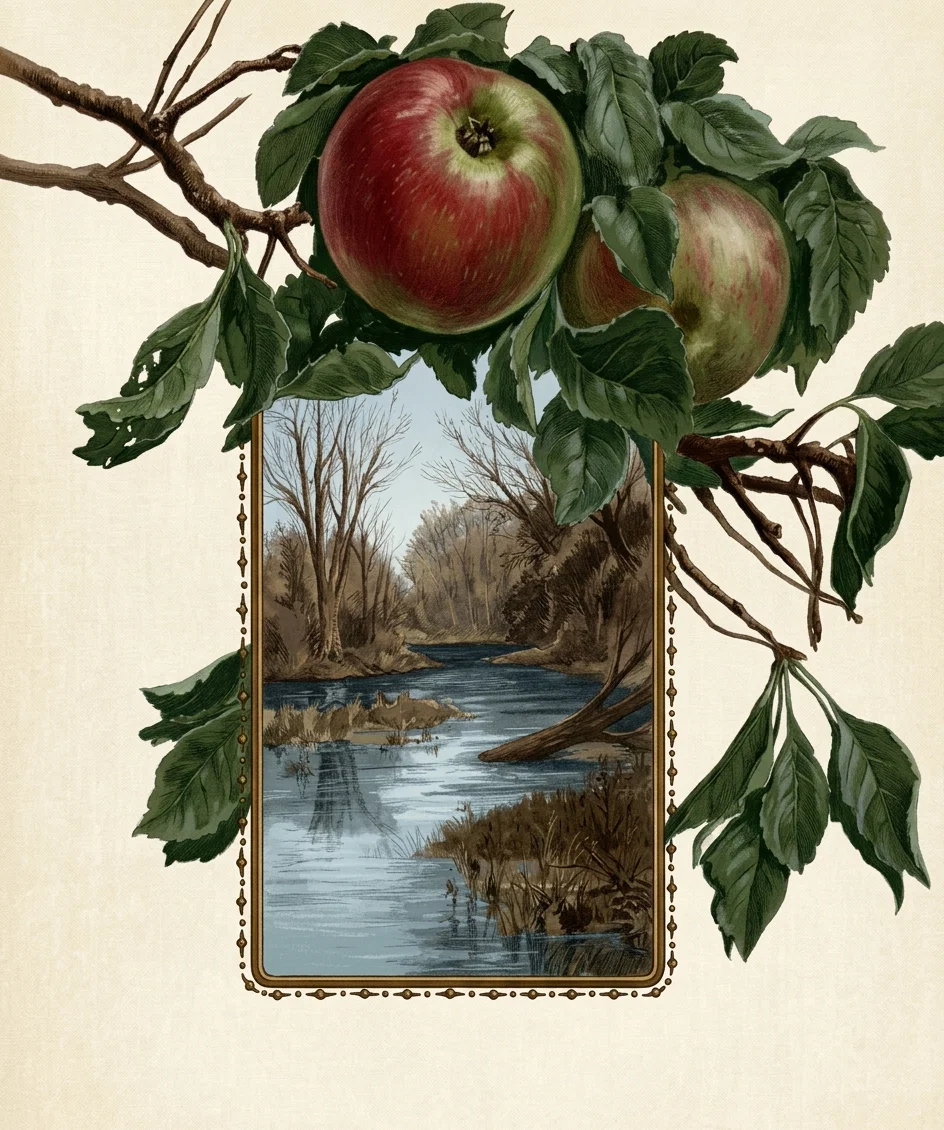
Our cover speaks of summer-time, with the beginning of its glad fruitage. We wish the picture were in natural colors; we would almost reach out to pluck that red astrachan hanging from the bough. How cool the waters look, and how inviting the shade of the trees. How the beauty and glory of God are manifested in infinite variety as the changing seasons pass; but in none more than full-orbed, luxuriant summer.

Sanatorium Treatment of Tuberculosis

One of our highly esteemed exchanges, the Medical Record, of June 12 (William Wood and Company, publishers, 51 Fifth Ave., New York), has for its leading article an exhaustive paper on “The Inadequacy of the Sanatorium Treatment of Tuberculosis,” by Maurice Fishberg, M.D., of New York. The same issue contains other articles of importance. We call the attention of our medical readers to these facts. Single copy, 15 cents.

A Question of the Ages

BEGINNING with our issue of July 28, the SIGNS will present a series of articles on the Sabbath question, among the most excellent that it has ever presented, covering the Sabbath question from Genesis to Revelation, from the origin of the Sabbath to the Sabbath in the new earth. In these days of agitation over the Sabbath question, theologically and politically, every soul ought to understand the true basis, and the true basis of every moral question is the Bible. Now is a good time for our readers to interest their friends in this question. The titles of the articles composing the series are as follows:
  1. The Sabbath at Creation.
  2. The Sabbath During the Days of the Patriarchs.
  3. The Sabbath at the Exodus.
  4. The Sabbath Marked by the Manna.
  5. The Sabbath in the Decalogue.
  6. The Sabbath “Made Known” to Israel.
  7. The Sabbath in Israel’s Land.
  8. Christ and the Sabbath.
  9. The Sabbath at the Crucifixion.
  10. The Sabbath and the Apostles.
  11. The Change of the Sabbath as Indicated by Prophecy.
  12. The Change of the Sabbath as Proved by History.
  13. The Restoration of the Sabbath Predicted by Divine Prophecy.
  14. The Seal of God.
  15. The First Day in the Scriptures; Is It a Holy Day?
  16. The Sabbath in Eternity.

Lessons from the Elsie Sigel Murder

A horrible crime was the murder of Elsie Sigel, granddaughter of General Sigel, of Civil-War fame. Miss Sigel was doing mission work for Chinese, and seemingly fell in love with two of them, and was killed by one in jealousy. Pacific Coast papers are using the incident to prejudice Americans against all Chinese. The awful incident has its lessons, but there is no reason for a propaganda of hatred or war against a race. Horrible and revolting as is the crime, it is not as bad as some crimes committed in America by Americans, in which every loathsome trait of brutality, bestiality, and devilishness has been manifest. Let us say: (1) The Chinese in America are not fair representatives of the race; they are generally the scum of the coast cities of China. (2) No young woman, married or single, ought to be doing missionary work alone for Chinese men or Oriental men of any nation or race. Eastern ideals of womanhood are not Western. Women may work with their husbands, but not alone. We believe that those of experience in Oriental lands will bear us out in this. The same principles may be worthy of study in our American city missions. Sentimental, tho innocent, girls should do their mission work under wise, experienced, discreet, tho sympathetic, supervision.

A Spirit Telegraph Office

A “Spirit Telegraph Office.”—Mr. W. T. Stead, the noted London editor, according to recent press despatches, states that under the direction of the spirit of a well-known Chicago woman, who died seventeen years ago, he has established a spirit telegraph office in London through which mortals can communicate with loved ones who have gone before. The news is that Mr. Stead is relinquishing all business and giving himself entirely to this work, that he is merely a servant acting under what he believes to be the spirit of Julia A. Ames, formerly editor of The Union Signal. This spirit telegraphy is not fully developed as yet. Still there are those who are developing along those lines and Spiritualists think that it is possible to establish complete intercommunication within a short time. Of course the believers in life through Christ alone and the Biblical doctrine of the condition of the dead, know that the one behind all this seeming communication with those who have gone before is the father of lies, and all the pretended spirits who return to us are but evil demons in the guise of the spirits of the dead.

Tuberculosis in Hogs on the Increase

Tuberculosis in hogs is on the increase. Reports from the United States bureau of animal industry at Washington, D. C., give some rather startling figures. Two per cent of the hogs slaughtered in the United States are affected with tuberculosis. This would mean that families where pork is used daily are exposed to tuberculosis germs once in two months, on an average. Investigations show that the majority of tuberculous hogs are produced by the following causes: Feeding raw milk and slime from creameries; feeding hand separated milk from tuberculous cows; feeding behind tuberculous cattle; feeding tuberculous carcasses; feeding slaughter-house offal. Not a pleasing picture, surely. Think of the product of such feeding, and compare it with rosy apples and peaches, luscious grapes and berries; good, wholesome vegetables and grains. How can there be any question as to the choice?

Capital and Labor.

—Mr. John Mitchell, vice-president of the American Federation of Labor, in a recent article denounces Mr. John Kirby, president of the National Association of Manufacturers, as the foe of working men and unionism. Mr. Kirby in American Industries for June denies that he is a foe of working men or of unionism in a legitimate sphere; but that he is against “a defiant labor trust machine representing less than five per cent of the wage-earners of the country, every page of whose history is black with the foulest deeds of inhumanity and injustice, from dynamiting and murder to throwing egg-shells filled with acid at dumb brutes because the drivers were not cogs in the wicked machine.” We have not space to reproduce the articles in question, but one can get a better idea of these two Johns by reading on both sides of the controversy.

Heat Wave Claims Many Victims

The heat wave which swept over the eastern portion of the United States the week following June 22 claimed a number of victims in the cities. In New York City the fatalities numbered more than fifty by June 25, on which day ten died from the heat. As usual, the children of the crowded tenement districts are the chief sufferers. Hospitals were crowded with patients, and the physicians were unable to care for all of them.

Cholera in St. Petersburg

Every hospital in St. Petersburg, Russia, is crowded with cholera patients, so a news-note of June 24 states. It was stated that on that date there were fully one thousand cases, and that one third were proving fatal. Many are stricken in the streets. The disease seems to be getting a firm foothold in the provinces, especially in Finland.

Leupp Resigns as Indian Affairs Commissioner
The resignation of Frank E. Leupp as commissioner of Indian affairs, which has been pending since March 4, was accepted Tuesday by President Taft, and Robert G. Valentine, assistant commissioner, was named to succeed him. Mr. Leupp has wanted to retire for some time on account of ill-health.

You have reached the end of this edition.

Signs of the Times · Jul 14, 1909