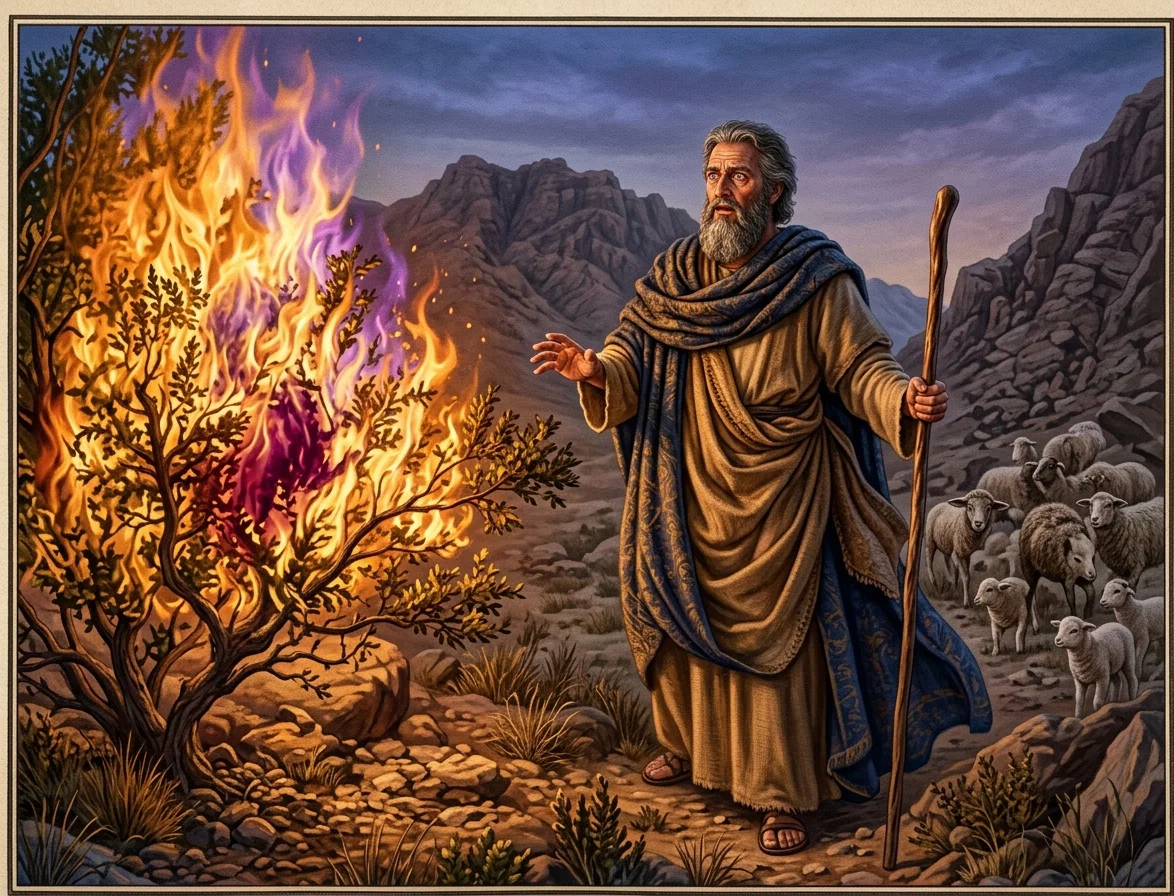
It is worthy of notice that when God selects a man for any distinct, difficult work He desires to have accomplished on the earth, He chooses the one who possesses, above all his other characteristics, the one or more traits indispensable to success in the undertaking.
The man may not be faultless. Indeed, he may possess defects of character, serious ones. It is difficult to find a man who does not. He may also through disobedience thwart God’s plan, so far as he himself personally is concerned, so far as his own welfare is affected, as did Saul, the son of Kish. But the qualities vital to the success of God’s definite enterprise he must have.
These qualities may exist in embryo, may need the pushing of powerful influences, potent circumstances, to bring them into action; but they must be on deposit, ready on call, at hand when emergency arises, else God’s plans, worked out by human hands, must often fall short in right results, in best fruitage.
In looking back over the world’s history one finds many clear-cut instances confirming these assertions. But space lacking, we may not cite them. It may be that, as we read on in this article, the names of some of these great workers under God may flash into mind.
God’s Call of Man
To-day we are considering him by whose lips were uttered, amid scenes awe-inspiring, face to face with demands affrighting, the words which form the heading of this article, a man about eighty years of age, a man who had been brought up a prince in the palace of Pharaoh, king of mighty Egypt, one who, as subsequent years evinced, had lacked no opportunity for high culture in the strong institutions of that land of learning.
This man was picked up by Jehovah on a desert side, at the foot of one of the grand mountains of the world, a fit, able shepherd of sheep, and was made the mightiest deliverer of MEN known to human history, with the single exception of the MAN from Nazareth—not slow of speech, not slow of tongue, as the Sermon on the Mount proclaims, as priceless chapters in the book of John assert.
As one studies from this far-distant viewpoint the superlative mental ability, the robust moral qualities of Moses, “the man of God,” together with his transcendent fitness for leadership of mankind in great concourse, he steps quickly to the supreme place. History fails to furnish his equal, none have surpassed him.
Alexander made appalling conquests, Cæsar subjugated entire countries, Napoleon won startling victories, Washington accomplished the independence of a then small nation, settled in homes, over broad territory, General Grant suppressed a wide uprising against just government.
But all these achieved their aims through disciplined troops, through men trained for war. Comparatively few years sufficed for their undertakings. There were home authorities in most cases to furnish munitions, rations, clothing, pay for service. Their armed hosts were not impeded by masses of women, children, flocks and herds, demanding care, ceaseless and peculiar.
Egypt and the Times
But take a look into Egypt 3,300 years ago, Egypt opulent, proud, despotic, but just then sorely punished, and witness emerge from that deeply humbled land—at night of the very day which completed their period of bondage, as promised by God to Abraham—a vast train of bond people, close to three millions in number; their fetters just broken by word of Pharaoh, most of them on foot, with flocks, herds, and cattle—an immense assemblage.
With hope high and heart glad they set out northward toward Succoth. Thence, circling eastward they crossed the Red Sea amid circumstances never before paralleled for awe, climax, unlikeness, and marched on toward exalted Sinai, with great Moses for leader—under “the angel of God which went before the camp.”
Humanly speaking, Moses was responsible for their safe crossing of the wild desert, amid privations new and irritating, amid enemies alert, resolute, yet stricken with dread.
Of what splendid order must have been the courage, the faith, the patience of that man! How broad, how tenacious his grasp of duty! How magnificent his self-abnegation! No $100,000 salary, annually, was assured him by the Governor of the universe.
If thought of a home and sweet rest in the promised land when the wilderness journey should be ended ever cheered his heart and mind, no suggestion thereof appears in the clear record of his brilliant forty years’ service as Israel’s leader.
His eminent self-forgetfulness—with the single, strange exception of when he smote the rock at Meribah, to bring forth water for the thirsting, murmuring multitude—illumines all that most remarkable history.
Unelated, unmoved by the Lord’s assertion—after Aaron had made the molten calf, to become leader to the uneasy host—that He would make of Moses himself “a great nation,” and remove Israel out of His sight, we hear the unaspiring man, the6man with great soul, entreat the Lord: “If Thou wilt, forgive their sin,—If not, blot me, I pray Thee, out of Thy book which Thou hast written.”
His Versatile Ability
How wonderful was the man’s ability to meet the thousand emergencies occurring daily in the life of that mixed host! How marvelous his endurance of stinging criticism, of hot complaints, of cutting accusation and watchful jealousy! And how amazing his steadfast singleness of purpose,—held with closest grip all through that desert wandering—that of planting redeemed Israel in the hungered-for land!
Like Paul, Moses was permitted to enjoy eminent personal interviews with God. The two prolonged periods with Him in Horeb, when he twice received the tables of commandments, are instances in point. Another signal occasion was when Aaron, Nadab, Abihu, and seventy of the elders of Israel were invited into the mount “and saw the God of Israel,” and saw under His feet the luminous “favored work of sapphire stone,” but Moses alone “came near unto the Lord.”
When God called Moses from amid the quieting shadows and sunlight of Horeb, the “Mount of God,” He knew that, notwithstanding the weighty excuses urged by the noble shepherd, and his intense shrinking from the momentous task proposed, he possessed, far beyond any Israelite in Egypt, the qualities essential to the success of the mighty undertaking of leading the enslaved children of Jacob out of bondage into joyous liberty in Canaan.
Further, the long and afflictive struggle with Pharaoh would require a man who possessed not only knowledge of Egyptian life and customs, acquaintance with kingly life and courtly etiquette, but also a man who would stand unflinchingly loyal to the supreme Ruler whose special ambassador he had become, and whose FAITH in that Ruler should never for a moment waver amid direct threats or punishments.
The lofty traits of Moses’ character became magnificently radiant during those last forty years of his life. Doubtless the eminent tests to which he was subjected daily, invigorated and gave luster to those qualities.
Yet splendid and altogether fitting had been his schooling during the preceding eighty years. In her highest, broadest courses Egypt had furnished him academic training through forty of those years. He “was learned in all the wisdom of the Egyptians, and was mighty in words and deeds.”
Deeper Knowledge
Following this, Nature, amid her eloquent, desert solitudes, in the vast Peninsula of Sinai, had opened before him books of far different order. Great mountains, broad, sandy wastes, green spots, gemmed with flowers and grasses, and the opulent, star-strown nights, with his typical vocation as a shepherd, all taught him in languages of God, and awakened powers and capacities which Egyptian scholarship ever failed to arouse.
But the acme, the climax, of mind-training of soul-training, of heart-expansion for Moses was attained during the many inspiring interviews, the long communions with the Maker of the universe Himself,—the exhaustless fountain of mental and spiritual endowment for the beings He has created.
No man could pass days in close, undisturbed converse with the Author of his being without blessed enlargement and uplifting of heart, mind, and soul, without the perfection of FAITH, without glad, finished submission to His will.
Moses’ ready, noble yielding to the will of God, when, after he had borne “the burden, the cumbrance, the strife of the children of Israel forty years,” and after his pathetic entreaty: “Let me, I pray Thee, go over and SEE the good land beyond Jordan, that goodly mountain and Lebanon,” God refused, saying: “Get thee up into the top of Pisgah, and lift up thine eyes westward, and northward, and southward, and eastward, and behold it with thine eyes, for thou shalt not go over this Jordan,” puts the finishing touch to the supremest trait of the grandest of men.
Falling on Your Knees
“FALLING on your knees is one way to prevent falling from grace.”
The Human Body
By Flora E. Warren
II. Glorifying God
By Flora E. Warren
God’s Physical Laws
God tells us His laws of life and health in His word, and He is ready to help all who seek His aid in obeying them. He desires to write His laws not only in each heart, but on every nerve and cell and fiber of the being. He can do this when all the being is yielded to Him. After a soul chooses the will of God and seeks to form the character of Jesus, our Example, Jesus will act through the organs and faculties. His Spirit will take possession of all the mental and physical powers of the body.
God made man’s mind to control his body. If the mind is yielded to God, He will control both the mind and the body. “Let this mind be in you, which was also in Christ Jesus.” Phil. 2:5. But through disobedience, persisted in for six thousand years, the human race is fast passing away.
“We are living in the midst of an ‘epidemic of crime’ at which thoughtful, God-fearing men everywhere stand aghast. The corruption that prevails, it is beyond the power of the human pen to describe. Every day brings fresh revelations of political strife, bribery, and fraud. Every day brings its heart-sickening record of violence and lawlessness, of indifference to human-suffering, of brutal, fiendish destruction of human life. Every day testifies to the increase of insanity, murder, suicide. Who can doubt that Satanic agencies are at work among men with increasing activity to distract and corrupt the mind, and defile and destroy the body?”—Ministry of Healing, pp. 142, 143.
God in mercy seeks to teach souls the folly of sin that they may forsake evil and live. He does not desire the death of any soul. He says: “Why will ye die? . . . for I have no pleasure in the death of him that dieth, saith the Lord God: wherefore turn yourselves, and live ye.” Eze. 18:31, 32. It is God who keeps the living machinery in action every moment, and it is our duty to study His laws which control the body, and obey them, that we may work in harmony with Him for our restoration. Physical law is a part of the law of God. Therefore, if we transgress physical law, we transgress the law of God. By studying the human organism we may learn to correct wrong habits, which if left uncorrected will bring the sure result—disease and suffering of various kinds, which make life a burden. If we form any habit which will weaken or destroy any part of the physical system, God is dishonored.
To His Glory
In 1 Cor. 10:31, God says: “Whether therefore ye eat, or drink, or whatsoever ye do, do all to the glory of God.” At this time in the world’s history, when many souls do not know of the great God who formed them, God gives a special work to those who know Him. He says to them: “Ye are My witnesses . . . that I am God.” Isa. 43:12. “Fear God, and give glory to Him; for the hour of His judgment is come.” Rev. 14:7. There are many ways in which to give glory to Him, but our first duty to God, to ourselves, and to our fellow men is to know and obey the laws of God, which include the laws of health. These laws are a transcript, or writing out, of the character of God, and all who learn and obey them will know God and reveal His glory. “And this is life eternal, that they might know Thee the only true God, and Jesus Christ, whom Thou hast sent.” John 17:3.
The Work of the Enemy
The same enemy who deceived our first parents in Eden still works “with all power and signs and lying wonders.” 2 Thess. 2:9. He has deceived many since the first7deception on this earth, and still seeks to deceive every soul. He knows he can still overcome souls, if he can control the will. He can do this by deceiving them, so they will work with him in transgressing the laws of nature, which is to transgress the law of God. It is his determined purpose to cause souls to work with him in making void the laws of God.
Satan taunts God with the poor way in which man represents his Maker. He seeks in every possible way to gain access to the soul-temple, to draw souls away from God. With many he has succeeded, and will still succeed. Our only safety is in yielding each moment to Him who formed us and bought us. Jesus has conquered the tempter, and endured temptation for us, that we might resist evil, and walk in the way of truth. “To whom ye yield yourselves servants to obey, his servants ye are to whom ye obey; whether of sin unto death, or of obedience unto righteousness.” Rom. 6:16.
The Way of Health
Jesus is our Saviour to-day. Those who bear the worst deformities of sin most need a Saviour. To such He comes with special healing. “He is able also to save them to the uttermost that come unto God by Him.” Heb. 7:25. He it is “who forgiveth all thine iniquities, who healeth all thy diseases.” Ps. 103:3. Health is the richest possession that mortals can have. With perfect health we may do a more perfect work, and better represent Him who formed us.
God is the same to-day as when He created man. His laws are the same. He says: “I am the Lord, I change not.” Mal. 3:6. God can not change His laws to meet the desires of men. Those who violate His unchanging laws must suffer the result. The Lord will not work a miracle to keep any one in health who will not learn all he can about the proper care of the body. If we transgress physical laws in any way, the body suffers more or less. If we learn obedience through this suffering, we escape greater suffering and death. Any abuse put upon the body, by disregarding God’s specific laws for the body, is a violation of God’s holy law. God has waited long for souls to learn His will, and perfect the character of Jesus. He still waits in mercy.
Preparing to Meet Christ
After Jesus arose from the tomb, He returned to His Father. His disciples watched Him as He ascended, and angels came and told them: “This same Jesus, which is taken up from you into heaven, shall so come in like manner as ye have seen Him go into heaven.” Acts 1:11. God tells us of signs which will precede the return of the Saviour, showing when He is near. Matthew 24, and Luke 21. These signs are nearly all fulfilled. His coming marks the end of sin, and God will not allow sin to continue longer than is necessary. Very soon Jesus will come. There will be a people prepared to meet Him, and welcome Him with joy, saying: “This is the Lord; we will be glad and rejoice in His salvation.” Isa. 25:9. This people have heard and obeyed God’s word: “Glorify God in your body, and in your spirit, which are God’s.” God will know them as “the people in whose heart is My law.” Isa. 51:7. His laws are written by Himself on every nerve, every muscle, and every faculty which He has placed in their care. These laws are the writing out of God’s character, which is love. “Love is the fulfilling [or filling full] of the law.” Rom. 13:10. The souls ready to meet Jesus will be filled with God’s love—filled full of His law. God will say of them: “They are without fault before the throne of God.” Rev. 14:5.
This ready people, who have obeyed the physical and spiritual laws of God, and formed the character of Jesus, are prepared for their last change, which takes place when Jesus appears. The bodies marred by sin will be restored to the likeness of God. “We look for the Saviour, the Lord Jesus Christ: who shall change our vile body, that it may be fashioned like unto His glorious body.” Phil. 3:20, 21. 1 Cor. 15:51-53, 42-44, 49.
God purposed to reveal Himself in man, formed in His image. His purpose is still the same. God’s glory was revealed in Jesus, who came to save man from sin. In every sinner saved from sin through faith in the Son of God, God is glorified. He will be forever glorified in those restored to His likeness. All who enter the kingdom of God will have His character and bear His likeness. They are overcomers through Christ, and delight to do God’s will as Christ did. Read Ps. 40:8.
Jesus is the sinner’s perfect Saviour. By beholding perfection we become perfect. “We all with open face beholding as in a glass the glory of the Lord, are changed into the same image from glory to glory, even as by the Spirit of the Lord.” 2 Cor. 3:18. Our Saviour longs to have every soul know the joyous liberty of the sons of God at this time, that they may rejoice in the day when the glory of God is more fully revealed in His children. “Beloved, now are we the sons of God, and it doth not yet appear what we shall be: but we know that when He shall appear, we shall be like Him; for we shall see Him as He is.” 1 John 3:2.
’Tis almost here—the day of God’s revealing,
The day for which the Son of God was sent;
God’s everlasting purpose knows no failing:
Shall WISDOM fail—’neath traitor’s vile intent?
HIS PURPOSE LIVES!
For even NOW we’re sons, tho not appearing;
God only knows the battles fought and won:
And all who choose the wisdom of the Father,
In that glad day will hear from Him:
“Well done.”
THAT day the sons of God will stand revealed.
“I Hold Still”
PAIN's furnace-heat within me quivers,
God's breath upon the flame doth blow,
And all my heart within me shivers
And trembles at the fiery glow;
And yet I whisper—“As God will!”
And in the hottest fire, hold still.
He comes and lays my heart, all heated,
On the hard anvil, minded so
Into His own fair shape to beat it,
With His own hammer, blow on blow;
And yet I whisper—“As God will!”
And at His heaviest blows, hold still.
He takes my softened heart, and beats it—
The sparks fly off at every blow:
He turns it o'er and o'er, and heats it,
And lets it cool, and makes it glow;
And yet I whisper—“As God will!”
And in the mighty hand, hold still.
—Anonymous.
The Attempted Change of the Sabbath
By H.
1. What did Peter prophesy would come among God’s people?
“There shall be false teachers, who shall privily bring in destructive heresies.”2 Peter 2:1.
2. When the belief crept in that Christ was coming in Paul’s day, what message did he bear?
The coming of the Lord will not be “except the falling away come first, and the man of sin be revealed, the son of perdition, he that opposeth and exalteth himself against all that is called God, or that is worshiped; so that he sitteth in the temple of God, setting himself forth as God.” “The mystery of lawlessness DOTH ALREADY WORK.”2 Thess. 2:3, 4, 7.
3. In exalting himself “against all that is called God,” what will this power do, according to the prophet?
“He shall speak great words against the Most High, and shall wear out the saints of the Most High; AND HE SHALL THINK TO CHANGE THE TIMES AND THE LAW.”Dan. 7:25.
4. What power was this?
The power represented by the fourth beast, as seen by Daniel, which was Rome. In the days of Paul the papal head was just arising, as he says.
5. In what way has Rome thought to change God’s laws?
“It has reversed the fourth commandment, doing away with the Sabbath of God’s word, and instituting Sunday as a holy day.”—N. Summerbell, in History of the Christians, p. 418.
6. Does history bear any record to prove this?
“The earliest recognition of the observance of Sunday as a legal duty is a constitution of Constantine in 321 A.D., enacting that all courts of justice, inhabitants of towns, and workshops were to be at rest on Sunday (venerabili die Solis), with an exception in favor of those engaged in agricultural labor.”—Encyclopedia Britannica.
7. When did the church herself take this action?
“The Council of Laodicea [A. D. 364] first settled the observation of the Lord’s day, and prohibited the keeping of the Jewish Sabbath under an anathema.”—Prynne’s Dissertation on the Lord’s Day Sabbath.
8. By whose authority was the change made?
“The pope has power to change times, to abrogate laws, and to dispense with all things, even the precepts of Christ.”—Decretal de Translat. Episcop. Cap.
“Ques.— Has the church power to make any alterations in the commandments of God?
“Ans.—Instead of the seventh day and other festivals appointed by the old law, the church has prescribed the Sundays and holy days to be set apart for God’s worship; and these we are now obliged to keep in consequence of God’s commandment, instead of the ancient Sabbath.”—Catholic Christian Instructed.
9. How do they regard the matter?
“They allege the Sabbath changed into Sunday, the Lord’s day, contrary to the Decalogue, as it appears; neither is there any example MORE BOASTED OF than the changing of the Sabbath day. Great, say they, is the power and authority of the church, since it dispensed with one of the ten commandments.”—Augsburg Confession.
NOTE.— The prophet Daniel foretold the attempted change of the law of God, Paul saw the beginning of the power which did it, history records it, Rome boasts of the deed, and Protestants abjectly worship at the man-made shrine. But Christ has said, “Till heaven and earth pass away, one jot or one tittle shall in no wise pass away from the law.” And again, “In vain do they worship Me, teaching as their doctrines the precepts of men.” H.
God’s Willingness to Save
WE do not use the term “willingness” to indicate that God is to some extent indifferent,—willing that man should be saved, and just as willing that he should be lost; for God’s willingness is all on the side of man’s salvation. He is “not willing that any should perish, but that all should come to repentance.” 2 Peter 3:9. “As I live, saith the Lord God, I have no pleasure in the death of the wicked; but that the wicked turn from his way and live.” Eze. 33:11. “Who willeth [desireth] that all men should be saved.” 1 Tim. 2:4. These are a few expressions of God’s willingness to save mankind.
“But,” says one, “if He is so willing that all should be saved, why does He not save all? He is all-powerful.” True, but God saves man in a way which will give man the greatest happiness. To be happy, man must be “willing.” It is “the willing and the obedient” that will eat the good of the land. Isa. 1:19. And to be willing, man must have free choice in the matter.
To save man regardless of his choice is to make of him a mere machine. It would add nothing to man’s happiness, but rather to his misery, to do that for him which was contrary to his will or choice. It would give God no more pleasure than any of His material works. To save man against man’s will or choice would be but the triumph of almightiness against feebleness, and it would degrade man from the sentient, intellectual, possibly capable being that he is to one who had no volition or will of his own. For man’s highest good and happiness, for the Creator’s highest glory, man’s will must be left free. It is a sacred enclosure into which even Deity will not enter arbitrarily.
Man must also for his highest good and the glory of God (for God’s glory is always ultimately man’s greatest good) build up a character through the exercise of faith in God. One consideration will serve to show the reason of this. If man were left to himself, if he had it within his own power to develop a righteous character, yet how narrow, how circumscribed would it be! Self would be its center, self its circumference, self would be its height and depth. But with faith in an Infinite Being he would ever be reaching out after the infinite possibilities and perfections of beauty found in that Being. In contemplating Him, man would be ever drawn out of himself to broader, higher, and more unselfish aims and objects.
All this God set before man in the beginning. The awful consequences of unbelieving transgression, and the infinite possibilities and blessings of faithful obedience, were set before him, and he was given his choice, with the earnest, loving admonition to do the right. Later on God presents the same great possibilities and dread consequences. After Moses had set before Israel the righteous commandments of God, he said:
“I call heaven and earth to record this day against you, that I have set before you life and death, blessing and cursing; therefore choose life, that both thou and thy seed may live; that thou mayest obey His voice, and that thou mayest cleave unto Him; for He is thy life, and the length of thy days.” Deut. 30:19, 20.
Over and over in His word has God said the same thing. Over and over in the open book of nature has He told man that transgression means suffering and death, while obedience means life and happiness. But God has not only warned. His love and mercy have been manifest in the abundance of His goodness, in temporal blessings bestowed, in the light of truth revealed, and all the blessings to the nations which have come through that truth. Many of these blessings and mercies have been given to the world at an immense sacrifice of time, and blood, and lives of God’s servants; and every moment of time, every drop of blood shed, every life taken, said to the world that God loved man and was anxious to save him. And at last Heaven gave its brightest Jewel, its most glorious Being save the Father, even the Son of God, to show HOW MUCH God loved the world, how much He desired it to be saved. “For God so loved the world that He gave His only begotten Son, that whosoever believeth in Him should not perish, but have everlasting life.” John 3:16. This act was not on God’s part alone. The Father and Son are one. John 10:30. Jesus “gave Himself” to redeem us from all iniquity, and purify us “unto Himself a peculiar people, zealous of good works.” Titus 2:14.
This is how much God loved us, how willing He is we should be saved. It is not willingness as men count it, it is infinite desire fed with infinite love. But with the infinite love is the infinite wisdom and prudence in its exercise. Eph. 1:8. This infinitely wise love has laid down the conditions of man’s salvation to be implicit faith in God, such faith as will lead to complete submission to God’s will. This is for man’s best and highest good. In fact, it was the only way that an infinitely wise God could do, and hence the only way which could be for man’s highest happiness.
Then, reader, why not submit to God’s way? It matters not how sinful you are, how weak, how poor, how blind, how wretched, Jesus bids you come just as you are. He loves you when in sin; He loves you that He may save you. He died that He might make you strong, and rich, and clear-sighted, and happy. All fulness is in Him. He pleads His own blood for you, that He may save you, and take you, poor as you are, and make you “to the praise of the glory of His grace.” Let not the enemy deceive you with the thought that there are no consequences to follow a continued course in sin. In choosing the sin you choose the consequences. Let him not deceive you in saying that God is not willing; He is anxious, “Turn ye, turn ye,” He says, “why will ye die?” “And the Spirit and the bride say, Come. And let him that heareth say, Come. And let him that is athirst come. And whosoever will, let him take the water of life freely.”
The Message of Beauty
By R.
THE world is full of beauty. Everywhere there is something to entrance the eye. Even the desert presents its contribution of beauty in waxlike blossoms, gorgeous sunsets, and star-clustered midnight skies.
By the dusty roadsides grow the humble weeds whose little florets, under the microscope, reveal beauties that surprise the eye and delight the heart.
Even the dull, gray mosses on the surfaces of rocks and tree trunks have their simple beauty of growth and texture. And in forest wastes and on mountainsides where the foot of man touches but once in a century, if at all, grow the grandest and rarest of flowers, imparting their fragrance to the desert air.
There is beauty in the shells along the seashore. Place a minute quantity of diatomaceous earth beneath the microscope; you will see forms of beauty that will startle the imagination and transcend the highest reaches of finite wisdom; minute as were the creatures, the skeletons they have left are all formed upon lines of the truest symmetry, numberless in variety, practically infinite in design.
We behold beauty when we look down into the depths of the unfathomable sea. There is beauty in the wreaths of glittering frost and the white plumes that hang upon the branches of the winter trees. There is unrivaled beauty in the deep turquoise blue of glacial ice, and the sunlight finds in their icy caverns that which shames the castles of kings and the glories of magnificent palaces.
Solutions of common salts when hardening take forms of indescribable beauty, rivaling the lace-work of the most beautiful ferns and showing, through their Author, a kinship with a higher world.
We can not gaze upon the skies without seeing vast sweeps of beauty that show how large a canvas can be gloriously covered by the Artist of the universe.
Even the clouds are indescribably beautiful. And in their changing forms they reveal the fact that nature is lavish of beauty. Nature never lets any one of the members of her family be like any other. Tho the clouds are alike in their great features, yet out of the countless millions that flock or cover the skies, every one of them has a separate beauty and character of its own.
Each cloud seems to have been formed by a distinct set of forces, and appears to manifest a separate thought in its creation. Take, for example, any single fragment of any cloud that floats in the sky, “and you will find it put together as if there had been a year's thought over the plan of it, arranged with the most studied inequality—with the most delicate symmetry—with the most elaborate contrast, a picture in itself.” Try any other piece of cloud in the sky, you will find it just as perfect, but not one in the least like another.9
And then, again, the clouds are constantly changing their forms and colors. A dozen clouds may have for us “fifty pictures, made up each of millions of minor thoughts—fifty aisles penetrating through angelic chapels to the shekinah of the blue—fifty hollow ways among bewildered hills—each with its own nodding rocks, and cloven precipices, and radiant summits, and robing vapors, but all unlike each other, except in beauty, all bearing witness to the unwearied, exhaustless operation of the Infinite Mind.”
As we gaze upon the beauty of the floating clouds, and see the delicate modeling of their shimmering sides, and the rounded glory of their magnificent heaps, we know and realize that the God who made them is a God of beauty; and by day even as well as by night we realize that “the heavens declare the glory of God; and the firmament showeth His handiwork.”
There is nothing in nature so bad or degraded by the curse of sin but it still manifests some tokens of beauty. Many thorn bushes have beautiful blossoms. And we all know of the sweetbrier whose thorns are forgotten for the beauty and fragrance of its flowers.
In these and all similar cases, wherever beauty bursts through and irradiates the degraded things of earth, it sends to us—if we will have it so—a message of hope.
Beauty in the world is but the shining there of the love of God. Beauty is God's promise to us that where partial perfection and glimmerings of beauty now rest shall some day be manifested the fulness of His perfection and character.
Beauty then is an earnest of the glories to come. It is a promissory note from God that some day the world shall be all beautiful and all glorious forevermore. R.
Man and Prayer
By H.
SOME will tell us that it is useless to pray; some will say that it is not only useless, but foolish. Science, which deals with the externals of nature, often sees little of the inner workings of nature’s God; failing to see, science denies the power behind the workings of nature, even the laws of nature which it studies.
But what is the habit of man? Pressed to his last hope, he prays. In the last extremity, in the hour of death, he calls for a priest or a parson. In the human heart there is the feeling that when man utterly fails, God can be importuned to help. Science is forgotten; her laws are recognized as unavailing, however carefully studied out and classified; only in God is there hope.
Travelers who pass through sections of country where all the trees lean the same way know the direction of the prevailing winds, even tho there is no wind at the time, even tho the wind blows in another direction. When the souls of men reach toward a certain quarter, bend in one direction, it is evidence that there is a cause. Something outside of and beyond man himself has kept him in the attitude of prayer. “Hope deferred maketh the heart sick.” Man would not have thus persisted in prayer had no answer ever come to his petitions.
A child makes a request of its father, a request which is proper and right; the father, seeing the reasonableness of the request, is happy to grant it. It may be that in the natural course of events, he would not have done so, at least not in the same way; but he is willing to alter the details of his own plan that the child may be made happy. It is not a departure from his course of life in regard to the child. He desires that the child shall be successful and happy in life; if by granting the request he accomplishes this, or if it is accomplished by refusing, or by substituting something better, the spirit of the request is answered.
God’s plans are unchangeable in purpose; but the prayers of His people have changed the natural course of events. Three weeks of prayer on the part of Daniel changed the heart of a heathen king. Hezekiah’s prayer brought an angel of God to defeat the almost victorious Sennacherib. The silent petition of Nehemiah brought the favor of Artaxerxes in behalf of his captive people. Elijah’s prayer shut up the windows of heaven for three years and six months that it rained not. For modern examples look to the mission fields. Ask Dr. Jacob Chamberlain of India whether God answers prayer; he has written a delightful book upon the subject. Read the words of George L. Pilkington on the new Pentecost in Uganda, where through the prayers of a few earnest souls a revival of unusual power reclaimed hundreds of the natives from heathenism. Recall the well dug in a drouth-stricken island of the sea, where a well was never heard of before, and the water which filled it. Prayer was the lever, the influence, which turned aside the course of nature to the salvation of men and the glory of God’s name.
It is not a mystery; God operates, we co-operate. “We do not change things or forces in their essence, but do change them in their relation to us. The seeds and the soil are fixed quantities, are stamped with certain powers; if we let them alone, these remain, but we lose them. If we use our powers to relate these seeds and soil properly, certain results come to pass, and we are enriched thereby. The river runs on to the sea. If we ask, it will turn our wheels and bear our burdens.” “Prayer is the highest form of cooperation known. In it the soul deals directly with God. In such dealing such changes are wrought, not in Him, nor in His purpose, which is always for the best, but in us and the relations which God’s purposes have with us.” H.