The French Revolution and Dangers of One-Man Power
Page 1
The American Sentinel
Dec 3, 1896
Pacific Press Publishing Company · New York · Dec 3, 1896
The French Revolution and Dangers of One-Man Power
By Editor
We have before mentioned the fact that, on both sides, in the late political campaign, there was frequent mention made of the French Revolution. Each side charged the other with showing alarming characteristics of that notable period of history.
Last week in these columns we pointed out the most dangerous of all these characteristics that could possibly appear—the danger of an established religion professing to be Christianity. And though this greatest danger must, and will, be kept before the people, as it is the great and leading issue; yet there are others only less important, and that contribute to the success of this greatest of all, which must be pointed out, and which must be avoided by all who would escape the vortex toward which these things are certainly tending.
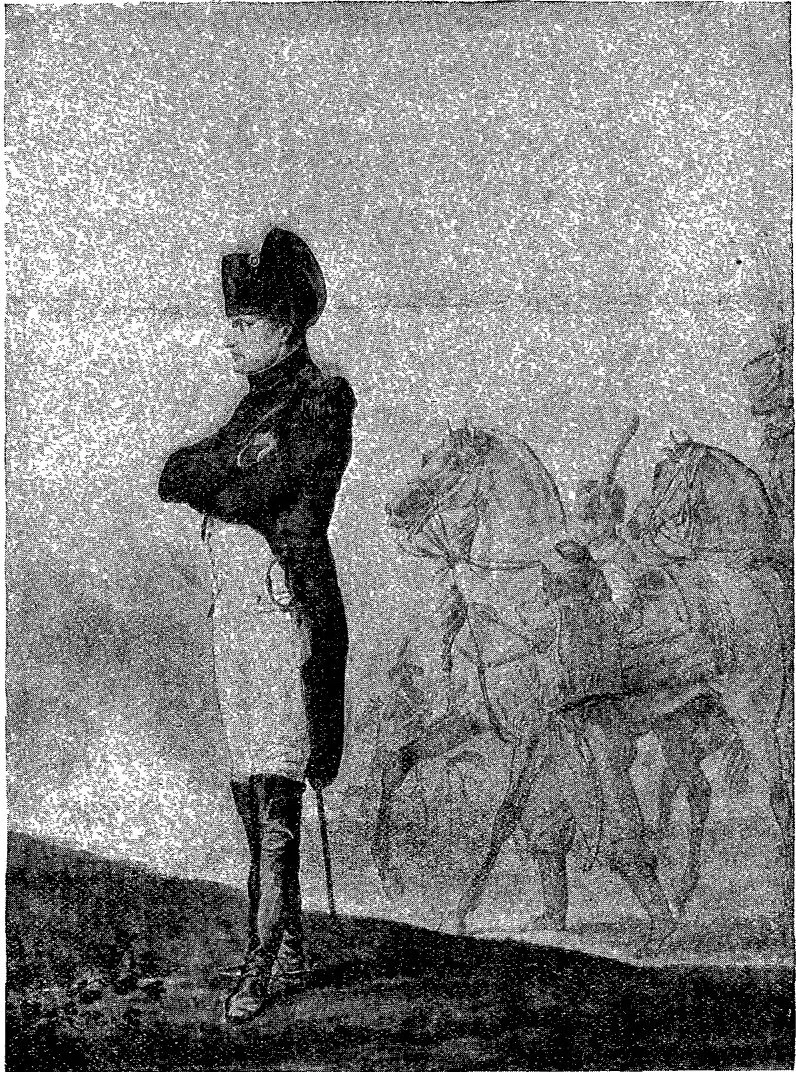
Only less remarkable than the national atheism that was developed in the French Revolution, was the development of a one-man power. As Napoleon was “returning from Notre Dame, after the ceremonies which had marked the conclusion of the Concordat,” he exclaimed, “Now the French Revolution is finished.” Napoleon could see plainly enough that he was the logical result of at least one series of events. And the situation that found its logical result in a Napoleon in France a hundred years ago, has to-day, in the United States, its counterpart in more than one of its phases.
This is evident from the fact that it was apparent to both sides, and was much emphasized in the discussions by the leaders, in the late campaign. Nor was this seen only by men in this country. It was seen and pointedly commented on by French thinkers also. Just before the National Conventions were held, the Paris Figaro, remarking upon the issues that were prominent in the campaign, said:— “Are the Americans in quest of a Napoleon? Are they moving in the direction of a dictatorship, the precursor of demagogic or military despotism? In the case of a people which hitherto has made it a point of honor to renovate, and not to follow, history’s general laws, this would certainly be an unexpected yet possible evolution.”
Certainly if any are qualified to discern such symptoms, the French are the ones. To those thinkers the issues involved in the French Revolution are as familiar as are those of the American Revolution to American thinkers. And when these men, being to-day upon the very spot and among the memorials of the French Revolution, can look across the ocean and at such a distance see that which causes them with interest to ask, “Are the Americans in quest of a Napoleon? Are they moving in the direction of a dictatorship, the precursor of demagogic or military despotism?” surely it is time for the people of this country to ask themselves whether they had not better begin seriously to consider the situation.
Nor is it symptoms that suggest the French Revolution alone, that this writer sees here: he sees also that which is suggestive of the course of the republic of ancient Rome. Upon this he remarks that “if America likes to indulge in the luxury of passing in a century and a half at most through all the stages to be found in the history of Rome, that is her affair;” and notes “the Cæsarian tendencies which have shown themselves too often in the United States during the last thirty years.”
Thus it is apparent that, from the examples of France and Rome, the one thing that strikes the attention of this writer, in studying the conditions in the United States, is the development of a one-man power. Thinkers, both writers and speakers, at home here, have called attention to the same thing. Indeed, it is strange that there should be anybody who thinks so little as not to be able to see it.
“I Do What I Please.”—Napoleon, June, 1796.
“Are the Americans in Quest of a Napoleon?”—Paris Figaro, June 18, 1896.
Looked at on strictly the civil side, the one great question at issue in France and Rome, at these crises in their history, was the question of “Capital and Labor,” precisely as now in strictly the civil aspect this is the one great question in the United States. In France one hundred years ago, and in Rome nineteen hundred years ago, there were vast aggregations of capital, the power which it gave being used only to crush out all competition and all idea of competition, and the wealth itself being used only to satisfy the extravagant and inventive genius of idle luxury; precisely as in the United States to-day. On the other hand, and against the aggregations378of capital, were vast aggregations of labor, bent on gaining power by which there should be assured a more equable distribution of the good things of life that were monopolized by the few; precisely as there is in the United States to-day.
This condition of things produced in Rome a one-man power—Cæsar. The like condition produced in France a one-man power—Napoleon. And now in the United States, the condition like to both that have gone before, as certainly as it shall be continued, can produce nothing less here than it produced in both instances before.
Indeed the elements at work to-day on both sides of this question, are themselves systematically developing a one-man power, and as systematically training men into ready submission to such power.
In the great business “Trusts” that are formed, men who individually have built up a successful business, deliberately surrender into the hands of the “Trust” their whole business and all their interests in that business, and shut down or start up only as the management of the “Trust” directs. However much the actual owner of the business may desire to go on with it, he cannot do so unless the manager of the “Trust” orders it. Thus it is in many of the leading businesses all over the land. And thus thousands of men all over the land have sold themselves, and are still selling themselves, to a one-man power; and are systematically training themselves into subjection to a one-man power. Only let the day come when a combination of these “Trust” interests shall have one of their number at the head of the government, and the country will find itself too, sold to a one-man power.
On the other hand, there are the great federations and Confederations of Labor, formed to oppose the “tyranny” of the federations and Confederations of Capital; but which themselves are only so many “Trusts” of another sort. Workingmen of every trade and occupation band themselves together and deliberately surrender into the hands of the president and the walking delegate the whole of their individuality. Their managers may sit in their offices in New York, Cleveland, Chicago, or wherever they may be, and send by telegraph a single word; and whether it be at midday or midnight, throughout half the country men will drop their tools and walk away from their work. Individually they may have no sort of grievance; their own personal choice would be to continue work; but the word has come from one man, the chief, whom personally they may not know, and may never even have seen; and though they may not know why, yet the word has come and they quit work and walk away to spend days, or weeks, or months, in absolute idleness, and they and their families in want. How would it be possible more plainly to show the insidious growth of a one-man power? Thus multitudes of people all over the land have sold themselves, and are still selling themselves, to the dictates of a one-man power; and are systematically training themselves into unquestioning subjection to a one-man power.
And have there not been sufficient illustrations of this to awaken the country to the imminent danger of it? In 1894 one man sat in Chicago and so suspended traffic and transportation over all the country from Lake Erie to the Pacific, that governors of “sovereign States” considered it necessary obsequiously to solicit that they be permitted by this one man, a private individual, in Chicago, to journey on official business within their own States. Only let the day come when one of these chiefs, or one representing the same interests, shall be placed at the head of the government; is there room for doubt that the nation would find itself under a one-man power?
The religious elements of the country are also, both by doctrine and by practice, being systematically trained into the same thing. They are continually trained in the pernicious theory that they must control the government. They are continually trained in the despotic doctrine that governments do not derive their just powers from the consent of the governed; but from “the will of God,” with themselves as the divinely-appointed expositors of that “will.” And in the practice of this pernicious theory, and this despotic doctrine, in the endeavor to take possession of the government, they are systematically training themselves into ready and unquestioning subjection to a one-man power. Only let the day come when one of these managers, or one devoted to their interests, shall be placed at the head of the government, and the country will find itself under the domination of a one-man power.
Take then the element of the aggregations of Capital, and the element of the aggregations of Labor against the aggregation of Capital, and the element of the aggregation of religious but earthly power—these three elements embrace the vast majority of the people of the United States. And when, as is the undeniable fact, these three elements are systematically training into blind submission to a one-man power, themselves and all whom they can influence, how long can it possibly be before the nation shall certainly fall under the domination of a one-man power?
This is not to say that these three elements will unite to bring the country under a one-man power. It is only to call attention to the open prospect, that whichever of the three shall win, in the struggle for possession of the national power, the country must certainly fall under the domination of a one-man power.
We have not space this week to discuss this question in other important bearings. Besides, what has been said is enough to contemplate for a week. It will not do to pass this off with a “pooh-pooh.” The situation may indeed be not exactly pleasant for you to contemplate, but there is no denying that this is a fair presentation of the situation as it really is before this country. And the situation as it is, calls just now for serious thinking. To pass it off without this serious thinking, is only surely to hasten the coming of such a condition of things as will compel serious thinking. It will be better to give the subject the serious thought that it demands, before it be too late.
Neither is there space now fully to point out the only safe course to take both for yourself and for the country. We can here cite but one admonition that the Lord gives to all for this time: “The Lord spake thus to me with a strong hand, and instructed me that I should not walk in the way of this people, saying, Say ye not, A confederacy, to all them to whom this people shall say, A confederacy; neither fear ye their fear nor be afraid. Sanctify the Lord of hosts himself; and let him be your fear, and let him be your dread. And he shall be for a sanctuary.” Isa. 8:11–13.
Secretary Francis on Wealth, Trusts, and Monopolies
From the Department of the Interior, Washington, D. C., Nov. 18, 1896, Hon. David R. Francis, Secretary of the Interior, come in sending his regrets at not being able to attend a banquet in Kansas City, Mo., closed his letter with the following statement of an important truth:—
“If some legislation is not enacted to check the growing influence of wealth and to circumscribe the powers of the trusts and monopolies, there will be an uprising of the people before the close of the century which will endanger our very institutions.”
POPULAR GOVERNMENT REPUDIATED.
The American theory of popular government, upon which the laws and institutions of the United States have rested since the nation’s birth, has been openly repudiated from the pulpit by a prominent Brooklyn clergyman, the Rev. Dr. Lyman Abbott, successor of Henry Ward Beecher. Not only did Mr. Abbott announce to his congregation his own repudiation of this theory, but he also announced that it had been repudiated by the American people.
It is well known that Dr. Abbott long ago repudiated the Bible, for he has been for years one of the foremost of the expounders and defenders of the doctrine of Evolution. It need not be thought strange, therefore, that he should repudiate the only theory of government which rests upon Scriptural grounds.
The theory that “government rested on the consent of the governed,” said Mr. Abbott, “was founded upon the proposition advanced by Rousseau that all men were born free and had surrendered their rights for the good of government.” In this Mr. Abbott takes issue with the framers of the Declaration of Independence, who said, “We hold these truths to be self-evident, that all men are created equal, and are endowed by their Creator with certain unalienable rights; . . . that to protect these rights, governments are instituted among men, deriving their just powers from the consent of the governed.” We believe these truths are still self-evident to every unbiased mind.
“When we, with muskets,” said Mr. Abbott, “faced the rioters at Chicago, who demanded that we should govern them only with their consent—that was America’s answer to the declaration that government rests on the consent of the governed.” If it was, then America should obliterate every tribute which she has paid to the memory of the men who wrote and signed the Declaration of Independence; since, according to this, they were the defenders and promoters of riot! But this is not the first time these noble men have been slandered in the name of religion.
These statements, however, only led up to the crowning assertion of the discourse, which was that “The right of a majority in a democracy is to enforce divine law; that is all.” That is the kind of government this Brooklyn clergyman would have in the place of government by the consent of the governed; and, sad to say, a multitude of other preachers believe in this substitution, and are doing their utmost to make it an accomplished fact. They are at the head of a mighty movement of religious forces in this land whose avowed aim is to substitute for the “godless” government we now have, one which will “enforce divine law.”
By this theory, the majority have the right to enforce divine law. The minority, therefore, have no rights at all; for of course the majority must control the government; and they must “enforce the divine law.” It will of necessity rest with them to decide what379the divine law is. A decision must be made on this point, for there is no general agreement among men as to what the divine law includes, or what it commands. It is true, the divine law is stated in the Scripture; but there is almost nothing over which men are so universally divided as the meaning of Scripture. And besides this, the Scripture tells us that the divine law is spiritual, and that spiritual truths must be spiritually discerned. To be spiritually minded, not politically minded, is what is required at the very start in order to know what the divine law means.
This, however, will not greatly interfere with the action of the political majority. Almost any person is able to tell what the law of God means—to his own satisfaction; and “the majority” will no doubt be able to decide upon its meaning to their own satisfaction, at least sufficiently to enable the machinery of this “divine” government to be set in motion. The world has had “Christian” governments in the past—governments that have denied that they received any powers from the consent of the governed—and kings, emperors, and others who have stood at the head of such governments have never shown much hesitancy in deciding what the government must do to carry out the will of God. If they could not decide themselves they could inquire of the pope, and the governing majority might do the same to-day!
The minority in the government must, of course, submit to the will of the majority. Not to do so would be anarchy. The public—or governmental—“conscience” will then be the only moral monitor needed. Obedience to the government will be obedience to the divine law, and the individual conscience will find its occupation gone. The minority will secure salvation simply by obedience to the majority, for the majority will “enforce the divine law.” This arrangement dispenses with the necessity for faith, or for Bible study, at least on the part of the minority. This accords exactly with the Christian Endeavor view that “The only preparation for the lofty privileges of the heavenly, is conspicuous and persevering fidelity in the fulfillment of the duties pertaining to our earthly citizenship.”
And this is just what is presented to the world in the papacy. The papist does not need the Bible, for does he not have the priest to tell him what is right? And the priest has the prelate to instruct him, and these in turn have the pope, who is infallible! These represent the “majority” who govern the “minority”—the common people—under the papal system. Small wonder that under it there is no need felt, and little seen, of the word of God and faith. And that this scheme of government by the enforcement of “divine law” presents the same features, is proof of its essentially papal character.
A STUMBLING TO TYRANTS ONLY.
Now that in the interests of a religious despotism the Declaration of Independence is openly attacked, it is well to remember the words of Abraham Lincoln as to the merit of that document and the meaning of those who framed it, spoken when it was attacked in the interests of the civil despotism of slavery. He said that by the Declaration its framers “meant to set up a standard maxim for free society, which should be familiar to all, and referred to by all, constantly looked to, constantly labored for, and, even though never perfectly attained, constantly approximated, and thereby constantly spreading and deepening its influence and augmenting the happiness and value of life of all people of all color everywhere. . . . Its authors meant it to be, as, thank God, it is now proving itself, a stumbling block to all those who, in after time, might seek to turn a free people back into the hateful paths of despotism. They knew the proneness of prosperity to breed tyrants, and they meant when such should reappear in this fair land and commence their vocation, they should find left for them at least one hard nut to crack.”
“In those days our Declaration of Independence was held sacred by all, and thought to include all; but now, to aid in making the bondage of the negro [and now the bondage of the consciences of all—EDITOR SENTINEL] universal and eternal, it is assailed and sneered at, and construed, and hawked at, and torn, till, if its framers could rise from their graves, they could not at all recognize it.”
It is well for the American people to know, and forever to bear in mind, that the Declaration of Independence can never be assailed, or sneered at, or hawked at, except in the endeavor to turn a free people back into the hateful paths of despotism.
THE NEW KINGDOM OF GOD.
By B
In 1894, the writer attended a convention in Williamsport, Pa., called to celebrate the one hundredth anniversary of the enactment of the present Pennsylvania Sunday law. The convention was composed largely of members of the National Reform Association, an organization originated by the Reformed Presbyterian Church for the purpose of securing an amendment to the national Constitution recognizing Christ as the ruler of nations and the Bible as the basis of all legislation.
On being introduced to the promoter of the convention as one who opposed his movement, the following conversation in substance followed:—
National Reformer—I am surprised that you people who claim to be Christians oppose our movement.
Answer—We oppose your movement because we are Christians and in the interests of Christianity.
National Reformer—But why do you oppose it?
Answer—We oppose it because it is an attempt to reinstate the theocratical form of government instituted by the Lord in the days of Moses, when the Lord governed by direct revelation of his will. This order of things has been abrogated by the word of the Lord as recorded in Eze. 21:25–27; and every attempted theocracy since that time has lacked the essential element of a true theocracy—it has lacked the true Theos—that is, it has lacked the true God. In the place of God it has put man. As a result we have the pages of history stained with the records of persecution, carried on in the name of God and professedly in the interests of the kingdom of God.
National Reformer—God never changes. He governed Israel by means of a theocracy and that is the form of government he desires to establish in America.
Reply—True, God does not change, but men do. And because of the perverseness of men, God has declared that the theocracy “shall be no more until He come whose right it is,” and then he declares, “I will give it Him.” Not until Christ comes from heaven and destroys all earthly kingdoms, and all wicked men, and melts the earth with “fervent heat,” and burns up the last trace of man’s wicked works—then, and not till then, will the Lord establish a theocracy in the earth. When Christ came he distinctly declared, “My kingdom is not of this world,” and refused to be made king.
National Reformer—When Christ came the government was a monarchy. Had it been a republic like our government or like the republic of Israel it would have been different.
Reply—The government of Israel was not in any sense a republic. The people did not select the rulers. Moses and Aaron were chosen by the Lord. The subordinate rulers were chosen by Moses at the direction of the Lord. The people did not make their own laws. All their laws were given by the Lord directly or through Moses. But leaving this point; Who is to take the place of Moses in the kingdom of God which you propose to set up here in America? The elements of the kingdom of God were God, Moses and the people. In your contemplated kingdom, who will occupy the place of Moses and receive the law from God and enforce it upon the people?
National Reformer—The Christian people will occupy the place of Moses.
Reply—But who are the Christian people that are to succeed Moses? There are many who claim to be Christian. There are Roman Catholics, Episcopalians, Methodists, Baptists, Presbyterians, Adventists, etc.,—who will rule for God in the place of Moses?
National Reformer—The Christian people of the country.
Reply—But who are the Christian people that are to rule for God? If they are yourself and the members of your association, where are your credentials? Moses had credentials from God and showed them to the people. Where are yours?
At this point the conversation was abruptly closed by the departure of the National Reformer, but insisting as he walked away that “the Christian people should rule in the proposed kingdom of God in America.”
Some readers will doubtless smile at the absurd position of this member of the National Reform Association and think to pass the matter by with the remark that it is the wild scheme of a few well-meaning, but misguided, Scotch Presbyterians who have brought with them to this country some of their old Covenanter notions of government.
If these dangerous theories of government were confined to the minds of this small Presbyterian sect, the situation would not be so serious; but, astonishing as it is true, the great Christian Endeavor Society has committed itself to these same views.
It is proposed by them to establish the kingdom of God in America now, as the following quotations from the official reports of addresses at annual conventions clearly show:
The objective point of Christianity as taught must be changed. This, not other worldliness, must become the motive for action. The consummation of Christianity is not in a “happy land, far, far, away,” but in this real, old sin-cursed earth, nor is it to be looked for in the distant visionary “good time coming” or the “sweet by and by,” but in the “near now and now.”
The Christian church must be made to realize fully the spirit and purpose of Christ. Christ came not to establish a church, but a kingdom. The establishment of the kingdom of heaven on earth was the object of his mission.
But how is this kingdom of heaven to be established for the Lord in the earth by these Endeavorers? This way:—
To the Christian Endeavorer politics means an380institution of righteousness, and party but the scaffolding around the rising kingdom of God. Politics, government, parties are not ends, but means.
But how will these Christian Endeavorers make use of these political parties as “means” with which to establish the kingdom of God on the earth? Here is the answer:—
We mean to lay hands on politics, we mean to wash politics clean and clothe her in white raiment and make her an obedient handmaid to the Great King.
But how is politics to be purified? By purifying the individual politician by preaching the gospel to him, the Christian’s only purifying power? No, it is to be done this way:—
There must be about a million votes in these societies, or those who will vote very soon. . . . The number of such voters is going to increase mightily as this work goes on and our country will soon hear from them at the polls. . . . I want to serve notice on them [the politicians] now, that the time is drawing near when they will discover that a political revolution has occurred, and they will be found coming home from Washington and our State capitols out of a job.
And who will get their jobs?
What is my work as a member of the good citizenship committee? It is to enthrone Christ in every town and city in the State, to have every mayor and every councilman a Christian, then Christ will rule.
Christians must rise up in the interests of righteousness and take control of civil affairs.
Influential Christian legislators must be chosen by Christian citizens.
The boss must be supplanted by the patriotic good citizenship chairman.
It will only be when Christian men . . . are elevated to places of trust and honor, and lauded as heroes by the patriotic sentiment of the Republic that Christian citizenship will have reached the acme of its claims and the government will become in fact as well as in name a Christian government.
When the managers of this movement have washed “politics clean” and clothed it in white raiment, by having themselves elected to office and made rulers for God, do they actually intend to attempt to enforce the laws of God by means of human statutes? The answer follows:—
We have a right to make and enforce human laws that shall call for the observance of the laws of God.
But how do these “rulers for God” in this “kingdom of God,” propose to find out the will of God:—
So it is with our nation. It is a world model and a century’s wonder, and our Father has permitted many worldly agencies and many political parties to garnish its rising glories hitherto. But to-day we are entering the cloud line; we are marshalling for final victories, victories which only purified hearts and consecrated hands can win. The undertaking of to-day will bring us to the unapproachable curtains of Sinai; and all things worldly must pause while the children of God ascend alone to receive new laws from God’s highest achievement in earthly government.
From all this it is seen that the powerful Christian Endeavor Society proposes to establish the kingdom of God on earth: that this it proposes to do by means of politics, by having its own members elected to office as the vice-rulers of God. Having done this they propose by human enactments to force upon all the people their own interpretation of the laws of God as the will of God. Did the papacy ever do more?
There are honest, conscientious Christians among them who “know not what they do,” but what they are doing is none the less fatal to that which has been our nation’s glory—religious freedom. Who in church councils, who in the councils of State, will have the courage to raise the voice of warning? B.
“THE CHURCH” AND “THE WORLD.”
It is a fact which should furnish food for serious thought to those church members who are trying to reform the world by law, that the world is able to discern a reform which is most imperatively needed within the church. The church says that immorality is increasing alarmingly in the world, and that there must be legislation to stop it. The world in turn, points to a condition of things in the church which may with good reason be regarded as the chief cause of the downward trend in the world.
The greatest reformation that is needed to-day is in the church. Among those who realize this fact is the well-known evangelist, D. L. Moody, who for some time past has been conducting revival meetings for church members in New York City. Mr. Moody’s effort drew forth some pertinent comments from the New York Journal of November 17. The Journal noted that the mission of the evangelist was “not to those who are sunk in poverty as well as sin, but to the congregations of the various evangelical denominations,” and proceeded to observe that “the weakness of the class to whom Mr. Moody comes as a quickening preacher is a tendency to seek respectability rather than righteousness—to form their conduct not so much on the teachings of Jesus of Nazareth as on the traditions of their sects and the example of those around them. Hence it comes about that the atmosphere of a church is too often repellant to the sort of sinners who stand in greatest need of salvation, and of human help to lift them from the misery into which their ignorance, their passions or their vices, or all combined, have plunged them.”
Respectability is not righteousness. Respectability is worldliness, and from the Christian standpoint, worldliness of the most dangerous type, since it can be made the counterfeit of righteousness. And this worldliness is in the church.
“If Mr. Moody,” the Journal continued, “will tell his Christian listeners that severe respectability—as manifested in a disinclination to touch elbows with coats that are not of good cut, and repugnance to meeting on a cordial footing those who are not above a certain caste—gives point to the assertion so frequently made that the average city church is not much else than a social club for the exclusive use and enjoyment of the contributing members, he may broaden the minds and widen the sympathies of many excellent people who expect to be as well placed in the next world as they are in this.”
The class of people for whom Sunday laws are particularly designed, are repelled from the church by the Pharisaical atmosphere which pervades it, and religious zealots now seek by legislation to drive the unchurched masses into this repulsive atmosphere.
What is needed is not that the people should be driven into the church in its present state, but that the Phariseeism within it should be driven out, by the straightforward preaching of that living Word which is sharper than a two-edged sword.
The Journal belongs to that “ungodly” class of papers which issue a Sunday edition; yet it can see and state clearly enough what is the matter with the church. “More warmth of heart, less fear of criticism, closer study of the Bible; more attention to the precepts of the sermon on the mount, and less to church custom; a real recognition of the essential brotherhood and sisterhood of all men and women, whether they be respectable or the reverse; and a genuine desire to model their lives as near as may be on that of Jesus, who was no aristocrat—if Mr. Moody will preach thus to the brethren and sisters who flock to his meetings, he may kindle a fire of godly zeal in this sin-suffering metropolis. And we trust that before the evangelist concludes his labors here he will explain to the churches fully why it is that, as they so loudly complain, they have lost their hold on the masses. Above all, it is to be desired that he will not neglect to give some sound advice to the preachers. They need it. Too many of them are worldly minded, and not a few of them are more ardent for the success of their political party than they are for the spread of Christ’s gospel.”
And it is the very class of preachers described in the concluding lines of this quotation, that are most forward in the demand for Sunday legislation. They are the men who are endeavoring to make Christianity succeed by political means.
The church is in no position to take offense if the world should quote to her the proverb, “Physician, heal thyself.” “First cast out the beam that is in thine own eye, and then shalt thou see clearly to cast the mote out of thy brother’s eye.” With the worldliness removed from the church, the church will see clearly that legislation is not the proper remedy to cure the immorality that is in the world.
CHURCH AND STATE AT WEST POINT.
The Catholic Standard and Times says that it is a “rule of the service” “at West Point that graduates [cadets?] of the academy must attend divine service on Sundays;” and that the Government “does provide an official chapel and pay a chaplain for non-Catholics.” This is the ground of the application of the Catholics for permission to build a meeting house on the Government reservation. They say that as the rule requires the cadets to attend divine service, and the Catholic cadets cannot attend Protestant service; that as the Government provides a chapel for the Protestant service, it is only fair and a very small thing, that the Catholics should be allowed on the reservation to provide themselves a chapel for the benefit of the Catholic cadets.
The Standard and Times acknowledges that “very fine reasoning” upon the rule requiring attendance of the cadets at divine service, “if carried to its logical conclusion, must result in the inference that this is an unconstitutional provision, in view of the clause separating Church and State.” But it argues that “unconstitutional or otherwise, there it is; and the Government is bound to give effect to its own regulation by providing means for holding divine service;” and that as the Government provides Protestant service, it is little enough that it allow the Catholics room there to provide themselves a place for service. And if the unconstitutional rule and its consequence is to stand, assuredly the reasoning of the Catholics is just. Indeed, under the existing circumstances, if as stated, it would be no more than just if they asked381the Government to provide at its own expense, a chapel and a chaplain for Catholic service as it does for Protestant service.
However, this whole matter simply shows how that in spite of the Constitution, the whole national system has become honeycombed with the encroachments of a State-supported religion, each particular instance of which is used as a precedent and ground for further encroachment. Oh! that the world might for just once behold a Christianity so genuine and consistent that it would despise all such ungenerous ways!