Your ShelfYour Projects

Signs of the Times, Vol. 26, No. 48.

SIGNS OF THE TIMES
Earlier text: TENDENCIES TO IMPERIALISM

SUFFERING AND TRIUMPHING

A Story for Girls
"I AM praying, blessed Saviour, To be more and more like Thee; I am praying that Thy Spirit Like a dove may rest on me."
"How long have you been praying for this sweet gift, Maggie, dear?" asked Aunt Lizzie.
"You mistake, auntie," said Maggie. "I was not praying—only singing."
"But what were you singing, dear?"
Maggie's face flushed as she replied, "O, I never pay any attention to the words of a hymn; they do not mean anything to me!"
"But, Maggie," persisted Aunt Lizzie, "such a prayer as you were singing should mean something to you."
"Well," said Maggie half angrily, "I should like to know what would be the use of my paying any attention to such words, or praying either. My life is a failure; my hopes are blasted; I have nothing I really desire; and I would like to see another girl who has as hard a time as I. I did make out to graduate from the high school, and now I wonder I ever did that."
Aunt Lizzie, closing her sightless eyes, said sweetly, "I fear you are too rebellious; you are not trusting, are you?"
"Aunt Lizzie, you don't know what it is to be deprived of everything as I am. All your life has been so even; nothing ever seems to trouble you."
Lizzie Leslie sighed half unconsciously as she replied, "Maggie, to-morrow I will tell you something that only one person in the world besides myself has ever known; and I pray that it may be a help to you."
Maggie Leslie was a very impulsive girl of twenty. Until within the past two years, she had been reared in a luxurious city home, with no thought of anything but a gay life among her young associates. But in Mr. Leslie's case, as in many others, riches had taken wings, and he had been obliged to move to a small farm—all that had been saved from his once handsome property. Mrs. Leslie's health gave way just before the financial difficulty, and upon Maggie fell the trial of housekeeping and caring for the invalid mother. Had she possessed a Christian spirit, her homely duties might have been a source of real happiness to her; but her disappointment seemed, greater than she could bear, and she was continually thinking and talking of her trials. She had received no religious training, and since leaving her old home, could see nothing to hope for.
Aunt Lizzie was her father's only sister. But little was ever said concerning her younger life, only that her blindness had come upon her while she was in college as a result of too close application to her books. But her lovely life and beautiful Christian spirit were admired by all her acquaintances. A few days previous to her conversation with Maggie, she had come to make a short visit; and, noticing Maggie's fretfulness and almost ungovernable temper, she had resolved at the first opportunity to speak with her on the subject, and her opportunity had just come.
The following afternoon, when the noonday work was finished, and the invalid mother made comfortable, Maggie and Aunt Lizzie walked to the shady grove near by. Sitting in its refreshing coolness, Aunt Lizzie asked, "Maggie, dear, have you ever heard much said concerning my younger life?"
"No, auntie, nothing in particular, only that you became blind while in college, but that you were always so resigned that people marveled. To me it seems that your life has been so free from the trials that so many have—even if you are blind."
"Maggie, I am going to tell you to-day the story of my life, and a secret that has been hidden for more than thirty years,—my heart story,—for I feel that it may benefit you. While very young, I became greatly interested in a people who sat in darkness, and I longed to go to them and tell them that a Light had sprung up. As I grew older, and took the vows of God upon me, I saw that I had no time to play with shadows, or enter into the vain and careless pleasures of the world. So I decided to prepare myself for missionary work, and, knowing that a physician would have entrance into many homes where no one else could, I decided to take a medical course first. I had already graduated from our academy, and my indulgent parents willingly sent me away to a distant city to enter the medical department of a university. At this time I was about twenty-two years of age. God only knows how my whole being was stirred as I thought of my future work. I was engaged to a young physician who also expected to go to the same missionary field, and my hopes seemed the brightest.
"While I was in the medical school, your Uncle Ray attended the law department in the same university, and we kept house together. I was doing my third year's work, and was to graduate in a few months. It was Ray's second year. During a part of the first year he had been very studious; but near its close he had fallen into the company of some who were very dissipated. The next year he was less inclined to study, and more given to spending his time with wild associates, and I saw with a breaking heart that he was drifting away. When I gently remonstrated with him, he would grow very angry, and I would tremble to witness his violent outbursts of temper. One night he returned from a wine supper at a very late hour, and, being somewhat under the influence of liquor, he grew very angry at a remark I made, and seizing a heavy inkstand, he threw it at my head, it striking me squarely in the eyes. I fell to the floor in a faint; and when I recovered consciousness for a few minutes, Ray was bathing my head, and alone with me, being too frightened to call any one. Thoroughly sobered, he said excitedly, 'Lizzie, dear, I was afraid I had killed you,' and then in an agony of remorse he continued: 'Do you feel better? Can you, will you forgive me? And, O Lizzie, if you won't tell of this, I will never get so angry again!' I tried to speak, but after a vain attempt, I sank into unconsciousness. After some time, so I was told afterward, I again became conscious of my surroundings, and saw I was in my bed, and a physician and some frightened women were doing what they could for me. Violent pains began in my head; delirium came on, and for days I was in a very critical condition. In my delirium I would constantly moan, 'No, I won't tell; no, I won't tell!'
"During my illness, Ray did not write to our parents, knowing that he was the cause of my suffering, and hoping each day that I would be better. But the optic nerve, which is the nerve of special sensibility of the eye, had been injured by the blow, and in a short time total blindness was the result. Maggie, only our Father knows my terrible grief and disappointment when I found that the sweet dream of my life-work was ended; but during the night hours, alone with my God, I could gain a victory which would enable me to be calm the next day. "Ray was almost beside himself with grief, and finally I said, 'Ray, if you will solemnly promise me to reform, I will keep back the real cause of this great affliction.' He promised; and when we returned to our home, no one knew of my deep heart anguish, and they have always thought my blindness was the result of overstudy. Especially was my heart bereft when he young man who was in a few months to call me his wife wrote me that 'under the painful circumstances,' of course he would expect to be released from his promise to me. But at last I could grasp the precious words, 'My grace is sufficient for thee,' with a new meaning, and my life has been a life reconciled to God's divine will, and almost continually I hear these beautiful words ringing in my ears:— "'A little while for patient vigil keeping, To face the storm and wrestle with the strong; A little while to sow the seed with weeping, Then bind the sheaves and sing the harvest song.' "And, Maggie, dear, your Aunt Lizzie is waiting to sing the harvest song. You are so young, my child, I want you to learn the true life, that you may be prepared to wrestle with the strong."
Maggie's tears were falling fast as she said: "O Aunt Lizzie, I see myself a selfish, disagreeable girl! To think how brave you have been through your great afflictions, when I've thought my little petty trials were so large! I have neglected mama, too."
"Then," said Aunt Lizzie, in her sweet, persuasive way, "Maggie, in the language of the hymn you sang yesterday, will you pray to be more like Him? And will you take up the little duties of home life and be a home-maker indeed? If you will, I shall be repaid for giving you the story of my life."
The girl said: "I will think about praying; sometime I may. But I will try to control my temper. But, Aunt Lizzie, Uncle Ray is a minister; you said he was in a law school."
"Yes, he was; but after he saw how patiently I could bear my trouble, he said: 'Lizzie, my dear sister, I am the cause of all your blasted hopes. My past life is such a reproach to me, I can not pass it by; and tell me, if you can, the source of all your comfort.' The result of the many quiet seasons we afterward had together, was Ray's conversion. One day he said to me, 'Lizzie, I must enter the ministry, and tell of the mighty One who can comfort when there is no comfort, and who can give songs in the darkest night.' So he became the noble man you know to-day; and, Maggie, perhaps my life would not so fully have reflected the Master's but for my physical blindness. Ray can not do enough for me, and many times with broken voice he says, 'O Lizzie, where would I be to-day but for your precious influence?'"
It was growing late when Aunt Lizzie and Maggie returned to the house. Aunt Lizzie remained but a few days; but she had sowed the seed which in a few years was to bring an abundant harvest. No one could fail to see that Maggie was a different girl. There were times when she would be very hasty; but gradually she learned to look to One "strong to defend, mighty to save;" and after several months of public testimony for the Master, people would say, "Maggie is growing to be like her Aunt Lizzie."
Five years later we again meet Maggie Leslie. We find her in a large church, which is filled to its utmost capacity with friends who desire to hear Dr. Maggie Leslie give her parting words before sailing to a people who sit in darkness and in the shadow of death, to tell them that a Light has sprung up. During the years that have intervened, Maggie has completed a medical course. She was able to do this through the kindness of Uncle Ray, who assisted her when she told him she would like to take up Aunt Lizzie's chosen work, had her blindness not come to her.
To-night, as she stands before the people, she tells them of her deep love for those benighted souls for whom Christ died, and in closing she says: "It is through the influence of my noble Aunt Lizzie, who pointed me to the Lamb of God, that I am before you to-night. Aunt Lizzie's work is done; but she 'being dead yet speaketh,' and I desire to work 'while it is day; the night cometh, when no man can work.'"
We will leave Maggie as she starts on her errand of love. In the case of Lizzie Leslie, whose sweet Christian influence sent a minister and a missionary into the world's great harvest-field, we have seen how full even a blighted life may be. And shall we not watch for our larger opportunities, and grasp them as they come to us?
"The smallest bark on life's tumultuous ocean Will leave a track behind forevermore; The lightest wave of influence set in motion Extends and widens to the eternal shore."
MRS. FLORENCE BOOTH MILLER. Sidney, N. Y.
THE HOME
THE HOME

TRUE LOVE BEGINS AT HOME

A GROUP of ladies once in great old Rome Showed each to each her wealth of jewels rare; And one there was within whose humble home No jewels were, but wealth of love was there.
So when they asked where her bright treasures were, She pointed to her children at her side, And gently said, "These are my treasures fair," And smiled upon them with a mother's pride.
Home is the door whence our best blessings flow; And they who, like that Roman dame of old, Prize home's wealth first, they best can feel and know How to reach kindly hands into the cold
Of this great world, and call the wanderer back, And bear God's message far across the seas, Where Arabs cower in the simoon's track, Or billows harden in the Arctic breeze.
True love begins at home. The children dear Whom God has sent to cheer our earthly way, Clasp tendril hands about my nature here, And link me fast to others far away.
What easy lessons God gives first to learn! Love father, mother, sister, brother, friend, And wife and children; then may we discern To love our neighbors to the great earth's end.
True love begins at home, and, reaching thence, Twines sympathetic arms round all our race, And fills our interval of time and sense With airs from heaven, its native dwelling-place.
Love's royal banner floats above our heads; Beneath its folds majestic do we rest. Home's window-star its radiance outward sheds,— Come in, lone heart, be thou a welcome guest.
Swing back, ye cloudy curtains, from the skies, And let me see the architecture fine Of those transparent palaces that rise Where crystal streets in wondrous brilliance shine.
But little like them can I hope to build, And yet in meek resemblance I would raise A home with their transmitted luster filled, Whose walls shall echo to Immanuel's praise.
For home shall be a type of that above, Like Israel's desert temple long ago, Built of the same grand masonry of love As that bright dwelling-place to which we go.
T. R. WILLIAMSON.

Santa Fe Route

Only line with its own tracks from San Francisco to Chicago. Through Pullman Palace and Tourist Cars leave every morning at nine o'clock.
PERSONALLY CONDUCTED Tourist Excursions every Monday, Thursday, and Saturday, in Vestibuled Tourist Cars.
The service on these Personally Conducted Excursions, in all that counts for comfort and convenience, is equal to the Palace Cars, and for elegance in finish and interior furnishings they are very pleasing. The wood-work is finished in imitation of mahogany, the seats are upholstered with clean, cool rattan with extension backs, as in the Palace Cars. A porter is in charge of each car to attend the wants of passengers. Clean linen and bedding, the proper lavatory and toilet accommodations are provided. These cars are built on the same plan as the Palace Cars and in the day the beds become comfortable seats. The aisles are carpeted and the windows double, to keep out the dust, and wide to allow an unobstructed view of the scenery en route.
Full information regarding the Santa Fe Route, with handsome folder and correct map of the section through which it runs, may be had at the Company's offices. Call or write
1118 Broadway, Oakland 641 Market Street, San Francisco

LESSONS BY MAIL ON MEDICAL ELECTRICITY OR HOW TO USE THE BATTERY

By Prof. G. L. Abell, Member of the Board of Directors of the Electro-Medical Society of San Francisco
Learn how to use the battery and treat yourself. Many diseases are quickly cured by the proper application of electricity. The course embraces the treatment of every organ and part of the body. The lessons are written in plain language and are illustrated. Course, five dollars. Send for circular. Address,
PROF. G. L. ABELL
School of Chemistry and Electro-Therapeutics
22 Geary St., San Francisco, Cal.

PEOPLE'S BIBLE SCHOOL

A new 48-page tract of 21 lessons, giving the "all around Gospel" of Advent, Sabbath, Immortality, Health, Temperance, Religious Liberty, Sanctuary, Prophecies, etc., with chart, tables, proof texts, etc. Five one-cent stamps for sample.
L. J. CALDWELL, Arvada, Colo.
Barred Plymouth Rocks, Black Langshans, Fancy White Wyandottes—three best breeds, Poultry Extra Quality. Prices reasonable, satisfaction guaranteed, circular free.

C. H. Tyrrell

SIOUX RAPIDS, IOWA
The paper used in printing this, the World's Outlook Number of the SIGNS OF THE TIMES was furnished by the
GRAHAM PAPER CO.
MR. W. G. RICHARDSON
San Francisco Agent

Another Triumph for the Densmore

United Typewriter and Supplies Co.

San Francisco, Cal., 327 Montgomery St. | 316 Broadway, New York Kansas City, Mo., 714 Delaware Street | Branches in DETROIT, GRAND RAPIDS, and Principal Cities

Found at Last

A Perfect Kitchen Scraper
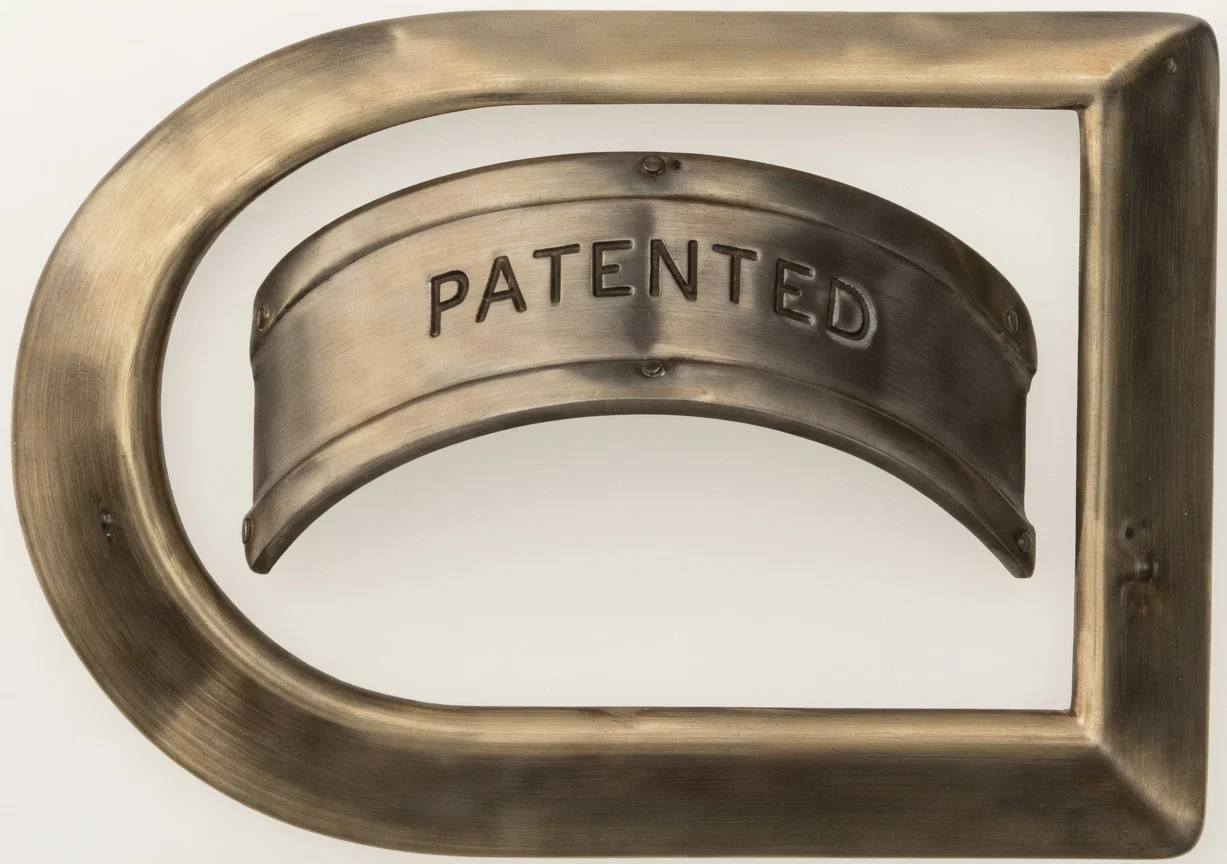
Made of the best English cold rolled steel.
It will clean your pots, skillets, bread pans, bread board, scrape paint or anything of that kind from a window glass, etc., etc.
The universal testimony of the housewives who have used it is that it stands at the head.
Agents Wanted
Sent, Post-paid, for 15 Cents
TAIT BROS. & CO., 1311 Fourth Avenue East Oakland, Cal.

Don't Say

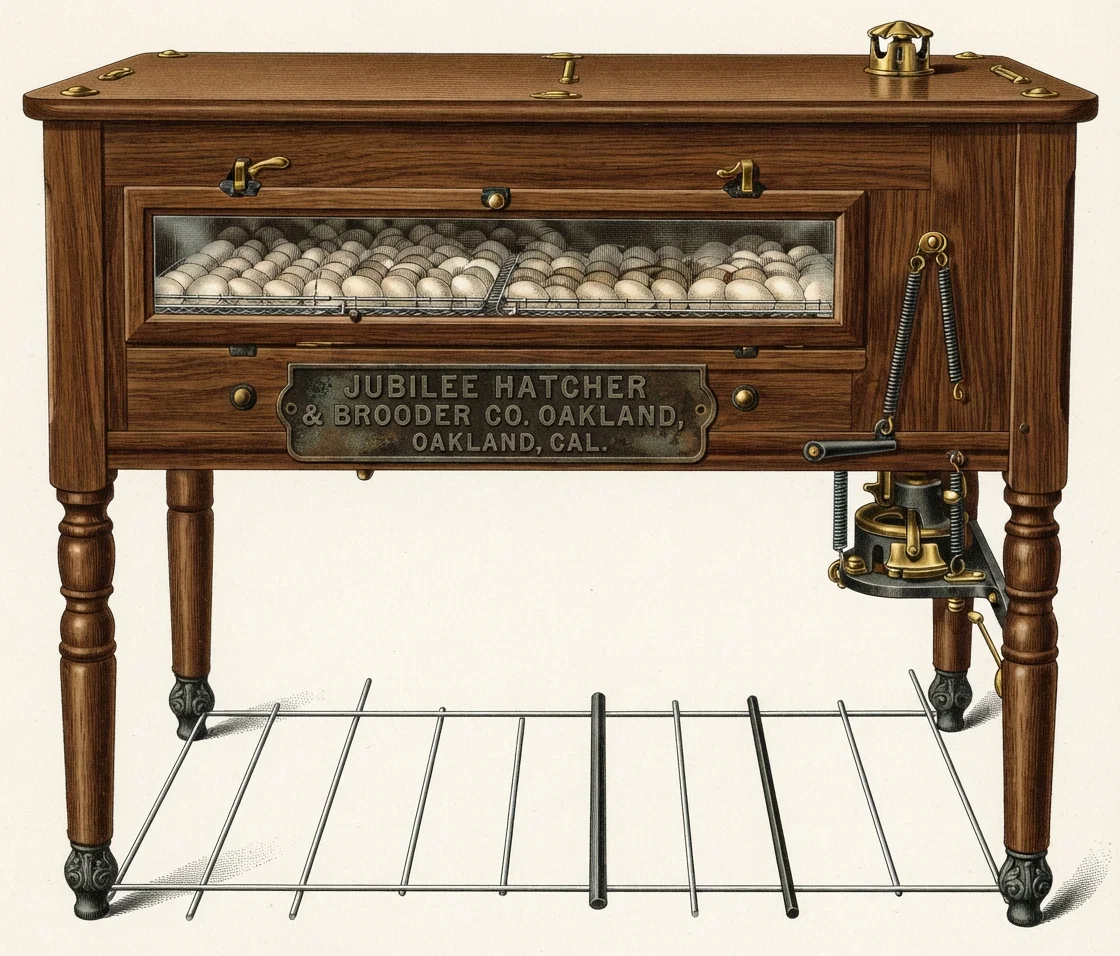
Incubators are a fraud just because you bought a cheap-john machine that was absolutely no good. Ninety per cent. of our customers are dissatisfied users of other makes. We make a specialty of repairing the hurt feelings of those who were afflicted with "Non-Hatchers." The results of the first hatch with a Jubilee will act as a powerful tonic on your system, and you will champion the cause of the best of incubators. The treatment is not as expensive as patent medicine, and you will not regret the expenditure. If you are ailing on the incubator question and desire a remedy, write for our catalogue.
[[FIGURE]]
JUBILEE INCUBATOR CO. 517 Thirty-second Street & & Oakland, Cal.

THE CREATION OF THE HOME

THE home is as old as creation. Its corner-stone was laid in the beginning, when God said, "It is not good that the man should be alone; I will make him an help meet for him." Gen. 2:18. God understood the need of the human soul when He said, "It is not good that the man should be alone." Man was created a social being.
God had a noble purpose in the creation of woman. She had a work to do, a place assigned by her Creator for her to fill. A beautiful truth was made manifest in her creation. When Adam awoke from the deep sleep that God caused to fall upon him, and the woman was presented to him, he recognized her as "bone of his bone, flesh of his flesh," a part of himself, and, as such, to be "nourished and cherished" "even as the Lord cares for the church."
It has been said by some one, "Woman was not taken from man's head, to rule over him; not from his feet, to be put beneath him; but from his side, that she might stand his equal;" not his equal perhaps in physical size and strength, but his equal, his companion, in the responsibilities of home life; in intellectual pursuits; in all avenues for doing good to perishing humanity; in love and affection.
One of the most beautiful scenes upon earth is a true Christian home, where love rules supreme. Many homes of to-day are far below what God designed them to be. The home should be a miniature heaven, where love and contentment reign. Instead, we too often find discord and wrangling in professedly Christian households. God has chosen the marriage state to represent the relation existing between Himself and the church, but, alas, how little of the great love of Christ do we see manifest in many homes!
In the beginning, the home was not complete without offspring. There was, then, a world to be populated, hence the command, "Be fruitful, and multiply, and replenish the earth." Gen. 1:28. God placed the husband at the head of the home, and, as such, to be the watchful sentinel, the faithful protector, the careful provider, the loving counselor, the strong, tender companion of wife and children. Being the stronger, he should take the brunt of the storms of life, that those dependent upon him might be protected from their chilling blasts. But in many homes how remiss is the husband in filling these posts of duty!
The husband's duty, however, does not end here. He should not only provide for the physical wants of his family, but he has a duty resting upon him to do his part to provide for the family's social and intellectual wants. Many husbands who are good providers so far as physical needs are concerned, are sadly deficient in sociability and in supplying food for the intellect.
Many a wife hungers for a pleasant talk with her husband upon the happenings of the day. But he sits down in silence to the carefully-prepared meal, eats in silence, then takes his political paper, and becomes oblivious to all around him until time to return to his work. Then the paper is dropped, and he rushes off without a word of tenderness or good cheer to wife or child. Evening comes, and is spent by the husband in study of the latest war news until bedtime.
Many husbands think if they provide a comfortable home, with food and clothing, for the family, their duty is done. A husband certainly ought to do all this, if he has good health, for the Word says, "If any provide not for his own, and especially for those of his own house [margin, "kindred"], he hath denied the faith, and is worse than an infidel." It is right for a man to provide for the temporal wants to the best of his ability. How often, however, we see a frail woman providing the daily bread for the family, while a hale, hearty husband spends his time in idleness!
As man was created with a social need, so the woman and the child partake of the same nature. And this want must be met to insure a happy, pleasant home. But many, too many husbands and wives are drifting apart, and sons and daughters are becoming dissatisfied with home, because these social wants are not supplied. Parents have great responsibilities resting upon them, and it is right that the various wants be met in kind sympathy, in watchful, tender care, so that the children will not wish to seek abroad for companionship.

The House We Live In

Do you like good stories?—“Of course we do,” you all answer at once. Then we know you will like

The House We Live In

This is a book of twenty-six stories, told by a mother to her children—Percy, Helen and Amy. These stories are all about the effect different foods and drinks have upon the body, and how you can keep yourself well and strong. It is full of new pictures, and has a very pretty cover showing a boy and girl going to school. Price, 75 cents.

Botany for Children

"I don't call this a lesson; such pleasant talk isn't study. I'd go to school all the year if I had my lessons this way," said one little girl after listening to one of the "talks" given by Aunt Mary, and written in this book. Fifty pictures of plants. Good cloth covers. Price, $1.00.

Black Beauty

This book tells about the way a good horse was treated by his different owners. Price, 60 cents.

Golden Grains

Ten very small books with paper covers, filled with good stories. Only 25 cents for the whole set.

Gospel Primer

More than half a million boys and girls have already studied this good book. The most of its reading lessons are well-told Bible stories. These stories are told both in words and pictures, and are very interesting. Cloth covers, 50 cents; boards, 25 cents.

Best Stories from the Best Book

This is a new book just being printed, and we think it will be ready by November 15. It is in two parts, the first called the "Easy Lessons Part," and the second, "Bible Story Department." Some of its many pictures will be nicely colored. Board covers, 50 cents; cloth, 75 cents.

Sketches from Bible Child Life

Stories of some Bible children with a great many pictures. Cloth covers, 50 cents.

Jack the Conqueror

How a poor, ragged little boy became a great and good man. Cloth covers, 50 cents.

Sabbath Readings

Four books containing 282 short stories. Just the kind of stories your parents will like to read to you, because they are interesting to the grown-up people as well as to you. Price for one book, 40 cents; for the four, $1.60.

Olive's Story

The story of a girl who took for her motto, "What would Jesus do?" Cloth, 40 cents.

Left With a Trust

Maybe your parents are poor, and you are trying to help them by not asking for rich clothing and expensive food. This is just what the children did who are told about in this book, and they were perfectly happy in it all, knowing they were making life easier for father and mother. Cloth covers, 50 cents.

BOOKS AT LITTLE PRICES

Facts I Ought to Know about the Government of My Country

Filled with just the information you need continually, and is well indexed for ready reference. Cloth, 50 cents.

The Mistakes We Make

A companion volume to the above. Devoted to "Things Called by Wrong Names," "Mistakes We Make about Places," "Mistakes We Make about Plants," etc., etc. Cloth, 50 cents.

Good Form and Christian Etiquette

"Social Life," "Young Men and Young Women," "Modesty," "Familiarity," "Street Behavior," "Youthful Courtesy and Success," "In School Days," "Manners in Church," "Dangers of Gift-giving and Gift-receiving," "Table Manners," are some of its chapters. Written by Mrs. S. M. I. Henry. Paper covers, 25 cents; cloth, 50 cents.

A Christ-Filled Life

A fit companion volume to "A Spirit-Filled Life." Beautifully bound in white and gold. A fine gift booklet. Price, 35 cents.

A Spirit-Filled Life

This popular book is carried in two styles—good cloth for 50 cents, and paper covers for 15 cents.

Laddie

How a young man learned not to be ashamed of his mother. Gift binding, 35 cents.

Miss Toosey's Mission

The life story of a dear old lady who wanted to be a missionary. Attractive covers, 35 cents.

Battle Hymn of the Kingdom

An illustrated poem treating upon the present unsettled condition of society. Cover design by Mr. Willing, of New York City. Price, 25 cents.

What Is Worth While

A profitable talk on "what is worth while," which has had an immense circulation, and aroused much favorable comment. Gift binding, 35 cents.

By the Still Waters

A meditation on "The Lord Is My Shepherd" Psalm, by J. R. Miller. Price, 35 cents.

Blessings of Cheerfulness

An appropriate gift book, by J. R. Miller. Price, 35 cents.

Unto the Hills

A Meditation on the "Mountain" Psalm (121), by J. R. Miller. Fancy covers, 35 cents; especially illustrated edition bound in cloth, 60 cents.

Young Men: Faults and Ideals

A discussion of quotations from young ladies on "Young Men: Faults and Ideals," by J. R. Miller. Gift binding, 35 cents.

Girls: Faults and Ideals

A companion volume to the above, for girls. Fancy binding, 35 cents.

Fruit of the Vine

Presents the dignity, the privilege, the imperative necessity, and the divine possibility of fruit-bearing on the part of every Christian, by Andrew Murray. Price, 35 cents.
PACIFIC PRESS PUBLISHING COMPANY * Oakland, California

Bible Year Book

A text for every day in the year, with colored pictures. Cloth, 40 cents.

PACIFIC PRESS PUBLISHING CO.

OAKLAND, CAL.
39 Bond Street New York City
18 West Fifth Street Kansas City, Mo.
Continue reading: BATTLE CREEK COLLEGE